How Long to Marinate Chicken: Safe Timing, Best Flavor, and Easy Chicken Marinade Tips
Knowing how long to marinate chicken helps you get better flavor, better texture, and more consistent results in the kitchen. The right marinating time depends on the cut of chicken, the type of marinade, and whether the marinade is acidic, creamy, salty, or oil-based.

For most home cooking, chicken needs anywhere from 30 minutes to 24 hours in a marinade. Smaller pieces absorb flavor faster, while bone-in thighs, drumsticks, and whole chicken pieces usually need more time. I prefer to match the marinating time to the cut because chicken breast, wings, thighs, and drumsticks do not all behave the same way in the fridge.

Why This Guide Matters
Chicken is one of the most useful proteins for weeknight dinners in Canada and the United States. It works on the barbecue, in the oven, in the air fryer, in a skillet, in creamy sauces, in sheet pan dinners, and in meal prep. But chicken can also become bland, dry, too salty, or mushy if the marinade is not handled properly.
A good marinade does three things:
- Adds flavor to the surface of the chicken
- Helps seasoning spread more evenly
- Supports browning during cooking
A marinade does not magically season chicken all the way to the center in a few minutes. Most of the flavor stays near the surface, especially with larger pieces. That is why timing matters. A short marinade can still be useful for small pieces, but larger cuts need more time for the seasoning to work.
The mistake to avoid is thinking that longer is always better. With some marinades, especially ones with lemon juice, vinegar, yogurt, buttermilk, wine, or pineapple, too much time can change the texture. Instead of becoming juicier, the chicken can become soft, stringy, or slightly mushy.
This guide explains the best marinating times for chicken breast, thighs, drumsticks, wings, skewers, and whole chicken pieces, plus practical tips for cooking, storage, and food safety.

Quick Answer
For most chicken recipes, these are the best marinating times:
- Chicken breast: 30 minutes to 4 hours
- Chicken thighs: 2 to 12 hours
- Chicken drumsticks: 2 to 12 hours
- Chicken wings: 1 to 6 hours
- Chicken tenders or small pieces: 20 minutes to 2 hours
- Chicken skewers: 30 minutes to 3 hours
- Whole chicken or large bone-in pieces: 6 to 24 hours
For acidic marinades with lemon juice, vinegar, wine, or lots of yogurt, stay closer to the shorter side. For oil, herbs, garlic, spices, mustard, or soy-style marinades, longer marinating is usually more forgiving.
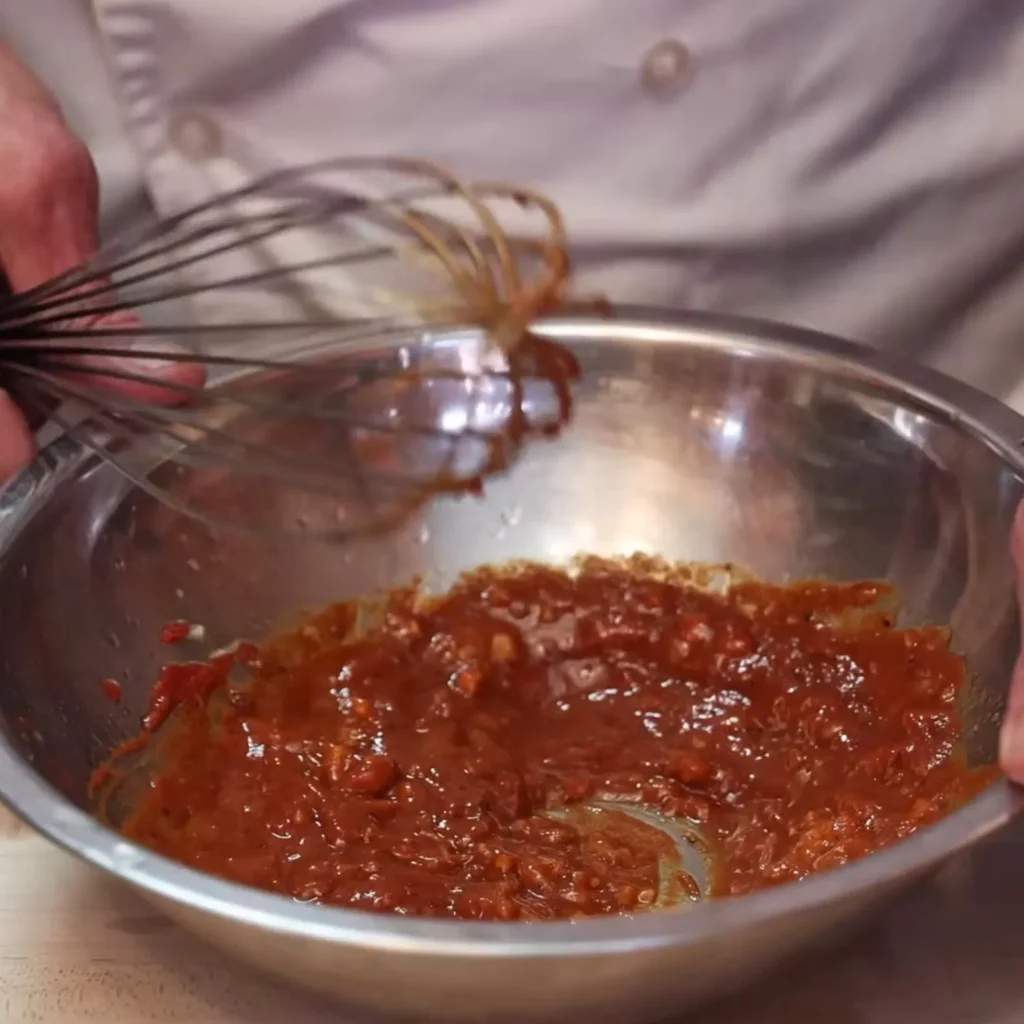
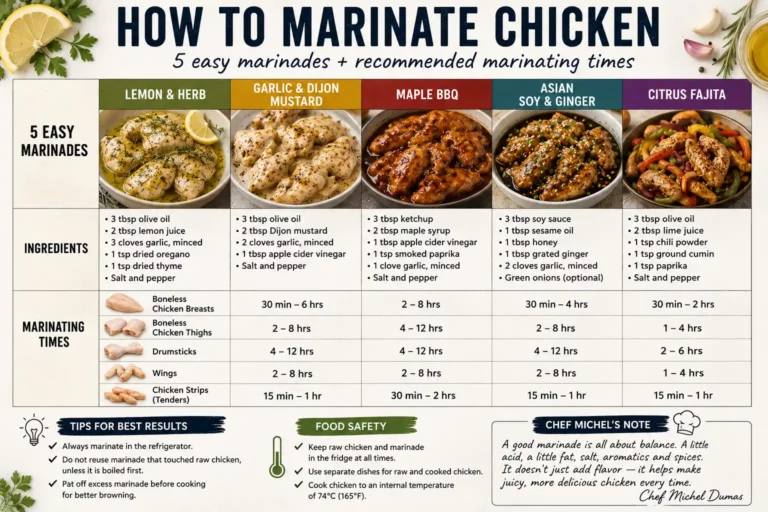
Best Chicken Marinating Time Chart
| Chicken Cut | Minimum Time | Best Time | Maximum Time | Best For |
| Boneless chicken breast | 30 minutes | 1 to 4 hours | 8 hours | Grilling, pan-searing, air fryer |
| Bone-in chicken breast | 2 hours | 4 to 8 hours | 12 hours | Oven roasting, BBQ |
| Chicken thighs, boneless | 1 hour | 2 to 8 hours | 12 hours | Skillet, air fryer, grill |
| Chicken thighs, bone-in | 2 hours | 4 to 12 hours | 24 hours | Oven, BBQ, air fryer |
| Chicken drumsticks | 2 hours | 4 to 12 hours | 24 hours | Oven, BBQ, air fryer |
| Chicken wings | 1 hour | 2 to 6 hours | 12 hours | Air fryer, oven, game day |
| Chicken tenders | 20 minutes | 30 minutes to 2 hours | 4 hours | Air fryer, pan-frying, wraps |
| Chicken cubes | 20 minutes | 30 minutes to 2 hours | 4 hours | Skewers, stir-fry, meal prep |
| Whole chicken | 6 hours | 12 to 24 hours | 24 hours | Roasting, BBQ |
These times are a practical guide for home cooking. The exact result depends on the marinade, the size of the pieces, and how you plan to cook the chicken.
What Does a Chicken Marinade Actually Do?
A marinade mainly seasons the surface of the chicken. It can add salt, herbs, garlic, spices, oil, mustard, citrus, yogurt, or other flavorings. It can also help with browning if it contains oil, sugar, honey, maple syrup, mustard, tomato paste, or spices.
A marinade usually does not go deep into large pieces of chicken. This is why thin chicken cutlets, cubes, and tenders pick up flavor faster than large bone-in pieces.
For example, a quick lemon herb marinade can work well on chicken breast because the meat is thinner and cooks quickly. Bone-in thighs and drumsticks need more time because the pieces are thicker and the skin, bone, and shape slow down seasoning.
If you want a practical marinade starting point, 5 easy chicken marinades gives you several flavor directions for oven, pan, barbecue, and air fryer cooking. For a more direct chicken marinade recipe, 5 easy and flavorful chicken marinades is also useful when you want a few options without overcomplicating dinner.
How Long to Marinate Chicken Breast
Chicken breast is lean and can dry out easily, so it usually does not need an overnight marinade. For boneless chicken breast, 30 minutes to 4 hours is usually enough.
Best time:
- Quick flavor: 30 minutes
- Better flavor: 1 to 2 hours
- Maximum practical time: 4 to 8 hours, depending on the marinade
If the marinade is very acidic, keep the time shorter. Lemon juice, vinegar, wine, and some yogurt-based marinades can change the outside texture if the chicken sits too long.
For air fryer chicken breast, a shorter marinade often works well because the cooking time is fast and the surface dries quickly under strong convection heat. A recipe like juicy air fryer chicken breast shows why seasoning, moderate oil, and proper timing matter when cooking a lean cut.
Chicken breast is also useful for wraps and sandwiches. When the chicken is sliced thin or breaded, flavor can be added with a shorter marinade or a well-seasoned coating, like in a crispy chicken wrap with cheddar and mustard dressing.
How Long to Marinate Chicken Thighs
Chicken thighs are more forgiving than chicken breast because they contain more fat and connective tissue. They can handle longer marinating and stronger flavors.
For boneless thighs, marinate for 1 to 8 hours. For bone-in thighs, marinate for 2 to 12 hours, or up to 24 hours if the marinade is not overly acidic.
Best time:
- Boneless thighs: 2 to 8 hours
- Bone-in thighs: 4 to 12 hours
- Maximum: 24 hours for mild marinades
Thighs are excellent with garlic, mustard, lemon, paprika, curry, barbecue spices, herbs, and yogurt-based marinades. They also work well in the oven, on the grill, and in the air fryer.
For example, air fryer chicken thighs are built around strong heat, crisp skin, and juicy meat. A marinade or seasoning mix can work well here, but the skin should not be too wet when it goes into the air fryer. Patting off excess marinade helps the skin brown better.
For grilling, Greek grilled chicken thighs with lemon is a good example of how lemon, heat, and simple seasoning can give chicken a bright flavor without needing a complicated overnight marinade.
How Long to Marinate Chicken Drumsticks
Chicken drumsticks need more time than chicken breast because they are bone-in and have thicker parts. For best results, marinate drumsticks for 2 to 12 hours.
Best time:
- Minimum: 2 hours
- Better: 4 to 8 hours
- Maximum: 24 hours for mild marinades
Drumsticks are perfect for oven, barbecue, and air fryer recipes because they stay juicy and take bold flavors well. Mustard, garlic, onion, herbs, paprika, barbecue sauce, honey, maple syrup, soy sauce, and curry-style marinades all work well.
The mistake to avoid is leaving drumsticks in a very acidic marinade for too long. If the marinade has a lot of lemon juice or vinegar, overnight may be too much. For a mustard, oil, garlic, and herb marinade, overnight can be fine.
For a deeper flavor, turn the drumsticks once or twice while they marinate so all sides touch the seasoning. Before cooking, remove excess marinade from the surface if you want better browning.
A rustic example is mustard chicken marinade with Dijon, garlic, and onions, which uses a strong mustard flavor and works especially well with oven-style chicken.
How Long to Marinate Chicken Wings
Chicken wings are smaller, so they do not need as much time. Marinate wings for 1 to 6 hours.
Best time:
- Minimum: 1 hour
- Better: 2 to 4 hours
- Maximum: 12 hours for mild marinades
Wings have skin, fat, and small joints, which means they can take bold seasoning without becoming dry. But if you want crispy skin, the surface should not be too wet before cooking.
For air fryer wings, pat them dry before cooking. Too much wet marinade can slow browning and make the skin less crisp. Air fryer chicken wings are a good example of how proper drying and a two-stage cook can give better texture.
If using a sticky marinade with honey, maple syrup, or barbecue sauce, watch the heat carefully. Sugars brown faster and can burn if the temperature is too high.
How Long to Marinate Chicken Tenders, Cubes, and Skewers
Small pieces of chicken marinate quickly. Chicken tenders, cubes, and skewers usually need 20 minutes to 2 hours.
Best time:
- Minimum: 20 to 30 minutes
- Better: 1 hour
- Maximum: 4 hours
Because small pieces have more surface area, they absorb flavor faster. They also cook quickly, which means they can dry out if the marinade is too acidic or the cooking time is too long.
This is especially important for chicken tenders. A short marinade or well-seasoned coating is usually enough. Air fryer chicken tenders are a good example of why texture, coating, and timing matter more than a long marinade for small pieces.
For skewers, avoid marinating too long if the pieces are cut small. A lemon-garlic or yogurt marinade can add good flavor in 30 minutes to 2 hours.
How Long to Marinate a Whole Chicken
A whole chicken needs more time because it is large and unevenly shaped. Marinate a whole chicken for 6 to 24 hours.
Best time:
- Minimum: 6 hours
- Better: 12 to 24 hours
- Maximum: 24 hours
For a whole chicken, the marinade mainly seasons the outside and some areas close to the surface. If you want deeper flavor, loosen the skin gently and spread some seasoning under the skin, especially over the breast and thighs.
Do not leave a whole chicken in a very acidic marinade for more than 24 hours. The surface can become too soft.
For oven roasting, let the excess marinade drip off before cooking so the chicken roasts instead of steaming.
Acidic vs Non-Acidic Marinades
Not all marinades work the same way. The biggest difference is acidity.
Acidic Marinades
Acidic marinades include ingredients like:
- Lemon juice
- Lime juice
- Vinegar
- Wine
- Buttermilk
- Yogurt
- Tomato-heavy marinades
These marinades add brightness and flavor, but they can change the texture of chicken if used too long.
Best timing:
- Small pieces: 20 minutes to 2 hours
- Chicken breast: 30 minutes to 4 hours
- Thighs and drumsticks: 2 to 8 hours
- Whole chicken: 6 to 12 hours
Non-Acidic or Mild Marinades
Milder marinades include:
- Olive oil
- Garlic
- Herbs
- Spices
- Mustard
- Soy sauce-style seasoning
- Maple syrup or honey
- Barbecue sauce
- Tomato paste with oil and spices
These are usually more forgiving and can often sit longer.
Best timing:
- Small pieces: 30 minutes to 4 hours
- Chicken breast: 1 to 8 hours
- Thighs and drumsticks: 4 to 24 hours
- Whole chicken: 12 to 24 hours
A recipe like easy one-pan marinated chicken with roasted vegetables shows how a bold marinade can support a full oven dinner with chicken, vegetables, and a sheet pan. In that kind of dish, the marinade is not just for flavor. It also helps season the vegetables and pan juices.
Should You Marinate Chicken Overnight?
Yes, but not always.
Overnight marinating works best for:
- Chicken thighs
- Drumsticks
- Bone-in chicken pieces
- Whole chicken
- Mild oil, herb, mustard, garlic, or spice marinades
Overnight marinating is not always ideal for:
- Thin chicken breast
- Small cubes
- Tenders
- Very acidic marinades
- Marinades with a lot of vinegar or citrus
For home cooking, overnight is convenient, but it is not automatically better. If the chicken is thin or the marinade is strong, a few hours can be enough.
A good rule: if the marinade tastes sharp, acidic, or very salty, use a shorter marinating time.
Can You Marinate Chicken Too Long?
Yes. Chicken can be marinated too long, especially in acidic marinades.
If chicken sits too long, the surface can become:
- Soft
- Mushy
- Stringy
- Too salty
- Overpowering in flavor
The texture problem usually comes from acid, salt, enzymes, or too much time. This is why chicken breast and small pieces need more care than thighs or drumsticks.
If you are not ready to cook, remove the chicken from the marinade, discard the marinade, pat the chicken dry, and refrigerate the chicken covered until cooking time. Do not keep extending the marinade time for another day.
Food Safety Tips for Marinating Chicken
Chicken should always be marinated in the refrigerator, not on the counter.
Use these simple safety habits:
- Marinate chicken in the fridge.
- Use a covered container or sealed food-safe bag.
- Keep raw chicken separate from ready-to-eat foods.
- Discard used marinade that touched raw chicken.
- If you want marinade for serving, reserve some before adding raw chicken.
- Do not reuse raw chicken marinade as a sauce unless it is boiled thoroughly.
- Wash hands, cutting boards, and utensils after handling raw chicken.
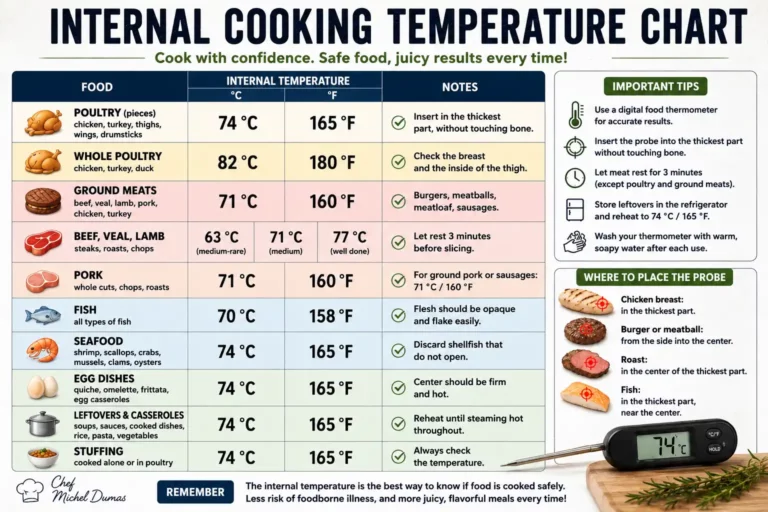
Cook chicken to a safe internal temperature. For home cooking, a food thermometer is the most reliable tool, especially for thick chicken breast, thighs, and drumsticks.
Best Marinade Ingredients for Chicken
A good chicken marinade usually has a balance of fat, seasoning, aroma, and sometimes acidity.
Fat
Fat helps carry flavor and supports browning.
Good options:
- Olive oil
- Neutral oil
- Peanut oil
- Melted butter, depending on the recipe
Salt and Savory Ingredients
Salt seasons the surface and makes the chicken taste more complete.
Good options:
- Salt
- Soy sauce-style seasoning
- Mustard
- Bouillon-based seasoning
- Worcestershire-style sauce
Aromatics
Aromatics add personality.
Good options:
- Garlic
- Onion
- Shallot
- Ginger
- Lemon zest
- Fresh herbs
- Dried herbs
- Spices
Acid
Acid brightens the flavor, but too much can affect texture.
Good options:
- Lemon juice
- Lime juice
- Vinegar
- Wine
- Yogurt
- Buttermilk
Sweetness
A little sweetness helps browning, but too much can burn.
Good options:
- Honey
- Maple syrup
- Brown sugar
- Barbecue sauce
For Canada and the USA, maple syrup is especially useful in chicken marinades because it brings sweetness and browning without needing much. Use it lightly so the chicken does not burn before it cooks through.
Chicken Marinade Timing by Marinade Type
| Marinade Type | Best For | Best Time | Watch Out For |
| Lemon garlic marinade | Breast, thighs, skewers | 30 minutes to 4 hours | Too much lemon can soften the surface |
| Yogurt marinade | Thighs, drumsticks, skewers | 2 to 8 hours | Avoid very long marinating for small pieces |
| Buttermilk marinade | Fried chicken, tenders, thighs | 2 to 12 hours | Pat dry before coating or cooking |
| Mustard marinade | Thighs, drumsticks, breast | 1 to 12 hours | Strong mustard can dominate if overused |
| BBQ marinade | Wings, thighs, drumsticks | 2 to 12 hours | Sugar can burn over high heat |
| Herb oil marinade | Almost any cut | 1 to 24 hours | Needs enough salt to taste complete |
| Soy-style marinade | Thighs, wings, skewers | 30 minutes to 8 hours | Can get too salty if left too long |
| Tomato paste marinade | Sheet pan chicken, thighs, drumsticks | 2 to 12 hours | Cook at moderate heat to avoid scorching |
Common Mistakes to Avoid
Marinating Chicken on the Counter
Chicken should marinate in the refrigerator. Room-temperature marinating is not worth the risk.
Marinating Too Long in Lemon or Vinegar
Acidic marinades can make the surface of chicken soft or mushy if used too long. Keep acidic marinades shorter, especially for breast, tenders, and small cubes.
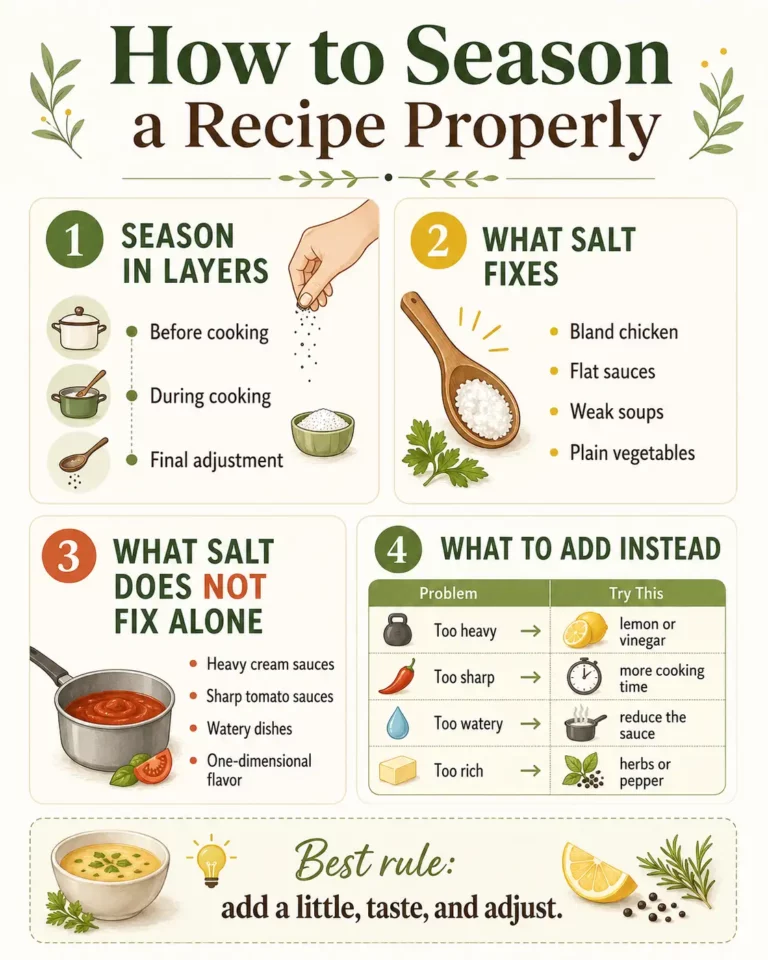
Not Using Enough Salt
A marinade without enough salt can smell good but still taste flat after cooking. Salt should be balanced, not excessive.
Leaving the Chicken Too Wet Before Cooking
Too much wet marinade on the surface can prevent browning. Pat off excess marinade before grilling, air frying, or pan-searing.
Using Too Much Sugar
Honey, maple syrup, brown sugar, and barbecue sauce help browning, but they can burn quickly over high heat. Use moderate heat or add sticky glaze near the end.
Reusing Raw Marinade as Sauce
Marinade that touched raw chicken should not be served as-is. Reserve some clean marinade before adding chicken, or boil used marinade thoroughly before using it as a sauce.
Treating Every Cut the Same
Chicken breast, wings, thighs, drumsticks, and whole chicken need different timing. Smaller and leaner pieces need shorter marinating times.
What to Serve with Marinated Chicken
Marinated chicken works with simple sides because the chicken already brings strong flavor.
Good side ideas include:
- Roasted potatoes
- Rice
- Pasta salad
- Green salad
- Grilled vegetables
- Air fryer vegetables
- Mashed potatoes
- Corn on the cob
- Garlic bread
- Simple tomato salad
For chicken dinners with sauce or pan juices, potatoes and pasta work well. For lighter grilled chicken, salads, rice, and vegetables are usually better. A recipe like one-pan Dijon mustard chicken and mashed potatoes shows how chicken, sauce, and a comforting side can work together in one complete meal.
For more ideas, the chicken recipes collection is a useful place to explore oven chicken, skillet chicken, air fryer chicken, and family-style dinners.
Storage and Meal Prep
Marinated chicken is convenient for meal prep, but timing matters.
If cooking the same day, marinate in the fridge until ready to cook. If preparing ahead, choose a mild marinade and avoid leaving chicken in strong acid for too long.
For meal prep:
- Add chicken and marinade to a sealed container.
- Refrigerate for the recommended time.
- Cook within 24 hours for most marinades.
- For longer planning, freeze chicken in the marinade if appropriate.
- Thaw frozen marinated chicken in the refrigerator before cooking.
Freezing chicken in marinade can be useful, especially for oil, herb, mustard, or spice marinades. The chicken marinates as it thaws. However, very acidic marinades can still affect texture, so use caution with lemon-heavy or vinegar-heavy blends.
After cooking, cool leftovers and refrigerate them in a covered container. Reheat gently so the chicken does not dry out.
FAQ
Is 30 minutes long enough to marinate chicken?
Yes, 30 minutes can be enough for chicken breast, tenders, cubes, and skewers, especially if the marinade is flavorful. Larger bone-in pieces usually need more time.
Can I marinate chicken overnight?
Yes, chicken can be marinated overnight if the marinade is mild and the cut is larger, such as thighs, drumsticks, bone-in pieces, or whole chicken. Avoid overnight marinating for very acidic marinades or small pieces.
How long is too long to marinate chicken?
For most chicken, more than 24 hours is too long. For acidic marinades with lemon, vinegar, wine, or lots of yogurt, even 8 to 12 hours can be too long for some cuts.
Should I poke holes in chicken before marinating?
Usually, no. Poking holes can damage the texture and is not necessary for most marinades. If the chicken is very thick, it is better to pound it evenly or cut it into smaller pieces.
Do I rinse chicken after marinating?
No. Do not rinse chicken after marinating. Instead, remove excess marinade with a spoon or pat the surface lightly with paper towel if you need better browning.
Can I use the marinade as a sauce?
Only if it has not touched raw chicken, or if it is boiled thoroughly after contact with raw chicken. The easiest method is to reserve some clean marinade before adding the chicken.
Should chicken be marinated before air frying?
Yes, but do not leave too much wet marinade on the surface. Pat off excess marinade so the chicken browns better in the air fryer.
Does marinating chicken make it more tender?
It can help the surface texture and flavor, but it does not completely transform the inside of the meat. Over-marinating, especially with acidic ingredients, can make the surface mushy instead of tender.
Final Thoughts
The best marinating time for chicken depends on the cut and the marinade. Chicken breast usually needs 30 minutes to 4 hours. Thighs and drumsticks do best with 2 to 12 hours. Wings need 1 to 6 hours. Small pieces need only 20 minutes to 2 hours. Whole chicken can take 6 to 24 hours.
For everyday cooking, use shorter times for acidic marinades and longer times for mild oil, herb, mustard, garlic, or spice marinades. Keep the chicken in the fridge, avoid over-marinating, and pat off excess marinade before cooking when browning matters.
For more chicken dinner ideas, explore easy chicken marinades, mustard chicken marinade with Dijon, garlic, and onions, air fryer chicken thighs, and skillet chicken dinners.
Useful Links
🛒 Michel Dumas Shop : Explore our kitchen essentials, including aprons and knives.
🌐 Linktree : Access all our important links in one place.
📱 YouTube | Instagram | Facebook | TikTok : Follow us for the latest recipes and culinary tips.