Boneless Lamb Shoulder Roast with Pan Jus and Vegetables
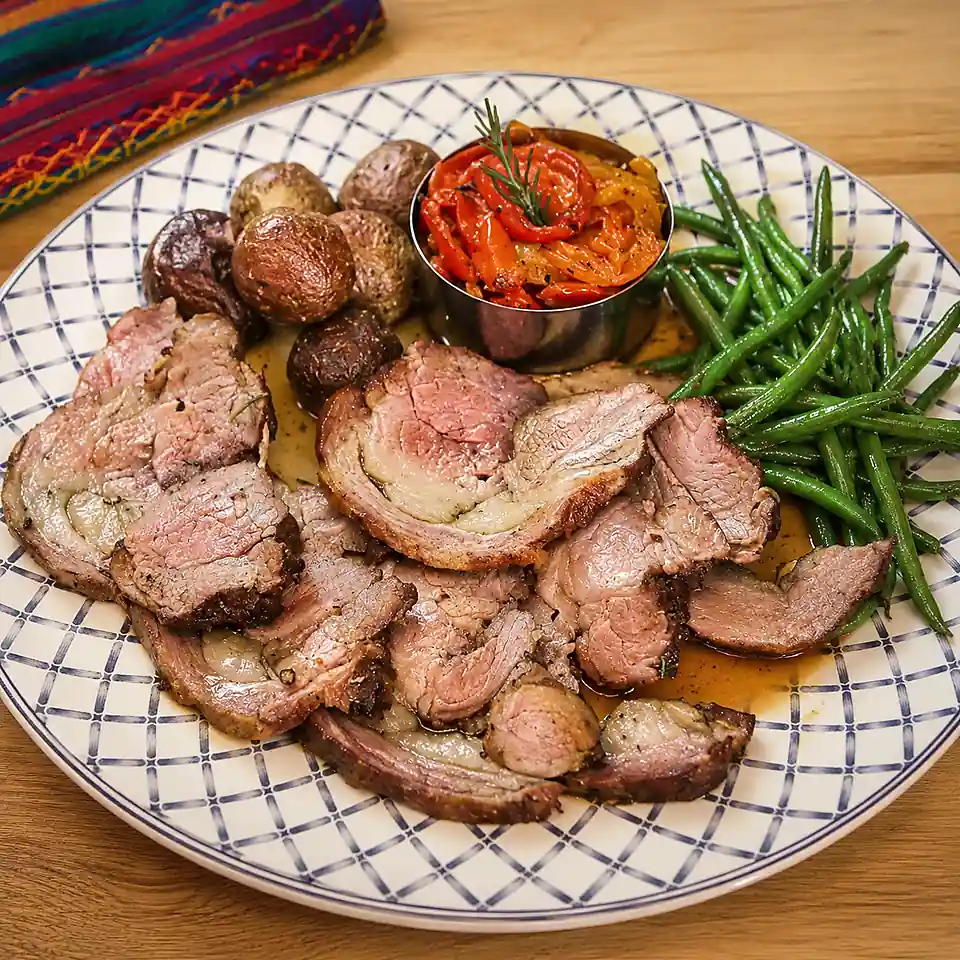
This boneless lamb shoulder roast is browned in duck fat, roasted over onions, carrots, garlic, and rosemary, then served with a reduced lamb jus, baby potatoes, green beans, and colorful peppers. The method is based on my YouTube video, with a few adjustments since publication so the cooking time is tied to the roast’s internal temperature instead of a fixed one-hour estimate. What makes it work is the deep sear before the stock goes into the pan. The mistake to avoid is cooking by time alone: the roast is ready when the centre reaches 150°F before resting and the outside is dark brown.
A boneless lamb shoulder roast is a rolled and tied cut from the front shoulder. It has more marbling and connective tissue than a leg roast, so this version is meant to be carved into thin slices at medium doneness rather than cooked until it falls apart. It makes a substantial, protein-forward Sunday dinner, but the vegetables and rosemary keep it suitable for a year-round family meal.
What Makes This Roast Different
The original video uses a compact shoulder roast, duck fat, a simple aromatic base, and brown lamb stock. I keep that same bistro-style structure. I make it this way because browning the meat first creates the roasted flavour that the jus needs, while the onions, carrots, and garlic keep the drippings from scorching and add sweetness.
This is not the same preparation as slow-braised lamb shanks or a hearty lamb stew. Those cook long enough to become very soft. Here, the shoulder is rolled, tied, roasted uncovered, and sliced thinly. For a leaner roast that is naturally tender when pink, use my oven-roasted boneless leg of lamb.
The main adjustment is temperature control. Two roasts can weigh the same but cook differently because one is thicker. Start checking early. What I look for is a deep brown exterior, gently bubbling stock around the vegetables, and a thermometer reading taken in the thickest part of the meat, away from large seams of fat. (YouTube)
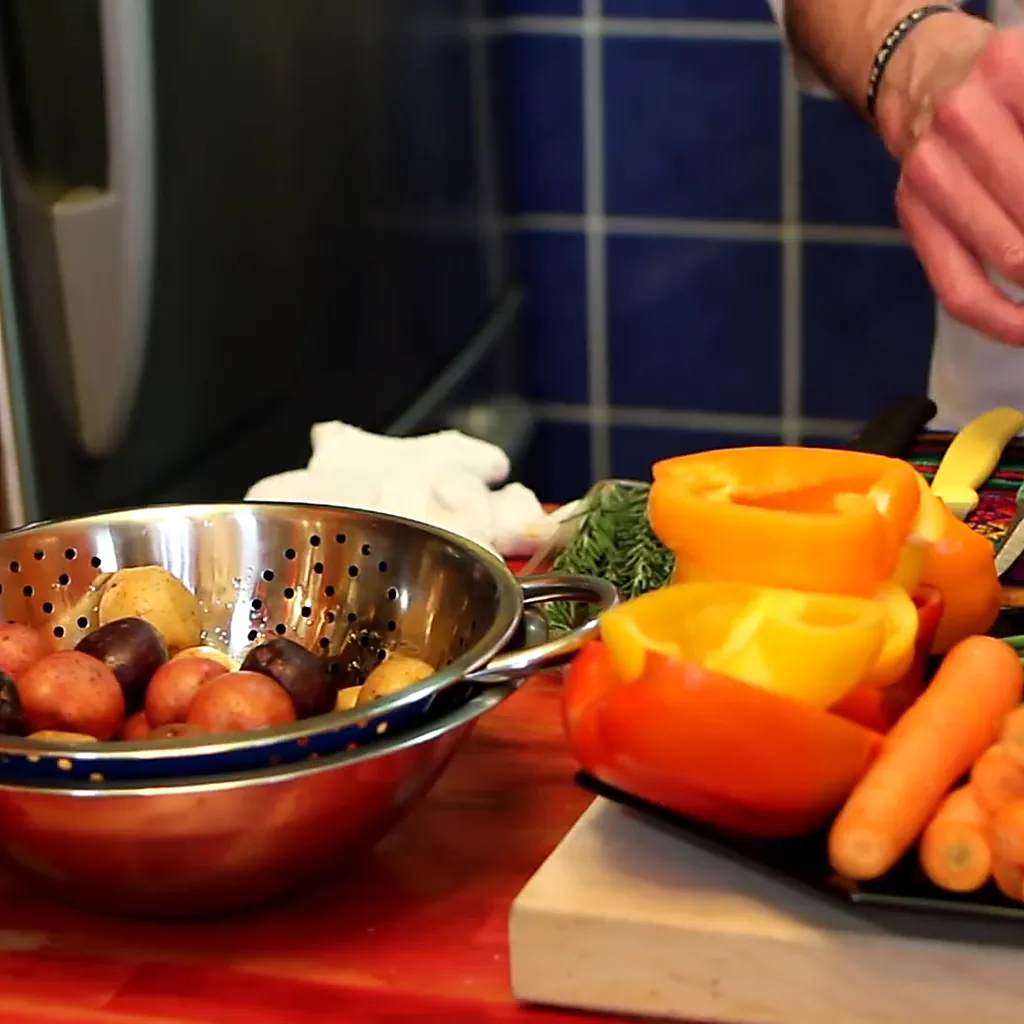
Ingredients You Need
Use a 3-pound boneless lamb shoulder roast that has been rolled and tied into an even shape. Trim an unusually thick fat cap to about 1/4 inch. Duck fat gives the lamb and potatoes the flavour shown in the video, but only a small amount is needed because shoulder releases fat while roasting.
Onions, carrots, garlic, and rosemary form the aromatic base. Low-sodium lamb stock is best because it can reduce without becoming too salty. A gelatin-rich homemade brown stock gives the jus the best body, while neutral brown veal stock is a practical alternative.
For the garnish, use evenly sized baby potatoes, trimmed green beans, and bell peppers cut into broad strips. Keeping the vegetables fairly large helps them stay distinct on the plate instead of disappearing into the sauce.
Step-by-Step Instructions
1. Season the lamb
Heat the oven to 350°F. Pat the roast completely dry, then season it with 2 teaspoons of the salt and 3/4 teaspoon of the pepper. Check that the twine holds the shoulder in a compact, even shape. Dry meat browns; wet meat steams.
2. Sear the roast and aromatics
Heat 1 tablespoon duck fat in a large oven-safe skillet or shallow braiser over medium-high heat. Brown the lamb on every side, about 8 to 10 minutes total. Let each side release naturally before turning it. If the drippings start turning black rather than brown, reduce the heat.
Transfer the lamb to a plate. Add the onions and carrots and cook for 3 to 4 minutes, scraping the bottom. Add the garlic for the final minute. The vegetables only need light colour at this stage.
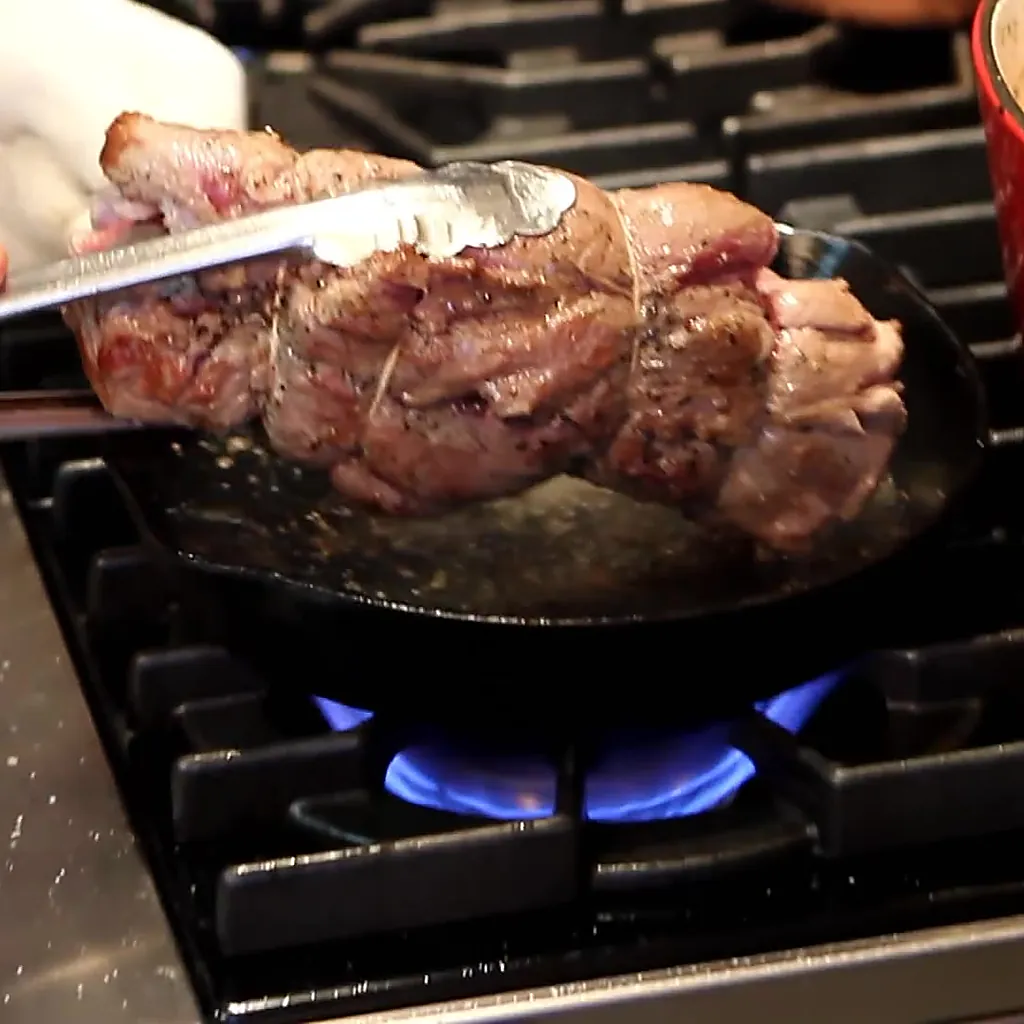
3. Add the stock and roast
Return the lamb to the pan and tuck in the rosemary. Pour the stock around the meat without wetting its browned top. The liquid should cover the bottom generously but should not come more than about 1/4 inch up the roast. Bring it to a gentle simmer, then roast uncovered.
Cook for 60 to 90 minutes. After 30 minutes, baste the lamb and rotate the pan. Begin checking the centre after 55 minutes. For the medium result shown in the video, remove the roast at 150°F and let carryover heat bring it close to 160°F during the rest. Do not keep cooking simply because an hour has not passed.
4. Prepare the vegetables
While the lamb roasts, cover the baby potatoes with cold salted water. Bring them to a simmer and cook until a knife enters with slight resistance, about 12 to 18 minutes. Drain well and let them steam dry.
Blanch the green beans in boiling salted water until bright green and just tender, about 4 to 6 minutes. Cool them in cold water, drain, and reserve. Sauté the peppers in 1/2 tablespoon duck fat until lightly browned but still holding their shape, about 7 minutes.
5. Rest the lamb and finish the garnish
Transfer the roast to a board and cover it loosely with foil for 15 minutes. Avoid wrapping it tightly, which softens the browned exterior.
Heat the remaining 1/2 tablespoon duck fat in a wide skillet. Brown the potatoes, then add the beans for the final 2 minutes to warm them through. Season the potatoes, beans, and peppers with the remaining salt and pepper. For a richer dinner, replace the baby potatoes with traditional gratin dauphinois.
6. Reduce the pan jus
Strain the roasting liquid into a small saucepan. Let it stand briefly, then remove the visible fat from the surface. This step is important because reducing a fatty liquid can make the sauce feel oily.
Simmer until the jus tastes concentrated and lightly coats the back of a spoon, about 5 to 10 minutes. Season only after reducing. If ordinary boxed stock remains thin, whisk in a small amount of the optional cornstarch slurry.
7. Slice and serve
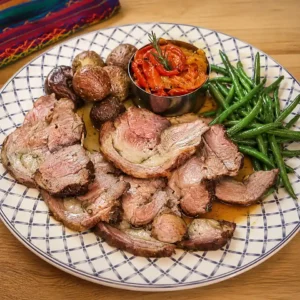
Remove the twine and carve the shoulder thinly across the grain. The centre should be warm and pink, with juices staying mostly in the meat instead of flooding the board. Arrange it with the potatoes, beans, and peppers, then spoon the jus around the slices.
Three Details That Matter
First, do not rush the sear. Pale lamb produces a pale, broth-like sauce. The surface should be deep brown before the stock is added.
Second, use a pan that fits the roast and vegetables closely. In an oversized roasting pan, the stock can evaporate before the lamb is cooked. Add a small splash of hot water or stock if the pan becomes nearly dry.
Third, slice shoulder more thinly than leg of lamb. This shortens the muscle fibres and improves the texture of a medium-roasted shoulder. For a spoon-tender result, use a braised dish such as spring lamb navarin.
What to Serve With Lamb Roast
The potatoes, beans, and peppers make this a complete dinner. For a larger table, add a crisp romaine and endive salad or a tray of oven-roasted mixed vegetables.
For another special lamb meal, compare it with a royal-style roast leg of lamb or a pesto-crusted rack of lamb. The leg feeds a larger group, while the rack cooks faster and gives each guest an individual chop. More menu ideas are in my holiday and entertaining recipe collection.
Substitutions
Boneless leg of lamb can replace the shoulder without changing the aromatic base. Since leg is leaner, begin checking its temperature earlier. Duck fat can be replaced with neutral high-heat oil. Olive oil also works, but do not let it smoke during the sear.
Unsalted beef stock or brown veal stock can replace lamb stock. Thyme can replace rosemary, and asparagus or thick carrot batons can replace the beans. For a different starch, choose a mash from this potato side-dish collection.
FAQ
Can I use a bone-in shoulder?
Yes, but the timing will change. Keep the thermometer away from the bone and expect the roast to cook less evenly than a compact, tied shoulder. Bone-in shoulder is also well suited to a longer braise.
What internal temperature should lamb roast reach?
For this medium roast, remove it at 150°F and rest it for 15 minutes so it finishes close to 160°F. For a pinker result, whole lamb roasts must still reach at least 145°F followed by a minimum three-minute rest. Measure in the thickest part. (Food Safety and Inspection Service)
Why did my shoulder turn out tough?
It may have been unusually thick, sliced with the grain, or from a shoulder with more connective tissue. Slice it thinly across the grain. For reliably fall-apart meat, use a covered slow-braise rather than extending this uncovered roasting method.
Can the vegetables be prepared ahead?
The beans can be blanched and cooled earlier in the day. The potatoes can be simmered until barely tender, drained, and chilled once cool. Brown and reheat them shortly before serving.
How do I stop the jus from becoming salty?
Use low-sodium stock and wait until the sauce has reduced before adjusting the seasoning. If it becomes too concentrated, add a spoonful of hot water and taste again.
What can I make for a different lamb dinner?
Try a lamb curry with seven-grain rice when you want a warmer spice profile instead of a classic roast dinner.
Suggested Posts
Try the oven-roasted boneless leg of lamb for a leaner carved roast.
Make braised lamb shanks when you want a softer, slow-cooked texture.
Use homemade brown stock as the base for a naturally glossy jus.
Serve traditional gratin dauphinois for a richer potato accompaniment.
Explore French-style stews and braised dishes for more cold-weather dinners.
Boneless Lamb Shoulder Roast with Pan Jus and Vegetables
Ingredients
- 3 lb boneless lamb shoulder roast rolled and tied
- 2 1/2 tsp kosher salt divided
- 1 tsp freshly ground black pepper divided
- 2 tbsp duck fat divided
- 2 medium onions quartered
- 3 medium carrots cut into large pieces
- 5 garlic cloves lightly crushed
- 2 sprigs fresh rosemary plus more for serving
- 1 1/2 cups low-sodium lamb stock
- 1 1/2 lb baby potatoes
- 1 lb green beans trimmed
- 3 bell peppers in different colours cut into broad strips
- 1 tsp cornstarch mixed with 1 tbsp cold water optional
Instructions
- Heat the oven to 350°F. Pat the lamb dry and season it with 2 teaspoons salt and 3/4 teaspoon pepper.
- Heat 1 tablespoon duck fat in an oven-safe pan. Brown the lamb on every side for 8 to 10 minutes, then transfer it to a plate.
- Cook the onions and carrots in the same pan for 3 to 4 minutes. Add the garlic and cook for 1 minute.
- Return the lamb to the pan. Add the rosemary and stock without wetting the top of the roast.
- Roast uncovered for 60 to 90 minutes, basting after 30 minutes, until the centre reaches 150°F for medium.
- Rest the lamb loosely covered for 15 minutes.
- Simmer the potatoes in salted water until barely tender, then drain and brown them in 1/2 tablespoon duck fat.
- Blanch the green beans for 4 to 6 minutes, cool them in cold water, then reheat them with the potatoes.
- Sauté the peppers in the remaining 1/2 tablespoon duck fat until lightly browned and tender-crisp. Season all vegetables with the remaining salt and pepper.
- Strain and defat the pan liquid. Reduce it until it lightly coats a spoon, using the optional cornstarch slurry only if needed.
- Remove the twine, slice the lamb thinly across the grain, and serve it with the vegetables and pan jus.