Spring Lamb Navarin (French-Style Lamb Stew with Baby Vegetables)
Navarin d’agneau is a classic French lamb stew: lamb shoulder is browned, then gently braised with wine, tomatoes, aromatics, and herbs until fork-tender. This spring-style version stands out for its bright, “market vegetable” finish—baby carrots, turnips, green beans, and potatoes are cooked separately so they stay vibrant and perfectly tender, then warmed in the sauce right before serving.
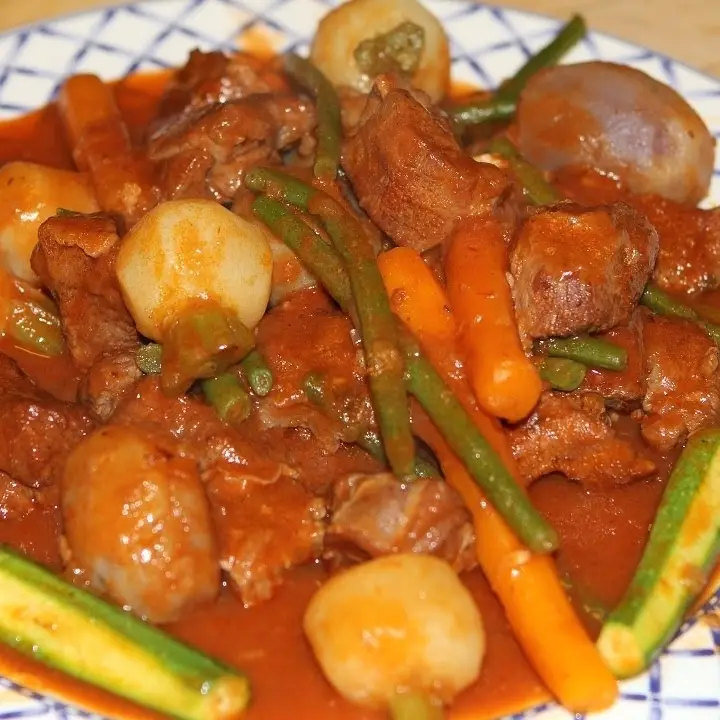
This recipe is based on my YouTube video, with a few practical adjustments since publication—mainly clearer liquid measurements, optional tomato paste for deeper flavor, and a foolproof timing approach so the lamb turns out tender every time.
What makes this version different
There are lots of “lamb stew” recipes online, but this one is intentionally French bistro-style: a wine-and-tomato braise, aromatic bouquet garni, and a clean, glossy sauce. It’s not a quick weeknight skillet meal, and it’s not a creamy stew. It’s a slow-simmer comfort food that still tastes fresh thanks to the spring vegetables added at the end.
If you’re browsing other dishes on the site:
- This is traditional and slow-cooked, like the vibe of a classic red-wine braise—think the same cozy direction as oven braised beef bourguignon but with lamb and brighter vegetables.
- It’s not a one-pan 30-minute dinner like beef burritos (flavor-packed).
- It’s not a creamy sauce recipe like creamy mustard chicken with mushrooms.
- It’s not a roast—if you want that vibe, go for oven roasted chicken or a showpiece like pork Wellington.
When to make it (seasonal and year-round)
Spring is the natural match because the vegetables are the star: baby carrots, turnips, green beans, and small potatoes feel right at home. But this navarin also works year-round—just swap in what looks best at the store (more ideas in the substitutions section). It’s also a great make-ahead meal for weekends, family dinners, or entertaining, because the flavor improves after a rest.

Ingredients you’ll need
Lamb shoulder is the key. It has enough fat and collagen to become meltingly tender with time. The stew builds flavor in layers:
- browning the lamb
- softening onions and garlic
- flour to lightly thicken
- red wine reduction
- tomato + stock simmer with herbs
For the best “restaurant” result, use a light stock such as neutral brown veal stock. If you don’t have stock, water still works—just be a little more generous with seasoning and let the sauce reduce properly.
Step-by-step: how to make lamb navarin that turns out tender

1) Prep the lamb
Cut lamb shoulder into cubes (about 1½ inches is a great target). Pat the pieces dry with paper towel and season with salt and pepper. Dry meat browns; wet meat steams.
Use a heavy pot or Dutch oven. Heat matters: you want a steady, confident sizzle.
2) Brown the lamb in batches
Add oil and brown the lamb in 2–3 batches, leaving space between pieces. This is the difference between a pale stew and a deep, bistro-style stew. Brown on multiple sides, then transfer to a bowl.
If you see browned bits on the bottom (fond), that’s perfect—don’t scrape it off yet.
3) Build the base: onions + garlic
Add the onions to the same pot with a small pinch of salt. Cook until softened and lightly golden. You’re not aiming for jammy caramelization—just enough color to round out the sauce.
Add the garlic and cook 30 seconds. Garlic burns fast, so keep it moving.
4) “Singer” with flour (light thickening)
Sprinkle flour over the onions and stir for 60–90 seconds. This step cooks out raw flour taste and gives the sauce a gentle body. You don’t want gravy-thick; you want glossy and spoonable.
5) Deglaze with red wine and reduce
Pour in the red wine and scrape up the fond. Let it simmer until reduced by about half. This concentrates the flavor so the stew tastes rich without needing extra fat or heavy thickeners.
Optional but recommended: stir in a tablespoon of tomato paste and cook it for 30 seconds. It deepens color and adds that classic “French stew” backbone.
6) Add tomatoes + stock, then simmer gently

Return the lamb (and any juices) to the pot. Add crushed tomatoes and enough stock (or water) so the liquid comes close to the level of the meat. Add your bouquet garni (more on that next), bring to a gentle simmer, then lower the heat.
Cover partially and simmer until the lamb is fork-tender. Depending on how your cubes are cut and how collagen-rich the shoulder is, this usually lands around 75–105 minutes. If it’s not tender at 60 minutes, don’t force it—give it time.
A gentle simmer matters. If it boils hard, the meat tightens up. Think: tiny bubbles, calm surface, slow and steady.
7) Bouquet garni (simple, clean flavor)
A bouquet garni keeps the sauce aromatic without leaving stray herbs in the bowl. In the video, the bouquet is built with leek and fresh herbs. You can do that, or you can keep it simple: tie thyme and basil in cheesecloth, or use a tea infuser. The goal is the same: easy removal, clean sauce.
8) Cook the vegetables separately
This is the “printanier” signature. Cooking the vegetables separately gives you:
- green beans that stay green
- carrots that stay sweet and intact
- turnips that don’t melt into the sauce
- potatoes that don’t cloud the stew
It’s a more precise approach than tossing everything into the pot—and it’s a big reason this tastes like a restaurant version.
General guide:
- Potatoes: start in cold salted water; simmer until tender.
- Carrots and turnips: simmer until tender but not soft.
- Green beans: quick boil, then drain.
- Zucchini: the quickest cook of all—keep it just tender.
Once cooked, drain everything and reserve.

9) Finish: warm vegetables in the stew right before serving
When the lamb is tender, remove the bouquet garni. Taste the sauce and adjust salt and pepper. Add the cooked vegetables to the pot and warm them through for 4–6 minutes—just enough to bring everything together without overcooking.
If the sauce feels too thin, simmer uncovered for a few minutes. If it feels too thick, loosen with a splash of stock or water. You’re aiming for a sauce that coats the lamb and vegetables, not a watery soup.

10) Serve like a bistro
Spoon lamb into warm bowls, add a mix of vegetables, and ladle sauce over everything. For an extra “French restaurant” feel, keep the plating clean: potatoes and carrots visible, green beans on top, and sauce around.
Nutrition context
This is a hearty comfort food: lamb provides plenty of protein and richness, while the vegetables make it feel balanced and not overly heavy. Because the sauce isn’t cream-based, it lands lighter than many creamy stews, but it still eats like a true winter-or-spring main dish.
Substitutions
Lamb shoulder:
- Best option. If needed, lamb leg works but can be a bit leaner; keep the simmer gentle and watch doneness.
Red wine:
- Any dry red wine works. If you want a different vibe, keep it French and rustic, similar to the tone of coq au vin (French red wine chicken), but the lamb version is deeper and more savory.
Stock:
- Best: neutral brown veal stock
- Good: beef stock (not too salty)
- Works: water + extra seasoning
Crushed tomatoes:
- Canned crushed tomatoes are easiest. In a pinch, you can use a good jarred base like homemade tomato sauce with fresh tomatoes if you have it ready.
Vegetables:
- Spring: baby carrots, turnips, green beans, zucchini
- Year-round swaps: parsnips, celery root, mushrooms, pearl onions, or even roasted vegetables (kept separate and added at the end)
Gluten-free option:
- Skip the flour and thicken at the end with a small slurry (cornstarch + cold water), or reduce the sauce longer uncovered.

FAQ
How do I know when the lamb is done?
When you can pierce a piece with a fork and it yields easily. If it still feels tight or chewy, it needs more time—keep the simmer gentle and let it go.
Can I make it ahead?
Yes. Make the lamb and sauce 1 day ahead, chill, then reheat gently. Cook vegetables fresh or cook them ahead and warm them briefly right before serving.
What if my sauce tastes too acidic?
This can happen depending on the tomatoes and wine. Let it simmer uncovered for a few extra minutes, and make sure it’s properly salted. If needed, add a very small pinch of sugar—just enough to round the edge, not sweeten it.
Can I cook the vegetables in the stew instead of separately?
You can, but it changes the result. Vegetables soften more, the sauce gets cloudier, and timing becomes trickier. Cooking separately keeps the “spring navarin” identity.
What’s the best pot to use?
A Dutch oven or heavy-bottomed pot. Consistent heat makes braises easier and prevents scorching.
What to serve with Spring Lamb Navarin
- A simple salad on the side: classic homemade grated carrot salad with mustard vinaigrette is crisp and bright next to a rich stew.
- Potatoes done another way (for a second dinner idea): Pommes Parisiennes with bacon are an elegant side if you want to serve the navarin without potatoes in the bowl.
- A fresh, cool sauce element: tzatziki sauce is surprisingly good with lamb, especially if you swap zucchini for more green beans and lean into a Mediterranean feel.
- A bigger French comfort-food night: Pair your weekend menu with another slow-cooked classic like weeknight beef ragout (beef stew) on a different day to keep the “cozy stew” theme without repeating lamb.
Suggested posts (same cozy, satisfying energy)
- Couscous royal (lamb, beef, and chicken)
- Homemade meatloaf (easy, quick, budget-friendly)
- Crispy honey garlic fried chicken (quick, gluten-free)
- Juicy smash burger with bacon cheddar
- Fresh homemade salmon tartare with sriracha
- Lamb recipe collection

Spring Lamb Navarin (French-Style Lamb Stew with Baby Vegetables)
Ingredients
For the lamb stew
- 1 lb 12 oz lamb shoulder cut into 1½-inch cubes
- 3 tbsp vegetable oil
- 2 medium onions finely sliced
- 2 garlic cloves crushed
- 3 tbsp all-purpose flour
- 1 cup dry red wine
- 1 tbsp tomato paste optional, for deeper flavor
- 1 ¾ to 2 cups crushed tomatoes
- 2 to 2 ½ cups low-sodium stock or water enough to come close to meat level
- 1 ½ tsp fine salt plus more to taste
- ½ tsp black pepper plus more to taste
Bouquet garni
- 1 leek leaf or a small piece of leek optional
- 6 –8 sprigs fresh thyme or 1 tsp dried
- 8 –10 fresh basil leaves or 1 tsp dried
- Kitchen twine
Spring vegetables
- 1 lb small potatoes blue potatoes if available, peeled if desired
- 10 –12 baby carrots or 3–4 carrots cut into large pieces
- 2 –3 turnips peeled and cut into chunks
- 8 oz extra-fine green beans trimmed
- 8 oz baby zucchini halved or left whole if small
Instructions
- Brown lamb: Pat lamb dry. Season with salt and pepper. Heat oil in a Dutch oven over medium-high. Brown lamb in batches, 6–8 minutes per batch, until well colored. Transfer to a bowl.
- Cook onions + garlic: Lower heat to medium. Add onions and cook 6–8 minutes until softened and lightly golden. Add garlic and cook 30 seconds.
- Add flour: Sprinkle flour over onions and stir 60–90 seconds.
- Deglaze: Pour in red wine, scrape up browned bits, and simmer until reduced by about half, 4–6 minutes. Stir in tomato paste if using and cook 30 seconds.
- Braise: Return lamb and juices to the pot. Add crushed tomatoes and stock/water (liquid should come close to meat level). Add bouquet garni. Bring to a gentle simmer, then reduce heat to low. Cover partially and simmer 75–105 minutes, until lamb is fork-tender. Skim foam early if needed.
- Cook vegetables separately:
- Potatoes: start in cold salted water; simmer until tender, 18–35 minutes depending on size.
- Carrots + turnips: simmer in salted water until tender, about 12–20 minutes.
- Green beans: boil in salted water 2–4 minutes, drain.
- Zucchini: boil 1–2 minutes, drain.
- Finish: Remove bouquet garni. Taste sauce and adjust salt/pepper. Add cooked vegetables to the stew and warm 4–6 minutes. If sauce is too thin, simmer uncovered a few minutes; if too thick, loosen with a splash of stock/water.
- Serve: Spoon lamb and vegetables into bowls and ladle sauce over top.
Video
Notes
Substitutions
Lamb shoulder:- Best option. If needed, lamb leg works but can be a bit leaner; keep the simmer gentle and watch doneness.
- Any dry red wine works. If you want a different vibe, keep it French and rustic, similar to the tone of coq au vin (French red wine chicken), but the lamb version is deeper and more savory.
- Best: neutral brown veal stock
- Good: beef stock (not too salty)
- Works: water + extra seasoning
- Canned crushed tomatoes are easiest. In a pinch, you can use a good jarred base like homemade tomato sauce with fresh tomatoes if you have it ready.
- Spring: baby carrots, turnips, green beans, zucchini
- Year-round swaps: parsnips, celery root, mushrooms, pearl onions, or even roasted vegetables (kept separate and added at the end)
- Skip the flour and thicken at the end with a small slurry (cornstarch + cold water), or reduce the sauce longer uncovered.
FAQ
How do I know when the lamb is done?When you can pierce a piece with a fork and it yields easily. If it still feels tight or chewy, it needs more time—keep the simmer gentle and let it go. Can I make it ahead?
Yes. Make the lamb and sauce 1 day ahead, chill, then reheat gently. Cook vegetables fresh or cook them ahead and warm them briefly right before serving. What if my sauce tastes too acidic?
This can happen depending on the tomatoes and wine. Let it simmer uncovered for a few extra minutes, and make sure it’s properly salted. If needed, add a very small pinch of sugar—just enough to round the edge, not sweeten it. Can I cook the vegetables in the stew instead of separately?
You can, but it changes the result. Vegetables soften more, the sauce gets cloudier, and timing becomes trickier. Cooking separately keeps the “spring navarin” identity. What’s the best pot to use?
A Dutch oven or heavy-bottomed pot. Consistent heat makes braises easier and prevents scorching.
🔗 Useful Links
🛒 Michel Dumas Shop : Explore our kitchen essentials, including aprons and knives.
🌐 Linktree : Access all our important links in one place.
📱 YouTube | Instagram | Facebook | TikTok : Follow us for the latest recipes and culinary tips.