Easy Fish Meunière with Lemon, Capers and Brown Butter
This fish meunière is a quick French-style dinner made with lightly floured white fish, browned butter, lemon, capers, parsley, and crisp croutons. It is based on my YouTube technique video, with a few adjustments since publication to make the quantities more reliable for two servings. The key is to keep the flour coating almost invisible and remove the fish when it flakes moistly, before the thin fillets turn dry.
Meunière means the fish is dusted with flour and cooked in butter until lightly golden. The lemon, caper, parsley, and crouton finish is a grenobloise garnish, which gives the dish more acidity and texture than a plain butter sauce. It is fast enough for a weeknight, but it still has the look and flavour of a French bistro plate.
{VIDEO}
What Makes This Recipe Different
This is not a battered or heavily breaded fish recipe. The flour forms a very thin coating that helps the surface brown while leaving the fish delicate. For a crunchier dinner, a recipe such as crispy fried sole with tarragon mayonnaise uses a different approach and produces a firmer crust.
It is also different from sole cooked with mushrooms, white wine, and cream. That dish is saucier and richer. Here, the sauce is mostly butter and lemon, with capers for saltiness and small croutons for crunch.
I make the grenobloise garnish separately after the fish comes out of the pan. This gives better control over the butter. Flour left in the pan can darken quickly, and once it burns, the sauce tastes bitter. A light hazelnut colour is what I look for, not dark brown or black specks.
The proportions have also been tightened from the original technique video. One lemon is enough for two servings, the vinegar is optional, and the amount of croutons is kept modest so they do not bury the fish.
For more ideas built around fish and shellfish, browse these seafood recipes for dinners and entertaining.
Ingredients You Need
Choose two fairly even fillets so they finish cooking at about the same time. Tilapia was used in the video, but sole, haddock, flounder, or another thin white fish can work.
White fish: Use two skinless fillets weighing about 5 to 6 ounces each. If the fillets have a thin tail end, fold that section underneath itself so it does not overcook before the thicker centre is ready.
Flour: Only a light dusting is needed. The fish should not look breaded. Shake each fillet well after dredging.
Neutral oil and butter: The oil helps the butter tolerate the initial heat of the pan. The fresh butter added later creates the actual sauce.
Lemon: One large lemon provides enough supremes, juice, and optional wedges for two plates. Using two full lemons can make the finished sauce too sharp.
Capers: Drain them well. Rinse them briefly if they are packed in a very salty brine.
Croutons: Use small, dry croutons rather than large salad croutons. They should add little crisp bites without dominating the plate.
Parsley: Flat-leaf parsley gives the freshest flavour, although curly parsley can also be used.
Vinegar: The original garnish included a little vinegar. Since the sauce already contains lemon, it is optional and should be limited to a small amount.

Step-by-Step Instructions
1. Prepare the lemon garnish
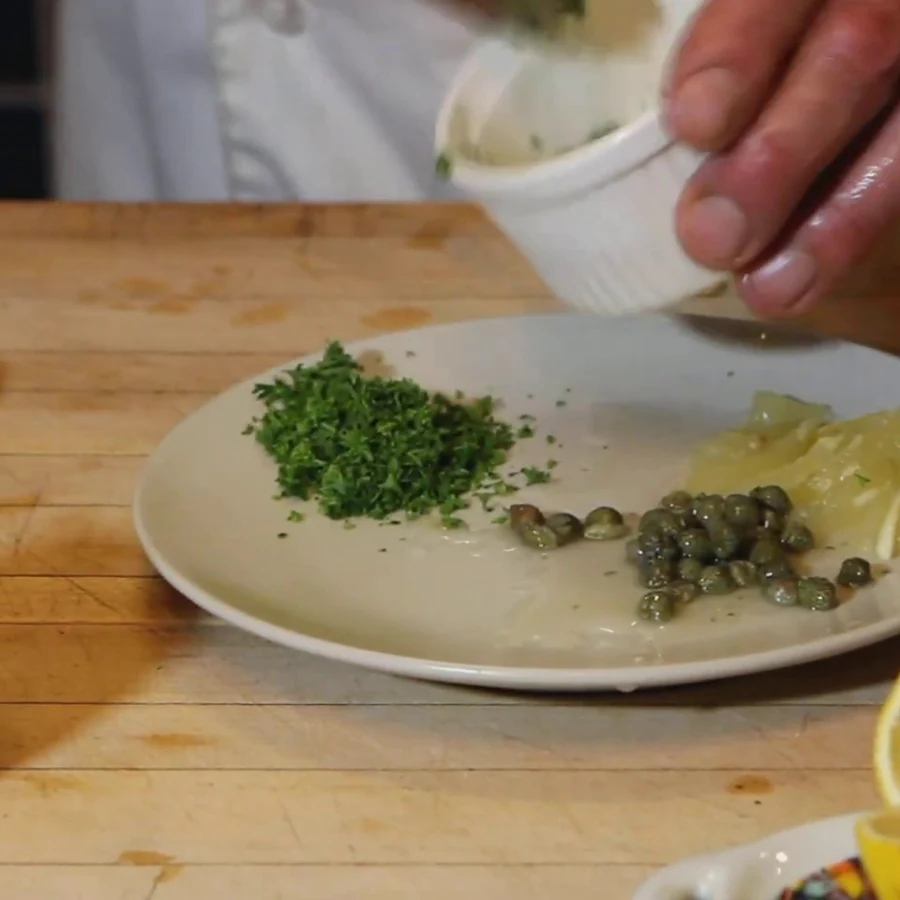
Cut the peel and white pith from half of the lemon. Hold the peeled half over a bowl and cut between the membranes to remove the individual lemon segments. Cut the segments into smaller pieces.
Squeeze 1 tablespoon of juice from the remaining half. It is better to measure the juice than to squeeze the lemon freely over the pan. Too much liquid can make the butter sauce harsh and watery.
Combine the lemon pieces, capers, and chopped parsley in a small bowl. Keep the croutons separate for now so they remain crisp.
2. Dry, season, and flour the fish
Pat the fillets very dry with paper towel. This matters more than it may seem. Moisture on the surface turns to steam, which prevents the flour from browning properly.
Season both sides lightly with salt and black pepper. Remember that the capers will add more salt later.
Place the flour in a shallow plate. Dredge each fillet immediately before it goes into the pan, then shake off as much excess flour as possible. The coating should look dusty, not thick or patchy.
3. Cook the first side
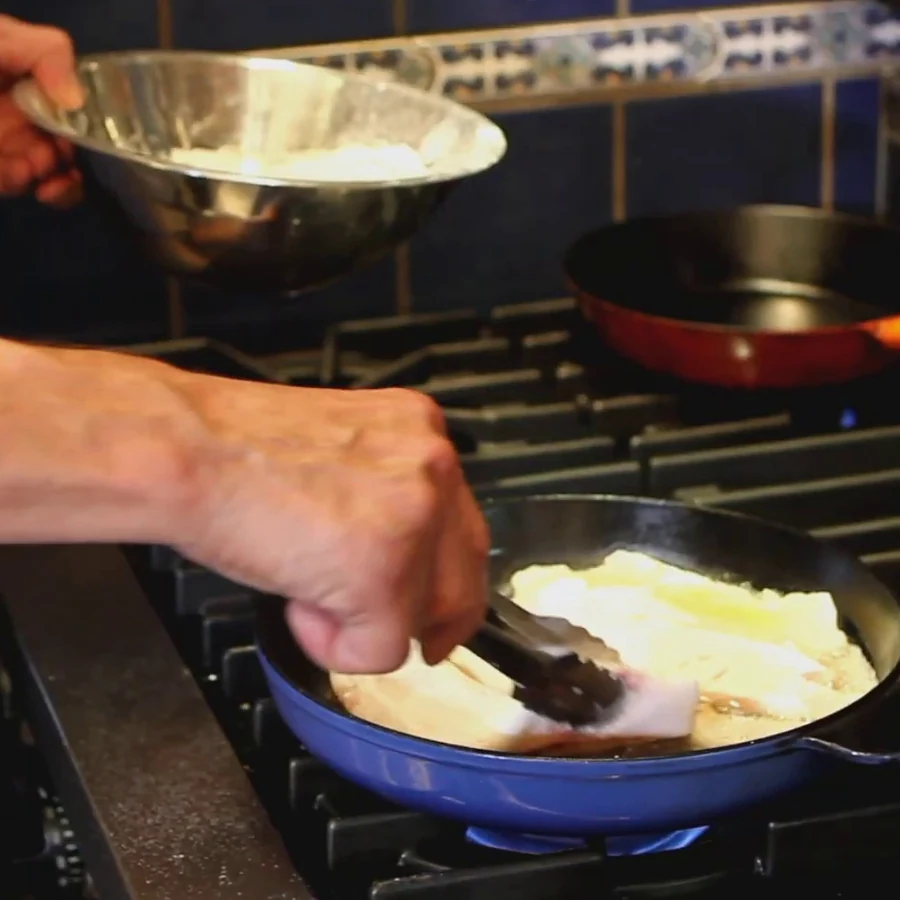
Heat a large skillet over medium to medium-high heat. Add the neutral oil and 1½ tablespoons of butter.
Wait until the butter is melted and foamy, but do not let it become dark before adding the fish. Lay the fillets into the pan away from you to reduce splashing.
Cook the first side for about 2 to 3 minutes. Leave the fish alone during the first minute so the surface can set. The edges should become opaque, and the underside should develop a light golden colour.
If the butter darkens aggressively or the flour begins smelling toasted before the fish is ready to turn, lower the heat. Thin fish needs steady heat, not the highest possible temperature.
4. Turn and baste
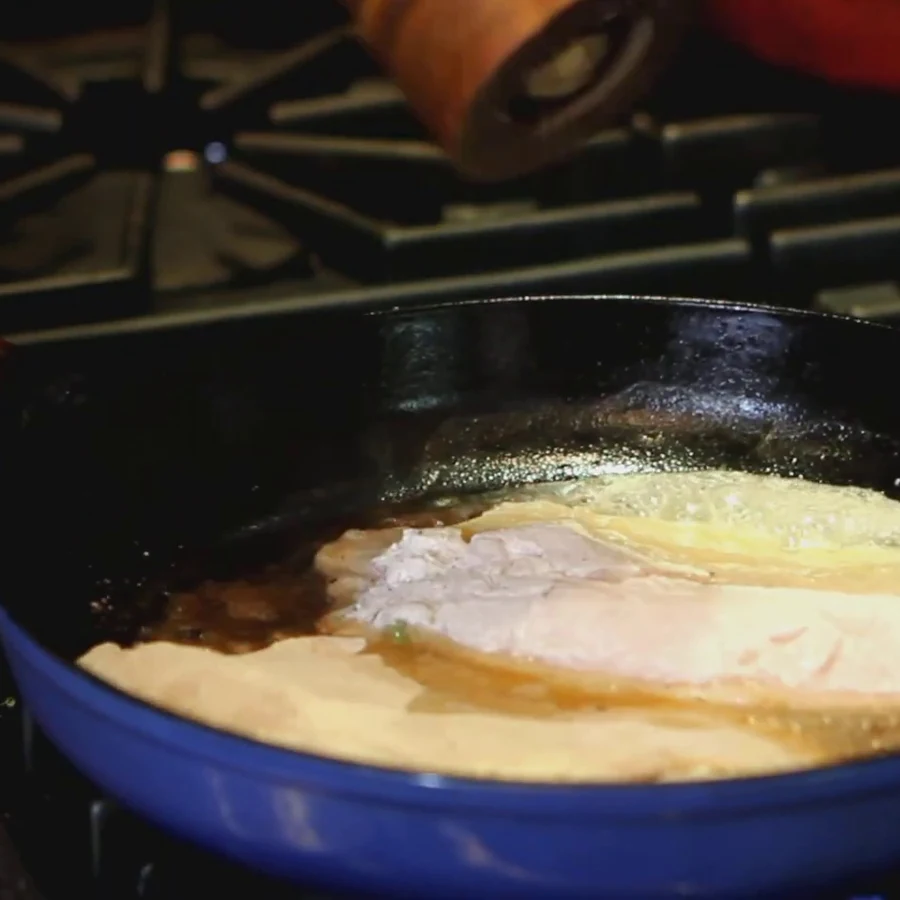
Slide a thin spatula fully underneath each fillet and turn it carefully. Add another small piece of butter if the pan looks dry.
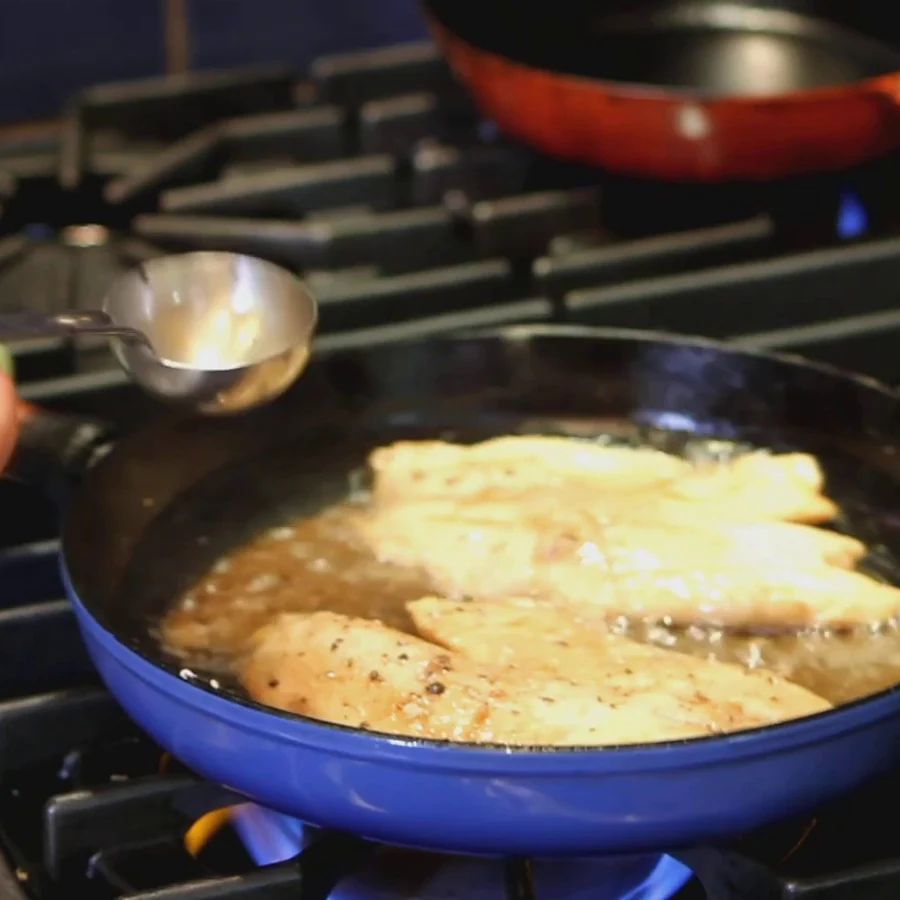
Tilt the skillet slightly and use a spoon to baste the fish with the foaming butter. Cook for another 1 to 2 minutes, depending on thickness.
What I look for here is moist separation between the flakes. A thin knife should enter the thickest part with almost no resistance. The centre should be opaque, but the fillet should still bend slightly when lifted. If it becomes stiff and begins breaking into dry pieces, it has cooked too long.
Transfer the fish to warm plates. Do not hold it in a 400°F oven. That temperature will continue cooking the fillets. If the plates need warming, use a low oven around 200°F and make sure they are oven-safe.
5. Make the brown butter grenobloise
Check the skillet. If the remaining butter contains dark, burned flour, carefully wipe the pan before continuing.
Add the remaining butter over medium heat. Let it foam and turn light golden. It should smell nutty. When the milk solids are hazelnut-coloured, add the capers and cook for about 15 seconds.
Add the croutons and toss them briefly in the butter. Remove the skillet from the heat before adding the lemon juice. Stir in the lemon pieces and parsley. Add up to ½ teaspoon vinegar only when the sauce needs a sharper finish.
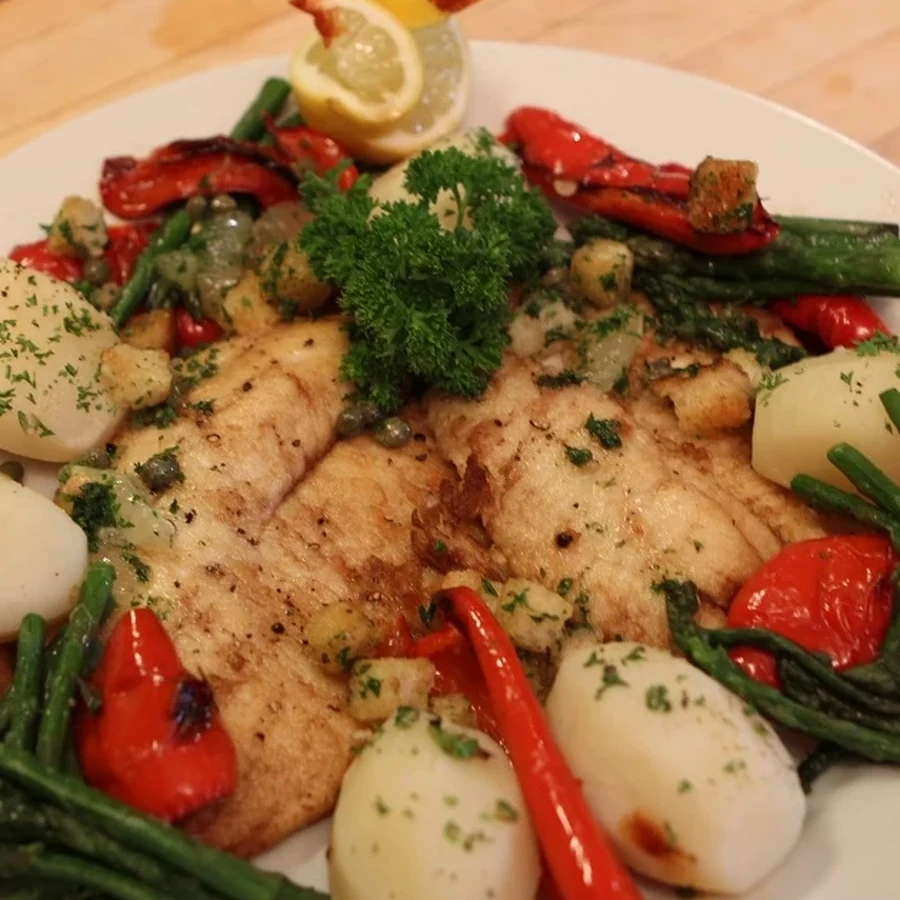
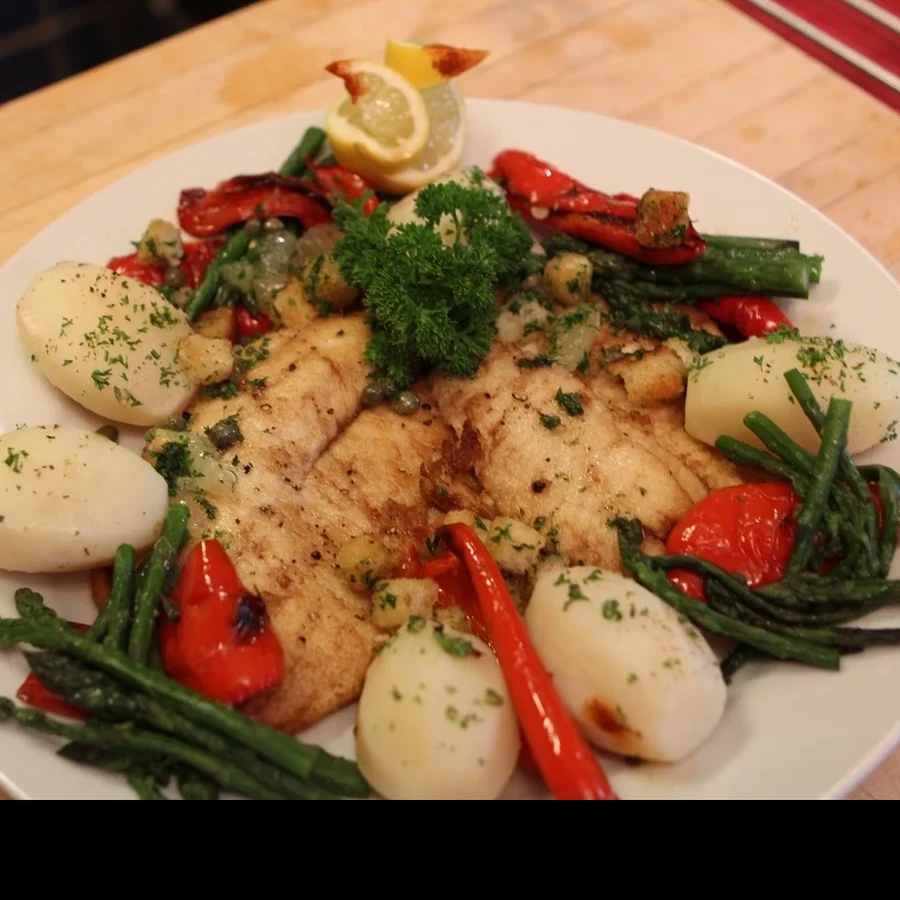
Spoon the warm garnish and butter over the fish immediately. The croutons should still have some crunch, the lemon should taste fresh, and the butter should be golden rather than greasy or burned.
Mistakes to Avoid
The most common mistake is leaving too much flour on the fish. A heavy coating absorbs butter, becomes pasty in spots, and leaves burned flour behind in the skillet.
Do not crowd the pan. When the fillets touch or overlap, they release steam and become difficult to turn. Use a skillet wide enough for both pieces or cook them separately.
Avoid squeezing an entire lemon into the sauce. The butter should remain the main body of the sauce. Lemon brightens it, but too much juice breaks the balance and softens the croutons.
Do not rely only on a fixed cooking time. A thin sole fillet may cook in three minutes total, while a thicker tilapia fillet may need five. Watch the sides of the fish and test the thickest section.
Finally, do not walk away while browning the butter. It changes slowly at first and then darkens quickly. Pull the pan from the heat as soon as it smells nutty and reaches a light amber colour.
What to Serve With Fish Meunière
In the video, the plate is served with boiled potatoes, asparagus, and roasted red pepper. That combination works well because the vegetables do not compete with the lemon and capers.
For a softer side, serve it with smooth homemade mashed potatoes. The potatoes absorb the brown butter without adding another strong sauce.
For a more traditional French plate, potatoes baked with onions and stock are another good match. A simple serving of steamed asparagus, green beans, carrots, or roasted zucchini also works. This collection of vegetable sides for fish and other main dishes offers more options.
The fish itself is protein-rich, while the cooking method remains lighter than deep-frying. Butter is still an important part of the dish, so a fresh vegetable side keeps the complete plate balanced without changing the character of the recipe.
Substitutions
Tilapia can be replaced with sole, flounder, haddock, pollock, or thin cod fillets. Thick cod portions need a longer, gentler cooking time. For a different method that cooks fish and potatoes together, try cod baked in parchment.
Whole trout is not a direct substitution because the cooking method changes, but oven-baked trout with vegetables is useful when you want the same fish-and-vegetable dinner format without pan-frying.
Gluten-free all-purpose flour can replace regular flour. Rice flour also creates a light surface, although it can become slightly crisper.
If capers are unavailable, finely chopped green olives can provide saltiness, but the result will no longer have the same classic grenobloise flavour.
Fresh parsley is preferred. Chives can be added, but dried parsley will not provide the same clean finish. Commercial croutons can be used when they are small, plain, and not heavily seasoned.
The same lemon-caper-crouton garnish also appears in this classic grenobloise preparation, which shows how the sauce can be paired with more than fish.
FAQ
What is the best fish for meunière?
Sole is the traditional choice because it is thin and cooks quickly, but tilapia, flounder, haddock, and other mild white fish are practical alternatives. Choose fillets of similar thickness and avoid pieces that are waterlogged or falling apart.
How do I stop the fish from sticking?
Dry the fish well, preheat the skillet, and let the flour coating set before trying to move the fillet. The oil and butter should be hot enough to foam around the fish, but not smoking. A thin fish spatula also makes turning easier.
Can I make the sauce in advance?
The lemon pieces and capers can be prepared in advance, but the brown butter sauce should be made immediately before serving. Reheated brown butter can separate, and the croutons lose their crunch once they sit in the liquid.
How do I know when white fish is cooked?
The sides become opaque first, followed by the centre. A thin knife should enter the thickest part without resistance, and the flesh should separate into moist flakes. Do not wait until the fillet becomes firm throughout.
Can I use frozen fish?
Yes. Thaw it completely in the refrigerator, then dry it especially well. Previously frozen fillets often release more moisture, so use several sheets of paper towel before seasoning and flouring.
Is this the same as fried fish?
No. Meunière uses only a light flour dusting and a shallow layer of butter and oil. For a thicker, crunchier coating, see these fish and chips dinner ideas.
Suggested Posts
Explore more French bistro recipes to make at home for skillet dishes, sauces, and classic sides.
Browse this collection of traditional French recipes for more foundational techniques.
Try salmon with a classic beurre blanc when you want a richer butter sauce with a thicker fish fillet.
For a fresh preparation with no pan-frying, make white fish ceviche with lime and grapefruit.
Find more mashed, roasted, fried, and gratin potato recipes to complete fish, chicken, or steak dinners.
Easy Fish Meunière with Lemon, Capers and Brown Butter
Ingredients
- 2 skinless white fish fillets 5 to 6 ounces each
- ¼ cup all-purpose flour or as needed
- ½ teaspoon salt divided
- ¼ teaspoon black pepper
- 1 tablespoon neutral cooking oil
- 4 tablespoons unsalted butter divided
- 1 large lemon
- 1½ tablespoons capers drained
- ¼ cup small plain croutons
- 2 tablespoons chopped fresh parsley
- ½ teaspoon vinegar optional
Instructions
- Peel half of the lemon to the flesh, remove the segments, and cut them into small pieces.
- Squeeze 1 tablespoon juice from the remaining lemon and reserve it separately.
- Combine the lemon pieces, capers, and parsley in a bowl, keeping the croutons separate.
- Pat the fish dry and season both sides lightly with salt and pepper.
- Dredge the fillets in flour immediately before cooking and shake off all excess.
- Heat the oil and 1½ tablespoons butter in a large skillet over medium to medium-high heat.
- Cook the fish for 2 to 3 minutes on the first side, until lightly golden around the edges.
- Turn carefully and cook for 1 to 2 minutes more, basting with the foaming butter.
- Transfer the fish to warm plates when the centre is opaque and separates into moist flakes.
- Wipe burned flour from the skillet if necessary, then add the remaining butter.
- Cook the butter until light golden and nutty, then add the capers for 15 seconds.
- Add the croutons, toss briefly, and remove the skillet from the heat.
- Stir in the lemon juice, lemon pieces, parsley, and optional vinegar.
- Spoon the brown butter garnish over the fish and serve immediately.