Hearty Lamb Stew with Potatoes and Carrots
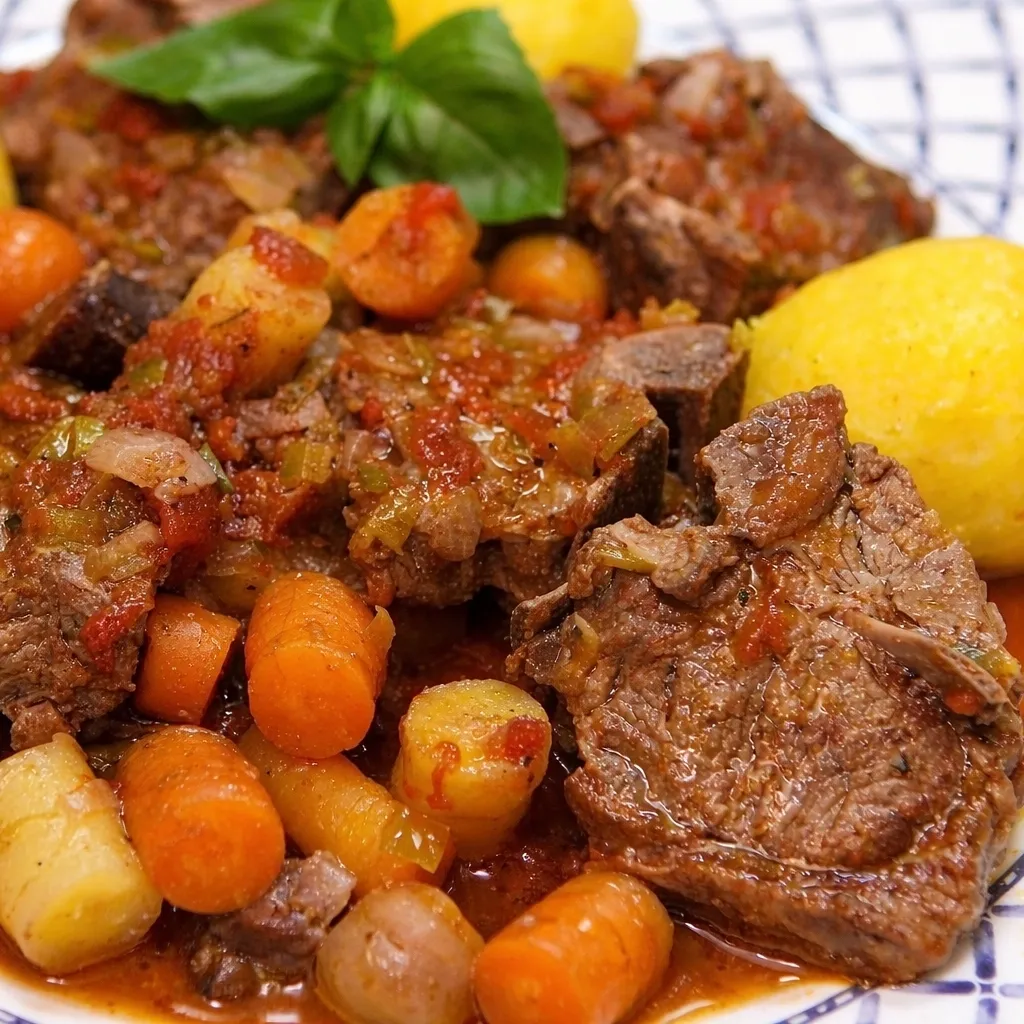
This lamb stew is a slow-simmered one-pot meal made with browned lamb, onions, leeks, carrots, potatoes, stock, and tomatoes. What makes it different from a lighter broth-based stew is the deeper body from searing the meat, cooking down the aromatics, and finishing with a properly reduced sauce. It is the kind of dish to make on a cold weekend, but it also works year-round when you want a satisfying, protein-rich dinner with everything in one pot.
This is not a quick 30-minute dinner like chicken with vinegar, honey garlic chicken, or chicken piccata. It belongs more in the same comfort-food family as weeknight beef ragout, braised beef cheeks with red wine, or classic French cassoulet: slower, richer, and built for deep flavor.
Why this lamb stew works
Lamb has a stronger flavor than chicken or pork, so it benefits from ingredients that can support it without hiding it. Onion, leek, garlic, tomato paste, thyme, stock, and white wine all work together to round out the meat. Potatoes and carrots make it hearty enough to serve as a full meal, which is one reason this type of stew stays so useful all year. In winter, it feels warm and rustic. In spring or fall, you can serve it with a simple salad and keep the meal balanced.
If you like dishes where the sauce matters as much as the meat, the same principle shows up in recipes like steak with creamy mushroom sauce, steak au poivre, or traditional blanquette de veau. A stew should coat the spoon lightly, not look watery and not turn into paste.

Ingredients you need
Choose lamb shoulder or lamb stew meat with a little fat and connective tissue. That is what gives you the best texture after simmering. Very lean lamb will cook, but it will not give the same tenderness or richness.
Use a good stock if possible. A homemade brown stock, such as this neutral brown veal stock, gives the best result, but a good unsalted beef stock also works well. Unsalted stock gives you better control over the final seasoning.
Leeks are not always included in a basic stew, but they are worth keeping here. They melt into the sauce and add sweetness without making the dish taste sugary. Tomatoes are used in moderation, just enough to give body and color without turning the stew into a tomato sauce.
Step-by-step instructions
Start by patting the lamb dry with paper towels. This matters more than it seems. Wet meat will steam instead of brown, and browning is one of the main foundations of flavor in a stew.
Season the lamb lightly with salt and pepper. Heat a heavy Dutch oven or large stew pot over medium-high heat with a little neutral oil. Brown the lamb in batches rather than all at once. Let each side take on real color before turning. You are not trying to cook it through at this stage. You are building the first layer of flavor.

Once the lamb is browned, transfer it to a plate. Lower the heat slightly and add the onions, leeks, and carrots. Cook them for several minutes, stirring often, until they soften and begin to take on a little color. This is one of the adjustments that improves the recipe most. In the original version, the vegetables were kept very pale. That works, but a light caramelization gives the stew much more depth.

Add the garlic and cook briefly, just until fragrant. Then add the tomato paste and stir it into the vegetables for a minute or two. Cooking the tomato paste before adding liquid removes the raw taste and deepens the base.
Pour in the white wine and scrape the bottom of the pot well. That fond is flavor, and you want it in the sauce, not stuck to the pan. Let the wine reduce for a minute or two, then return the lamb to the pot.

Add the diced tomatoes, stock, and thyme, along with a bay leaf if you like. Bring everything just to a boil, then lower the heat to a gentle simmer. Cover partially and cook for about 1 hour to 1 hour 15 minutes.
At that point, add the potatoes. The exact timing depends on how large they are cut, but 20 to 30 minutes is usually right. You want them fully tender without falling apart completely. The lamb should also be getting close to fork-tender by then.
If the stew looks too thin near the end, use a small amount of beurre manié instead of flour mixed with cold water. Beurre manié gives a smoother finish and blends more naturally into the sauce. Add it little by little and let it simmer for a few minutes before deciding whether you need more.

Taste and adjust the seasoning at the end. That final tasting matters because stock strength, tomato acidity, and lamb flavor vary. A small extra pinch of salt or a few turns of black pepper can bring everything into focus.
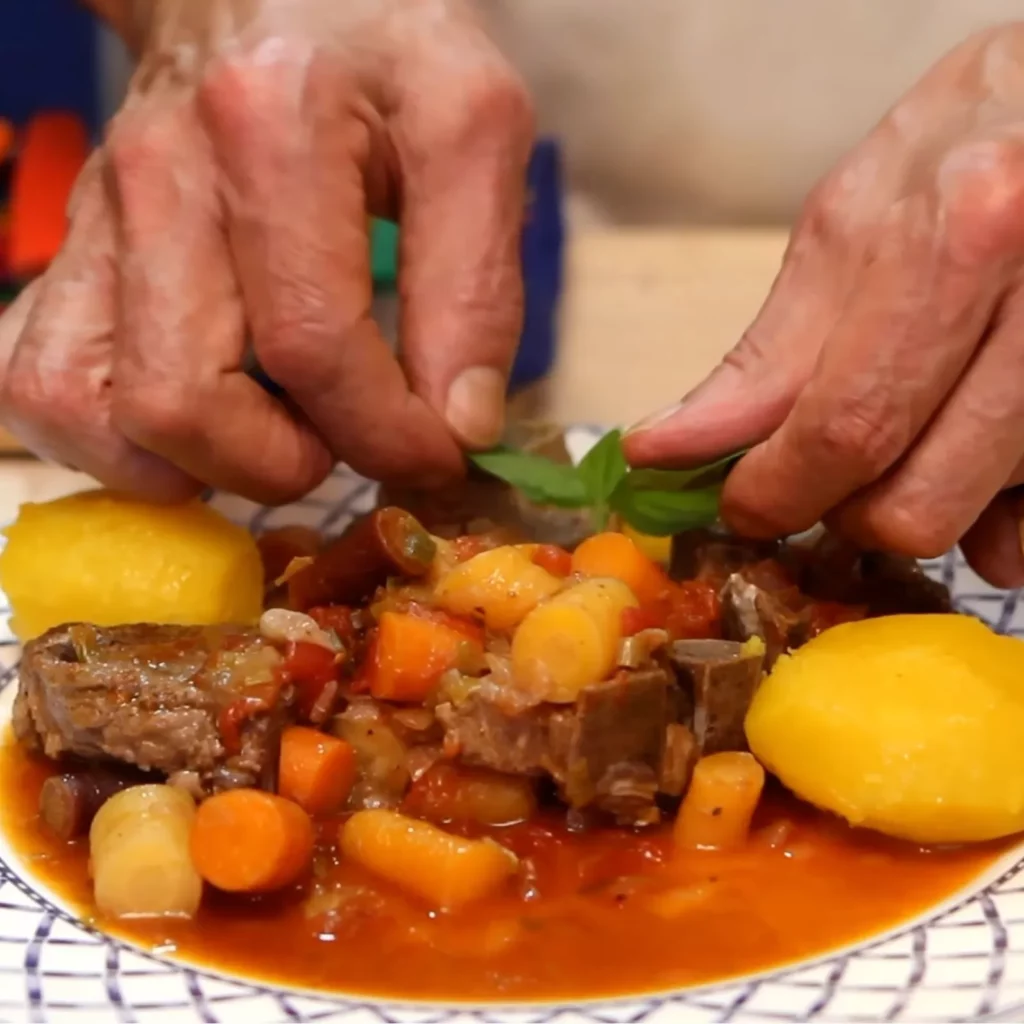
Finish with chopped parsley if you want a fresher look and taste. Basil can work, but parsley is more natural here and keeps the stew anchored in a classic savory profile.

Tips for the best result
Do not rush the browning. If the lamb is pale, the stew will still be pleasant, but it will lack depth.
Do not drown the meat. A stew should simmer in enough liquid to braise, but the final texture should be rich and spoonable. If it looks too loose, uncover it for part of the cooking time to reduce naturally.
Cut the vegetables in larger pieces than you would for a quick soup. Lamb stew benefits from a rustic texture. Small dice can disappear too much during the simmer.
Use waxy or all-purpose potatoes if you want cleaner pieces. Russets can work, but they break down more easily and will thicken the sauce faster.
This dish is hearty comfort food, with protein from the lamb and plenty of vegetables in the pot. Because it already includes potatoes and carrots, it can stand on its own without needing much on the side.
Substitutions
No leeks? Use extra onion.
No white wine? Replace it with a little extra stock and a small splash of white wine vinegar or lemon juice added carefully at the end.
No diced tomatoes? Crushed tomatoes work, but use a little less so the stew does not become too tomato-heavy.
No lamb shoulder? Lamb leg stew meat can work, though shoulder is usually more forgiving and more flavorful for braising.
Want a thicker, more old-fashioned texture? Add a bit more beurre manié near the end.
Want a slightly deeper braised flavor profile? You can lean toward the style of oven braised beef bourguignon or boeuf bourguignon, my way by replacing the white wine with red wine.

FAQ
What cut of lamb is best for stew?
Lamb shoulder is usually the best choice. It has enough fat and connective tissue to become tender and flavorful during a long simmer.
Can I make this ahead of time?
Yes. Like many braised dishes, it is often even better the next day. The flavors settle, and the sauce becomes more cohesive.
Can I freeze lamb stew?
Yes. Let it cool fully, then freeze in airtight containers. The potatoes may soften a little after thawing, but the stew still reheats well.
Can I cook it longer?
Yes, as long as the heat is gentle. If your lamb is not tender after the suggested time, keep simmering until it is. Tough stew meat usually needs more time, not more liquid.
What if my sauce is too thin?
Simmer uncovered to reduce it, or finish with a small amount of beurre manié.
What if my stew tastes flat?
Usually it needs one of three things: more salt, a little more reduction, or better browning at the beginning.
What to serve with lamb stew
Because the stew already has potatoes, keep the sides simple. A crisp salad works well for contrast, such as traditional Quebec cabbage salad or homemade Greek salad. If you want something even more comforting, serve it with homemade mashed potatoes or a side of Parisian potatoes, though in that case I would reduce the potatoes inside the stew itself.
If you enjoy slow-cooked dishes with a rustic French feel, you can also explore couscous royal with lamb, chicken, and beef, oven roasted boneless leg of lamb, rustic pork stew with carrots and lentils, and slow-cooked carbonnade flamande. For dessert after a meal like this, something simple and familiar works best, such as chewy chocolate chip cookies or one of these easy chocolate desserts.
Hearty Lamb Stew with Potatoes and Carrots
Ingredients
- 2 1/4 lb lamb shoulder or lamb stew meat cut into chunks
- 2 tbsp neutral oil
- 2 onions sliced
- 2 leeks cleaned and sliced
- 4 garlic cloves minced
- 5 to 6 carrots cut into large pieces
- 2 tbsp tomato paste
- 1/2 cup white wine
- 1 1/2 cups diced tomatoes
- 3 1/2 to 4 cups unsalted beef stock
- 1 bay leaf
- 1 tsp dried thyme
- 1 1/2 lb potatoes peeled and cut into chunks
- Salt and black pepper to taste
- 1 to 2 tbsp beurre manié or flour slurry if needed
- Chopped parsley for serving
Instructions
- Pat the lamb dry, season with salt and pepper, and brown it in batches in hot oil. Remove and reserve.
- In the same pot, cook the onions, leeks, and carrots until softened and lightly colored.
- Add the garlic and tomato paste. Cook for 1 to 2 minutes.
- Deglaze with the white wine and scrape up the browned bits.
- Return the lamb to the pot. Add the diced tomatoes, stock, bay leaf, and thyme.
- Bring to a boil, reduce to a gentle simmer, and cook partially covered for 1 hour to 1 hour 15 minutes.
- Add the potatoes and continue simmering for 20 to 30 minutes, until the lamb is tender and the potatoes are cooked through.
- If needed, thicken the sauce with a little beurre manié. Adjust seasoning and finish with parsley before serving.
Video
Notes
FAQ
What cut of lamb is best for stew?
Lamb shoulder is usually the best choice. It has enough fat and connective tissue to become tender and flavorful during a long simmer.Can I make this ahead of time?
Yes. Like many braised dishes, it is often even better the next day. The flavors settle, and the sauce becomes more cohesive.Can I freeze lamb stew?
Yes. Let it cool fully, then freeze in airtight containers. The potatoes may soften a little after thawing, but the stew still reheats well.Can I cook it longer?
Yes, as long as the heat is gentle. If your lamb is not tender after the suggested time, keep simmering until it is. Tough stew meat usually needs more time, not more liquid.What if my sauce is too thin?
Simmer uncovered to reduce it, or finish with a small amount of beurre manié.What if my stew tastes flat?
Usually it needs one of three things: more salt, a little more reduction, or better browning at the beginning.🔗 Useful Links
🛒 Michel Dumas Shop : Explore our kitchen essentials, including aprons and knives.
🌐 Linktree : Access all our important links in one place.
📱 YouTube | Instagram | Facebook | TikTok : Follow us for the latest recipes and culinary tips.