Turkey Gravy Without Drippings, Easy to Make Ahead
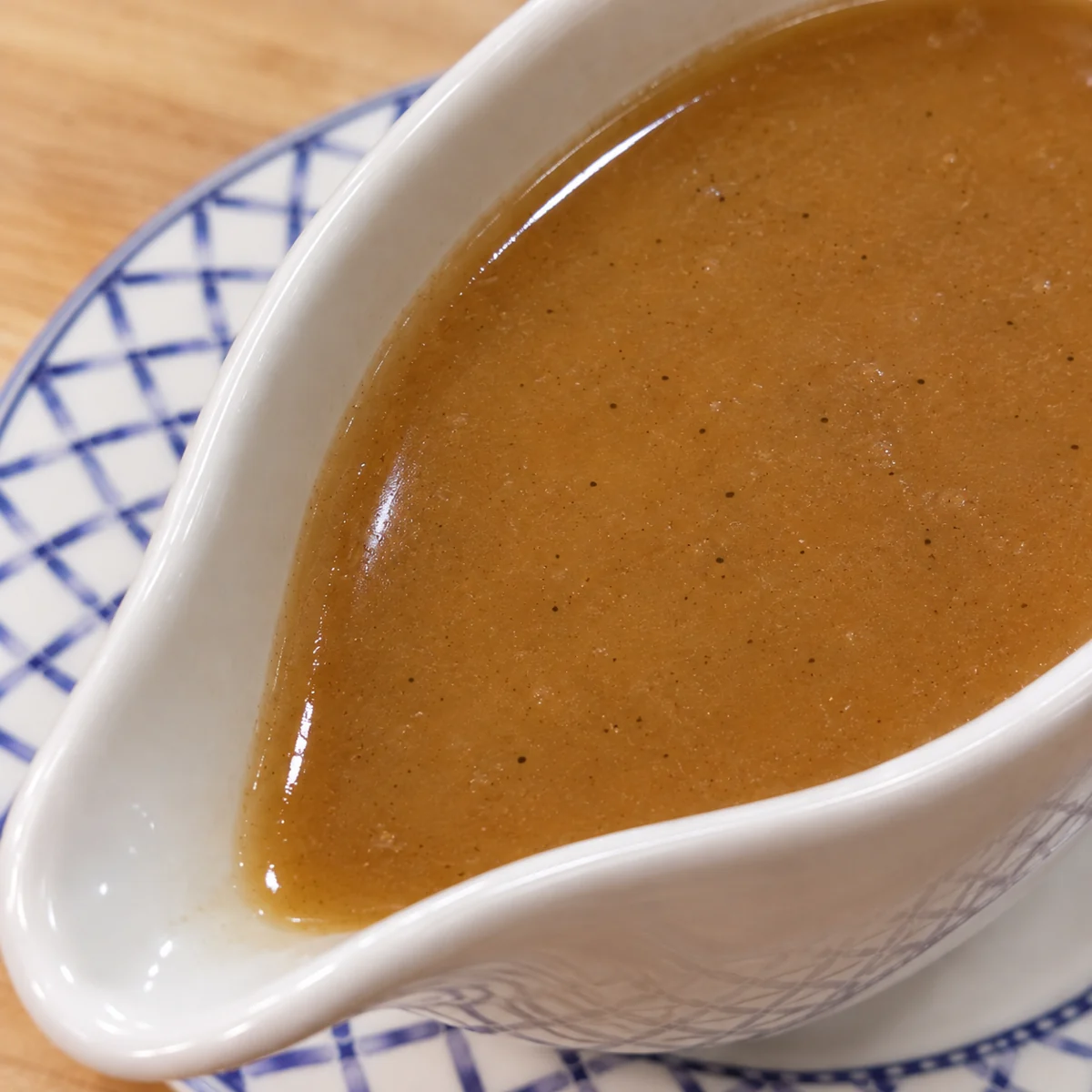
Gravy does not have to wait for the turkey to leave the oven. A little butter, flour and good poultry broth can give you a smooth sauce before the roasting pan is available. Cook the flour until it smells lightly toasted, add the broth gradually and stop reducing when the gravy coats a spoon but still pours in a steady ribbon.
For gravy you can prepare before the roast is ready, I recommend this poultry-broth base thickened with a butter-and-flour roux. Onion, thyme and a small amount of sage give it a savoury poultry flavour. It is useful for holiday meals prepared ahead, turkey breast cooked without much pan juice, or leftovers that need a fresh sauce.
The broth matters more than the colour
Turkey broth is the first choice. Low-sodium chicken broth is a practical substitute when turkey broth is unavailable. The sauce will taste of whichever broth you use, so choose one with a clean poultry flavour rather than a strong vegetable or yeast note.
If using chicken stock concentrate or homemade bouillon cubes, dilute them to regular broth strength. A concentrate poured straight into the saucepan can make an intensely salty sauce before it has even reduced.
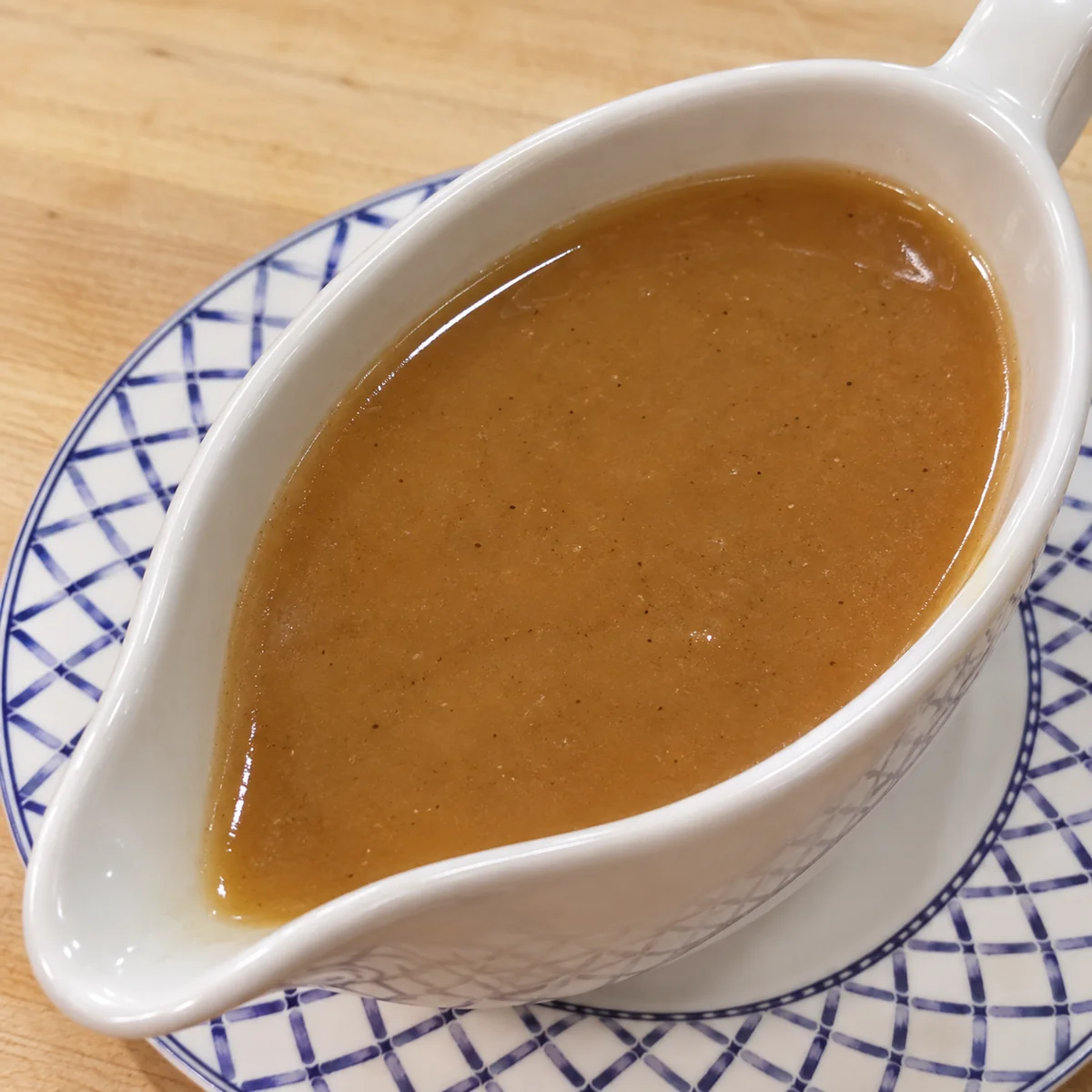
This gravy is usually golden to light brown. It does not need the dark colour of a classic brown sauce, which has a different flavour base. A teaspoon of soy sauce is optional for extra savouriness and colour, but taste first. Darker does not automatically mean better.
Cook the flour, but do not burn the onion
Finely chopped onion softens in butter before the flour goes in. It should become translucent with a little gold at the edges, not dark and crisp. A very finely minced garlic clove adds background flavour without turning this into a garlic sauce.
When the flour is added, stir continuously for about three minutes over medium-low heat. The mixture should bubble gently and become pale golden. This removes the raw flour taste. A deep brown roux is unnecessary and has less thickening power, so do not keep cooking until it looks like chocolate.
For broader sauce troubleshooting, the brown gravy guide explains related texture issues. Here, the aim is a relatively light poultry gravy that supports turkey rather than covering it with a heavy beef flavour.
Make the sauce before the rest of dinner
Soften the onion in butter
Melt the butter in a medium heavy saucepan over medium heat. Add the finely chopped onion and cook for five to six minutes, stirring often. Reduce the heat if the edges colour too quickly. Add the garlic, thyme, sage and pepper, and stir for thirty seconds.
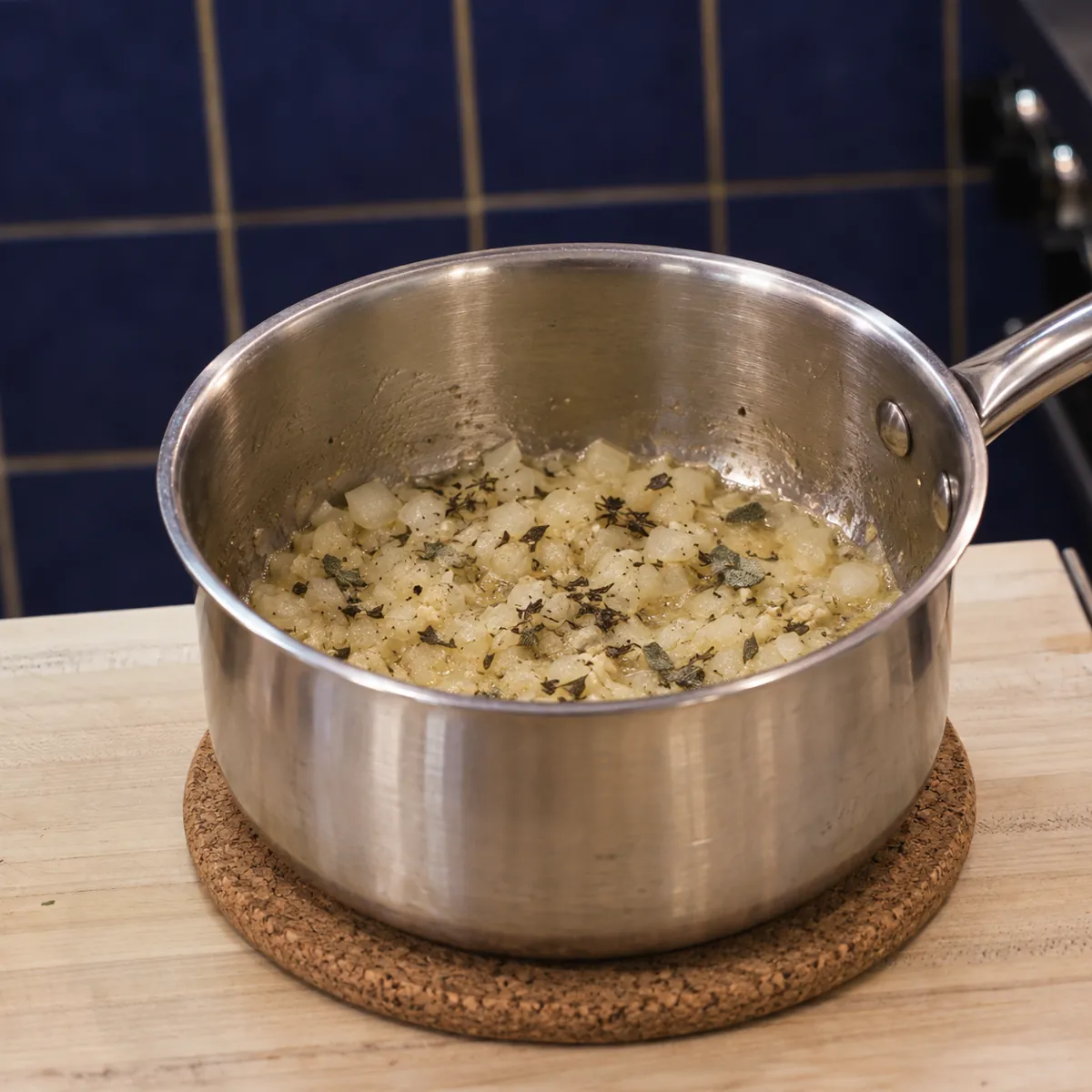
Use a small quantity of sage. Its flavour can become strong in a reduced sauce, and the goal is a hint of poultry seasoning rather than a gravy that tastes mostly of dried herbs. Rub any large dried leaves between your fingers before adding.
Stir in the flour
Add the flour and stir over medium-low heat for three minutes. Scrape the bottom and corners with a flat-edged spoon or whisk. The mixture will look like a soft paste around the onion. If it seems dry in spots, keep stirring rather than immediately pouring in extra fat.
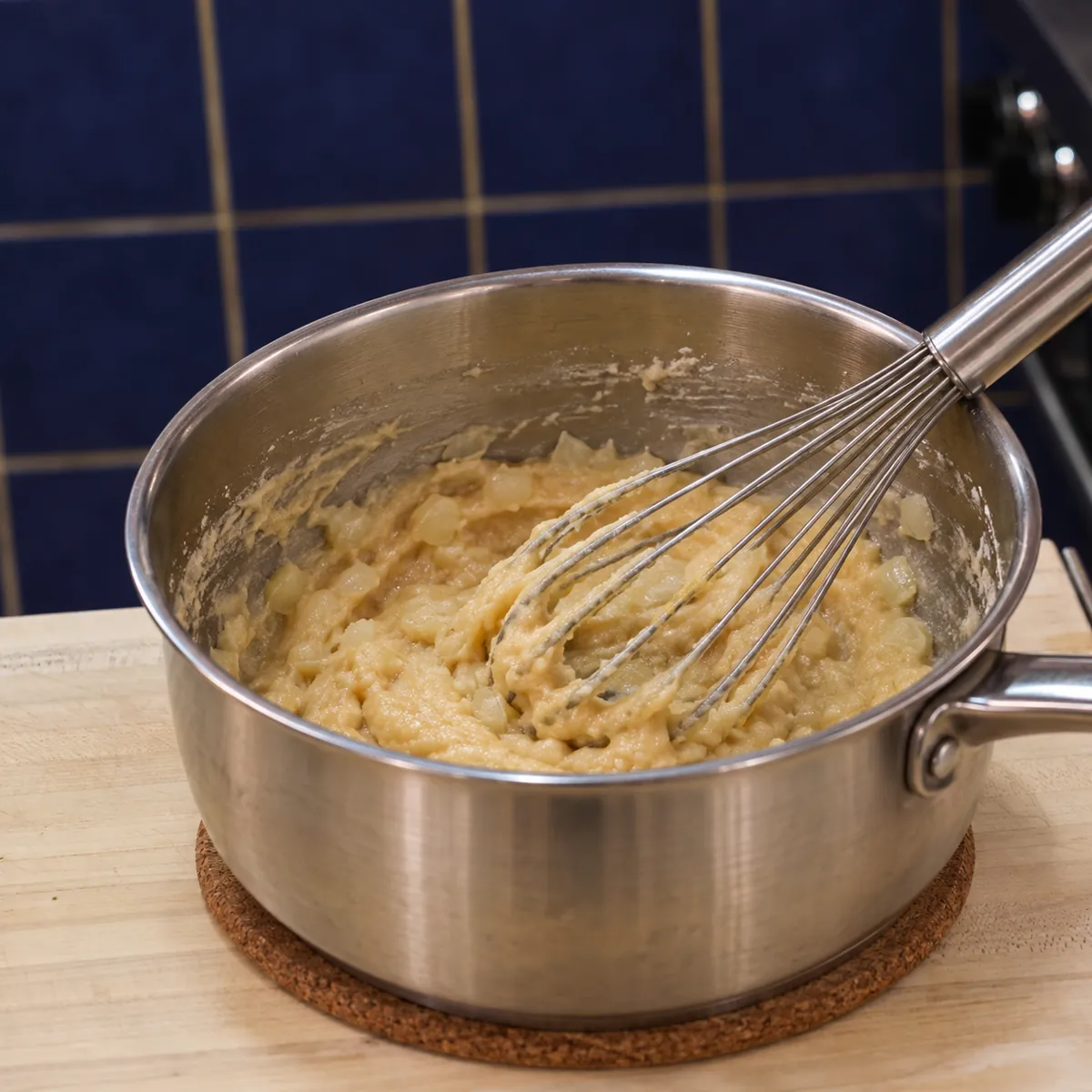
Pour in about half a cup of broth and whisk until smooth. The first addition makes a thick paste. Add another half cup, whisk again, then gradually add the rest. This staged approach is easier to control than pouring all the liquid into the roux at once.
Simmer until the texture is right
Bring to a gentle simmer and cook for eight to ten minutes, stirring frequently. The gravy should lightly coat the back of a spoon. It will thicken a little as it cools, so do not reduce it until it falls from the spoon in heavy clumps.
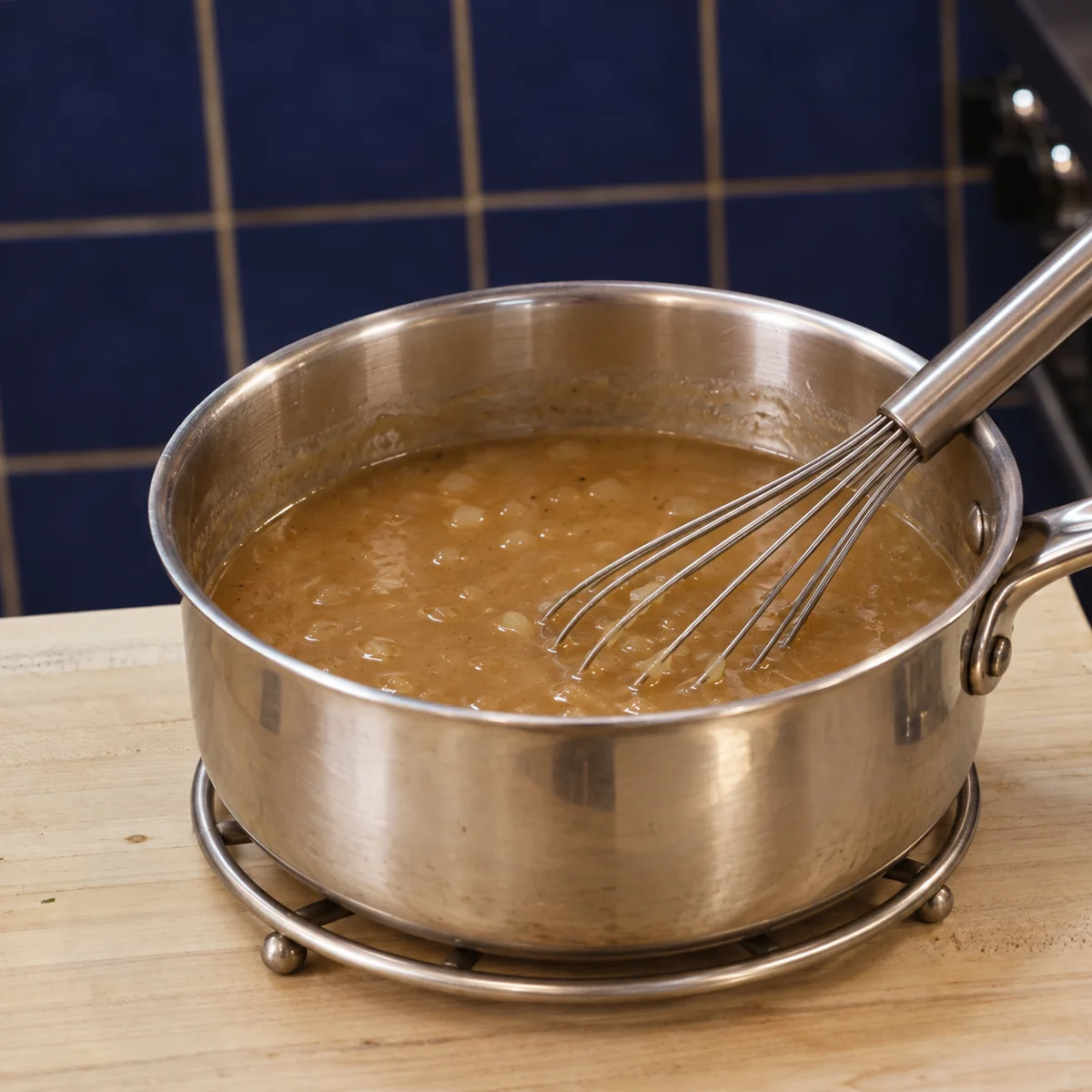
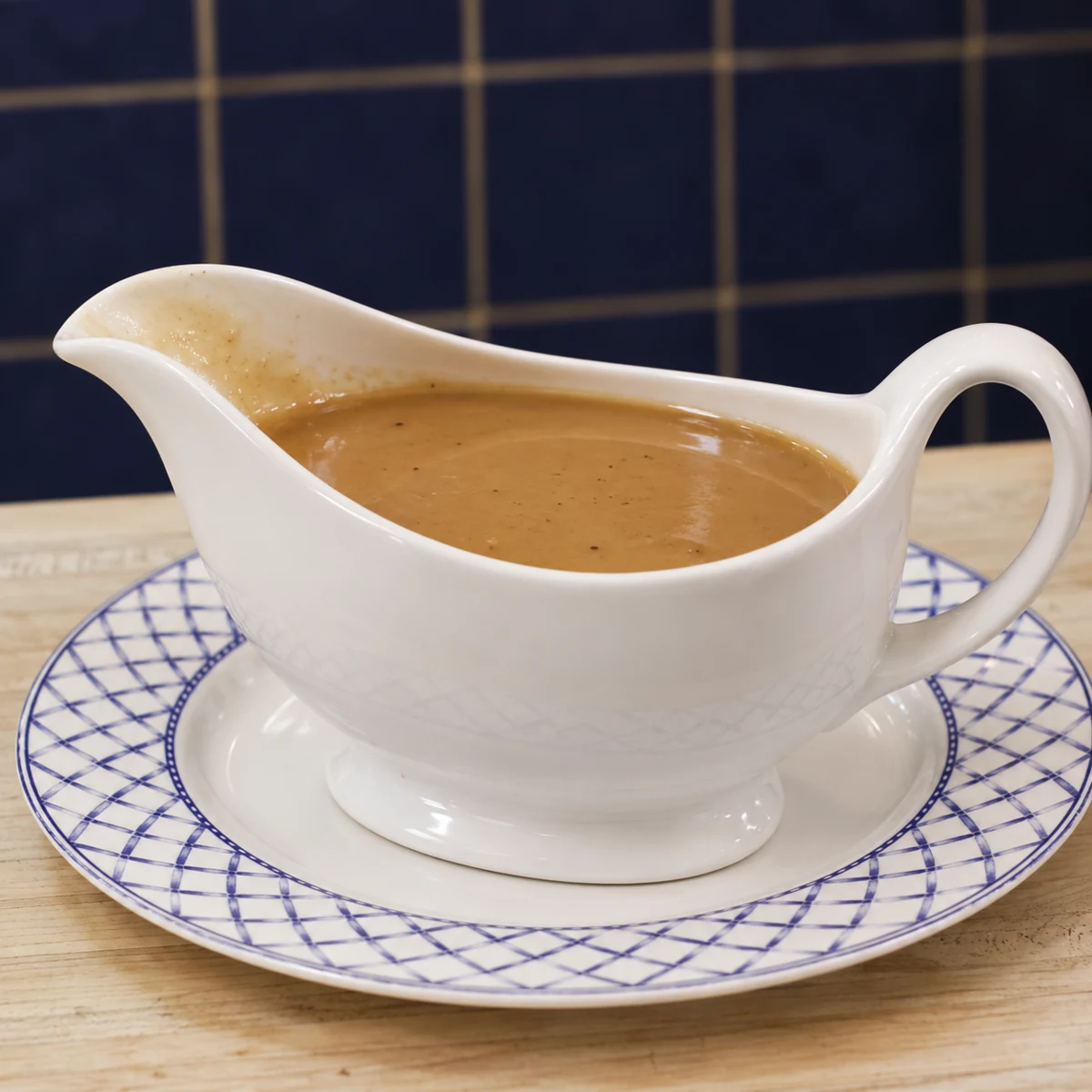
Taste before adding salt. Add the optional soy sauce only if the broth needs a little more depth. For a smooth gravy, strain through a fine sieve into a clean saucepan or heatproof jug, pressing gently on the onion. Keep warm over very low heat and whisk before serving.
How to adjust it without starting again
If the gravy is too thick, whisk in warm broth a tablespoon or two at a time. Water can also loosen it if the sauce is already salty. Taste again after each adjustment rather than adding a large amount of liquid all at once.
If it is slightly too thin, simmer a few minutes longer. A small amount of beurre manié is another thickening method, but do not sprinkle dry flour directly into the finished gravy. Dry flour forms lumps and needs cooking, not simply stirring at the table.
Lumps are usually a mixing problem, not a reason to discard the sauce. Whisk firmly while the gravy is hot, then strain if needed. A scorched flavour is different: do not scrape burnt material from the bottom into the gravy. Prevention is easier, especially once the sauce becomes thick.
Substitutions
If turkey broth is unavailable, I’d use chicken broth in the same quantity. A small shallot can replace the onion, with a slightly sweeter flavour. Unsalted butter gives the most control over seasoning. If you use salted butter, wait until the very end before deciding whether the gravy needs any additional salt.
This flour-based method is not automatically gluten-free. A cornstarch gravy needs a different thickening approach, so do not swap equal spoonfuls and expect the same result. The optional soy sauce may also contain wheat. For another poultry sauce served as part of a dish, chicken vol-au-vent uses a creamier filling rather than this pourable gravy.
Make-ahead questions
How far ahead can I prepare it?
Make it up to three days ahead. Cool promptly in a shallow container and refrigerate. Reheat gently to 165°F, whisking often and adding a little broth if needed. It will look much thicker when cold than when it is hot.
Can I freeze the gravy?
Yes. Freeze cooled gravy in small containers for up to two months. Thaw in the refrigerator and reheat while whisking. It may look separated at first but often becomes smooth again with gentle heat and stirring. Adjust the consistency after it is fully hot.
Can I add turkey drippings later?
Yes, although the recipe does not require them. Separate excess fat from the pan juices and add a little at a time to the hot gravy. Taste after every addition because drippings from a brined turkey can be very salty. Do not pour in the whole roasting pan without checking.
What this gravy goes with
Serve with roast turkey and bread stuffing or a deboned stuffed turkey roast. It also works with baked turkey meatballs when you want a poultry-based sauce. Mashed potatoes catch the extra gravy neatly. This is a rich accompaniment, so a small ladleful is usually enough to finish the plate.
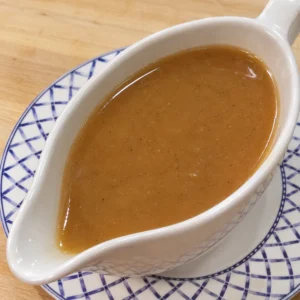
Turkey Gravy Without Drippings, Easy to Make Ahead
Ingredients
- 4 tablespoons unsalted butter
- 1 small onion finely chopped
- 1 small garlic clove minced
- 1/4 teaspoon dried thyme
- 1/4 teaspoon dried rubbed sage
- 1/4 teaspoon ground black pepper
- 1/4 cup all-purpose flour
- 3 cups low-sodium turkey broth or chicken broth
- 1 teaspoon soy sauce optional
- Fine salt as needed
Instructions
- Melt butter in a medium heavy saucepan. Cook onion over medium heat 5–6 minutes until softened and lightly golden. Add garlic, thyme, sage and pepper for 30 seconds.
- Stir in flour and cook over medium-low heat 3 minutes, stirring constantly, until pale golden and lightly toasted.
- Whisk in broth gradually, starting with two 1/2-cup additions and smoothing the paste each time. Add remaining broth.
- Simmer gently 8–10 minutes, stirring often, until gravy coats a spoon but still pours easily. Taste, add optional soy sauce and salt only as needed.
- Strain for a smooth texture. Adjust thickness with warm broth or water and serve hot.