Slow Cooker Apple Butter with Cinnamon, No Dairy
Apple butter becomes thick by losing water, not by adding butter. Let the apples soften slowly, blend them smooth, then give the purée time to reduce with the lid off. It is ready when a spoon drawn across the surface leaves a visible trail and a small cooled spoonful holds a soft mound instead of spreading into a watery puddle.
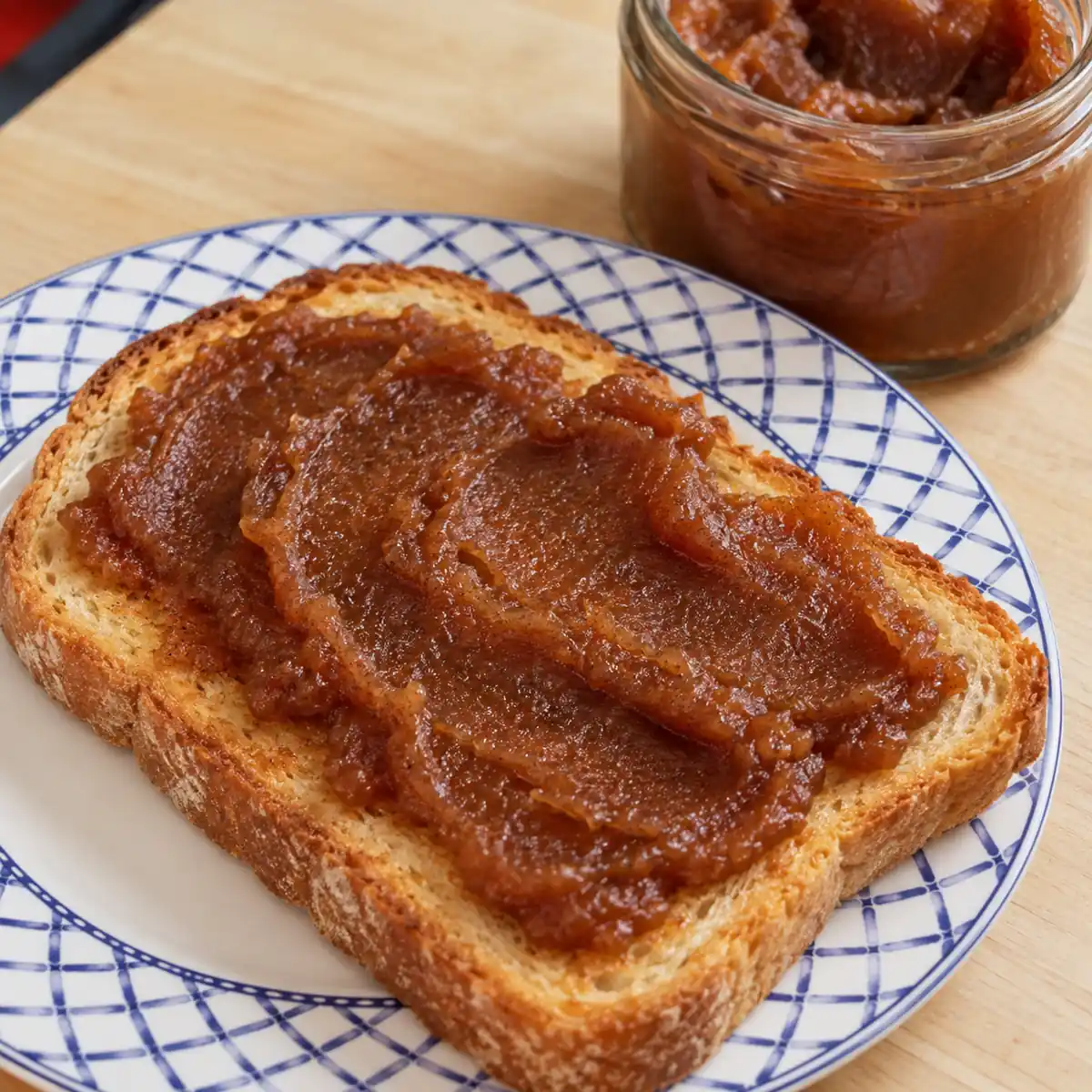
For toast, I’d choose this smooth apple spread when you want something thicker and more concentrated than applesauce. Despite the name, it contains no dairy. It is darker and thicker than applesauce, made for toast, breakfast dishes and small spoonfuls alongside desserts. This batch is intended for refrigeration or freezing, not shelf-stable canning.
Choose apples for flavour, not perfect slices
A mixture of sweet and tart apples gives a fuller taste than one very sweet variety alone. McIntosh, Cortland, Gala and Golden Delicious are useful choices; include a few tart apples if you like a brighter spread. The fruit will be blended, so it does not need to hold a neat shape during cooking.
That is different from apple turnovers, where pieces of fruit need to sit inside pastry, or a caramelized apple upside-down cake, where the arrangement is visible. For apple butter, aroma, sweetness and moisture matter more than a tidy slice.
Peel and core the apples, removing bruised or damaged spots. Cut into roughly one-inch pieces so they soften at a similar rate. Four pounds of whole apples usually gives about three to three and a half pounds after trimming. The exact amount of peel and core affects the final yield, so expect approximately three cups rather than an exact jar count.
A little water gets the cooking started
The quarter cup of water prevents the bottom from being dry before the apples begin releasing juice. It is not meant to make a thin cooking liquid. Most of the moisture comes from the fruit itself. Very juicy apples simply need more time during the uncovered reduction.
Brown sugar gives a mild caramel note. The half cup here is a starting quantity for a moderately sweet spread, not a preservation formula. Lemon juice brightens the flavour. It does not make this an approved canning recipe, and filling a hot jar does not make the contents shelf stable.
The texture differs from strawberry jam, which follows its own fruit and sugar balance. Apple butter is reduced fruit purée rather than a clear jelly or a chunky jam. It should spread easily from the refrigerator without becoming a firm gel.
Let the slow cooker do the first stage
Fill the crock
Place the prepared apples in a four- to six-quart slow cooker. Add the brown sugar, water, lemon juice, cinnamon and salt. Toss gently so the seasoning is distributed. Do not add vanilla yet; it is more noticeable when stirred in at the end.

Cover and cook on low for eight to ten hours, until the apples are completely soft and collapse under a spoon. Stir once or twice if you are nearby, especially if your appliance tends to run hot around the edges. The fruit will shrink considerably as it cooks.
Blend the softened apples
Turn off the heat briefly before blending. Use an immersion blender, keeping its head submerged to avoid splashing hot fruit. Blend until smooth. If using a countertop blender, cool the mixture somewhat and work in small batches with the lid vented according to the manufacturer’s instructions; never seal a large amount of steaming purée in the jug.

The mixture may still look like loose applesauce at this stage. That is expected. Blending does not remove water. The next stage is what changes a soft purée into a concentrated spread.
Reduce until it holds a trail
Return the slow cooker to high and cook uncovered for one to three hours, stirring every twenty to thirty minutes and more often as it thickens. Scrape the sides and bottom carefully. If your appliance does not permit uncovered cooking, transfer the purée to a wide heavy saucepan and reduce over low heat instead, stirring frequently.

The apple butter should become darker and thicker. Draw a spoon through it: the trail should remain visible briefly. Put a teaspoon on a cool plate and wait a minute. It should hold a soft mound without a watery ring. Stir in the vanilla, taste and stop cooking once the texture is right. It thickens a little more as it cools.

Judge the fruit, not just the timer
Slow cookers vary in heat and evaporation. A narrow deep crock loses moisture more slowly than a wide one. Apples also vary from juicy to fairly dry. The listed time is a guide; the cooled spoonful tells you more than the clock during the final stage.
Do not turn the heat up repeatedly to chase a darker colour. Once thick, the purée can scorch at the edges. Brown is desirable; black flecks and a burnt smell are not. Stirring becomes more important near the end, when less water remains to buffer the heat.
If it becomes too thick, stir in hot water one tablespoon at a time. It should spread over toast without tearing the bread. This makes it a natural partner for homemade white bread or a slice of soft brioche.
Substitutions
For a lighter flavour, I’d replace the brown sugar with granulated sugar at the same volume. You can reduce the sugar to taste because this is a refrigerated spread, but the finished yield and texture may differ. Do not use these adjustments to invent a canning process.
A small pinch of ginger or nutmeg can accompany the cinnamon. Keep the spices restrained; their flavour concentrates along with the fruit. Do not replace all the apples with pears and assume the same timing, because their water content and flavour balance differ. If you simply want to bake with apples, apple cinnamon muffins use fresh diced fruit rather than this spread.

Questions about jars and storage
How should I store apple butter?
Transfer to clean, shallow containers, cool promptly and refrigerate within two hours. Use within one week. For longer storage, freeze in small portions for up to three months, leaving room for expansion. Thaw in the refrigerator and use a clean spoon each time.
Can these jars stay in the pantry?
No. This recipe has not been developed as a shelf-stable canning formula. A lid that seals during cooling is not proof of safe preservation. Use a separately tested canning recipe and its exact processing directions if pantry storage is your goal.
Can I use it instead of applesauce in baking?
Not as an automatic one-for-one replacement. Apple butter is more concentrated, sweeter and more strongly spiced. A recipe such as moist apple cake is balanced around its own ingredients. Use the spread as a topping unless a baking recipe specifically calls for it.
Ways to use a small jar
Spread a thin layer on French toast or serve a spoonful with fluffy pancakes. It also works beside plain yogurt or oatmeal. For dessert, a little alongside apple crisp adds concentrated fruit flavour, though it is already sweet and does not need another heavy syrup. Treat it as a spread, not a full serving of fresh fruit.

Slow Cooker Apple Butter with Cinnamon, No Dairy
Ingredients
- 4 pounds apples weighed before peeling and coring
- 1/2 cup packed brown sugar
- 1/4 cup water
- 2 tablespoons lemon juice
- 2 teaspoons ground cinnamon
- 1/4 teaspoon fine salt
- 1 teaspoon vanilla extract
Instructions
- Peel, core and cut apples into roughly 1-inch pieces. Place in a 4–6-quart slow cooker with sugar, water, lemon juice, cinnamon and salt. Toss gently.
- Cover and cook on low 8–10 hours until apples collapse easily. Stir once or twice if practical.
- Turn off heat briefly and blend smooth with an immersion blender, keeping the head submerged to avoid splashes.
- Cook on high uncovered 1–3 hours, stirring every 20–30 minutes and more often near the end, until a spoon leaves a visible trail and a cooled spoonful holds a soft mound. If uncovered cooking is not allowed by the appliance, reduce in a wide saucepan over low heat instead.
- Stir in vanilla. Transfer to clean shallow containers, cool promptly and refrigerate within 2 hours. This is not a shelf-stable canning recipe.