Maple-Glazed Carrots in One Skillet
These carrots get their shine from a little butter and pure maple syrup, added after the vegetables are nearly tender. Cooking them in water first keeps the maple from burning before the centres soften. The finished glaze should cling to each slice, with just a spoonful left in the skillet rather than a pool of sweet sauce.
I’d serve these tender carrots as a warm side, coated with just enough reduced maple and butter glaze to cling to the pieces. A small splash of cider vinegar balances the sweetness. They fit a Thanksgiving table, but they are equally useful beside a weeknight roast or a simple piece of fish when the oven is already occupied.
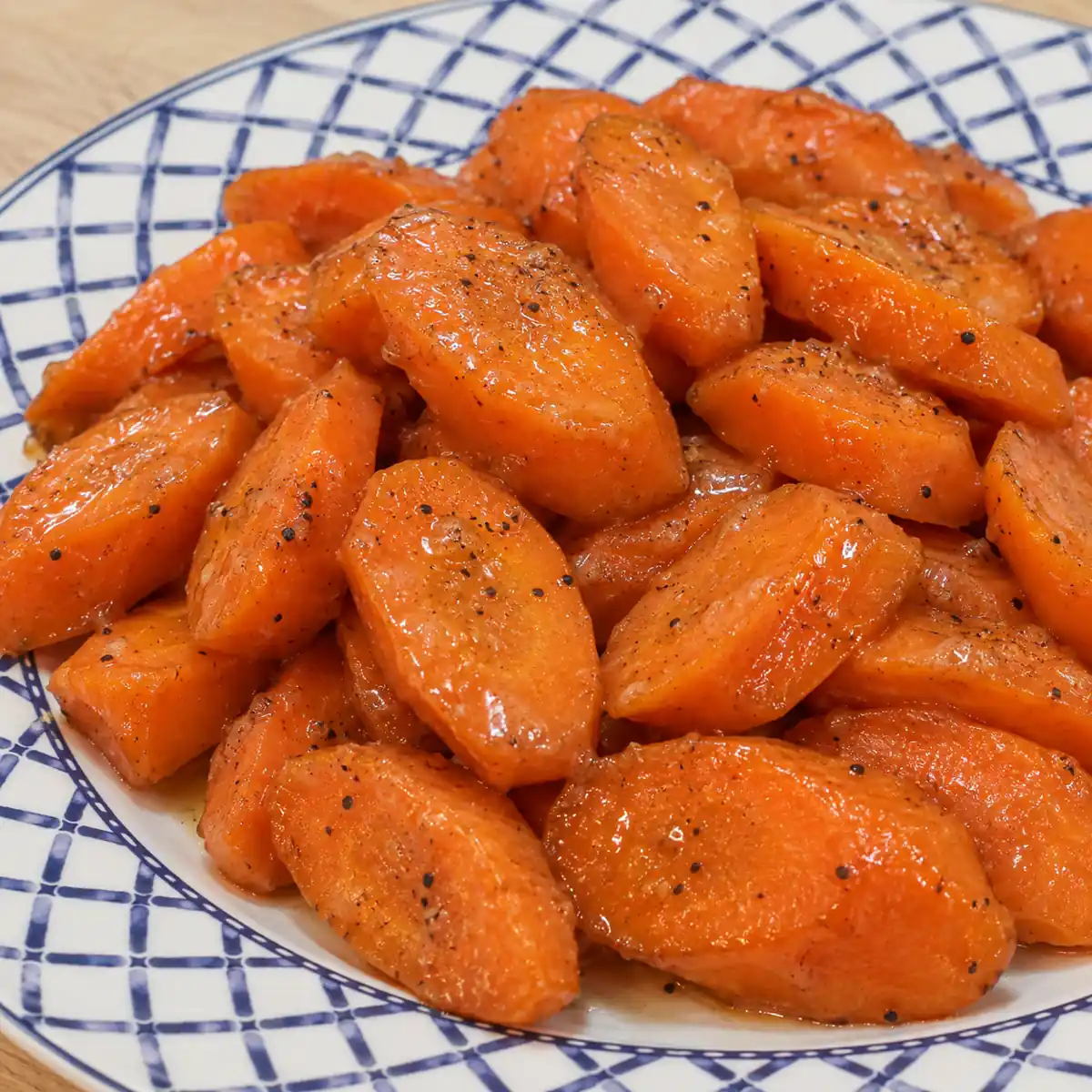
Why I add the maple near the end
Maple syrup contains sugars that can scorch while thick pieces of carrot are still hard. I prefer to separate those two jobs: soften the vegetable first, then concentrate the glaze. This gives more control than putting everything in a dry pan and hoping the timing works out.
The carrots are gently glazed, not roasted until deeply browned. If you want a creamy vegetable bake instead, the potato and carrot gratin is a different kind of side. For a cold carrot dish, grated carrots with mustard vinaigrette offer crunch and acidity without a sweet glaze.
Carrots, maple syrup and a wide pan
Start with one and a half pounds of carrots before peeling. Ordinary orange carrots work well; there is no need to buy miniature carrots. Look for firm roots without soft patches. If the upper ends are much thicker than the tips, halve those sections lengthwise before slicing so the pieces cook at a similar pace.
Pure maple syrup is important here because its flavour is the point of the dish. Amber or dark syrup both work. Dark maple has a stronger taste once reduced; a very light syrup makes a more delicate glaze. Pancake syrup is a different product and will not give the same result.
Use unsalted butter so you can season the carrots directly. Cider vinegar should sharpen the flavour without making the dish taste pickled. Start with the measured teaspoon; after tasting, you can add a few drops more if the carrots are particularly sweet. Black pepper gives a little warmth. No cream, flour or starch is needed.
A wide, roughly twelve-inch skillet is more useful than a narrow saucepan. Its larger surface lets excess water evaporate before the maple goes in. If the carrots are piled several layers deep, the bottom pieces soften while the upper ones lag behind. For a double batch, use two skillets or cook in batches.
From firm slices to a glossy coating
Cut to an even thickness
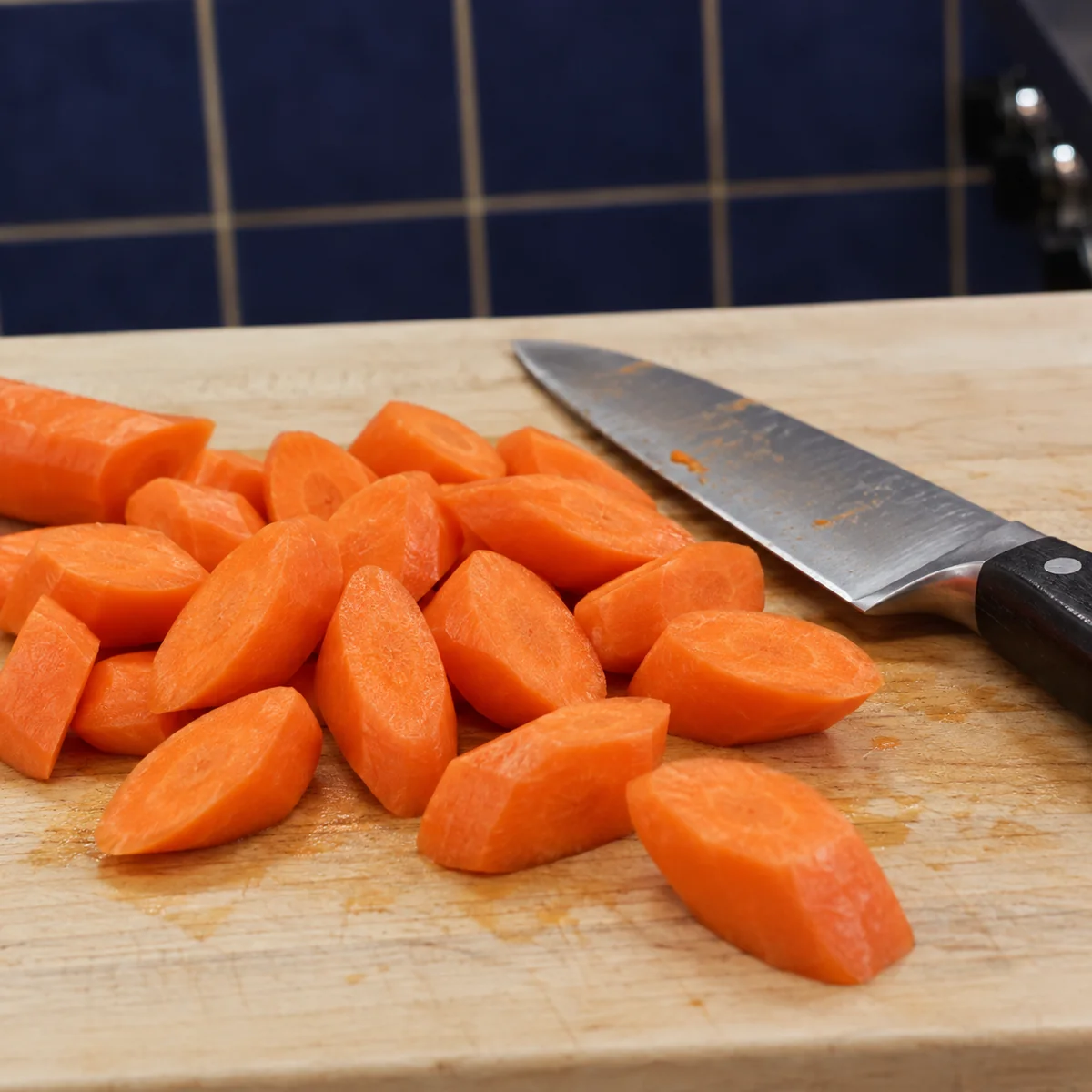
Peel the carrots, trim the ends and cut on the diagonal into half-inch slices. The slant makes an attractive shape, but thickness matters more than the angle. Very thin coins can fall apart during glazing. Thick chunks need extra covered cooking time before the syrup is added.
Steam and simmer in the skillet
Put the carrots in the skillet with half a cup of water, one tablespoon of butter and the salt. Bring to a simmer, cover and cook over medium heat for eight to twelve minutes. Stir once or twice. A knife should enter a thick slice with slight resistance, not a hard crunch.
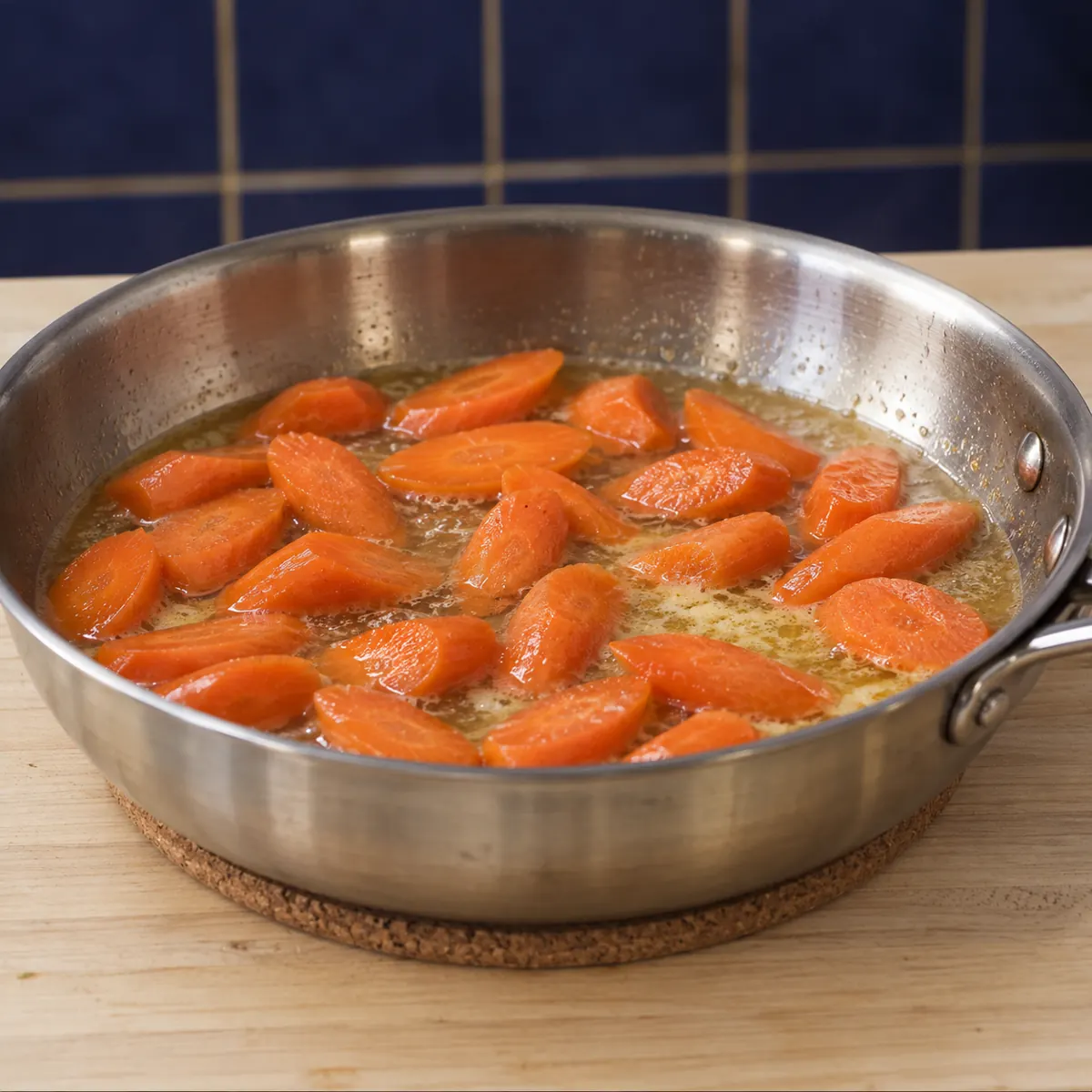
Uncover and let the water evaporate for two to four minutes. Watch the pan now: if the carrots are still firm and the water is gone, add two tablespoons of water, cover briefly and continue cooking. If they are already tender but plenty of liquid remains, lift them into a bowl while you reduce that liquid, then return them to the skillet.
Finish with maple, butter and vinegar
Reduce the heat to medium-low. Add the maple syrup and remaining tablespoon of butter. Toss gently for two to three minutes, until the bubbling liquid thickens just enough to coat the carrots. Use a spatula to turn them rather than stirring aggressively. You want intact slices, not orange mash.
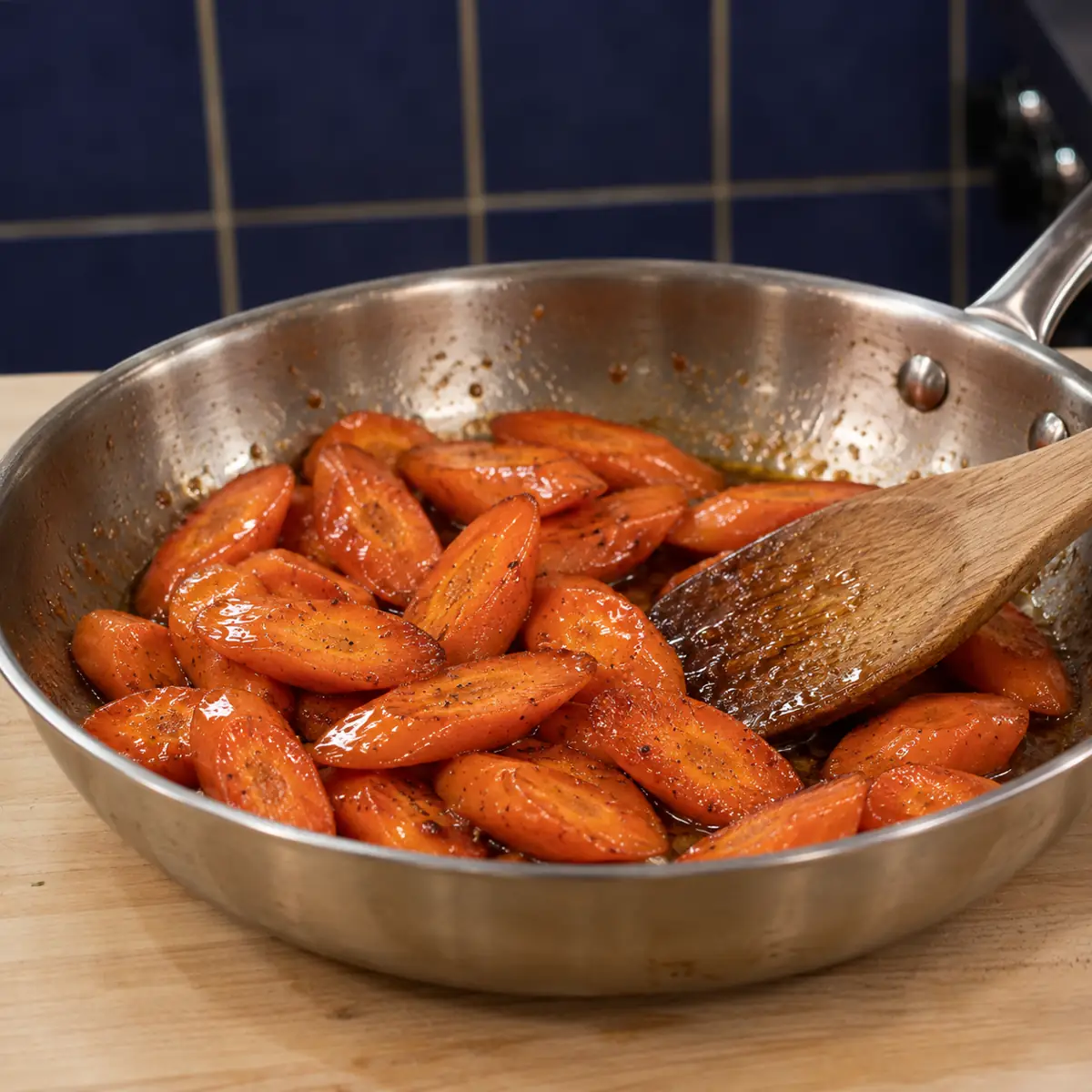
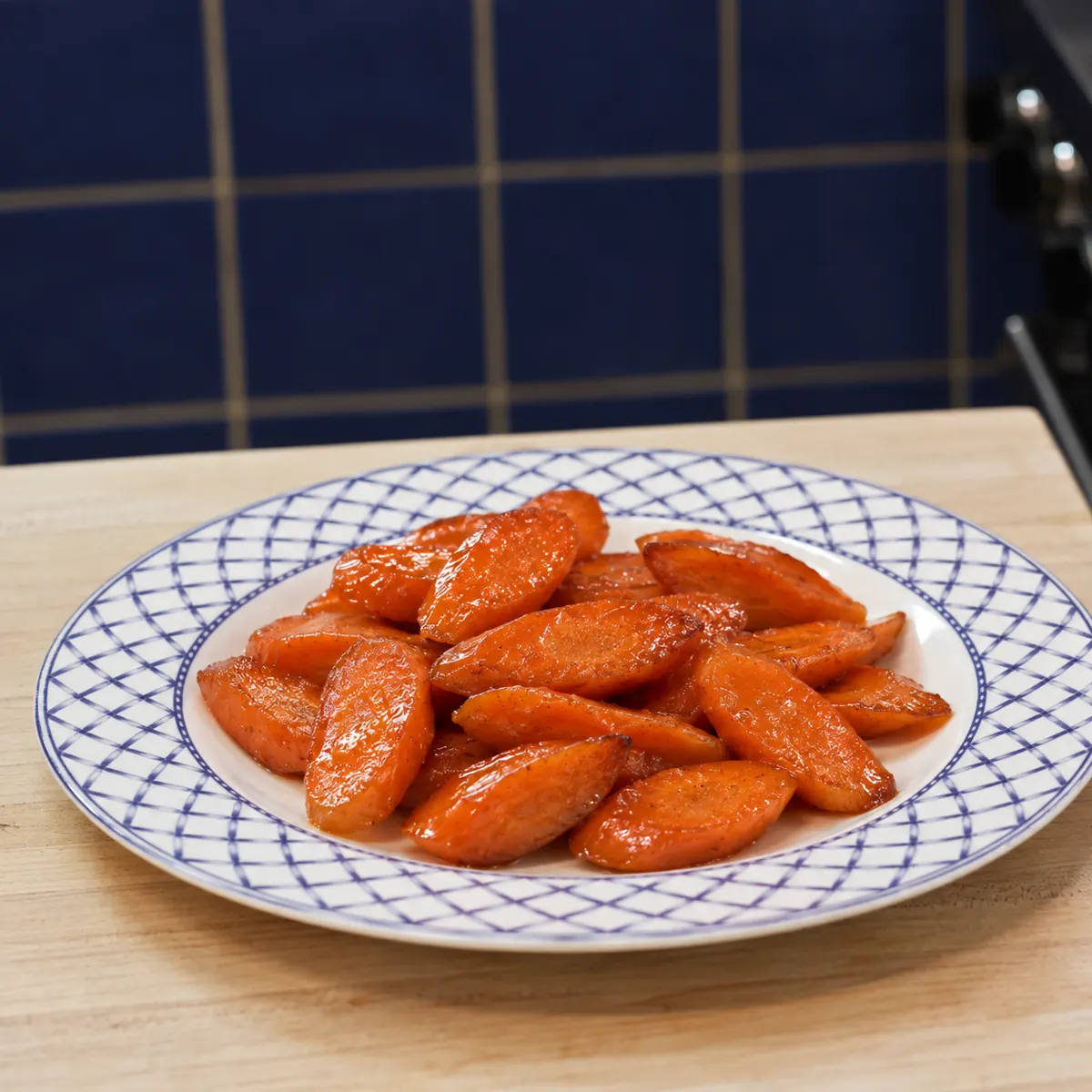
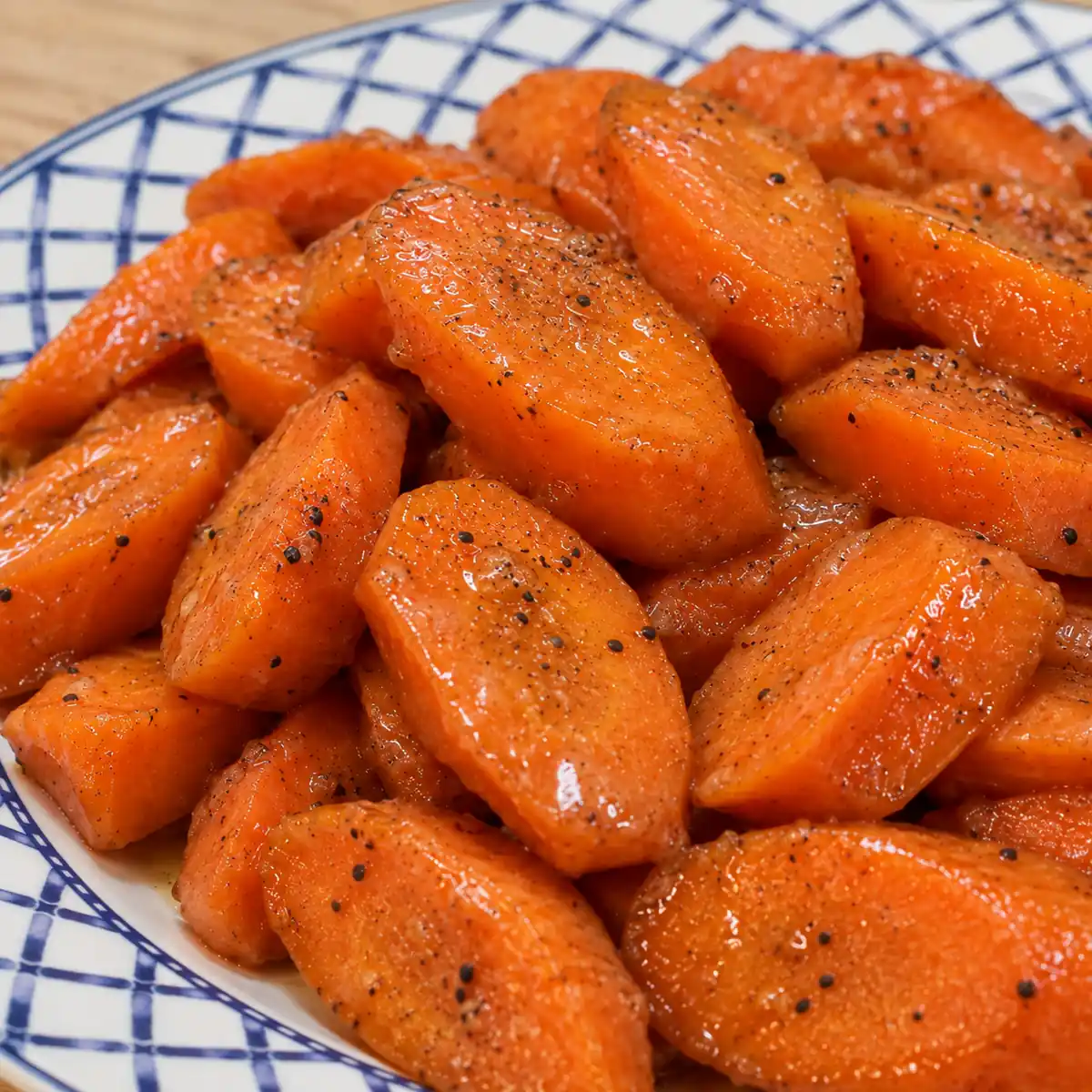
Take the skillet off the heat and add the cider vinegar and pepper. Taste a carrot with a little glaze, then adjust the salt. Serve while warm. The glaze thickens slightly as it cools, so stop cooking before it becomes sticky like candy.
Three useful cooking cues
First, check a piece from the thick end of a carrot. Thin tips are ready sooner and can give a false impression that the whole pan is done. Second, listen when the water is almost gone: a quiet simmer turns into a sharper sizzle. That is the moment to lower the heat, not walk away.
Finally, look at the spatula after tossing. It should have a thin glossy coating rather than a thick rope of syrup. If the glaze tightens too much, add a tablespoon of water off the heat and toss again. Bitter, blackened syrup cannot be fixed with extra water; transfer any unburnt carrots to a clean pan instead.
Substitutions and small variations
For a dairy-free side, I’d replace the butter with a mild olive oil. The glaze will taste less buttery but still coat the carrots. Lemon juice can replace the cider vinegar teaspoon for teaspoon. Honey also makes a glaze, although it changes the defining maple flavour; use the same quantity and watch the heat carefully.
Whole baby-cut carrots vary in thickness. Follow the knife test rather than assuming the cooking time is identical. Frozen carrot slices are less firm and release additional water, so they are not the first choice for this presentation. For another way to use a mixed bag of vegetables, browse the vegetable side dish collection.
Questions about serving and storage
Can I prepare them before guests arrive?
Yes. Cook the carrots through the covered stage, cool promptly and refrigerate. Finish the reduction and glaze shortly before serving, adding a little water to reheat evenly. This keeps the final coating fresher than leaving fully glazed carrots over heat for an hour.
How sweet are they?
Three tablespoons of syrup season the whole batch, divided among six side portions. The carrots remain a vegetable side rather than a candied dessert. You can use two tablespoons for a less sweet version, but do not try to replace the missing syrup with a large quantity of water.
How should I reheat leftovers?
Refrigerate promptly in a covered container and use within three to four days. Reheat in a skillet with a tablespoon of water, covered at first, then toss uncovered until hot. Freezing is possible, but thawed carrots soften and the glaze loosens; for the best texture, make a fresh batch.
Build a balanced plate around them
The sweet glaze goes naturally with roast turkey and bacon stuffing or an oven-roasted pork tenderloin. If your main course is already sweet, such as maple-glazed pork roast, reduce the syrup here and include something sharp on the plate.
For starch, keep homemade mashed potatoes fairly plain. Salmon with beurre blanc is another good pairing in smaller portions. A crisp cabbage and carrot salad is an alternative when you want a cold side. If carrots are meant to form part of the main dish, try French beef and carrot stew instead of adding a separate sweet glaze.
Maple-Glazed Carrots in One Skillet
Ingredients
- 1 1/2 pounds carrots peeled and sliced diagonally 1/2 inch thick
- 1/2 cup water plus a little more if needed
- 2 tablespoons unsalted butter divided
- 3 tablespoons pure maple syrup
- 1 teaspoon apple cider vinegar
- 1/2 teaspoon fine salt adjusted to taste
- 1/4 teaspoon ground black pepper
Instructions
- Put carrots, water, 1 tablespoon butter and salt in a wide skillet. Bring to a simmer, cover and cook over medium heat for 8–12 minutes, stirring occasionally, until nearly tender.
- Uncover and evaporate excess water for 2–4 minutes. If carrots are still firm, add a little water and cover again until a knife enters with slight resistance.
- Reduce heat to medium-low. Add maple syrup and remaining butter. Toss gently for 2–3 minutes until a thin glaze coats the carrots.
- Remove from heat. Add cider vinegar and pepper, adjust salt and serve warm. If glaze is too thick, loosen with 1 tablespoon water.




 Last chance for our paring knives.