Tofu Peanut Noodle Bowls
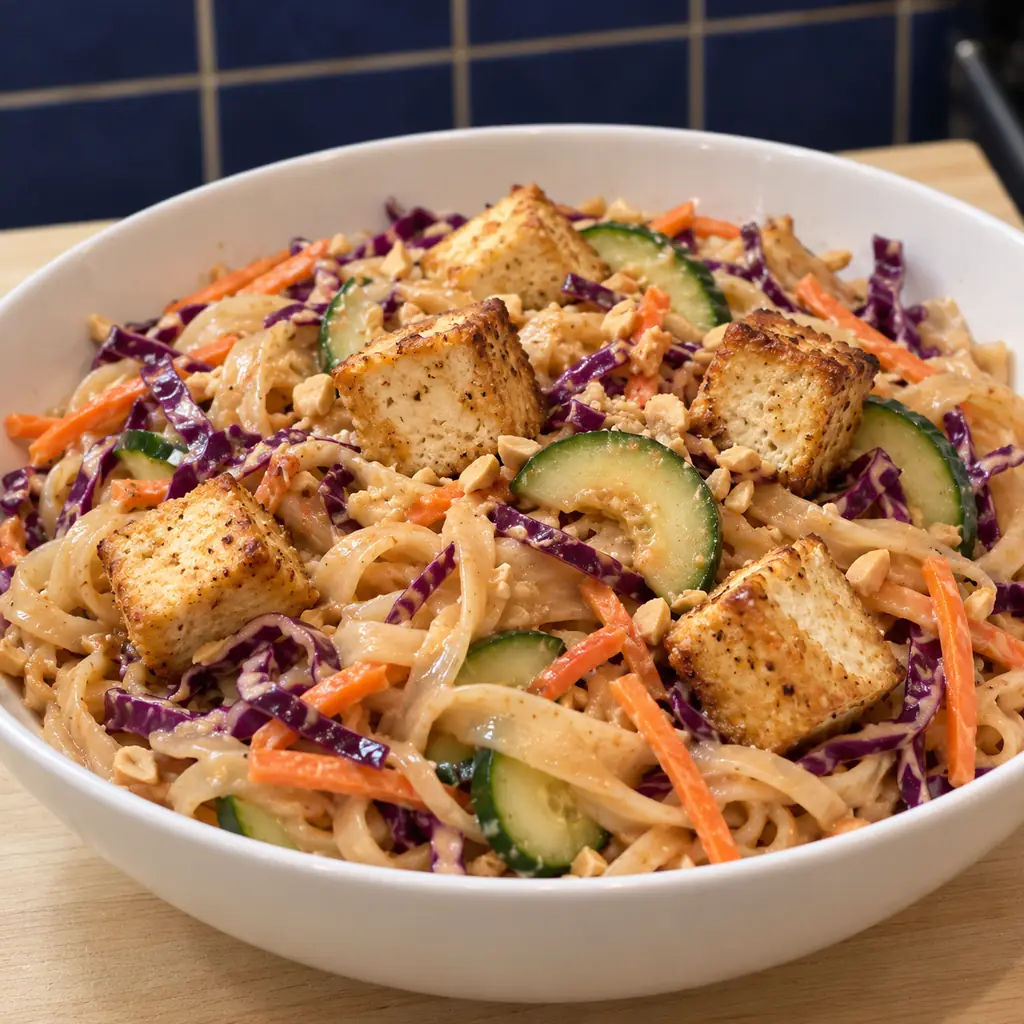
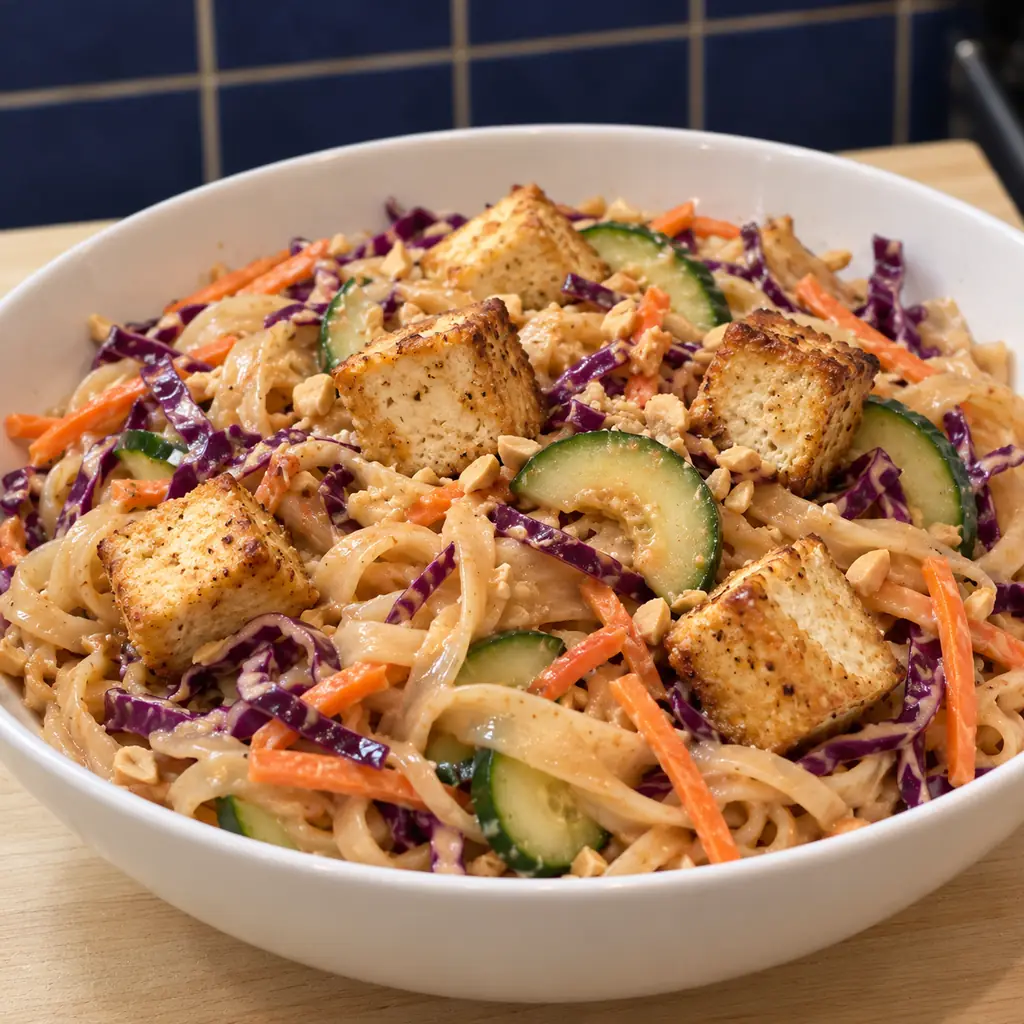
These tofu peanut noodle bowls combine lightly crisp baked tofu, tender rice noodles, crunchy cabbage, carrot, and cucumber with a peanut-lime sauce. I like to keep the vegetables fresh and the tofu separate until serving, so each bowl has more than one texture. The sauce is creamy enough to coat the noodles but thin enough to toss easily. This is a practical meatless dinner for four, with the components prepared while the tofu bakes.
Choose firm tofu and remove surface water
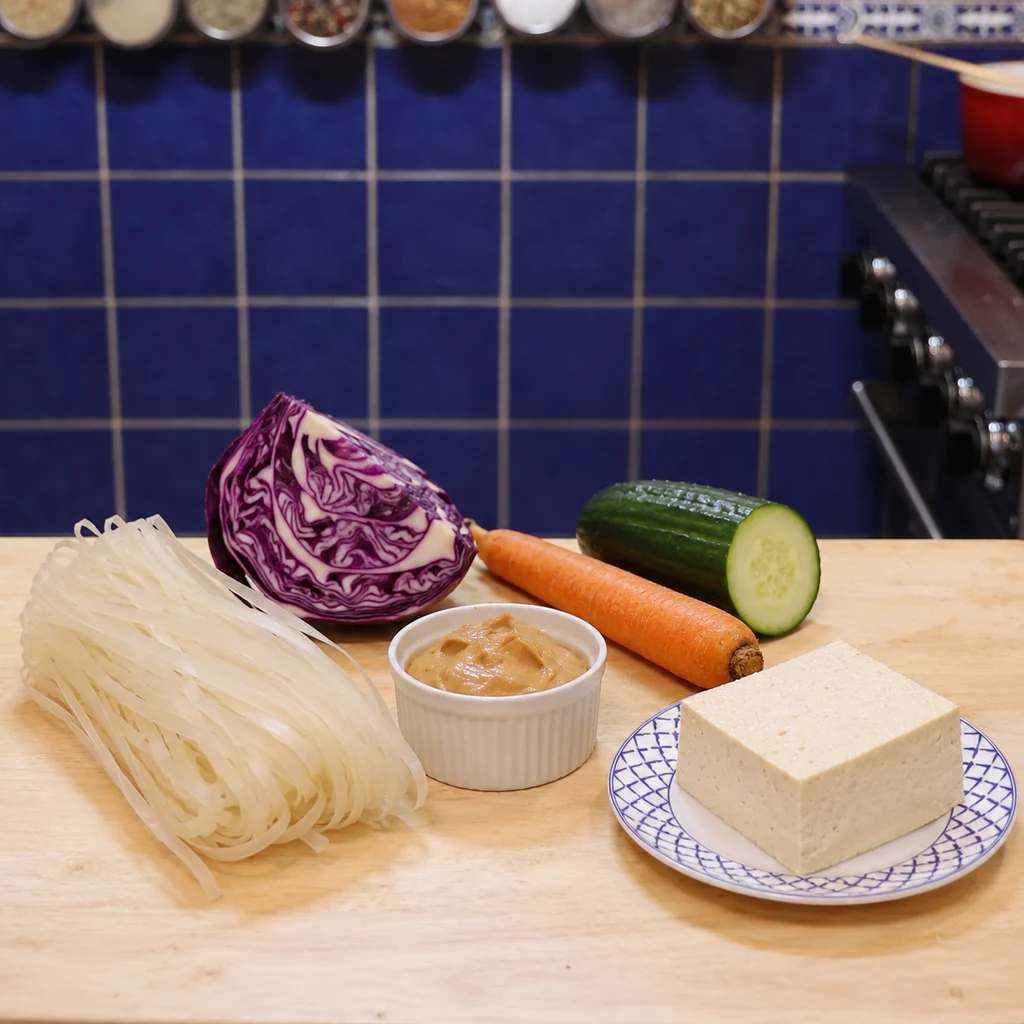
Use 400 g, about 14 oz, of firm or extra-firm plain tofu. Package weights differ in Canadian and American stores, so use the weight in the recipe instead of assuming one package is always the right amount. Silken tofu is too delicate for this cube-and-bake method. Drain the block, pat it dry, and press it gently between clean towels with a modest weight for about ten minutes while you prepare the other ingredients.
Cut into cubes approximately 2 cm, or three quarters of an inch, across. I prefer cubes that are similar in size without trying to make them perfectly identical. Tiny pieces become hard before larger pieces colour, while very large cubes have less browned surface in each bite. Drying the outside helps the light starch coating stick. A little moisture inside the tofu is normal; the goal is a tender centre with a lightly crisp edge, not a dry crouton.
Keep the peanut sauce balanced and pourable
Whisk smooth peanut butter with soy sauce, lime juice, rice vinegar, maple syrup, grated ginger, and a little minced garlic. Add warm water gradually, beginning with about half the measured amount. The mixture may tighten at first before becoming smooth. Continue whisking and adding water until it falls from the spoon in a thick ribbon. Different peanut butters absorb water differently, so the final spoonful of water is a texture adjustment rather than a rigid rule.
I use unsweetened smooth peanut butter to make the balance easier to control. If your peanut butter is already sweetened, start with less maple syrup and taste before adding more. The sauce should have a clear peanut flavour, a little salt, and enough lime to feel fresh. For another quick condiment with fewer ingredients, the separate three-ingredient peanut sauce is useful on a different menu. This bowl has its own measured dressing, with ginger and lime included from the start.
The recipe contains peanuts and soy, and ordinary soy sauce often contains wheat. Use a suitable alternative only after checking the needs of the people eating. Sunflower seed butter changes the flavour and can thicken differently; add water gradually if making that substitution. Do not call the finished dish gluten-free simply because the noodles are made from rice. The sauce and all packaged seasonings also matter.
Coat the tofu lightly before baking
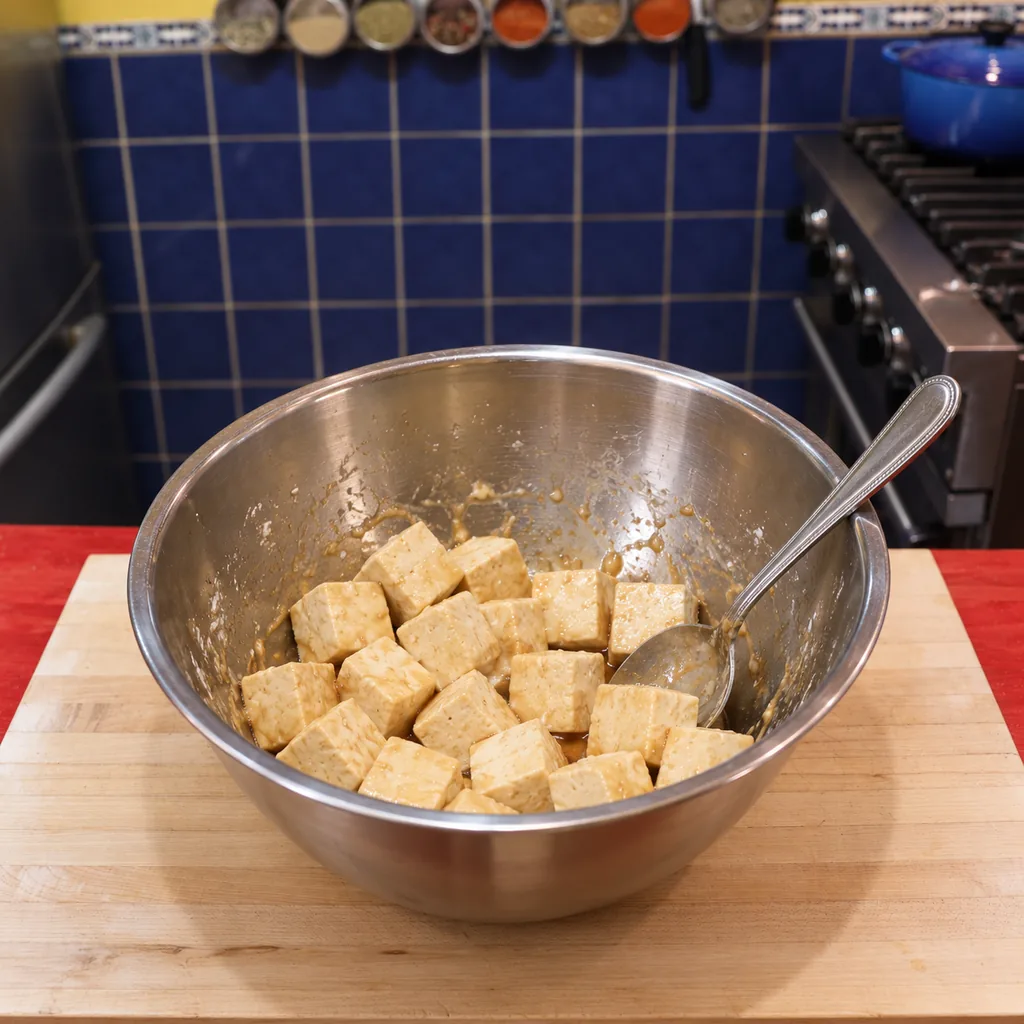
Heat a conventional oven to 220°C, or 425°F, and line a large metal sheet with parchment. Toss the dried tofu cubes with 15 ml, or one tablespoon, of soy sauce and the same amount of neutral oil. Sprinkle over 15 g, about two tablespoons, of cornstarch and turn gently until there are no large dry patches. I do not like a heavy powdery coating; it can stay chalky in the corners instead of forming a thin crust.
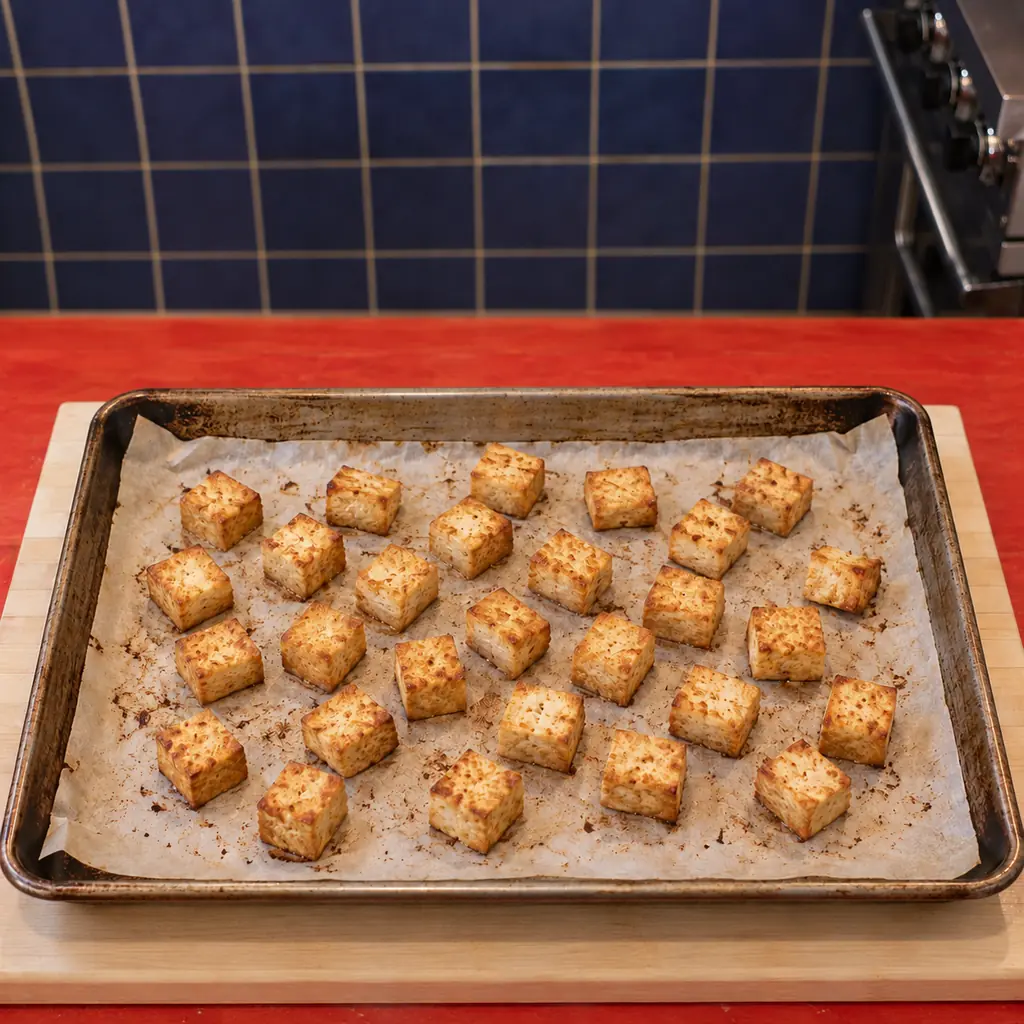
Spread the cubes with gaps between them. Bake for twenty-five to thirty minutes, turning once after about fifteen minutes. Look for light golden edges and a dry surface rather than a deep fried appearance. An overcrowded tray traps steam and keeps the coating soft. Use two sheets if needed, with room for air to move, and rotate them during baking if one browns faster.
Cook the noodles according to their thickness
Use 225 g, or approximately 8 oz, of dry flat rice noodles. Follow the package directions because some need soaking and a brief boil while others cook directly in hot water. Test a strand before draining. It should bend easily and be tender through the middle without falling apart. If the package recommends rinsing, rinse briefly and drain very well. The remaining surface water should not dilute the peanut sauce into a puddle.
Rice noodles can stick together while they sit. Loosen them gently with a little of the sauce, rather than pulling a cold compact bundle apart with force. I prepare them toward the end of the tofu’s baking time so they can go directly into the bowls. Wheat noodles can also be used, following their own cooking time. For a different hot noodle dinner cooked in a wok, chicken pad thai uses its own sauce and sequence; these bowls are assembled after the components cook.
Cut vegetables so every bite is easy to eat
Shred the cabbage finely and cut the carrot into thin matchsticks or grate it coarsely. Thick cabbage chunks are awkward to mix with long noodles. Slice the cucumber into half moons, removing a very watery seed core if necessary. Pat wet vegetables dry after washing. I like their raw crunch against the soft noodles and warm tofu, so they stay out of the oven and out of a hot wok.
Red cabbage gives a strong colour contrast, but green cabbage works too. The familiar combination of cabbage and carrot also appears in cabbage and carrot salad, which has a separate creamy dressing. Here, keep those vegetables plain until they meet the peanut-coated noodles. Adding another dressing would make the bowl unnecessarily wet and change the seasoning balance.
Assemble the bowls just before serving
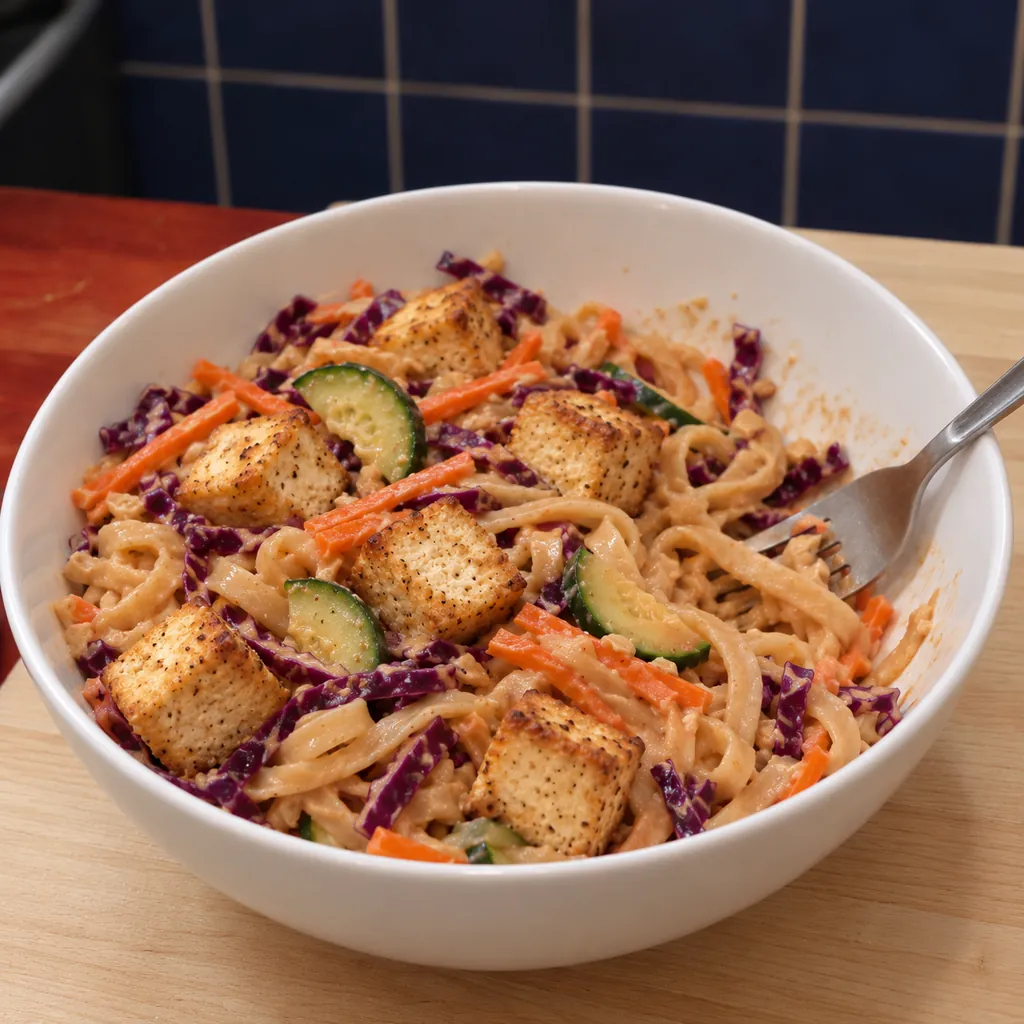
Toss the well-drained noodles with roughly half the peanut sauce. Fold through cabbage and carrot, then divide between four wide bowls. Add cucumber and warm baked tofu. Spoon over more sauce to taste, keeping a little at the table if you prefer. A small scattering of chopped peanuts or cilantro is optional. The main bowl already has plenty of texture, so it does not need a thick layer of extra toppings.
I keep the tofu on top rather than stirring it into a large bowl of sauce, because the coating softens once wet. Serve as soon as the bowls are assembled. For another noodle dish with seafood and a hot pan finish, shrimp stir-fried noodles offer a different dinner option. The tofu bowls should remain a clear recipe of their own, with fresh vegetables and a peanut dressing rather than a stir-fry sauce.
Adjust portions and prepare components ahead
This recipe makes four medium main-course bowls. For a lighter meal, use a smaller noodle portion and add more sliced cucumber or cabbage. If you want an extra chilled side for a larger spread, creamy cucumber salad with dill belongs in its own bowl, because its dressing is very different. Avoid adding several dressed salads directly on top of the noodles.
For a future menu with a chewy wheat noodle and pork, stir-fried udon noodles are another option. Do not swap thick udon into this recipe and assume the same dry weight, cooking time, and sauce absorption. Each noodle type behaves differently. When changing noodles, start with a moderate amount of sauce and add more only after tossing.
Store each component separately when possible
Refrigerate cooked tofu and noodles within two hours, in shallow covered containers, and use within two to three days. Keep fresh vegetables and sauce separate when preparing ahead. Chilled peanut sauce thickens; whisk in a little warm water before serving. Reheat tofu separately until hot throughout, and reheat cooked leftovers to 74°C, or 165°F. A covered bowl with a small splash of water helps noodles soften without drying at the edges.
The fresh cucumber and cabbage are best added after reheating. Fully assembled leftovers are still usable, but the tofu crust softens and the vegetables lose some crunch. I prefer making only the number of bowls needed for the meal and leaving the remaining components separate. Freezing an assembled bowl is not my first choice: cucumber becomes watery and the noodles can change texture. The components are straightforward enough to prepare for a short refrigerated plan instead.
Tofu Peanut Noodle Bowls
Ingredients
- 400 g about 14 oz firm or extra-firm plain tofu, drained
- 45 ml 3 tbsp soy sauce, divided: 15 ml for tofu and 30 ml for sauce
- 15 ml 1 tbsp neutral oil
- 15 g about 2 tbsp cornstarch
- 225 g 8 oz dry flat rice noodles
- 200 g about 3 packed US cups red or green cabbage, finely shredded
- 150 g about 2 medium carrots, cut into thin matchsticks or coarsely grated
- 150 g about 1/2 large cucumber, sliced into half moons
- 80 g about 1/3 US cup smooth unsweetened peanut butter
- 30 ml 2 tbsp lime juice
- 15 ml 1 tbsp rice vinegar
- 15 ml 1 tbsp maple syrup, adjusted if peanut butter is sweetened
- 10 g about 2 tsp fresh ginger, finely grated
- 1 small garlic clove finely minced
- 90 ml 6 tbsp warm water, plus more as needed
- Optional: 5 ml 1 tsp chili sauce; chopped peanuts or cilantro for serving
Instructions
- Heat oven to 220°C (425°F). Press drained tofu gently between clean towels for about 10 minutes, then cut into 2 cm cubes. Line a large metal baking sheet with parchment.
- Toss tofu with 15 ml soy sauce and oil. Add cornstarch and turn gently for a thin coating. Spread with gaps on the sheet. Bake 25–30 minutes, turning after about 15 minutes, until lightly golden with a dry surface.
- Whisk peanut butter, remaining 30 ml soy sauce, lime juice, vinegar, maple syrup, ginger, garlic, and optional chili sauce. Gradually whisk in warm water to make a thick but pourable sauce. Adjust with a little more water if needed.
- Cook rice noodles according to the package. Drain well; rinse briefly if directed. Prepare shredded cabbage, carrot, and cucumber while tofu bakes.
- Toss noodles with about half the sauce, then cabbage and carrot. Divide between 4 bowls. Add cucumber and warm tofu; spoon on remaining sauce as desired. Add optional chopped peanuts or cilantro and serve promptly.