Stir-Fried Udon Noodles with Pork and Vegetables, Fast Weeknight Wok Dinner
This stir-fried udon recipe is based on my YouTube video for Nouilles Udon Sautées, with a few adjustments since publication to make the written version easier to reproduce at home. In the video, the sauce was very bold and salty, so here I slightly reduce the dark soy sauce, add a small touch of sweetness, and give clearer vegetable amounts for a more balanced result.
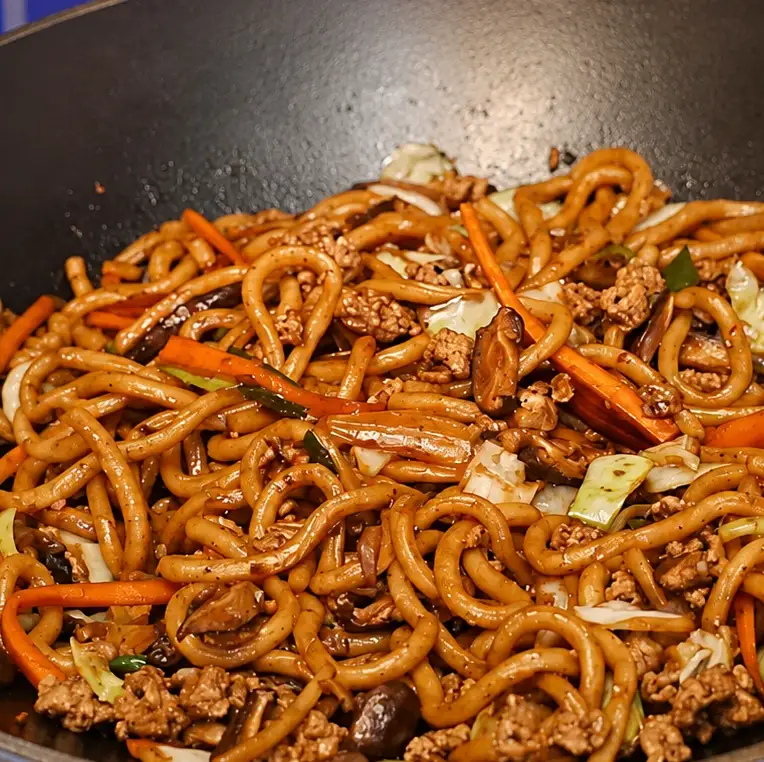
Stir-fried udon is a quick wok-style noodle dish made with thick Japanese wheat noodles, ground pork, mushrooms, cabbage, carrots, garlic, green onions, and a glossy soy-oyster sauce. It is different from a creamy pasta dish because the sauce is not heavy or dairy-based, and it is different from a dry noodle stir-fry because the udon gets coated in a savory sauce that clings to the noodles.
I make it this way because ground pork cooks fast, gives the sauce good flavor, and makes the dish feel like a full meal without needing a long marinade. The mistake to avoid is overcooking the udon before it goes into the wok. What I look for here is a noodle that is just loosened, still springy, and ready to finish in the sauce.
Why This Version Works
The original video recipe is built around speed: hot wok, quick-cut vegetables, ground pork, udon noodles, and a strong sauce. That works. But for a written recipe, especially one people will repeat in Canada and the USA with different brands of soy sauce and udon, the ratios need to be a little more forgiving.
Dark soy sauce can vary a lot. Some brands are sweeter and thicker, while others are saltier and more intense. I prefer to use enough for color, but not so much that the noodles become too dark or too salty. The oyster sauce brings body, the rice vinegar cuts through the oil and pork, and a little sugar or honey rounds everything out.
This recipe is also very different from my chicken chow mein, which uses a more classic takeout-style noodle texture. Here, the udon are thicker, chewier, and more comforting. It is also not the same as easy chicken Pad Thai, which has rice noodles, peanuts, lime, and a completely different sweet-sour profile.
Ingredients
For the noodles and stir-fry
14 to 16 oz fresh, frozen, or vacuum-packed udon noodles
1 lb ground pork, preferably lean but not extra-dry
4 to 5 oz shiitake mushrooms, sliced or roughly chopped
2 cups sliced cabbage
2 medium carrots, cut into thin matchsticks
1 small onion, sliced or chopped
2 to 3 garlic cloves, finely chopped
2 to 3 green onions, sliced into larger pieces
2 to 3 tbsp neutral cooking oil, divided
For the sauce
2 tbsp low-sodium soy sauce
1 1/2 to 2 tbsp dark soy sauce
2 tbsp oyster sauce
2 tbsp rice vinegar
1 to 2 tsp sugar, honey, or maple syrup
1/4 tsp MSG, optional
1/2 tsp black pepper or mixed black and white pepper
1 tsp toasted sesame oil, optional, for finishing
Step-by-Step Instructions
1. Prepare the vegetables first
Before turning on the heat, cut everything. This is important. A wok recipe moves fast, and if the garlic is still on the cutting board while the pork is already cooking, something will burn.
Slice or roughly chop the shiitake mushrooms and keep them separate. They go into the wok before the other vegetables so they have time to brown and release their moisture.

Slice the cabbage, cut the carrots into thin matchsticks, chop the onion, and finely chop the garlic. Slice the green onions and keep them aside for the end. At this point, the counter should look organized: mushrooms in one pile, cabbage-carrot-onion-garlic in another, green onions separate, sauce ready, noodles ready.

2. Mix the sauce
In a small bowl, stir together the low-sodium soy sauce, dark soy sauce, oyster sauce, rice vinegar, sugar or honey, MSG if using, and pepper.
Do not judge the sauce too much by tasting it alone. It should taste strong because it still needs to season the noodles, pork, and vegetables. The important thing is balance: salty, slightly sweet, tangy, and savory.
If your dark soy sauce is very thick and strong, use the smaller amount. If it is milder and sweeter, use the full 2 tablespoons.
3. Cook the udon briefly
Bring a pot of water to a boil. Add the udon and cook just until the noodles loosen.

For vacuum-packed udon, this may take only 1 minute. For frozen udon, it may take 1 to 2 minutes. For dry udon, follow the package directions, but stop a little before they are fully soft.
Drain the noodles, rinse briefly under cold water, and drain very well. The draining matters. If the noodles go into the wok wet, the sauce becomes thin and the stir-fry loses that glossy finish.

4. Brown the pork
Heat a large wok or wide skillet over high heat. Add about 1 tablespoon of oil, then add the ground pork.
Break the pork apart with a spatula and let it cook until it is mostly browned, about 80 percent cooked. You want a little color and some pork flavor in the pan, but it does not need to be fully cooked yet because it will return later.
Remove the pork from the wok and set it aside. If you are using fattier pork, leave only a thin layer of fat in the pan. If you are using lean pork, add a little more oil before the mushrooms.
5. Cook the mushrooms
Add the shiitake mushrooms to the hot wok. Stir and toss them for about 2 to 3 minutes.
At first, they will absorb the oil and look a bit dry. Keep going. You know they are ready when they smell deeper, their edges soften, and they start to take on a little color. This step gives the final dish more flavor than just throwing all the vegetables in at once.
6. Add the vegetables
Add the cabbage, carrots, onion, and garlic. Stir-fry for 3 to 4 minutes.
The vegetables should soften slightly but not collapse. The carrots should bend a little, the cabbage should lose its raw stiffness, and the garlic should smell fragrant without browning too hard. If the wok looks dry, add a small splash of oil. If the pan looks watery, keep the heat high and let the moisture cook off.

7. Return the pork
Add the pork back into the wok and stir everything together. Cook until the pork is fully cooked with no pink remaining.
This is also the moment when the vegetables and pork start to feel like one mixture instead of separate ingredients. The pork should be broken up, the mushrooms should be mixed through, and the vegetables should still have some bite.
8. Add the green onions, sauce, and noodles
Add the green onions, then pour in the sauce. Stir quickly.
Add the drained udon noodles. Turn off the heat or reduce it very low, then toss everything together until the noodles are coated. The wok should still be hot enough to finish the sauce without turning the noodles mushy.

At this point, it should look glossy, not soupy. The sauce should cling to the noodles and lightly coat the pork and vegetables. If it looks dry, add 1 or 2 tablespoons of water. If it looks too wet, toss for another minute over medium-high heat.
Finish with toasted sesame oil if using.
What Makes This Different from Similar Recipes
This is a fast, savory, pork-and-vegetable noodle dinner. It is not creamy, not grilled, and not meant to be a light salad-style noodle bowl.
For a sweeter chicken noodle dish, I would go toward teriyaki chicken noodles with vegetables. For a rice-based wok dinner, homemade chicken fried rice and homemade beef fried rice sit in the same quick weeknight family, but the texture is completely different.
This udon version is heavier and chewier because of the thick noodles and ground pork. It is the kind of dish I make when I want something fast but still filling, especially on a weeknight when ordering takeout sounds tempting but the fridge has vegetables to use.
Substitutions
Ground pork is excellent here, but ground chicken, ground turkey, or ground beef also works. If using chicken or turkey, keep a little more oil in the pan because those meats are usually leaner.
Shiitake mushrooms give the best deep flavor, but cremini mushrooms, button mushrooms, or oyster mushrooms can replace them.
Cabbage and carrots are practical because they hold up well in the wok. You can also add bok choy, snow peas, bell pepper, broccoli florets, or zucchini. Just avoid adding too many watery vegetables at once or the sauce will thin out.
For the sauce, maple syrup works nicely instead of sugar, especially if you want a subtle Canadian touch. Mirin can also replace the sugar and rice vinegar combination, but use it carefully because it changes the balance.
MSG is optional. I like a very small amount because it boosts the savory taste, but the recipe still works without it.
Health and Nutrition Context
This is a hearty, protein-rich noodle meal with pork, vegetables, and a generous portion of udon. It is not a low-sodium recipe because soy sauce and oyster sauce are naturally salty, so I use low-sodium soy sauce and keep the dark soy sauce under control.
For a lighter plate, add more cabbage and carrots, use lean pork or ground turkey, and keep the oil closer to 2 tablespoons. For a more comfort-food version, use the full amount of oil and finish with sesame oil.
FAQ
Can I use frozen udon?
Yes. Frozen udon works very well. Boil just until the noodles separate, then rinse briefly and drain well before adding them to the wok.
Can I use dry udon?
Yes, but the timing changes. Cook dry udon according to the package directions, stopping slightly before they are fully tender. They will finish in the wok with the sauce.
Is this recipe too salty?
Not with the adjusted proportions. The original video version used more dark soy sauce, which can be too salty depending on the brand. This written version keeps the same flavor but makes it safer for home cooking.
Can I make it without oyster sauce?
Yes. Use hoisin sauce for a sweeter result, or use more low-sodium soy sauce plus a small amount of sugar. The flavor will change, but the recipe will still work.
Can I meal prep this?
Yes, but udon is best fresh. Leftovers can be stored in the fridge for 2 to 3 days. Reheat in a skillet with a small splash of water to loosen the noodles.
What should I avoid?
Do not overcook the noodles before stir-frying. Do not add wet noodles to the wok. Do not cook the garlic too early on high heat or it can burn and taste bitter.
What to Serve With These Udon Noodles
This dish is already a complete meal, but if you want a bigger table, keep the sides simple. A small cucumber salad, steamed greens, or a light soup works well.
For another fast noodle dinner, try a takeout-style chicken chow mein or a glossy teriyaki chicken noodle dish. If you want rice instead of noodles, chicken fried rice with soy and ginger is a natural match.
For pork lovers, sweet and sour pork at home keeps the same takeout-style feeling, while garlic butter pork chops goes in a more pan-seared, North American direction.
If you are building a quick weeknight menu, browse more easy pasta and noodle dinner ideas or explore the full Dumas family recipe collection.
Stir-Fried Udon Noodles with Pork and Vegetables
Ingredients
- 14 to 16 oz udon noodles
- 1 lb ground pork
- 4 to 5 oz shiitake mushrooms sliced or roughly chopped
- 2 cups sliced cabbage
- 2 medium carrots cut into matchsticks
- 1 small onion sliced or chopped
- 2 to 3 garlic cloves finely chopped
- 2 to 3 green onions sliced
- 2 to 3 tbsp neutral cooking oil divided
- Sauce
- 2 tbsp low-sodium soy sauce
- 1 1/2 to 2 tbsp dark soy sauce
- 2 tbsp oyster sauce
- 2 tbsp rice vinegar
- 1 to 2 tsp sugar honey, or maple syrup
- 1/4 tsp MSG optional
- 1/2 tsp black pepper or mixed pepper
- 1 tsp toasted sesame oil optional
Instructions
- Slice the mushrooms, cabbage, carrots, onion, garlic, and green onions. Keep the mushrooms separate and reserve the green onions for the end.
- Mix the low-sodium soy sauce, dark soy sauce, oyster sauce, rice vinegar, sugar or honey, MSG if using, and pepper in a small bowl.
- Cook the udon just until loosened, about 1 minute for many fresh or vacuum-packed noodles. Drain, rinse briefly under cold water, and drain very well.
- Heat a wok or large skillet over high heat. Add 1 tablespoon oil, then cook the ground pork until mostly browned. Remove and reserve.
- Add more oil if needed, then cook the shiitake mushrooms for 2 to 3 minutes.
- Add the cabbage, carrots, onion, and garlic. Stir-fry for 3 to 4 minutes, until slightly softened but not mushy.
- Return the pork to the wok and cook until fully cooked with no pink remaining.
- Add the green onions, sauce, and drained udon. Turn off the heat or reduce to low, then toss until the noodles are glossy and well coated.
Video
Notes
FAQ
Can I use frozen udon?
Yes. Frozen udon works very well. Boil just until the noodles separate, then rinse briefly and drain well before adding them to the wok.Can I use dry udon?
Yes, but the timing changes. Cook dry udon according to the package directions, stopping slightly before they are fully tender. They will finish in the wok with the sauce.Is this recipe too salty?
Not with the adjusted proportions. The original video version used more dark soy sauce, which can be too salty depending on the brand. This written version keeps the same flavor but makes it safer for home cooking.Can I make it without oyster sauce?
Yes. Use hoisin sauce for a sweeter result, or use more low-sodium soy sauce plus a small amount of sugar. The flavor will change, but the recipe will still work.Can I meal prep this?
Yes, but udon is best fresh. Leftovers can be stored in the fridge for 2 to 3 days. Reheat in a skillet with a small splash of water to loosen the noodles.What should I avoid?
Do not overcook the noodles before stir-frying. Do not add wet noodles to the wok. Do not cook the garlic too early on high heat or it can burn and taste bitter.🔗 Useful Links
🛒 Michel Dumas Shop : Explore our kitchen essentials, including aprons and knives.
🌐 Linktree : Access all our important links in one place.
📱 YouTube | Instagram | Facebook | TikTok : Follow us for the latest recipes and culinary tips.