Teaspoon, Tablespoon, and Cup Conversion Chart for Home Cooking
Teaspoons, tablespoons, and cups are the most common volume measurements used in North American home cooking. Knowing how they convert makes it easier to follow recipes, adjust portions, measure small ingredients accurately, and avoid mistakes in baking, sauces, marinades, dressings, and everyday meals.
This guide is especially useful when a recipe gives part of the measurements in spoons and part in cups. A simple conversion chart can save time, reduce guessing, and help you keep the texture of a recipe more consistent.

Why This Guide Matters
In home cooking, a small measurement mistake is not always a disaster. A little extra parsley in a pasta dish or a bit more garlic in a marinade may still taste good. But in baking, sauces, spice blends, dressings, and marinades, small measurements matter more.
One teaspoon of baking powder is very different from one tablespoon. A quarter cup of maple syrup is not the same as a few spoonfuls guessed by eye. Too much salt, baking soda, vinegar, soy sauce, or chili flakes can change the whole recipe.
That is why teaspoons, tablespoons, and cups are worth understanding.
For everyday cooking, this chart is helpful when making recipes like Montreal steak marinade, where soy sauce, Worcestershire sauce, Dijon mustard, maple syrup, vinegar, and spices need to be balanced carefully. It is also useful for baking recipes like bakery-style double chocolate muffins, where small differences in baking powder, cocoa, or sour cream can affect texture.
I prefer to keep these conversions simple because most home cooks do not want to calculate while cooking. A clear chart is easier to use beside the cutting board, near the mixing bowl, or while adjusting a recipe.
Quick Answer
The basic North American kitchen conversions are:
- 1 tablespoon = 3 teaspoons
- 1 cup = 16 tablespoons
- 1 cup = 48 teaspoons
- 1/2 cup = 8 tablespoons
- 1/4 cup = 4 tablespoons
- 1/3 cup = 5 tablespoons + 1 teaspoon
- 1 teaspoon = about 5 mL
- 1 tablespoon = about 15 mL
- 1 US cup = about 240 mL
For most cooking, these conversions are close enough. For baking, use proper measuring spoons and level them off for better accuracy.

Teaspoon, Tablespoon, and Cup Conversion Chart
| Measurement | Tablespoons | Teaspoons | Approx. Milliliters |
| 1 teaspoon | 1/3 tablespoon | 1 teaspoon | 5 mL |
| 1 tablespoon | 1 tablespoon | 3 teaspoons | 15 mL |
| 1/8 cup | 2 tablespoons | 6 teaspoons | 30 mL |
| 1/4 cup | 4 tablespoons | 12 teaspoons | 60 mL |
| 1/3 cup | 5 tablespoons + 1 teaspoon | 16 teaspoons | 80 mL |
| 1/2 cup | 8 tablespoons | 24 teaspoons | 120 mL |
| 2/3 cup | 10 tablespoons + 2 teaspoons | 32 teaspoons | 160 mL |
| 3/4 cup | 12 tablespoons | 36 teaspoons | 180 mL |
| 1 cup | 16 tablespoons | 48 teaspoons | 240 mL |
Common Spoon Conversions
| If a Recipe Says | Use This |
| 1 tablespoon | 3 teaspoons |
| 2 tablespoons | 1/8 cup |
| 4 tablespoons | 1/4 cup |
| 8 tablespoons | 1/2 cup |
| 12 tablespoons | 3/4 cup |
| 16 tablespoons | 1 cup |
| 1/2 tablespoon | 1 1/2 teaspoons |
| 1/4 tablespoon | 3/4 teaspoon |
This is useful when a recipe calls for a small amount of oil, vinegar, maple syrup, melted butter, lemon juice, or soy sauce. For example, a sauce like garlic butter sauce for steak depends on simple ingredients, but the balance of butter, garlic, and seasoning still matters.
Cups to Tablespoons Chart
| Cups | Tablespoons |
| 1/8 cup | 2 tablespoons |
| 1/4 cup | 4 tablespoons |
| 1/3 cup | 5 tablespoons + 1 teaspoon |
| 1/2 cup | 8 tablespoons |
| 2/3 cup | 10 tablespoons + 2 teaspoons |
| 3/4 cup | 12 tablespoons |
| 1 cup | 16 tablespoons |
| 1 1/2 cups | 24 tablespoons |
| 2 cups | 32 tablespoons |
For cooking, this helps when you do not want to dirty a full measuring cup. For baking, it is better to use the correct measuring cup when possible, especially for flour, cocoa, sugar, sour cream, yogurt, and liquids.
Tablespoons to Cups Chart
| Tablespoons | Cups |
| 1 tablespoon | 1/16 cup |
| 2 tablespoons | 1/8 cup |
| 3 tablespoons | 3/16 cup |
| 4 tablespoons | 1/4 cup |
| 5 tablespoons + 1 teaspoon | 1/3 cup |
| 6 tablespoons | 3/8 cup |
| 8 tablespoons | 1/2 cup |
| 10 tablespoons + 2 teaspoons | 2/3 cup |
| 12 tablespoons | 3/4 cup |
| 16 tablespoons | 1 cup |
This chart is practical for sauces and marinades. If a marinade calls for 1/4 cup of soy sauce but you only have a tablespoon nearby, you need 4 tablespoons. If a recipe calls for 1/2 cup of milk, that is 8 tablespoons.
Teaspoons to Tablespoons Chart
| Teaspoons | Tablespoons |
| 1 teaspoon | 1/3 tablespoon |
| 2 teaspoons | 2/3 tablespoon |
| 3 teaspoons | 1 tablespoon |
| 4 teaspoons | 1 tablespoon + 1 teaspoon |
| 6 teaspoons | 2 tablespoons |
| 9 teaspoons | 3 tablespoons |
| 12 teaspoons | 4 tablespoons |
| 24 teaspoons | 8 tablespoons |
| 48 teaspoons | 16 tablespoons |
This is most helpful with spices, salt, baking powder, baking soda, vanilla, lemon juice, vinegar, mustard, and small sauce ingredients.
US Cup vs Canadian Metric Cup
In many English recipes, especially from the United States, 1 cup is about 240 mL. In some Canadian metric contexts, 1 cup may be rounded to 250 mL.
For most everyday cooking, the difference is small. In a soup, pasta sauce, marinade, or casserole, 240 mL vs 250 mL will rarely ruin the dish.
For baking, the difference matters more. Muffins, cakes, brownies, pancakes, crêpes, and cookies depend more on ratios. If you are baking, use the same measuring system throughout the recipe and avoid switching back and forth unless the recipe gives tested equivalents.
This is especially important for recipes like lemon blueberry muffins, protein muffins with blueberry or banana, and the dessert ideas in easy chocolate desserts.
Dry vs Liquid Measurements
Cups, tablespoons, and teaspoons measure volume. That means they measure how much space an ingredient takes up, not how much it weighs.
That is why 1 cup of flour does not weigh the same as 1 cup of sugar, and 1 cup of cocoa does not weigh the same as 1 cup of milk.
Liquid ingredients
Liquid ingredients are easier to measure by volume.
Examples:
- Water
- Milk
- Cream
- Oil
- Vinegar
- Soy sauce
- Maple syrup
- Lemon juice
- Broth
- Melted butter
Use a liquid measuring cup for larger amounts and measuring spoons for small amounts.
Dry ingredients
Dry ingredients can vary depending on how they are scooped.
Examples:
- Flour
- Sugar
- Cocoa powder
- Breadcrumbs
- Oats
- Grated cheese
- Cornstarch
- Baking powder
- Spices
For dry ingredients, spoon the ingredient into the measuring cup and level it off instead of packing it down, unless the recipe specifically says packed.
How to Measure Correctly
Use level spoons
A teaspoon or tablespoon should be level unless the recipe says heaping. For ingredients like baking powder, baking soda, salt, or spices, level measurements are important.
Do not use regular eating spoons
A soup spoon from the drawer is not the same as a measuring tablespoon. Use actual measuring spoons for better accuracy.
Pack only when the recipe says so
Brown sugar is often packed. Flour is usually not packed. Grated cheese can vary depending on how finely it is grated.
Measure liquids at eye level
For a larger amount of liquid, place the measuring cup on the counter and check the line at eye level.
Be careful with sticky ingredients
Maple syrup, honey, molasses, corn syrup, and peanut butter can stick to the spoon or cup. Scrape well or lightly oil the measuring tool if the recipe allows it.
This matters in recipes like pouding chômeur with maple syrup, where maple syrup is a major ingredient and the final texture depends on the balance between cake and sauce.
When Precision Matters Most
Some recipes are flexible. Others need more precision.
Measure carefully for baking
Baking depends on ratios. Flour, sugar, fat, liquid, eggs, and leavening need to work together. Too much flour can make muffins dry. Too much baking powder can affect the rise and flavor. Too much liquid can make the batter weak.
For baking recipes, use level cups and spoons. Better yet, use weight if the recipe provides it.
Measure carefully for salt and leavening
Salt, baking soda, baking powder, and yeast are powerful ingredients. A small mistake can change flavor, rise, and texture.
Measure carefully for marinades
Marinades depend on balance: salt, acid, fat, sweetness, and aromatics. Too much acid can affect texture. Too much soy sauce can make the final dish too salty. Too much sugar can burn.
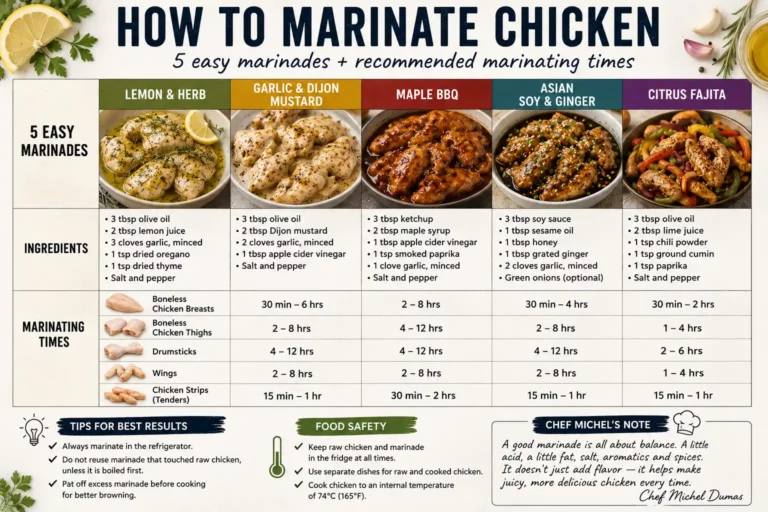
This is why recipes like 5 easy chicken marinades and 5 easy chicken marinades with cooking tips are easier to follow when the spoon and cup conversions are clear.
Measure carefully for sauces
Sauces can usually be adjusted, but some ingredients are stronger than others. Mustard, vinegar, lemon juice, soy sauce, hot sauce, garlic powder, cornstarch, and flour can change a sauce quickly.
In a pasta dish like spicy creamy chicken pasta, cream, Parmesan, tomato, and seasoning need to stay balanced so the sauce coats the pasta without becoming too thick or too salty.
Easy Measurement Substitution Chart
| If You Do Not Have | Use This Instead |
| 1 tablespoon | 3 teaspoons |
| 1/2 tablespoon | 1 1/2 teaspoons |
| 1/4 cup | 4 tablespoons |
| 1/3 cup | 5 tablespoons + 1 teaspoon |
| 1/2 cup | 8 tablespoons |
| 2/3 cup | 10 tablespoons + 2 teaspoons |
| 3/4 cup | 12 tablespoons |
| 1 cup | 16 tablespoons |
| 1 cup | 48 teaspoons |
Practical Examples
Example 1: A recipe calls for 1/4 cup of maple syrup
Use 4 tablespoons.
This is useful in sweet and savory recipes, such as sticky soy maple chicken, where maple syrup balances salty soy sauce and acidic vinegar or lime juice.
Example 2: A recipe calls for 1/2 cup of milk
Use 8 tablespoons.
This can help if you are making a small sauce, pancake batter, muffin batter, or a creamy pasta base.
Example 3: A recipe calls for 1 tablespoon of Dijon mustard
Use 3 teaspoons.
This matters in marinades, vinaigrettes, creamy sauces, and bistro-style chicken dishes like creamy pepper chicken with cognac, shallots, and cream.
Example 4: A recipe calls for 1/3 cup
Use 5 tablespoons plus 1 teaspoon.
This is one of the most useful conversions because many measuring cup sets do not always include every size, or the 1/3 cup measure disappears in the drawer.
Example 5: A recipe calls for 2 tablespoons of butter
Use 1/8 cup.
This is helpful for garlic butter, sauces, pasta, and baking.
Common Mistakes to Avoid
Confusing teaspoons and tablespoons
This is one of the most common mistakes. A tablespoon is three times bigger than a teaspoon. If a recipe calls for 1 teaspoon of salt and you add 1 tablespoon, the dish may become too salty.
Using eating spoons instead of measuring spoons
Regular spoons vary in size. Use measuring spoons for more reliable results.
Packing flour into a measuring cup
Packed flour can make baked goods dry and dense. Spoon flour into the cup and level it off.
Measuring sticky ingredients without scraping
Honey, maple syrup, mustard, molasses, and peanut butter cling to the spoon. Scrape the spoon well so the amount is closer to what the recipe needs.
Switching between 240 mL and 250 mL cups in baking
The difference is small, but in baking it can add up. Use one system consistently.
Guessing baking powder or baking soda
These ingredients affect rise and flavor. Use a level measuring spoon.
Measuring over the mixing bowl
If too much salt, baking soda, or spice falls in, it is hard to remove. Measure over the counter, then add it to the bowl.
Best Recipes to Use This Chart With
This chart is especially helpful for recipes that use small measurements, precise liquids, or baking ratios.
Use it with:
- Muffins
- Cakes
- Brownies
- Pancakes
- Crêpes
- Marinades
- Garlic butter
- Steak sauce
- Creamy pasta
- Chicken sauces
- Maple desserts
- Dressings
- Spice blends
For baking inspiration, explore easy brunch ideas with pancakes, muffins, and waffles, bakery-style double chocolate muffins, and easy chocolate desserts.
For savory recipes, this chart is useful with Montreal steak marinade, garlic butter sauce for steak, 5 easy chicken marinades, and chicken Alfredo bake.
FAQ
How many teaspoons are in a tablespoon?
There are 3 teaspoons in 1 tablespoon.
How many tablespoons are in a cup?
There are 16 tablespoons in 1 cup.
How many teaspoons are in a cup?
There are 48 teaspoons in 1 cup.
How many tablespoons are in 1/4 cup?
There are 4 tablespoons in 1/4 cup.
How many tablespoons are in 1/2 cup?
There are 8 tablespoons in 1/2 cup.
Is 1 cup 240 mL or 250 mL?
In many US-style recipes, 1 cup is about 240 mL. In some Canadian metric contexts, 1 cup may be rounded to 250 mL. For most cooking, the difference is small. For baking, use one measuring system consistently.
Can I use tablespoons instead of cups?
Yes, especially for small amounts. For example, 1/4 cup is 4 tablespoons and 1/2 cup is 8 tablespoons. For larger baking recipes, using the correct measuring cup is usually easier.
Should dry and liquid cups be measured the same way?
They measure the same volume, but the technique is different. Liquids are easier in a liquid measuring cup. Dry ingredients should be spooned into a dry measuring cup and leveled off.
Final Thoughts
Teaspoon, tablespoon, and cup conversions are simple, but they make cooking much easier. Once you remember that 1 tablespoon equals 3 teaspoons and 1 cup equals 16 tablespoons, most recipe adjustments become faster.
For everyday cooking, these conversions help with sauces, marinades, garlic butter, pasta, chicken, and dressings. For baking, they help protect texture and consistency. Keep the chart handy, measure carefully when it matters, and use the same system throughout a recipe for the best results.
For more recipes where measurements matter, explore easy brunch ideas, bakery-style double chocolate muffins, Montreal steak marinade, and pouding chômeur with maple syrup.
Useful Links
🛒 Michel Dumas Shop : Explore our kitchen essentials, including aprons and cooking tools.
🌐 Linktree : Access all our important links in one place.
📱 YouTube | Instagram | Facebook | TikTok : Follow us for the latest recipes and culinary tips.


Great help thanks chef