Chicken Cobbler with Homemade Cheddar Biscuits
This chicken cobbler combines cooked chicken, carrots, celery, and peas in a homemade creamy sauce beneath a cheddar biscuit topping. The filling is heated on the stove before the dough is added, helping the biscuits cook from underneath as well as on top. Unlike a pastry-covered pie, the topping is dropped in separate mounds with small gaps between them. The result is a spoonable family dinner with a golden top and a generous vegetable filling.
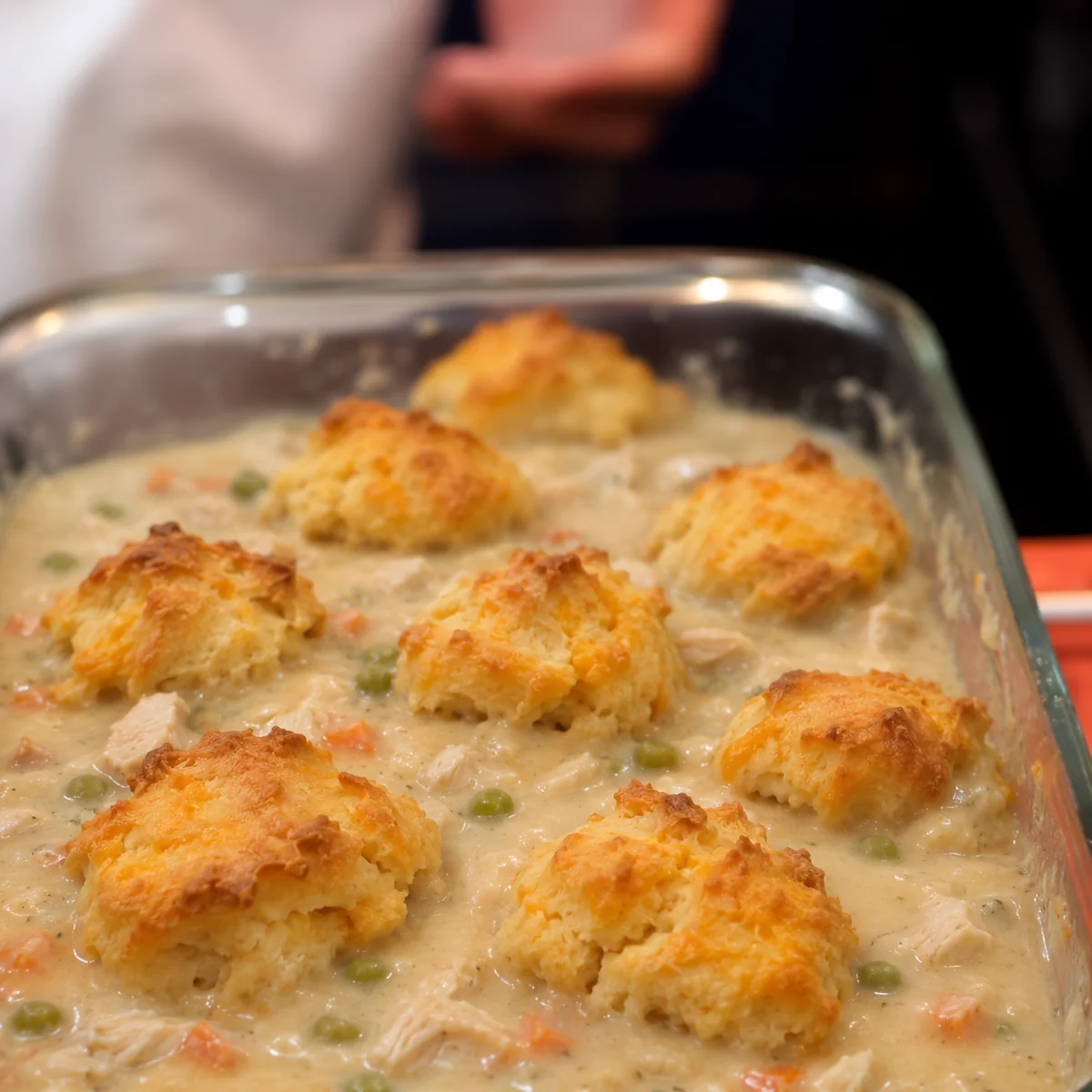
Start with cooked chicken
Use one pound of cooked boneless chicken, roughly three cups cut into bite-size pieces. Leftover roast chicken or a plain rotisserie chicken works well once the skin and bones are removed. A mixture of breast and thigh meat gives a pleasant balance, but either can be used. Avoid large pieces that make it difficult to serve a little chicken with each spoonful of sauce.
This recipe does not cook raw chicken in the filling. If starting with uncooked poultry, cook it separately until it reaches 165°F before measuring and assembling the cobbler. Keep cooked chicken refrigerated until needed, and include any time it has already spent in the refrigerator when planning leftovers. Baking it again does not restart its storage life.
My oven-roasted chicken is one way to prepare chicken for a meal and reserve some for another dish. For other uses of cooked poultry, homemade chicken fried rice and creamy chicken Caesar wraps follow different methods. Choose the recipe that suits the amount and seasoning of the chicken you have.
Soften the vegetables before making the sauce
Heat the oven to 400°F. Have a nine-by-thirteen-inch baking dish ready; a dish with enough depth to contain bubbling sauce is important. Melt three tablespoons of butter in a large saucepan or deep skillet over medium heat. Add one diced onion, two diced carrots, and two diced celery stalks. Cook for eight to ten minutes, stirring, until the vegetables begin to soften.
Cut the carrot and celery into small pieces, around a quarter inch, so they finish cooking without leaving hard chunks under the topping. Add two minced garlic cloves and one teaspoon of dried thyme, then cook for thirty seconds. The vegetables should smell fragrant and look softened, not deeply caramelized. Lower the heat if the garlic begins to colour quickly.
I prefer cooking these vegetables before adding the liquid because it gives better control over their texture. The peas are different: they only need to heat through and can be added later. There is no benefit to simmering them for the full vegetable-cooking stage, especially when using small frozen peas.
Build a sauce that flows around the chicken
Sprinkle five tablespoons of flour over the vegetables and stir for one minute. Gradually add two cups of low-sodium chicken broth, stirring well, then one cup of milk. Bring to a gentle simmer and cook for three to four minutes, stirring along the bottom. The sauce should thicken enough to coat a spoon but still move easily around the vegetables.
This follows the thickening principle explained in my béchamel sauce methods, though this filling uses both broth and milk. Do not reduce it to a stiff paste. The oven will remove more moisture and the biscuit undersides will absorb some sauce. If it is already too thick, loosen it with broth a tablespoon at a time before adding the topping.
Stir in the chicken, one cup of frozen peas, a quarter teaspoon of fine salt, and a quarter teaspoon of pepper. Heat until the filling is steaming and gently bubbling. Taste and adjust the salt according to your broth and chicken. I keep the initial salt modest because rotisserie chicken and cheddar can already contribute quite a bit.
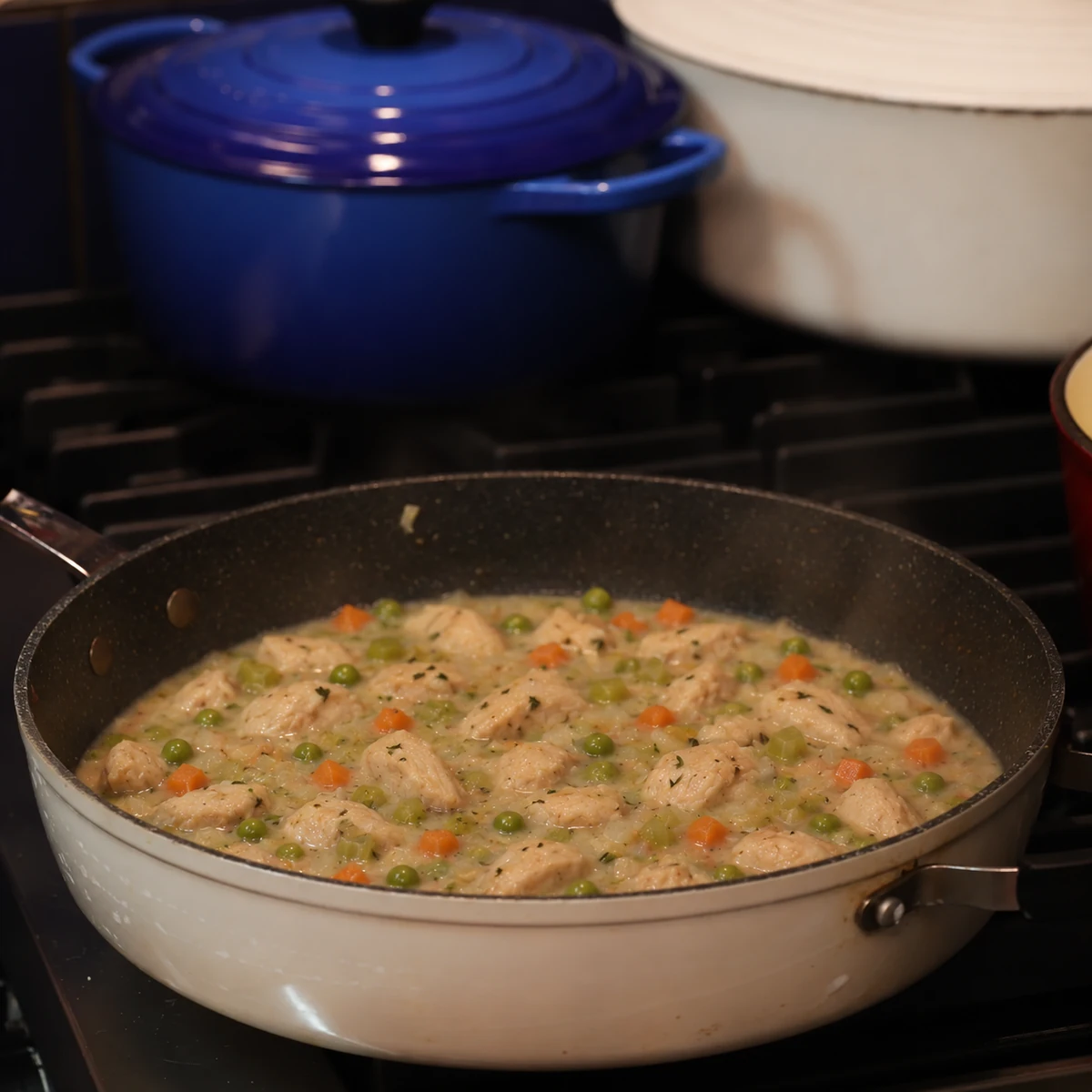
Mix a soft cheddar biscuit dough
For the topping, combine two cups of all-purpose flour, one tablespoon of baking powder, and half a teaspoon of fine salt. Cut in four tablespoons of cold butter until the mixture has coarse crumbs and a few small butter pieces. Stir in three ounces of grated sharp cheddar, about three-quarters of a cup, then add three-quarters of a cup of cold milk.
Fold just until a soft, rough dough comes together. It should be scoopable, not pourable like pancake batter and not dry enough to roll without cracking. If needed, add milk one teaspoon at a time, up to one extra tablespoon. Do not beat or knead the dough smooth. The small butter pieces and restrained mixing help the biscuits stay tender.
This oven topping differs from the steamed dough in my chicken and drop dumplings. Those dumplings cook under a lid, while these biscuits brown in dry oven heat. My classic chicken pot pie uses pastry instead. Neither topping should simply be swapped into this timing without checking its own cooking method.
Assemble while the filling is hot
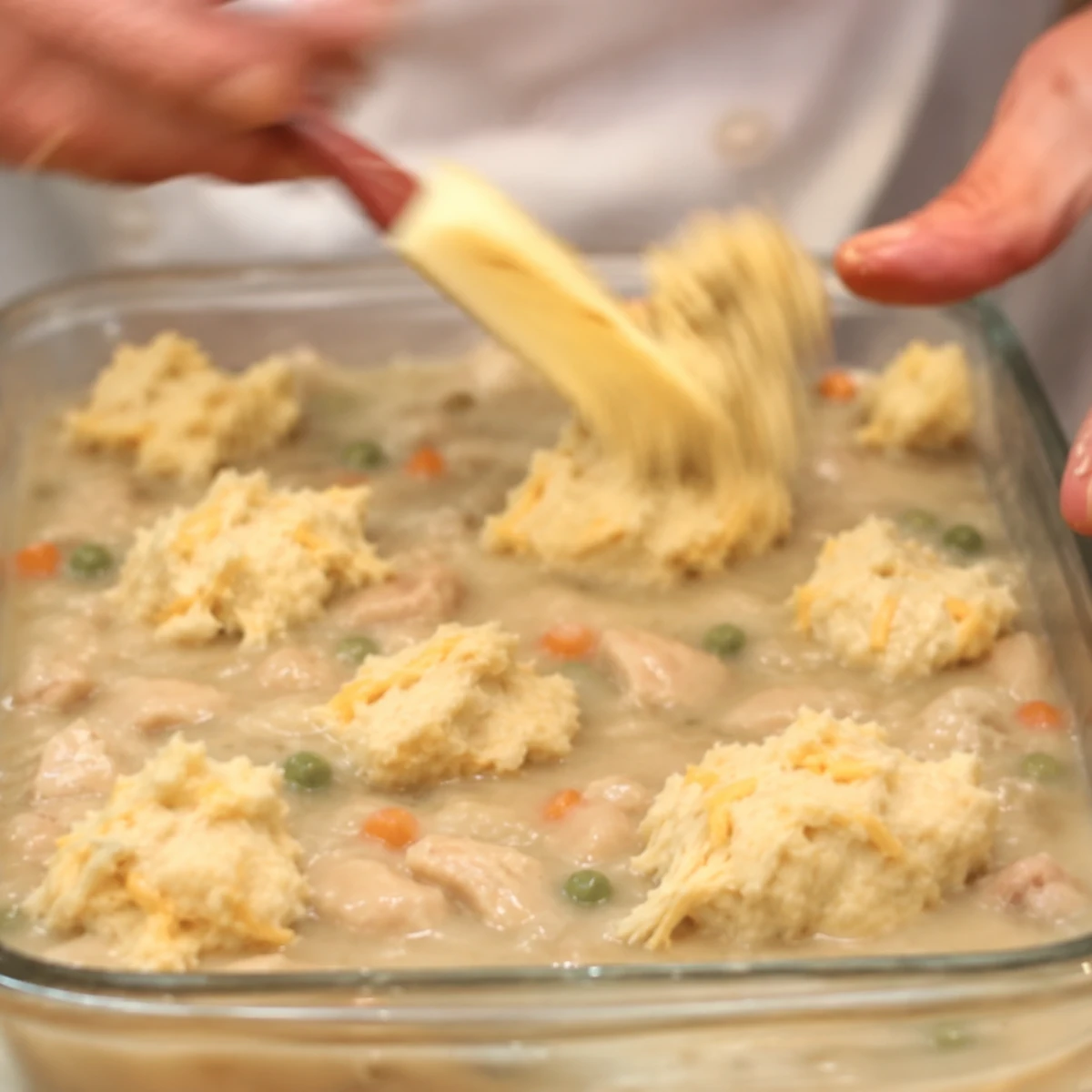
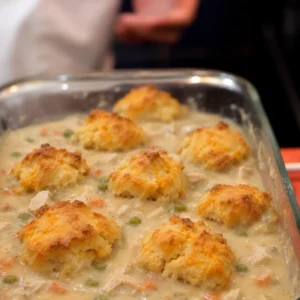
Transfer the hot chicken mixture to the baking dish. Drop the biscuit dough over it in eight roughly equal mounds, leaving small gaps so steam can escape and sauce remains visible. Do not flatten the dough into one sealed lid. A little unevenness looks natural and gives different browned ridges on the finished biscuits.
Set the dish on a rimmed sheet to catch possible drips, then bake for twenty-five to thirty minutes. The sauce should bubble between the biscuits, the tops should be golden, and the filling in the centre should reach at least 165°F. Open the centre of a biscuit to check that it is fluffy and cooked rather than shiny or gummy. Colour alone does not prove the dough underneath is done.
Rest before serving
If the biscuits brown before their centres are cooked, cover the dish loosely with foil and continue baking in short intervals. A deeper dish or cooler filling can extend the cooking time. Starting with hot filling makes the recipe more predictable. Let the finished cobbler rest ten minutes so the sauce thickens slightly and is easier to spoon onto plates.
I serve the biscuits with the chicken and vegetables underneath rather than trying to cut neat squares. Eight biscuit mounds divide across six generous servings; some portions can include part of a biscuit. The meal is meant to be spooned, with sauce around the topping, not lifted as a dry slice of pie.
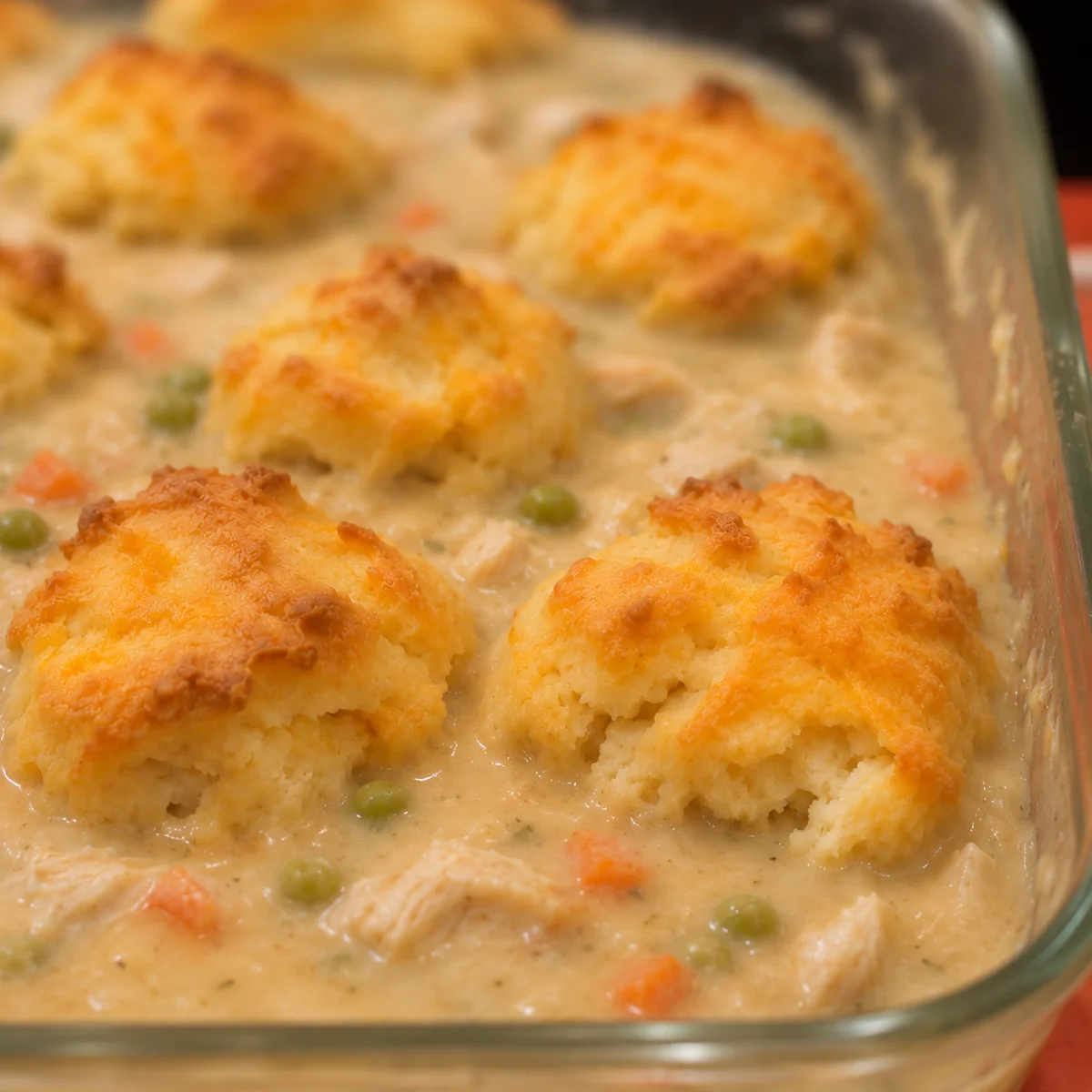
Keep the accompaniments simple
A romaine and endive salad provides a crisp contrast. Green bean salad with raspberry vinaigrette also works served separately. Since the cobbler already contains vegetables, starch, and chicken, there is little need for potatoes or bread alongside. For another chicken dinner, French chicken fricassee offers a pan-sauce approach without the baked topping.
Make ahead and handle leftovers
You may make the filling a day ahead, refrigerate it promptly, and reheat it until bubbling before assembling with fresh biscuit dough. Do not leave raw dough sitting on cold filling overnight. Refrigerate cooked leftovers within two hours and use within three days, or sooner if the chicken was already stored. Reheat covered until the centre reaches 165°F, then uncover briefly to refresh the topping. Freeze cooled portions up to two months if needed, expecting softer biscuits. My one-pan chicken and rice is another complete meal when you want a different starch and cooking method.
Chicken Cobbler with Homemade Cheddar Biscuits
Ingredients
- 3 tablespoons unsalted butter for the filling
- 1 medium onion diced (about 150 g)
- 2 medium carrots diced (about 150 g)
- 2 celery stalks diced (about 100 g)
- 2 garlic cloves minced
- 1 teaspoon dried thyme
- 5 tablespoons all-purpose flour for the sauce (about 40 g)
- 2 cups low-sodium chicken broth
- 1 cup milk for the sauce
- 1 pound cooked boneless chicken in bite-size pieces (about 3 cups)
- 1 cup frozen peas
- 1/4 teaspoon fine salt plus more to taste, for the filling
- 1/4 teaspoon black pepper
- 2 cups all-purpose flour for the topping (about 250 g)
- 1 tablespoon baking powder
- 1/2 teaspoon fine salt for the topping
- 4 tablespoons cold unsalted butter cubed
- 3 ounces sharp cheddar grated (about 3/4 cup)
- 3/4 cup cold milk plus up to 1 tablespoon if needed, for the topping
Instructions
- Heat oven to 400°F. Prepare a 9-by-13-inch baking dish.
- Melt filling butter in a large pan. Cook onion, carrot, and celery over medium heat 8–10 minutes. Add garlic and thyme for 30 seconds.
- Stir in sauce flour for 1 minute. Gradually add broth and milk; simmer 3–4 minutes, stirring, until lightly thickened. Add cooked chicken, peas, filling salt, and pepper; heat until gently bubbling and adjust seasoning.
- Mix topping flour, baking powder, and salt. Cut in cold butter, add cheddar, then fold in cold milk just until a soft dough forms. Add up to 1 tablespoon extra milk only if needed.
- Transfer hot filling to dish. Add dough in 8 mounds with gaps. Place dish on a rimmed sheet and bake 25–30 minutes, until golden, biscuit centres cooked through, and filling at least 165°F. Cover loosely if tops brown early and continue until done.
- Rest 10 minutes and serve in 6 portions.