Pepper Steak with Colorful Bell Peppers, Easy Bistro-Style Dinner
This steak dinner is based on my YouTube video, with a few adjustments since publication to make the method easier to reproduce at home. The main correction is precision: instead of relying only on pan heat and visual timing, I give clear doneness cues, a simple pan sauce, and enough detail for the potatoes, peppers, and asparagus to finish together.
This is not peppercorn steak or steak au poivre. It is a pan-seared steak served with green, yellow, orange, and red bell peppers, plus roasted Hasselback-style potatoes and asparagus. I make this when I want a full steak plate with vegetables, color, and a quick pan sauce without turning it into a cream sauce.
The reason this recipe works is the order. The potatoes go in first because they take the longest, then the peppers and asparagus are prepared while the oven does its job. The mistake to avoid is starting the steak too early. A thick steak rests better when everything else is ready, not when the potatoes still need 25 minutes.

Why This Version Works
In the video, I cook with a very hot pan, duck fat, colorful peppers, asparagus, and roasted potatoes. That gives a good result, but for a written recipe I prefer to make the heat more practical. A pan that is too hot can smoke hard, burn the fat, and char the steak before the inside reaches the right doneness.
What I look for here is a heavy pan that is hot enough to give a strong sizzle the moment the steak touches it. The fat should shimmer, not look angry and smoky. The steak should brown deeply, and when you flip it, the crust should be dark golden with some browned edges, not black and bitter.
This version is different from my richer steak recipes because the sauce stays light and pan-based. If you want a more classic bistro direction, you can look at my steak with mushroom sauce or my rib steak with mustard sauce. This one is more about the peppers, the beef, and the full plate. It also sits apart from my budget steak with baked potato because here the garnish is more generous and colorful, with asparagus and a quick reduction.
For a bigger steak night, my guide to steak dinners from pan to BBQ is a good place to compare methods.
Ingredients You Need
Use thick steaks if possible. A thin steak cooks too quickly and gives you less control. I like pieces around 12 to 14 oz each for this style of plate. That sounds generous, but this is a full steak dinner, not a small weeknight stir-fry.
The peppers are the identity of the dish. Green brings a sharper taste, red is sweeter, and yellow and orange sit in the middle. Together they make the plate look alive without needing much decoration.
Duck fat is excellent here. It helps the peppers and potatoes taste deeper, almost like something from a small bistro kitchen. You can use oil and butter instead, but duck fat gives a more rounded result.

For the sauce, I add beef stock or demi-glace because a pan needs liquid to become a sauce. Meat juices alone are not always enough. If the pan is dry, you will not get a real sauce, just a few browned spots and butter. If sauce technique is something you want to improve, my guide to deglazing a pan explains the basic movement clearly.
Step-by-Step Method
Start with the potatoes. Heat the oven to 375°F. Scrub the potatoes and keep the skin on. Cut thin slices across each potato, about 1/8 inch apart, but do not cut all the way through. The potato should open slightly as it cooks but still stay attached at the bottom.
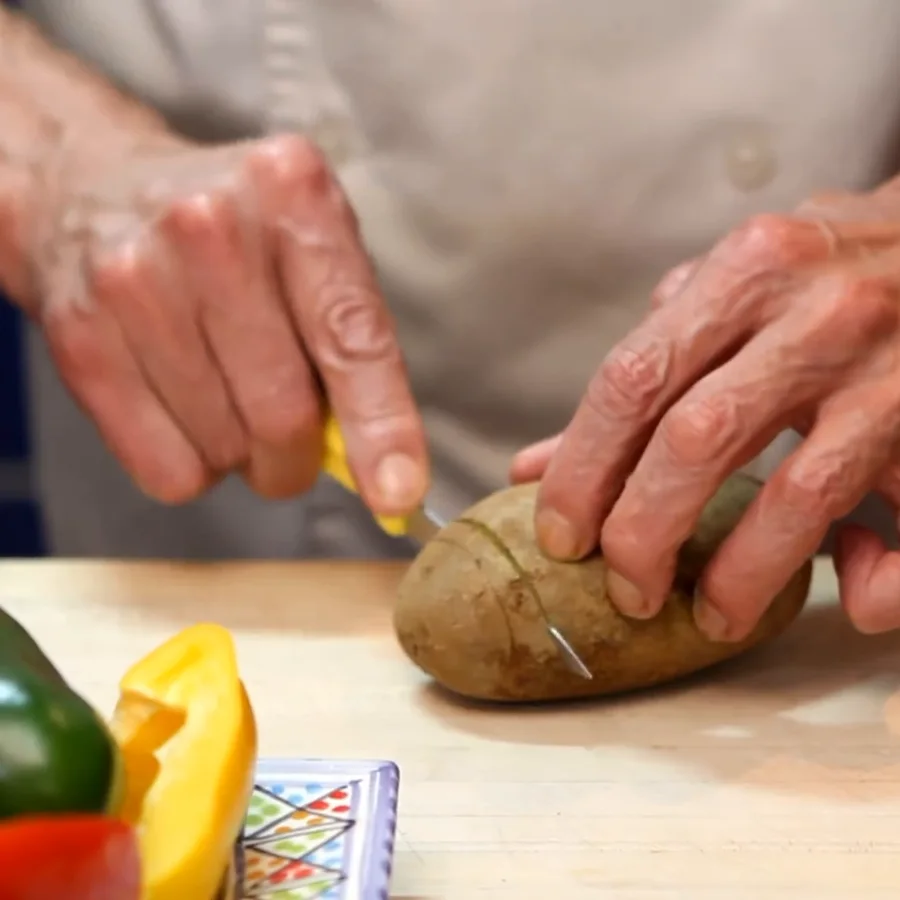
Brush them with duck fat or melted butter, season with salt and pepper, and put them in the oven. They need about 55 to 65 minutes. Halfway through, brush them again with a little fat from the pan if you can. You know they are ready when the edges are lightly golden and a knife slides into the center without resistance.
While the potatoes cook, slice the bell peppers into thick strips. Do not cut them too thin. Thin strips collapse and lose their shape. I prefer strips that still have a little bite after cooking.
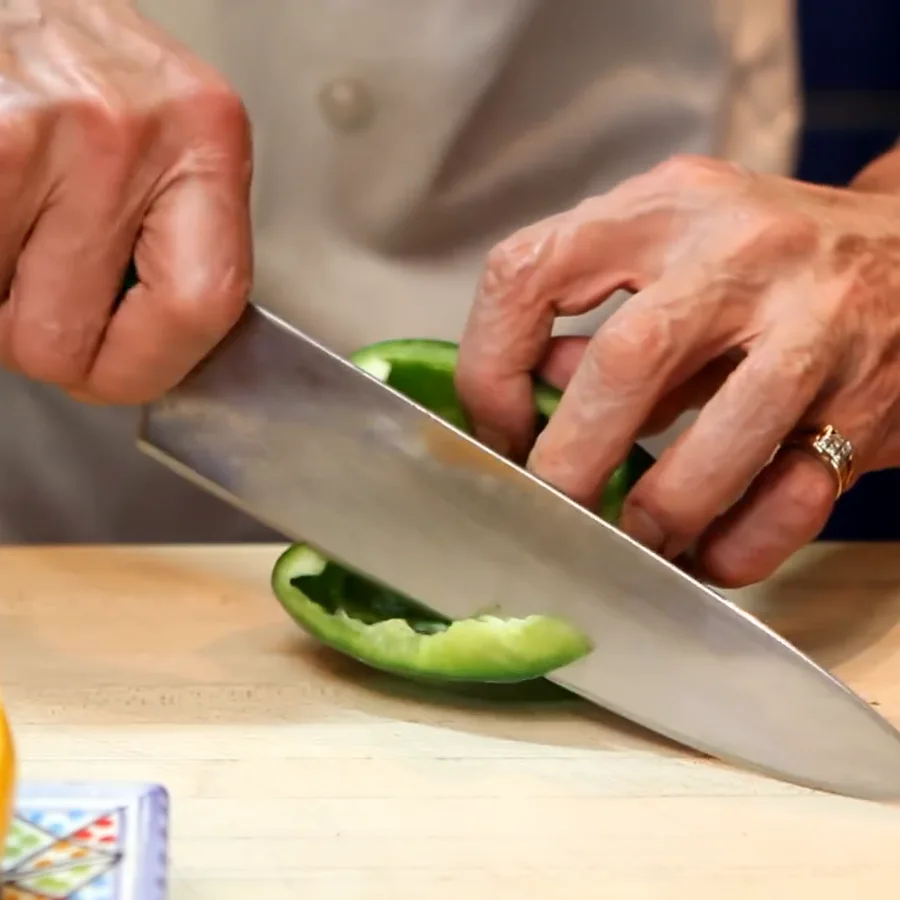
Heat a large pan over medium-high heat and add a small spoonful of duck fat. Add the peppers, season with salt, pepper, and thyme, then cook for 5 to 8 minutes. Stir, but do not move them nonstop. Let them touch the pan long enough to pick up a bit of color. At this point, they should look glossy, slightly softened, and still bright. Remove them and keep them warm.
Trim the woody ends from the asparagus. Bring salted water to a boil and cook the asparagus for 2 to 4 minutes, depending on thickness. Thin asparagus may only need 2 minutes. Medium asparagus usually takes 3. They should bend slightly but not look tired. Drain and keep warm.
Now cook the steaks. Pat them dry first. This matters. Moisture on the surface fights against browning, and the steak starts steaming before it sears. Season both sides well with salt and black pepper. If you are unsure about seasoning meat, my practical guide to seasoning a recipe is useful for understanding why salt needs to be present early enough to do its job.
Heat the pan until very hot, then add a thin film of duck fat. Lay in the steaks and listen. You want a strong sizzle. Sear for about 3 to 4 minutes on the first side, depending on thickness, then flip and cook the second side. For very thick steaks, lower the heat slightly after searing so the inside can finish without burning the crust.

The best way to avoid guessing is to use a thermometer. For medium-rare, pull the steak around 130°F to 135°F. For medium, aim closer to 140°F to 145°F. The temperature will rise a little as the meat rests. My internal cooking temperature chart is helpful if you want a wider reference for meats.

Rest the steaks for 5 to 8 minutes. Do not skip this. If you cut right away, the juices run out onto the board and the steak eats drier than it should.
For the sauce, keep the same pan. Pour off excess fat if there is too much, but keep the browned bits. Add beef stock or demi-glace and scrape the bottom with a wooden spoon. Let it bubble and reduce until slightly syrupy. Add a small knob of cold butter at the end and swirl the pan until the sauce looks shiny. If you like this kind of sauce, the method is close in spirit to a simple homemade brown gravy, just faster and built directly from the steak pan.

How to Serve It
Place the asparagus on the plate first. Add the peppers in the center, almost like a small warm vegetable garnish. Set the potato on the side, then place the steak slightly forward so it stays the focus.
Spoon the sauce over the steak and a little around the plate. Do not drown it. The sauce should season the meat, not hide the crust.
This is a hearty, protein-rich dinner with a good amount of vegetables on the plate. It is not a light salad meal, but it feels balanced because the sauce is not cream-based and the peppers bring sweetness and freshness.
It works year-round. In spring and early summer, asparagus makes sense. In colder months, use green beans, broccolini, mushrooms, or roasted carrots.
Substitutions
If you do not have duck fat, use a neutral oil for searing and finish the sauce with butter. For the potatoes, melted butter or olive oil works well.
For the steak, ribeye, striploin, sirloin, tenderloin medallions, or hanger steak can all work. Tenderloin cooks more gently and has less fat, so watch it carefully. For a more refined steak plate, my beef tenderloin medallions are a good comparison.
If you do not have asparagus, use green beans, broccolini, or zucchini. Keep the cooking short so the green vegetable still has color.
For the sauce, beef stock is easy. Demi-glace gives a deeper result. Red wine can be added, but keep it modest and let it reduce properly so the sauce does not taste sharp.
For the peppers, you can use only red and yellow if that is what you have, but the four-color mix is what makes the plate feel like the original video.
FAQ
Is this the same as steak au poivre?
No. Steak au poivre is usually made with cracked peppercorns and a rich sauce, often with cream or cognac. This recipe uses colorful bell peppers as the main garnish, so the word pepper refers to the vegetables.
Can I grill the steak instead?
Yes. Grill the steak, rest it, and make the peppers in a pan. You will lose the pan drippings for the sauce, so use beef stock, a little butter, and seasoning to make a quick sauce separately.
Can I make the potatoes ahead?
You can partially bake them earlier, then finish them in the oven before serving. They are best freshly roasted because the cut edges stay nicer.
How do I keep everything hot?
Keep the potatoes in the oven on low once they are cooked. Keep the peppers and asparagus warm, covered loosely. Cook the steak last, then rest it while you finish the sauce.
What is the biggest mistake?
Overheating the pan until the fat burns. A strong sear is good, but bitter smoke is not. If the pan starts smoking too aggressively before the steak goes in, lower the heat for a minute.
What to Serve With This Steak Dinner
If you want a richer potato side instead of the sliced roasted potatoes, serve it with classic gratin dauphinois or the more generous French-style creamy potato gratin.
For a crisp restaurant-style side, beer-batter onion rings are a good match. If you want something a little less rich, panko onion rings give crunch without feeling as heavy.
For a cold side, a simple classic macaroni salad works well beside steak, especially in summer. A cabbage and carrot salad with creamy dressing also cuts through the richness of the beef. For something fresher and lighter, serve a small flower mesclun salad before the main plate.

Pepper Steak with Colorful Bell Peppers, Easy Bistro-Style Dinner
Ingredients
- 3 beef steaks about 12 to 14 oz each
- 4 bell peppers 1 green, 1 yellow, 1 orange, and 1 red
- 3 medium potatoes
- 1 bunch asparagus
- 2 to 3 tbsp duck fat divided
- 1/2 cup beef stock or demi-glace
- 2 tbsp red wine optional
- 1 tbsp cold butter
- 1 tsp thyme fresh or dried
- Salt to taste
- Black pepper to taste
Instructions
- Preheat the oven to 375°F.
- Scrub the potatoes. Slice them thinly across the top, about 1/8 inch apart, without cutting all the way through.
- Brush the potatoes with duck fat or melted butter. Season with salt and pepper. Bake for 55 to 65 minutes, until tender in the center and lightly golden on the edges.
- Slice the bell peppers into thick strips.
- Heat a large pan over medium-high heat. Add a little duck fat, then add the peppers. Season with salt, pepper, and thyme. Cook for 5 to 8 minutes, until glossy, lightly colored, and still slightly firm. Remove and keep warm.
- Trim the asparagus. Boil in salted water for 2 to 4 minutes, depending on thickness. Drain and keep warm.
- Pat the steaks dry. Season both sides with salt and black pepper.
- Heat a heavy pan until very hot. Add a thin film of duck fat. Sear the steaks for 3 to 4 minutes per side, or until cooked to your preferred doneness. For medium-rare, remove around 130°F to 135°F. For medium, remove around 140°F to 145°F.
- Rest the steaks for 5 to 8 minutes.
- Add beef stock or demi-glace to the steak pan. Add red wine if using. Scrape the browned bits from the bottom and reduce until slightly thickened.
- Turn off the heat and swirl in the cold butter until the sauce is glossy.
- Plate the asparagus, peppers, potatoes, and steaks. Spoon a little sauce over the meat and serve hot.
Video
Notes
FAQ
Is this the same as steak au poivre?
No. Steak au poivre is usually made with cracked peppercorns and a rich sauce, often with cream or cognac. This recipe uses colorful bell peppers as the main garnish, so the word pepper refers to the vegetables.Can I grill the steak instead?
Yes. Grill the steak, rest it, and make the peppers in a pan. You will lose the pan drippings for the sauce, so use beef stock, a little butter, and seasoning to make a quick sauce separately.Can I make the potatoes ahead?
You can partially bake them earlier, then finish them in the oven before serving. They are best freshly roasted because the cut edges stay nicer.How do I keep everything hot?
Keep the potatoes in the oven on low once they are cooked. Keep the peppers and asparagus warm, covered loosely. Cook the steak last, then rest it while you finish the sauce.What is the biggest mistake?
Overheating the pan until the fat burns. A strong sear is good, but bitter smoke is not. If the pan starts smoking too aggressively before the steak goes in, lower the heat for a minute.🔗 Useful Links
🛒 Michel Dumas Shop : Explore our kitchen essentials, including aprons and knives.
🌐 Linktree : Access all our important links in one place.
📱 YouTube | Instagram | Facebook | TikTok : Follow us for the latest recipes and culinary tips.