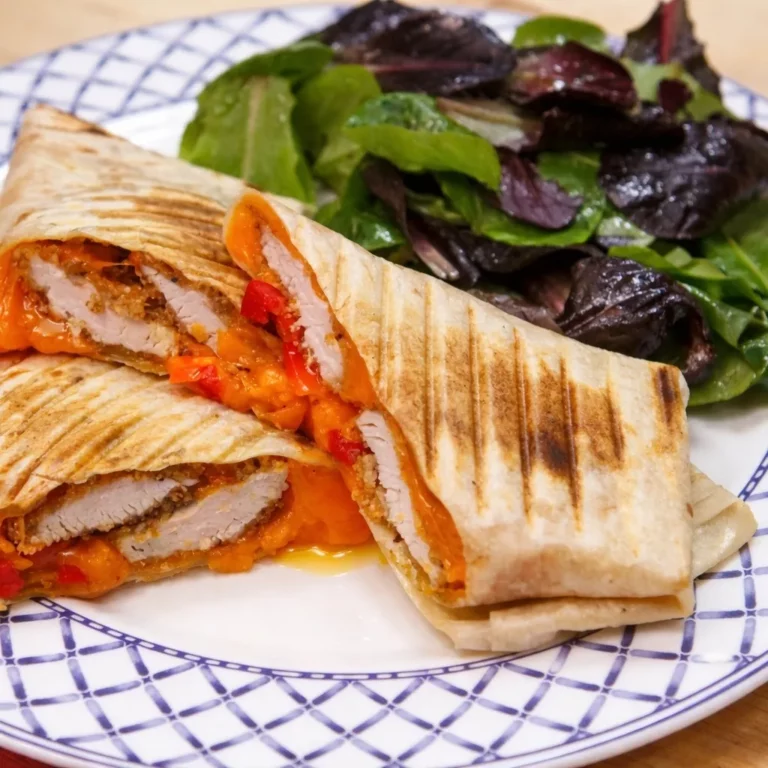
Easy Pan-Seared Chicken Hearts with Garlic and Parsley
These pan-seared chicken hearts cook quickly in duck fat, then get tossed with fresh garlic and parsley for a deeply savoury, budget-friendly meal. The method works because the pan is properly heated before the hearts go in; crowding a cool skillet is the mistake that makes them steam instead of brown. Look for a dark golden surface, a lively sizzle, and an internal temperature of 165°F.
This recipe is based on my original YouTube video, with a few adjustments since publication. I clarified the ingredient quantities, added more preparation details, and changed the doneness instructions so the poultry reaches a safe internal temperature.
Chicken hearts with persillade are a rustic skillet dish made with inexpensive poultry hearts, finely chopped garlic, fresh parsley, and cooking fat. They can be served as a quick main dish with salad or potatoes, or divided into smaller portions as a warm appetizer.
{VIDEO}
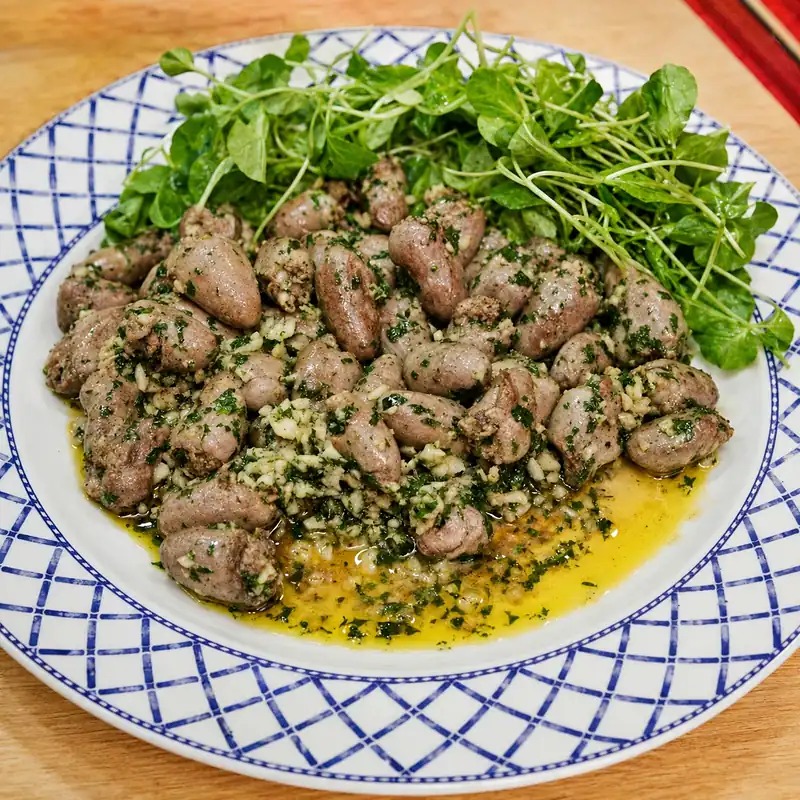
What Makes This Recipe Different
Chicken hearts have a firmer, meatier texture than chicken breast or thigh meat. They also have a more pronounced savoury flavour, but they are not as strong as liver. If you already enjoy recipes such as chicken livers with garlic butter and potatoes, this is another economical way to cook poultry offal without using a heavy sauce.
Unlike my duck hearts with red wine and morel sauce, this version is fast and uncomplicated. There is no wine reduction or cream. The hearts are cooked directly in the skillet, and the persillade goes in at the end so the garlic stays fragrant and the parsley keeps its fresh colour.
I use duck fat because it handles the heat well and gives the surface a rich, rounded flavour. It also suits this kind of French bistro cooking. The finished dish belongs naturally beside the other rustic dishes in my collection of French bistro recipes.
Ingredients You Need
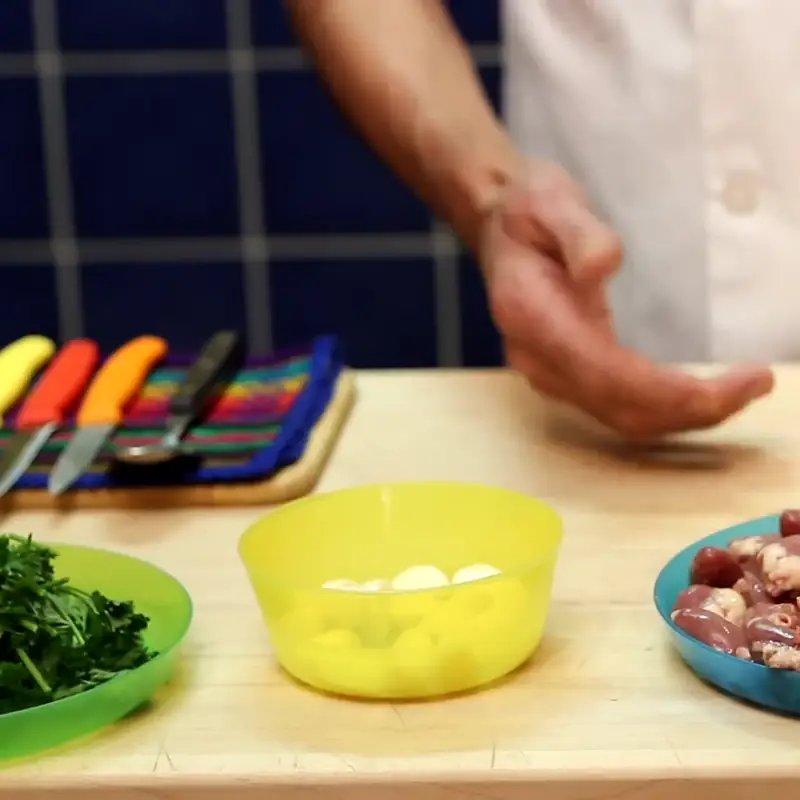
Chicken hearts: You need 14 ounces of fresh chicken hearts. Choose hearts that are similar in size so they finish cooking at roughly the same time.
Duck fat: One tablespoon is enough for a large skillet. The hearts do not need to swim in fat.
Garlic: Three large cloves provide a noticeable garlic flavour without overpowering the meat.
Fresh parsley: Use about one loosely packed cup of flat-leaf parsley. Remove the thick stems before chopping.
Salt and pepper: Simple seasoning is all that is required.
Lemon juice: A small amount added after cooking cuts through the richness of the duck fat.
Salad greens and vinaigrette: These are optional, but they turn the hearts into a more complete plate.
Chicken hearts are a protein-rich ingredient with iron and B vitamins, although this is still a rich dish because of the duck fat. Serving them with lightly dressed greens keeps the plate balanced without changing the character of the recipe.
Step-by-Step Instructions
1. Prepare the chicken hearts
Trim away any tough connective pieces and excessive exterior fat. If a few hearts are much larger than the others, cut those in half so everything cooks more evenly. There is no need to rinse raw poultry. Instead, pat the hearts thoroughly dry with paper towel.
This drying step matters more than it appears. Moist hearts cool the skillet and release liquid, while dry ones begin browning almost immediately.
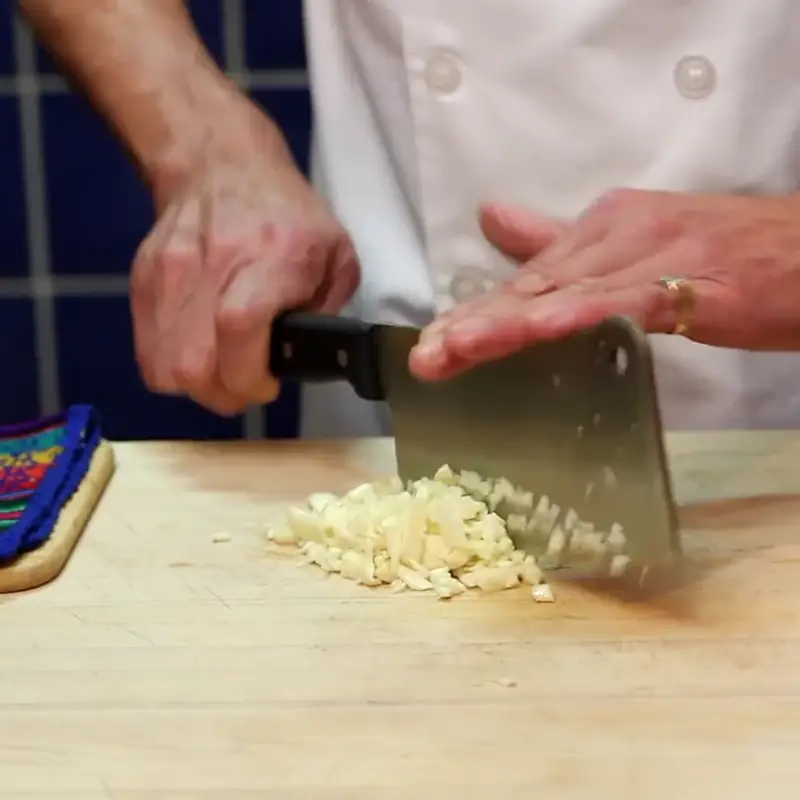
2. Make the persillade
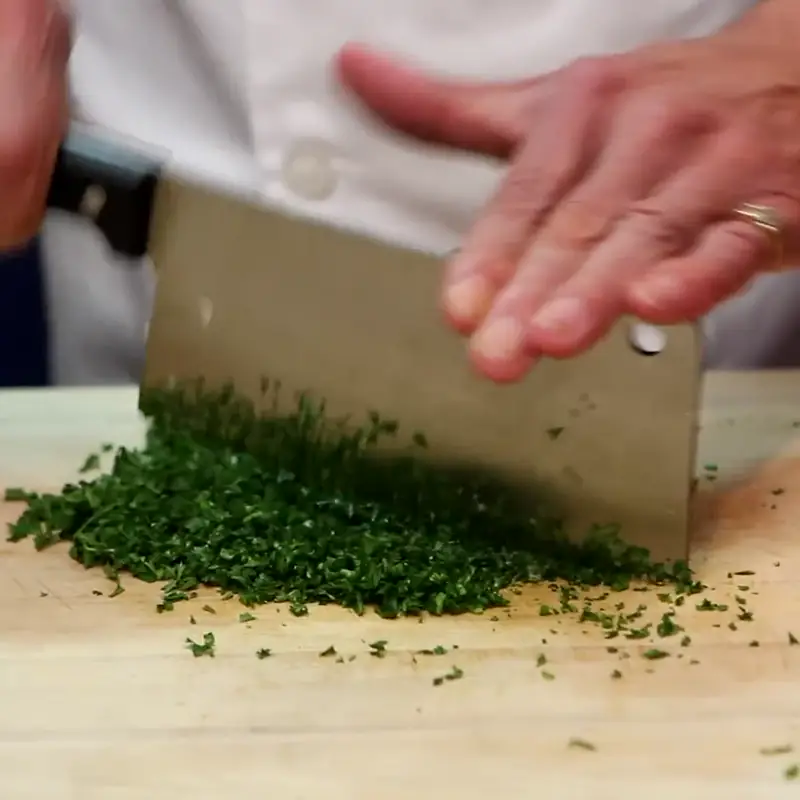
Peel the garlic and chop it very finely. Gather the parsley leaves and chop them separately until fine but not wet or crushed. Combine the garlic and parsley in a small bowl.
I prefer to prepare the two separately because garlic usually needs more chopping than parsley. If everything goes into a food processor together, the parsley can turn into a damp paste before the garlic is fine enough.
3. Heat the skillet
Set a large, heavy skillet over medium-high to high heat. A 12-inch skillet works well for 14 ounces of hearts. Add the duck fat and let it melt.
The pan is ready when the fat moves easily across the surface and a heart placed in the skillet produces an immediate, strong sizzle. The 180°C mentioned in the original video refers to a hot cooking surface, not an oven temperature.
4. Sear without crowding
Season the hearts with the salt and pepper, then place them in the skillet in a single layer. Leave them undisturbed for about two minutes to develop their first browned side.
Turn or toss them and continue cooking for another three to five minutes. If your skillet is smaller than 12 inches, cook in two batches. Packing them tightly into a small pan will cause them to release moisture and become grey rather than golden.

5. Check the internal temperature
Check several of the largest hearts with an instant-read thermometer. Poultry hearts should reach 165°F internally. Colour alone is not a reliable way to judge poultry doneness, so the rosy centre shown in the original video should not be used as the final test.
For more information about checking different meats accurately, consult my internal cooking temperature chart. The goal is to reach the required temperature without continuing to cook the hearts long afterward, since unnecessary extra cooking can make them firm.
6. Add the persillade
Reduce the heat to medium-low. Add the chopped garlic and parsley and toss continuously for 30 to 45 seconds. The garlic should smell fragrant but should not take on a dark brown colour.
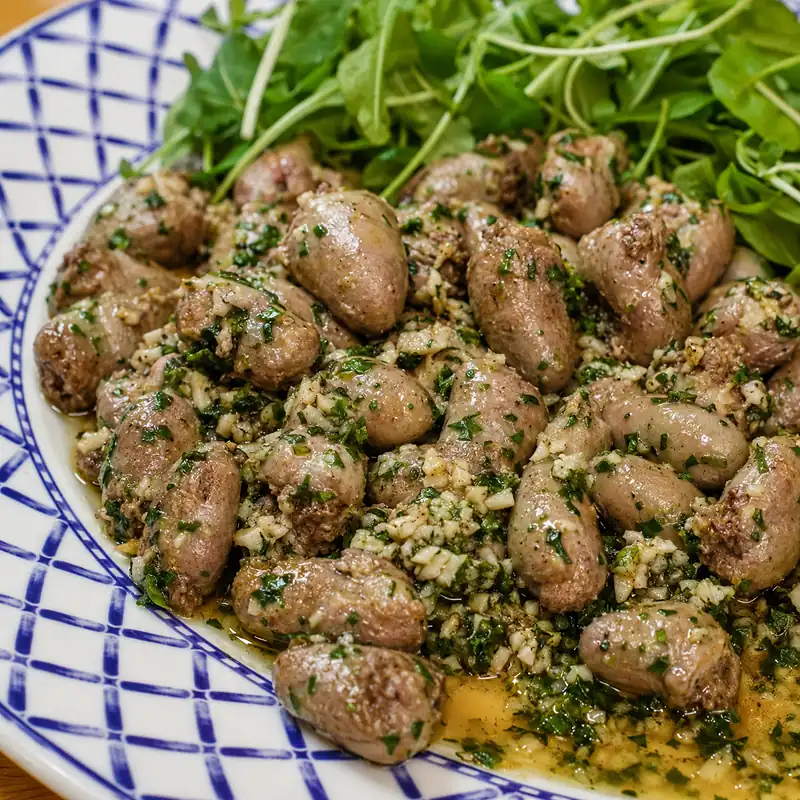
Remove the skillet from the heat and add the lemon juice. Taste and adjust the salt and pepper. At this point, the pan should smell strongly of fresh garlic and parsley, with only a small amount of seasoned fat remaining around the hearts.

7. Dress and serve
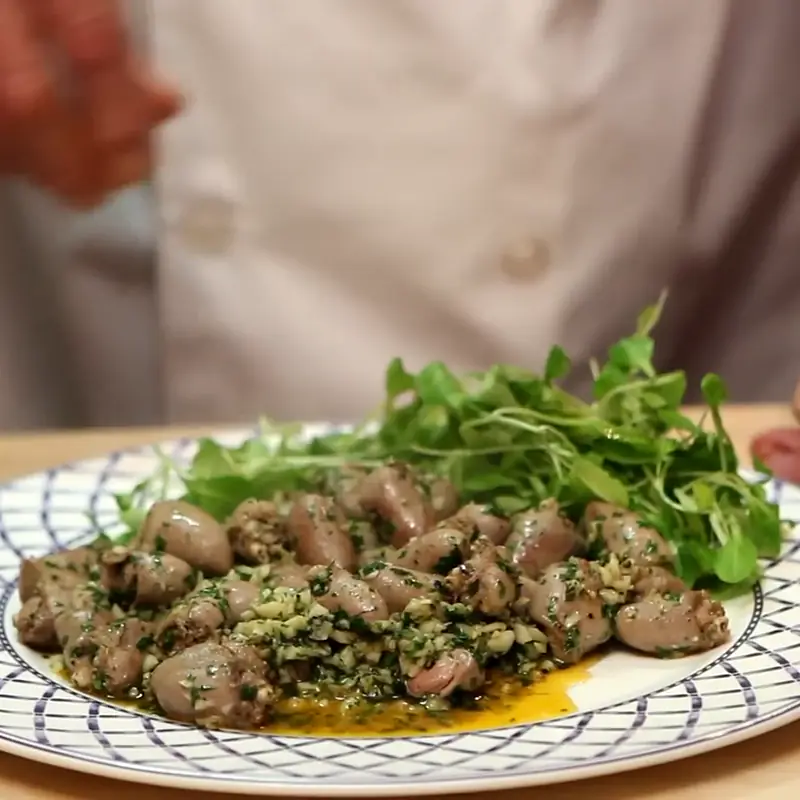
Toss the salad greens with the vinaigrette and arrange them on the plates. Spoon the hot hearts and persillade alongside the salad, then serve immediately.
The vinaigrette provides additional acidity, which is useful against the rich duck fat. If you are serving the hearts without salad, do not omit the lemon unless you are adding another acidic side dish.
Common Problems and How to Avoid Them
If the hearts are pale and surrounded by liquid, the pan was not hot enough, they were not sufficiently dried, or the skillet was overcrowded. Let excess moisture evaporate before adding the persillade, since garlic added to a watery skillet will taste boiled rather than toasted.
Burned garlic is another common problem. The pan used for searing is much too hot for several minutes of garlic cooking. Reduce the heat and add the persillade only after the hearts are nearly finished.
Tough hearts are usually overcooked or unevenly sized. Trim and sort them before cooking, monitor the largest pieces with a thermometer, and remove the pan from the heat once they reach 165°F. Do not continue cooking them simply to achieve a darker centre.
What to Serve With Chicken Hearts
A simple green salad is the lightest option. The combination of lettuce, a sharp vinaigrette, and hot persillade works particularly well. My romaine and endive salad has enough bitterness and crunch to stand up to the rich hearts. For something more delicate, try a quick flower and mesclun salad.
Potatoes make the meal more substantial. Duck fat potatoes with garlic and parsley repeat the main flavours of the skillet, while French-style Lyonnaise potatoes add soft onions. For a quieter side that absorbs the pan juices, choose homemade mashed potatoes.
Substitutions
If duck fat is unavailable, replace it with one tablespoon of neutral cooking oil. Butter alone is more likely to burn during the initial high-heat sear, but you can add a small pat of butter with the persillade after reducing the heat.
Curly parsley can replace flat-leaf parsley, although its texture is slightly coarser. Cilantro will work technically, but it changes the French persillade character of the recipe. If fresh garlic is too strong for your taste, use two cloves rather than replacing it with garlic powder.
Lamb’s lettuce, arugula, romaine, or mixed greens can all accompany the hearts. Browse these easy salad recipes or these vegetable side dishes for additional options.
Chicken gizzards are not a direct substitute. Their texture and required cooking method are different, so they should not be dropped into this quick skillet recipe using the same timing.
FAQ
What do chicken hearts taste like?
They taste savoury and noticeably meatier than chicken breast, but they are milder than chicken liver. The texture is compact and pleasantly firm when they are cooked properly.
Do chicken hearts need to be cleaned before cooking?
They usually need some light trimming. Remove tough connective pieces and excessive exterior fat, then pat the hearts dry. Do not rinse raw poultry in the sink.
Can chicken hearts be served pink?
For a publicly reproducible recipe, cook poultry hearts to an internal temperature of 165°F. The colour inside can vary, so use an instant-read thermometer rather than judging doneness only by appearance.
Why are my chicken hearts tough?
They may have cooked too long, or a mixture of large and small hearts may have caused some pieces to overcook before the others were ready. Even out the sizes before cooking and remove them from the heat once the largest pieces reach the proper temperature.
Can I prepare the persillade in advance?
Yes. Chop the garlic and parsley several hours ahead and refrigerate them in a covered container. For the freshest flavour and colour, do not cook the mixture until the hearts are almost ready.
How should leftovers be stored?
Refrigerate cooled leftovers promptly in an airtight container for up to three days. Reheat them gently in a skillet only until hot, since prolonged reheating can make their texture firmer.
Suggested Posts
For more rustic ideas, explore my collection of traditional French recipes.
Chicken livers with garlic butter and potatoes
Duck hearts with red wine and morel sauce
Duck fat potatoes with garlic and parsley
French-style Lyonnaise potatoes
Romaine and endive green salad
Easy Pan-Seared Chicken Hearts with Garlic and Parsley
Ingredients
- 14 ounces chicken hearts
- 1 tablespoon duck fat
- 3 large garlic cloves finely chopped
- 1 loosely packed cup fresh flat-leaf parsley leaves finely chopped
- 1/2 teaspoon fine sea salt
- 1/4 teaspoon freshly ground black pepper
- 2 teaspoons fresh lemon juice
- 4 cups tender salad greens optional
- 3 tablespoons vinaigrette optional
Instructions
- Trim the tough connective pieces and excess fat from the chicken hearts. Cut unusually large hearts in half and pat everything thoroughly dry.
- Finely chop the garlic and parsley separately, then combine them in a small bowl.
- Heat a large, heavy skillet over medium-high to high heat and melt the duck fat.
- Season the hearts with salt and pepper. Sear them in a single layer for 2 minutes without moving them.
- Turn the hearts and cook for another 3 to 5 minutes, checking that the largest pieces reach 165°F internally.
- Reduce the heat to medium-low. Add the garlic and parsley and toss for 30 to 45 seconds without browning the garlic.
- Remove from the heat, add the lemon juice, and adjust the seasoning.
- Toss the greens with vinaigrette, divide them among the plates, and serve with the hot chicken hearts.