Rib Steak with Mustard Sauce
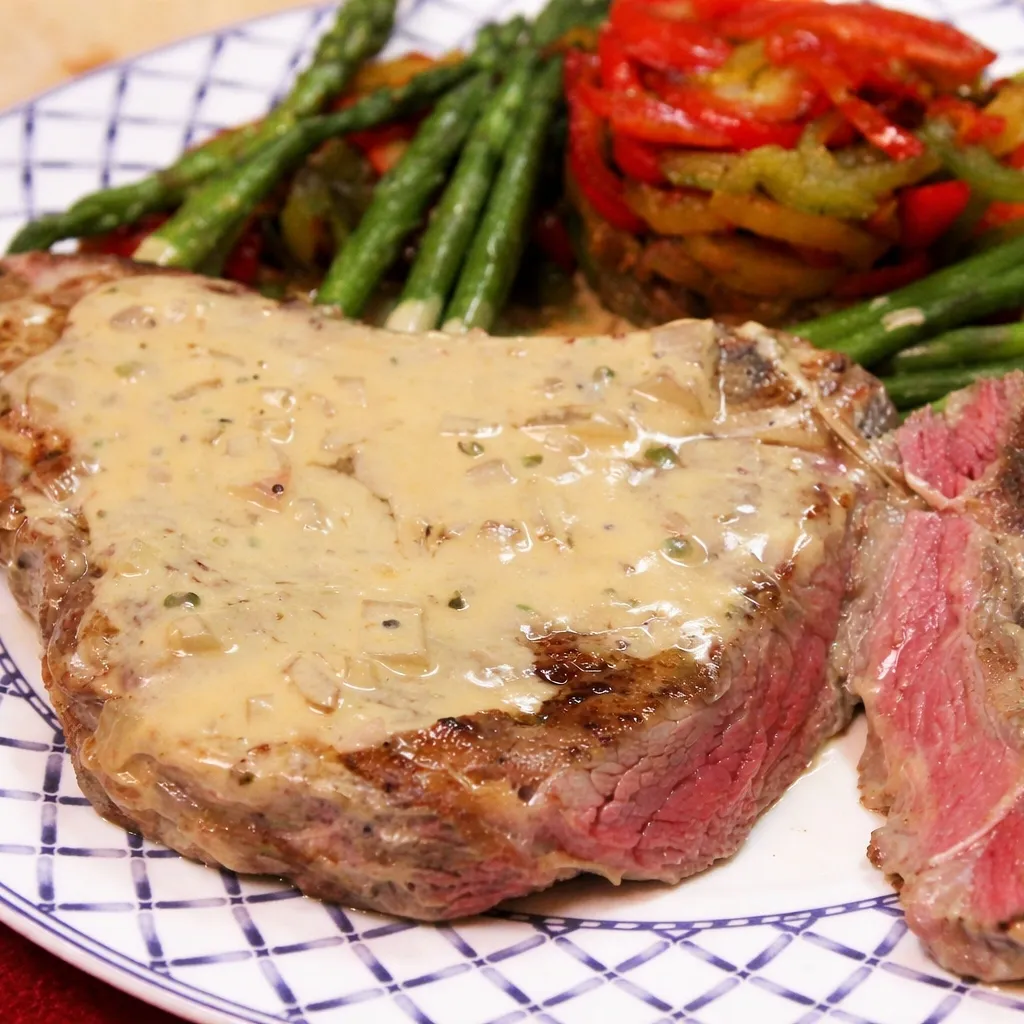
A thick rib steak with mustard sauce is a classic steakhouse-style dinner that feels a little more refined than a basic pan-seared steak, but it is still very doable at home. What makes this version different is the balance between the richness of the beef, the sweetness of slow-cooked peppers, the freshness of asparagus, and a mustard cream pan sauce that stays sharp instead of becoming too heavy.
This is the kind of steak dinner that works for a weekend supper, a date night meal, or a more elegant family dinner when you want something comforting without going into a long braise like classic boeuf bourguignon or a slow, sauce-heavy dish. It is also based on my YouTube video, with a few adjustments since publication so the proportions are easier to follow and the final result is more reliable in a home kitchen.
What I like about making steak this way is that the sauce is built right in the pan after the meat cooks. The browned bits left behind give depth, the mustard cuts through the richness, and the cream rounds everything out without taking over. It is not meant to be as aggressive as a peppercorn sauce or as powerful as a blue cheese topping. It sits somewhere in between, with enough body for a rib steak but still enough brightness to keep the plate lively.
If you already enjoy beef dinners like ribeye steak with bordelaise sauce,steak with beurre maître d’hôtel, or French peppercorn steak, this mustard version gives you another direction to explore. It is less wine-driven than bordelaise, less butter-led than herb butter steak, and softer than a roquefort or mushroom sauce.
Why this recipe works
A rib steak already brings plenty of flavor because of its marbling and bone. That means the sauce should support the meat, not bury it. Here, the shallot, white wine, stock, mustard, and cream create a sauce with enough structure to coat the steak while still letting the beef stay in front.
The peppers matter too. They add sweetness and softness, which helps balance the tang of Dijon and the slight bitterness of asparagus. It makes the plate feel complete rather than just meat with sauce. If you like building full steak dinners, this recipe fits into the same family of meals as steak with warm herb butter emulsion or a simpler creamy mushroom steak, but with a cleaner mustard profile.
From a nutrition point of view, this is rich, protein-forward comfort food. The asparagus and peppers keep it from feeling too heavy, and you can control the amount of sauce you use on the plate.
Ingredients
For the steak
- 1 bone-in rib steak, about 1 1/4 pounds
- 1 teaspoon kosher salt
- 1/2 teaspoon black pepper
- 2 teaspoons neutral oil
For the peppers
- 2 red bell peppers, seeded and sliced
- 1 shallot, thinly sliced
- 1 tablespoon neutral oil
- Salt, to taste
- Black pepper, to taste
For the asparagus
- 1 bunch asparagus, trimmed
- Salted water, for blanching

For the mustard sauce
- 1 shallot, finely minced
- 1/3 cup dry white wine
- 1/2 cup beef stock or reduced brown stock
- 1 to 1 1/2 tablespoons Dijon mustard
- 2/3 cup cooking cream or heavy cream
- Salt, to taste
- Black pepper, to taste
Step-by-step instructions
1. Blanch the asparagus
Bring a pot of salted water to a boil. Add the asparagus and cook for about 2 to 3 minutes, depending on thickness. You want them tender but still bright and slightly firm. Drain right away and set them aside.
You can cool them quickly under cold water if you want to hold them longer before serving. If the asparagus are very thick, peel the lower part of the stalks first.
2. Cook the peppers
Heat 1 tablespoon of oil in a skillet over medium to medium-high heat. Add the sliced bell peppers and the sliced shallot. Season with salt and pepper.

Cook slowly, stirring from time to time, until the peppers soften and begin to caramelize lightly. This should take about 10 to 15 minutes. They should not be raw or watery. They should be glossy, tender, and a little sweet. Set them aside and keep warm.
This garnish gives the plate a different feel than serving the steak with only potatoes. It is one of the details that separates this dish from a more straightforward bistro plate like Salisbury steak or a simple black pepper beef.
3. Season and sear the rib steak
Pat the steak dry with paper towels. Season both sides with the salt and pepper.

Heat a heavy skillet until very hot. Add the oil, then place the steak in the pan. Sear hard to build color. The video suggests a very high-heat start, and that is the right idea here. Give the first side a strong sear, then flip and continue cooking, turning as needed for an even crust.
For a steak about 1 1/4 inches thick, medium-rare usually lands around 4 to 5 minutes per side total, depending on your pan and the exact thickness. Use your judgment and cook to your preferred doneness

Once cooked, transfer the steak to a plate and let it rest for at least 5 to 8 minutes. Resting is essential for a juicy result.
4. Build the mustard sauce
Lower the heat slightly. In the same pan, add the minced shallot. Cook for about 30 seconds to 1 minute, just until softened.
Pour in the white wine and scrape up the browned bits from the pan. Let the wine reduce by about half. Add the beef stock and continue reducing for another minute or two.
Whisk in the Dijon mustard, then pour in the cream. Simmer gently until the sauce thickens enough to coat a spoon. Taste and adjust with salt and black pepper.

The goal is a sauce that is smooth and lightly sharp, not overly thick and not too aggressive with mustard. If you enjoy steak sauces with a more pronounced dairy note, you might also like steak with roquefort sauce, but this mustard version stays more balanced and versatile.

If you want to understand the kind of stock base that gives steak sauces more depth, a good brown stock makes a real difference, just like in recipes built on neutral brown veal stock.
5. Reheat the asparagus
Just before serving, return the asparagus to the pan for 30 seconds, or warm them separately. You do not need to cook them again, only heat them through.

6. Plate the dish
Spoon the peppers onto the plate first. Add the asparagus beside or over them. Place the rested rib steak on top or alongside the vegetables, then spoon the mustard sauce over part of the meat.

Serve right away.
Substitutions
Rib steak is ideal here because it is flavorful and generous, but you can also use a strip steak or a thick boneless ribeye. A sirloin works too, though it will be a little leaner.

For the mustard, Dijon is the best fit. Whole grain mustard can be added in a small amount for texture, but do not replace all the Dijon or the sauce loses its smoothness.
For the cream, a lighter cooking cream works if that is what you use at home, but heavy cream gives the best texture and a more stable sauce.
For the stock, beef stock is the obvious choice. If you have a homemade brown stock, even better.
You can swap asparagus for green beans or serve this steak with potatoes instead. It pairs especially well with Parisian potatoes,mashed potatoes, or Lyonnaise potatoes.
Frequently asked questions
What is the best doneness for rib steak with mustard sauce?
Medium-rare is usually the sweet spot. The meat stays juicy, and the sauce has enough richness without overpowering the steak.
Can I make the sauce ahead of time?
It is best made in the pan after the steak cooks because the fond adds a lot of flavor. You can prep the shallots, peppers, and asparagus in advance, though.
Can I grill the steak instead?
Yes. Grill the steak, then make the sauce in a skillet separately. You will lose some of the pan flavor, but it will still be very good.
Is this the same as steak au poivre?
No. Peppercorn steak has a more forceful pepper profile and often leans on cream and cognac. This recipe is built around Dijon mustard, which gives it a different kind of sharpness. If you want that classic alternative, French peppercorn steak is the closer match.
What side dish goes best with this?
Potatoes are the easiest match, especially if you want a full steakhouse-style meal. A crisp salad also works well if you want the plate to feel lighter.
What to serve with rib steak with mustard sauce
For potatoes, this steak is excellent with Parisian potatoes,mashed potatoes, or Lyonnaise potatoes.

For a lighter pairing, serve it with a peppery green salad like steak salad with arugula.
If you want to explore more steak dinners on the site, take a look at ribeye steak with bordelaise sauce,steak with beurre maître d’hôtel,steak with warm herb butter emulsion,creamy mushroom steak, and steak with roquefort sauce.
Rib Steak with Mustard Sauce
Ingredients
- 1 bone-in rib steak about 1 1/4 pounds
- 1 teaspoon kosher salt
- 1/2 teaspoon black pepper
- 2 teaspoons neutral oil
- For the peppers
- 2 red bell peppers seeded and sliced
- 1 shallot thinly sliced
- 1 tablespoon neutral oil
- Salt to taste
- Black pepper to taste
- For the asparagus
- 1 bunch asparagus trimmed
- For the sauce
- 1 shallot finely minced
- 1/3 cup dry white wine
- 1/2 cup beef stock
- 1 to 1 1/2 tablespoons Dijon mustard
- 2/3 cup cooking cream or heavy cream
- Salt to taste
- Black pepper to taste
Instructions
- Blanch the asparagus in salted boiling water for 2 to 3 minutes. Drain and reserve.
- Cook the sliced peppers and shallot in oil over medium heat until soft and lightly caramelized. Season with salt and pepper. Reserve.
- Pat the rib steak dry. Season with salt and pepper.
- Heat a skillet until very hot. Add the oil and sear the steak on both sides until well browned and cooked to your preferred doneness. Rest for 5 to 8 minutes.
- In the same pan, cook the minced shallot for 30 seconds. Deglaze with white wine and reduce by half.
- Add the beef stock and reduce briefly. Whisk in the Dijon mustard, then the cream. Simmer until the sauce lightly coats a spoon. Adjust seasoning.
- Reheat the asparagus briefly.
- Plate the peppers, asparagus, and steak. Spoon the mustard sauce over the steak and serve immediately.
Video
Notes
Frequently asked questions
What is the best doneness for rib steak with mustard sauce?
Medium-rare is usually the sweet spot. The meat stays juicy, and the sauce has enough richness without overpowering the steak.Can I make the sauce ahead of time?
It is best made in the pan after the steak cooks because the fond adds a lot of flavor. You can prep the shallots, peppers, and asparagus in advance, though.Can I grill the steak instead?
Yes. Grill the steak, then make the sauce in a skillet separately. You will lose some of the pan flavor, but it will still be very good.Is this the same as steak au poivre?
No. Peppercorn steak has a more forceful pepper profile and often leans on cream and cognac. This recipe is built around Dijon mustard, which gives it a different kind of sharpness. If you want that classic alternative, French peppercorn steak is the closer match.What side dish goes best with this?
Potatoes are the easiest match, especially if you want a full steakhouse-style meal. A crisp salad also works well if you want the plate to feel lighter.🔗 Useful Links
🛒 Michel Dumas Shop : Explore our kitchen essentials, including aprons and knives.
🌐 Linktree : Access all our important links in one place.
📱 YouTube | Instagram | Facebook | TikTok : Follow us for the latest recipes and culinary tips