Easy Pan Seared Chicken Thighs in a Skillet
Pan seared chicken thighs are one of the best ways to get deeply browned chicken without turning on the oven. I start the thighs skin-side down in a skillet and give them enough time for the fat to slowly render before flipping them. The mistake to avoid is using heat that is too high: the skin can turn dark before the meat cooks through. What I look for is an even golden crust that releases easily from the pan, with clear juices and tender meat around the bone.
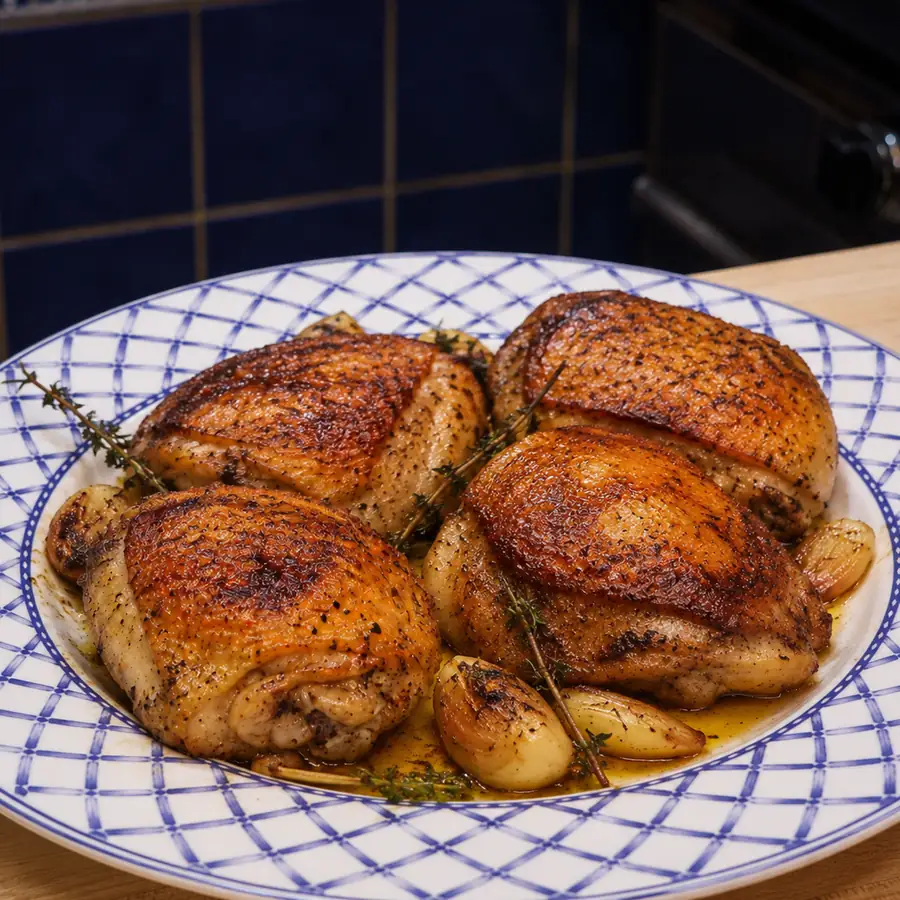
This is a stovetop chicken thigh recipe made with bone-in, skin-on thighs, a simple seasoning, garlic, thyme and butter. Unlike my oven-focused crispy chicken thighs, this version stays in the skillet from beginning to end. It works well for a weeknight supper, but the browned skin and buttery pan juices also make it substantial enough for a weekend meal.
This recipe is based on the method from my YouTube cooking, with a few adjustments since publication. The main change is keeping the heat controlled throughout the sear rather than trying to brown the skin as quickly as possible.
What Makes This Pan-Seared Method Different
Chicken thighs are forgiving because they contain more fat and connective tissue than chicken breast. If you are deciding which cut to use, my guide to chicken breasts, thighs and drumsticks explains the differences in cooking and texture.
For this recipe, bone-in thighs are especially useful. The meat stays juicy while the skin has enough time to render in the pan.
I prefer to start with a hot skillet and then settle into medium or medium-low heat. Listen to the pan. You want a steady sizzle, not aggressive crackling and smoking. If the skin is becoming very dark after only three or four minutes, the pan is too hot.
Another important point is not constantly lifting the chicken. As the skin browns, it eventually releases more easily from the skillet. Trying to pull it up too early can tear the skin.
For more basic chicken preparation information, see my complete guide to cooking chicken.
Ingredients You Need
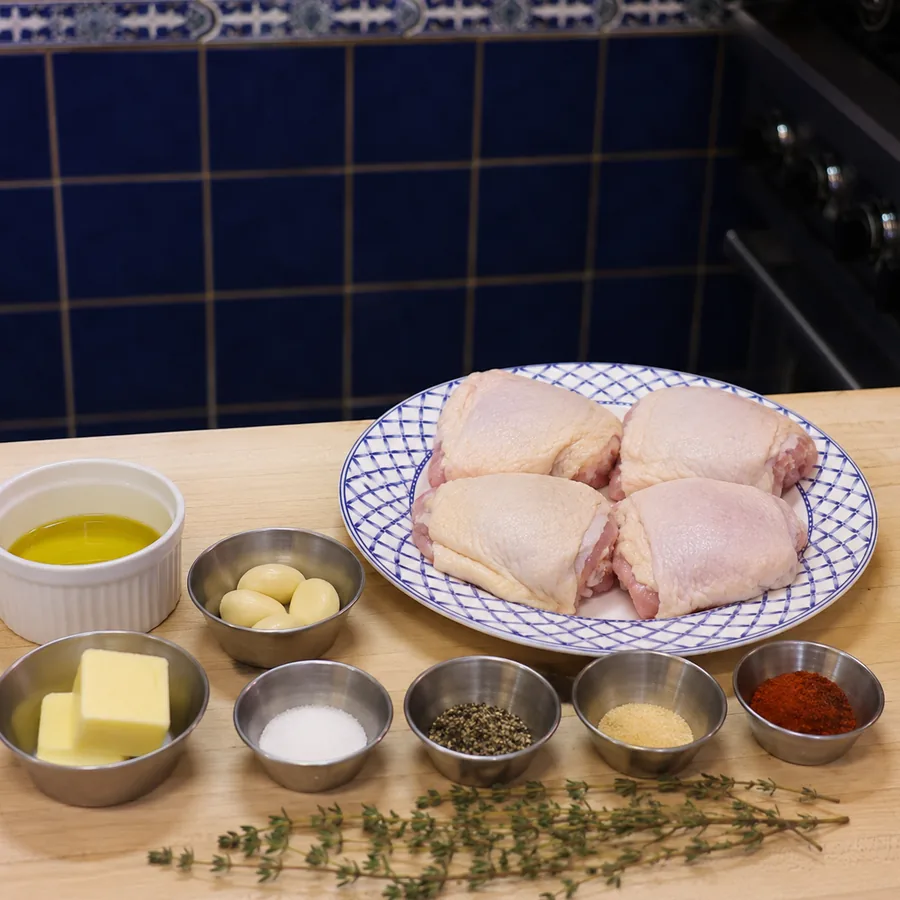
Bone-in, skin-on chicken thighs: Choose thighs that are fairly similar in size so they finish cooking at roughly the same time.
Salt and black pepper: Season both sides, paying particular attention to the meat side and the surface of the skin.
Garlic powder and paprika: These give the chicken more savoury flavour and colour without turning this into a heavily spiced recipe.
Neutral cooking oil: You only need a small amount because the thighs release their own fat.
Butter: Added toward the end rather than at the beginning so it does not burn while the chicken skin is rendering.
Garlic and thyme: These perfume the butter during the final few minutes of cooking.
If you want stronger seasoning before cooking, my chicken marinade guide covers another approach. For this skillet version, however, I prefer keeping the surface fairly dry because moisture works against browning.
Step-by-Step Instructions
1. Dry and season the chicken
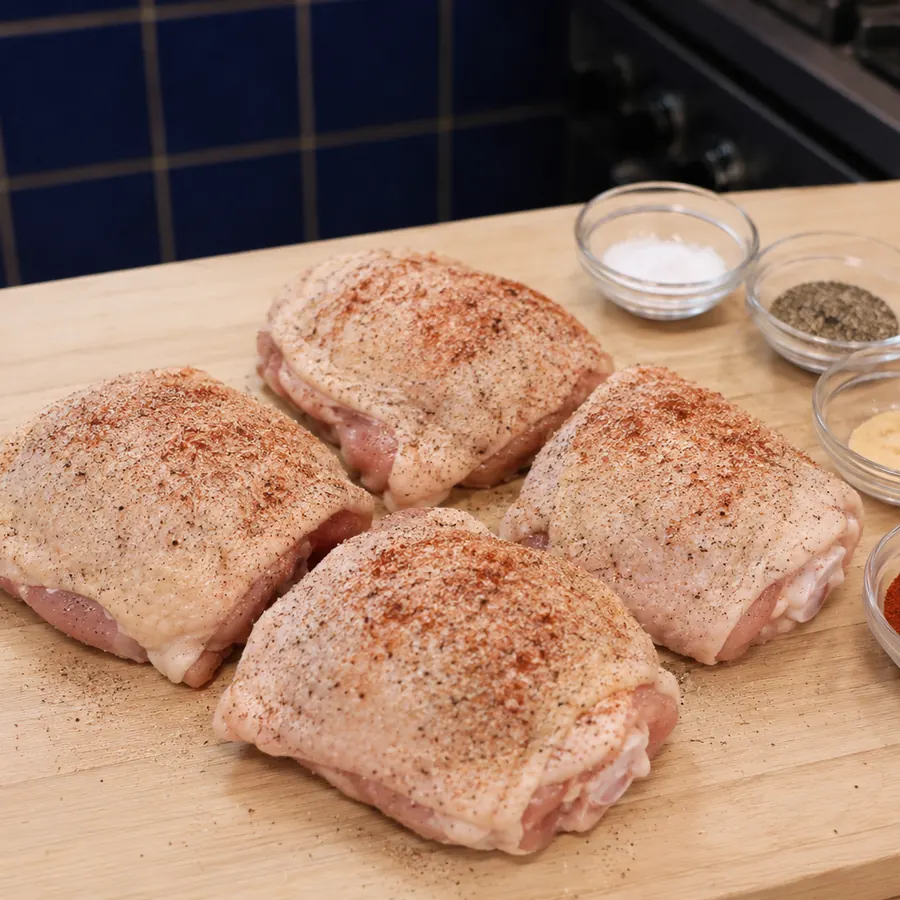
Pat the chicken thighs thoroughly dry with paper towel. This matters more than it seems. Water on the skin has to evaporate before browning can begin, so wet chicken tends to steam in the pan.
Season the thighs with salt, black pepper, garlic powder and paprika. Let them sit for about 5 minutes while the skillet heats.
2. Start skin-side down
Heat a large heavy skillet over medium-high heat. Cast iron works particularly well because it retains heat, but a heavy stainless-steel pan is also suitable.
Add the oil, then place the thighs skin-side down. You should hear an immediate sizzle.
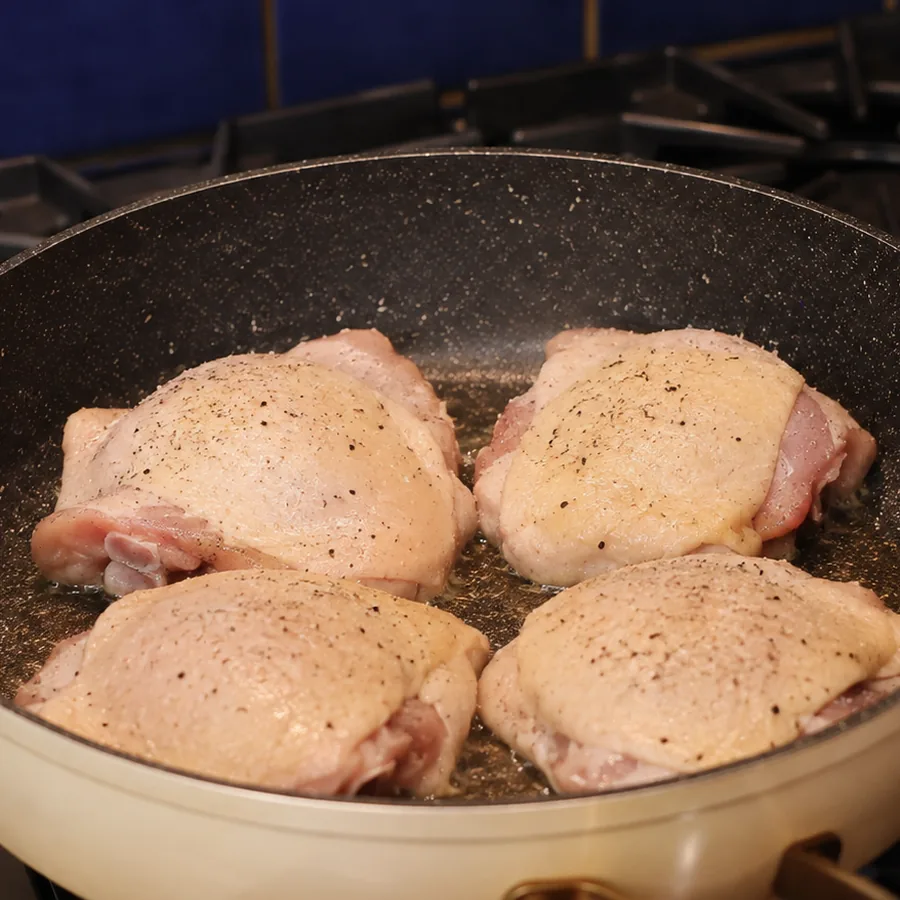
Do not overcrowd the skillet. If eight thighs cannot sit flat without touching, cook them in two batches. Crowding traps steam, which softens the skin.
3. Render the skin slowly
After the first minute or two, reduce the heat to medium. Cook the chicken skin-side down for approximately 10 to 12 minutes.
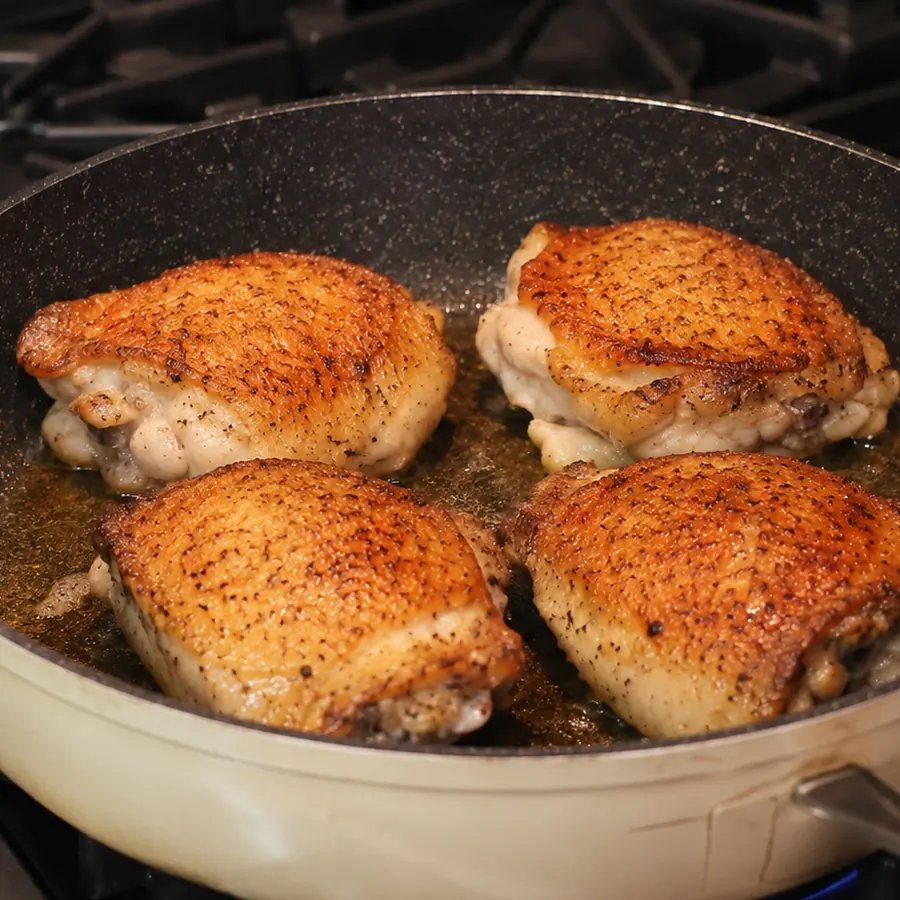
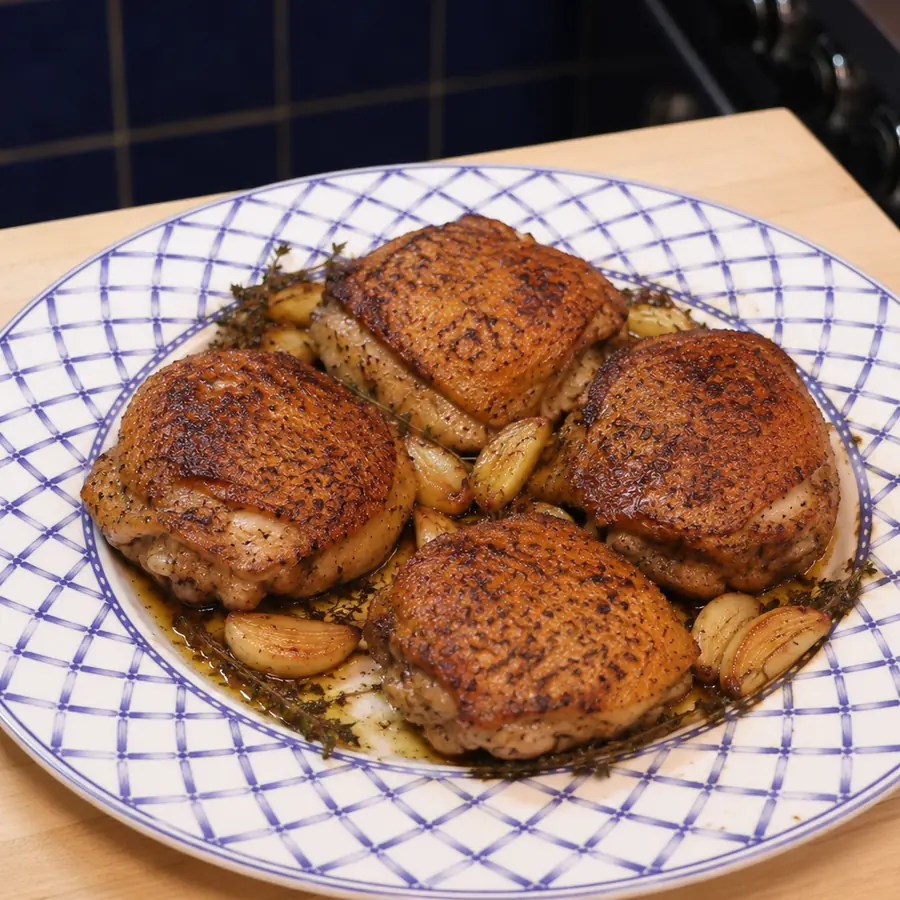
What I look for here is an even amber-golden surface rather than a few black spots. The rendered chicken fat should gradually collect in the skillet.
If one part of a thigh is not contacting the pan, press it gently with tongs for several seconds. Avoid moving the thighs around unnecessarily.
4. Flip and cook the second side
Turn the chicken over once the skin is deeply browned and releases without much resistance.
Cook meat-side down for another 8 to 10 minutes over medium to medium-low heat. Larger thighs can take a little longer.
Chicken is safely cooked when the thickest part reaches at least 165°F, without the thermometer touching the bone. With thighs, I often look for a somewhat higher internal temperature, around 175°F, because the connective tissue becomes more tender.
5. Add butter, garlic and thyme
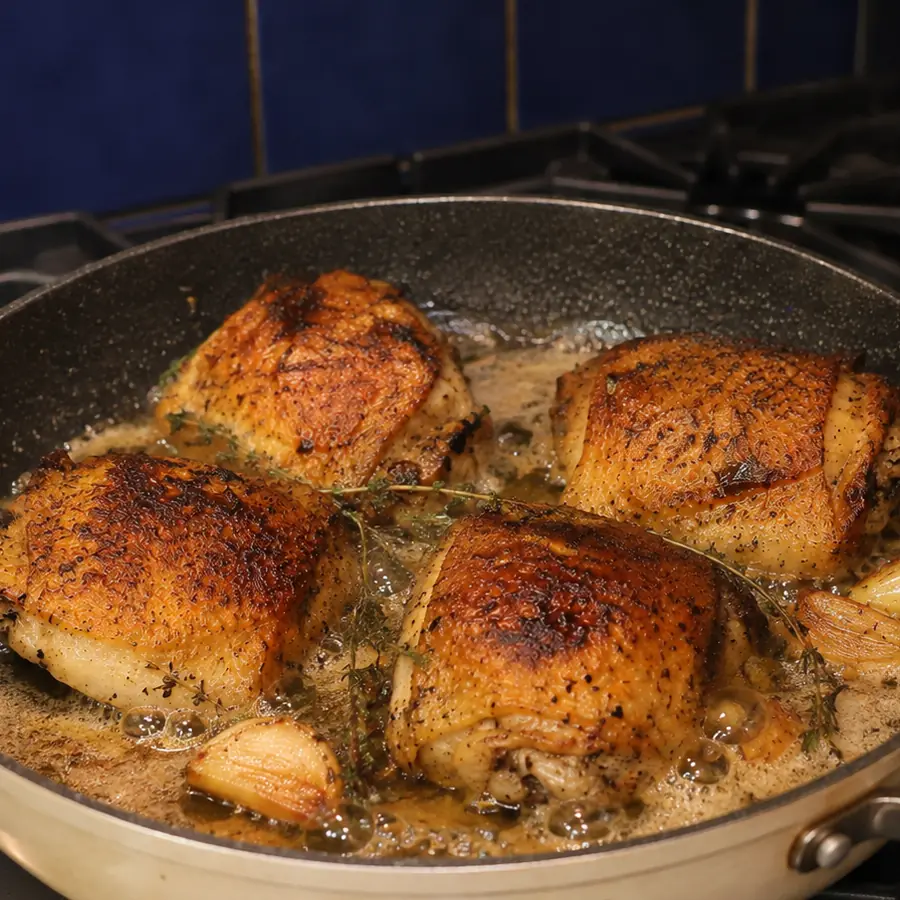
Lower the heat. Add the butter, crushed garlic cloves and thyme sprigs.
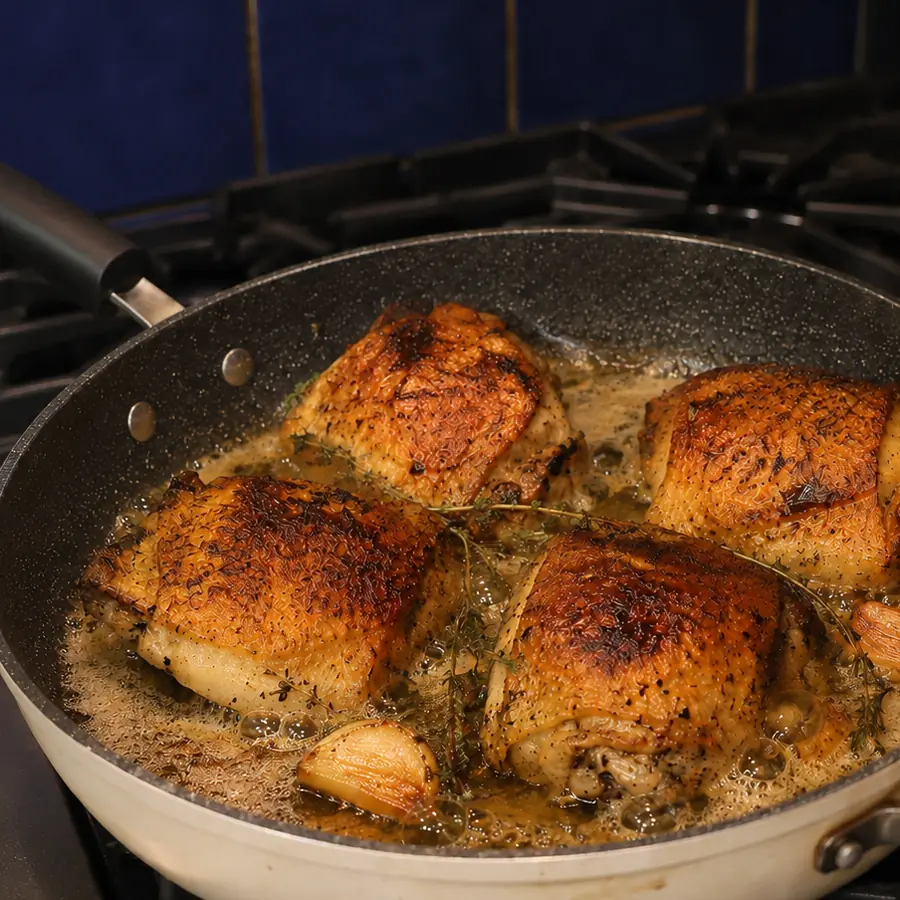
As soon as the butter foams, tilt the skillet slightly and spoon the aromatic butter over the thighs for 1 to 2 minutes.
The garlic should smell toasted but not burnt. If the butter begins turning very dark immediately, remove the skillet from the heat briefly.
6. Rest before serving
Transfer the chicken to a plate and rest for about 5 minutes.
Do not cover it tightly with foil. Trapping steam against the chicken can soften the skin you just spent time browning.
While it rests, spoon a little of the garlic-thyme pan butter over the meat, avoiding flooding the crispy skin.
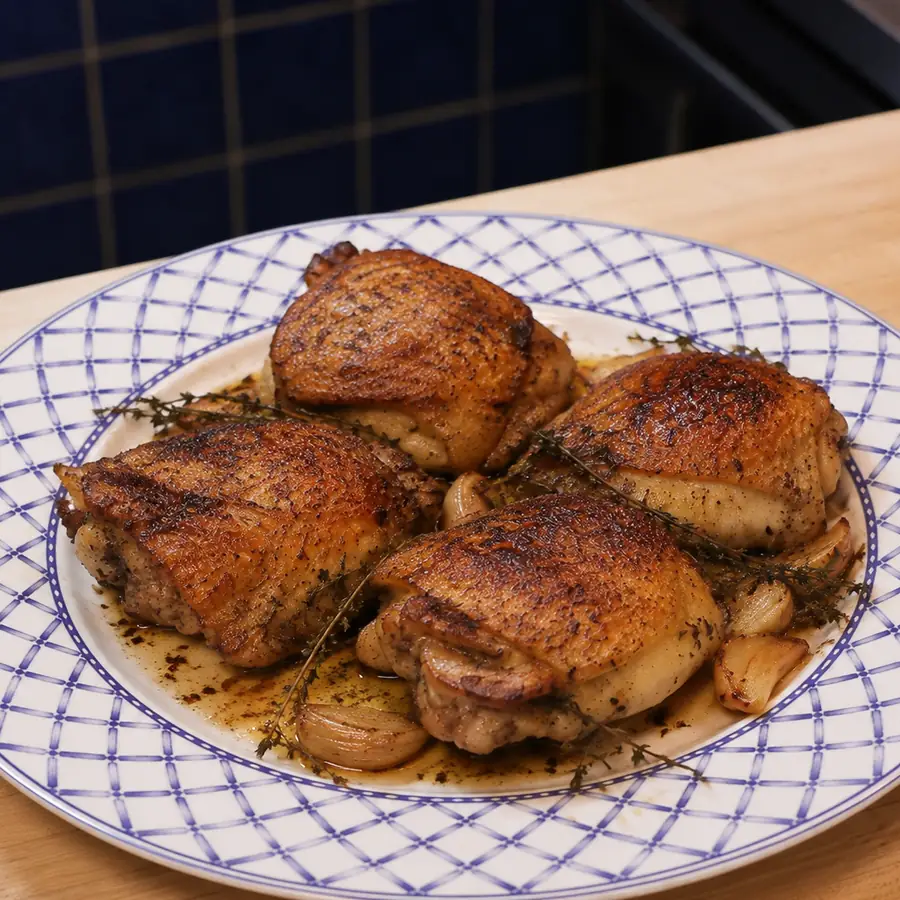
How to Know the Chicken Thighs Are Done
A thermometer is the most reliable indicator. Insert it into the thickest part of the thigh without touching the bone.
The exterior should be well browned, but colour alone does not tell you whether the centre is cooked.
You should also notice a change in the feel of the meat. Raw chicken thighs are quite soft. Properly cooked thighs feel firmer while still yielding slightly when pressed.
If your thighs are especially large and the skin is already browned before the centre reaches temperature, lower the heat and continue cooking gently. Do not keep increasing the heat to finish them faster.
Common Problems With Skillet Chicken Thighs
The skin sticks to the pan: It may simply need more time. Properly browned chicken usually releases more easily than partially browned chicken.
The skin burns before the inside cooks: Your heat is too high. Reduce it after the initial sear.
The chicken looks pale: The surface may have been wet, the pan may not have been hot enough initially, or too many pieces may have been added at once.
The garlic burns: Add fresh garlic during the butter-basting stage, not at the beginning.
For a completely different cooking method, try air fryer chicken thighs. If you want more flavour built around the thighs themselves, my Mediterranean-style chicken thighs and honey-garlic chicken thighs go in different directions without competing with this basic skillet method.
What to Serve With Pan Seared Chicken Thighs
The browned chicken and buttery pan juices are especially good with potatoes. For a classic plate, serve them with homemade mashed potatoes, which catch any juices left on the plate.
For something with more texture, French-style Lyonnaise potatoes are another natural skillet-chicken side.
If you want a lighter plate, a crisp romaine and endive salad gives you some acidity and crunch beside the rich chicken.
You can also browse my vegetable side dishes for chicken and other mains or the larger collection of mashed and potato side dishes.
If you would rather turn the chicken and potatoes into a single-pan dinner, try my chicken thighs with potatoes. For an oven-based meal with vegetables, there is also my sheet-pan chicken and vegetables.
Substitutions
Boneless chicken thighs: They cook considerably faster. Use the same general searing method, but begin checking the internal temperature earlier.
Skinless chicken thighs: They can be cooked in the skillet, but you will not get the rendered, crisp surface that defines this recipe. Reduce the cooking time as needed.
Fresh rosemary instead of thyme: Rosemary can replace thyme if that is what you have. Use it sparingly because its flavour is stronger.
Olive oil instead of neutral oil: A regular cooking olive oil is fine. Avoid relying on butter alone for the initial sear because the milk solids can burn before the chicken is finished.
For a sweeter variation rather than a direct substitution, the maple-soy chicken thigh version gives you a glazed finish. For something built around a creamy sauce, try mushroom chicken thighs instead.
FAQ
How long do chicken thighs take to cook in a frying pan?
Bone-in chicken thighs generally need about 18 to 25 minutes in the skillet, depending on their size, the pan and the cooking temperature. Use internal temperature rather than time alone to decide when they are finished.
Should I use bone-in or boneless thighs?
Bone-in, skin-on thighs are my preference for this recipe because the longer cooking time gives the skin a chance to render gradually. Boneless thighs are quicker but require different timing.
Do I need a cast-iron skillet?
No. Cast iron is useful because it holds heat well, but a heavy stainless-steel skillet works too. The most important thing is using a pan large enough that the chicken is not crowded.
Why are my chicken thighs not crispy?
The most common causes are moisture on the skin, overcrowding the pan or moving the chicken before the skin has browned. Pat the thighs dry and give them enough uninterrupted contact with the hot skillet.
Do I have to finish chicken thighs in the oven?
No. That is what separates this recipe from many other chicken-thigh methods. By controlling the skillet temperature, you can brown the skin and cook bone-in thighs completely on the stovetop.
Can I make these ahead?
You can refrigerate cooked chicken thighs and reheat them, but the skin is best immediately after cooking. Reheating uncovered in an oven or air fryer will preserve the texture better than microwaving.
Are chicken thighs high in protein?
Chicken thighs are a good source of protein. Skin-on thighs also contain more fat than skinless chicken breast, so the overall nutrition depends on the cut, serving size and whether you eat the skin.
Easy Pan Seared Chicken Thighs in a Skillet
Ingredients
- 8 bone-in skin-on chicken thighs
- 1 1/2 teaspoons kosher salt
- 1 teaspoon freshly ground black pepper
- 1 teaspoon garlic powder
- 1/2 teaspoon paprika
- 1 tablespoon neutral cooking oil
- 2 tablespoons unsalted butter
- 4 garlic cloves lightly crushed
- 4 sprigs fresh thyme
Instructions
- Pat the chicken thighs very dry and season both sides with salt, pepper, garlic powder and paprika.
- Heat a large heavy skillet over medium-high heat and add the oil.
- Place the thighs skin-side down, reduce the heat to medium and cook for 10 to 12 minutes until deeply golden.
- Flip the thighs and cook for 8 to 10 minutes, or until the thickest part reaches at least 165°F.
- Lower the heat and add the butter, garlic and thyme.
- Spoon the foaming butter over the chicken for 1 to 2 minutes.
- Transfer the thighs to a plate and rest for 5 minutes before serving.