Easy Panko Crusted Salmon in 25 Minutes
This panko crusted salmon is an easy oven-baked dinner with a crisp, golden breadcrumb topping and moist, flaky salmon underneath. A thin Dijon and mayonnaise layer helps the panko stay attached while adding enough moisture to protect the surface of the fish, and the main mistake to avoid is packing the breadcrumbs down too firmly, which makes the crust heavy instead of light and crisp.
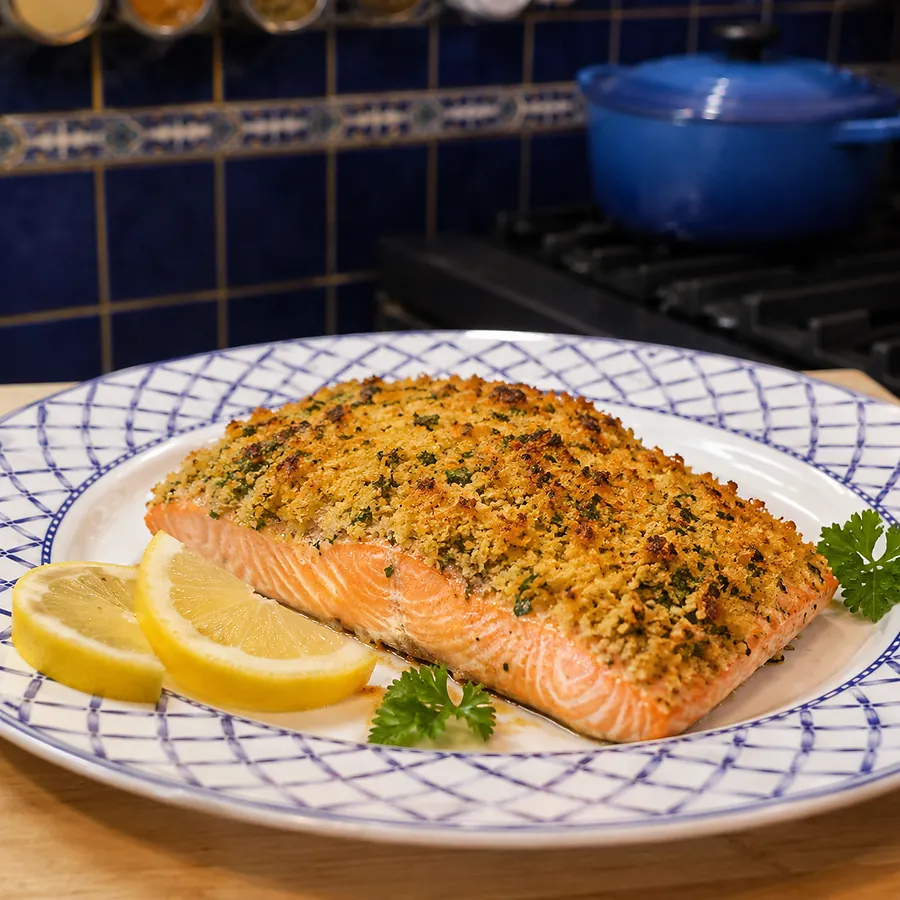
Panko crusted salmon is a salmon fillet topped with Japanese-style breadcrumbs and baked until the coating turns golden. Unlike a plain oven-baked salmon, the focus here is the contrast between the crunchy topping and the soft flakes of fish underneath. It works well for a quick weeknight dinner, but the finished fillets are neat enough to serve when you have people over too.
What Makes This Panko Salmon Different
The important part is getting a crust that actually stays on the salmon.
I prefer to use Dijon mustard mixed with a little mayonnaise as the base rather than coating the fish in a heavy batter. You only need a thin layer. It gives the crumbs something to grip without hiding the flavour of the salmon.
The panko itself gets mixed with melted butter, parsley, lemon zest, garlic and a little Parmesan. The butter is important because the salmon cooks fairly quickly. Dry breadcrumbs can still look pale when the fish is already done, while lightly buttered panko starts browning much sooner.
I also keep this recipe separate from my pan-seared salmon, where the goal is direct contact with a hot pan and a browned surface. Here, the oven does most of the work and the breadcrumb layer provides the texture.
If you want an even faster method without breadcrumbs, air fryer salmon is another option. This version is specifically for when you want that crisp panko topping.
This recipe is based on my YouTube cooking approach, with a few adjustments to make the breadcrumb topping more reliable and easier to prepare at home.
Ingredients You Need
You do not need many ingredients, but each one has a job.
Salmon fillets: Use four similar-sized portions so they finish cooking at roughly the same time. Skin-on or skinless both work.
Panko breadcrumbs: Panko is coarser and lighter than ordinary breadcrumbs, which is what gives the topping its crisp texture.
Dijon mustard: Adds acidity and helps the coating adhere.
Mayonnaise: Just enough to keep the top of the salmon moist and hold the crumbs in place.
Parmesan: Adds a little savoury flavour and helps the crust brown.
Butter: Moistens the panko so it can become golden before the salmon overcooks.
Garlic: One finely grated clove is enough. Too much raw garlic can dominate the salmon.
Lemon: I use zest in the crumbs and wedges at the table. The zest gives you lemon flavour without adding liquid to the breadcrumb mixture.
Parsley: Adds freshness and colour.
Salt and black pepper: Season the fish itself before adding the topping.
For four servings, you will need:
4 salmon fillets, about 6 ounces each
1 cup panko breadcrumbs
2 tablespoons unsalted butter, melted
2 tablespoons finely grated Parmesan
1 tablespoon finely chopped fresh parsley
1 garlic clove, finely grated
1 teaspoon finely grated lemon zest
2 tablespoons mayonnaise
1 tablespoon Dijon mustard
3/4 teaspoon kosher salt
1/4 teaspoon black pepper
1 lemon, cut into wedges
Step-by-Step Instructions
1. Prepare the salmon
Heat the oven to 425°F. Line a baking sheet with parchment paper or lightly grease a baking dish.
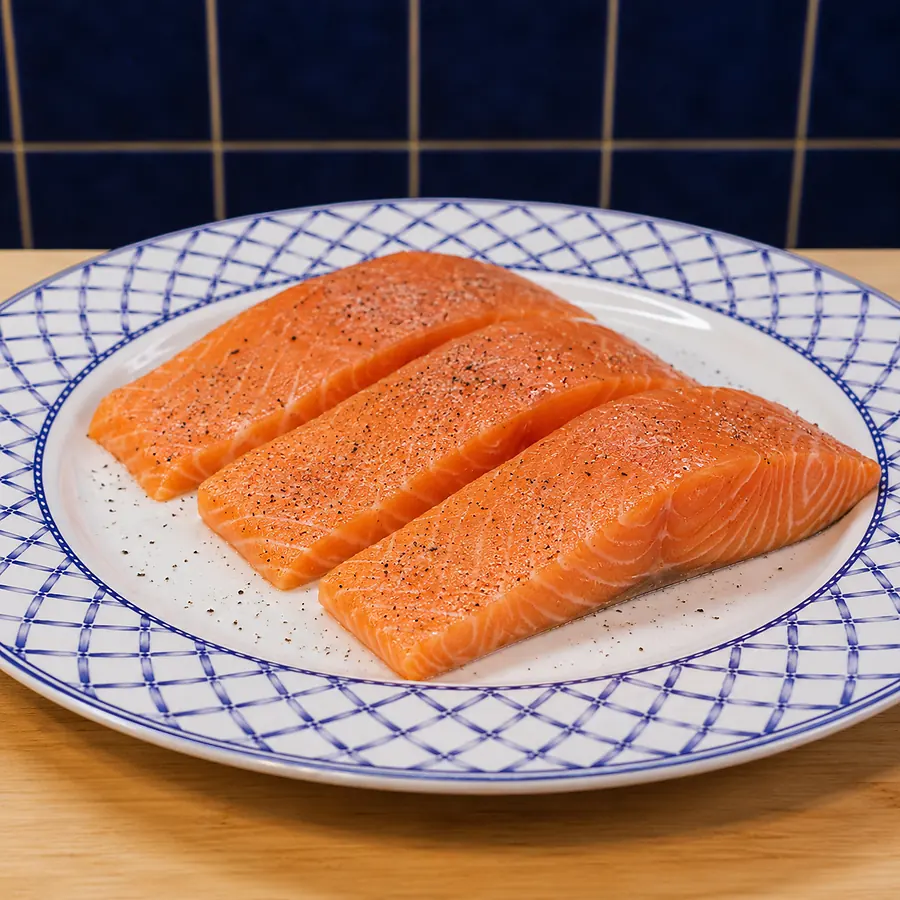
Pat the salmon very dry with paper towel, especially across the top. This small step matters. If there is a layer of moisture on the fish, the Dijon mixture can slide around and the breadcrumb crust will not attach as cleanly.
Arrange the fillets with a little space between them and season with salt and black pepper.
2. Make the panko topping
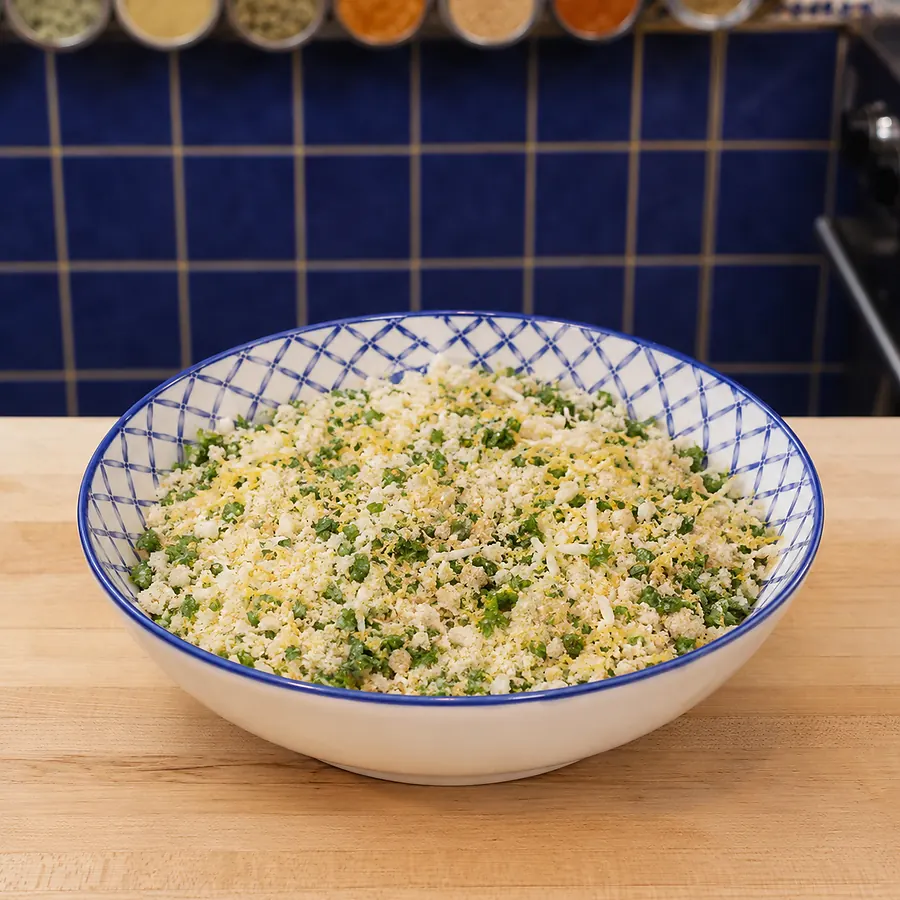
Combine the panko, melted butter, Parmesan, parsley, garlic and lemon zest in a bowl.
Mix with a fork until the breadcrumbs are evenly moistened but still loose. What I look for here is a crumb mixture that feels lightly coated, not wet or greasy. If you squeeze it in your hand, it can hold together slightly, but it should separate easily again.
That loose texture is what gives the finished crust its crunch.
3. Add the Dijon layer and breadcrumbs
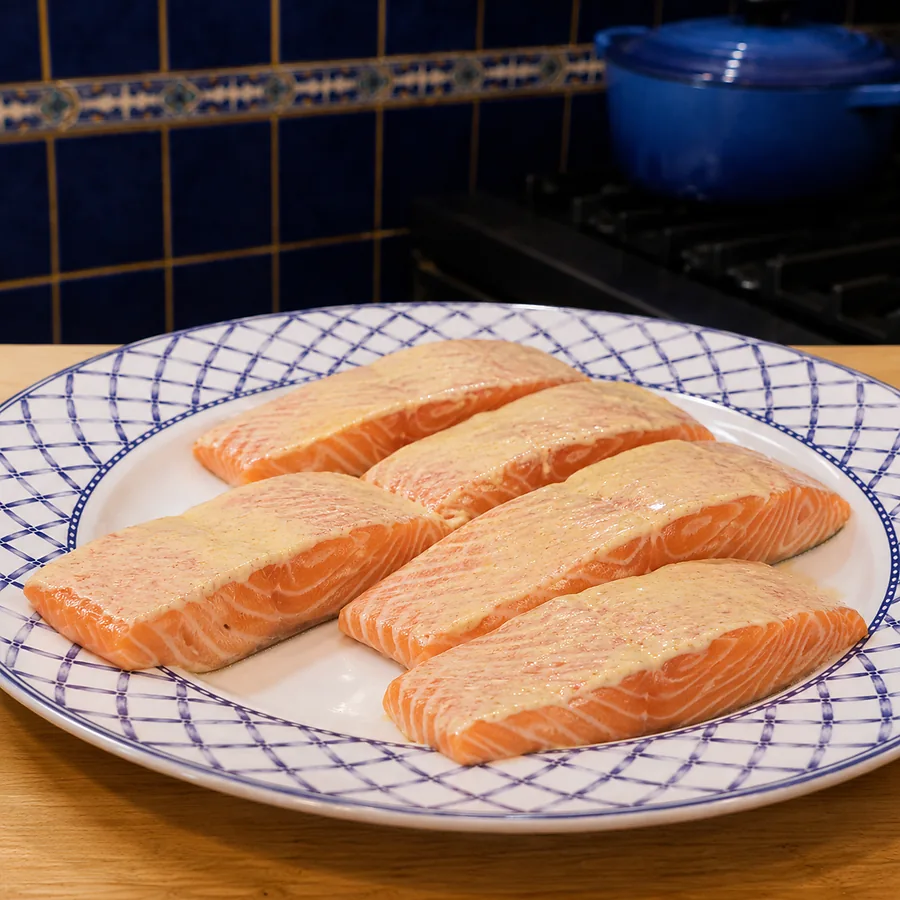
Mix the mayonnaise and Dijon mustard together.
Spread a thin coating over the top of each salmon fillet. There is no need to cover the sides.
Divide the breadcrumb mixture between the fillets. Spoon it over the mustard layer, then press very lightly so the panko stays in place.
The mistake to avoid is pushing hard and compressing the crumbs into a solid cap. You want an uneven surface with plenty of exposed edges because those little peaks are what brown first.
4. Bake until golden and flaky
Bake for approximately 10 to 14 minutes, depending on the thickness of the fillets.
Start checking early rather than relying completely on the clock. The panko should be golden across the top, and the salmon should begin to separate into moist flakes when gently pressed with a fork.
For the most precise result, check the centre with an instant-read thermometer and cook the salmon to the doneness you prefer. Remember that the temperature can continue to rise slightly after the fish comes out of the oven.
If the salmon is nearly ready but the topping is still too pale, switch the oven to broil briefly. Watch it continuously. Buttered panko can go from pale to dark brown surprisingly quickly.
5. Rest briefly and serve
Let the salmon sit for 2 to 3 minutes before serving.
Finish with fresh lemon wedges. I prefer adding most of the lemon juice at the table rather than soaking the breadcrumbs before baking, because too much liquid can soften the crust.
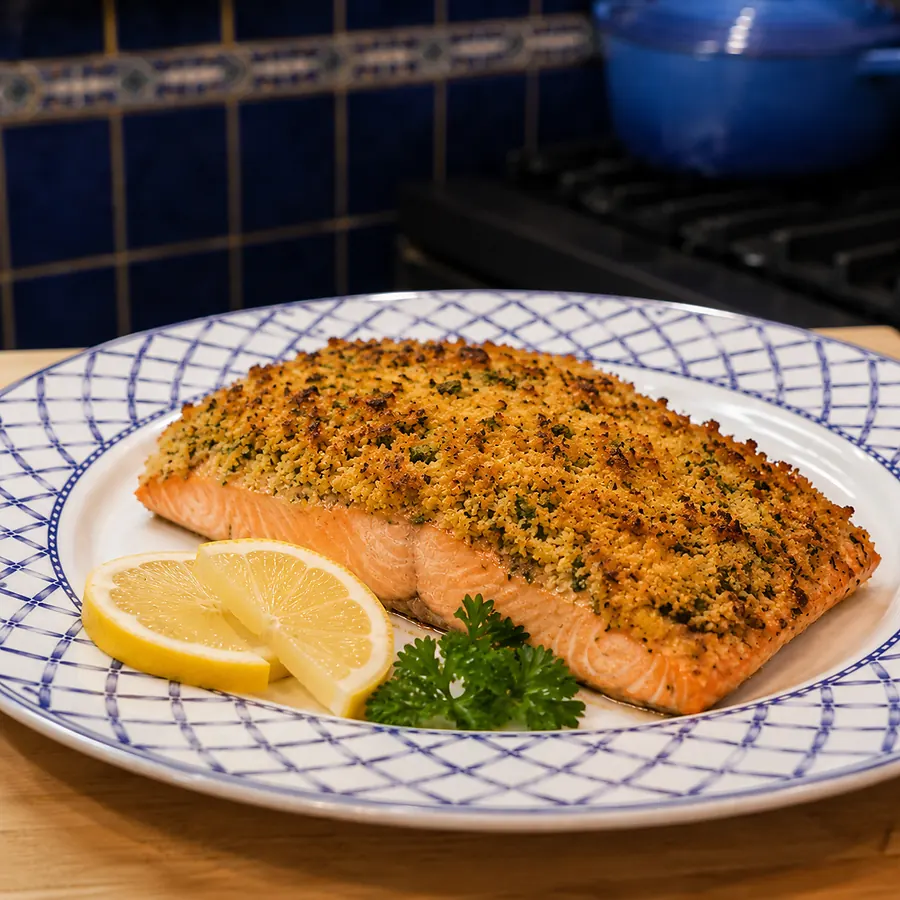
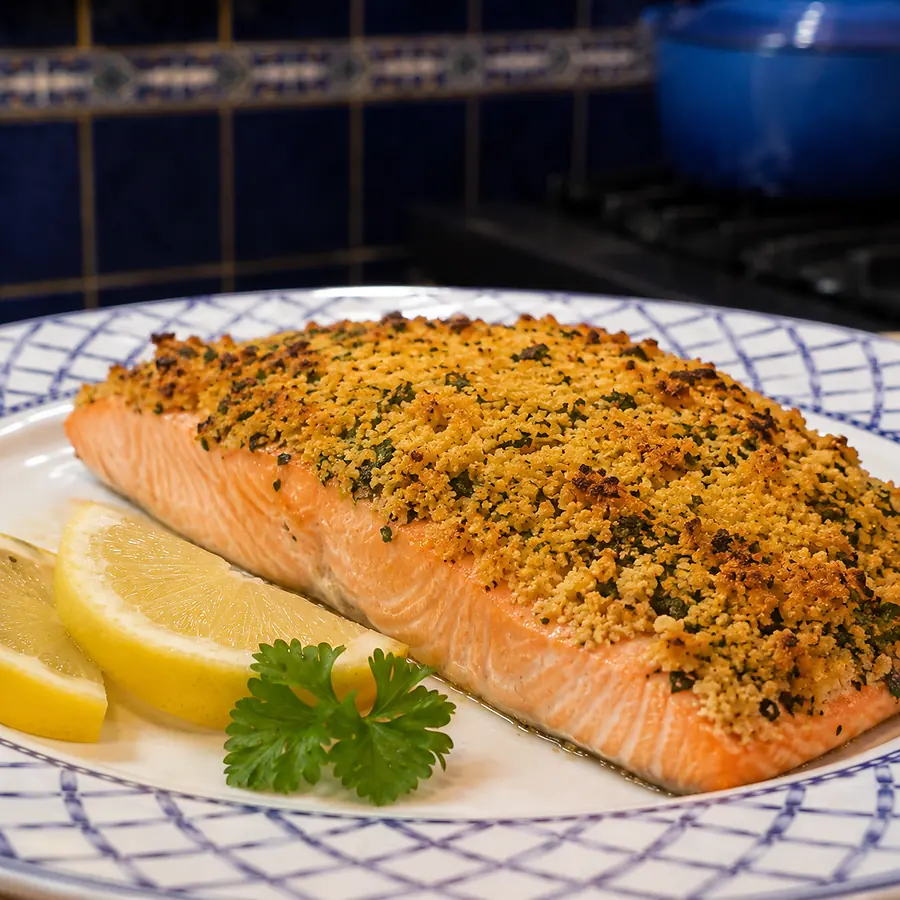
When you cut into the salmon, the centre should be moist and flaky while the top gives you a noticeable crunch.
How to Know When the Salmon Is Done
Thickness matters more than weight. A thick centre-cut fillet can take several minutes longer than a thin tail piece even when both weigh about the same amount.
Look at the side of the fish. As salmon cooks, its colour changes and the flesh becomes more opaque from the outside toward the centre. The flakes should separate with gentle pressure rather than feeling firm and dry.
You may also notice a little white albumin forming on the surface. A small amount is normal. A lot of it can be a sign that the salmon has been cooked aggressively or for longer than necessary.
Because the breadcrumb topping hides the top of the fish, checking the thickest part from the side is particularly useful with this recipe.
For a completely different presentation, my salmon with beurre blanc puts the emphasis on a French butter sauce rather than breadcrumbs.
Three Details That Make a Better Crust
First, dry the salmon properly. Even the best breadcrumb mixture has trouble sticking to a wet fillet.
Second, coat the crumbs with butter before they go into the oven. You are not trying to saturate them. A light coating is enough to encourage browning.
Third, do not drown the finished salmon in sauce. If you want something creamy alongside it, serve a small amount of garlic aioli on the plate rather than pouring it over the panko. That keeps the crunchy top intact.
What to Serve With Panko Crusted Salmon
For a simple dinner, I like something relatively plain beside the salmon because the topping already brings plenty of texture.
A fluffy stovetop rice pilaf works especially well because it catches the lemony juices without competing with the fish.
You can also keep the entire plate vegetable-heavy with oven-roasted mixed vegetables. They can roast while you prepare the salmon, although you may need to start harder vegetables before putting the fish into the oven.
For something richer, creamy potato and carrot gratin makes this feel more like a weekend dinner.
If you want a fresh counterpoint, a simple green salad with lemon vinaigrette gives you acidity without softening the breadcrumb crust.
Storage and Reheating
Store leftover salmon in a covered container in the refrigerator.
The main challenge with reheating is protecting the fish without turning the panko soft. A microwave works quickly, but the breadcrumb coating will lose most of its crunch.
For a better texture, reheat the salmon gently in the oven or air fryer until warmed through. Avoid heating it much longer than necessary because salmon dries out quickly once it has already been cooked.
If you know you will have leftovers, keep any sauce or vinaigrette separate.
Substitutions
Regular breadcrumbs can replace panko, but the texture will be finer and less crisp. Because ordinary breadcrumbs are denser, start with slightly less and add only enough to cover the fillets.
If you do not want Parmesan, leave it out rather than replacing it with a large quantity of another cheese. The coating will still work.
Fresh parsley can be replaced with another mild fresh herb that suits salmon. Avoid adding a large amount of dried herbs because they can make the light breadcrumb topping taste dusty or overly concentrated.
If you prefer mustard without mayonnaise, you can use a thin layer of Dijon by itself, although the finished coating will have less richness.
Skin-on salmon works perfectly well. Bake it skin-side down and leave the skin in place while cooking.
FAQ
Can I use frozen salmon?
Yes, but thaw it completely first and dry it very thoroughly. Frozen salmon often releases extra surface moisture after thawing, which can make the panko coating less secure.
Can I make panko crusted salmon in an air fryer?
Yes. The cooking time will depend on your air fryer and the thickness of the fillets. If your priority is a straightforward air-fryer method without the breadcrumb topping, see my air fryer salmon recipe.
Why is my panko not browning?
The breadcrumbs may not contain enough fat, or the salmon may finish cooking before the crumbs have enough time to colour. Mixing melted butter into the panko helps. You can also broil briefly at the end while watching the salmon closely.
Why does the crust fall off?
The most common reasons are wet salmon, too much mayonnaise or mustard underneath, or not pressing the crumbs onto the surface at all. Pat the fish dry, use only a thin adhesive layer and press the panko gently.
Can I prepare it ahead?
You can prepare the breadcrumb mixture ahead and refrigerate it separately. For the best crust, assemble the salmon shortly before baking so the panko does not sit on a moist surface for too long.
What is the difference between panko salmon and regular baked salmon?
Regular baked salmon focuses on simply seasoning and cooking the fish. This version adds a separate crunchy layer. If you want the more basic method, try my easy baked salmon instead.
What other salmon recipes can I make?
Salmon is flexible enough for several very different techniques. You can pan-sear it, air-fry it, turn it into pasta or use it in more elaborate preparations. My salmon recipe collection brings those styles together.
Suggested Posts
For another quick salmon dinner, try Pan-Seared Salmon.
For a hands-off cooking method, make Easy Oven-Baked Salmon.
For smaller pieces with plenty of browned edges, try Air Fryer Salmon Bites.
For a richer French-style dinner, make Salmon with Beurre Blanc.
For a completely different use of salmon, try Creamy Salmon Pasta with Spinach.
For a special-occasion version, make Salmon Wellington.

Easy Panko Crusted Salmon in 25 Minutes
Ingredients
- 4 salmon fillets about 6 ounces each
- 1 cup panko breadcrumbs
- 2 tablespoons unsalted butter melted
- 2 tablespoons finely grated Parmesan
- 1 tablespoon finely chopped fresh parsley
- 1 garlic clove finely grated
- 1 teaspoon finely grated lemon zest
- 2 tablespoons mayonnaise
- 1 tablespoon Dijon mustard
- 3/4 teaspoon kosher salt
- 1/4 teaspoon black pepper
- 1 lemon cut into wedges
Instructions
- Heat the oven to 425°F and line a baking sheet with parchment paper.
- Pat the salmon dry, arrange it on the baking sheet and season with salt and pepper.
- Combine the panko, melted butter, Parmesan, parsley, garlic and lemon zest.
- Mix the mayonnaise and Dijon, then spread a thin layer over each salmon fillet.
- Divide the panko mixture over the salmon and press it down very lightly.
- Bake for 10 to 14 minutes, until the topping is golden and the salmon flakes easily.
- Broil briefly if needed to brown the panko, watching carefully.
- Rest for 2 to 3 minutes and serve with lemon wedges.