Juicy Dutch Oven Pork Tenderloin with Easy Pan Sauce
This Dutch oven pork tenderloin is seared until deeply browned, then finished in the oven over onions, garlic, thyme and a light pan jus. I use the Dutch oven because its heavy base gives the pork a strong crust while keeping all the browned bits in one pot for the sauce. The main mistake is overcooking the tenderloin, so pull it when the center reaches 145°F and the juices are still glossy, not dry.
Pork tenderloin is a small, lean cut that cooks much faster than pork loin or pork shoulder. This version is specifically built around the Dutch oven: sear the meat on the stovetop, build the pan juices underneath it, then move the same pot directly into the oven. It works well for a weeknight dinner but still gives you the kind of pan sauce and presentation I would use for a Sunday meal.
This recipe is based on my pork tenderloin video, with a few adjustments since publication. The goal here is not a creamy sauce or a sweet glaze. It is a straightforward roasted tenderloin with a good crust, tender centre and savoury juices from the bottom of the Dutch oven.
Why I Like the Dutch Oven Method
A Dutch oven holds heat extremely well. Once it is properly heated, it gives the pork much better contact with the cooking surface than a thin baking dish. That first sear matters because the browned layer becomes part of the flavour of the finished sauce.
I also prefer to cook the onions in the same pot instead of roasting the pork by itself. As they soften, they pick up the browned pork drippings. Chicken broth then loosens everything from the bottom, so none of that flavour is wasted.
This is different from my oven-roasted pork tenderloin, which is better when you simply want to season the meat and roast it. If you want something richer and creamier, my pork tenderloin with Dijon sauce goes in a completely different direction.
Ingredients You Need
For this recipe, I use two pork tenderloins so there is enough meat for four to six servings without increasing the cooking time very much. Try to buy tenderloins that are similar in thickness so they finish at roughly the same time.
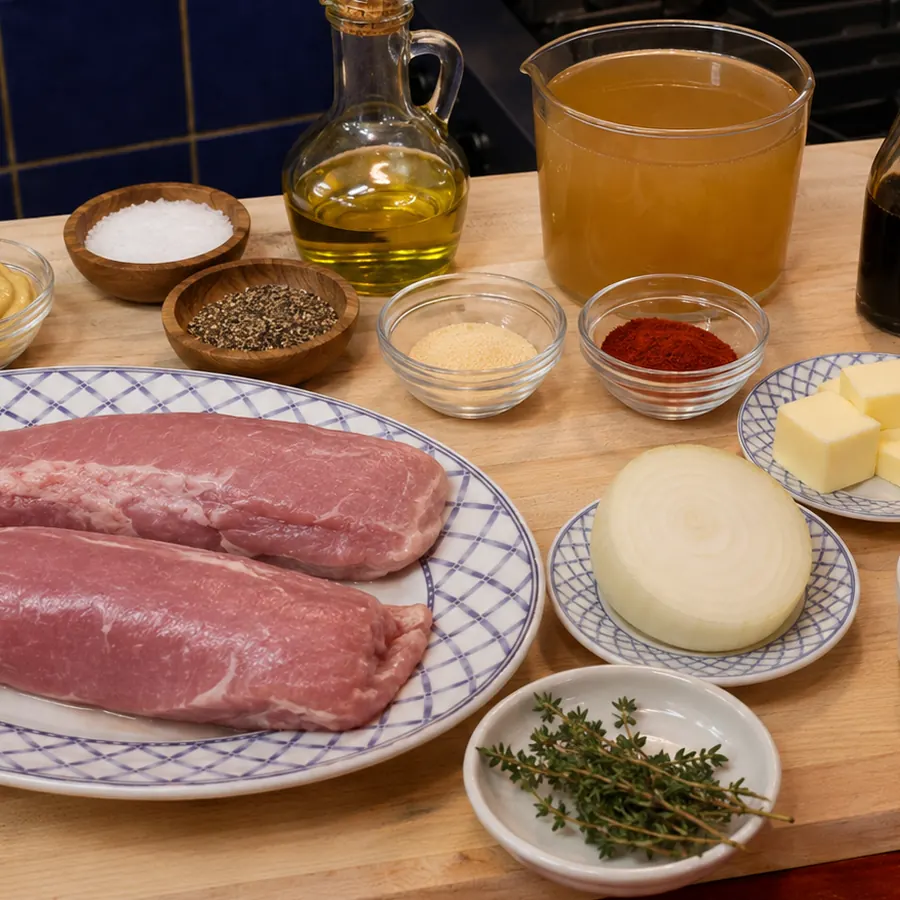
You will need pork tenderloin, olive oil, Dijon mustard, salt, black pepper, garlic powder and smoked paprika for the meat. For the bottom of the Dutch oven, use onion, fresh garlic, thyme, chicken broth, Worcestershire sauce and a little butter.
The Dijon is not there to make this a mustard sauce. It creates a thin coating that helps the seasoning cling to the pork and adds a little sharpness to the crust.
If you enjoy sweeter pork recipes, the flavour profile here is intentionally different from my honey garlic pork tenderloin or maple-glazed pork roast. This one stays savoury so the pork, onions and pan juices remain the focus.
Step-by-Step Instructions
1. Prepare the pork
Heat the oven to 400°F.
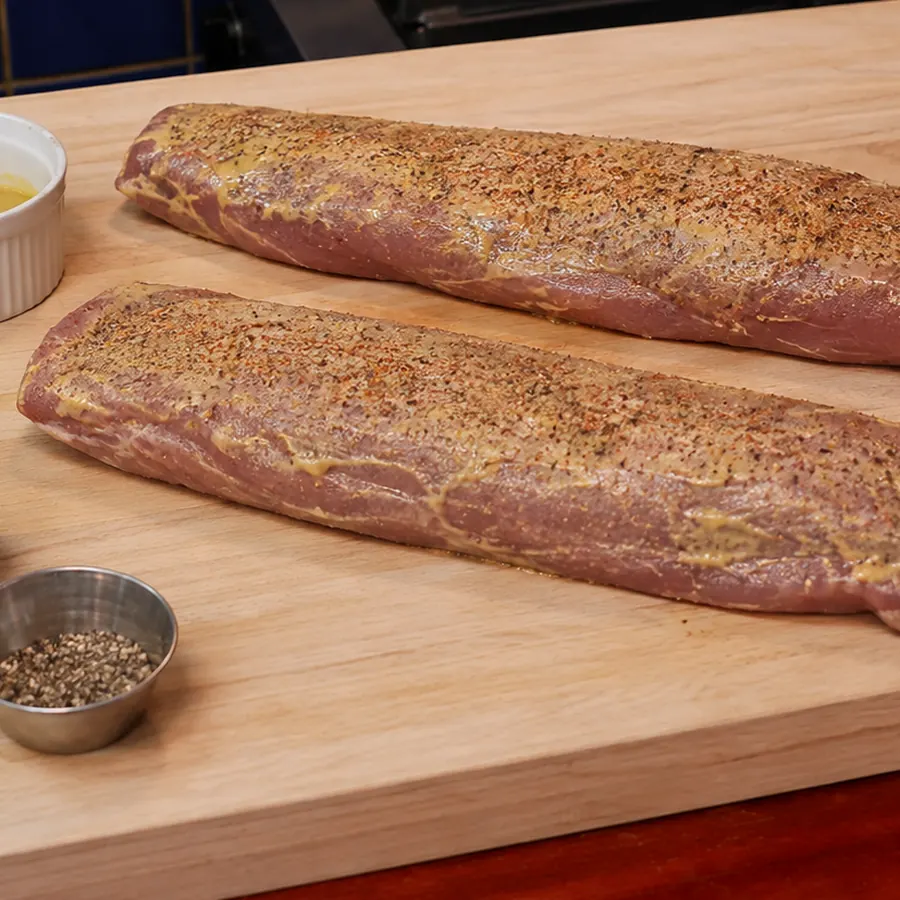
Remove any obvious silver skin from the tenderloins with a sharp knife. Pat the meat very dry with paper towel. Moisture on the exterior is one of the main reasons pork refuses to brown properly.
Rub the tenderloins with Dijon mustard, then season all over with salt, black pepper, garlic powder and smoked paprika.
2. Sear in the Dutch oven
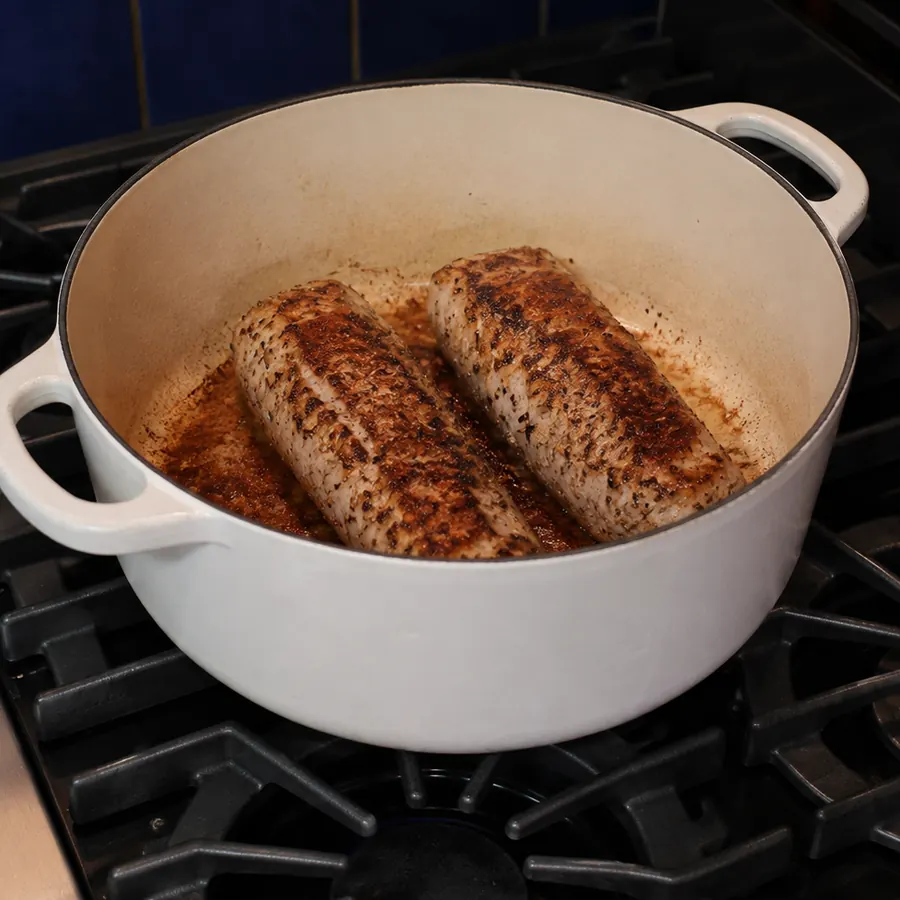
Place a large Dutch oven over medium-high heat and let it get properly hot before adding the oil.
Add the pork and sear it without constantly moving it. Give each major side about 2 minutes, turning until the exterior has a dark golden-brown colour.
What I look for here is real browning, not pale grey meat with a few brown spots. If the pork releases a lot of water immediately, the pot was probably not hot enough or the surface of the meat was still damp.
Transfer the tenderloins temporarily to a plate.
3. Build the base
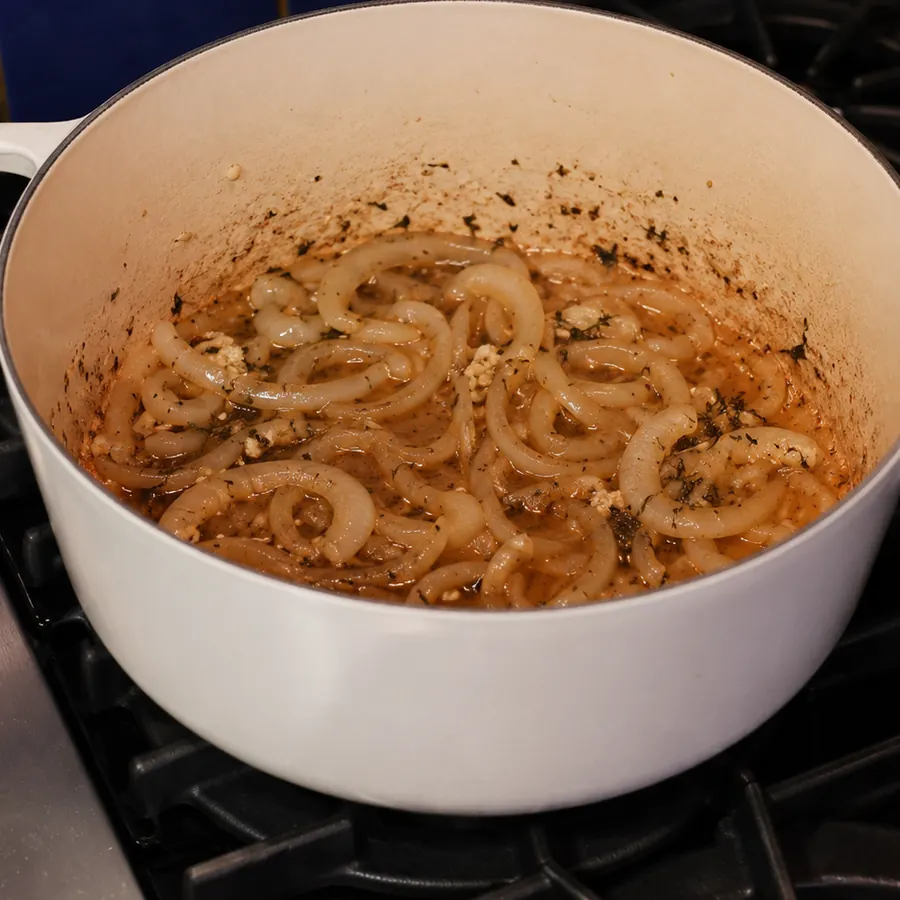
Lower the heat to medium. Add the sliced onion to the same Dutch oven and cook for about 3 minutes, stirring and scraping the bottom.
Add the garlic and thyme and cook for another 30 seconds. You should smell the garlic quickly. Do not let it become dark brown.
Pour in the chicken broth and Worcestershire sauce. Scrape the bottom firmly with a wooden spoon to dissolve the browned bits into the liquid.
4. Finish the pork in the oven
Return the tenderloins to the pot, setting them over the onions rather than burying them in the liquid.
Place the Dutch oven in the preheated oven uncovered.
Roast for approximately 12 to 18 minutes. The exact time depends far more on the thickness of the tenderloins than their total weight, so start checking early with an instant-read thermometer.
5. Check the temperature, not just the clock
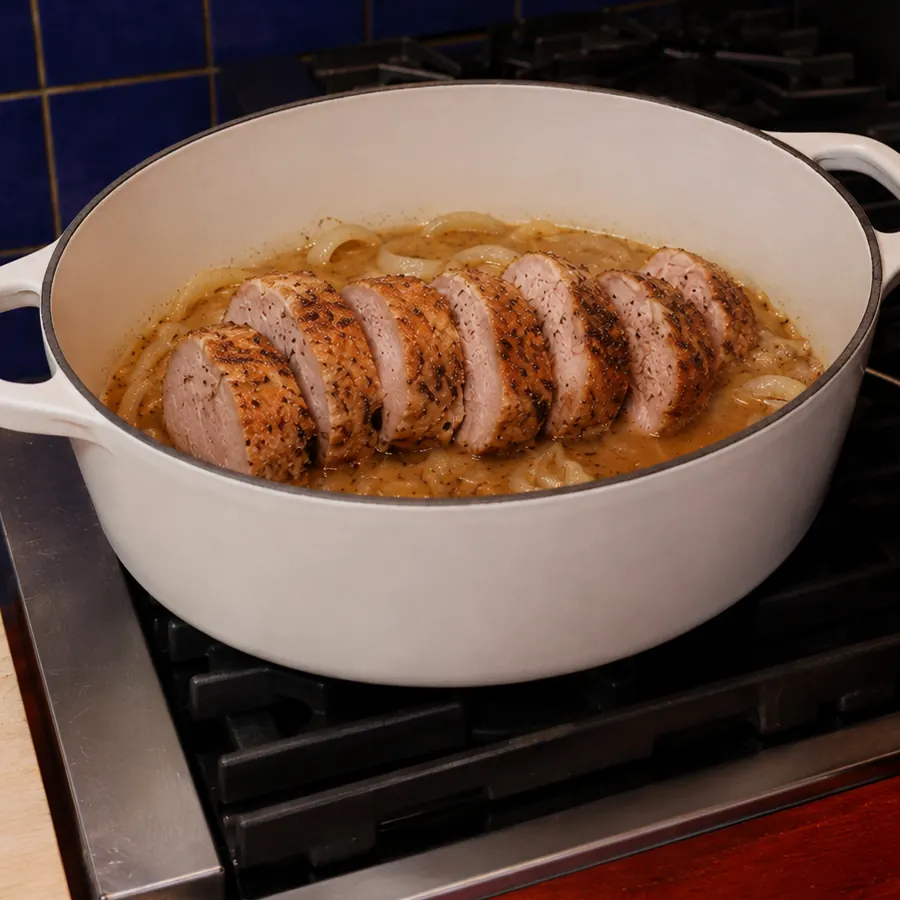
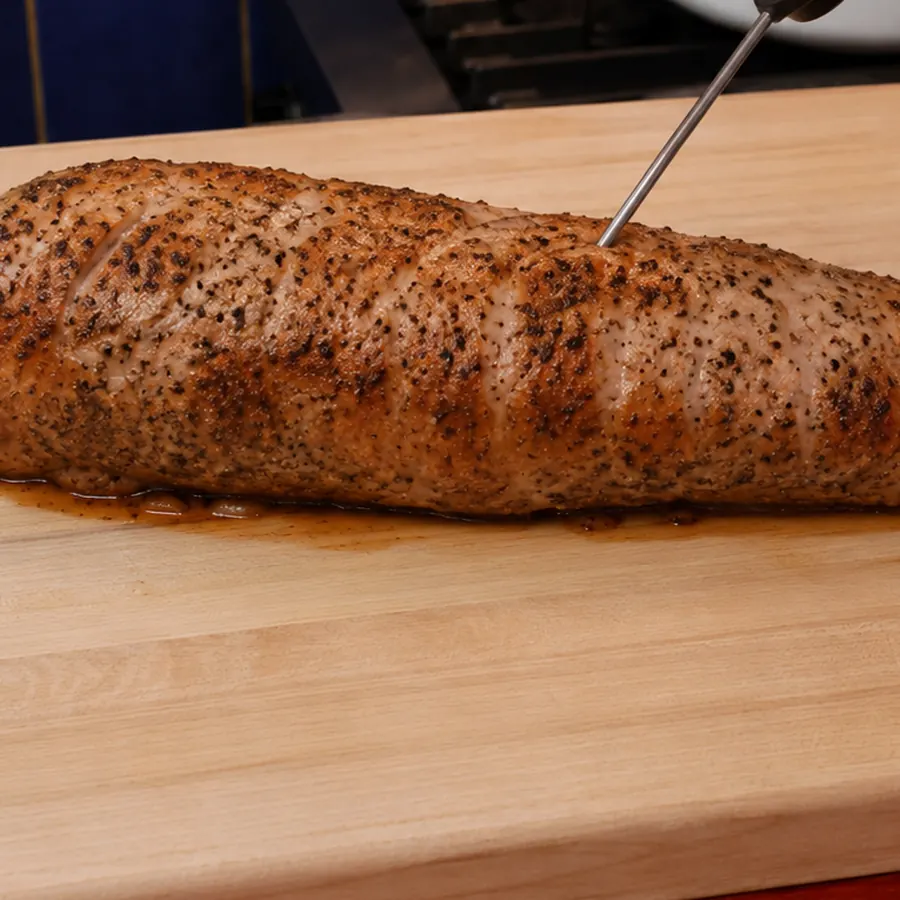
Insert the thermometer into the thickest part of the meat. Remove the pork from the oven when the centre reaches about 145°F.
The meat should feel firm but still have a slight spring when pressed. Once sliced, the centre can have a light blush and should look moist.
A pork tenderloin is much leaner than a large pork roast, so extra time in the oven does not make it more tender. It makes it drier. That distinction is important if you are used to slower recipes such as my oven pork roast or pork loin roast with apples.
6. Rest and finish the pan sauce
Move the pork to a cutting board and rest it for 8 to 10 minutes.
Meanwhile, return the Dutch oven to medium heat. Simmer the onion and cooking liquid for a few minutes until the flavour concentrates slightly. Stir in the butter at the end.
The sauce does not need to become thick like gravy. I prefer it reduced just enough that it looks glossy and lightly coats a spoon.
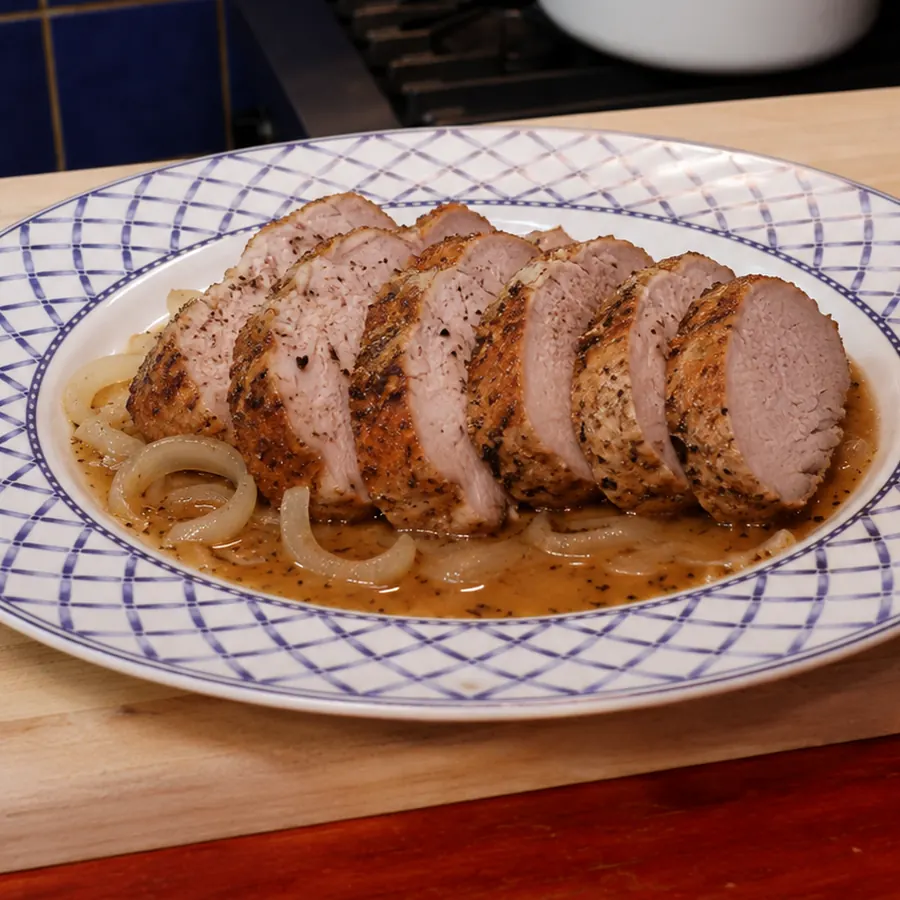
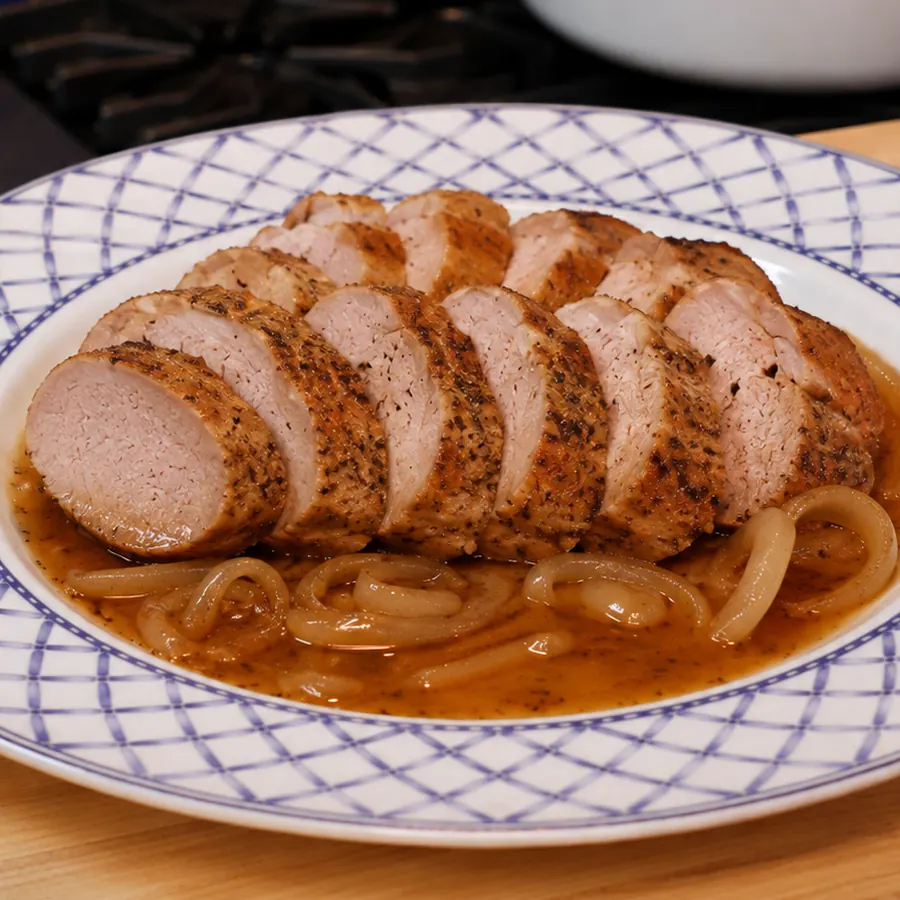
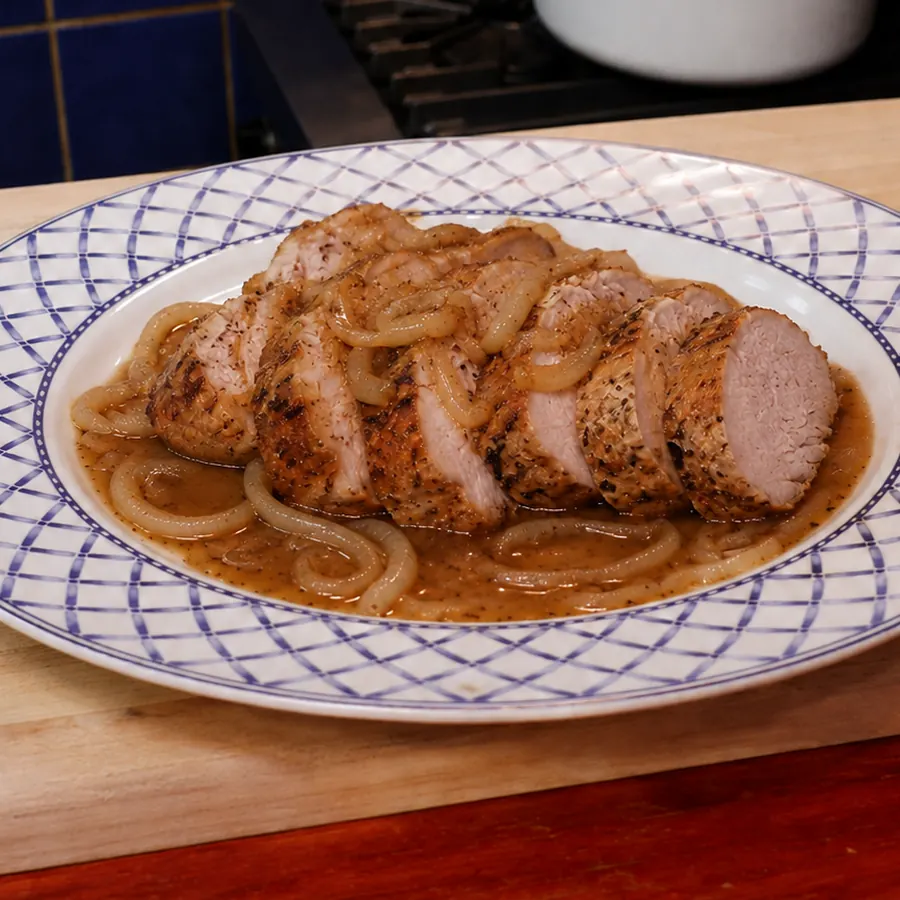
Slice the pork across the grain into medallions and spoon the onions and pan juices over the top.
Three Details That Make a Difference
The first is drying the pork before seasoning it. Even a very hot Dutch oven struggles to create a proper crust when there is excess surface moisture.
The second is leaving enough room around the tenderloins. If your Dutch oven is small and the two pieces are pressed tightly together, sear them one at a time. Crowding lowers the surface temperature and the meat begins steaming.
The third is resting the meat. Cutting into it immediately releases more juice onto the cutting board instead of keeping it in the slices. Eight minutes is usually enough time to finish the sauce while the pork rests.
What to Serve With Dutch Oven Pork Tenderloin
The pan juices make potatoes an obvious choice. For a simple plate, spoon the onions and sauce over homemade mashed potatoes. For something richer, gratin dauphinois works particularly well with the savoury pork.
You can also keep the meal lighter with oven-roasted mixed vegetables or a crisp romaine and endive green salad.
For a heartier cold-weather plate, mushroom risotto works because the mushrooms pick up the earthy thyme and onion flavours in the Dutch oven.
If you specifically want pork and potatoes cooked together, my one-pan pork chops and potatoes is a better fit than adding a large quantity of potatoes to this tenderloin recipe. Tenderloin cooks quickly, while potatoes usually need much longer.
Substitutions
Chicken broth can be replaced with low-sodium vegetable broth. Beef broth also works, although it gives the finished pan juices a darker, stronger flavour.
Fresh thyme can be replaced with a smaller amount of dried thyme. Rosemary also works, but use it lightly because it can dominate lean pork.
If you do not have Dijon mustard, use a small amount of regular prepared mustard. Avoid very sweet mustard if you want to preserve the savoury flavour of this particular version.
You can prepare one tenderloin instead of two. The oven time will not necessarily be cut in half because cooking time is controlled mostly by thickness. Start checking the internal temperature early.
If you would rather use an air fryer, do not try to duplicate the Dutch oven method. Use my air fryer pork tenderloin instead, since the cooking environment is completely different.
FAQ
How long does pork tenderloin take in a Dutch oven?
After searing, a typical pork tenderloin usually needs roughly 12 to 18 minutes in a 400°F oven. Thickness varies considerably, so an instant-read thermometer is more reliable than a fixed cooking time.
Do you cook pork tenderloin covered or uncovered in a Dutch oven?
I leave it uncovered for this recipe. Covering traps more steam, while an uncovered Dutch oven helps preserve the browned exterior created during searing.
What temperature should pork tenderloin reach?
Cook the thickest part of the tenderloin to 145°F, then let the meat rest before slicing. Check the temperature in the centre rather than close to the surface of the meat.
Why is my pork tenderloin dry?
The most common reason is simply cooking it too long. Pork tenderloin has very little fat and does not benefit from the prolonged cooking used for pork shoulder or other braising cuts.
Another common mistake is waiting for the meat to look completely white and firm before removing it from the oven. By that stage, a small tenderloin can already be overcooked.
Can I make this ahead?
You can season and trim the pork ahead of time, but I prefer to sear and roast it shortly before serving. Reheating sliced tenderloin is more likely to dry it out.
Leftovers can be refrigerated and reheated gently with some of the pan juices to protect the meat from drying.
Is pork loin the same as pork tenderloin?
No. Pork tenderloin is smaller, narrower and considerably quicker to cook. Pork loin is a larger roast and should not be substituted using the same cooking time.
Suggested Posts
For another simple preparation, try my oven-roasted pork tenderloin.
For a sauce-forward version, make the creamy Dijon pork tenderloin.
For a sweeter variation, try the honey garlic pork tenderloin.
For another Dutch-oven-style comfort meal using a slower pork cut, try my rustic braised pork shank.
Juicy Dutch Oven Pork Tenderloin with Easy Pan Sauce
Ingredients
- 2 pork tenderloins about 1 lb each
- 1 tbsp Dijon mustard
- 1 1/2 tsp kosher salt
- 1 tsp black pepper
- 1 tsp garlic powder
- 1 tsp smoked paprika
- 2 tbsp olive oil
- 1 medium yellow onion thinly sliced
- 4 garlic cloves minced
- 1 tsp fresh thyme leaves
- 1 cup chicken broth
- 1 tbsp Worcestershire sauce
- 1 tbsp unsalted butter
Instructions
- Preheat the oven to 400°F and trim the silver skin from the pork tenderloins.
- Pat the pork dry, coat with Dijon, and season with salt, pepper, garlic powder and smoked paprika.
- Heat the olive oil in a Dutch oven over medium-high heat and sear the pork for about 2 minutes per major side.
- Remove the pork, reduce the heat to medium, and cook the onion for about 3 minutes.
- Add the garlic and thyme and cook for 30 seconds.
- Add the chicken broth and Worcestershire sauce and scrape the browned bits from the bottom of the pot.
- Return the pork to the Dutch oven and roast uncovered for 12 to 18 minutes, or until the thickest part reaches 145°F.
- Transfer the pork to a cutting board and rest for 8 to 10 minutes.
- Simmer the pan juices briefly, stir in the butter, then slice the pork and serve with the onions and sauce.