Jamaican Jerk Marinade with Scotch Bonnet and Allspice
Jamaican jerk marinade is a fragrant wet seasoning built around allspice, thyme, scallion and Scotch bonnet pepper. It is blended into a thick, finely chopped paste that clings to chicken rather than a thin pouring sauce. This card makes the marinade itself; the suggested chicken quantity and cooking guidance explain how to use a portion safely.
Why this recipe works
Allspice and thyme give this wet jerk marinade its central character. Scotch bonnet contributes a fruity heat, while scallion, onion, garlic and ginger make the paste aromatic. Brown sugar supports browning but should not turn the mixture into a sweet barbecue sauce. Soy sauce, lime and vinegar bring salt and acidity in modest amounts. A home version can use familiar equipment and available peppers without claiming to reproduce the smoke and technique of jerk cooked over pimento wood.
Different sauce bases suit different meals. homemade barbecue sauce brings a tomato-and-vinegar barbecue profile, while garlic yogurt sauce offers a cool dairy-and-garlic option. For a sauce whose job is binding a baked dish, homemade béchamel sauce uses a flour-thickened milk base. The recipes in five chicken marinades show other ways to season poultry before cooking. Keep the method and storage guidance attached to the particular sauce you choose, since a marinade, a dip and a cooked binder have different uses.
Ingredients and what to look for
4 green onions, roughly chopped
1 small yellow onion, roughly chopped
4 garlic cloves
1 tbsp chopped fresh ginger
1 Scotch bonnet pepper, stem removed
2 tbsp fresh thyme leaves
2 tsp ground allspice
1 tsp ground black pepper
1/2 tsp ground cinnamon
1/4 tsp ground nutmeg
2 tbsp brown sugar
2 tbsp reduced-sodium soy sauce
2 tbsp fresh lime juice
2 tbsp apple cider vinegar
2 tbsp neutral oil
1/2 tsp fine salt
Use ground allspice, sometimes called pimento, not a mixed spice blend with the same general name. Fresh thyme leaves give a clear herbal note without woody stems. Scotch bonnet peppers vary in heat; trimming the internal ribs reduces some of it but does not make them mild. Green onions should include tender white and green parts. Chop the onion roughly before processing so it blends without needing extra water. Neutral oil helps the paste coat meat and distribute the aromatic ingredients.

How to make it
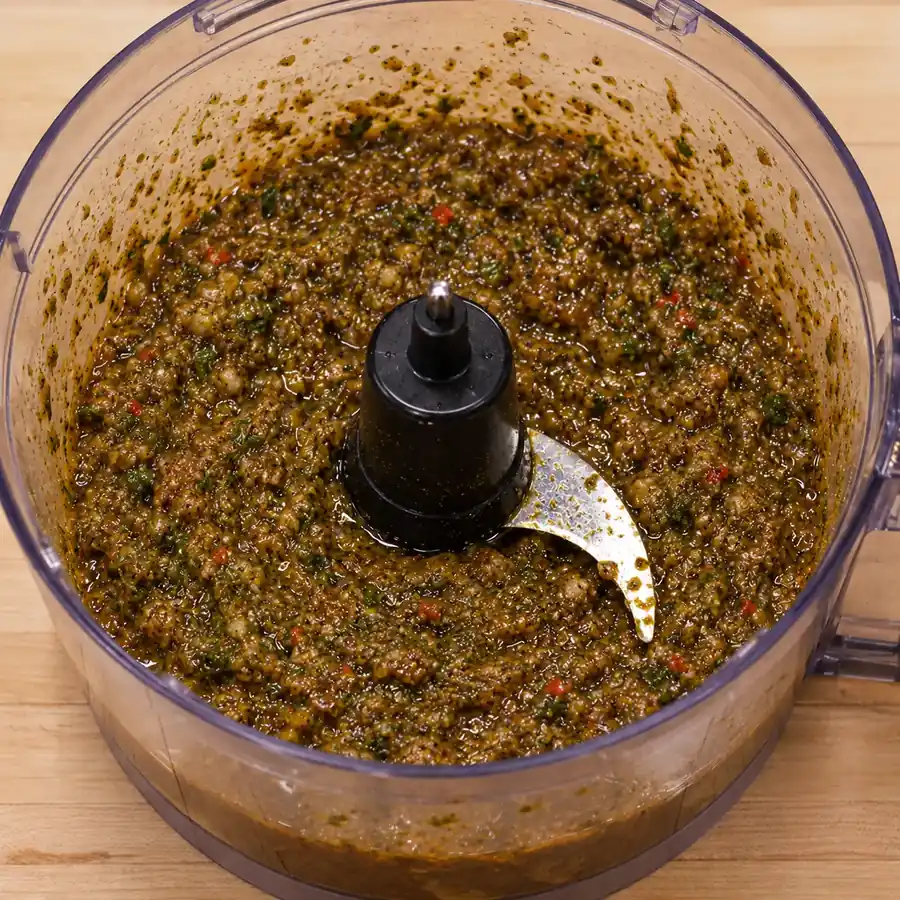
Wear gloves to trim the pepper and keep your hands away from your face. Add the ingredients to a food processor and pulse, scraping the bowl, until finely chopped. Leave a little texture rather than making a watery green liquid. Taste a tiny clean sample carefully and adjust salt before any raw meat is involved. Divide the batch into clean portions at this stage. For two pounds of chicken thighs or drumsticks, use about three-quarters of a cup of marinade and refrigerate four to twelve hours.
Step 1
Wear gloves to prepare the pepper and avoid touching your face. Remove seeds and pale ribs for less heat if desired. Put all ingredients in a food processor.

Step 2
Pulse to a thick, finely chopped wet paste, scraping the bowl. Do not dilute into a watery sauce. Makes about 1 1/2 cups, or 12 portions of 2 tbsp.

Step 3
For 2 lb chicken thighs or drumsticks, use about 3/4 cup marinade and refrigerate 4 to 12 hours. Reserve any serving portion before raw meat contact. Discard used marinade and cook chicken to 165°F. Refrigerate unused clean marinade or freeze in portions.

Practical cooking details
Choose the final thickness according to the meal. A spoonable sauce stays in place as a dip, while a slightly looser one spreads more evenly over rice or cooked meat. Make the first adjustment in a small bowl instead of changing the entire batch. That way the main container keeps its intended balance, and a serving can be thinned only as much as necessary. The food underneath contributes salt, fat and moisture of its own, so tasting the sauce with that food is more useful than repeatedly tasting it alone.
When scaling a small sauce, measure seasonings before adding them and keep a little room for a final adjustment. Garlic cloves, citrus fruit and hot peppers vary in strength even when their count is the same. Add the main liquid and aromatic ingredients in the stated proportions first, then judge the finished texture at serving temperature. A warm sauce can feel thinner than it will after cooling, while a cold dairy sauce may loosen as it sits briefly on the plate. Keep the clean reserve separate from the serving bowl.
Troubleshooting
If the paste seems watery, the onion may have been very juicy or extra liquid was added to help the processor. Pulse smaller batches and scrape rather than pouring in water. If too hot, blend a small portion with extra scallion and onion, then rebalance the other seasonings; simply adding sugar does not remove heat. If cooking chicken later, wipe away heavy excess paste before a hot sear so loose onion pieces do not burn before the meat is cooked.
Substitutions
A habanero can replace Scotch bonnet when that is what is available, with a related but different flavor. Dried thyme can replace fresh in a smaller amount because it is more concentrated. Tamari can replace soy sauce, but taste the salt level. Lemon juice changes the citrus profile and can work when lime is unavailable. Keep allspice in the formula if you want the characteristic jerk direction. Cinnamon and nutmeg are supporting notes, so increasing them heavily can make the paste taste like a baking spice mix.

Frequently asked questions
Is this jerk sauce ready to pour over cooked food?
This recipe is presented as a raw wet marinade. Use it to season food that will be cooked, and reserve a separate clean portion before contact with raw meat if you plan a cooked serving sauce. The card’s yield and timing describe the marinade, not a complete chicken dinner or a bottled table sauce.
How long should chicken stay in jerk marinade?
For thighs or drumsticks, four to twelve hours in the refrigerator is a practical range for this paste. Do not leave the meat on the counter to marinate. An overnight rest can fit that range, but longer is not automatically better when acid is present. Cook the chicken fully to 165°F and discard marinade that contacted raw poultry.
Can I freeze jerk marinade?
Yes. Portion clean unused paste into small freezer containers for up to two months. Thaw in the refrigerator before using. Small portions let you season one meal without repeatedly thawing the entire batch. Label them as raw marinade so they are not mistaken for a ready-to-eat sauce, especially if several homemade sauces share the freezer.
Storage and make-ahead
Keep unused clean marinade in a sealed container in the refrigerator for up to three days, or freeze promptly. Never return a spoon or brush that has touched raw chicken to the clean batch. Discard the used marinade after removing the meat. The recipe card does not include chicken in its ingredient list or cooking time; adding chicken is a separate meal preparation, with its own safe handling and final cooking step. Use only as much paste as needed to coat evenly.
What to serve with it and related recipes
For chicken meals, air fryer chicken wings and air fryer chicken drumsticks are useful recipes to prepare independently before choosing a finishing sauce. oven barbecue chicken drumsticks gives a separate barbecue direction for an oven dinner. A small serving of sauce can also be offered beside chicken shawarma wraps, with the wrap’s own dressing considered before adding more. For a dipping plate, crispy homemade fries or air fryer roasted potatoes provides a crisp potato base. Put a modest amount of sauce in a serving bowl, taste with the food, and keep the clean reserve chilled as appropriate instead of dressing the whole meal more heavily than needed.
Jamaican Jerk Marinade with Scotch Bonnet and Allspice
Ingredients
- 4 green onions roughly chopped
- 1 small yellow onion roughly chopped
- 4 garlic cloves
- 1 tbsp chopped fresh ginger
- 1 Scotch bonnet pepper stem removed
- 2 tbsp fresh thyme leaves
- 2 tsp ground allspice
- 1 tsp ground black pepper
- 1/2 tsp ground cinnamon
- 1/4 tsp ground nutmeg
- 2 tbsp brown sugar
- 2 tbsp reduced-sodium soy sauce
- 2 tbsp fresh lime juice
- 2 tbsp apple cider vinegar
- 2 tbsp neutral oil
- 1/2 tsp fine salt
Instructions
- Wear gloves to prepare the pepper and avoid touching your face. Remove seeds and pale ribs for less heat if desired. Put all ingredients in a food processor.
- Pulse to a thick, finely chopped wet paste, scraping the bowl. Do not dilute into a watery sauce. Makes about 1 1/2 cups, or 12 portions of 2 tbsp.
- For 2 lb chicken thighs or drumsticks, use about 3/4 cup marinade and refrigerate 4 to 12 hours. Reserve any serving portion before raw meat contact. Discard used marinade and cook chicken to 165°F. Refrigerate unused clean marinade or freeze in portions.