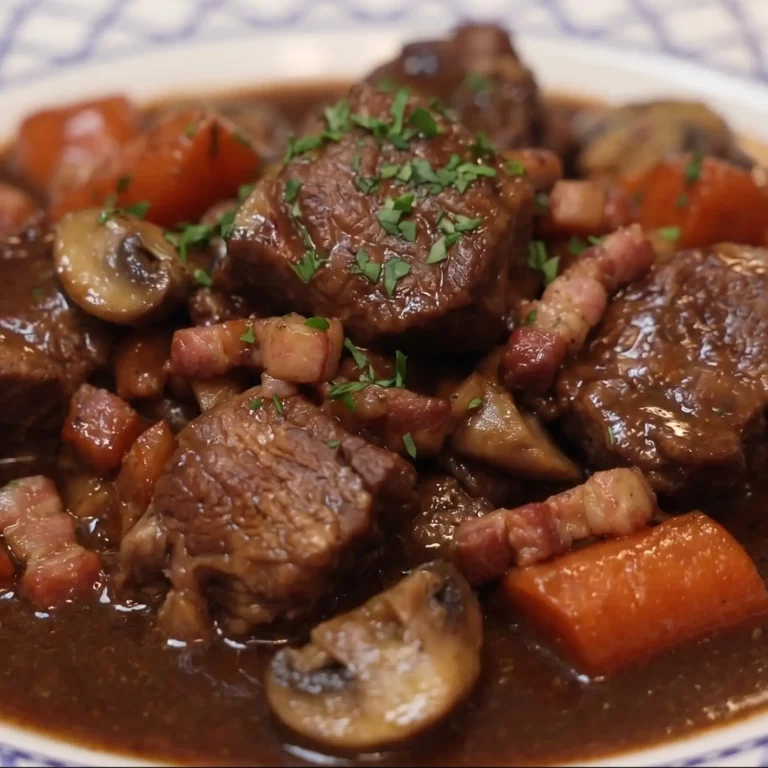
Tender Pot Roast with Pommes Boulangères
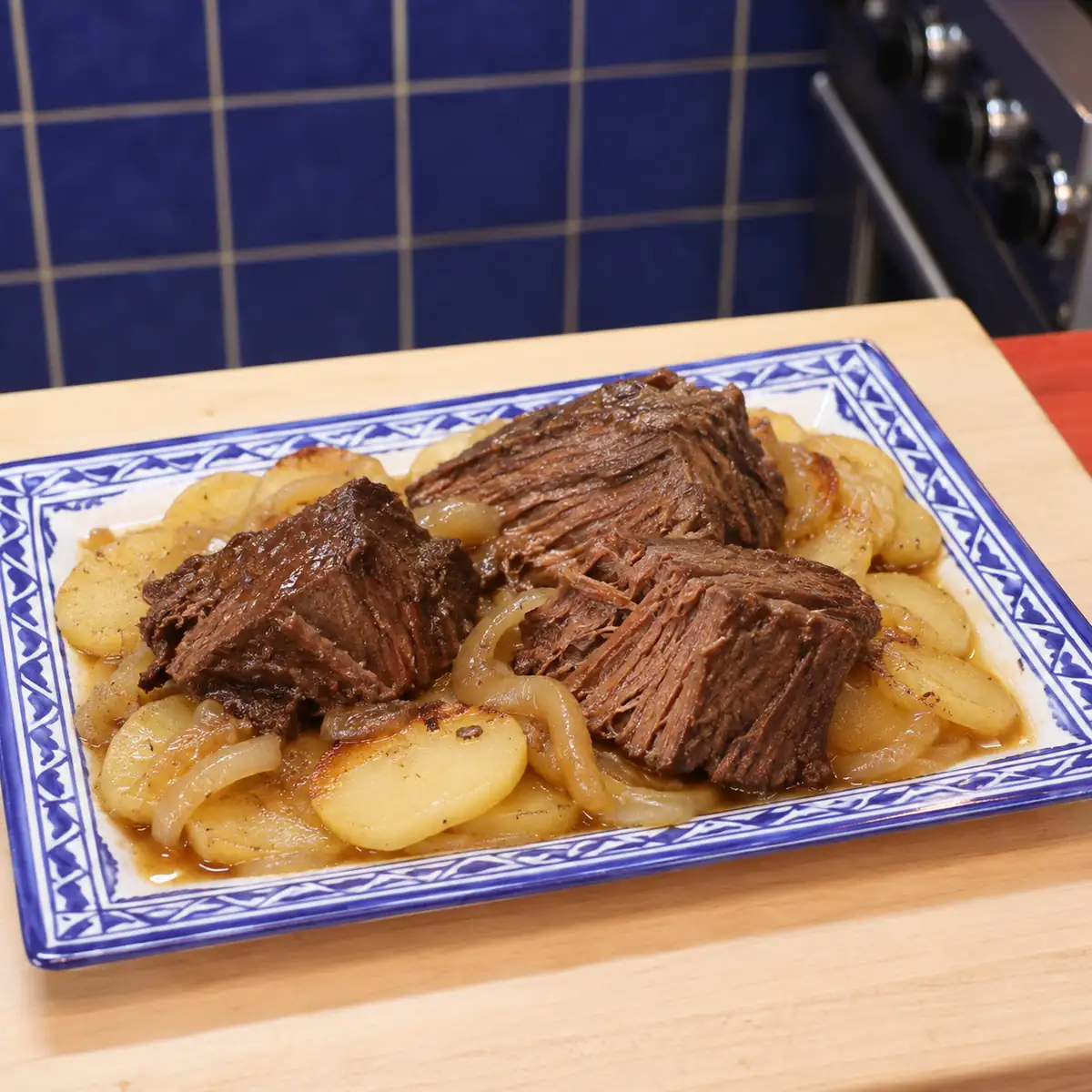
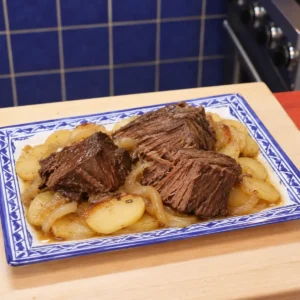
This pot roast combines a slow-braised chuck roast with sliced potatoes and onions cooked in the beef juices like pommes boulangères. The timing matters: the roast starts first, then the potatoes go in later so they become tender and browned without collapsing into the braising liquid.
This is different from my Dutch oven pot roast, which cooks with carrots and potatoes from the start, and from my standalone classic pommes boulangères. Here the two ideas become one complete dish, with the potatoes absorbing some of the roast juices while still keeping their layered texture.
Why the proportions work
A three-pound chuck roast is large enough to stay moist during a long braise but small enough to fit comfortably over two pounds of sliced potatoes in a standard Dutch oven. The braising liquid is intentionally limited. Too much stock turns the potato layer into soup, while too little leaves the bottom dry before the beef becomes tender.
I use about three cups of total liquid between beef stock and wine. The roast cooks in most of that liquid during the first stage. Once the potatoes are added, some liquid is spooned over them, but the top third of the slices should remain above the surface. That gives you tender potatoes underneath and lightly browned edges on top.
Chuck roast is the right cut because it contains enough connective tissue to become tender after several hours. A lean top round roast can dry before the fibres relax. For another slow-cooked beef dish where collagen is the point, my braised beef cheeks use the same general principle even though the cut and sauce are different.
Ingredients You Need
Use a three-pound boneless beef chuck roast, two pounds of Yukon Gold potatoes, two large onions, garlic, beef stock, dry white wine, thyme, bay leaf and a little Dijon mustard. The mustard disappears into the braising liquid but gives it more savoury depth.
Yukon Golds are a good middle ground here. They stay intact better than very floury russets but still absorb the broth. Slice them about one-eighth inch thick. A mandoline is helpful, but a sharp knife works if you keep the slices even. If onions slow you down, the technique in my how to cut an onion guide keeps the layers tidy.
Step-by-Step Instructions
Sear the beef properly
Heat the oven to 325°F. Pat the roast dry and season it on all sides. Heat the oil in a Dutch oven over medium-high heat and sear the roast until deeply browned, about four to five minutes per broad side. Do not rush this step. The colour on the beef becomes part of the sauce.
Remove the roast. Add one sliced onion and cook until softened and lightly golden. Stir in the garlic for about thirty seconds, then deglaze with the wine. Scrape the browned bits from the bottom. If you want to understand why this step matters, my deglazing guide explains what should actually come off the pan.
Braise the roast before adding the potatoes
Add the beef stock, Dijon, thyme and bay leaf. Return the roast to the pot. The liquid should come roughly one-third to halfway up the meat, not cover it.
Cover tightly and braise for about one hour and forty-five minutes. At this stage the beef will be partly tender but not ready to pull apart. That is intentional. If you add the sliced potatoes at the beginning, they spend too long in the liquid and lose their structure.
For a richer homemade base, use brown stock or neutral brown veal stock instead of boxed stock.
Build the pommes boulangères layer
Lift the roast onto a plate. Taste the braising liquid and adjust the salt before the potatoes go in. Layer the sliced potatoes with the second onion directly in the Dutch oven, seasoning lightly between layers.
Pour or ladle enough braising liquid over the potatoes to moisten them well without completely submerging the top layer. Put the roast back on top. Cover and return to the oven for forty-five minutes.
Finish uncovered for colour
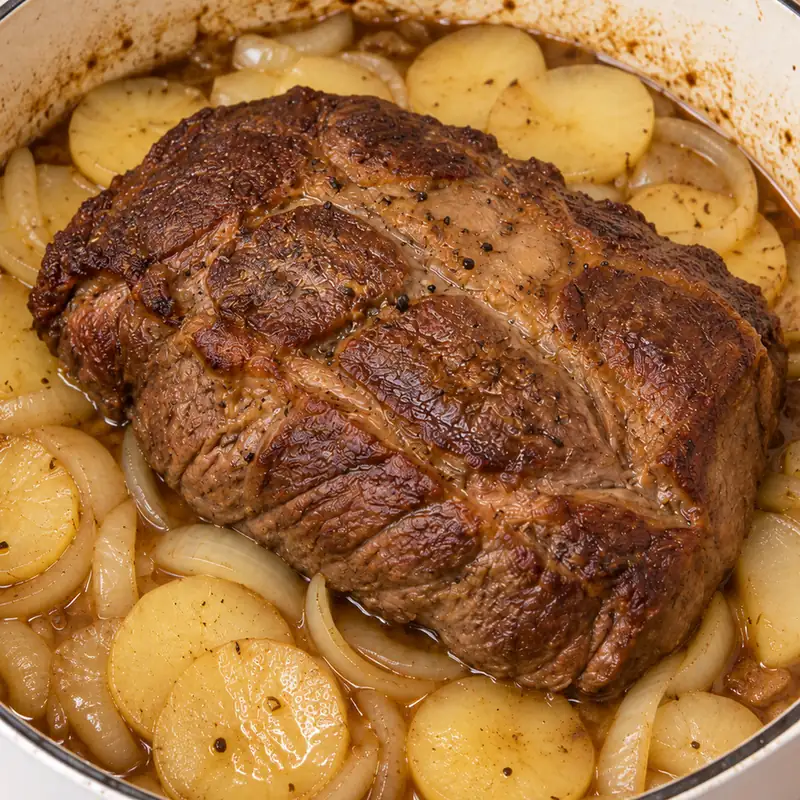
Remove the lid and cook another thirty to forty minutes. The beef should be fork-tender and the potato slices should be soft when pierced in the centre. The top edges of the potatoes should take on some golden colour.
If the roast is tender before the potatoes are browned, transfer the beef to a board, tent loosely with foil and let the potatoes finish uncovered. This is better than overcooking the beef just to colour the garnish.
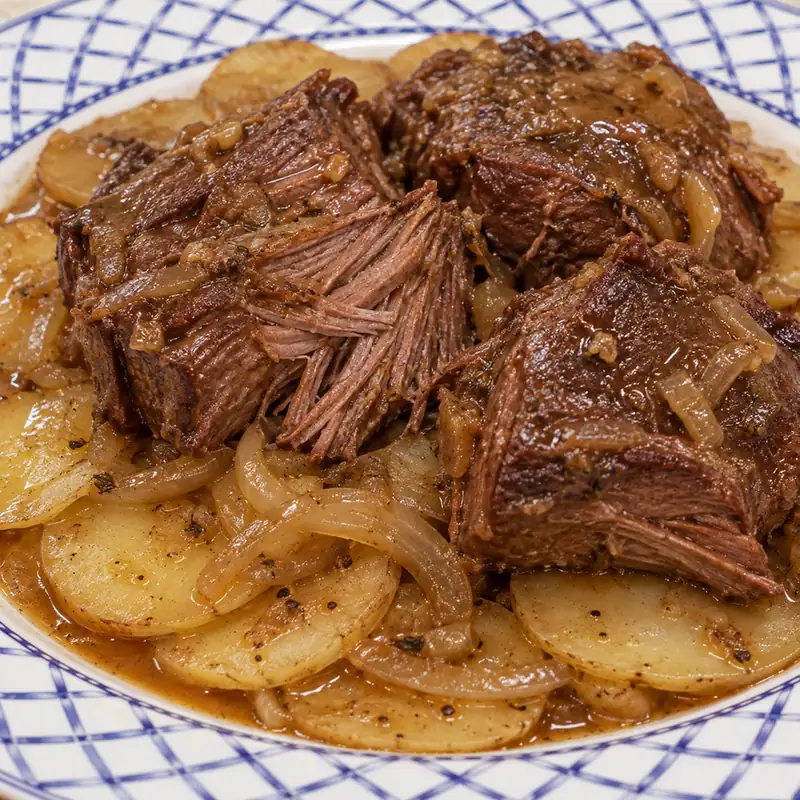
Rest the roast for fifteen minutes before slicing or pulling into large pieces. Spoon a little braising liquid over each portion and serve with the potatoes and onions underneath.
What can go wrong
The first mistake is using too much liquid. Pommes boulangères should absorb broth, not swim in it. If the potatoes are completely covered, they cook more like boiled potatoes and the top never develops colour.
The second mistake is slicing the potatoes unevenly. Thin slices can dissolve while thick slices remain firm. Aim for one-eighth inch. If some are closer to one-quarter inch, they may need extra time.
The third mistake is expecting a chuck roast to become tender on a strict clock. The exact time depends on thickness and connective tissue. It is ready when a fork twists into the centre with little resistance. If it is still tight, give it another twenty to thirty minutes.
This is a hearty meal, so I usually serve it with a lighter vegetable side such as oven-roasted mixed vegetables or a crisp salad rather than another starch.
Substitutions
A blade roast or boneless shoulder roast can replace chuck. If the piece is much leaner, watch the tenderness carefully. Russet potatoes can replace Yukon Golds, but slice them slightly thicker and handle them gently because they break down faster.
Red wine can replace the white wine for a deeper sauce, although the dish becomes closer in character to beef bourguignon. For a wine-free version, use additional beef stock and add one teaspoon of red wine vinegar near the end for balance.
Fresh rosemary can replace thyme, but use it sparingly. Rosemary can dominate a long braise.

FAQ
Can I make this a day ahead?
Yes. Braised beef reheats very well. Cool the pot promptly, refrigerate overnight, then reheat covered at 325°F until hot through. The potatoes will be softer on the second day, so the best texture is still on the day it is cooked.
Should I peel the potatoes?
You can leave thin Yukon Gold skins on if you scrub them well. For the classic layered look, I prefer peeled potatoes because the slices sit flatter and absorb the stock more evenly.
Can I cook the potatoes separately?
Yes, but then the dish loses the main advantage of this version. If you want separate sides, make the classic pommes boulangères and a standalone pot roast instead.
Suggested Posts
For more braised beef ideas, try hearty beef stew, French beef and carrot stew or oven-braised beef bourguignon. For another potato side with a crisp finish, Lyonnaise potatoes go in a completely different direction.
Tender Pot Roast with Pommes Boulangères
Ingredients
- 3 pounds boneless beef chuck roast
- 2 teaspoons fine salt plus more to taste
- 1 teaspoon black pepper
- 2 tablespoons neutral oil
- 2 large yellow onions thinly sliced, divided
- 3 garlic cloves minced
- 1 cup dry white wine
- 2 cups beef stock
- 1 tablespoon Dijon mustard
- 4 thyme sprigs
- 1 bay leaf
- 2 pounds Yukon Gold potatoes peeled and sliced 1/8 inch thick
- 2 tablespoons unsalted butter for the potato layer and finishing
Instructions
- Heat oven to 325°F. Pat roast dry, season with salt and pepper, and sear in oil in a Dutch oven until deeply browned on all sides. Remove.
- Cook half the onions until softened. Add garlic for 30 seconds, deglaze with wine and scrape the pot. Add stock, Dijon, thyme and bay leaf.
- Return roast, cover and braise 1 hour 45 minutes.
- Remove roast. Layer potatoes with remaining onions in the pot, seasoning lightly and dotting with butter. Spoon braising liquid over without fully submerging the top layer.
- Return roast on top, cover and bake 45 minutes. Uncover and bake 30–40 minutes more until beef is fork-tender and potatoes are soft and browned at the edges.
- Rest beef 15 minutes before serving with potatoes and braising liquid.