Easy Bavette Steak Recipe with Shallot and Red Wine Sauce (French Flank Steak Dinner)
Few things feel more like a true French bistro than a perfectly cooked bavette steak covered in a glossy shallot and red wine sauce, with green beans, Parisian potatoes and a few juicy cherry tomatoes on the side. This bavette à l’échalote recipe is inspired directly by my YouTube video, but I’ve fine-tuned a few details here for home cooks in Canada and the USA: clearer quantities, cooking times, and a few tricks to get the same result you see on camera.
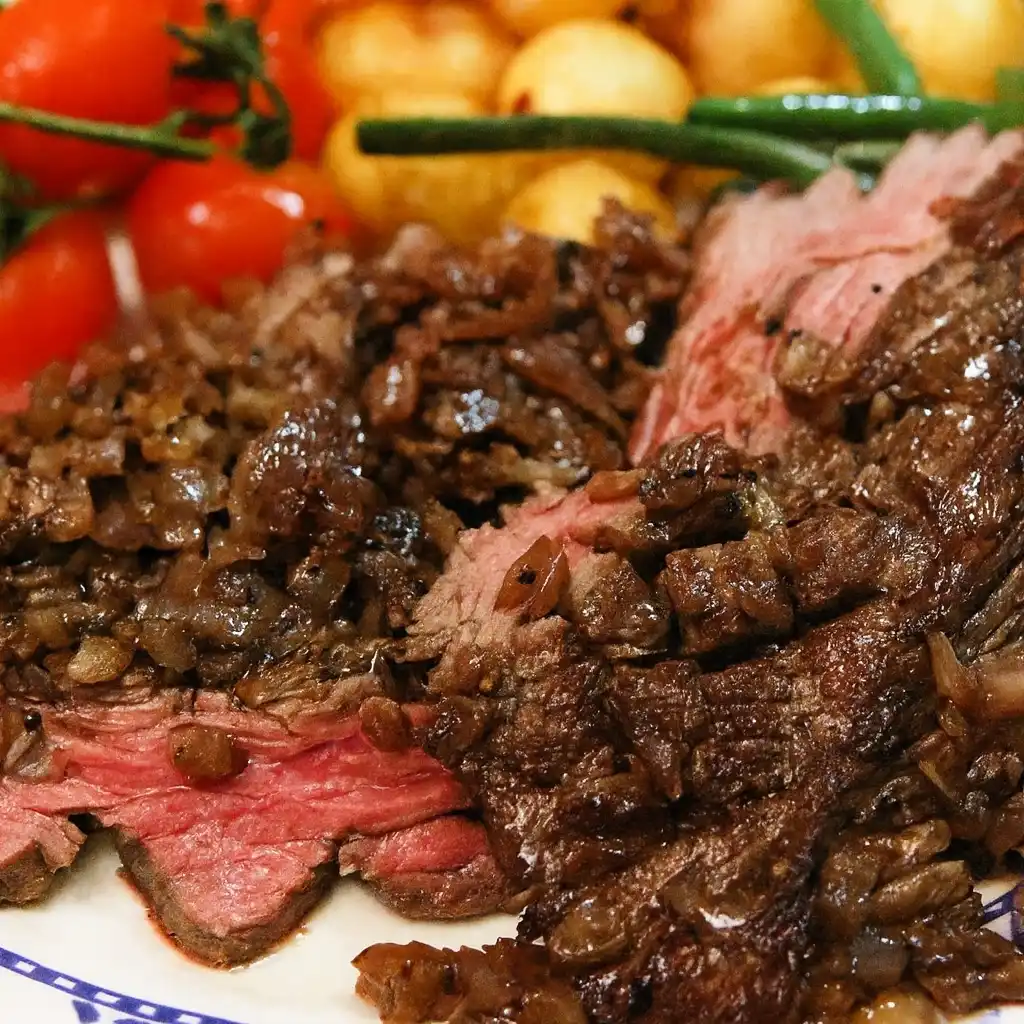
Bavette (also called flank steak in many North American butcher shops) is a naturally flavorful cut that loves high heat, butter basting and a bold sauce. It’s the kind of steak you’ll find in Paris brasseries, served with fries or potatoes, a glass of red wine and a simple salad on the side. Here, we keep the spirit of the classic French bavette steak with shallot red wine sauce, but adapt the steps for a reliable, weeknight-friendly method.
If you already love my recipes like steak with Roquefort sauce, creamy mushroom sauce for steak, or my Parisian potatoes, this bavette à l’échalote will fit perfectly into your French bistro rotation.
What is bavette steak?
In France, bavette is a long, flat, very flavorful cut taken from the belly area of the cow. In Canada and the USA, the closest equivalents are:
- Flank steak
- Sometimes flap steak or sirloin flap (ask your butcher)
Bavette is:
- Rich in beef flavor
- Best cooked hot and fast, usually medium-rare to medium
- Sliced across the grain so it stays tender
If you can’t find bavette, see the substitutions section below for other cuts that work well with this classic shallot red wine sauce.

Ingredients for bavette à l’échalote
This recipe serves 2 very generous portions (or 3 smaller ones), but you can easily scale it up.
For the steak and sauce
- 600g (1.3 lb) bavette steak (flank or flap steak), at room temperature
- 15ml (1 tbsp) neutral oil (canola, sunflower, grapeseed)
- 40g (3 tbsp) unsalted butter, divided (for basting and for the shallots)
- 120g (4 oz) shallots, finely minced (about 3–4 large)
- 60ml (¼ cup) cognac or brandy
- 180ml (¾ cup) dry red wine
- 120ml (½ cup) beef stock (optional but recommended for body)
- 5ml (1 tsp) red wine vinegar (to balance the sauce)
- Fine salt and freshly ground black pepper

For the green beans and potatoes
- 400g (14 oz) green beans, trimmed (preferably thin French-style beans)
- 1.5L (6 cups) water for blanching
- 15g (1 tbsp) coarse salt for the blanching water
- 500g (1.1 lb) small waxy potatoes (Parisian potatoes or small baby potatoes)
- 20–30g (1½–2 tbsp) butter for sautéing the potatoes
- Salt and pepper
For the cherry tomato garnish
- 150g (5 oz) cherry tomatoes
- A drizzle of olive oil (optional)
- A pinch of salt
Step-by-step: how to make bavette with shallot red wine sauce
1. Prep the vegetables
Trim the green beans and keep them whole. If you like a restaurant look, you can tie them into small bundles using kitchen twine, just like in the video. Rinse the potatoes and leave them whole if they’re small; otherwise cut them into bite-sized pieces so they cook evenly. Rinse the cherry tomatoes and set aside.
If you love potato sides, you can also check out my cheesy beef macaroni casserole or cheesy beef and tomato pasta for other comforting ideas.
2. Blanch the green beans
Bring 1.5L (6 cups) of water to a boil and add 15g (1 tbsp) of coarse salt. Add the green beans and cook for about 8–10 minutes, until they are tender but still bright green. Drain well, shake off the excess water and set aside. You’ll reheat them quickly in the pan before serving.
3. Par-cook or boil the potatoes
You can steam or boil the potatoes in salted water until just tender when pierced with the tip of a knife (about 12–15 minutes depending on size). Drain thoroughly and let them dry a little in the colander; this helps them brown nicely later.
If you want a richer variation, you can also use my Parisian potatoes with bacon or serve the bavette over homemade mashed potatoes.

4. Prepare the steak
Pat the bavette dry with paper towels. Lightly score the surface in a criss-cross pattern with a sharp knife (as in the video) — just shallow cuts to help the heat and fat penetrate and to create a nice crust.
Season generously on both sides with salt and freshly ground black pepper. Let the steak sit at room temperature for 20–30 minutes while you prepare the sauce ingredients.
5. Brown the potatoes
In a large skillet, melt 20–30g (1½–2 tbsp) of butter over medium-high heat. Add the pre-cooked potatoes and sauté until they develop a golden, slightly crisp surface, about 8–10 minutes. Season with salt and pepper. Keep them warm (low oven or covered).
For more potato ideas with steak, you can also look at my traditional gratin dauphinois or creamy mashed potatoes.
6. Sear the bavette
Heat a heavy pan (cast iron or thick stainless steel) over high heat. Add the neutral oil. When it shimmers and just begins to smoke, lay the bavette in the pan.
Cook for about 2–3 minutes per side for medium-rare, turning more often if the steak is thin, just like in a bistro. During the last minute of cooking, add about 20g (1½ tbsp) of butter and baste the steak with the foaming butter.
Transfer the bavette to a warm plate, tent loosely with foil and let it rest for 5–7 minutes while you make the shallot red wine sauce.
If you enjoy sauce variations, you might also like my steak au poivre or mushroom cream sauce for steak.

7. Make the shallot and red wine sauce
Pour off excess fat from the pan, leaving about 1 tbsp of the flavorful drippings. Lower the heat to medium. Add the remaining butter and the finely minced shallots. Cook gently for 3–4 minutes, stirring often, until soft and translucent but not browned.

Carefully pour in the cognac. If you’re comfortable and your ventilation is good, you can briefly flambé to burn off the alcohol; otherwise simply let it simmer for a minute.
Add the red wine and scrape the bottom of the pan to dissolve all the browned bits. Let it reduce by about half. Stir in the beef stock (if using) and continue simmering until the sauce is slightly thickened and glossy, another 4–6 minutes.
Finish with red wine vinegar, a pinch of salt and pepper, and taste. The sauce should be rich, with a nice balance between sweetness from the shallots and acidity from the wine and vinegar. If you like this style of sauce, you may also enjoy my classic French onion soup or homemade beef meatballs in tomato sauce.

8. Reheat the vegetables and tomatoes
In a clean pan, quickly reheat the blanched green beans with a small knob of butter and a pinch of salt and pepper, just until hot. For the cherry tomatoes, you have two options:
- Serve them raw for freshness, simply seasoned with a little salt, or
- Toss them quickly in a warm pan with a drizzle of olive oil, just until they start to soften
Both work beautifully on the plate and match the style of a French bistro.

9. Slice and plate the bavette
Slice the rested bavette against the grain into thin slices. Arrange the potatoes, green beans and cherry tomatoes on the plate. Fan out the bavette on top or next to the vegetables, and spoon plenty of shallot red wine sauce over the steak.
Serve immediately, ideally with a green salad dressed with Caesar dressing without mayonnaise or a classic homemade Caesar salad, and a glass of red wine.
Chef tips for perfect bavette à l’échalote
- Let the steak warm up: 20–30 minutes at room temperature helps it cook more evenly.
- Use high heat: bavette loves a hot pan; don’t be shy with the temperature.
- Don’t skip the rest: resting the steak keeps the juices inside when you slice.
- Reduce the sauce properly: the shallot red wine sauce should coat the back of a spoon.
- Balance the flavors: if the sauce tastes flat, add a pinch of salt and a few more drops of vinegar; if it’s too sharp, whisk in a little extra butter.
For more quick steak dinners, you can also explore my crispy Mongolian beef or black pepper beef.

Substitutions and variations
- If you can’t find bavette/flank steak
Replace with skirt steak, flap steak, flat iron steak, or even a thin sirloin steak. Cooking time may change slightly depending on thickness. - No cognac?
Use another brandy, whisky, or simply add a little extra red wine. The flavor will be slightly different but still delicious. - No beef stock on hand
You can skip it and reduce the wine a bit more, or use a mild chicken stock instead. For a deeper restaurant-style flavor, a spoonful of homemade beurre manié whisked in at the end can thicken and enrich the sauce. - Gluten-free option
The recipe is naturally gluten-free as long as your stock and cognac are gluten-free. - Different sides
Instead of potatoes and beans, try serving the bavette with authentic Belgian fries, creamy green spinach basil pasta, or creamy butternut squash soup as a starter.

What to serve with bavette steak (suggested recipes)
Here are some ideas from the site that pair beautifully with this French bavette steak with shallot red wine sauce:
- Parisian potatoes
- Authentic Belgian fries
- Traditional gratin dauphinois
- Homemade Caesar salad
- Creamy tomato soup as a starter
- Homemade tomato sauce with fresh tomatoes served with simple pasta on the side
- Moist dark chocolate cake for dessert
- Fresh strawberry tiramisu if you want a lighter dessert
- Creme brûlée for a very French finish
FAQ – Bavette steak with shallot sauce
Can I make the sauce ahead of time?
Yes. You can prepare the shallot red wine sauce a few hours in advance. Reheat it gently over low heat while you cook the steak, and whisk in a small knob of butter just before serving.
What is the best doneness for bavette?
Bavette is at its best medium-rare to medium. If you cook it well-done, it will become firmer and less juicy. Aim for an internal temperature around 52–55°C (125–130°F) after resting for medium-rare.
How do I slice bavette properly?
Always slice against the grain, in thin slices. This shortens the muscle fibers and keeps each bite tender.
Can I use another wine for the sauce?
Any dry red wine that you enjoy drinking will work: a basic French table wine, a Côtes du Rhône, or a simple Canadian or Californian red. Avoid very sweet or heavily oaked wines.
Can I cook this on the grill instead of in a pan?
Yes. Grill the bavette over high heat and make the sauce separately in a pan, using a spoonful of beef stock or a bit of homemade beef meatballs sauce or beef drippings instead of the pan juices.

Easy Bavette Steak Recipe with Shallot and Red Wine Sauce (French Flank Steak Dinner)
Ingredients
For the steak and sauce
- 600 g 1.3 lb bavette steak (flank or flap), room temperature
- 15 ml 1 tbsp neutral oil (canola, sunflower, grapeseed)
- 40 g 3 tbsp unsalted butter, divided
- 120 g 4 oz shallots, finely minced (about 3–4 large)
- 60 ml ¼ cup cognac or brandy
- 180 ml ¾ cup dry red wine
- 120 ml ½ cup beef stock (optional but recommended)
- 5 ml 1 tsp red wine vinegar
- Fine salt and freshly ground black pepper
For the sides
- 400 g 14 oz green beans, trimmed
- 1.5 L 6 cups water for blanching
- 15 g 1 tbsp coarse salt for blanching water
- 500 g 1.1 lb small waxy potatoes (Parisian or baby potatoes)
- 20 –30g 1½–2 tbsp butter for sautéing potatoes
- 150 g 5 oz cherry tomatoes
- Salt pepper, and a drizzle of olive oil (optional)
Instructions
- Bring 1.5L (6 cups) of water to a boil with 15g (1 tbsp) salt. Add the green beans and cook 8–10 minutes until tender but still bright. Drain, shake off excess water and set aside.
- Cook the potatoes in salted boiling water until just tender, 12–15 minutes. Drain well and let them dry slightly.
- Pat the bavette dry. Lightly score the surface in a criss-cross pattern. Season generously on both sides with salt and pepper. Let rest at room temperature for 20–30 minutes.
- In a skillet, melt 20–30g (1½–2 tbsp) butter over medium-high heat. Add the potatoes and sauté 8–10 minutes until golden and crisp in spots. Season with salt and pepper and keep warm.
- Heat a heavy pan over high heat. Add the neutral oil. When hot and lightly smoking, sear the bavette 2–3 minutes per side for medium-rare, turning as needed. During the last minute, add about 20g (1½ tbsp) butter and baste the steak with the foaming butter. Transfer to a warm plate and rest 5–7 minutes.
- Pour off excess fat from the pan, leaving about 1 tbsp drippings. Lower heat to medium. Add the remaining butter and minced shallots. Cook 3–4 minutes until soft and translucent.
- Deglaze with cognac, simmer 1 minute, then add the red wine and scrape the bottom of the pan. Reduce by half. Stir in the beef stock (if using) and simmer 4–6 minutes until slightly thickened and glossy. Finish with red wine vinegar, salt and pepper to taste.
- Quickly reheat the green beans in a small pan with a knob of butter, salt and pepper. For the cherry tomatoes, serve them raw with a pinch of salt or warm briefly in a pan with a little olive oil.
- Slice the bavette thinly against the grain. Arrange potatoes, green beans and cherry tomatoes on plates. Fan the steak slices on top or alongside and spoon over the shallot red wine sauce. Serve immediately.
Video
Notes
Substitutions and variations
- If you can’t find bavette/flank steak
Replace with skirt steak, flap steak, flat iron steak, or even a thin sirloin steak. Cooking time may change slightly depending on thickness. - No cognac?
Use another brandy, whisky, or simply add a little extra red wine. The flavor will be slightly different but still delicious. - No beef stock on hand
You can skip it and reduce the wine a bit more, or use a mild chicken stock instead. For a deeper restaurant-style flavor, a spoonful of homemade beurre manié whisked in at the end can thicken and enrich the sauce. - Gluten-free option
The recipe is naturally gluten-free as long as your stock and cognac are gluten-free. - Different sides
Instead of potatoes and beans, try serving the bavette with authentic Belgian fries, creamy green spinach basil pasta, or creamy butternut squash soup as a starter.
FAQ – Bavette steak with shallot sauce
Can I make the sauce ahead of time?Yes. You can prepare the shallot red wine sauce a few hours in advance. Reheat it gently over low heat while you cook the steak, and whisk in a small knob of butter just before serving. What is the best doneness for bavette?
Bavette is at its best medium-rare to medium. If you cook it well-done, it will become firmer and less juicy. Aim for an internal temperature around 52–55°C (125–130°F) after resting for medium-rare. How do I slice bavette properly?
Always slice against the grain, in thin slices. This shortens the muscle fibers and keeps each bite tender. Can I use another wine for the sauce?
Any dry red wine that you enjoy drinking will work: a basic French table wine, a Côtes du Rhône, or a simple Canadian or Californian red. Avoid very sweet or heavily oaked wines. Can I cook this on the grill instead of in a pan?
Yes. Grill the bavette over high heat and make the sauce separately in a pan, using a spoonful of beef stock or a bit of homemade beef meatballs sauce or beef drippings instead of the pan juices.
Useful Links
🛒 Michel Dumas Shop : Explore our kitchen essentials, including aprons and knives.
🌐 Linktree : Access all our important links in one place.
📱 YouTube | Instagram | Facebook | TikTok : Follow us for the latest recipes and culinary tips.