Chocolate Crinkle Cookies with Soft Centres and a Powdered Sugar Crust
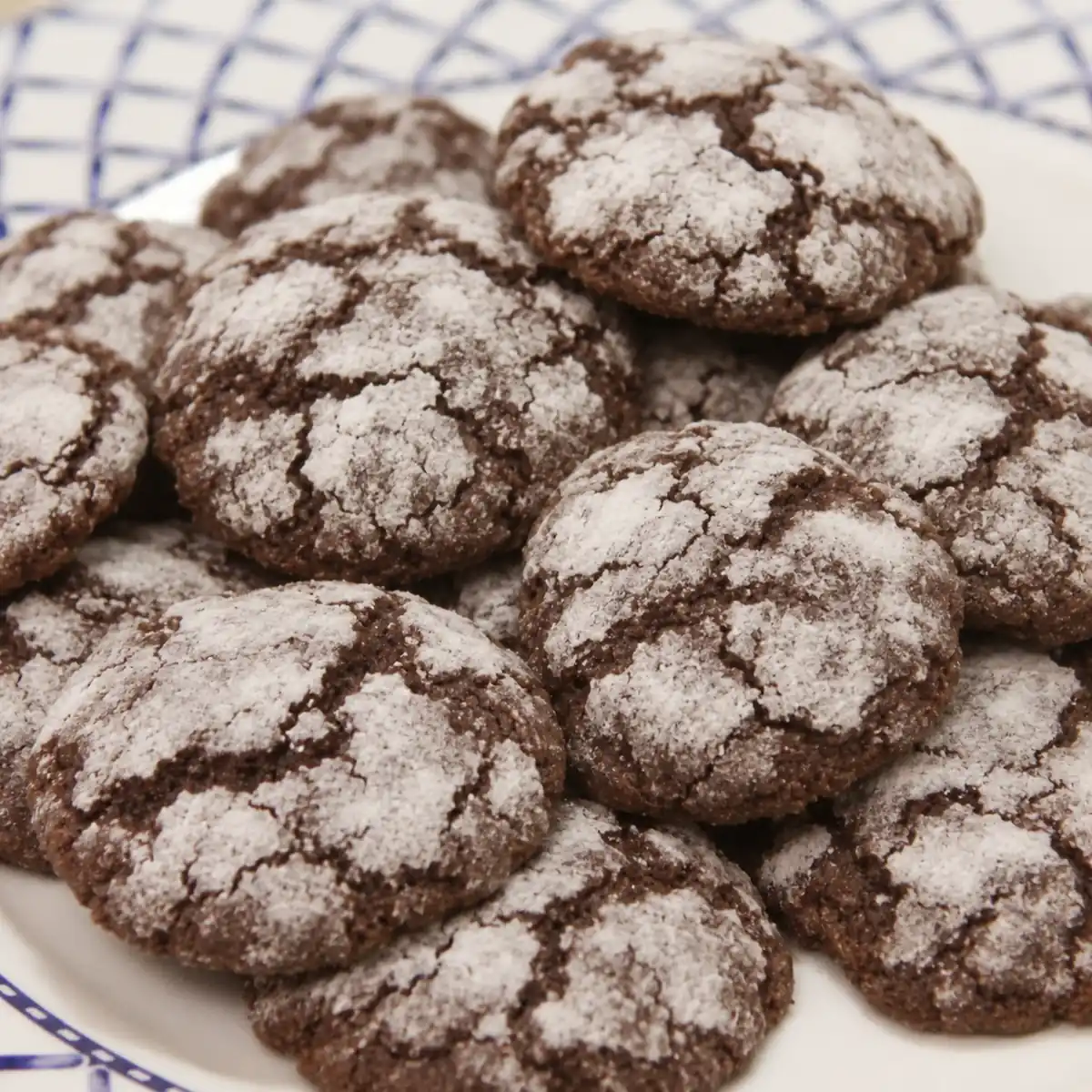
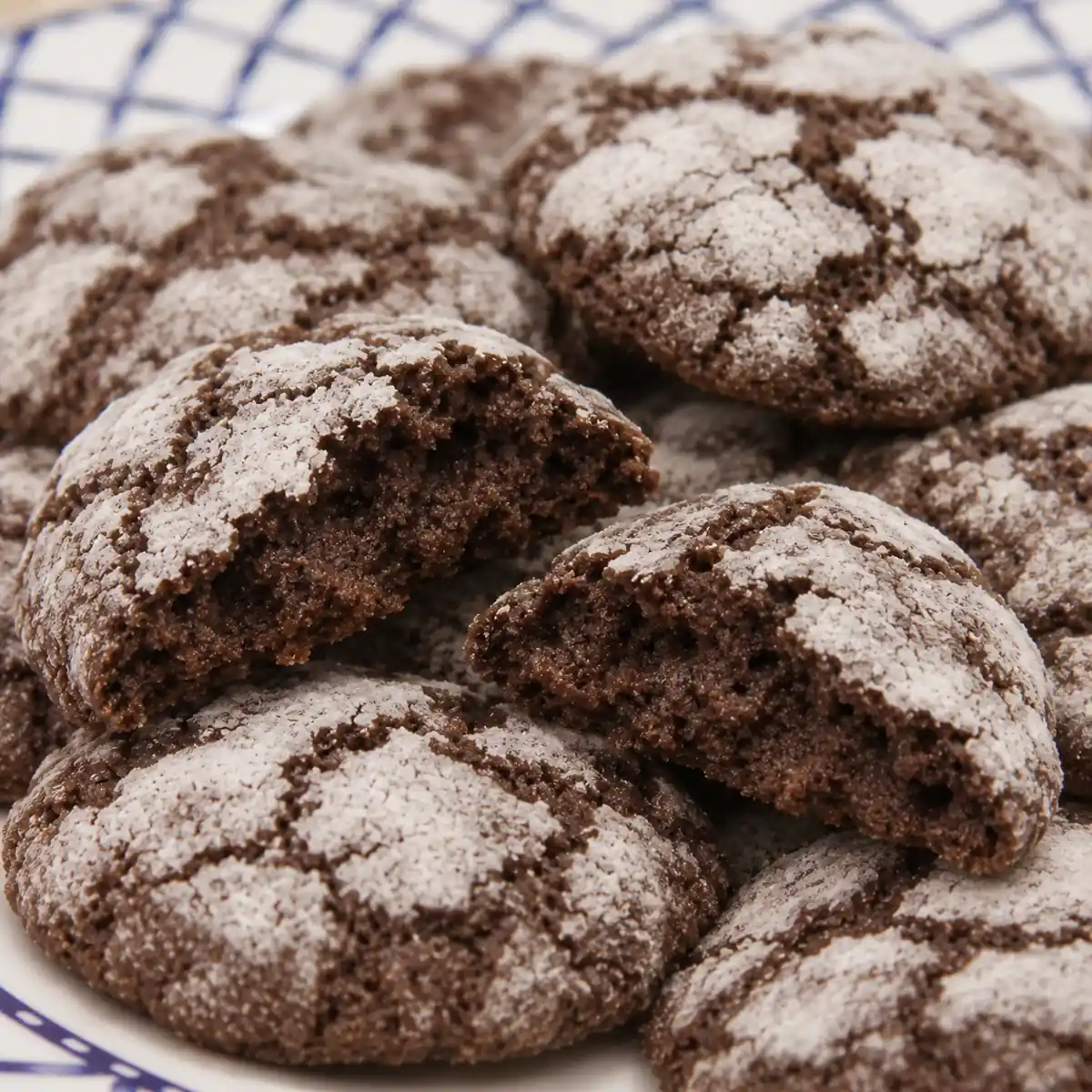
Chocolate crinkle cookies start as a sticky cocoa dough that becomes easy to shape after chilling. Rolled in sugar and baked, the dough spreads and opens into irregular dark cracks beneath a white coating. This version uses cocoa powder and oil, with no melted chocolate to prepare. The centres stay soft once cooled, while the outside has a delicate sugar crust. Plan for at least two hours of chilling; that pause is part of the recipe, not an optional shortcut.
Why the dough needs time in the refrigerator
Freshly mixed crinkle dough is softer than the dough for a typical chocolate-chip cookie. Cocoa and flour gradually absorb moisture while the mixture chills, and the colder dough holds its shape long enough for the surface to set in the oven. Trying to roll it immediately usually leads to sticky hands, extra flour, and cookies that spread too far.
Cover the bowl and refrigerate for at least two hours, or overnight. The dough should be firm enough to scoop and roll without flowing between your fingers. If your kitchen is warm, work with half the dough at a time and keep the rest cold. I prefer this patient approach to correcting a soft dough with more flour, which changes the texture of the finished cookie.
Cocoa powder and the dry ingredients
Use unsweetened natural cocoa powder for this version. Do not use hot chocolate mix, which contains sugar and often milk powder. Different cocoa powders absorb moisture differently, so weighing is helpful. The measured amount gives a pronounced chocolate flavour without adding chopped chocolate. If you want chocolate pieces instead, my chewy chocolate-chip cookies are built around that texture.
Whisk the flour, baking powder, and salt separately before adding them to the wet mixture. Baking powder provides the lift that helps the surface open; baking soda is not an equal replacement. Break up any lumps in the cocoa before mixing it with the oil and sugar. A small dry cocoa lump can remain bitter even after the surrounding dough is baked.
Mix just until the flour disappears
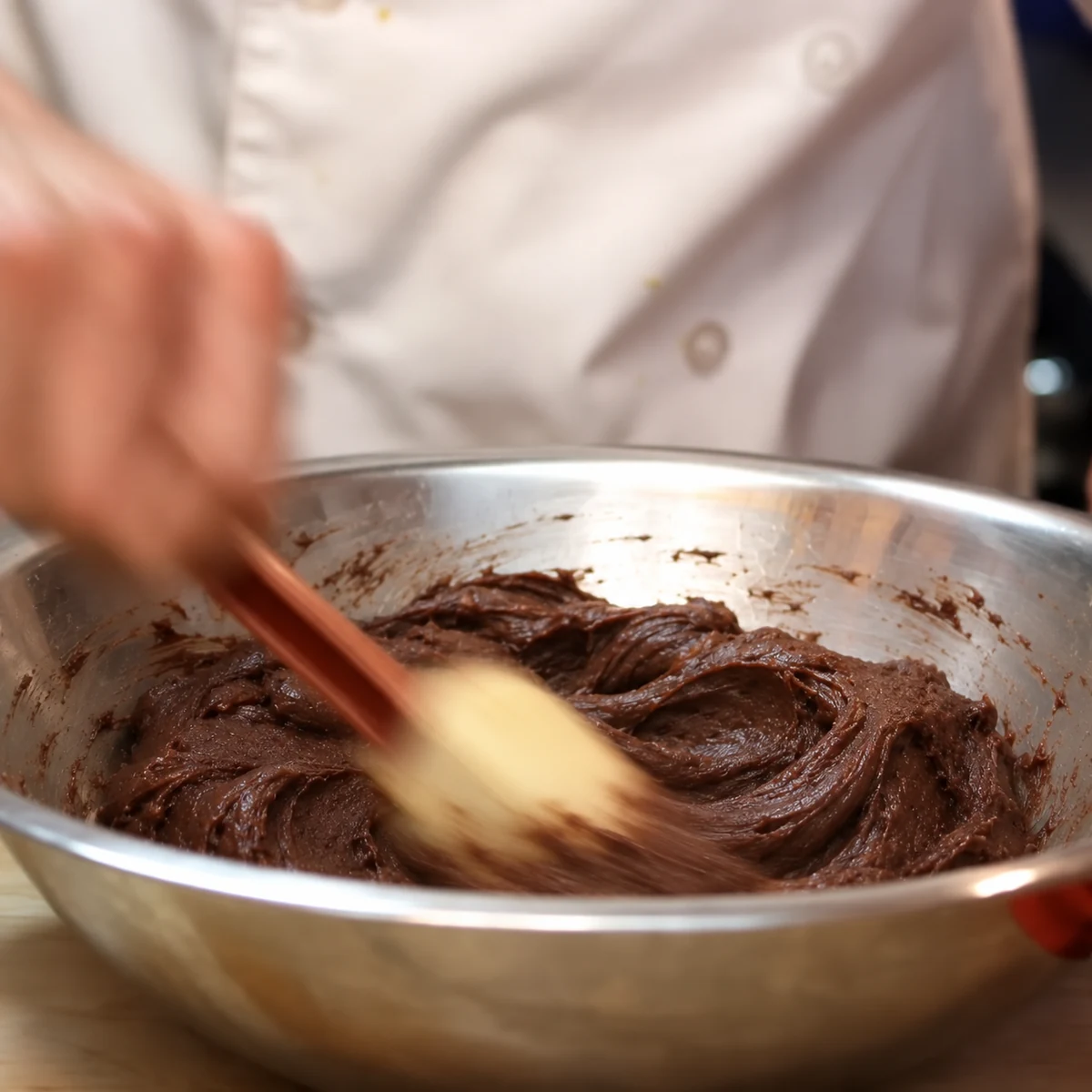
Whisk the granulated sugar, cocoa, and oil into a thick dark paste. Add the eggs one at a time, mixing until smooth after each, then add vanilla. The mixture may look glossy, which is normal at this stage. Use a neutral oil such as canola rather than a strongly flavoured oil that competes with the cocoa.
Fold in the flour mixture with a spatula, scraping the bottom and sides until no dry patches remain. Stop once the dough is evenly mixed. There is no need for a stand mixer or prolonged beating. The finished dough will look closer to a thick brownie mixture than to a dry dough for rolling out. Cover and chill before making any judgement about its final firmness.
The chocolate character sits between a cookie and a small cake. My ultra-fudgy cocoa brownies are denser and are cut after baking, while brown butter chocolate cookies have a different fat base and flavour. Those doughs are not interchangeable with this one.
Shape consistent portions
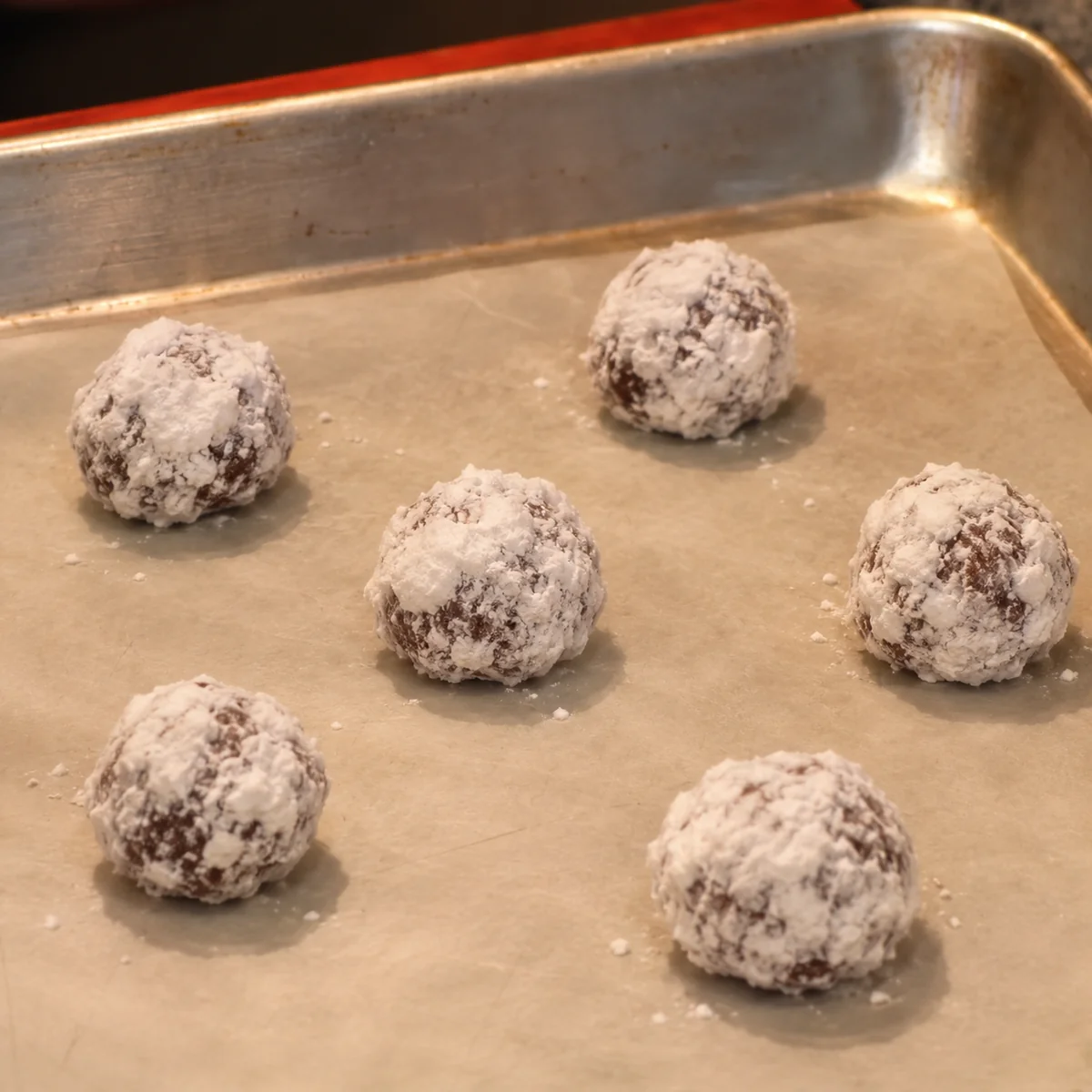
Heat the oven to 350°F and line two baking sheets with parchment. Portion the cold dough into twenty-four pieces, about one level tablespoon or twenty-three grams each before coating. A small scoop helps keep the baking time consistent. Roll briefly between your palms to make balls, without warming each portion for longer than necessary.
If the dough sticks heavily, return it to the refrigerator for fifteen minutes. Lightly damp hands can help, but do not leave water on the dough surface. Avoid dusting your hands or the board with flour, which can create dry patches. The balls do not need to be mathematically round; similar weight matters more than a perfectly polished shape.
Two sugar coatings for a clearer crackle
Put a little granulated sugar in one shallow bowl and icing sugar in another. Roll each dough ball lightly in granulated sugar, then generously in icing sugar. The first layer helps reduce how quickly the white coating absorbs moisture. The second should cover the surface well enough that dark dough is not showing through before baking.
Coat only the portions that are going into the oven next. Balls left sitting in icing sugar for a long time can absorb it and lose the contrast. Place twelve on a baking sheet with about two inches between them, and leave them rounded rather than flattening them. Keep the remaining dough cold while the first sheet bakes. I like a varied natural crackle, so I do not try to score or mark the tops.
Bake until the edges hold
Bake one sheet at a time on the middle rack for ten to twelve minutes. The cookies should puff, spread, and develop cracks. The edges should look set, while the centre remains soft but is no longer visibly wet. A cookie that feels firm all the way through while still in the oven will often be dry once cooled.
Let them sit on the baking sheet for five minutes before moving them to a rack. They are delicate when hot and need that short rest to hold together. Use a thin spatula to lift them rather than pulling at their edges. Cool completely before stacking, because trapped warmth creates moisture that can dissolve the sugar coating.
Your oven and baking sheet affect timing. A dark sheet may brown the bottoms faster, while a crowded oven can delay the centre. If the first tray spreads too much, chill the remaining dough longer and make sure the sheet has cooled before using it again. Do not place fresh dough on a hot tray.
Build a cookie assortment
For a holiday plate, combine the crinkles with whipped shortbread cookies, soft molasses cookies, and raspberry thumbprints. The different flavours and shapes make a more varied selection than several very similar chocolate cookies. Keep strongly spiced cookies in a separate container until serving so their aroma does not dominate the others.
For another sugar-coated cookie, try snickerdoodles. One-bowl sugar cookies are a simpler vanilla option, while white chocolate macadamia cookies add a nutty choice. Clearly identify nuts when sharing an assortment, even though this crinkle dough itself does not contain them.
Store or freeze
Keep fully cooled cookies in an airtight container at room temperature for up to four days. Separate layers with parchment and store away from heat. The icing sugar may soften slightly over time, especially in a humid kitchen, but the cookies remain pleasant. Avoid refrigerating baked cookies simply to keep the sugar white; condensation can have the opposite effect.
Freeze uncoated dough balls on a tray, then transfer to a freezer container for up to two months. Thaw overnight in the refrigerator, coat in both sugars, and bake as directed. Baked cookies can also be frozen once cold, separated by parchment, though their white finish may become less distinct after thawing. For the clearest appearance, freezing the uncoated dough is the better option.
Common questions
Why did the sugar disappear? The coating may have been too thin, the dough too warm, or the balls left coated too long before baking. Why are the cookies dry? Check flour measurement and reduce baking time on the next tray. Can I skip chilling? No; the dough is designed to firm up in the refrigerator. For another straightforward chocolate bake, my double chocolate muffins use a different batter and do not need this shaping step.
Chocolate Crinkle Cookies with Soft Centres and a Powdered Sugar Crust
Ingredients
- 1 cup granulated sugar 7 ounces
- 1/2 cup unsweetened natural cocoa powder 1 3/4 ounces
- 1/4 cup neutral oil
- 2 large eggs
- 1 teaspoon vanilla extract
- 1 cup all-purpose flour 4 1/4 ounces
- 1 teaspoon baking powder
- 1/4 teaspoon fine salt
- For coating:
- 1/4 cup granulated sugar
- 1/2 cup icing sugar plus a little more if needed
Instructions
- Whisk sugar, cocoa, and oil. Mix in eggs one at a time, then vanilla.
- Separately whisk flour, baking powder, and salt. Fold into cocoa mixture just until evenly combined. Cover and refrigerate at least 2 hours or overnight.
- Heat oven to 350°F. Line two baking sheets with parchment. Portion dough into 24 balls, about 23 g each before coating.
- Roll each lightly in granulated sugar, then generously in icing sugar. Place 12 per sheet about 2 inches apart without flattening. Keep unused dough cold.
- Bake one sheet at a time for 10–12 minutes until cracked and set around edges, with soft centres that are no longer visibly wet.
- Rest on sheet 5 minutes, then transfer to a rack and cool completely before storing.