Classic Lemon Squares with Fresh Lemon Juice and Shortbread
Classic lemon squares need a buttery base, a bright lemon layer, and enough chilling time to cut neatly. This version uses ordinary fresh lemons, eggs, sugar, and a little flour over a pressed shortbread crust. There is no condensed milk, cream cheese, or specialty citrus juice. The lemon filling is whisked in a bowl and baked directly on the warm crust, making this a practical dessert to prepare a day before serving.
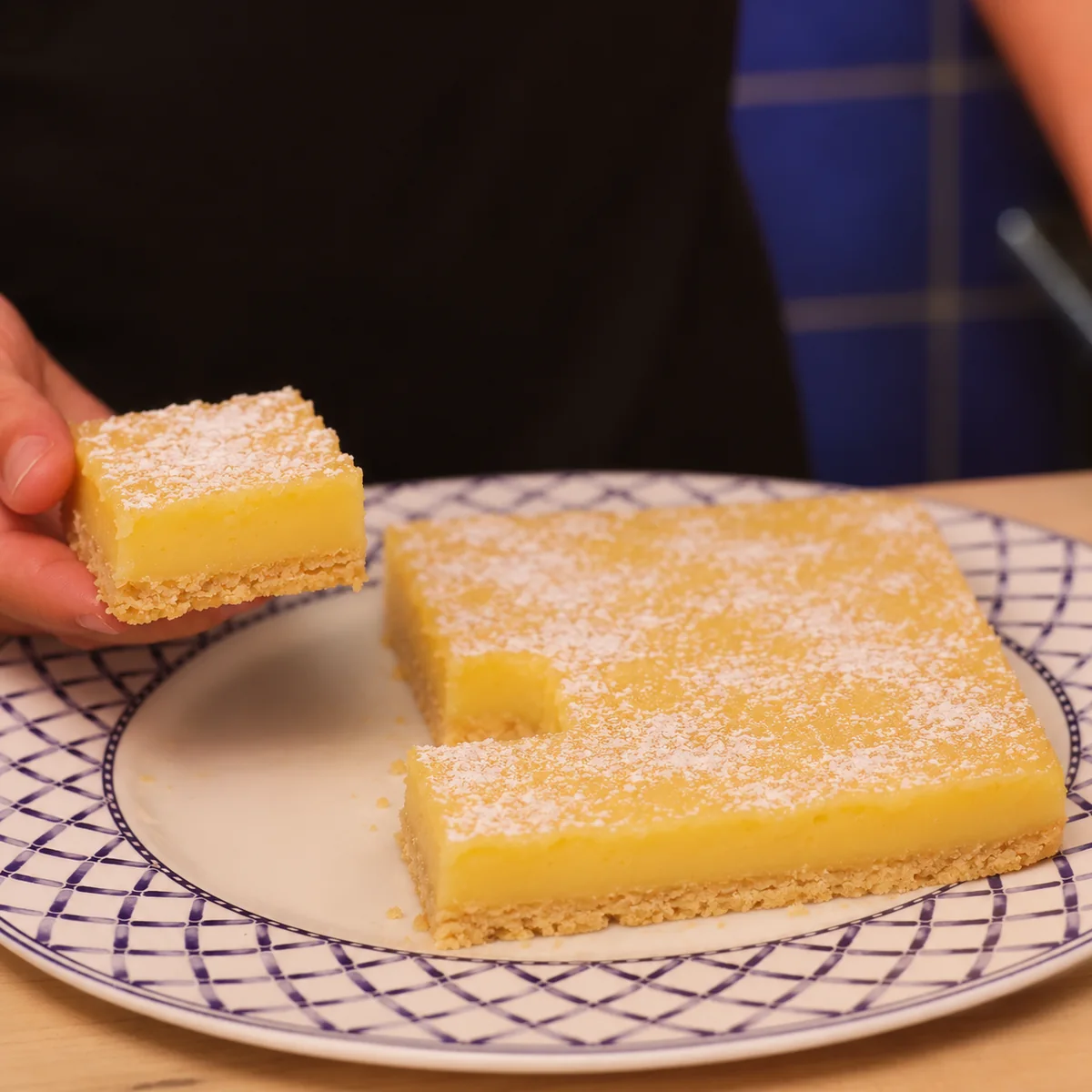
Regular lemons, a clear citrus flavour
These squares are the straightforward lemon-only counterpart to my yuzu lemon bars. They use supermarket lemons and a simple baked filling, so there is no need to find bottled yuzu juice. The zest provides the fragrant part of the flavour, while the measured juice supplies acidity. Both matter: adding extra juice in place of zest makes the filling wetter without reproducing the same aroma.
The sugar quantity balances the lemon and helps the filling set with a pleasant texture. This is a tart dessert, but it still needs sugar to work as intended. I prefer a thin dusting of icing sugar at serving time rather than a thick sweet coating. If you want a citrus dessert with a cake crumb instead, my lemon yogurt cake is a better choice than changing the filling proportions here.
Choose and prepare the pan
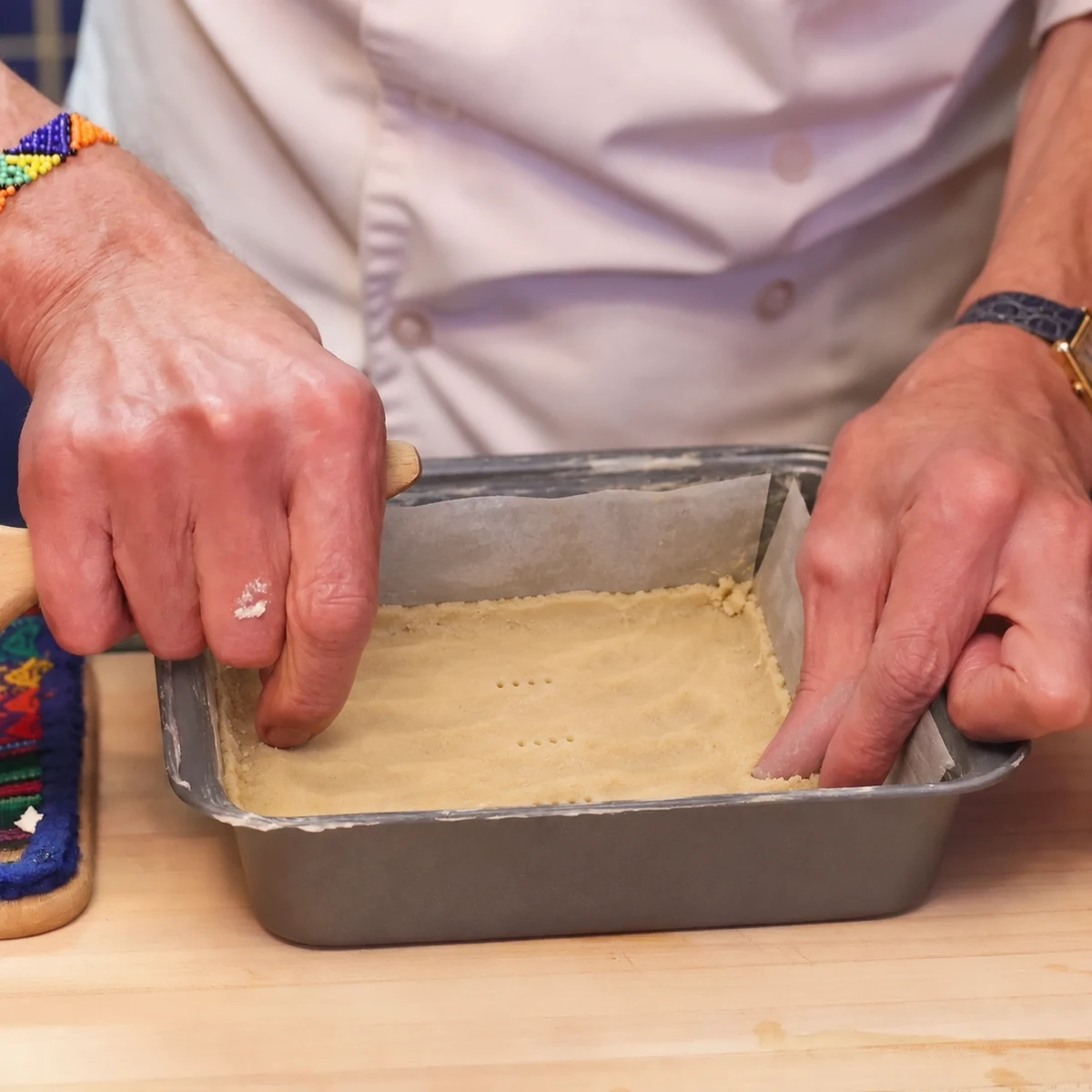
Use an eight-inch square metal pan with sides at least two inches high. Line it with parchment, leaving handles on two opposite sides, and lightly butter any exposed sides. Press the paper into the corners so the bottom lies flat. A narrow fold is fine; a large ridge can leave a weak spot in the crust where the filling runs underneath.
A light-coloured metal pan gives a useful view of how quickly the edges brown. Very dark pans may colour the shortbread faster, so begin checking at the shorter end of the suggested time. Do not substitute a much larger pan and expect the same thickness or timing. The amount of filling is designed for this surface area, with a clear but not excessively deep lemon layer.
Make the shortbread crust
Mix the flour, icing sugar, and salt in a medium bowl. Work in cool softened butter with a spatula or your fingertips until moist crumbs form. The mixture should hold together when squeezed, even if it does not gather into a smooth ball on its own. Do not add water. The butter supplies enough moisture and fat once the mixture is pressed into the pan.
Scatter the crumbs across the bottom, then press into an even layer. Use the flat base of a measuring cup to level the surface, paying attention to the corners. A thick rim is harder to cut and can remain underbaked. Lightly prick with a fork and bake at 350°F for eighteen to twenty minutes, until the edges begin to turn pale gold.
The crust should be lightly baked rather than deeply browned because it returns to the oven with the filling. Its buttery texture is related to my whipped shortbread cookies, although this base is pressed firmly enough to support custard. Keep it warm in its pan while preparing the lemon layer, and reduce the oven to 325°F for the second bake.
Measure the lemon carefully
Wash and dry the lemons, then grate the zest before cutting and juicing them. Remove only the coloured outer peel. The white layer underneath can taste bitter, especially when finely grated throughout a filling. You need two teaspoons of finely grated zest and half a cup of strained juice. The number of lemons varies with size and juiciness, so buy a few and measure the juice rather than counting fruit.
Strain out seeds and large pieces of pulp. Bottled lemon juice can taste noticeably different and does not provide fresh zest, so fresh fruit is the better choice here. Do not substitute a sweetened lemon drink. For more ways to use fresh lemons in baking, my lemon poppy seed loaf and lemon blueberry muffins offer different textures and serving occasions.
Whisk the filling without making foam
Rub the zest into the granulated sugar with your fingertips until fragrant. Stir in the flour so it is evenly distributed before adding liquid. Add the eggs and whisk gently until blended, then whisk in the strained lemon juice. Scrape the sides and bottom of the bowl to catch any dry flour or sugar. The mixture should be smooth and fluid, with only a few small bubbles.
Avoid beating at high speed. A thick layer of foam can bake into a pale, uneven surface and makes it harder to judge the custard underneath. If the mixture becomes foamy, let it stand briefly and skim off the excess. Pour over the warm crust immediately before returning the pan to the oven. I like this direct baked method because it avoids cooking a separate lemon curd in a saucepan.
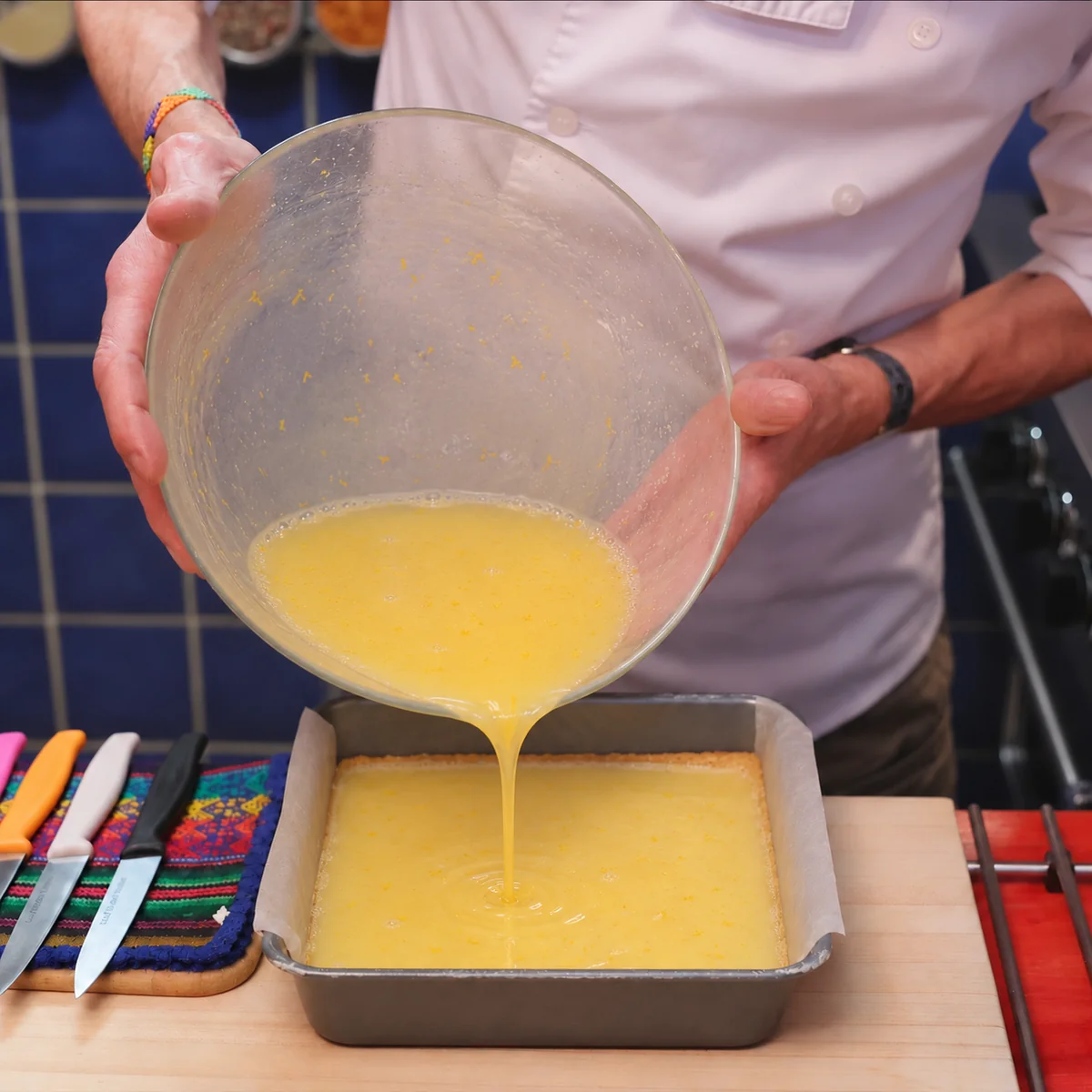
Bake gently and chill fully
Bake at 325°F for twenty-two to twenty-eight minutes. The edges should be set and the centre should move slightly as one piece when the pan is nudged. It should not slosh or ripple like raw liquid. The centre of the egg filling should reach 160°F. Check between the centre and the edge with a thin thermometer, avoiding contact with the crust below.
Remove the pan before the surface becomes dry and deeply coloured. A few tiny bubbles or a light pale film are normal and do not require another long bake. Cool on a rack for about one hour, then refrigerate for at least three hours until firm. Keep the total room-temperature cooling period under two hours. Cover once the bars are cold so condensation does not drip onto the surface.
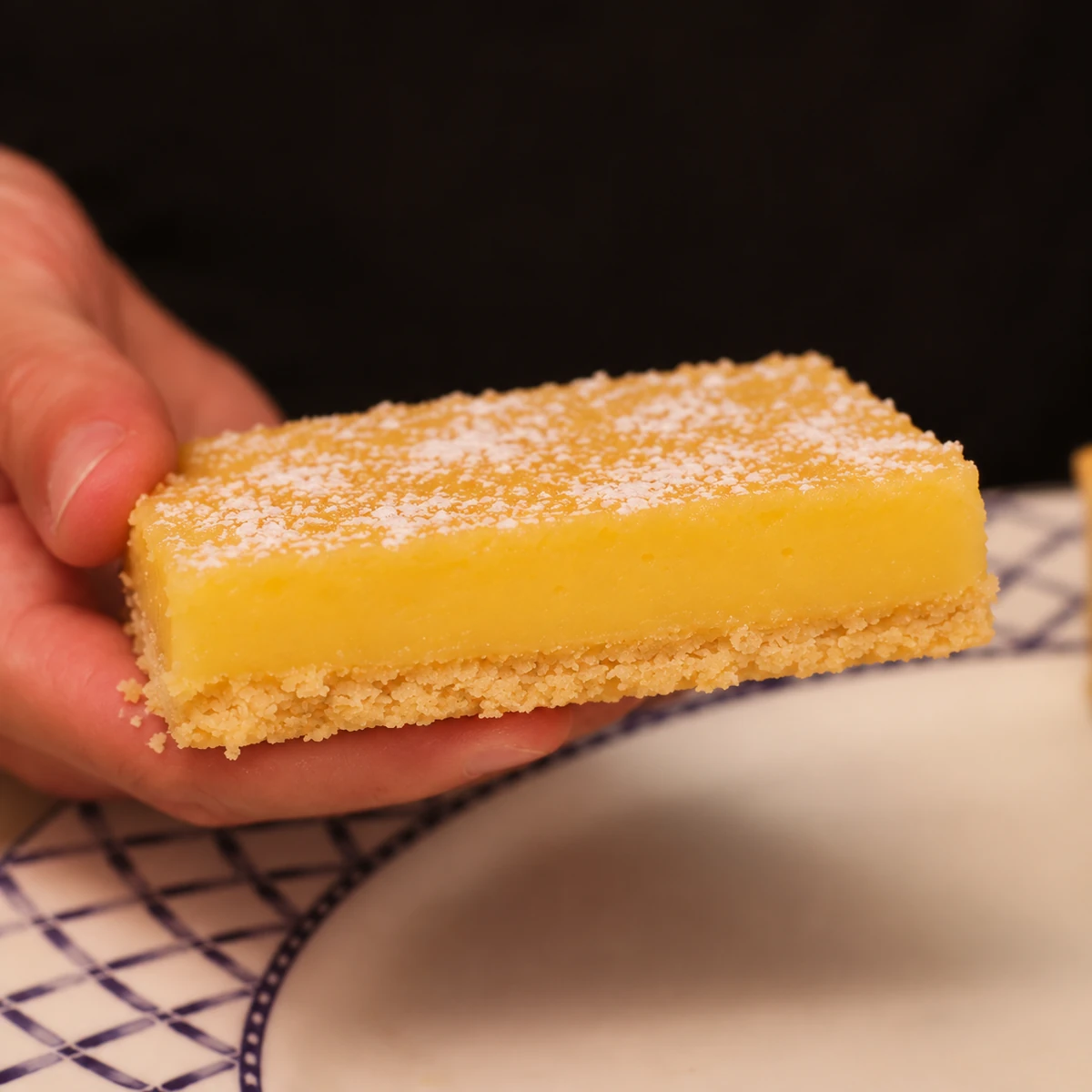
Slice and finish just before serving
Lift the chilled slab with the parchment and place it on a board. Cut into sixteen squares using a sharp knife, wiping the blade clean between cuts. A warm blade can help, but dry it after rinsing so water does not run over the filling. Dust lightly with icing sugar immediately before serving. Added too early, the sugar dissolves into the moist surface and may look patchy.
For another lemon dessert with a more elaborate finish, my lemon meringue pie adds a meringue topping. Its related lemon pie video shows a different lemon dessert, not these squares. The lemon dessert collection helps compare cakes, mousse, bars, and pie when planning a menu.
Storage and dessert-tray ideas
Store the squares covered in the refrigerator for up to four days. Separate stacked layers with parchment and add icing sugar after removing portions for serving. Freeze without the sugar topping for up to two months; thaw in the refrigerator. The crust can soften slightly after freezing, but the filling remains pleasant when properly chilled.
For a mixed tray, add ultra-fudgy cocoa brownies or Canadian butter tarts so guests can choose between citrus, chocolate, and a sweeter filling. No-bake cheesecake bars offer another chilled option. Keep the tray refrigerated until shortly before serving and bring out smaller portions as needed rather than leaving the entire batch on the table for hours.
Troubleshooting the texture
A runny centre usually means the filling needed more baking or more chilling. A hard base can come from overbaking or packing an unevenly thick layer into the corners. If the filling slips beneath the crust, check that the parchment lies flat and the crust reaches the pan edges. For a double batch, use two eight-inch pans and check each separately; increasing depth changes the way the custard sets.
Classic Lemon Squares with Fresh Lemon Juice and Shortbread
Ingredients
- For the crust:
- 1 1/4 cups all-purpose flour 5 1/4 ounces
- 1/4 cup icing sugar 1 ounce
- 1/4 teaspoon fine salt
- 1/2 cup unsalted butter cool and softened (4 ounces)
- For the lemon filling:
- 1 cup granulated sugar 7 ounces
- 2 tablespoons all-purpose flour
- 2 teaspoons finely grated lemon zest
- 3 large eggs
- 1/2 cup freshly squeezed lemon juice strained
- 1 tablespoon icing sugar for serving
Instructions
- Heat oven to 350°F. Line an 8-inch square metal pan with parchment handles and butter exposed sides.
- Mix crust flour, icing sugar, and salt. Work in butter to form moist crumbs. Press evenly into pan, lightly prick, and bake 18–20 minutes until edges are pale gold. Reduce oven to 325°F.
- Rub zest into granulated sugar. Stir in filling flour. Gently whisk in eggs, then lemon juice, until smooth without excess foam.
- Pour over warm crust. Bake 22–28 minutes until edges are set and centre moves slightly as one piece, without liquid ripples. Centre filling should reach 160°F.
- Cool about 1 hour on a rack, then refrigerate at least 3 hours until firm. Lift out, cut into 16 squares, and dust with icing sugar just before serving.