Apple Cider Chicken with Apples, Dijon and Thyme
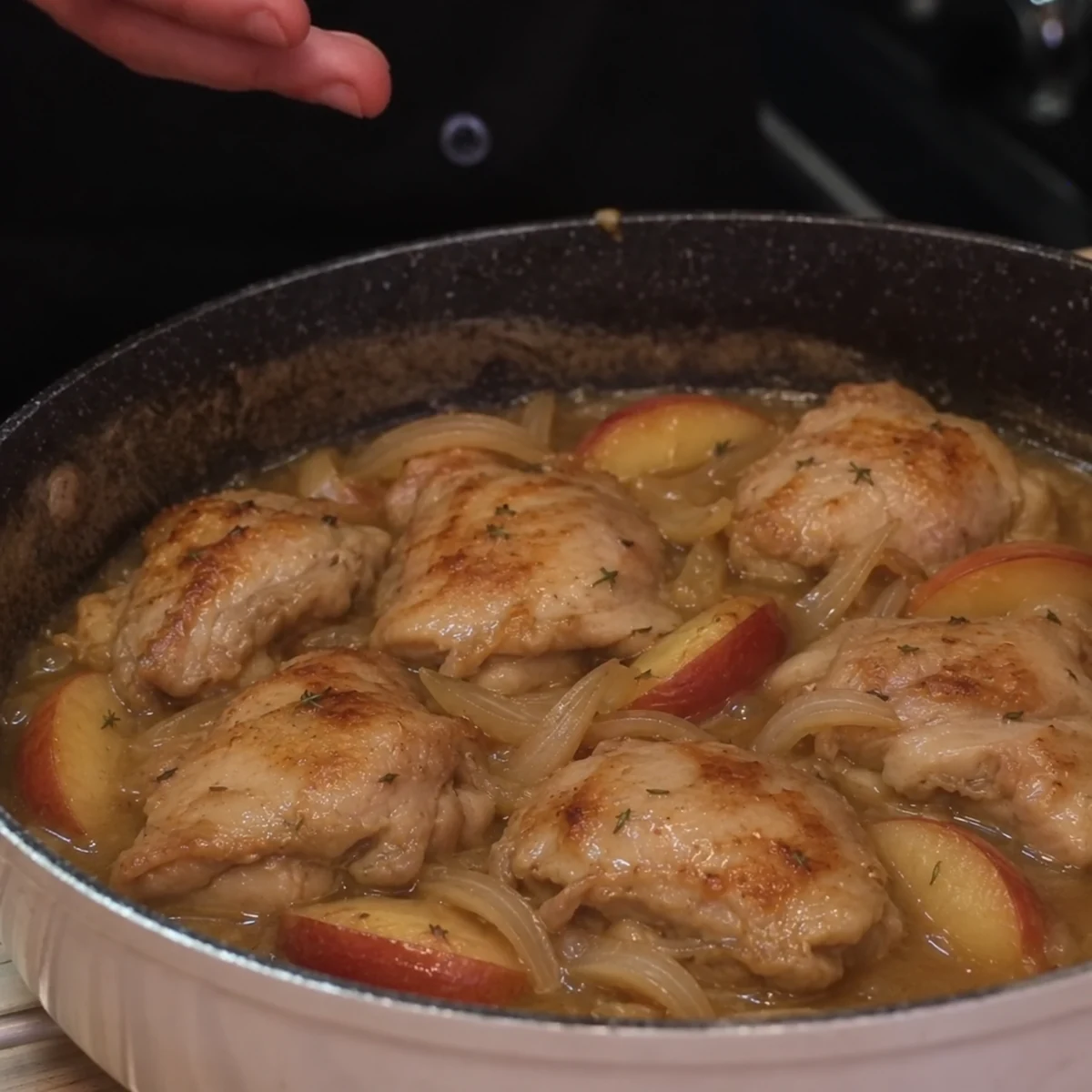
Apple cider chicken combines browned chicken thighs with apples, onion, thyme, and a sauce made from non-alcoholic apple cider and chicken broth. A little Dijon mustard and cider vinegar keep the fruit flavour savoury. The chicken finishes gently in the sauce, while the apples are added late enough to hold their shape. This version uses boneless skinless thighs for a manageable stovetop dinner, with no cream and no added sugar.
Choose the right cider
Here, apple cider means the non-alcoholic, usually cloudy apple drink sold in North America, not hard cider and not apple cider vinegar. Read the label and choose a product without added sugar. The apples already bring sweetness, and reducing a heavily sweetened drink can make the sauce taste closer to a glaze than to a savoury pan sauce.
If non-alcoholic cider is unavailable, unsweetened apple juice works, with a slightly different flavour. Keep the measured vinegar in the recipe and adjust only after tasting the reduced sauce. Do not replace the cider with the same quantity of vinegar. I prefer to build the apple flavour with fruit and cider, then use mustard and acidity to keep it balanced rather than adding cream to soften it.
Why boneless thighs work well
Use six boneless skinless chicken thighs weighing about one and a half pounds altogether. Trim large loose pieces of fat, but do not cut every thigh into tiny pieces. Keeping them whole makes it easier to brown them and remove them from the sauce at the right moment. Their shapes will differ naturally; similar thickness is more useful than matching outlines.
Pat the chicken dry with paper towels, then season with the salt and pepper. Moisture on the surface delays browning and encourages the meat to steam. Do not rinse raw poultry. If you prefer a whole roasted bird for another meal, my oven-roasted chicken uses a different cooking approach and timing. Whole bone-in pieces should not simply be substituted here without allowing a longer cooking time.
Brown the chicken in a wide pan
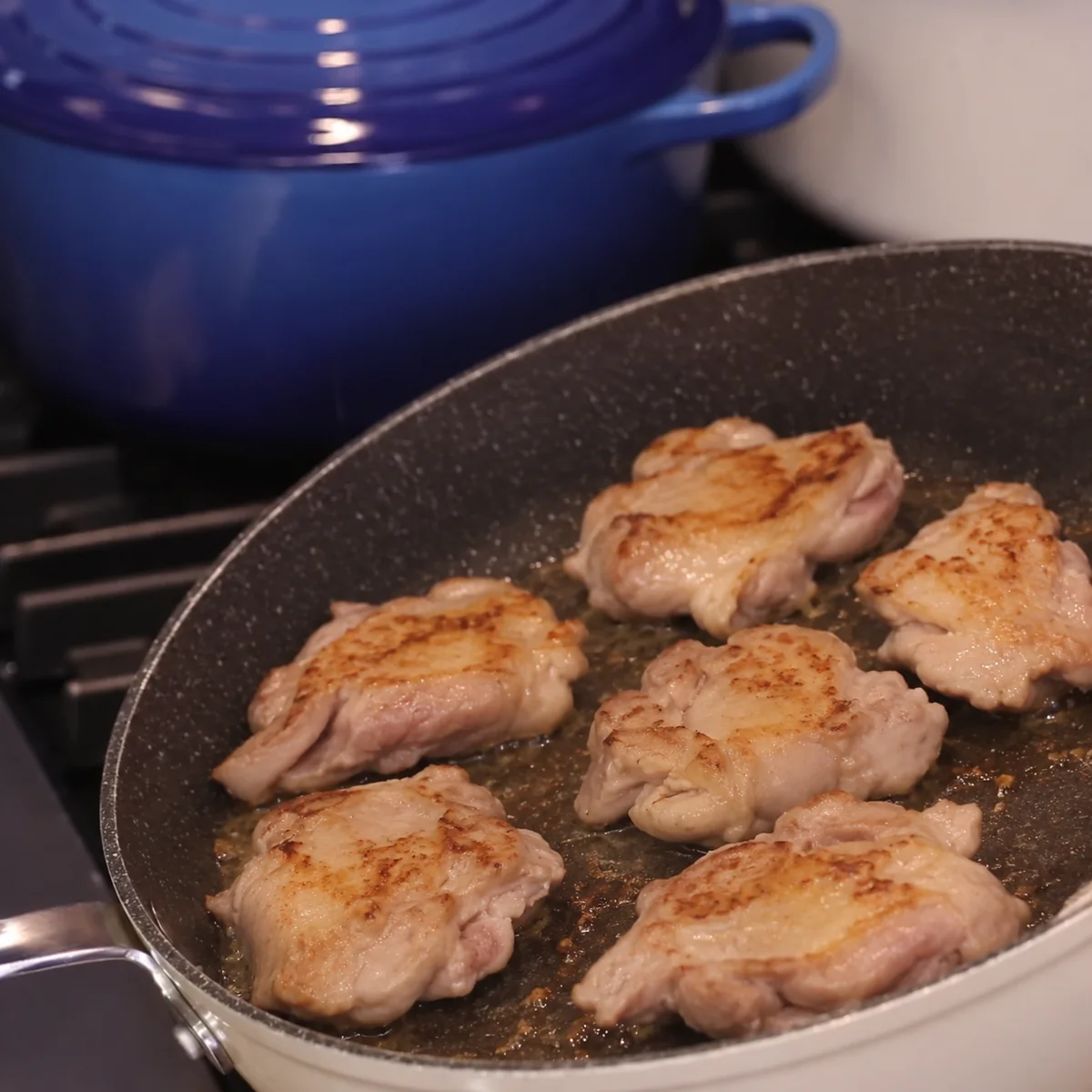
Heat the oil in a twelve-inch skillet over medium-high heat. Add the thighs in one layer and cook for four to five minutes on the first side, then about three minutes on the second. Work in two batches if they overlap. The aim is good surface colour, not complete cooking. Transfer to a plate and keep the juices that collect there for the sauce.
Browned deposits in the pan add flavour, but blackened residue tastes bitter. Reduce the heat if the oil smokes heavily or the deposits darken too quickly. If necessary, wipe out burnt spots before continuing. I like a broad skillet for this recipe because the liquid reduces predictably and the apples have room to cook without being crushed beneath the chicken.
Cook the onion and lift the pan juices
Lower the heat to medium and add the butter and sliced onion. Cook for four to five minutes, stirring, until softened and lightly coloured. Add the garlic and thyme for thirty seconds. The onion should be soft enough to blend into the sauce, but it does not need the long cooking required for deeply caramelized onions.
Pour in the cider and scrape up the browned deposits with a wooden spoon. Add the broth and Dijon mustard, stirring until the mustard disperses. Bring to a simmer and let the liquid reduce for four minutes. Use low-sodium broth so the reduction does not become too salty. You can add salt after the sauce has reached its final consistency.
This pan-sauce approach also appears in my French chicken fricassee, although that dish uses wine and cream. Its related fricassee video demonstrates a different chicken recipe, not this cider version. For another rich variation, bacon mustard chicken has its own balance of dairy and seasoning.
Add apples at the right time
Choose two firm apples such as Honeycrisp or Granny Smith, about twelve ounces before coring. Cut each into eight wedges. You may leave the peel on if it is thin and sound; it helps the wedges hold together. Very soft apples can collapse into the sauce, which tastes fine but gives a different result from distinct pieces beside the chicken.
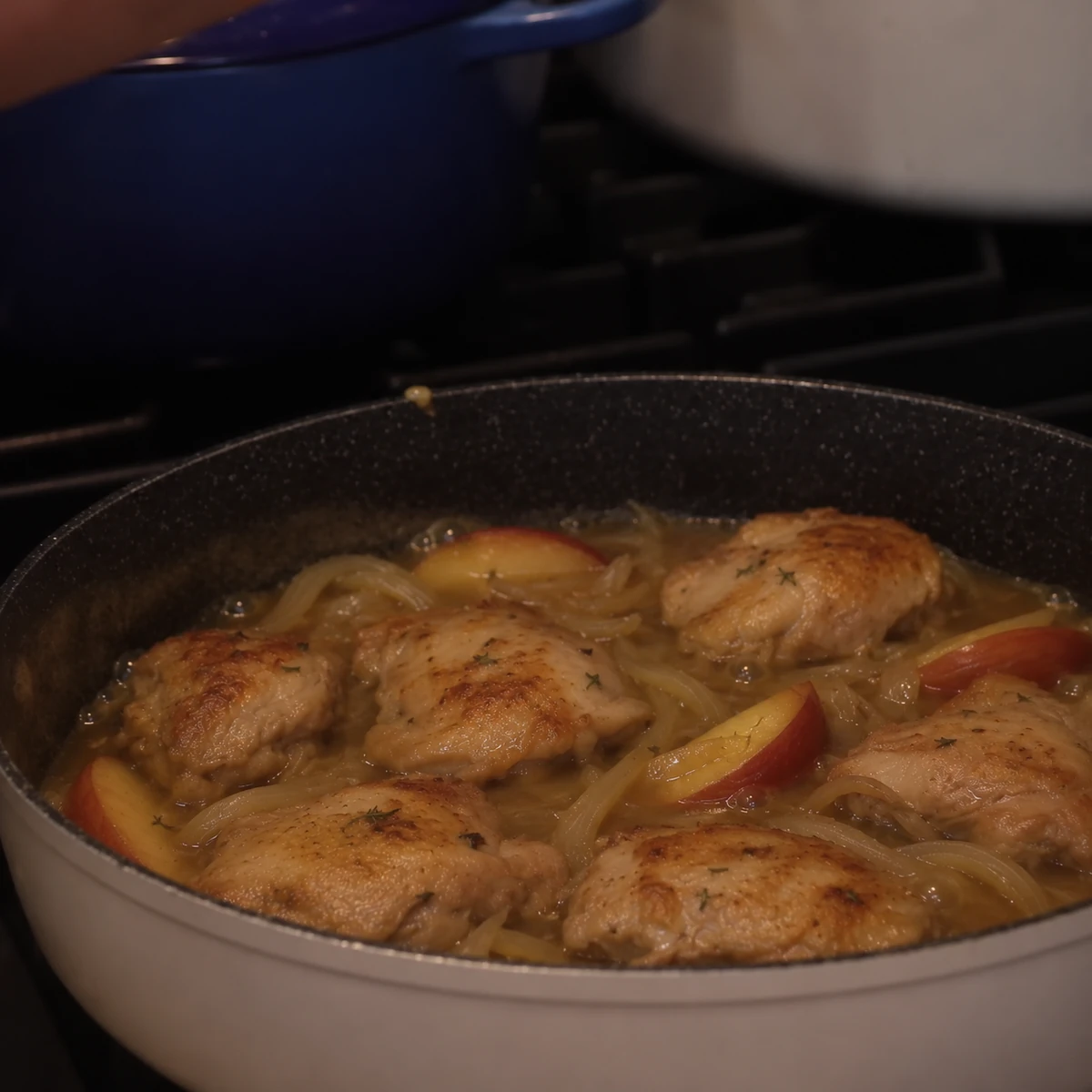
Return the chicken and its collected juices to the pan. Simmer gently, partly covered, for five minutes. Add the apple wedges around the thighs, then continue for eight to twelve minutes, turning the chicken once and spooning sauce over exposed areas. The apples should soften without falling apart. Avoid vigorous boiling, which breaks up the fruit and reduces the sauce before the meat is ready.
Finish with temperature and texture checks
Check the thickest part of several thighs with a thermometer; each must reach at least 165°F. Boneless thighs can remain tender a little beyond that point, but there is no benefit in leaving them simmering indefinitely. If one piece is ready early, move it to a clean plate while the others finish. Keep the cooked chicken separate from the plate that held it partially cooked unless that plate has been washed.
Mix the cornstarch with the cold water until smooth. Stir it into the simmering sauce and cook for one minute, moving the chicken aside if needed to distribute it. The sauce should lightly coat a spoon rather than become sticky. Add the cider vinegar, taste, and adjust salt or pepper. If the sauce is too concentrated, add broth a tablespoon at a time.
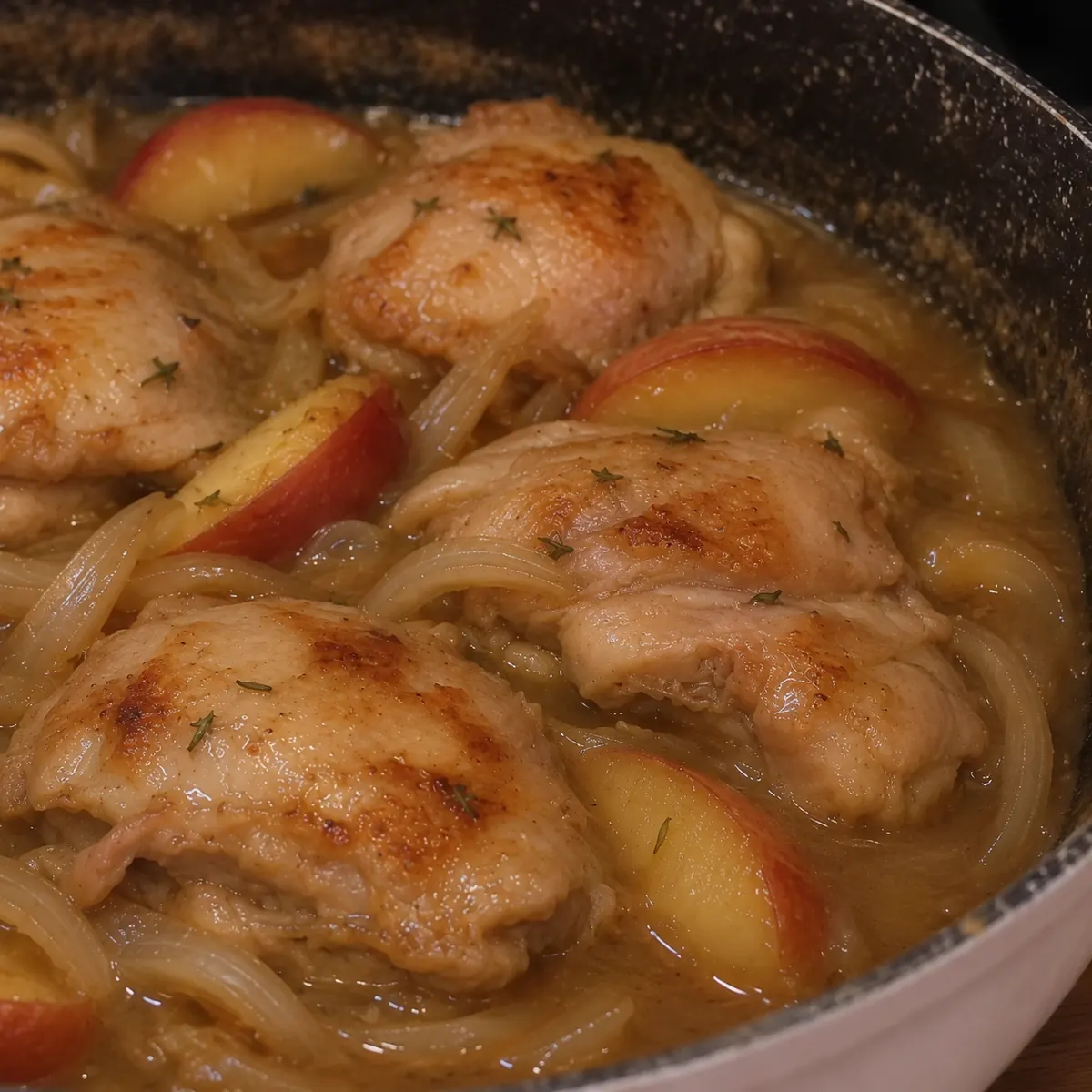
Let the pan rest off the heat for three minutes before serving. Spoon a little sauce over each thigh and place the apple wedges beside it. The finished dish should taste of chicken and apples with a mild mustard background, not like a sweet dessert sauce. My pork loin roast with apples offers another savoury use for fruit with a different cut of meat.
What to serve alongside
Homemade mashed potatoes are useful for catching the sauce. For a lighter vegetable contrast, add green bean salad with raspberry vinaigrette as a separate side. Keep its dressing modest so it does not compete with the apple sauce. Plain rice or boiled potatoes also work without adding another strong flavour.
If you prefer a baked vegetable accompaniment, consider broccoli gratin or classic cauliflower gratin. Choose one rich side rather than several. My cheesy vegetable gratin is a more substantial alternative, while creamy coleslaw suits a casual meal when served separately.
Make ahead and keep leftovers
You can slice the onion, measure the liquids, and trim the chicken ahead, keeping raw chicken covered and separate in the refrigerator. Cut the apples close to cooking so they do not brown unnecessarily. The complete dish is best served shortly after cooking, when the wedges still have defined edges and the sauce is freshly balanced.
Refrigerate leftovers in a shallow covered container within two hours and use within three days. Reheat gently until the chicken reaches 165°F, adding a splash of broth if the sauce has thickened. The apples soften further each time they are heated, so warm only the portions needed. Freeze up to two months if necessary, expecting softer fruit after thawing overnight in the refrigerator.
Apple Cider Chicken with Apples, Dijon and Thyme
Ingredients
- 6 boneless skinless chicken thighs about 1 1/2 pounds total
- 3/4 teaspoon fine salt plus more to taste
- 1/4 teaspoon black pepper
- 1 tablespoon olive oil
- 1 tablespoon unsalted butter
- 1 medium onion thinly sliced
- 2 garlic cloves finely chopped
- 1 teaspoon dried thyme
- 1 cup unsweetened non-alcoholic apple cider
- 1/2 cup low-sodium chicken broth
- 1 tablespoon Dijon mustard
- 2 firm apples cored and cut into 8 wedges each (about 12 ounces before coring)
- 1 teaspoon cornstarch
- 1 tablespoon cold water
- 1 teaspoon apple cider vinegar
Instructions
- Pat chicken dry and season with salt and pepper. Heat oil in a wide skillet over medium-high heat. Brown thighs 4–5 minutes on one side and 3 minutes on the other, in batches if necessary. Transfer to a plate.
- Lower heat to medium. Add butter and onion; cook 4–5 minutes. Add garlic and thyme for 30 seconds.
- Add cider, scraping the pan. Stir in broth and Dijon. Simmer 4 minutes.
- Return chicken and collected juices. Simmer gently, partly covered, 5 minutes. Add apples and cook 8–12 minutes more, turning chicken once, until every thigh reaches at least 165°F and apples are tender.
- Mix cornstarch with cold water. Stir into simmering sauce and cook 1 minute. Add vinegar and adjust seasoning. Rest off heat 3 minutes, then serve.