Classic Steak au Poivre (1980s-Style) with Cognac Cream Sauce
Steak au poivre is a classic French bistro steak coated in cracked black pepper, pan-seared, then finished in a cognac-flambé cream sauce built from pan drippings and reduced stock. What makes this 1980s-style version special is the bold pepper crust and the “show” moment of flambé—perfect for a date night, a dinner party, or anytime you want a restaurant-level steak at home.
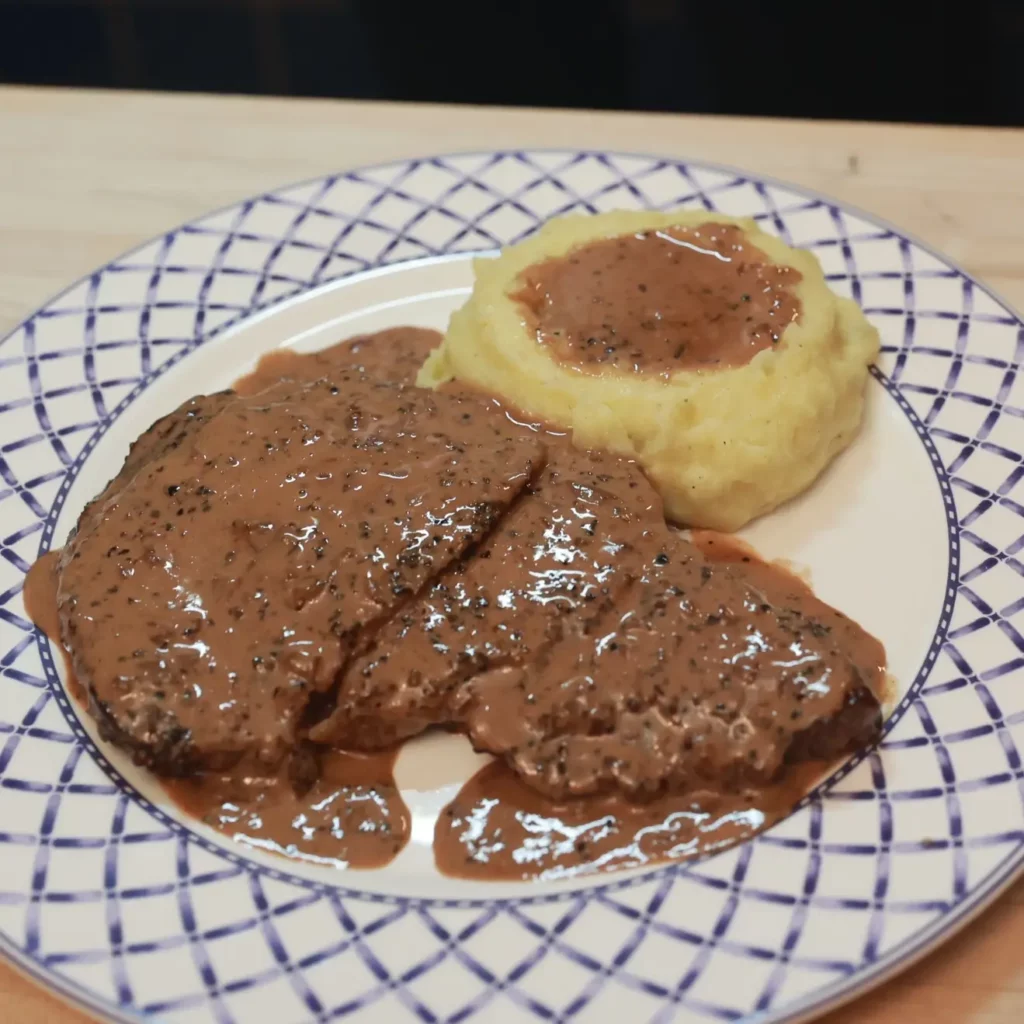
This recipe is based on my YouTube video “STEAK AU POIVRE PRÉPARÉ COMME DANS LES ANNÉES 80!”, with a few adjustments since publication so the proportions are consistent and the sauce is easier to replicate at home.
The 1980s bistro logic behind steak au poivre
Old-school brasserie cooking is all about mise en place and reductions. The steak gets a pepper crust for aroma and texture, then the sauce is built in the same pan: shallots, cognac, red wine, veal stock (or demi-glace), then cream, then butter at the end for shine and body.
If you’ve made pan sauces before, this will feel familiar. If you haven’t, the key is simple: reduce in stages, and keep the final sauce below a boil once butter is added.
If you like the broader “bistro steak night” vibe, you can round out the menu with crispy fries like my authentic Belgian fries (frites) recipe or a cozy potato side like my homemade mashed potatoes recipe.
Choosing the right steak
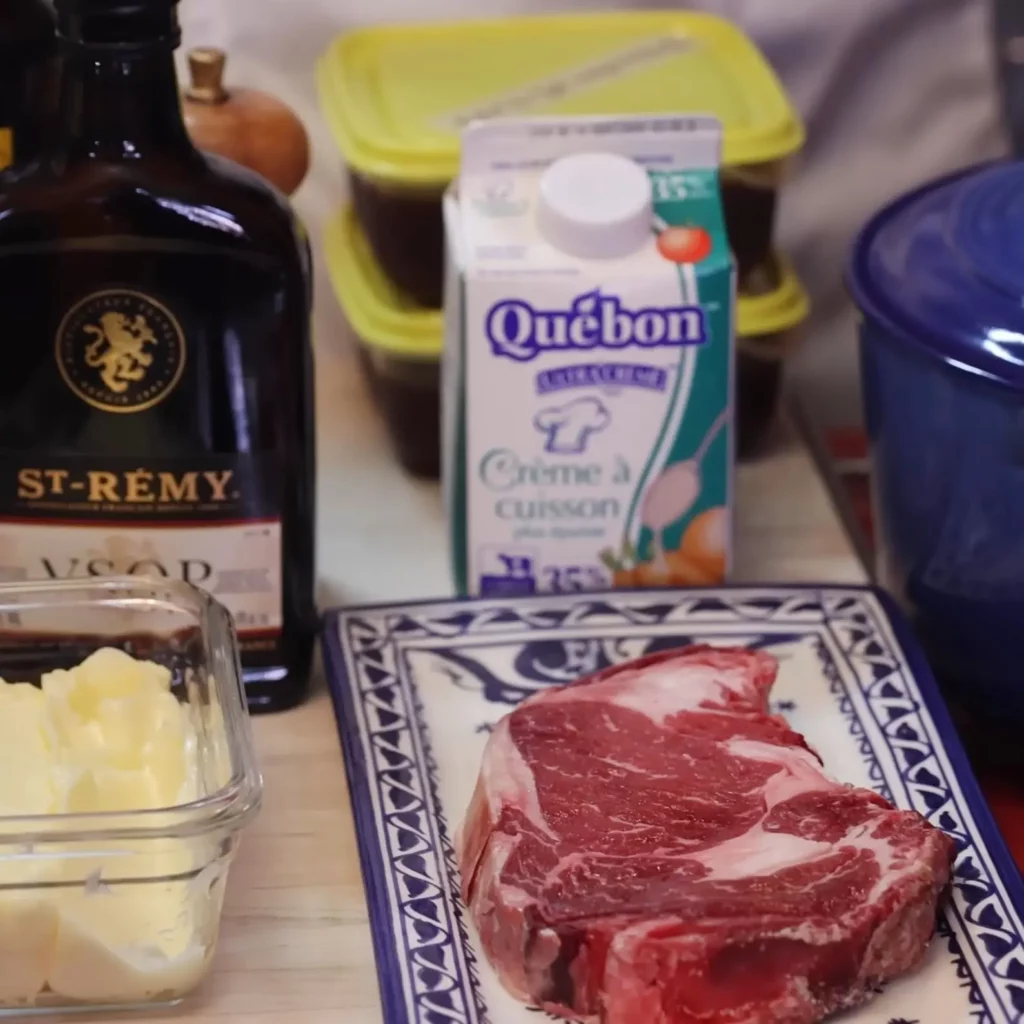
For the true steak au poivre experience, choose a steak that’s tender and quick-cooking:
- Striploin / New York strip (great balance of flavor and tenderness)
- Filet mignon (very tender, mild)
- Ribeye (richer, more marbling—watch flare-ups)
Aim for steaks about 1 to 1¼ inch thick. Thin steaks can overcook before the sauce is ready, and thick steaks may need a quick oven finish.
A quick note on seasoning: pepper is the “star,” but salt matters. Pepper alone doesn’t season the meat—salt does. The trick is to salt the steak properly, then let the pepper do the aromatic work.
Pepper: cracked, not powdered
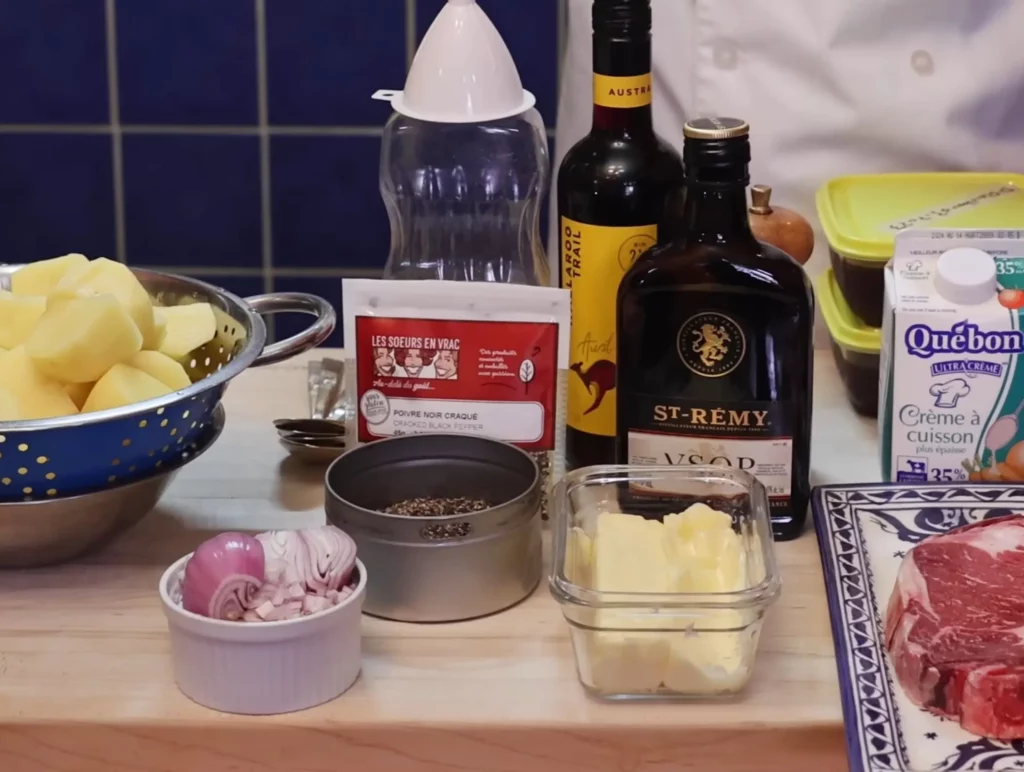
Use coarsely cracked black pepper, not finely ground. Fine pepper burns faster and turns bitter. Coarse pepper stays aromatic and gives that classic crust.
If you have a mortar and pestle, great. If not, a pepper mill on the coarsest setting works. Avoid pre-ground pepper here—it just doesn’t deliver the same result.
Sauce structure: demi-glace vs stock
In the video, demi-glace is used. At home, you have two solid options:
- Demi-glace / concentrated veal stock
Fast, glossy, restaurant-style body.
If you keep stock in the freezer, this pairs perfectly with a base like neutral brown veal stock. - Regular veal/beef stock reduced more
Lighter, still delicious, but requires extra reduction time.
Either way, the goal is the same: reduce until the sauce coats a spoon, then finish with cream and butter.
Step-by-step (clear, restaurant-style workflow)

1) Mise en place (do this first)
Steak au poivre happens fast. Before heating the pan, have everything ready:
- Crack the pepper
- Mince the shallot
- Measure cognac, wine, stock, cream
- Cube cold butter (for finishing)
- Warm plates (optional but very bistro)
If you’re serving potatoes, get them going first. For a classic pairing, mash works year-round and fits the 1980s vibe—my homemade mashed potatoes recipe is a great baseline.
2) Pepper-crust the steaks
Pat steaks dry. Season both sides generously with salt, then press cracked pepper into both sides. Don’t be shy, but don’t create a pepper “blanket” so thick it falls off—aim for a solid, even crust.

3) Sear the steak properly
Heat a heavy skillet (cast iron is ideal) over medium-high until very hot. Add a thin layer of neutral oil.
Sear the steaks until a deep brown crust forms, flipping as needed to control the gradient:
- For medium-rare, you’re typically in the range of 3–5 minutes per side depending on thickness.
- Remove steaks when they’re just under your target doneness; carryover heat finishes the job.
Transfer to a warm plate and rest. Resting keeps juices in the meat and prevents the sauce from getting watery later.

4) Build the sauce in the same pan
Lower heat slightly. Add a small knob of butter, then sauté the shallots until softened (no strong browning).
Add cognac and carefully flambé (optional but classic). Let the flames burn off naturally, then add red wine and reduce until it’s nearly syrupy. This is where the deep bistro flavor comes from.
Add demi-glace (or reduced stock) and reduce again. You’re concentrating flavor and creating a sauce base with real body. When it starts coating the spoon, add the cream and reduce gently until the sauce is smooth and glossy.
Finally, turn off the heat and whisk in cold butter a little at a time. This gives you that classic sheen and rounded texture.

5) Finish the steak in the sauce (without boiling)
Return the steak to the pan just long enough to coat it and warm it through. Avoid boiling once the steak is back in—boiling can tighten the meat and can also cause a finished butter sauce to separate.

6) Plate like a brasserie
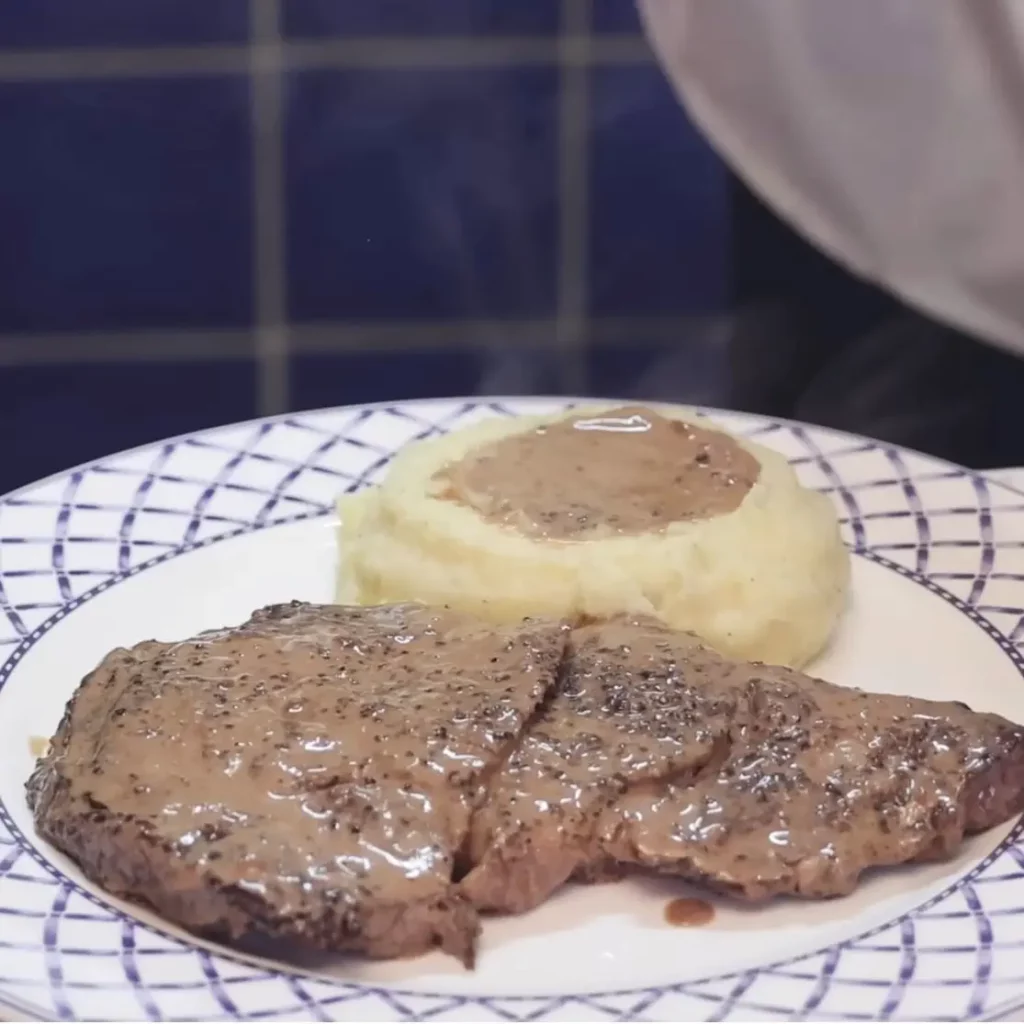
Spoon your potato side, set the steak on top or beside it, then nap the sauce over the steak. Serve immediately.
If you want to turn this into a full “bistro night” menu, fries are the obvious move—try my authentic Belgian fries (frites) recipe or go full comfort with a Quebec-style plate using my homemade poutine recipe.
How this steak au poivre is different from other steak recipes on the site
This version is pepper-forward and flambé-driven, built around a reduced pan sauce with cream and butter. It’s not meant to be:
- a mushroom-based sauce steak (for that style, see creamy mushroom sauce for steak)
- a blue-cheese steak sauce night (different flavor profile than steak with Roquefort sauce)
- a classic “gravy steak” dinner (closer to homemade Salisbury steak)
- a sandwich build (that’s more like my steak sandwich recipe)
Steak au poivre is its own lane: pepper crust + flambé + reduced stock + cream finish.
Nutrition context (simple and practical)
This is a protein-rich main dish, and portion size is easy to manage: one steak per person, with sauce served as a finishing element rather than a heavy stew. The richness mainly comes from cream and butter—so pairing it with a lighter side (salad, green veg, or a smaller serving of potatoes) keeps the meal balanced while still feeling like a true bistro dinner.

Substitutions
- No cognac? Use brandy, bourbon, or skip flambé and deglaze with extra wine/stock. You’ll lose some classic aroma, but the sauce still works.
- No red wine? Use a dry white wine for a slightly brighter sauce (less “old-school,” still delicious).
- No demi-glace? Use a strong beef/veal stock and reduce longer. If you cook often, freezing portions of neutral brown veal stock makes this kind of sauce easy anytime.
- No shallots? Use finely minced onion, cooked gently until soft.
- Dairy-free? Skip cream and finish with extra stock reduction plus a small knob of dairy-free butter alternative (texture won’t be identical, but you’ll still get a peppery pan sauce).
- Pepper too intense? Use slightly less pepper on the steak and keep the sauce pepper moderate. You can always add a final pinch at the end.
FAQ
Why did my sauce taste harsh or alcoholic?
The wine or cognac wasn’t reduced enough before adding stock/cream. Reduce in stages until the alcohol bite softens and the liquid thickens.
Why did my sauce break or look greasy?
The heat was too high when finishing with butter, or the sauce boiled after butter was added. Turn the heat off and whisk in cold butter gradually.
Can I make the sauce ahead?
You can reduce the sauce base (shallots + wine + stock) ahead, then rewarm gently and finish with cream and butter right before serving.
What’s the best doneness for steak au poivre?
Medium-rare is the classic choice because the sauce is rich and the steak stays tender. If you prefer medium, use a thicker steak and control the heat so the pepper doesn’t burn.
Can I use filet mignon?
Yes—filet is a classic steak au poivre cut. Because it’s lean, don’t overcook it, and rest it properly so it stays juicy.

What to serve with steak au poivre (Suggested posts)
- Homemade mashed potatoes recipe
- Authentic Belgian fries (frites) recipe
- Homemade poutine recipe
- Steak sandwich (hearty, fail-proof)
- Creamy mushroom sauce for steak
- Steak with Roquefort sauce (30 minutes)
- Homemade Salisbury steak
- Beef Wellington
And if you want a classic French dessert to finish the meal:
For more recipes, browse the full collection on the Michel Dumas blog or visit the site homepage at micheldumas.com.
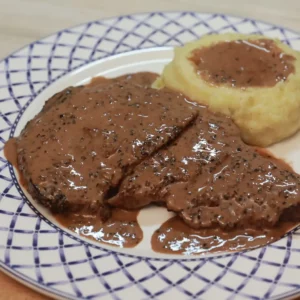
Classic Steak au Poivre (1980s-Style) with Cognac Cream Sauce
Ingredients
Steak
- 2 steaks 1 to 1¼ inch thick, striploin or filet mignon
- 2 tsp kosher salt or to taste
- 1 ½ Tbsp cracked black pepper coarse
- 1 Tbsp neutral oil
Sauce
- 1 Tbsp salted butter for shallots
- 1 shallot finely minced
- 2 Tbsp cognac or brandy
- ¼ Tasse red wine
- ¾ Tasse demi-glace or strong beef/veal stock reduced if needed
- ½ Tasse cooking cream
- 2 Tbsp cold salted butter cubed (to finish)
- Salt to taste
Instructions
- Pat steaks dry. Season both sides with salt. Press cracked pepper into both sides.
- Heat a skillet over medium-high. Add oil. Sear steaks until browned and near target doneness, flipping as needed. Transfer to a warm plate and rest.
- Reduce heat to medium. Add 1 Tbsp butter and sauté shallot until soft (no heavy browning).
- Add cognac and carefully flambé (optional). Add red wine and reduce until nearly syrupy.
- Add demi-glace/stock and reduce until it coats a spoon lightly. Add cream and simmer gently until glossy and slightly thickened.
- Turn heat off. Whisk in cold butter cubes to finish the sauce. Taste and adjust salt.
- Return steaks to the pan briefly to coat and warm through without boiling. Serve immediately with sauce.
Video
Notes
Substitutions
- No cognac? Use brandy, bourbon, or skip flambé and deglaze with extra wine/stock. You’ll lose some classic aroma, but the sauce still works.
- No red wine? Use a dry white wine for a slightly brighter sauce (less “old-school,” still delicious).
- No demi-glace? Use a strong beef/veal stock and reduce longer. If you cook often, freezing portions of neutral brown veal stock makes this kind of sauce easy anytime.
- No shallots? Use finely minced onion, cooked gently until soft.
- Dairy-free? Skip cream and finish with extra stock reduction plus a small knob of dairy-free butter alternative (texture won’t be identical, but you’ll still get a peppery pan sauce).
- Pepper too intense? Use slightly less pepper on the steak and keep the sauce pepper moderate. You can always add a final pinch at the end.
FAQ
Why did my sauce taste harsh or alcoholic?
The wine or cognac wasn’t reduced enough before adding stock/cream. Reduce in stages until the alcohol bite softens and the liquid thickens.Why did my sauce break or look greasy?
The heat was too high when finishing with butter, or the sauce boiled after butter was added. Turn the heat off and whisk in cold butter gradually.Can I make the sauce ahead?
You can reduce the sauce base (shallots + wine + stock) ahead, then rewarm gently and finish with cream and butter right before serving.What’s the best doneness for steak au poivre?
Medium-rare is the classic choice because the sauce is rich and the steak stays tender. If you prefer medium, use a thicker steak and control the heat so the pepper doesn’t burn.Can I use filet mignon?
Yes—filet is a classic steak au poivre cut. Because it’s lean, don’t overcook it, and rest it properly so it stays juicy.Useful Links
🛒 Michel Dumas Shop : Explore our kitchen essentials, including aprons and knives.
🌐 Linktree : Access all our important links in one place.
📱 YouTube | Instagram | Facebook | TikTok : Follow us for the latest recipes and culinary tips.