Easy Pan-Seared Salmon with Lemon Butter
Pan-seared salmon is a quick stovetop salmon recipe where the fish is cooked in a hot pan until golden outside and tender inside, then finished with butter, lemon juice, and parsley. This version is different from baked salmon or air fryer salmon because the flavor comes from direct pan contact, a light crust, and a fast lemon butter finish. I make it when I want a clean, protein-rich dinner that feels a little more restaurant-style without needing a heavy sauce.
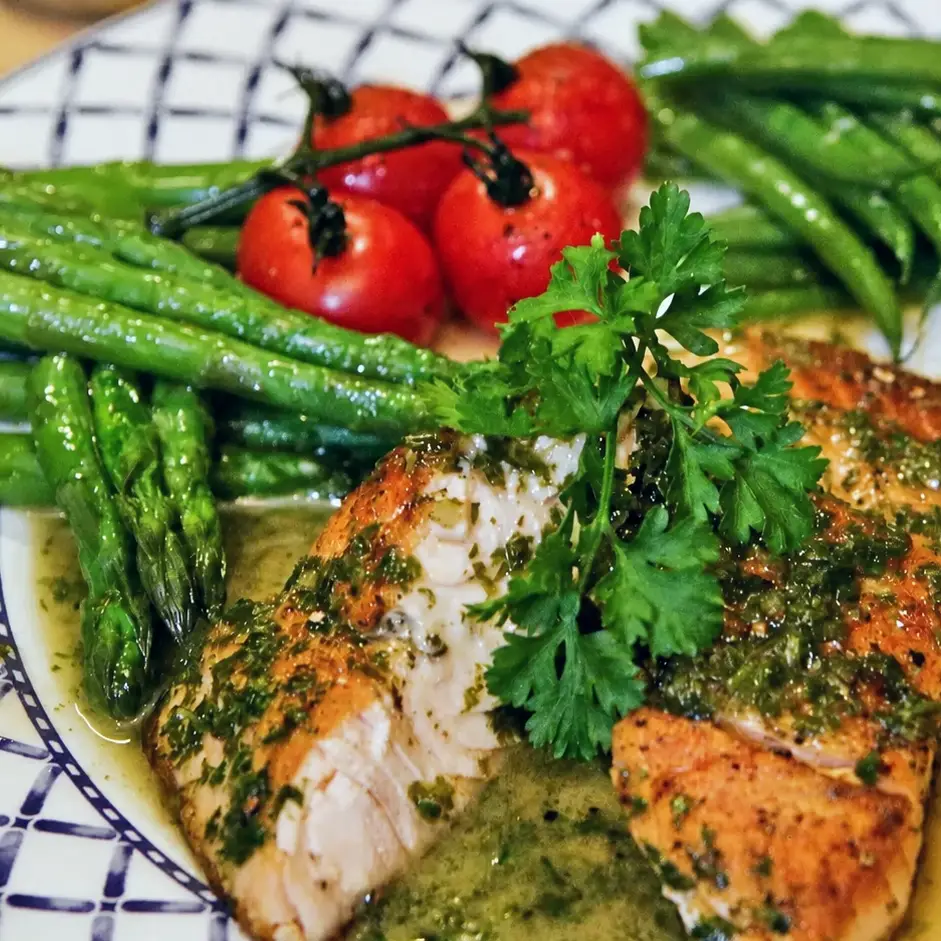
This recipe is based on my YouTube video for saumon à la poêle, with a few adjustments since publication to make the proportions clearer and easier to reproduce at home. In the video, I served the salmon with cherry tomatoes, green beans, asparagus, and small turned potatoes. For the website version, I keep the same spirit but make the quantities more precise, especially for the butter, lemon juice, potatoes, and vegetables.
I make it this way because salmon does not need much to taste good. A hot pan, a little oil, salt, pepper, butter, lemon, and parsley are enough. I prefer to finish the salmon with the butter and lemon at the end, not from the beginning, because butter can burn if the pan is too hot. This gives you a cleaner taste and a better sauce to spoon over the fish.
Why This Pan-Seared Salmon Works
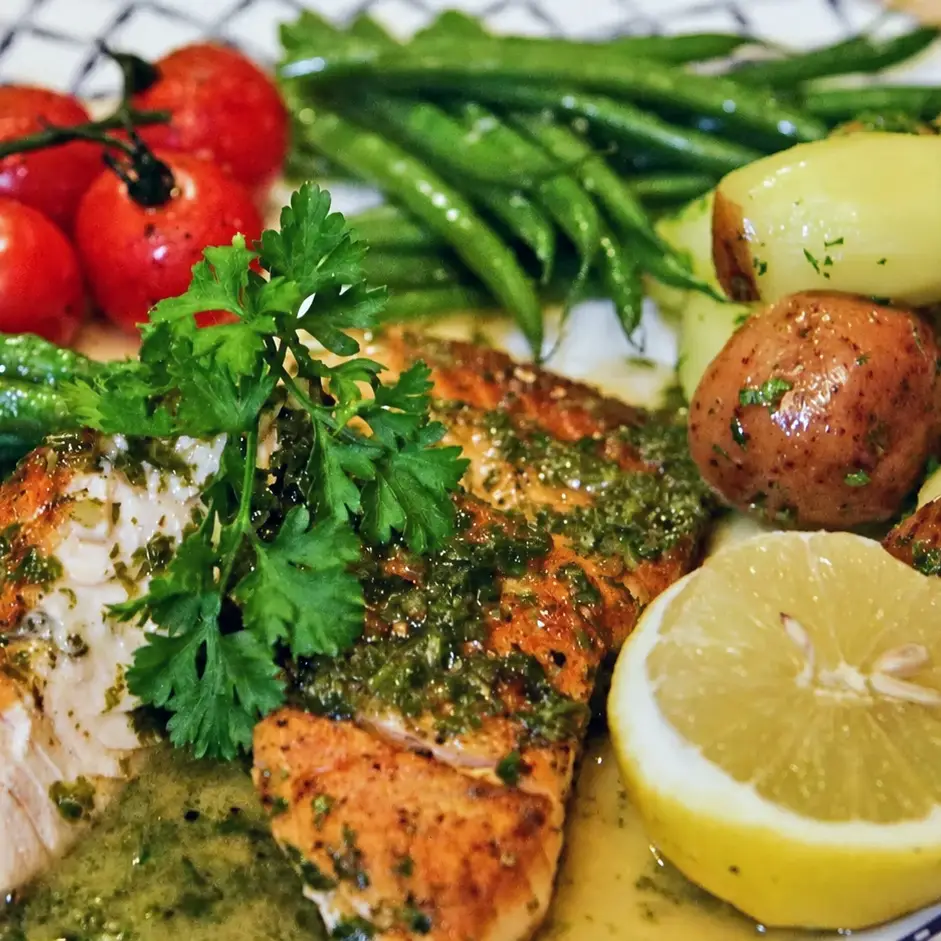
The most important part of this recipe is controlling the heat. The salmon starts in a hot pan with a small amount of oil, which helps create color on the outside. Once the first side is seared, the heat comes down slightly so the fish can finish cooking without drying out.
The butter and lemon go in at the end. This is important. If you add butter too early, it can burn before the salmon is cooked. If you add lemon too early, it can reduce too much and become sharp. By adding both at the end, you get a quick lemon butter sauce that stays bright, glossy, and balanced.
This is not the same as my gentle baked salmon with lemon-Dijon butter, which is more hands-off and weeknight-friendly. It is also different from salmon cooked in the air fryer, where hot circulating air gives a more automatic result. This stovetop method gives you more control, more color, and a more classic pan-cooked finish.
Ingredients You Need
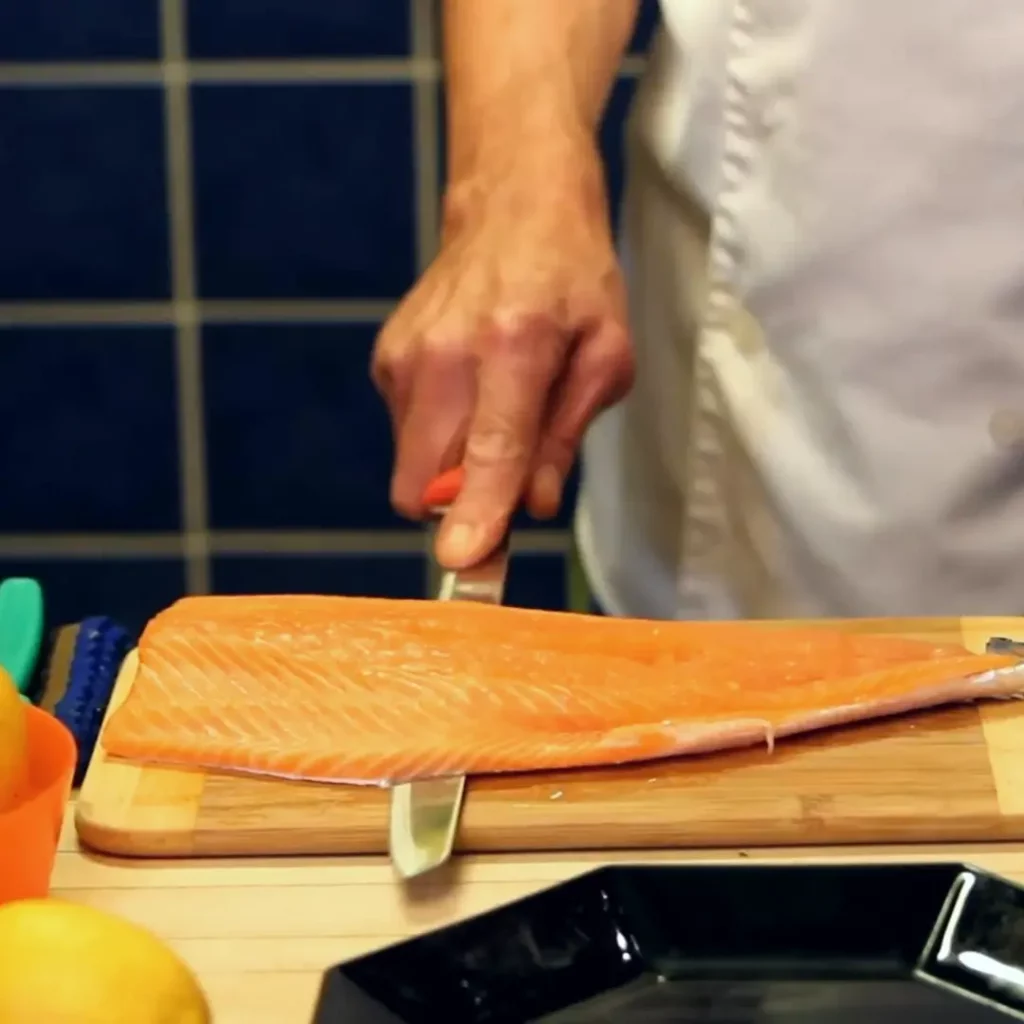
For the salmon, use a center-cut salmon fillet if possible. A piece around 1 1/3 lb is ideal for 3 generous portions. The pieces should be thick enough to stay juicy in the center while the outside browns.
You need olive oil for the sear, butter for the finish, fresh lemon juice, parsley, salt, and black pepper. The garnish from the video is simple but elegant: cherry tomatoes roasted with olive oil and bay leaf, green beans, asparagus, and small potatoes warmed in butter and parsley.
The potatoes in the video are shaped like little mushrooms, which is a classic decorative restaurant-style cut. At home, small boiled potatoes or baby potatoes work perfectly. You can also serve this salmon with crispy air fryer potatoes if you want a faster side, or with classic pommes boulangères for something more French and comforting.
Step-by-Step Instructions
Start with the garnish because the salmon cooks quickly. Preheat the oven to 300°F. Put the cherry tomatoes in a small baking dish with olive oil, a bay leaf, salt, and pepper. Roast them for about 15 minutes, just until they soften and become glossy. They should not collapse into sauce. They are there to bring acidity, color, and sweetness to the plate.
Next, prepare the potatoes. If they are not already cooked, boil small potatoes in salted water until tender, about 12 to 18 minutes depending on size. Drain them well. Before serving, warm them with a little butter, salt, pepper, and chopped parsley. This keeps the plate simple and balanced.
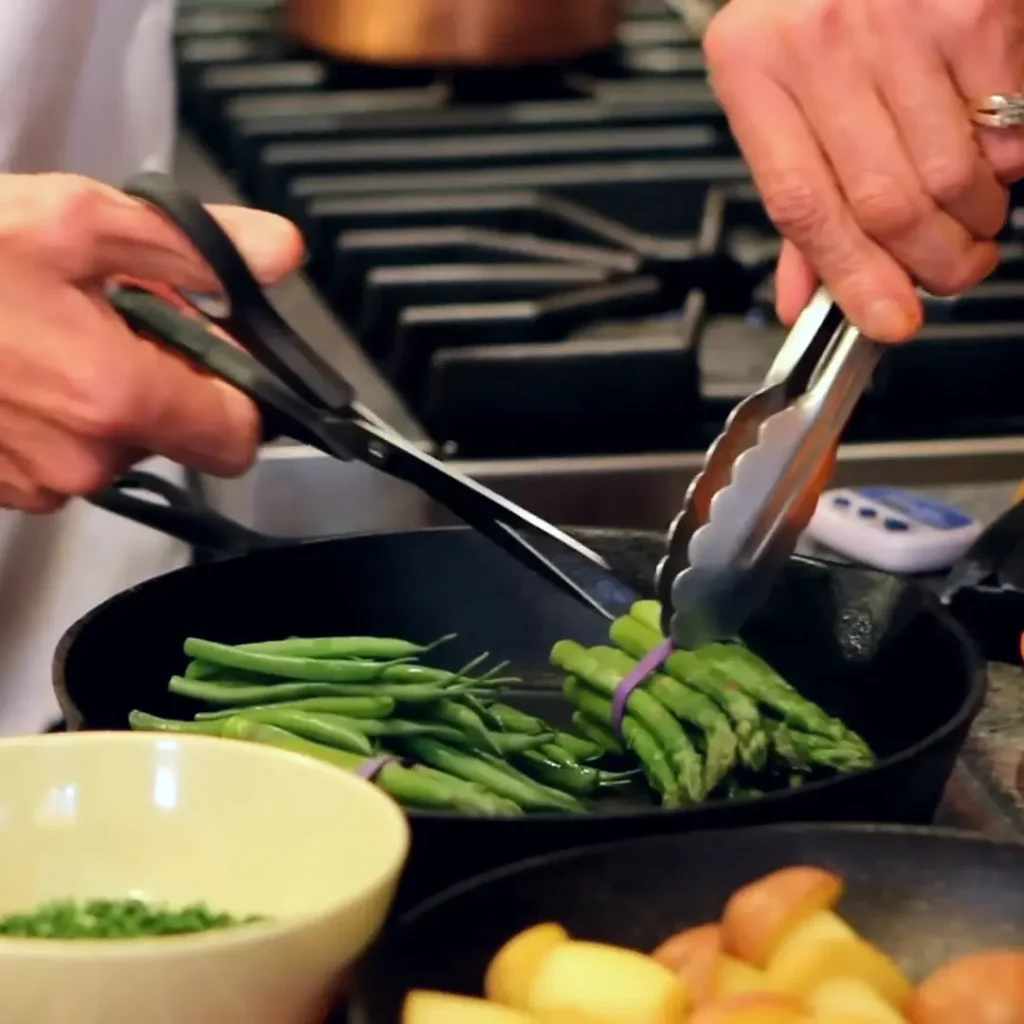
For the green vegetables, bring a pot of salted water to a boil. Add the green beans and asparagus and cook for 3 to 4 minutes, until bright and still slightly crisp. Drain them well. Toss with a small amount of butter, salt, pepper, and a few drops of lemon juice if you like. This is one of the small corrections I would make from the transcript: the vegetables need seasoning after blanching, not just cooking.
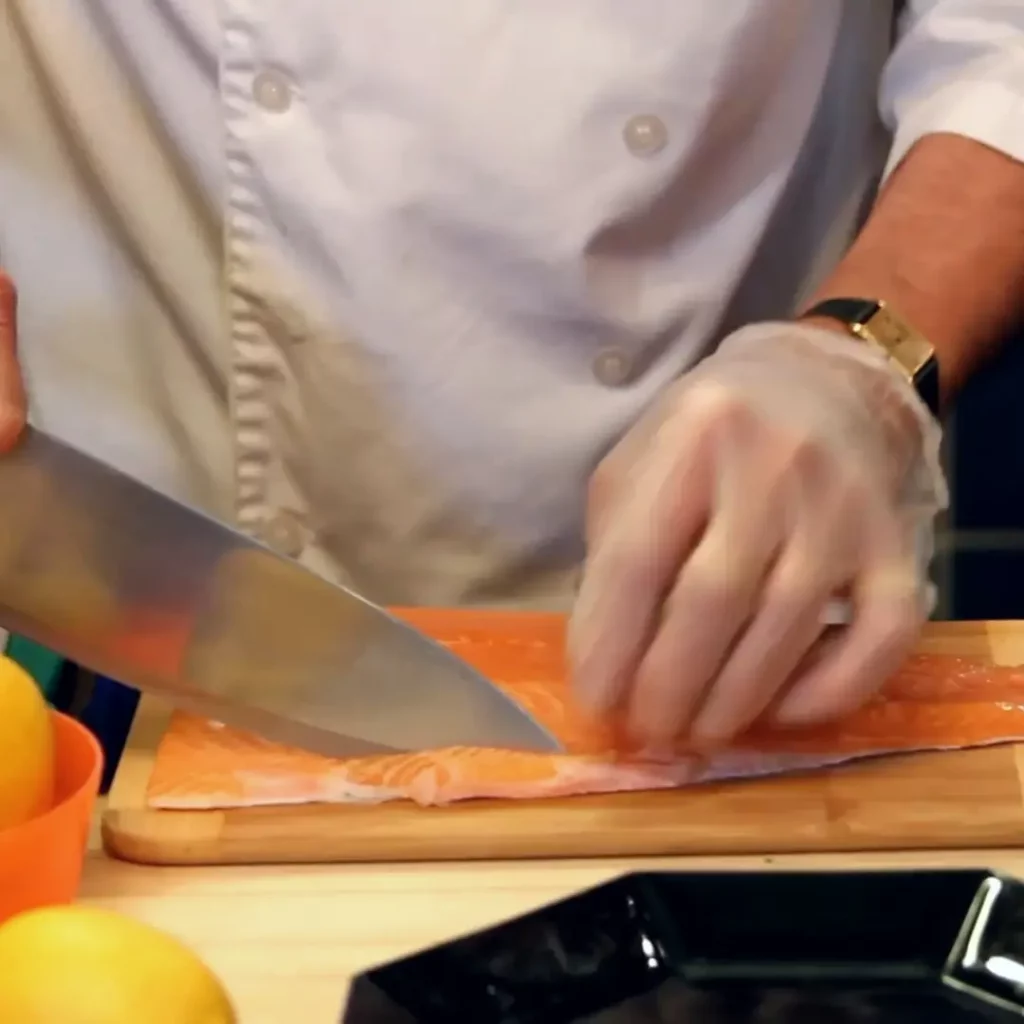
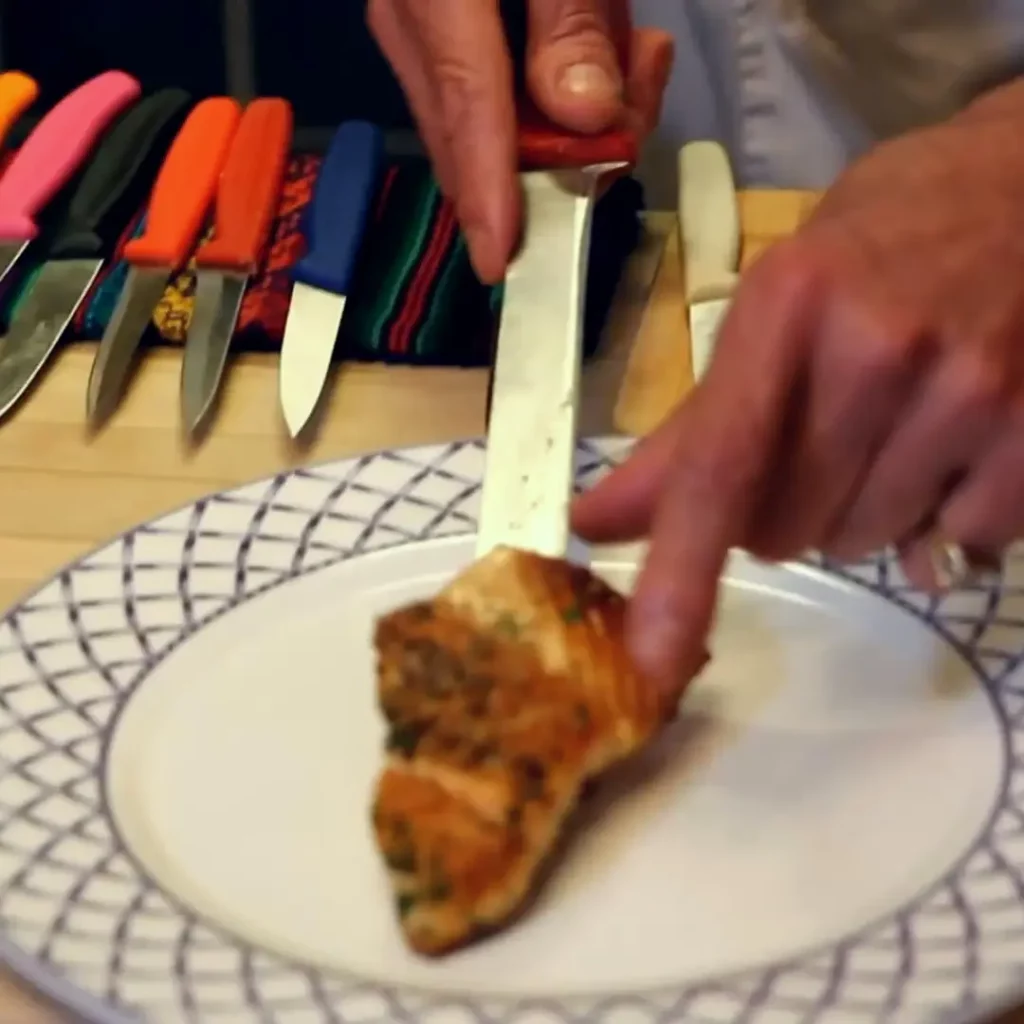
Now prepare the salmon. If the skin is still attached, remove it with a sharp knife by sliding the blade between the skin and the flesh. Cut the salmon into 3 portions. Pat the pieces dry with paper towel. This helps the surface brown instead of steaming.
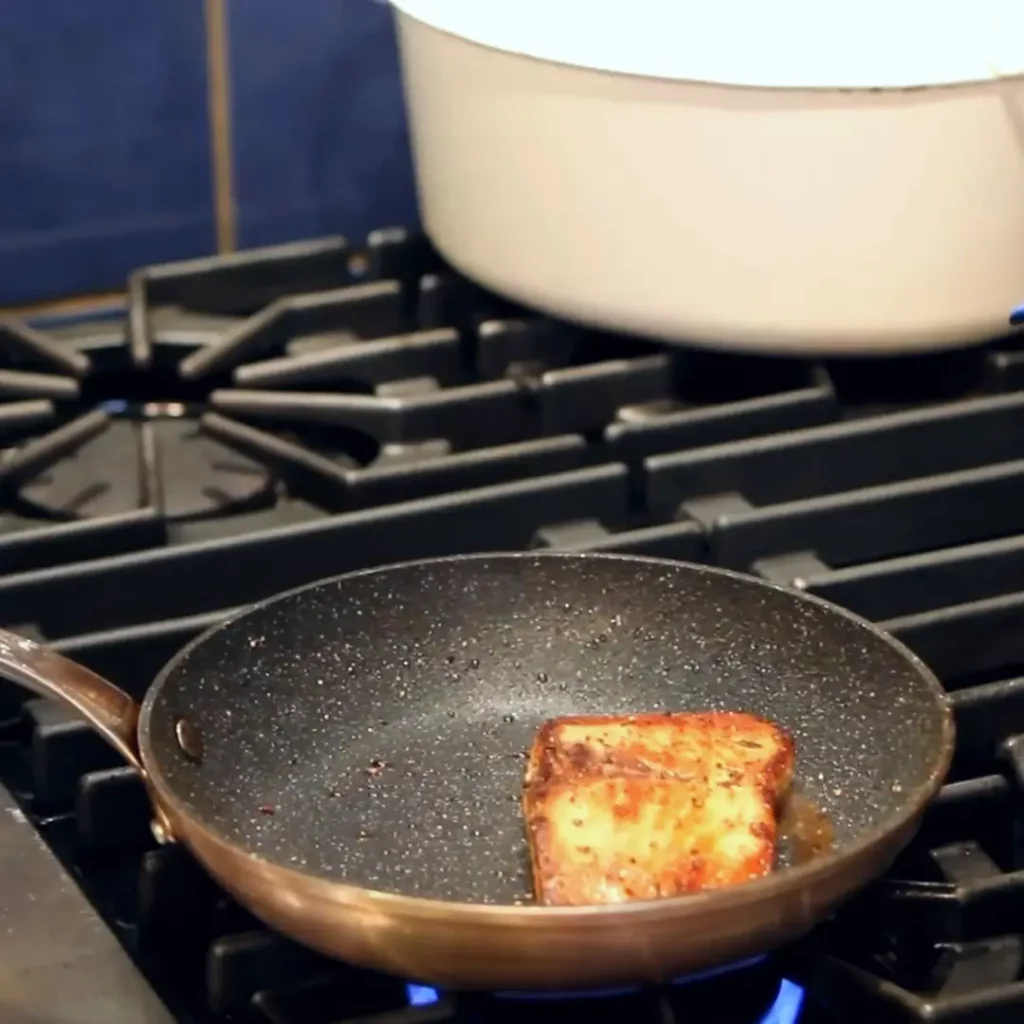
Heat a large skillet over medium-high to high heat. Add a thin layer of olive oil. When the oil is hot, place the salmon pieces in the pan. Season with salt and black pepper. Cook for about 3 minutes on the first side without moving the fish too much. You want the surface to form a light crust.
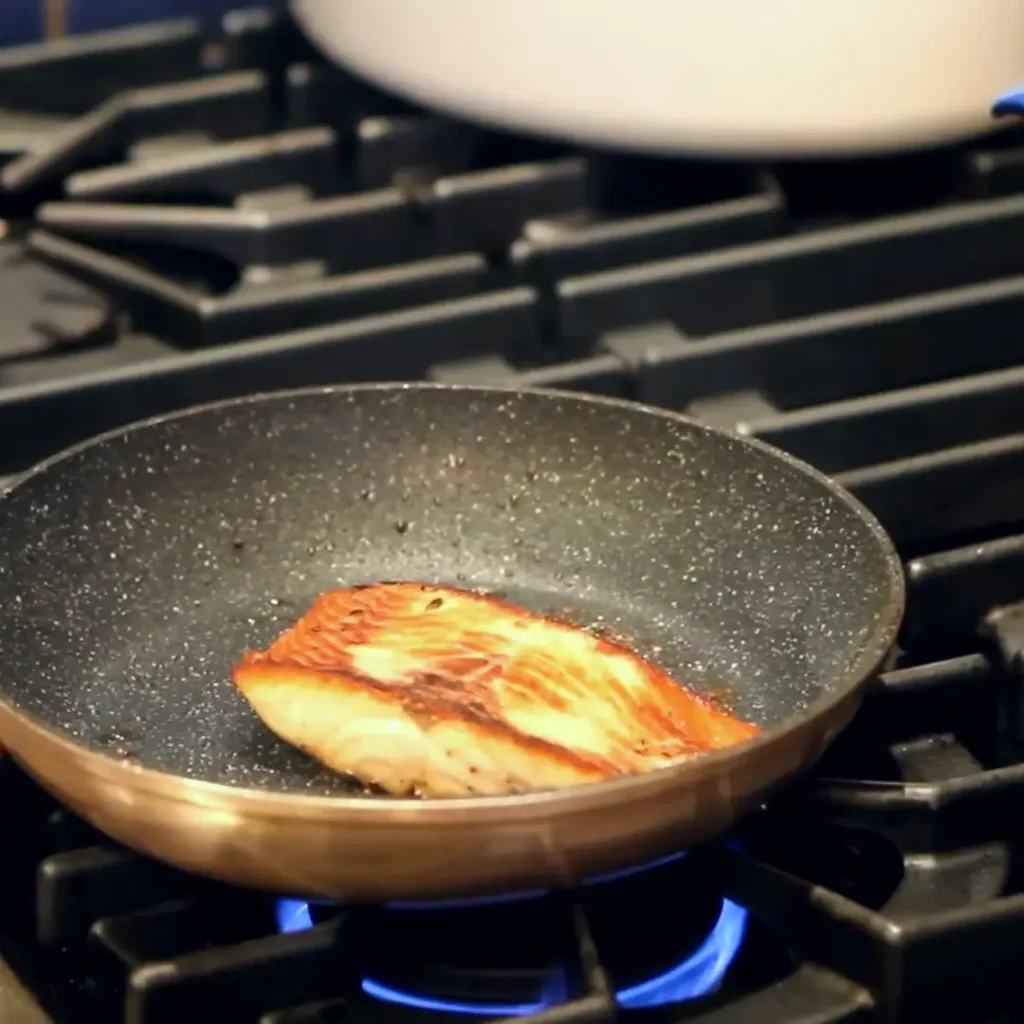
Turn the salmon carefully. Reduce the heat slightly and cook for another 2 to 3 minutes, depending on the thickness. The salmon should be golden outside and still slightly rosy in the center. If you use a thermometer, around 130°F in the thickest part gives a moist, medium result. Cook it a little longer if you prefer it more done.
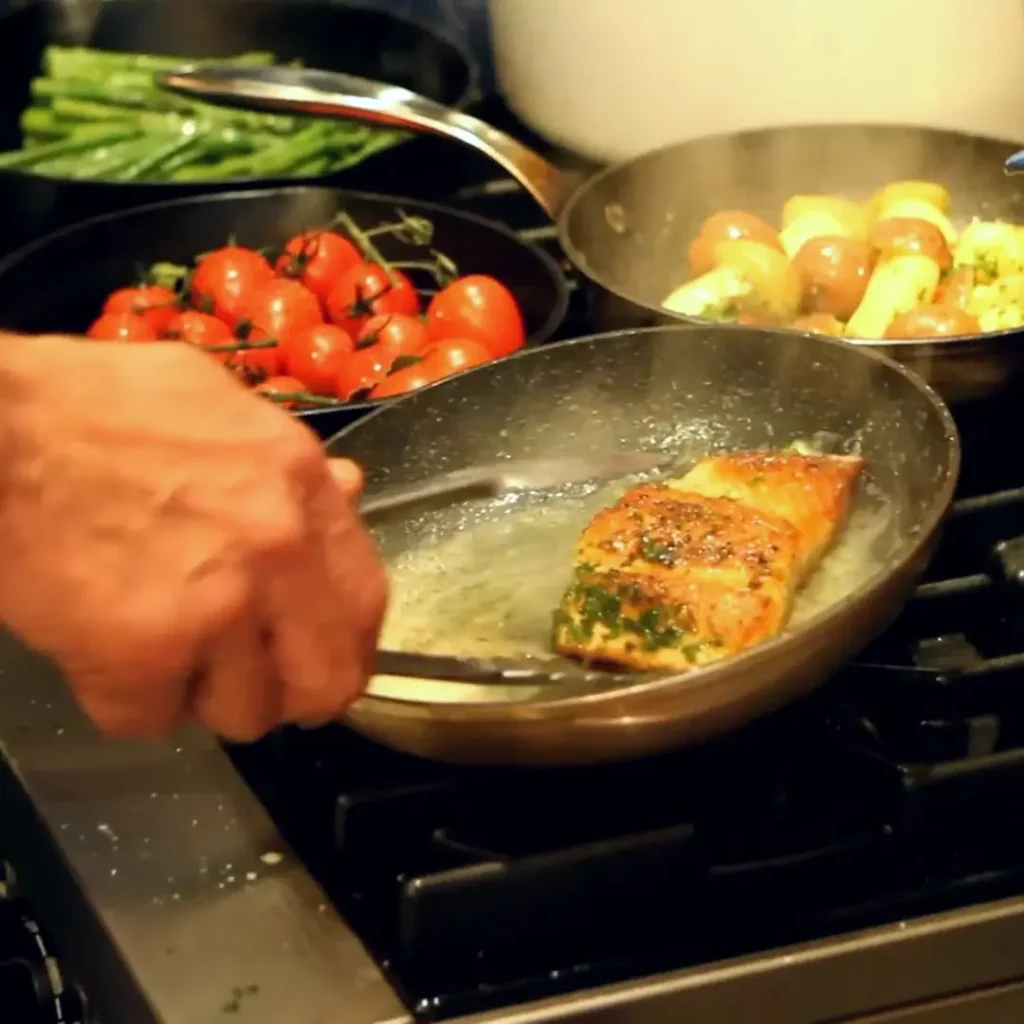
When the salmon is almost ready, turn the heat to low or briefly remove the pan from the heat. Add the butter and fresh lemon juice. Return the pan to low heat for a few seconds, just enough to make the butter foam lightly. Spoon the lemon butter over the salmon. Add chopped parsley at the end.
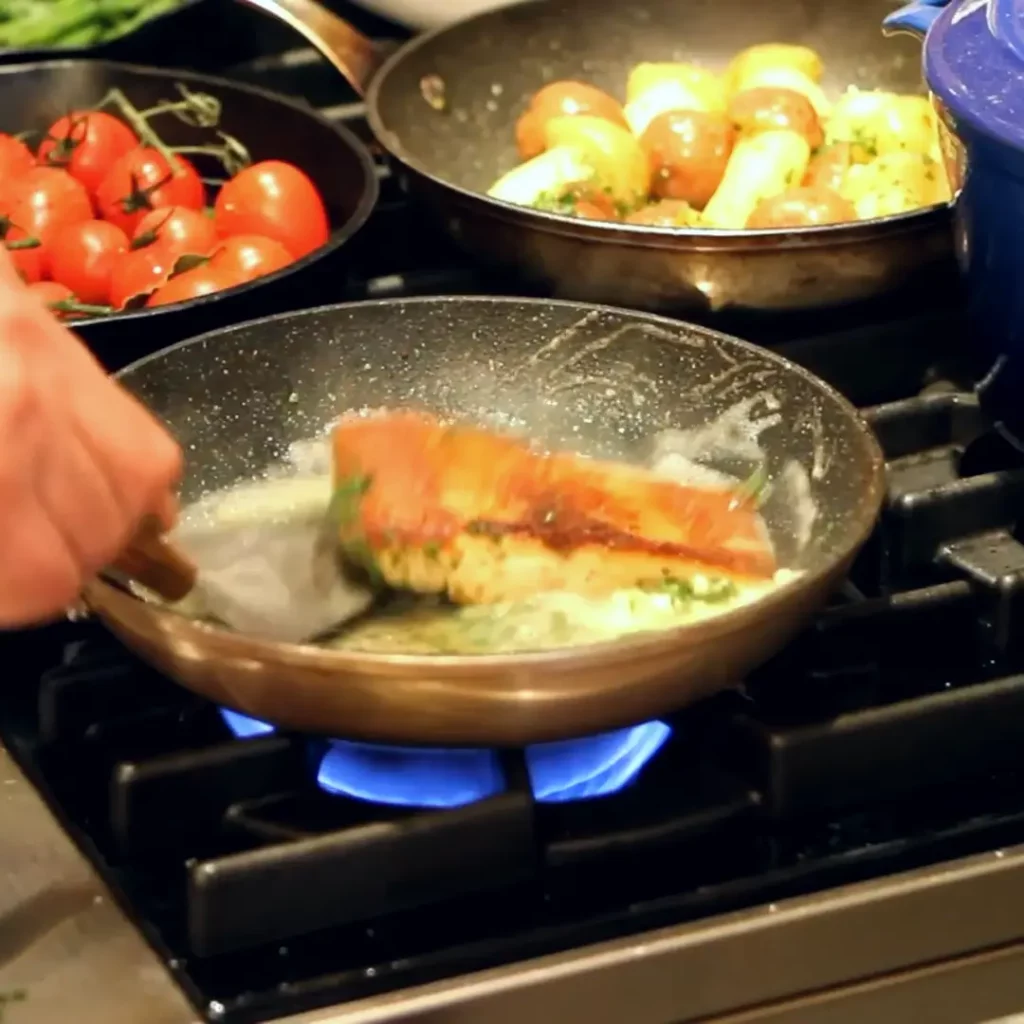
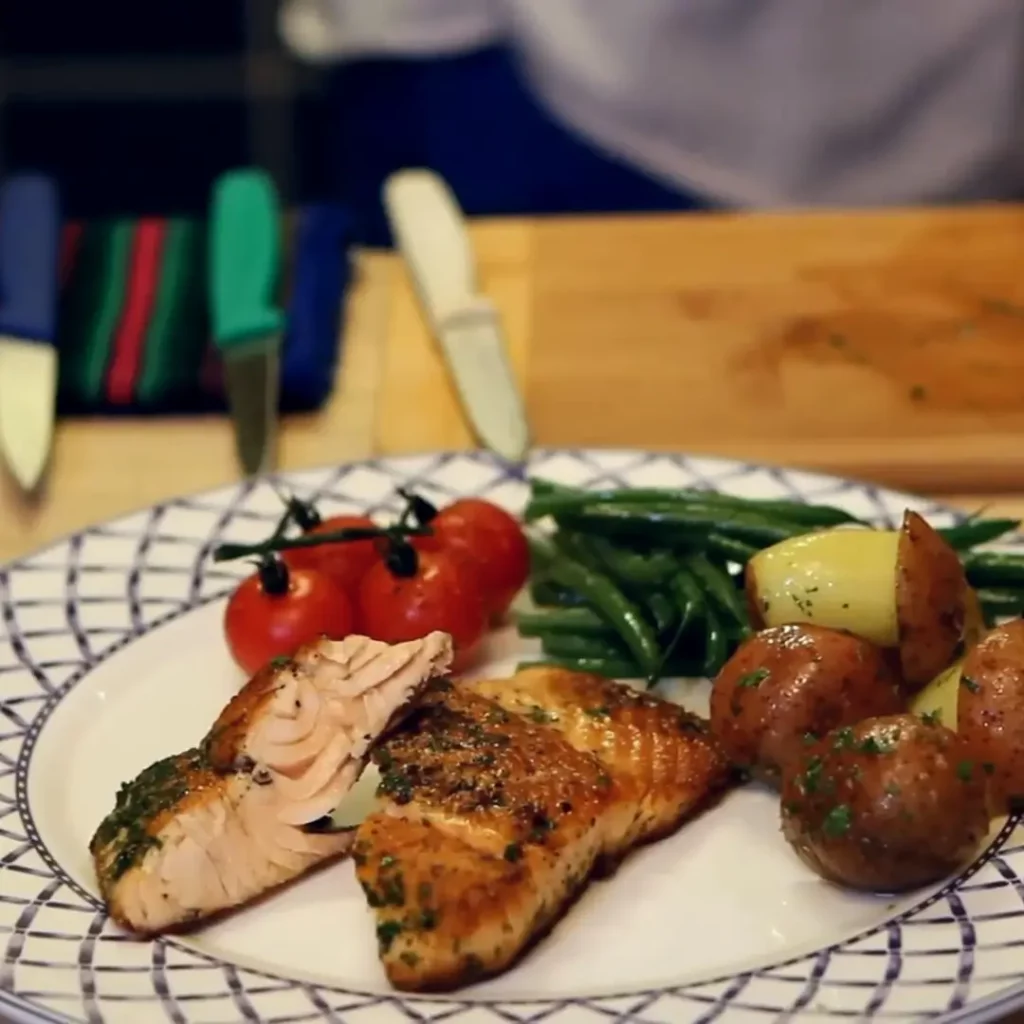
Plate the salmon with the roasted tomatoes, green beans, asparagus, and potatoes. Spoon a little lemon butter over the fish and finish with fresh parsley and lemon wedges.
What Makes This Different From Other Salmon Recipes
This recipe is a classic pan-seared salmon with lemon butter. It is quick, simple, and focused on the fish. There is no cream sauce, no marinade, and no breading.
For a lighter cold dish, a fresh salmon salad is a completely different option. For a creamy comfort dish, salmon with pasta is richer and more filling. For a make-ahead appetizer, homemade cured salmon uses salt, sugar, and time instead of heat.
This pan-seared version sits in the middle. It is fast enough for a weeknight, but elegant enough for guests. It works in summer with tomatoes and asparagus, and it also works year-round with green beans, broccoli, roasted vegetables, or potatoes.
Tips for the Best Result
Do not overcrowd the pan. If the salmon pieces are too close together, they steam instead of searing. Use a pan large enough to leave space between each piece.
Pat the salmon dry before cooking. Moisture on the surface prevents browning.
Do not add the butter too early. Sear with oil first, then finish with butter and lemon at the end.
Use fresh lemon juice. Bottled lemon juice is usually too harsh for a simple sauce like this.
Do not overcook the salmon. The fish should flake but still look moist inside. A dry, chalky texture usually means it cooked too long.
Season every part of the plate. The salmon, vegetables, potatoes, and tomatoes all need a little salt and pepper.
Substitutions
You can replace salmon with trout or Arctic char. The cooking time will be similar if the fillets are the same thickness.
You can replace asparagus with broccoli, broccolini, zucchini, or spinach. Green beans work all year and are easy to find in Canada and the USA.
You can replace cherry tomatoes with grape tomatoes or small tomato wedges. In winter, roasting them helps bring out more sweetness.
You can replace the potatoes with rice, roasted vegetables, or a simple salad. A fresh side like homemade Greek salad works well if you want a brighter plate.
For the sauce, keep it simple. This recipe uses lemon butter, but if you want to explore richer sauces for another meal, the sauces section has more classic ideas. For this salmon, I would not add cream because it changes the whole style of the dish.
FAQ
Can I cook the salmon with the skin on?
Yes. If you like crispy skin, leave it on and start the salmon skin-side down. Press it gently for the first few seconds so the skin stays flat. In the video, I remove the skin, which gives a cleaner plated presentation.
How do I know when salmon is cooked?
The salmon should be lightly firm on the outside and still moist inside. The center can remain slightly rosy. If using a thermometer, about 130°F gives a moist medium result. Cook it a little longer if you prefer fully cooked salmon.
Can I make this without butter?
Yes, but the flavor will be different. You can finish with olive oil and lemon juice instead. The result will be lighter, but you will lose the classic buttery sauce.
Can I use frozen salmon?
Yes. Thaw it completely in the refrigerator, then pat it very dry before cooking. Frozen salmon often releases more moisture, so drying the surface is important.
Can I prepare the sides ahead?
Yes. The potatoes can be boiled ahead and reheated in butter. The green beans and asparagus can be blanched ahead, then quickly reheated before serving. The tomatoes are best roasted just before serving, but they can also be warmed again gently.
Is this a healthy salmon recipe?
This is a protein-rich salmon dinner with vegetables and a moderate amount of butter. It is not a heavy cream-based dish. The final nutrition depends on the portion size and the sides you choose.
What to Serve With Pan-Seared Salmon
For a potato side that feels classic and French, serve this with pommes boulangères baked with onions and stock. For a faster side, crispy air fryer roasted potatoes are a good match with the lemon butter.
If you want a vegetable side instead of the asparagus and green beans from the video, oven-roasted mixed vegetables work well year-round. A crisp salad like homemade Caesar salad also pairs nicely with the richness of the salmon.
For more salmon ideas, try air fryer salmon bites when you want smaller crispy pieces, oven-baked salmon with rice pilaf when you want a more complete plated dinner, or creamy salmon pasta when you want something richer.
Easy Pan-Seared Salmon with Lemon Butter
Ingredients
- For the Salmon
- 1 1/3 lb salmon fillet skin removed, cut into 3 portions
- 1 tbsp olive oil
- 3 tbsp unsalted butter
- 2 tbsp fresh lemon juice more to taste
- 1 to 2 tbsp chopped fresh parsley
- Salt to taste
- Black pepper to taste
- For the Cherry Tomatoes
- 1 1/2 cups cherry tomatoes
- 1 tbsp olive oil
- 1 bay leaf optional
- Salt to taste
- Black pepper to taste
- For the Vegetables and Potatoes
- 7 oz green beans
- 7 oz asparagus
- 1 lb small potatoes or baby potatoes
- 2 tbsp butter divided
- 1 tbsp chopped fresh parsley
- Salt to taste
- Black pepper to taste
- Lemon wedges for serving
Instructions
- Preheat the oven to 300°F. Place the cherry tomatoes in a small baking dish with olive oil, bay leaf, salt, and pepper. Roast for 15 minutes, until softened and glossy.
- Boil the potatoes in salted water for 12 to 18 minutes, until tender. Drain and reserve. Before serving, warm them with 1 tbsp butter, parsley, salt, and pepper.
- Bring a pot of salted water to a boil. Cook the green beans and asparagus for 3 to 4 minutes, until bright and crisp-tender. Drain and toss with 1 tbsp butter, salt, and pepper.
- Pat the salmon dry. Season with salt and pepper.
- Heat a skillet over medium-high to high heat. Add olive oil. Place the salmon in the pan and cook for about 3 minutes on the first side, until golden.
- Turn the salmon, reduce the heat slightly, and cook for another 2 to 3 minutes, depending on thickness. The center should remain moist and slightly rosy.
- Lower the heat or briefly remove the pan from the heat. Add butter and lemon juice. Return to low heat for a few seconds until the butter foams lightly.
- Spoon the lemon butter over the salmon and finish with chopped parsley.
- Serve immediately with the roasted tomatoes, green beans, asparagus, potatoes, lemon wedges, and extra lemon butter from the pan.
Video
Notes
FAQ
Can I cook the salmon with the skin on?
Yes. If you like crispy skin, leave it on and start the salmon skin-side down. Press it gently for the first few seconds so the skin stays flat. In the video, I remove the skin, which gives a cleaner plated presentation.How do I know when salmon is cooked?
The salmon should be lightly firm on the outside and still moist inside. The center can remain slightly rosy. If using a thermometer, about 130°F gives a moist medium result. Cook it a little longer if you prefer fully cooked salmon.Can I make this without butter?
Yes, but the flavor will be different. You can finish with olive oil and lemon juice instead. The result will be lighter, but you will lose the classic buttery sauce.Can I use frozen salmon?
Yes. Thaw it completely in the refrigerator, then pat it very dry before cooking. Frozen salmon often releases more moisture, so drying the surface is important.Can I prepare the sides ahead?
Yes. The potatoes can be boiled ahead and reheated in butter. The green beans and asparagus can be blanched ahead, then quickly reheated before serving. The tomatoes are best roasted just before serving, but they can also be warmed again gently.Is this a healthy salmon recipe?
This is a protein-rich salmon dinner with vegetables and a moderate amount of butter. It is not a heavy cream-based dish. The final nutrition depends on the portion size and the sides you choose.🔗 Useful Links
🛒 Michel Dumas Shop : Explore our kitchen essentials, including aprons and knives.
🌐 Linktree : Access all our important links in one place.
📱 YouTube | Instagram | Facebook | TikTok : Follow us for the latest recipes and culinary tips.