AAA Dry-Aged Tomahawk Steak (120 Days) with Maître d’Hôtel Butter and Duck-Fat Potatoes
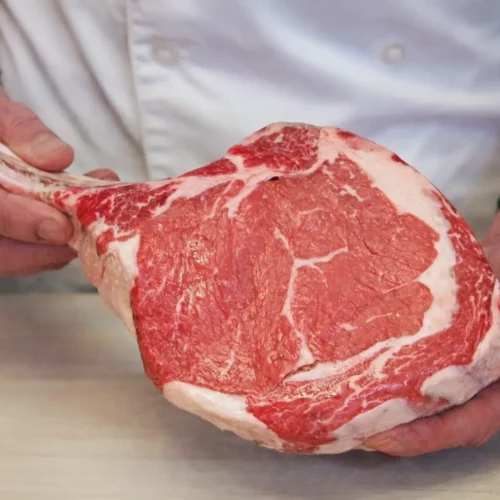
A tomahawk steak is a thick, bone-in rib steak cut with a long rib bone left attached; when it’s AAA and dry-aged for 120 days, it’s more concentrated in flavor and naturally tender. This is the kind of steak you make when you want a restaurant-style centerpiece at home—weekend dinner, special occasion, or any time you feel like cooking a serious cut without needing a heavy sauce.
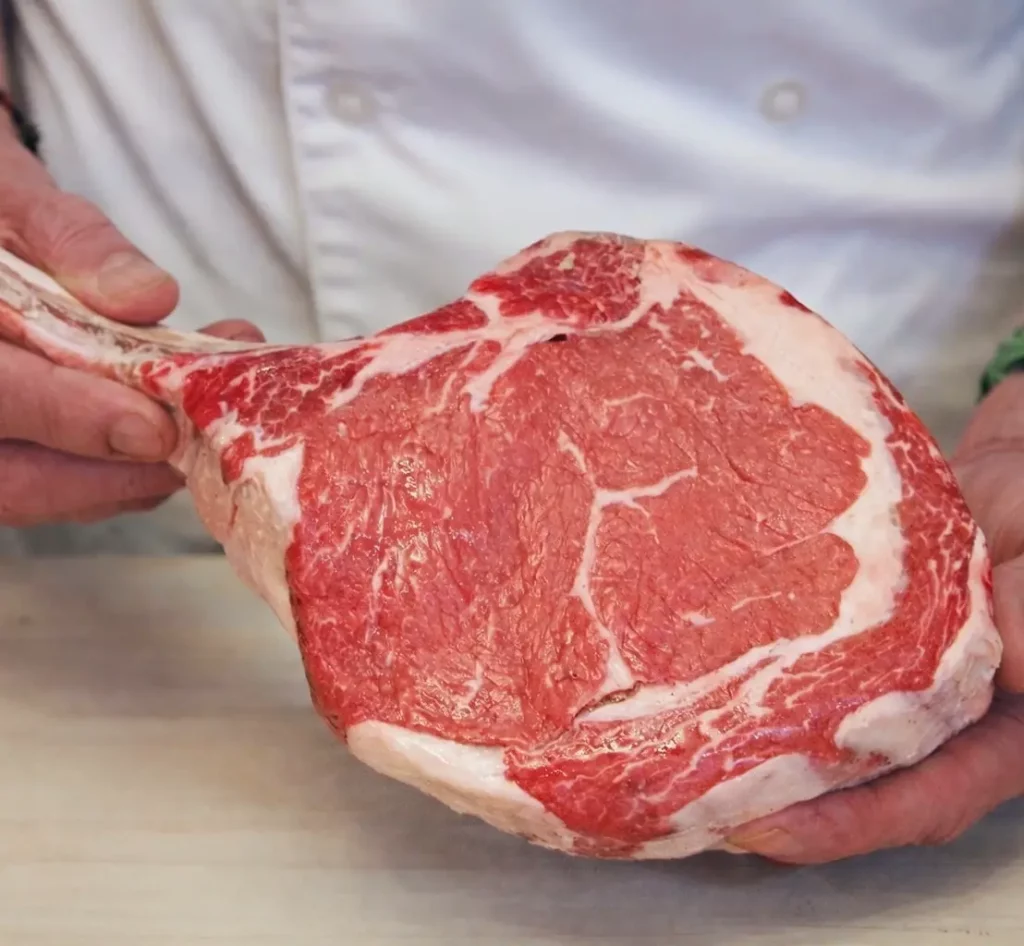
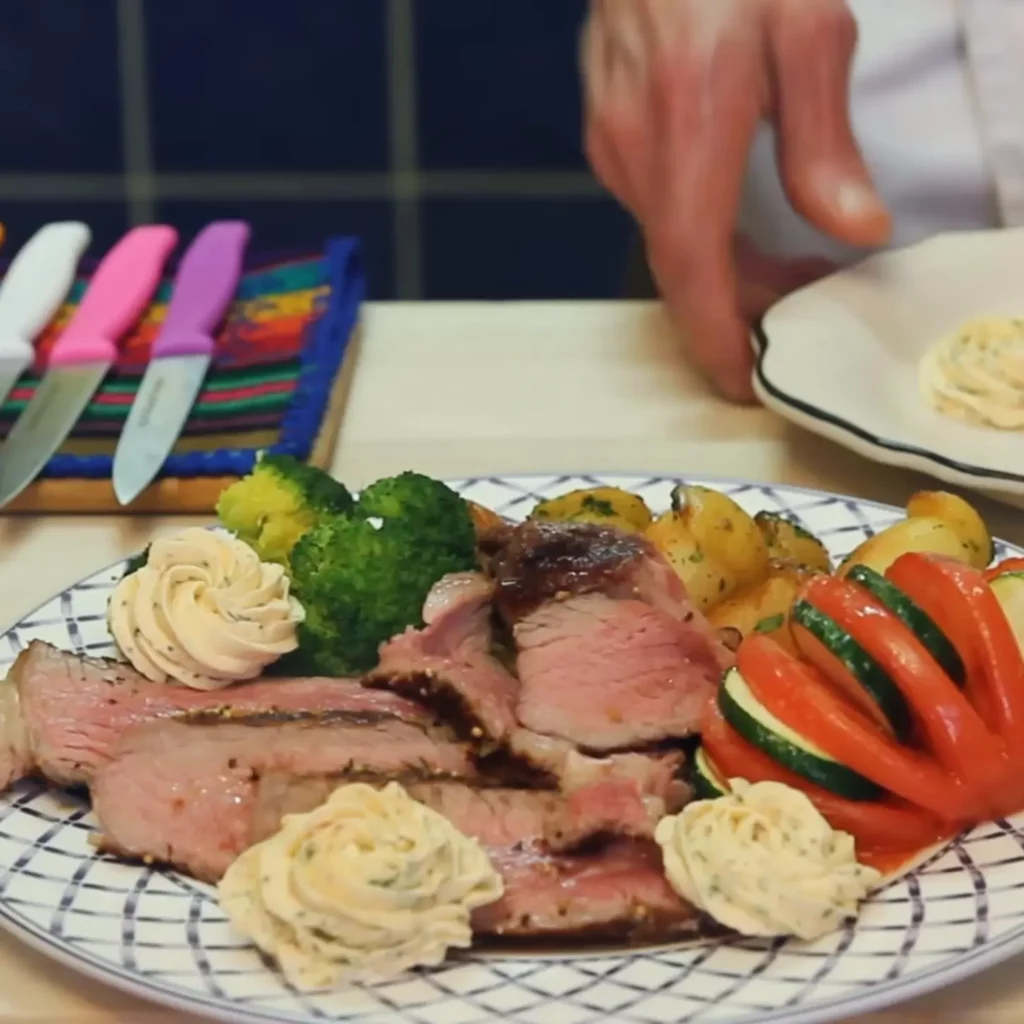
This method is based on my YouTube video “Le Tomahawk AAA vieilli 120 jours”, with a few practical adjustments since publication so the timing and doneness are consistent at home. The idea stays the same: no sauce, just a cold maître d’hôtel butter melting on hot beef, plus a simple, classic garnish that feels bistro and works year-round.
If you’re comparing it to other beef recipes on the site, this one is intentionally not a quick 30-minute steak and not a saucy steak dinner. It’s a controlled, thermometer-friendly tomahawk method that’s built for thick cuts—sear hard, finish gently, rest properly, then serve with an herb butter that does the job of a sauce.
What Makes a 120-Day Dry-Aged Tomahawk Different?
Dry-aging concentrates beef flavor by reducing moisture and allowing enzymes to tenderize the meat over time. At 120 days, you’re in the world of bold, nutty, deeply “beefy” flavor—so you don’t want to drown it in sauce. That’s why an herb butter is perfect: it adds shine and aroma, but the steak stays the star.

Ingredients
Tomahawk
- 1 tomahawk steak, about 4–4.5 lb (AAA, ideally dry-aged)
- Kosher salt
- Freshly ground black pepper
- Montreal steak spice (optional)
Maître d’Hôtel Butter (herb-lemon butter)
- 1 cup (2 sticks / 8 oz) salted butter, softened
- 1 packed cup chopped flat-leaf parsley (see notes)
- 2 shallots, roughly chopped
- 1–2 tbsp fresh lemon juice (start with 1 tbsp, then adjust)
- Black pepper

Duck-Fat Potatoes + Garnish
- 2–2.5 lb potatoes (Yukon Gold or other waxy/medium-starch potatoes)
- 4 cups water (for blanching, add more if needed)
- 2 tsp salt (for blanching water)
- A small pinch turmeric (optional, for color)
- 3–4 tbsp duck fat (or more as needed)
- Salt + pepper, to taste
Vegetables (simple bistro plate)
- 1 broccoli head, cut into florets
- 2 zucchini
- 2–3 tomatoes
- A drizzle of olive oil or a spoon of duck fat (recommended)
- Salt + pepper
Equipment Notes (Quick but Important)
A thick tomahawk is easiest if you have:
- A heavy skillet, plancha, or very hot grill surface
- A sheet pan + oven rack
- An instant-read thermometer (highly recommended for thick cuts)
Step-by-Step Instructions

1) Make the Maître d’Hôtel Butter
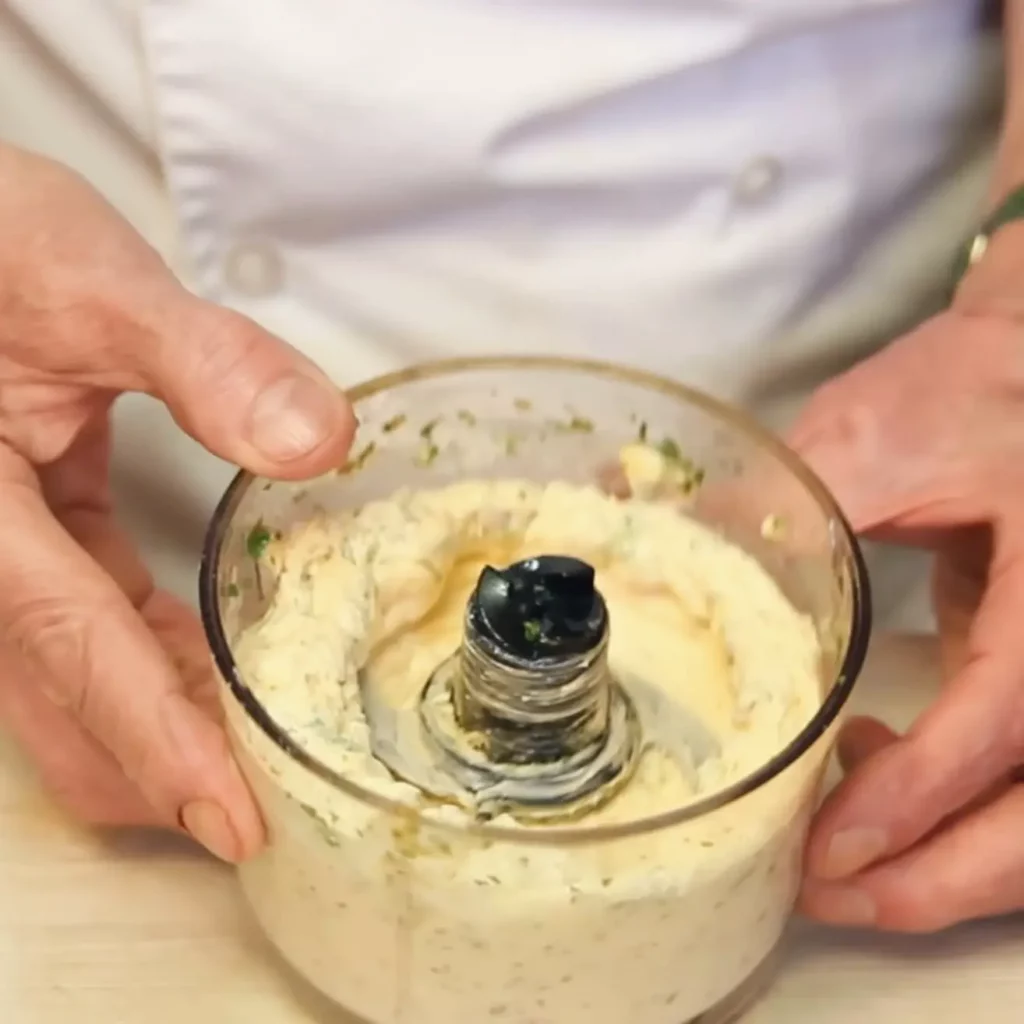
- Add softened salted butter to a food processor.
- Add chopped parsley, shallots, 1 tbsp lemon juice, and a few turns of black pepper.
- Pulse until the mixture is evenly green and well blended. Taste. Add up to 1 more tbsp lemon juice if you want it brighter.
- Scrape into a bowl. Shape into a log in plastic wrap or parchment, or pipe into a butter “rope” if you want clean portions.
- Refrigerate until firm.
Why this matters: cold butter melting on hot dry-aged beef gives you a glossy finish without masking the steak’s flavor.
For another butter-based idea (different vibe, more “garlic-forward”), see homemade garlic butter recipe.
2) Prep the Potatoes (Mushroom Shape Optional, Crisp Finish Guaranteed)
In the video, the potatoes are shaped like “mushrooms.” It’s a fun retro detail, but the key is the texture: tender inside, crisp outside.
- Peel the potatoes. If you want the mushroom look, peel partially, leaving a band of skin to suggest a cap.
- Shape the potatoes into small rounds or mushroom-like forms. Keep pieces similar in size for even cooking.
- Put shaped potatoes in a bowl of cold water while you work to prevent browning.
Blanch (so they cook through)
- Bring 4 cups water to a boil with 2 tsp salt and a tiny pinch of turmeric (optional).
- Add potatoes and blanch 6–8 minutes (not 1 minute). You want the surface to soften slightly but not fall apart.
- Drain and let them steam-dry for a few minutes.
Crisp in duck fat
- Heat duck fat in a skillet over medium-high heat.
- Add potatoes and brown, turning gently, 10–15 minutes until deeply golden and crisp.
- Season with salt and pepper. Finish with a little chopped parsley if you like.
If you want a different potato side on another day, authentic Belgian fries (frites) recipe is a perfect steak pairing, and Parisian potatoes recipe is a more classic French bistro option.
3) Prep and Cook the Vegetables
This garnish is simple, but it should still taste seasoned—not just look pretty.
Broccoli
- Bring a pot of salted water to a boil.
- Blanch broccoli florets 3–4 minutes until bright green and just tender.
- Drain well and let them cool naturally (so they don’t absorb water).
- Right before serving, toss with a drizzle of olive oil (or a small spoon of duck fat), salt, and pepper.
Tomato + zucchini (simple “striped” garnish)
- Slice zucchini into thick coins (about ½ inch).
- Slice tomatoes or score them if you want the decorative look.
- Roast on a sheet pan at 425°F for 12–18 minutes, seasoning with salt, pepper, and a little olive oil.
If you want a broader vegetable side option, oven roasted mixed vegetables works with almost any steak dinner.
4) Cook the Tomahawk: Sear Hard, Finish in the Oven
This is the heart of the recipe. With a thick, dry-aged cut, you want a strong crust and a controlled finish.
Temper + season
- Take the tomahawk out of the fridge 45–60 minutes before cooking (especially if it’s very thick).
- Pat dry thoroughly.
- Season generously with kosher salt and black pepper on all sides.
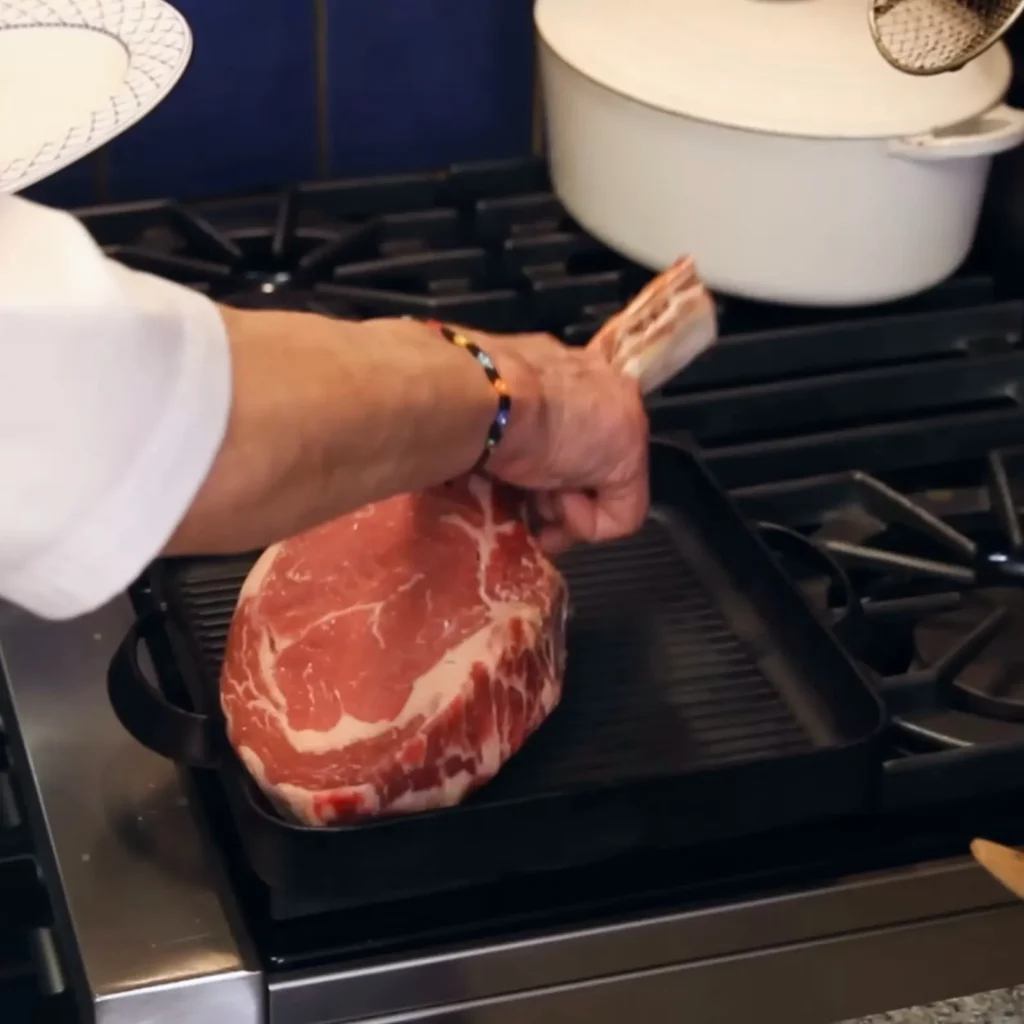
Sear (crust)
- Preheat your skillet/plancha until very hot. A drop of water should sizzle instantly.
- Sear the tomahawk about 2 minutes per side, then rotate and sear edges as needed (total sear time 6–10 minutes, depending on thickness and heat).

Oven finish (control doneness)
- Preheat the oven to 350°F.
- Transfer the steak to a rack over a sheet pan.
- Roast until it reaches your target internal temperature:
- 125°F for rare
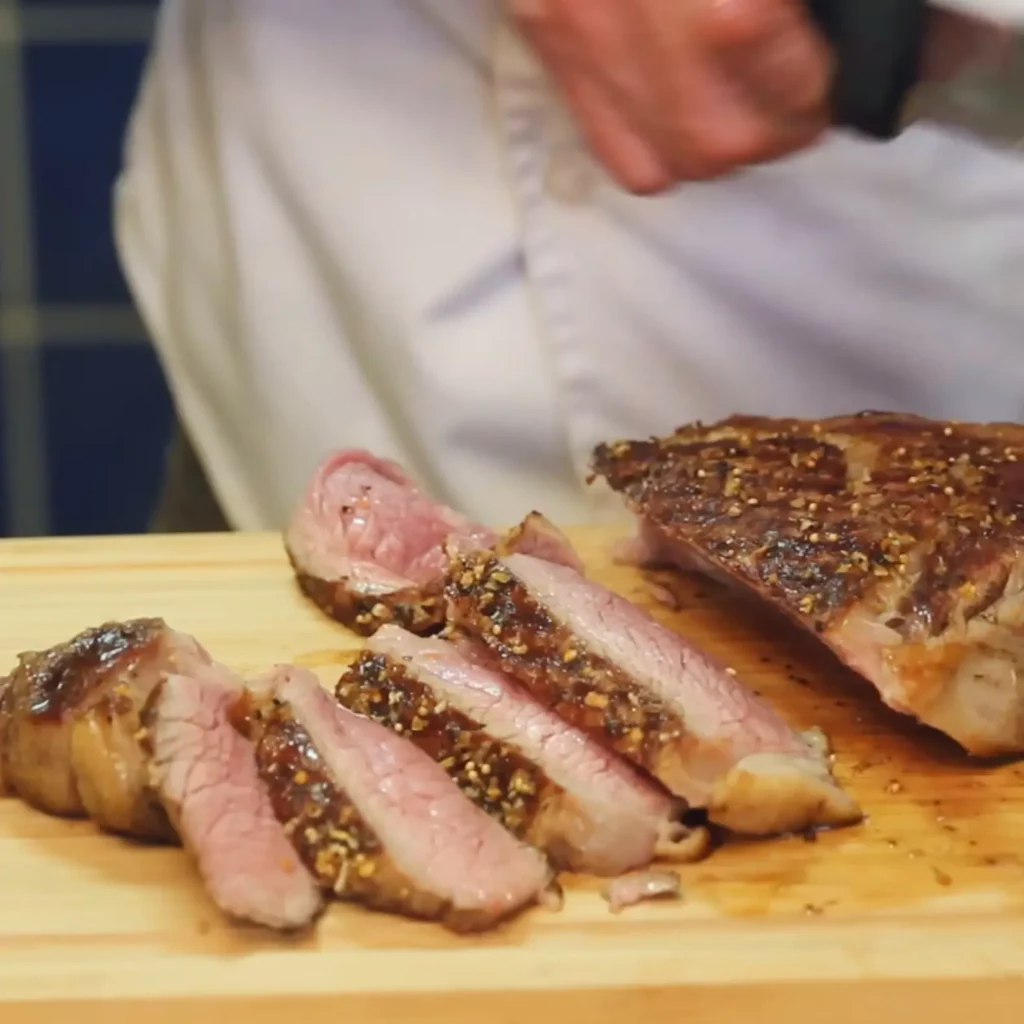
- 130–135°F for medium-rare
- 140°F for medium
(Dry-aged steak is often best around 130–135°F.)
Depending on thickness, the oven stage may take 8–20 minutes. The thermometer is your truth.
Rest (non-negotiable)
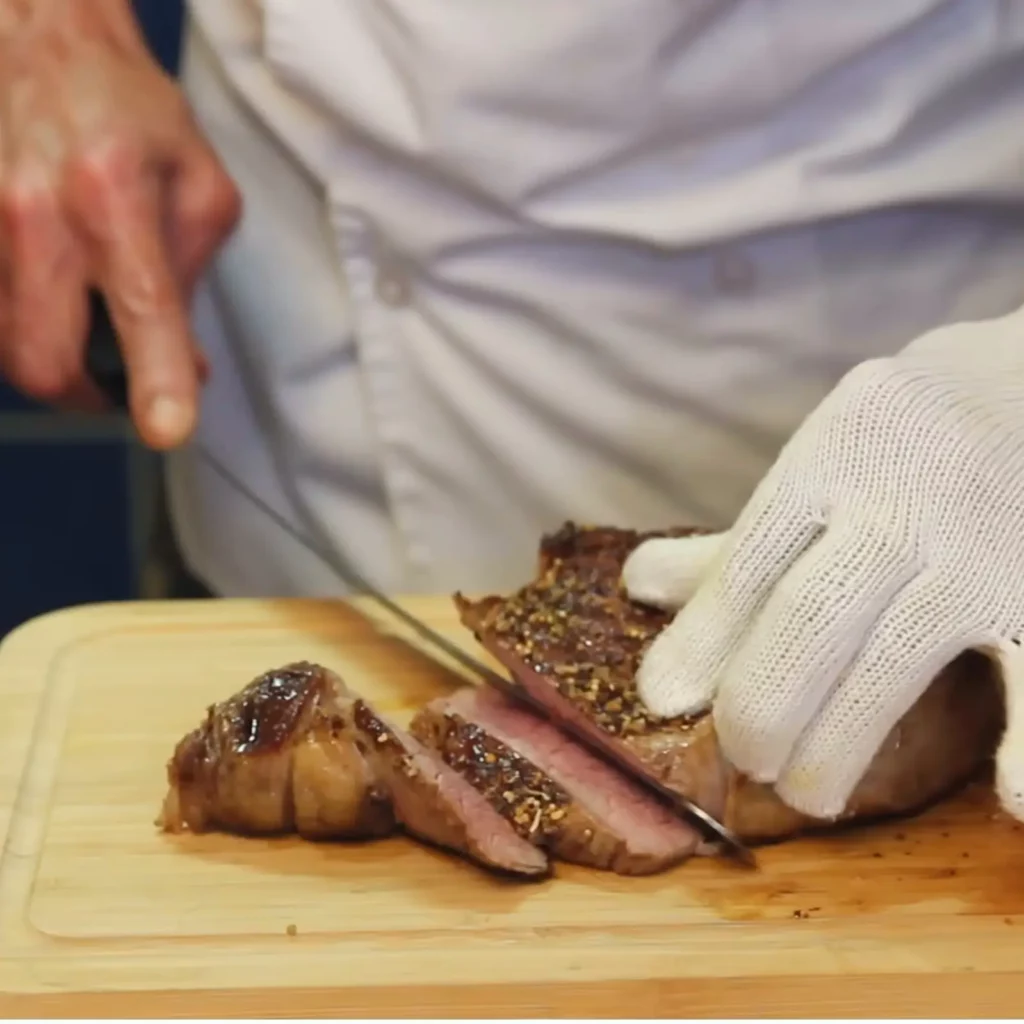
- Rest the steak 10–15 minutes.
- Slice against the grain and plate.
For another beef dinner in a totally different direction (more classic and structured), beef Wellington is a great “special occasion” counterpart. And if you want a weeknight comfort beef plate instead, homemade Salisbury steak is the opposite end of the spectrum—easy, saucy, and familiar.
Serving Ideas (Year-Round)
This tomahawk plate works in winter with hearty sides and in summer with lighter vegetables. For a classic steakhouse feel, serve it with something crisp on the side and keep the butter as the “sauce.”
If you want a sandwich spin on leftover slices, steak sandwich is an easy next-day win.
Nutrition Context (No Diet Claims)
Tomahawk steak is protein-rich and very satisfying, especially paired with vegetables and a reasonable portion of potatoes. Dry-aged beef is also more intense in flavor, so many people find they’re happy with a smaller serving than a standard steak—especially when you add a finishing butter for aroma and richness.
Substitutions
If you can’t find AAA dry-aged tomahawk
- Use a bone-in rib steak or ribeye (thick cut). The method stays the same; adjust cook time to thickness.
If you don’t have duck fat
- Use beef tallow, ghee, or neutral oil + a knob of butter at the end.
If you don’t want to shape potatoes
- Cut into chunky rounds or small roasting pieces. The blanch + crisp method still works.
If you want a different “steak finish” than herb butter
- Go saucy instead (different intent, different result): creamy mushroom sauce for steak.
- Or go herb-forward in another direction: homemade chimichurri.
FAQ
Why rest a tomahawk steak?
Resting lets juices redistribute so the steak slices cleanly and stays juicy. With a thick cut, 10–15 minutes makes a noticeable difference.
Do I need a thermometer?
For a thick tomahawk, it’s the simplest way to get the doneness you want without guessing. If you cook thick steaks often, it’s one of the best tools you can own.
Why does dry-aged beef cook differently?
Dry-aged beef has less moisture, so it can brown faster and its flavor is more concentrated. It still needs careful temperature control because thick cuts carry heat differently.
Can I cook this on a grill?
Yes. Sear over high heat for crust, then move to indirect heat to finish to temperature. Keep the butter cold and add it at the end.
What if my steak is thinner than 4 lb?
Use the same strategy, but shorten the oven time. Always prioritize internal temperature.
What to Serve With (Suggested Posts)
- authentic Belgian fries (frites) recipe for a true steak-frites plate
- Parisian potatoes recipe for a classic French bistro side
- oven roasted mixed vegetables for a simple year-round vegetable tray
- creamy mushroom sauce for steak if you want a saucier steak night (different style)
- steak sandwich for leftovers
- homemade chimichurri for a brighter herb finish
- beef Wellington for another special-occasion beef centerpiece
- crème brûlée as a classic dinner-party dessert
- ultra fudgy double chocolate chip cookies for an easy make-ahead sweet option
- no-churn dark chocolate ice cream for a simple freezer dessert
AAA Dry-Aged Tomahawk Steak (120 Days) with Maître d’Hôtel Butter and Duck-Fat Potatoes
Ingredients
Tomahawk
- 1 tomahawk steak 4–4.5 lb (AAA, dry-aged if possible)
- Kosher salt
- Black pepper
- Montreal steak spice optional
Maître d’Hôtel Butter
- 1 cup 8 oz salted butter, softened
- 1 packed cup chopped flat-leaf parsley
- 2 shallots roughly chopped
- 1 –2 tbsp fresh lemon juice
- Black pepper
Duck-Fat Potatoes + Vegetables
- 2 –2.5 lb potatoes
- 4 cups water
- 2 tsp salt
- Pinch turmeric optional
- 3 –4 tbsp duck fat
- 1 broccoli head florets
- 2 zucchini
- 2 –3 tomatoes
- Olive oil optional but recommended
- Salt + pepper
Instructions
- Make the maître d’hôtel butter: blend butter, parsley, shallots, 1 tbsp lemon juice, and pepper. Taste, adjust lemon, chill until firm.
- Prep potatoes: shape or cut. Blanch in salted water 6–8 minutes, drain, steam-dry.
- Crisp potatoes in duck fat 10–15 minutes, season.
- Blanch broccoli 3–4 minutes; season with a little oil or duck fat, salt, pepper. Roast tomatoes and zucchini at 425°F for 12–18 minutes, seasoning well.
- Temper steak 45–60 minutes. Pat dry and season generously with salt and pepper.
- Sear steak on very high heat about 2 minutes per side (plus edges) for a deep crust.
- Finish in a 350°F oven on a rack until internal temp hits 125°F (rare) or 130–135°F (medium-rare).
- Rest 10–15 minutes. Slice and plate.
- Top hot steak with cold maître d’hôtel butter and serve with potatoes and vegetables.
Video
Notes
Substitutions
If you can’t find AAA dry-aged tomahawk
- Use a bone-in rib steak or ribeye (thick cut). The method stays the same; adjust cook time to thickness.
If you don’t have duck fat
- Use beef tallow, ghee, or neutral oil + a knob of butter at the end.
If you don’t want to shape potatoes
- Cut into chunky rounds or small roasting pieces. The blanch + crisp method still works.
If you want a different “steak finish” than herb butter
- Go saucy instead (different intent, different result): creamy mushroom sauce for steak.
- Or go herb-forward in another direction: homemade chimichurri.
FAQ
Why rest a tomahawk steak?
Resting lets juices redistribute so the steak slices cleanly and stays juicy. With a thick cut, 10–15 minutes makes a noticeable difference.Do I need a thermometer?
For a thick tomahawk, it’s the simplest way to get the doneness you want without guessing. If you cook thick steaks often, it’s one of the best tools you can own.Why does dry-aged beef cook differently?
Dry-aged beef has less moisture, so it can brown faster and its flavor is more concentrated. It still needs careful temperature control because thick cuts carry heat differently.Can I cook this on a grill?
Yes. Sear over high heat for crust, then move to indirect heat to finish to temperature. Keep the butter cold and add it at the end.What if my steak is thinner than 4 lb?
Use the same strategy, but shorten the oven time. Always prioritize internal temperature.Useful Links
🛒 Michel Dumas Shop : Explore our kitchen essentials, including aprons and knives.
🌐 Linktree : Access all our important links in one place.
📱 YouTube | Instagram | Facebook | TikTok : Follow us for the latest recipes and culinary tips.