Oven-Baked Salmon with Rice Pilaf and Tarragon Cream Sauce
A good salmon dinner does not need to be complicated to feel elegant. This one is built around a thick piece of oven-baked salmon, fluffy rice pilaf, green vegetables, and a light tarragon cream sauce, which makes it just as fitting for a weeknight as it is for a more polished weekend meal.
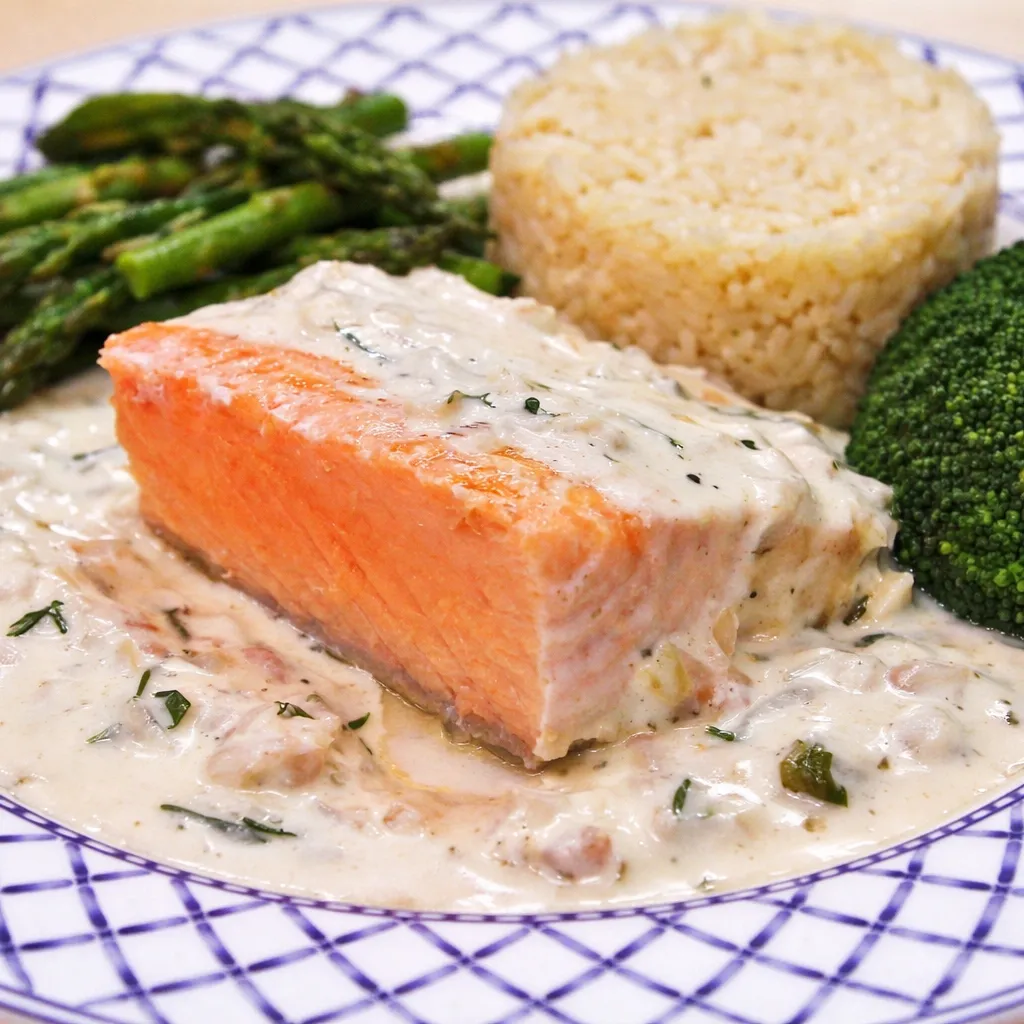
This recipe is based on my YouTube video, with a few adjustments since publication to make the timing cleaner and the written method more reliable. I make it this way because the salmon stays moist, the pilaf cooks evenly in the oven, and the sauce brings everything together without making the plate feel heavy.
Unlike a creamy skillet dish or a pasta-based salmon dinner, this is a plated oven salmon recipe with distinct textures on the plate. You get tender fish, separate grains of rice, crisp-tender vegetables, and a sauce that adds richness without taking over. It works beautifully in spring when asparagus is in season, but it also makes sense all year with broccoli and a good piece of salmon from the fish counter.
What you need for this salmon dinner
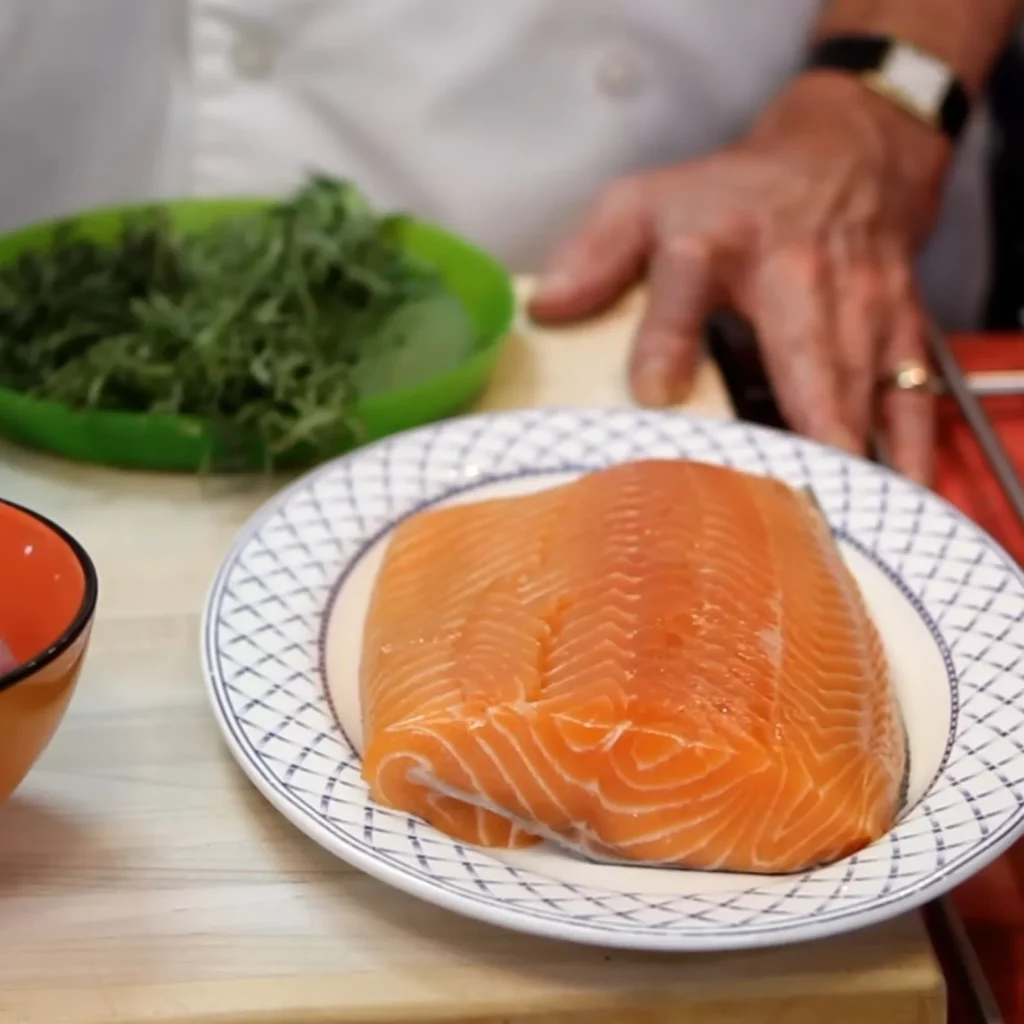
The heart of the recipe is a thick center-cut salmon fillet. That detail matters. A thicker piece gives you more control in the oven and makes it much easier to hit that sweet spot where the salmon is cooked but still juicy. Around it, the rest of the plate stays classic: white onion for the pilaf, shallots for the sauce, fresh tarragon, thyme, bay leaves, broccoli, and asparagus.
For the pilaf, I keep the method simple and traditional. The onions are sweated gently in butter, the rice is coated in the fat, then hot stock goes in before the whole thing finishes in the oven. If you want a deeper look at that technique, my fluffy stovetop rice pilaf is another useful base recipe to keep on hand.
The final sauce is intentionally restrained. Tarragon and salmon are a classic pairing, and a light cream with shallots gives you enough richness to make the plate feel complete. This is not meant to be as heavy as a pasta sauce like my easy salmon pasta or my creamy salmon pasta with spinach. It is cleaner, lighter, and better suited to a composed dinner plate.
Why this method works
There are a few details that make a big difference here.
First, the salmon is baked at a moderate temperature instead of blasted in a very hot oven. That gives the fish time to cook gently and more evenly. With a center-cut fillet, you are much less likely to dry out the thinner edges before the middle is ready.
Second, the rice pilaf goes into the oven instead of being left entirely on the stovetop. The heat surrounds the pot more evenly, which helps the grains cook through without constant fussing. It is a great method when you want your starch to finish at roughly the same time as the fish.
Third, the vegetables are cooked separately. That may sound obvious, but it is what keeps the plate clean and balanced. The broccoli and asparagus stay bright and distinct instead of becoming soft from too much sauce or overcooking in the oven.
Ingredients
For the salmon
- 1 large center-cut salmon fillet, about 1 1/2 to 2 pounds
- Salt
- Black pepper
For the rice pilaf
- 2 cups long-grain white rice
- 1 medium white onion, finely diced
- 2 tablespoons butter
- 4 cups hot chicken or vegetable stock
- 2 sprigs fresh thyme
- 2 bay leaves
- Salt, to taste
For the vegetables
- 1 bunch asparagus, trimmed
- 3 to 4 cups broccoli florets
- Salt, for the cooking water
For the tarragon cream sauce
- 2 shallots, finely chopped
- 1 tablespoon butter
- 1/4 cup dry white wine
- 1 cup light cream or half-and-half
- 1 to 2 tablespoons fresh tarragon, finely chopped
- Salt
- Black pepper
How to make oven-baked salmon with rice pilaf
Start by heating the oven to 350 F. If you want to follow the same spirit as the video, use a heavy baking dish or roasting pan for the salmon and an oven-safe pot with a lid for the pilaf. A round of parchment pressed over the rice before covering the pot is also a very good touch if you want especially even results.
Dice the onion and the shallots, then chop the tarragon. Bring your stock to a simmer in a small saucepan. Salt a pot of water for the vegetables and have it ready to boil later so everything finishes together.
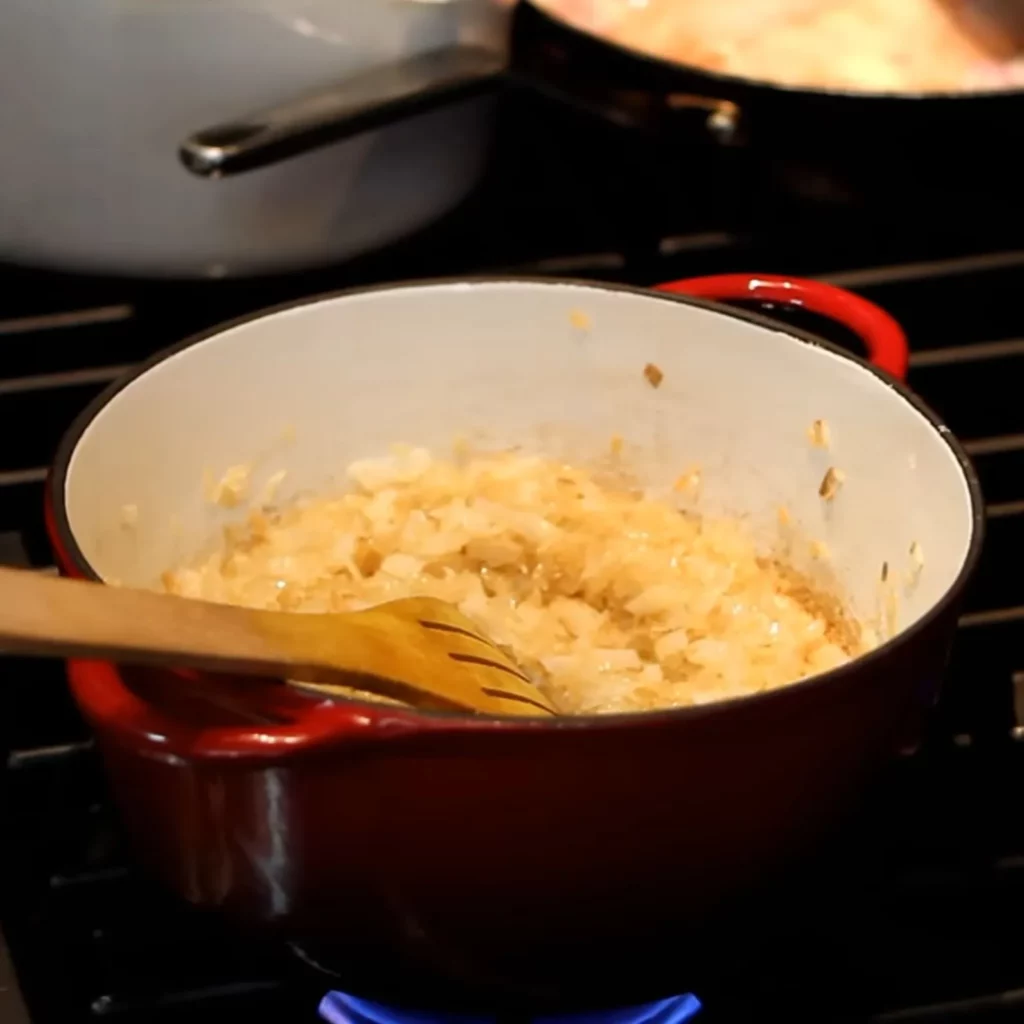
For the pilaf, melt the butter in your oven-safe pot over medium-low heat. Add the onion and cook it slowly until softened without browning. This step is important. You want sweetness and aroma, not color. Stir in the rice and cook for a minute or two so every grain is coated. Add the hot stock, season lightly with salt, then add the thyme and bay leaves. Cover with parchment if using, then put on the lid and transfer the pot to the oven. Bake for about 23 minutes, then let it rest for 5 minutes before fluffing.
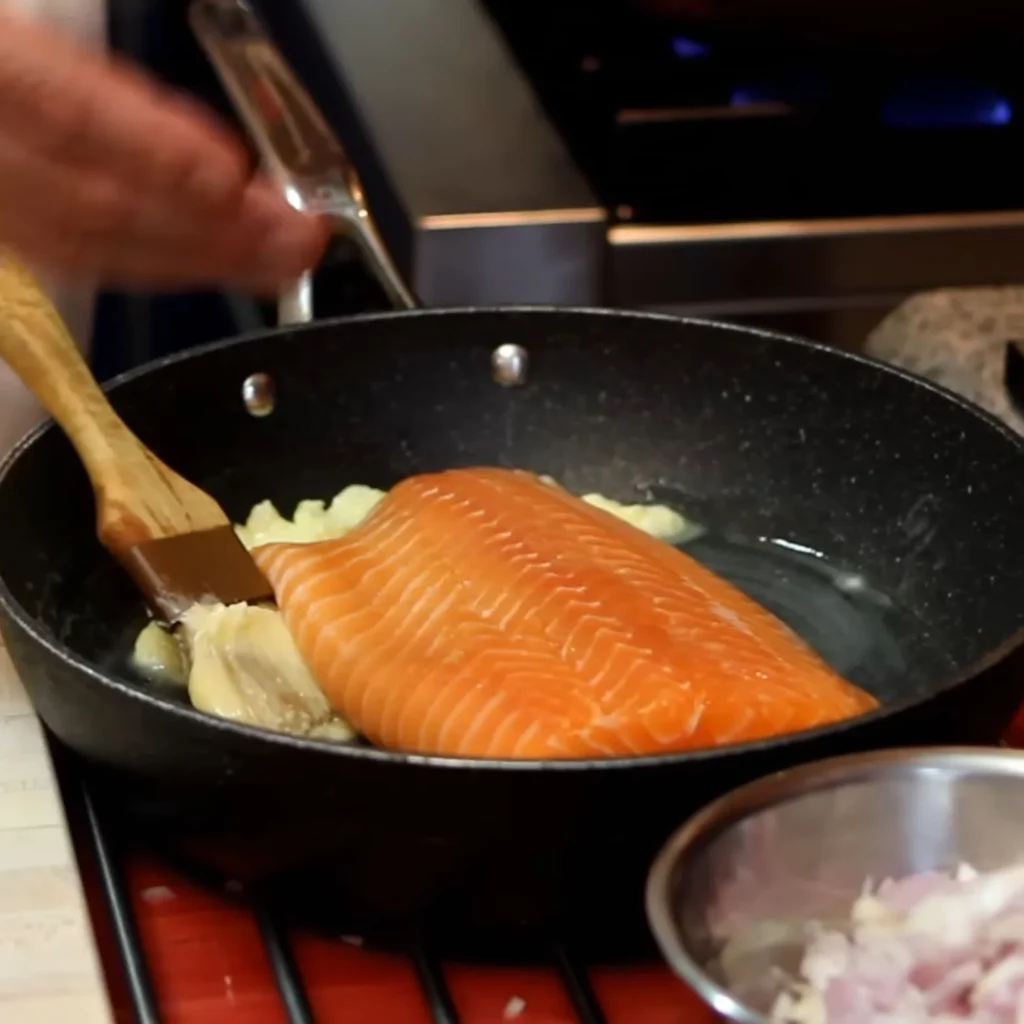
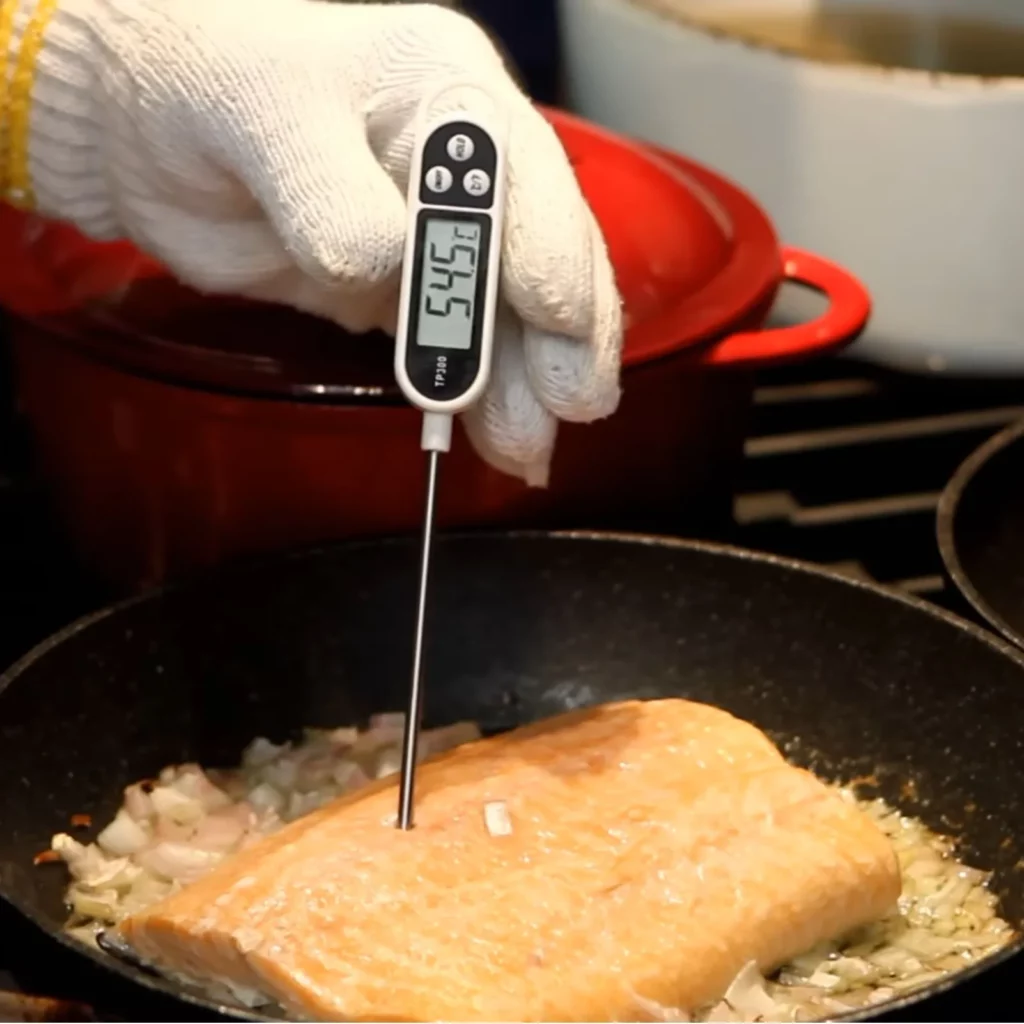
While the rice cooks, season the salmon with salt and pepper and place it in a baking dish. Once the pilaf has had a short head start, slide the salmon into the oven. The exact timing depends on thickness, but a thick fillet usually needs about 12 to 18 minutes. I prefer to pull it when the center is just cooked and still moist. If you check with a thermometer, aim for about 120 to 125 F in the thickest part for a tender result.
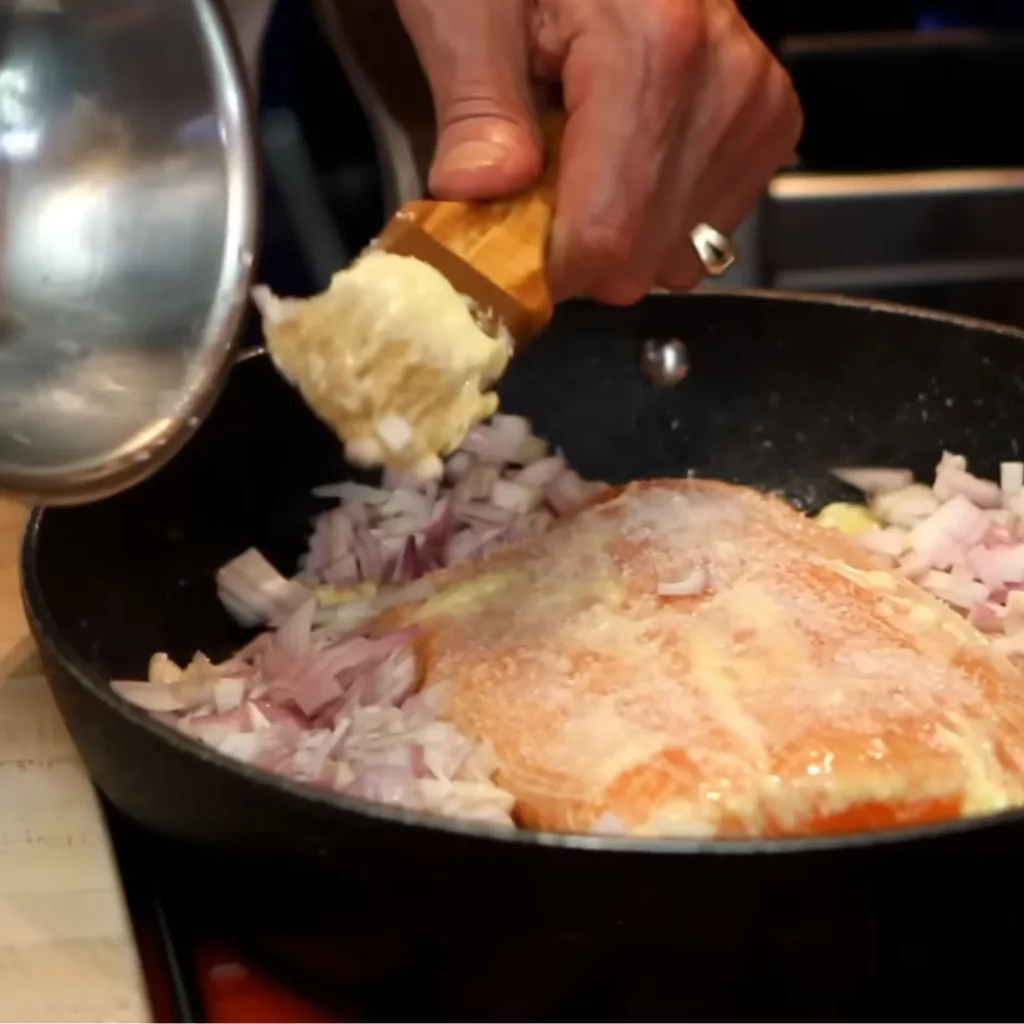
As the salmon finishes, cook the vegetables. Drop the broccoli into boiling salted water for about 3 to 4 minutes, then remove it. Cook the asparagus in the same water for about 2 to 3 minutes, depending on thickness. Drain well. The goal is bright color and a little bite, not softness.
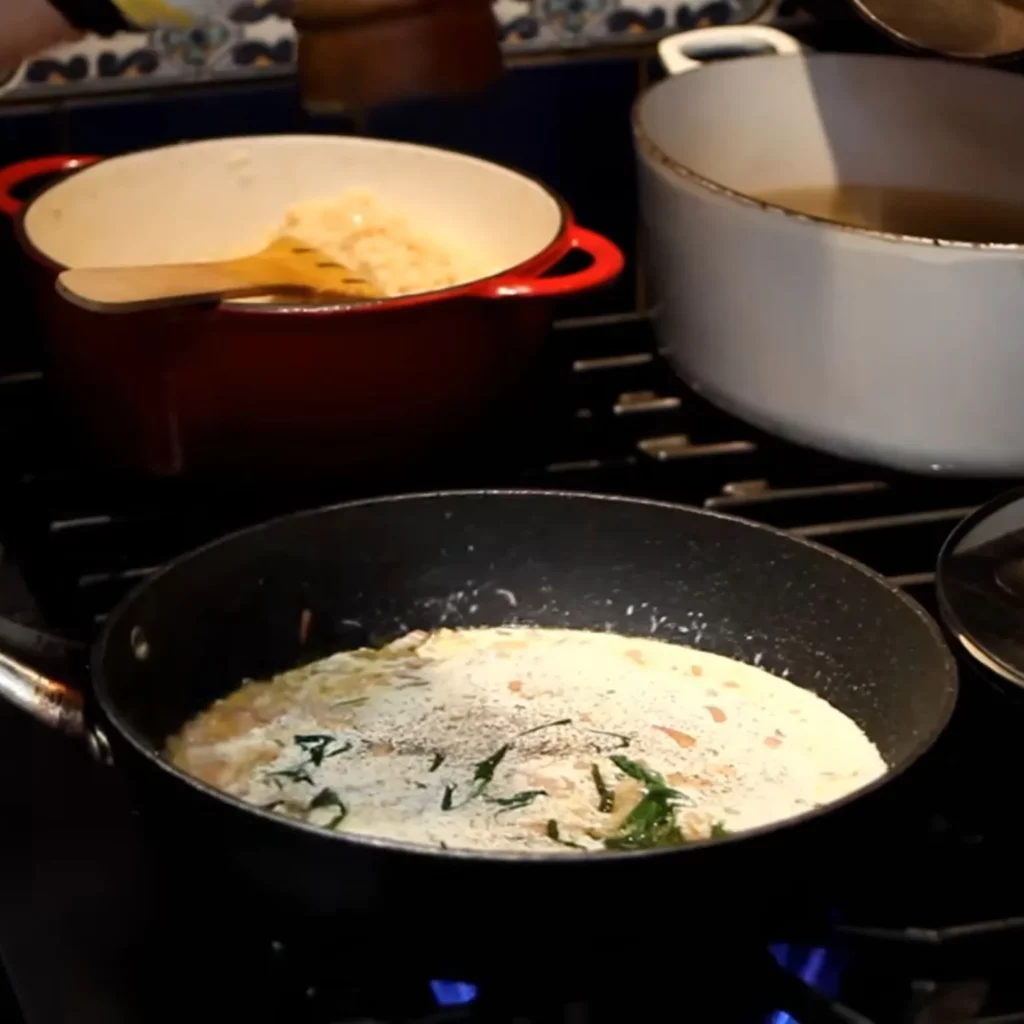
Now make the sauce. Melt the butter in a small pan and cook the shallots gently until softened. Add the white wine and let it reduce slightly. Stir in the cream and tarragon, season with salt and pepper, and simmer gently until lightly thickened. This should coat a spoon but still flow easily on the plate.
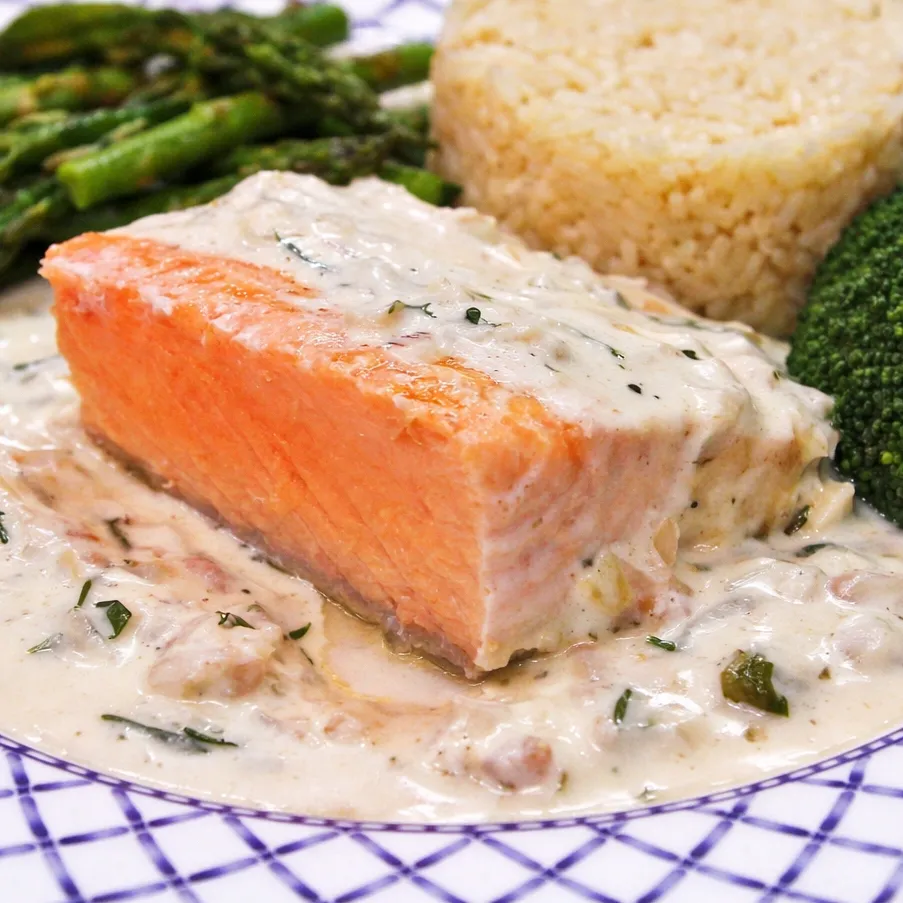
Take the rice out of the oven, remove the thyme and bay leaves, then fluff it gently with a fork. Let the salmon rest for a minute or two. To serve, spoon or mold the pilaf onto the plate, add the salmon, arrange the broccoli and asparagus around it, and finish with the tarragon cream sauce.
Tips for the best result
Use a thick fillet if possible. Thin tail pieces cook fast and are much less forgiving.
Do not rush the onions for the pilaf. If they brown, the rice takes on a more roasted flavor that is not as delicate with the salmon.
Keep the sauce at a gentle simmer. A hard boil can make a light cream sauce look rough.
Season in layers. A little salt in the rice, in the vegetables, and in the sauce will give you a much more complete final plate than trying to fix everything at the very end.
If you like this kind of composed fish dinner, you may also enjoy my salmon Wellington for something richer and more festive, or keep things even simpler with a side of roasted mixed vegetables.
Substitutions
If you do not have tarragon, dill or chives work well, though the final flavor changes. Tarragon gives the most classic French-style finish.
If asparagus is out of season, use green beans, zucchini, or more broccoli.
If you want a richer potato-based side instead of rice, this salmon is excellent with Parisian potatoes or with homemade mashed potatoes.
If you want the sauce to lean more buttery than creamy, a little homemade garlic butter can be whisked in at the end for shine and flavor.
For a different sauce direction, you can also pair salmon with homemade hollandaise sauce for a brunch-style plate, or a cold homemade tartare sauce if you want a sharper contrast.
A quick note on texture and nutrition
Salmon is one of those proteins that feels both comforting and light when cooked properly. With rice and green vegetables, this meal lands in that sweet spot between elegant and practical. It is satisfying, protein-rich, and balanced enough for a family dinner, but it still looks like something you would happily serve to guests.
FAQ
Can I use salmon portions instead of one large fillet?
Yes. Individual portions work well, but watch the timing closely because they cook faster than a large center-cut piece.
Can I make the rice ahead?
Yes. Rice pilaf reheats well. Fluff it first, then reheat gently with a small splash of stock or water so it stays soft.
Can I make the sauce ahead?
Yes, but it is best fresh. If reheating, do it gently over low heat and stir often.
Can I use frozen salmon?
Yes, as long as it is fully thawed and patted dry before baking.
What should I serve with it if I skip the broccoli and asparagus?
A crisp salad works well. A classic Caesar salad is an easy choice if you want something fresh on the side.
What to serve with / Suggested posts
If you liked this salmon dinner, these recipes fit naturally into the same kitchen rhythm:
- fluffy stovetop rice pilaf
- roasted mixed vegetables
- crispy Parisian potatoes
- homemade mashed potatoes
- easy salmon pasta
- creamy salmon pasta with spinach
- salmon Wellington
- homemade hollandaise sauce
- homemade tartare sauce
- classic Caesar salad
Oven-Baked Salmon with Rice Pilaf and Tarragon Cream Sauce
Ingredients
For the salmon
- 1 large center-cut salmon fillet 1 1/2 to 2 pounds
- Salt
- Black pepper
For the rice pilaf
- 2 cups long-grain white rice
- 1 medium white onion finely diced
- 2 tablespoons butter
- 4 cups hot chicken or vegetable stock
- 2 sprigs fresh thyme
- 2 bay leaves
- Salt to taste
For the vegetables
- 1 bunch asparagus trimmed
- 3 to 4 cups broccoli florets
- Salt for the cooking water
For the sauce
- 2 shallots finely chopped
- 1 tablespoon butter
- 1/4 cup dry white wine
- 1 cup light cream or half-and-half
- 1 to 2 tablespoons fresh tarragon finely chopped
- Salt
- Black pepper
Instructions
- Heat the oven to 350 F.
- Melt 2 tablespoons butter in an oven-safe pot. Cook the diced onion over medium-low heat until softened without browning.
- Stir in the rice and cook 1 to 2 minutes. Add the hot stock, thyme, bay leaves, and a little salt. Cover and bake for 23 minutes. Rest 5 minutes, then fluff.
- Season the salmon with salt and pepper and place in a baking dish. Bake until the center reaches about 120 to 125 F, about 12 to 18 minutes depending on thickness. Rest briefly.
- Boil the broccoli in salted water for 3 to 4 minutes. Remove. Boil the asparagus for 2 to 3 minutes. Drain.
- For the sauce, cook the shallots in 1 tablespoon butter until soft. Add the white wine and reduce slightly. Add the cream and tarragon. Season with salt and pepper and simmer gently until lightly thickened.
- Serve the salmon with the rice pilaf, broccoli, asparagus, and tarragon cream sauce.
Video
Notes
FAQ
Can I use salmon portions instead of one large fillet?
Yes. Individual portions work well, but watch the timing closely because they cook faster than a large center-cut piece.Can I make the rice ahead?
Yes. Rice pilaf reheats well. Fluff it first, then reheat gently with a small splash of stock or water so it stays soft.Can I make the sauce ahead?
Yes, but it is best fresh. If reheating, do it gently over low heat and stir often.Can I use frozen salmon?
Yes, as long as it is fully thawed and patted dry before baking.What should I serve with it if I skip the broccoli and asparagus?
A crisp salad works well. A classic Caesar salad is an easy choice if you want something fresh on the side.🔗 Useful Links
🛒 Michel Dumas Shop : Explore our kitchen essentials, including aprons and knives.
🌐 Linktree : Access all our important links in one place.
📱 YouTube | Instagram | Facebook | TikTok : Follow us for the latest recipes and culinary tips.