Homemade Gravlax (Cured Salmon) — My No-Rinse Method + Classic Balanced Option
If you love Nordic flavors and elegant appetizers, gravlax (cured salmon) is one of the highest-impact, low-effort recipes you can make at home. This version follows my chef’s style: a stronger, salt-forward cure, plenty of cracked pepper, fresh fennel/dill on top—and no rinsing after curing. Instead, we scrape and blot the exterior so the flavor stays concentrated and the texture remains silky.
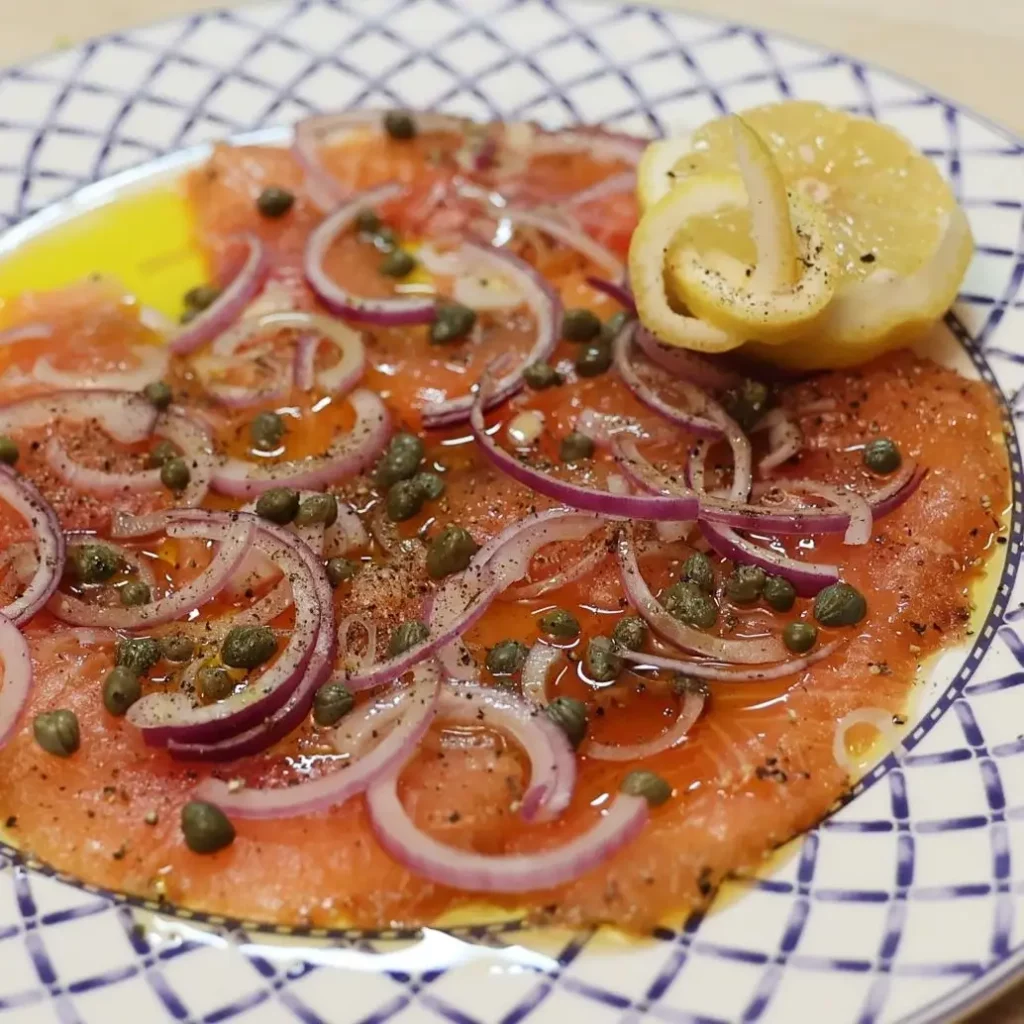
For readers who prefer the classic Scandinavian profile (milder, slightly sweet, very balanced), I’m also including an optional classic cure with a lower salt percentage and a bit of sugar. Both methods give you gorgeous, sliceable salmon perfect for brunch boards, holidays, or a cozy winter aperitif in Canada or the U.S.
Why You’ll Love This Gravlax
- Restaurant-level appetizer at home. Thin, buttery slices with bright herbal notes—luxury without special equipment.
- Two styles, same technique. My No-Rinse Strong Cure (bold, savory) and a Classic Balanced Cure (gentler, slightly sweet).
- Make-ahead friendly. Cure it the day before; slices are ready for toast, blinis, or bagels with lemon and red onion.
- Scales up easily. Hosting a crowd? Double the fillet and cure in two bags.
Ingredient Notes
- Salmon (about 800 g / 1.75 lb): Tail section is great (fewer pin bones), but a center-cut works too. Use fresh, high-quality salmon. If serving to vulnerable guests, consider previously frozen sashimi-grade salmon from a trusted source.
- Salt: The engine of the cure. My style uses a higher salt percentage for a firmer, savory result.
- Cracked black pepper: Adds bite and aroma. We scrape off the excess after curing.
- Fresh fennel or dill: Classic aromatics. Fennel fronds or dill both work beautifully.
- Finishings: Extra-virgin olive oil, thin red onion, lemon.
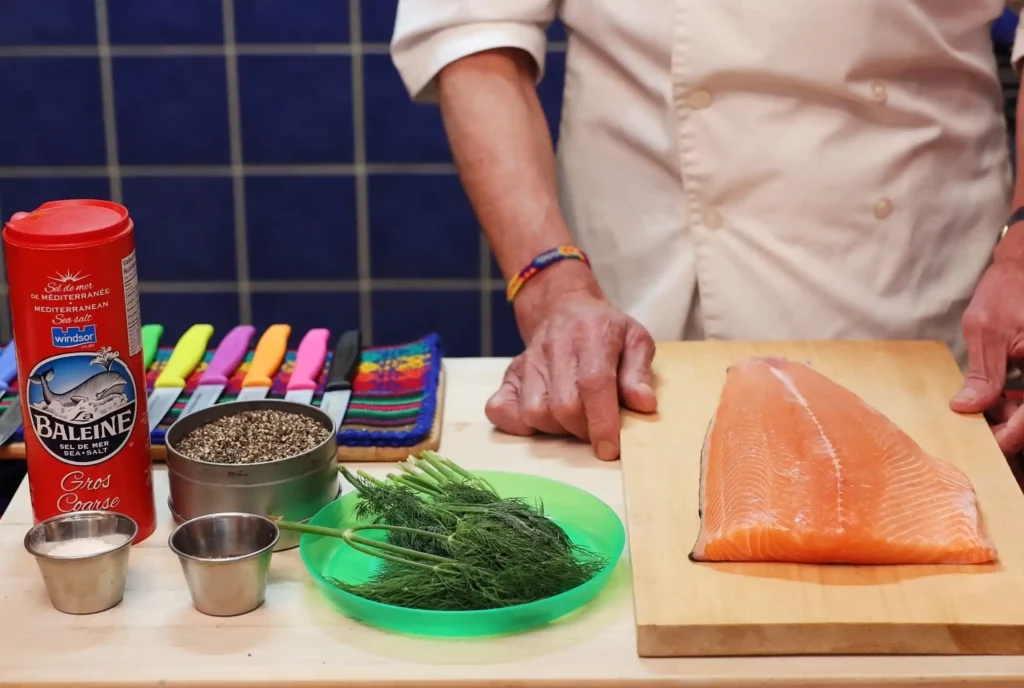
Salt Math (Quick Guide)
- My No-Rinse Strong Cure: ~5% salt relative to salmon weight (e.g., 40 g salt for 800 g fish). Very savory, firmer texture, no sugar.
- Classic Balanced Cure: 3% salt + ~2% sugar (e.g., 24 g salt + 16 g sugar for 800 g fish). Milder salinity, slightly tender, classic Scandinavian balance.
- Pepper: My style is pepper-forward; for a gentler profile, reduce to 3–4 g per 800 g fish.
Step-by-Step (Both Methods)
- Prep salmon. Pat completely dry (important for even curing). Place skin-side down on a clean board.
- Mix cure. Combine salt (+ sugar if using the classic option) and cracked black pepper.
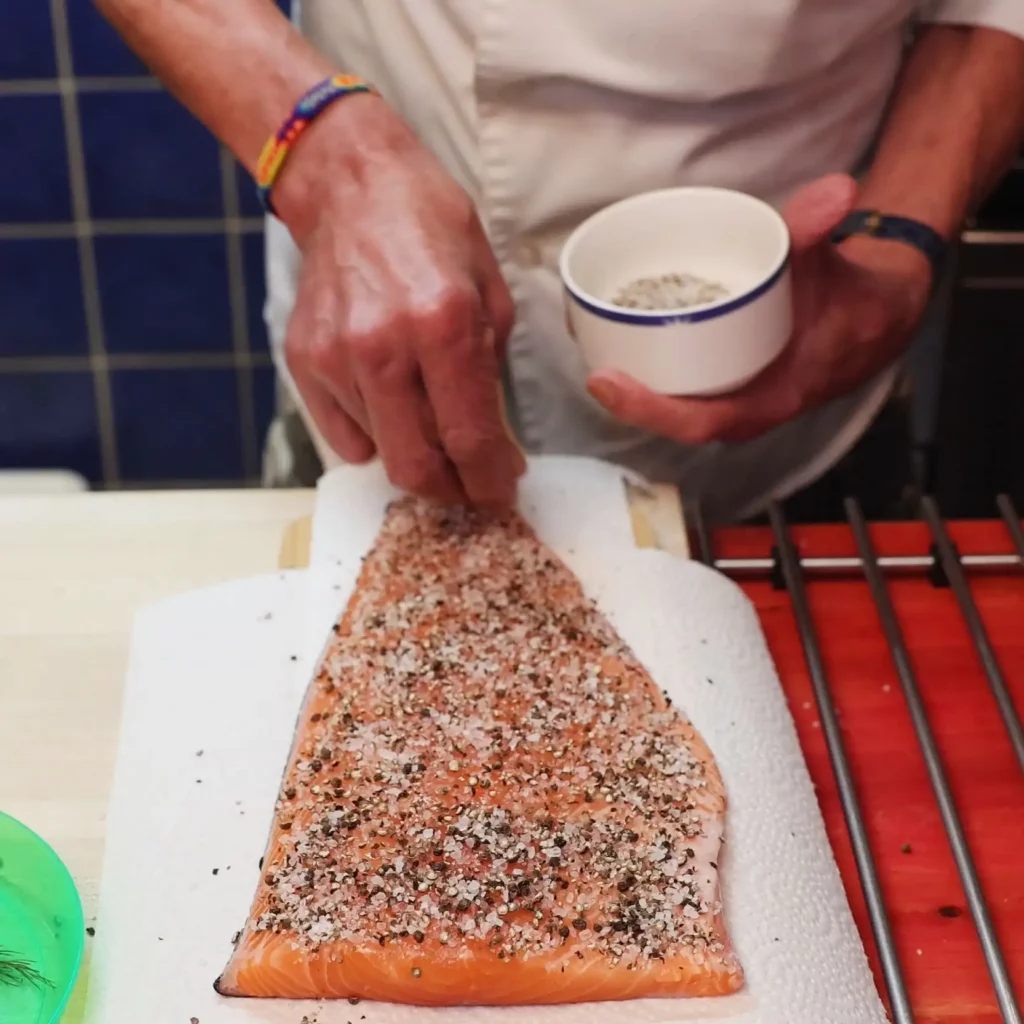
- Season smartly. Heavier layer on the thick end, lighter near the tail where the fish is thinner.
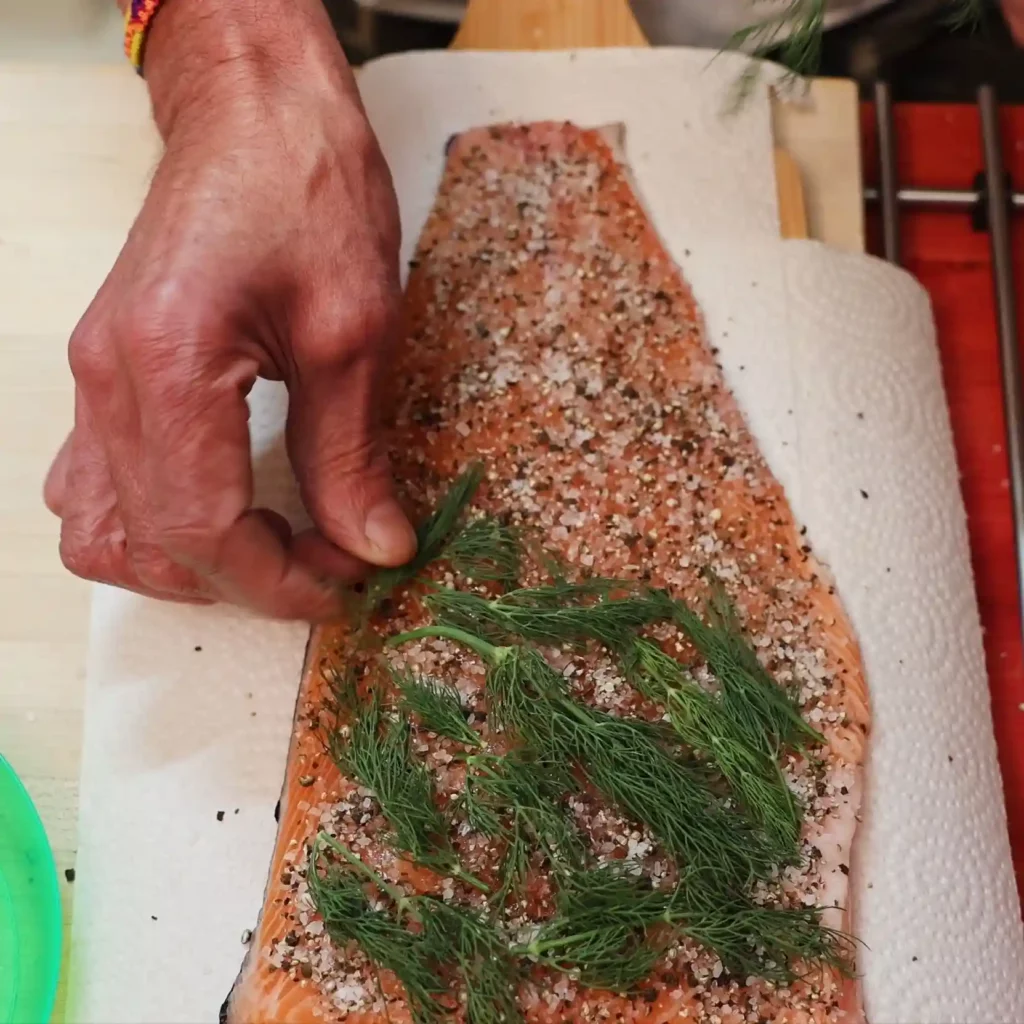
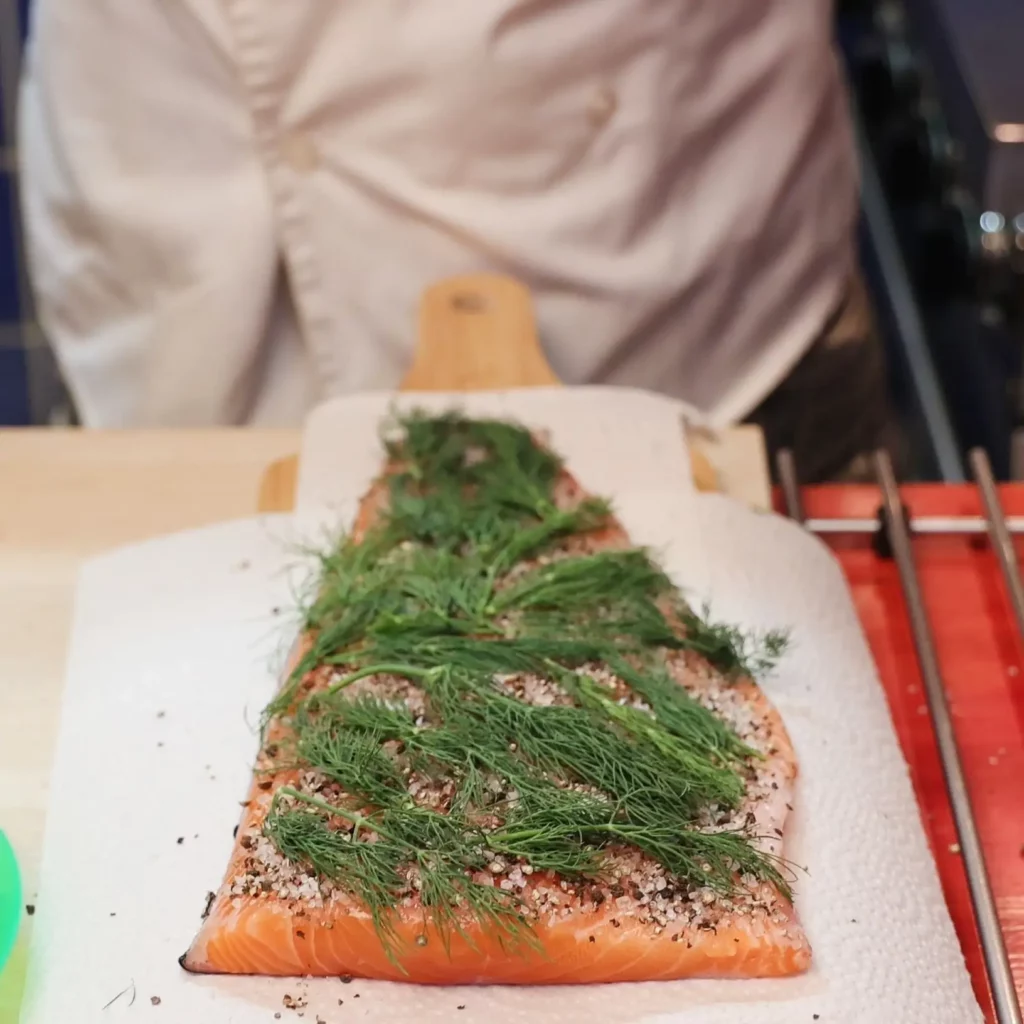
- Add herbs. Top with lots of fennel fronds or dill. Press lightly so the fronds hug the surface.
- Bag and chill. Slide into a sturdy, food-safe bag. Press out the air. Refrigerate 24 hours for the strong cure tail piece; up to 36–48 hours for a thicker center cut.
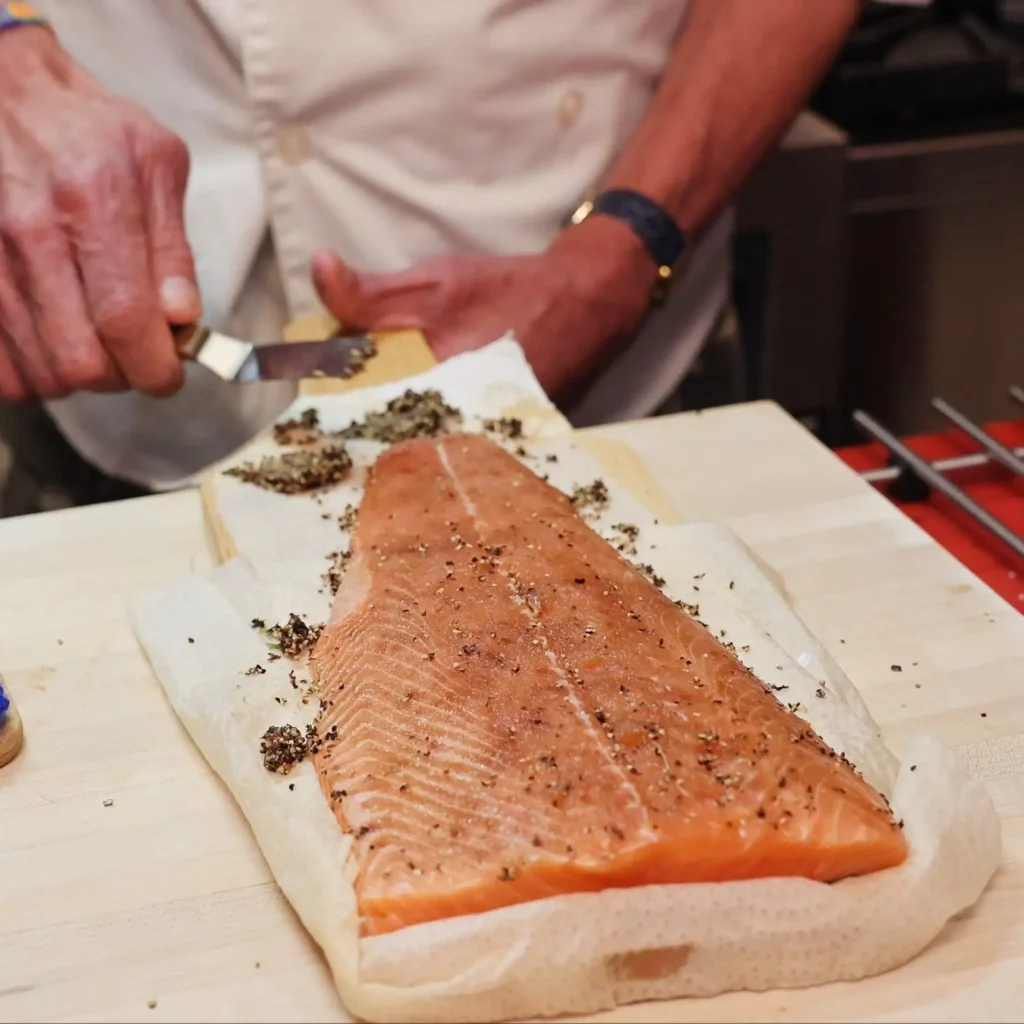
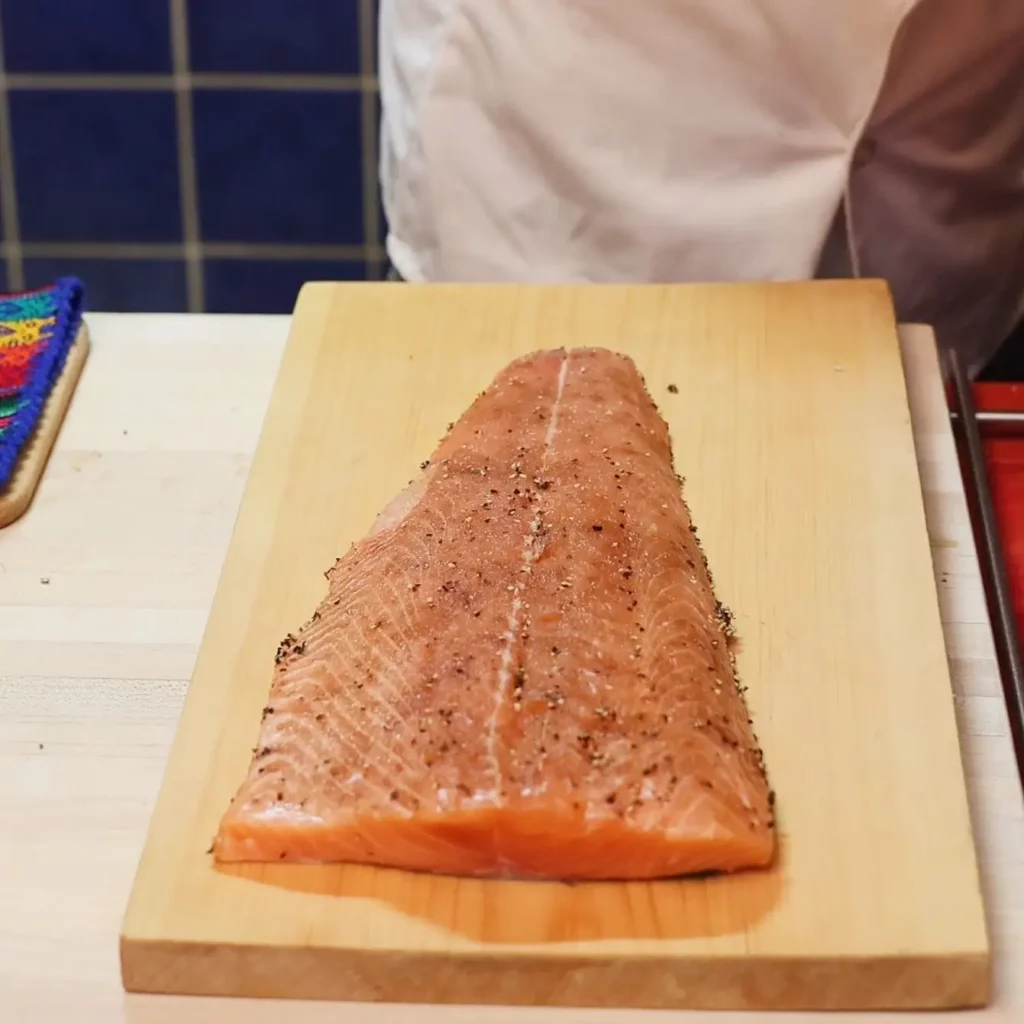
- After curing (no rinse). Open the bag, remove herbs, scrape off exterior cure (salt/pepper) gently with a spatula or knife. Do not rinse. Blot well with paper towels.
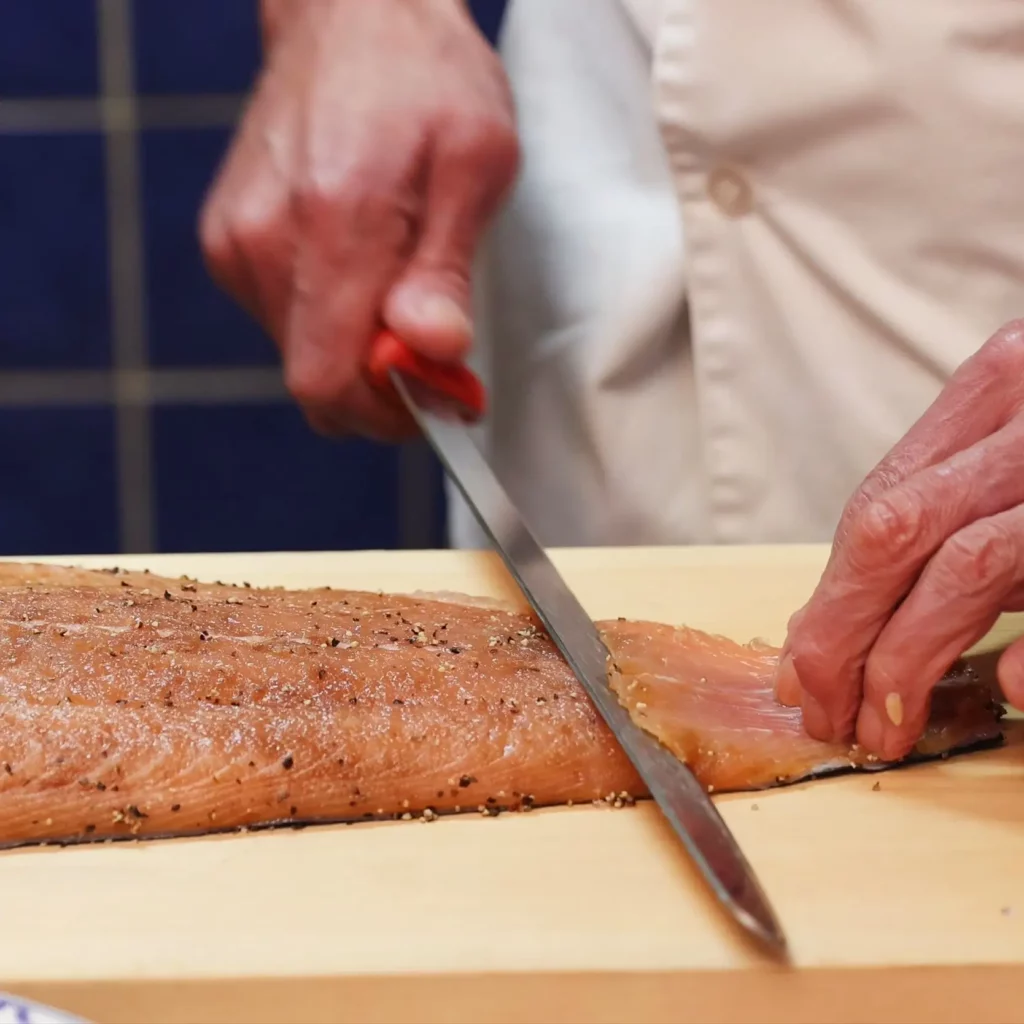
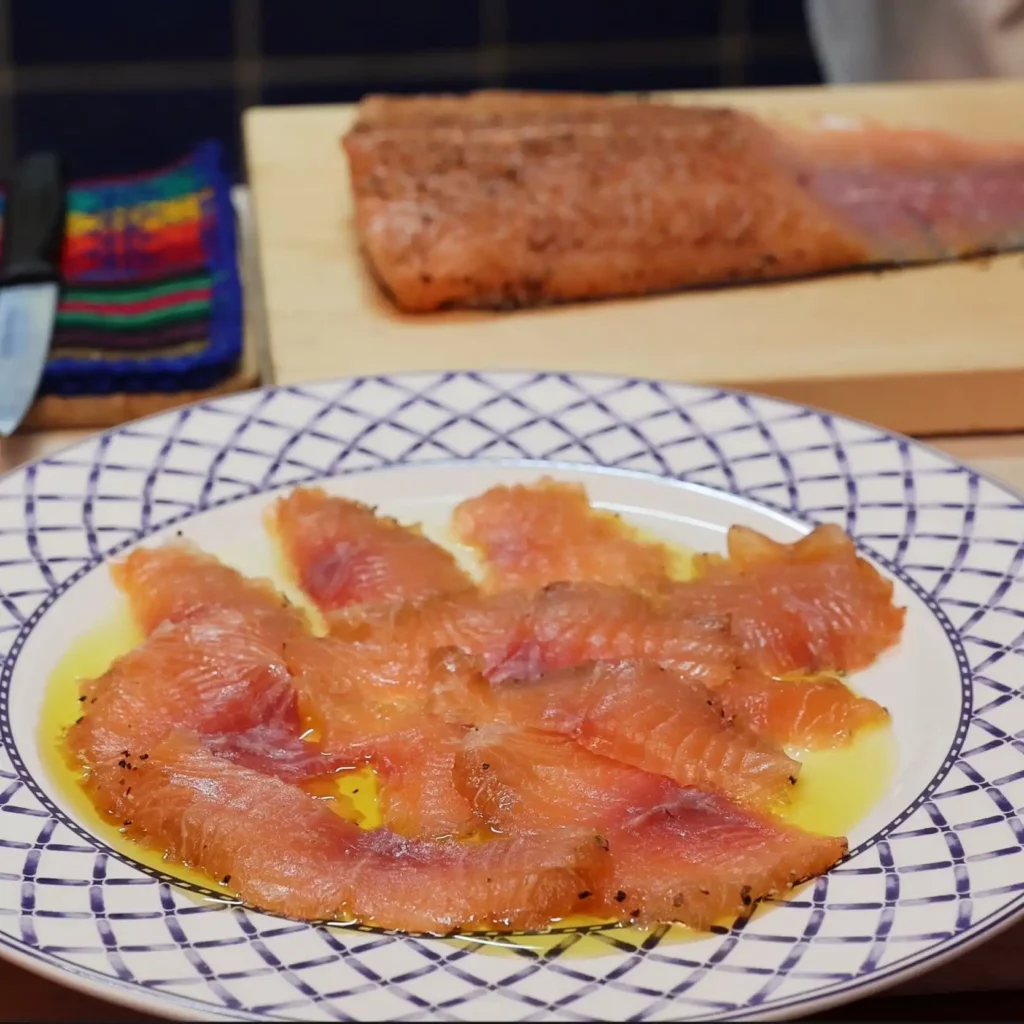
- Slice. Using a long sharp knife, slice thinly on a shallow angle. Avoid the brown flesh line if you prefer a cleaner taste.
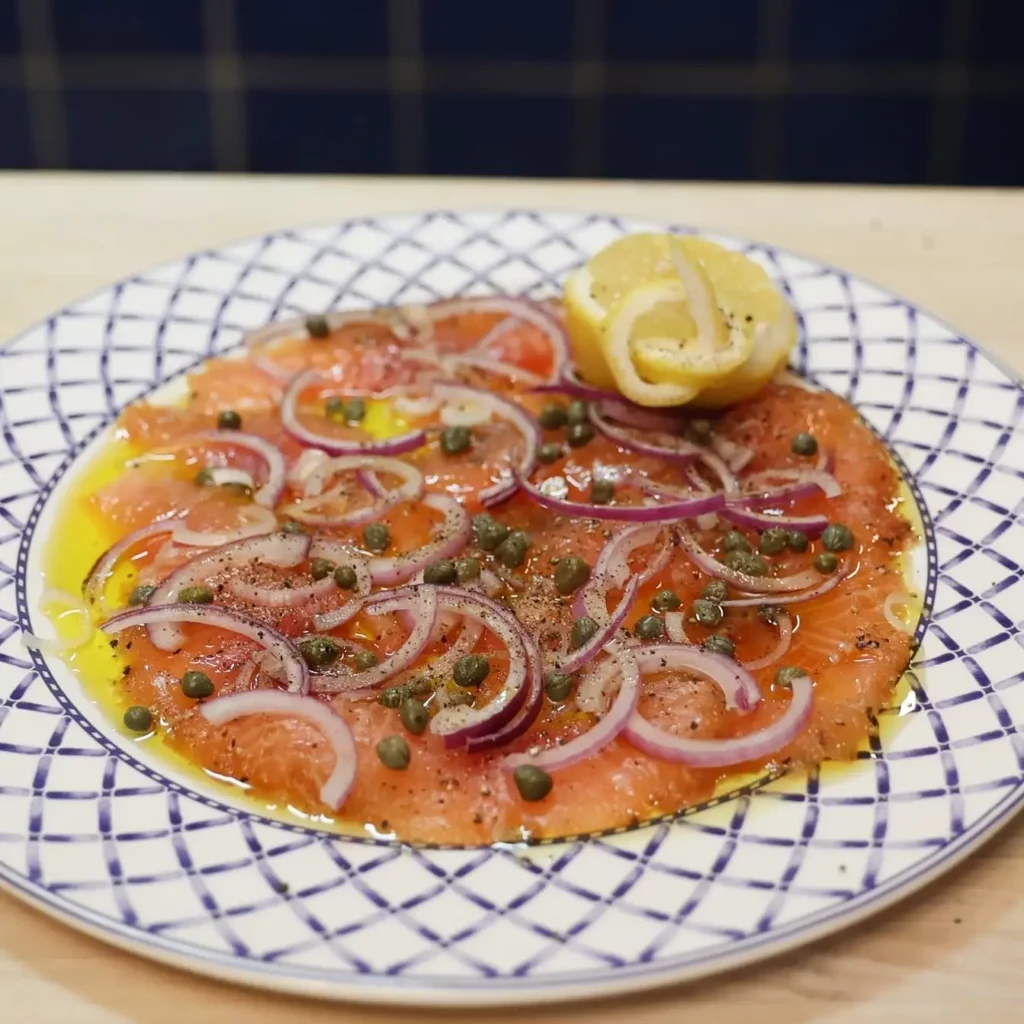
- Serve. Plate with fine red onion slices, lemon, a few cracks of pepper, and a light thread of olive oil.
My No-Rinse Strong Cure (Chef’s Style, Bold & Savory)
Flavor profile: salt-forward, peppery, super clean finish—amazing with lemon, onion, and olive oil.
Ingredients (800 g salmon)
- 800 g (1.75 lb) salmon fillet, pin bones removed (tail section preferred)
- 40 g fine salt (about 5% of fish weight)
- Up to 12 g cracked black pepper (use 3–4 g if you want less bite)
- 1 generous bunch fennel fronds or dill
- To serve: thin red onion, lemon, extra-virgin olive oil, black pepper
Instructions
- Pat salmon dry.
- Mix salt and pepper.
- Season the salmon surface, heavier on the thick end.
- Cover fully with fennel/dill and press to adhere.
- Bag tightly; refrigerate 24 hours (tail) to 36 hours (thicker piece).
- Remove herbs. Scrape away exterior cure; do not rinse. Blot dry.
- Slice thin; plate with onion, lemon, a light drizzle of oil, and a crack of pepper.
Classic Balanced Cure (Lower Salt + a Touch of Sugar)
Flavor profile: gentle salinity, delicate sweetness, very “Nordic brunch” friendly.
Ingredients (800 g salmon)
- 800 g (1.75 lb) salmon fillet, pin bones removed
- 24 g fine salt (3% of fish weight)
- 16 g sugar (about 2% of fish weight; white or light brown)
- 3–4 g cracked black pepper
- 1 generous bunch dill or fennel fronds
- To serve: thin red onion, lemon, olive oil
Instructions
Same process as above; cure 24–36 hours depending on thickness. After curing, scrape and blot—no rinse.
Result: Silky, gently seasoned, classically balanced gravlax with fresh herb aroma.
Substitutions & Variations
- Herbs: Dill is traditional; fennel fronds add a light anise note. You can mix both.
- Citrus zest (optional): A teaspoon of lemon or orange zest in the cure brightens flavor (great for holiday platters).
- Pepper profile: Prefer mild? Cut pepper to 3 g per 800 g.
- Sugar type (classic version): White sugar = clean; light brown sugar = subtle caramel note.
- Oil finish: Extra-virgin olive oil is lovely; a neutral oil works if you want the salmon flavor to dominate.
- Serving breads: Toasted baguette, rye crisps, bagels, or blinis.
Serving Ideas & Pairings (with Internal Links)
Parisian Potatoes for a bistro-style spread: Parmesan-buttery potatoes
- Homemade Hollandaise (brunch vibes; drizzle lightly or serve on the side): Hollandaise sauce
- Croutons for crunch on the platter or salad add-ons: Homemade croutons
- Salmon Pasta (use leftover gravlax in a creamy pasta—fold in gently off heat): Easy salmon pasta
- Tomato Sauce (for a contrasting warm appetizer—garlic toasts + spoon of sauce): Fresh tomato sauce
- Greek Salad (fresh, bright, and make-ahead friendly): Greek salad
Storage & Make-Ahead
- Fridge: Once cured, scraped, and blotted, keep tightly wrapped 3–4 days in the refrigerator.
- After slicing: Keep slices covered so they don’t dry out; a light film of oil helps protect the surface.
- Freezer: You can cure, slice, and freeze portions between parchment layers for up to 1 month. Thaw overnight in the fridge, blot, and serve.
Chef’s note: I don’t rinse my gravlax—I scrape and blot. This preserves the rich surface flavor and perfect texture.
Troubleshooting
- Too salty? Slice thinner; serve with lemon and an herby salad or crème fraîche. Next time, reduce salt to 30 g per 800 g or switch to the classic cure.
- Too peppery? Use 3 g pepper next time and scrape thoroughly.
- Too soft? Cure longer (by 6–12 hours) or use the stronger salt version.
- Dry edges? Wrap tightly and add a light oil coat after slicing.
Frequently Asked Questions
Do I need to rinse after curing?
No. My method is no-rinse by design. Scrape off the cure and blot well—you’ll keep flavor and ideal texture without water diluting the surface.
Is sugar required in gravlax?
Not at all. My chef’s style uses no sugar for a clean, savory finish. That said, the classic Scandinavian approach includes a bit of sugar for balance—both are excellent.
How long should I cure?
For an 800 g tail piece, 24 hours usually gives perfect texture (strong cure). For thicker center cuts or the classic lower-salt cure, go 36–48 hours.
What salmon should I buy?
Choose very fresh salmon from a trusted fishmonger. Many home cooks in Canada/USA use previously frozen salmon for safety and consistency.
Can I use steelhead trout or Arctic char?
Yes—both cure beautifully. Adjust timing slightly if the fillet is thinner (start checking at 18–20 hours).
What knife is best for slicing?
A long, thin, flexible knife (slicing knife or fillet knife). Slice at a shallow angle for translucent ribbons.
Homemade Gravlax (Cured Salmon) — My No-Rinse Method + Classic Balanced Option
Ingredients
Ingredients — My No-Rinse Strong Cure (800 g)
- 800 g salmon fillet tail section preferred, pin bones removed
- 40 g fine salt ≈5% of fish weight
- 3 –12 g cracked black pepper 3–4 g for mild, up to 12 g for bold
- 1 generous bunch fennel fronds or dill
- To serve: thin red onion lemon, extra-virgin olive oil, pepper
Ingredients — Classic Balanced Cure (800 g)
- 800 g salmon fillet pin bones removed
- 24 g fine salt 3% of fish weight
- 16 g sugar about 2%
- 3 –4 g cracked black pepper
- 1 generous bunch dill or fennel fronds
- To serve: thin red onion lemon, olive oil
Instructions
- Dry: Pat salmon very dry; set skin-side down.
- Mix cure: Combine salt (+ sugar for classic) and pepper.
- Season: Heavier on the thick end, lighter on the tail.
- Herbs: Cover with fennel/dill; press gently.
- Cure: Seal in a bag; refrigerate 24–36 h (strong cure: 24 h for tail; classic: 24–36 h, thicker cuts may need 36–48 h).
Finish (no rinse): Remove herbs; scrape off excess cure; blot thoroughly.
Rinse: For the rince method rince the salmon to remove the salt and herbs.
- Slice & serve: Thin slices; plate with red onion, lemon, a light drizzle of olive oil, and pepper.
Video
Notes
Why You’ll Love This Gravlax
- Restaurant-level appetizer at home. Thin, buttery slices with bright herbal notes—luxury without special equipment.
- Two styles, same technique. My No-Rinse Strong Cure (bold, savory) and a Classic Balanced Cure (gentler, slightly sweet).
- Make-ahead friendly. Cure it the day before; slices are ready for toast, blinis, or bagels with lemon and red onion.
- Scales up easily. Hosting a crowd? Double the fillet and cure in two bags.
Ingredient Notes
- Salmon (about 800 g / 1.75 lb): Tail section is great (fewer pin bones), but a center-cut works too. Use fresh, high-quality salmon. If serving to vulnerable guests, consider previously frozen sashimi-grade salmon from a trusted source.
- Salt: The engine of the cure. My style uses a higher salt percentage for a firmer, savory result.
- Cracked black pepper: Adds bite and aroma. We scrape off the excess after curing.
- Fresh fennel or dill: Classic aromatics. Fennel fronds or dill both work beautifully.
- Finishings: Extra-virgin olive oil, thin red onion, lemon.
Chef Tips for Canada/USA Entertaining
- Brunch boards: Add bagels, capers, crème fraîche, and sliced cucumbers.
- Holiday platters: Pair with Homemade Hollandaise for a luxe touch.
- Leftovers: Fold chopped gravlax into warm pasta off the heat (try Salmon Pasta) or serve on Homemade Croutons with a dab of crème fraîche and lemon zest.
Useful Links
🛒 Michel Dumas Shop : Explore our kitchen essentials, including aprons and knives.
🌐 Linktree : Access all our important links in one place.
📱 YouTube | Instagram | Facebook | TikTok : Follow us for the latest recipes and culinary tips.