Easy Oven-Baked Salmon (Fail-Proof, Moist, and Weeknight-Friendly)
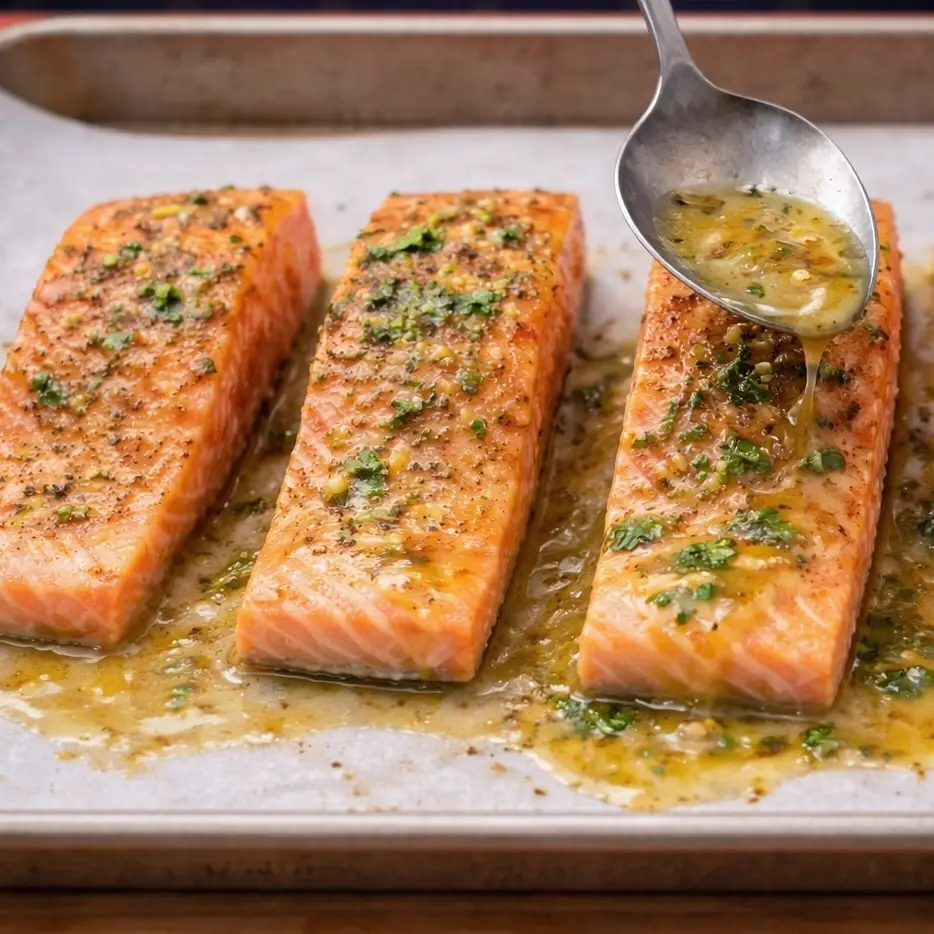
Oven-baked salmon is a simple method where salmon fillets cook quickly in steady heat until just flaky, then finish with a glossy sauce or glaze. What makes this version different is the gentle bake plus a fast lemon-Dijon butter finish that keeps the fish moist without needing a marinade. It’s the kind of recipe you make on a busy Tuesday, but it’s also clean and elegant enough for guests.
Why this oven-baked salmon works (even if you’re nervous about fish)
Salmon gets a reputation for being “easy,” but the truth is most people overcook it—usually because they wait for it to look fully firm everywhere. The trick is to cook it gently, pull it a touch early, and let carryover heat finish the job while you spoon the sauce over top.
Here’s what you’re aiming for:
- Moist, flaky layers that separate cleanly with a fork
- A glossy lemon-Dijon butter that tastes bright and savory without being heavy
- A method you can repeat with different salmon sizes, fresh or frozen (with one key adjustment)
If you already cook salmon in the air fryer, this recipe gives you a more relaxed, hands-off alternative with a slightly softer, juicier texture than my Air Fryer Salmon.
The salmon you should buy (and what matters more than the label)
You can make this with Atlantic, sockeye, coho—doesn’t matter. What matters is thickness.
- Thicker fillets (1 to 1½ inches) are more forgiving and stay juicy.
- Thin fillets cook fast and can jump from perfect to dry in a minute.
Skin-on is great because it protects the bottom and makes it easier to lift the fillet. Skinless also works—just use parchment so nothing sticks.
If your salmon is frozen, thaw it overnight in the fridge, then pat it dry really well before seasoning. If you want more salmon dinner ideas built around simple techniques, my Easy Salmon Pasta (Quick & Delicious) is a great “same ingredient, totally different vibe” option.

Flavor profile: classic, bright, and flexible
This is not a sweet teriyaki salmon and it’s not a creamy, heavy sauce. The finish is buttery, lemony, a little tangy from Dijon, and it loves black pepper.
You can keep it minimal (lemon + butter), or build it into a slightly more “bistro” version with garlic and herbs. If you’re a garlic person, you can borrow the flavor direction from my Homemade Garlic Butter Recipe and use it as the base for the finish.

Step-by-step: easy oven-baked salmon
1) Preheat and set up your pan
Preheat the oven to 400°F. Line a sheet pan or baking dish with parchment paper (or lightly oil it). Parchment makes cleanup effortless and prevents sticking, especially for skinless fillets.
2) Dry the salmon (this matters)
Pat the salmon very dry with paper towel. Moisture on the surface = steaming instead of roasting, and seasonings slide off.
3) Season simply—but correctly
Season both sides with salt and black pepper. If the salmon is skin-on, focus the salt on the flesh side. Add a light drizzle of olive oil to help heat transfer and improve the finish.
Optional but recommended: add lemon zest over the top. Zest gives you aroma without extra acidity.

4) Bake gently and don’t chase “fully firm”
Place salmon on the pan, skin side down if using skin-on. Bake until the salmon is just starting to flake at the thickest part and the center still looks slightly more translucent than the edges.
General timing (at 400°F):
- 6 oz fillets, average thickness: about 10–12 minutes
- Thick center-cut fillets: about 12–14 minutes
- Very thin pieces: about 8–10 minutes
If you have an instant-read thermometer, pull the salmon when the thickest part hits 125–130°F for a moist finish. Carryover heat will bring it up a little while it rests.

5) Make the lemon-Dijon butter (2 minutes)
While the salmon bakes, melt butter in a small pan over medium-low heat. Add minced garlic (optional) and cook 30 seconds just until fragrant. Stir in Dijon, lemon juice, and a pinch of salt and pepper. Turn off the heat.
If you want a more sauce-forward pairing for fish, you can also serve salmon with a cold, bright sauce like my Homemade Tartare Sauce Recipe—especially if your side dish is something crispy.
6) Rest, sauce, and serve
Take the salmon out of the oven and rest 2–3 minutes. Spoon the warm lemon-Dijon butter over the top. Finish with chopped parsley or dill if you like, and serve with lemon wedges.
How to avoid dry salmon every time (quick chef tips)
- Thickness controls time. Two minutes can be the difference between perfect and dry.
- Pull early. The oven keeps cooking it after you remove it.
- Sauce after baking. Acids (lemon) can tighten proteins if cooked too aggressively—finishing keeps it gentler.
- Don’t drown the pan in liquid. A big puddle of lemon juice/water steams the fish.
If you love oven cooking methods and want a reliable side that’s basically “set it and forget it,” pair this with Oven Roasted Mixed Vegetables on the same oven rack.
Substitutions (so you can make it with what you have)
- Salmon: Use steelhead trout the exact same way (nearly identical cook behavior).
- Dijon mustard: Whole-grain mustard works, slightly milder and more rustic. In a pinch, a small amount of yellow mustard works (use less).
- Butter: Olive oil works, but the sauce will be less “glossy.” You can do half butter, half olive oil.
- Lemon: Lime works for a sharper finish; orange works for a sweeter citrus profile (great with dill).
- Herbs: Dill, parsley, chives, or even a little tarragon.
- Garlic: Optional—skip it if you want the cleanest, simplest flavor.
If you’re serving salmon to people who love rich comfort food, you can lean into a more “bistro plate” by adding a potato side like Homemade Mashed Potatoes (Easy, Classic).

FAQ
Can I bake salmon from frozen?
You can, but results are better thawed. If baking from frozen, add time and expect more moisture in the pan. Pat dry halfway through if there’s excess water, then continue baking and finish with the sauce at the end.
What temperature should salmon be cooked to?
For a moist, tender texture, aim for 125–130°F in the thickest part, then rest. If you prefer firmer salmon, go a bit higher—but know it dries out faster.
How do I know it’s done without a thermometer?
Press gently on the thickest part with a fork. If it flakes into layers but still looks slightly glossy in the center, you’re in the sweet spot.
Can I meal prep oven-baked salmon?
Yes. Keep the salmon slightly underdone when baking, then reheat gently. Store the sauce separately and warm it briefly before serving.
What’s the best way to reheat salmon without drying it out?
Low and slow: 275°F in the oven for a short time, or a covered pan on low heat with a tiny splash of water. Avoid microwaving on high.
Can I make this recipe feel “restaurant” for guests?
Yes—plate it with something crisp and something creamy. For crisp, fries are classic: Authentic Belgian Fries (Frites). For creamy, mashed potatoes or a smooth purée.
How this recipe is different from other salmon recipes on my site
This is your simple, reliable weeknight oven salmon: minimal prep, gentle bake, quick pan sauce.
It’s not:
- an air-fryer method like Air Fryer Salmon (faster, slightly firmer exterior)
- a pastry-based centerpiece like Salmon Wellington (richer, more “event” cooking)
- a cured preparation like Beet Cured Salmon Gravlax (no cooking, totally different texture)
- a pasta dinner like Easy Salmon Pasta (Quick & Delicious) (more comfort-food, saucier)
That difference matters: it helps you choose the right salmon dish for the moment—and it keeps your recipe library clean and organized by intent.
Health / nutrition context (simple and practical)
Salmon is naturally protein-rich and provides fats that make it satisfying without needing heavy sauces. This method keeps the ingredient list short and the cooking gentle, which is helpful when you want something lighter that still feels like a real meal—especially paired with vegetables or a simple salad.
What to serve with oven-baked salmon
A good salmon plate usually wants:
- something fresh or green
- something comforting or starchy
- a sauce option (warm or cold)
Here are combinations that work year-round:
- Salmon + Oven Roasted Mixed Vegetables + lemon wedges
- Salmon + Homemade Mashed Potatoes (Easy, Classic) + extra lemon-Dijon butter
- Salmon + Authentic Belgian Fries (Frites) + Homemade Tartare Sauce Recipe
If you’re building a full menu and want a dessert that feels classic and “restaurant,” finish with Crème Brûlée (Caramelized Top).
Suggested posts (more recipes from the same “easy but impressive” lane)
- Air Fryer Salmon
- Salmon Wellington
- Beet Cured Salmon Gravlax
- Easy Salmon Pasta (Quick & Delicious)
- Oven Roasted Mixed Vegetables
- Homemade Mashed Potatoes (Easy, Classic)
- Homemade Tartare Sauce Recipe
- Homemade Garlic Butter Recipe
- Authentic Belgian Fries (Frites)
- Crème Brûlée (Caramelized Top)
Easy Oven-Baked Salmon (Fail-Proof, Moist, and Weeknight-Friendly)
Ingredients
Salmon
- 4 salmon fillets about 6 oz each, skin-on or skinless
- 1 tbsp olive oil
- 1 tsp kosher salt or to taste
- 1/2 tsp black pepper
- Zest of 1 lemon optional
Lemon-Dijon Butter
- 3 tbsp butter
- 1 small garlic clove minced (optional)
- 1 tbsp Dijon mustard
- 1 1/2 tbsp lemon juice about 1/2 lemon
- 1 tbsp chopped parsley or dill optional
- Lemon wedges for serving
Instructions
- Preheat oven: Heat to 400°F. Line a sheet pan with parchment paper.
- Season salmon: Pat fillets very dry. Place on the pan (skin-side down if skin-on). Drizzle with olive oil, then season with salt and pepper. Add lemon zest if using.
- Bake: Cook until salmon flakes easily at the thickest point but remains slightly glossy in the center, 10–14 minutes depending on thickness (pull around 125–130°F if using a thermometer).
- Make sauce: While salmon bakes, melt butter over medium-low heat. Add garlic (optional) for 30 seconds. Stir in Dijon and lemon juice, then season lightly with salt and pepper. Turn off heat.
- Rest + finish: Rest salmon 2–3 minutes. Spoon sauce over top. Garnish with herbs if desired and serve with lemon wedges.
Notes
FAQ
Can I bake salmon from frozen?
You can, but results are better thawed. If baking from frozen, add time and expect more moisture in the pan. Pat dry halfway through if there’s excess water, then continue baking and finish with the sauce at the end.What temperature should salmon be cooked to?
For a moist, tender texture, aim for 125–130°F in the thickest part, then rest. If you prefer firmer salmon, go a bit higher—but know it dries out faster.How do I know it’s done without a thermometer?
Press gently on the thickest part with a fork. If it flakes into layers but still looks slightly glossy in the center, you’re in the sweet spot.Can I meal prep oven-baked salmon?
Yes. Keep the salmon slightly underdone when baking, then reheat gently. Store the sauce separately and warm it briefly before serving.What’s the best way to reheat salmon without drying it out?
Low and slow: 275°F in the oven for a short time, or a covered pan on low heat with a tiny splash of water. Avoid microwaving on high.Can I make this recipe feel “restaurant” for guests?
Yes—plate it with something crisp and something creamy. For crisp, fries are classic: Authentic Belgian Fries (Frites). For creamy, mashed potatoes or a smooth purée.Useful Links
🛒 Michel Dumas Shop : Explore our kitchen essentials, including aprons and knives.
🌐 Linktree : Access all our important links in one place.
📱 YouTube | Instagram | Facebook | TikTok : Follow us for the latest recipes and culinary tips.