Easy Skillet Roast Chicken with Cajun Seasoning and Vegetables
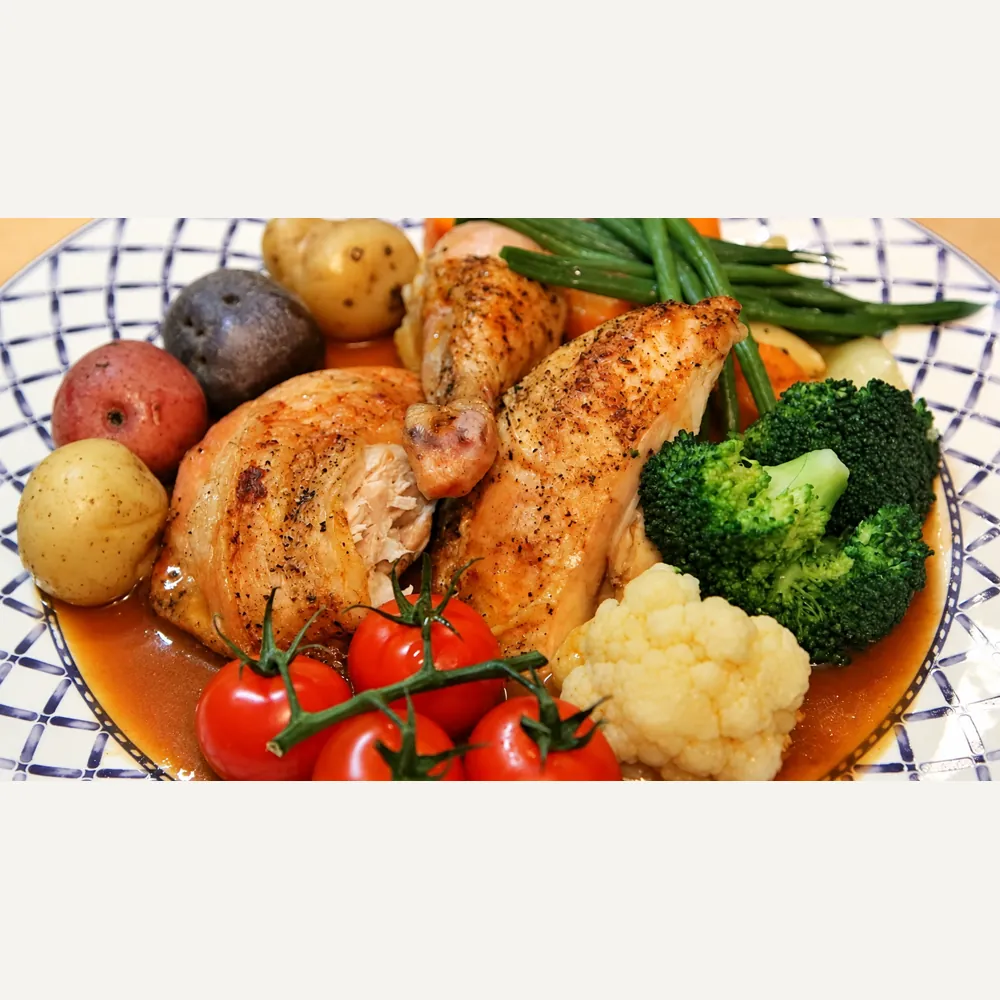
A flattened chicken gives this dinner its shape: golden skin above a bed of carrots, onion and garlic, with potatoes and green vegetables served alongside. Cajun seasoning brings a little warmth, and brown poutine gravy ties the plate together. The important detail is to check the meat with a thermometer rather than assume that a browned bird is cooked through.
Butterflied chicken, also called chicken en crapaudine, is opened so it lies flat. Here it roasts in an oven-safe skillet, while the serving vegetables are cooked separately. It is a family roast for a weekend lunch or a weeknight when you have about an hour for cooking, without a long marinade.
This recipe is based on my YouTube video, with a few adjustments since publication: clearly measured ingredients, a resting period and more precise vegetable cues. The Cajun seasoning, vegetable bed, oven temperature and brown sauce remain the heart of the dish.
{VIDEO}
Why I roast it this way
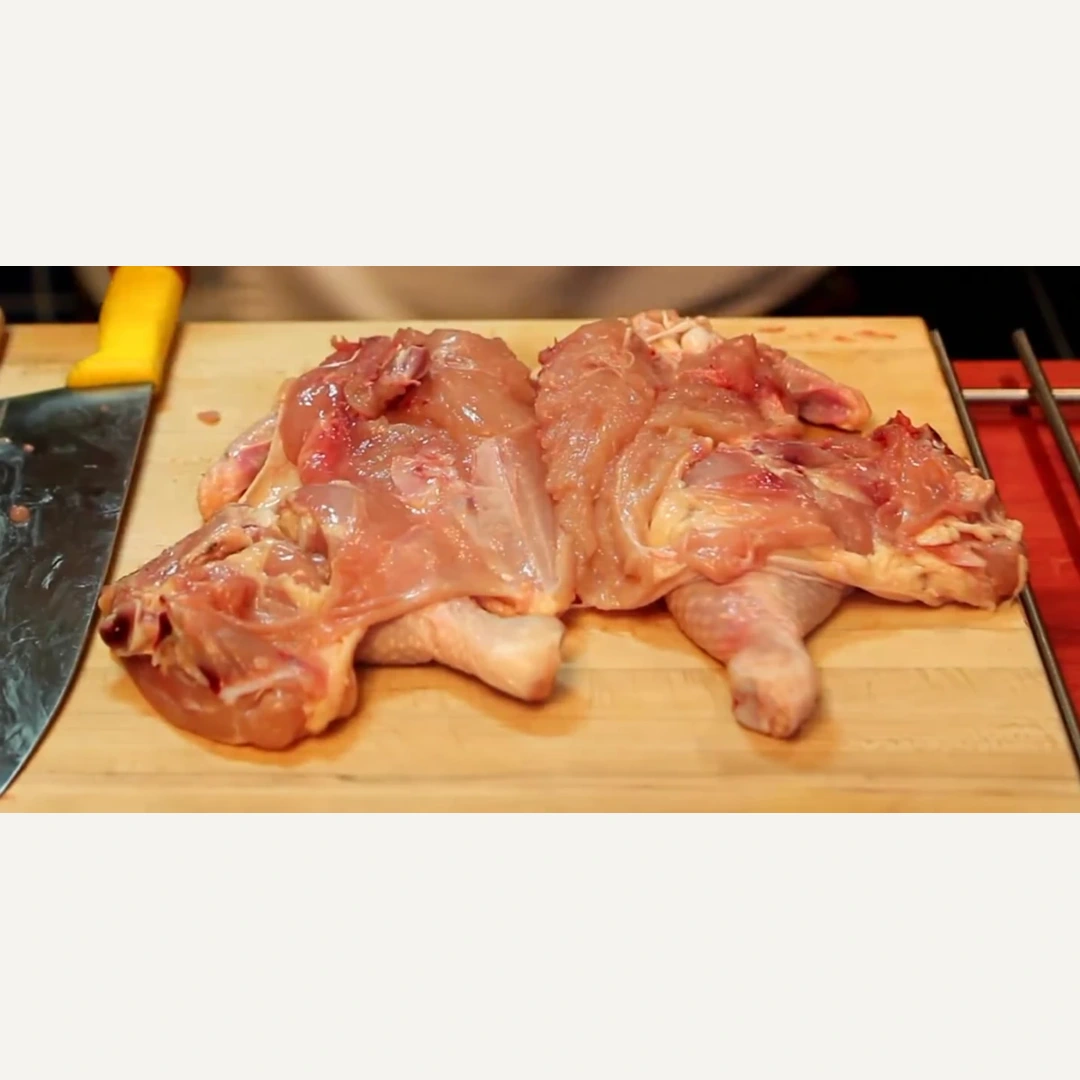
I open the chicken because a flatter bird sits more evenly over the vegetables and is easier to portion. In the video, I go further than a simple butterfly cut by removing the central carcass. The legs keep their bones. A butcher can prepare it this way, which makes the home version much more approachable.
The skillet is the roasting dish, not a promise of stovetop cooking. It needs to be wide enough for the chicken to spread out, with an oven-safe handle. There is no preliminary searing step. I brush the skin with oil, season it and let the oven do the work.
This is different from my creamy Cajun chicken or honey-mustard butterflied chicken. There is no cream, honey or mustard in this version. The chicken supplies protein, the potatoes make it a complete dinner, and the vegetables bring variety without needing a second rich sauce.
Ingredients and equipment
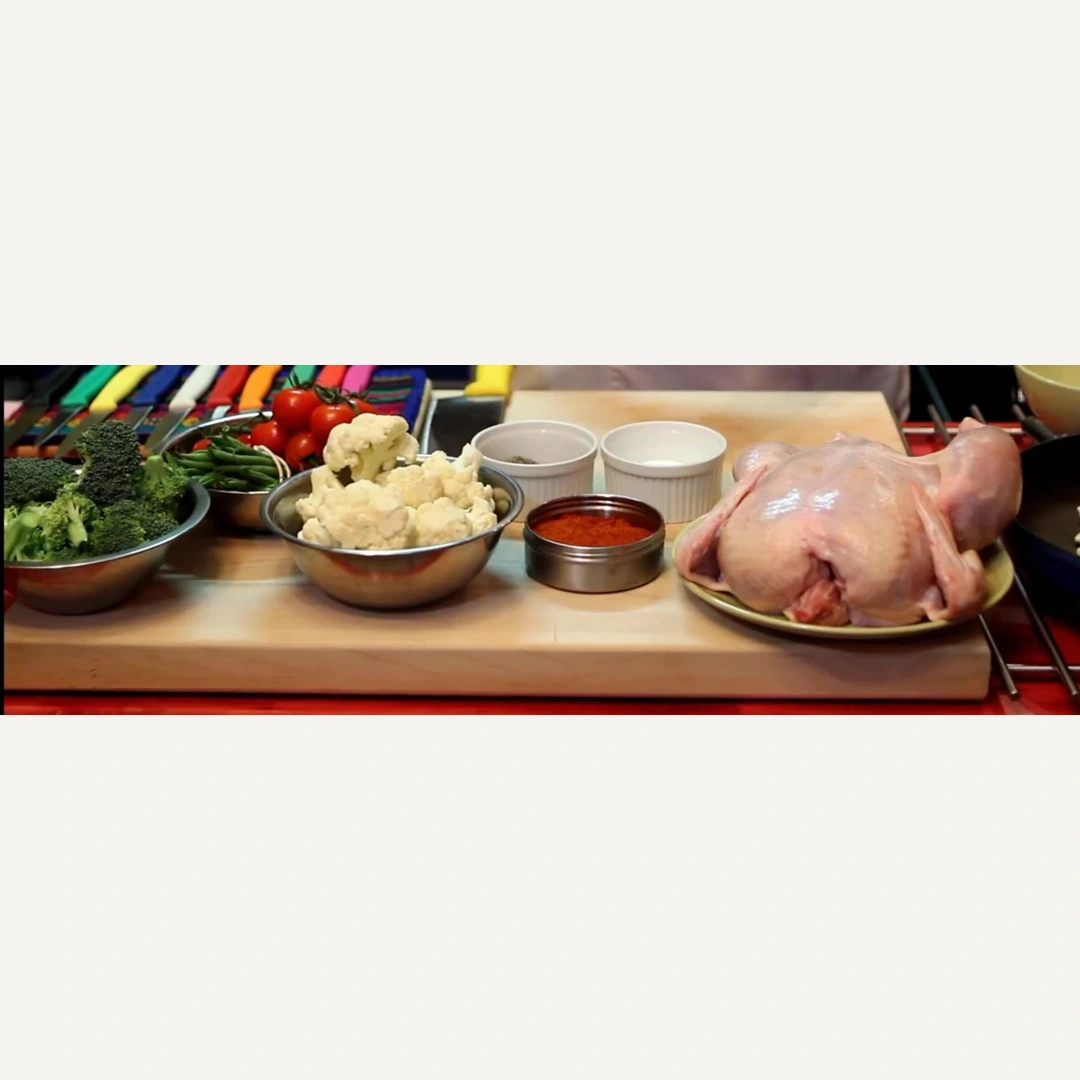
Choose a chicken weighing about 3 lb before preparation. A much larger bird needs extra cooking time and can overwhelm an ordinary skillet. Ask for a butterflied bird with the central carcass removed, or use a normally butterflied chicken and allow more time as necessary.
The seasoning is simple: olive oil, Cajun spice, salt and black pepper. My homemade Cajun spice blend lets you control the salt and heat. The quantities below use a salt-free blend; if yours contains salt, reduce the separate salt before seasoning. A heavy layer of spice can darken long before the meat reaches its target temperature.
Carrots, yellow onions and garlic form the bed under the chicken. They soften in the rendered juices. Keep the carrot pieces reasonably thick so they survive the roast, and spread the onion rather than piling it into one damp mound.
For the serving vegetables, use small potatoes of similar size, broccoli and cauliflower florets, thin green beans and cherry tomatoes. My homemade chicken stock can supply the chicken stock used to reheat the vegetables. The brown sauce is prepared poutine gravy, as in my homemade poutine, not a new sauce built from raw chicken bones during this meal.
Step-by-step cooking
1. Open and prepare the chicken
Heat the oven to 350°F. Pat the chicken dry without rinsing it. For the preparation shown in the video, open the bird, remove the backbone and central rib cage, then flatten it while leaving the skin and leg portions intact. If you are unfamiliar with poultry deboning, have a butcher do this rather than force a knife through resistant bone.
Keep the removed bones for stock, refrigerated or frozen promptly. Wash and sanitize the board and tools after raw chicken preparation. Use a clean board for vegetables and, later, the cooked meat.
2. Season and roast in the skillet
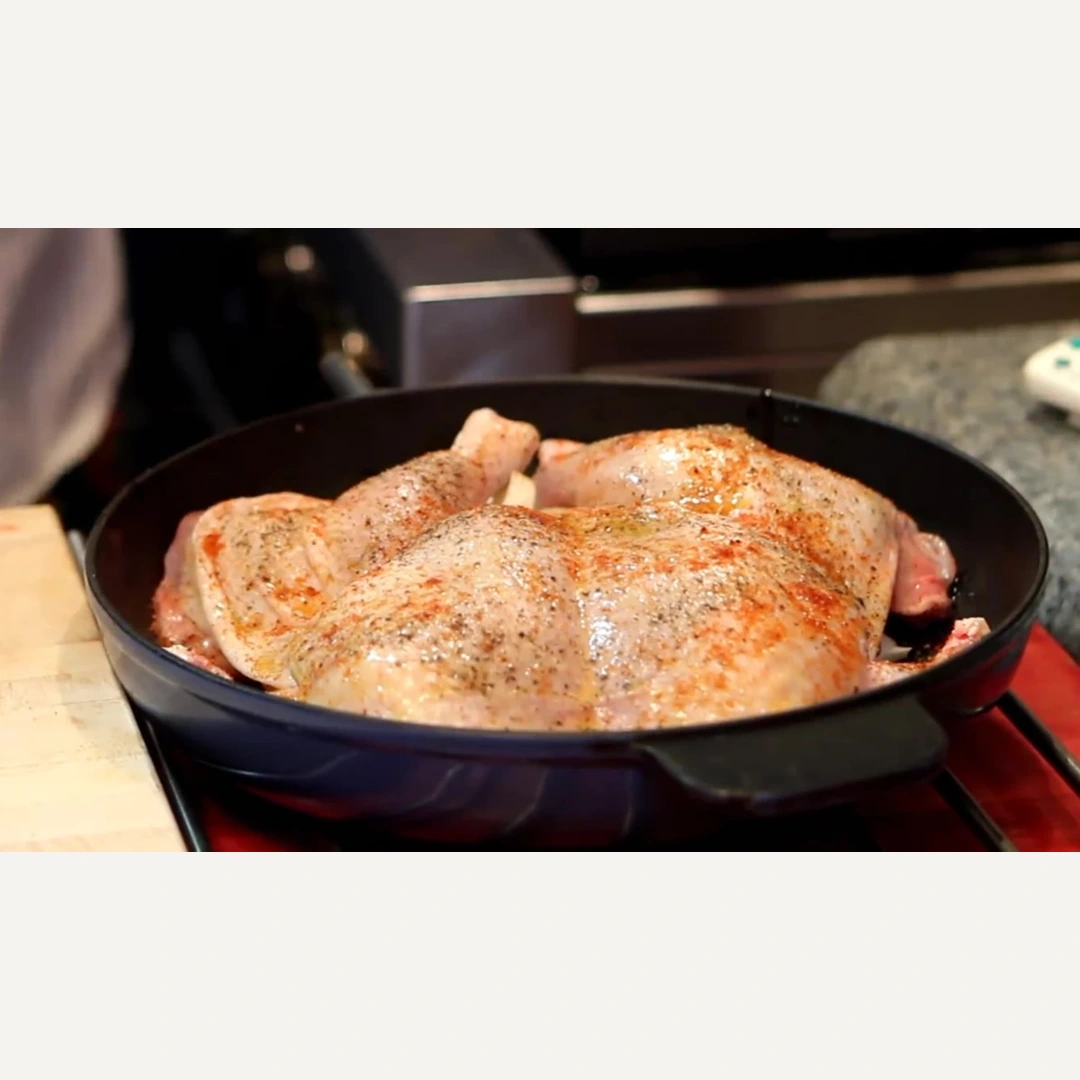
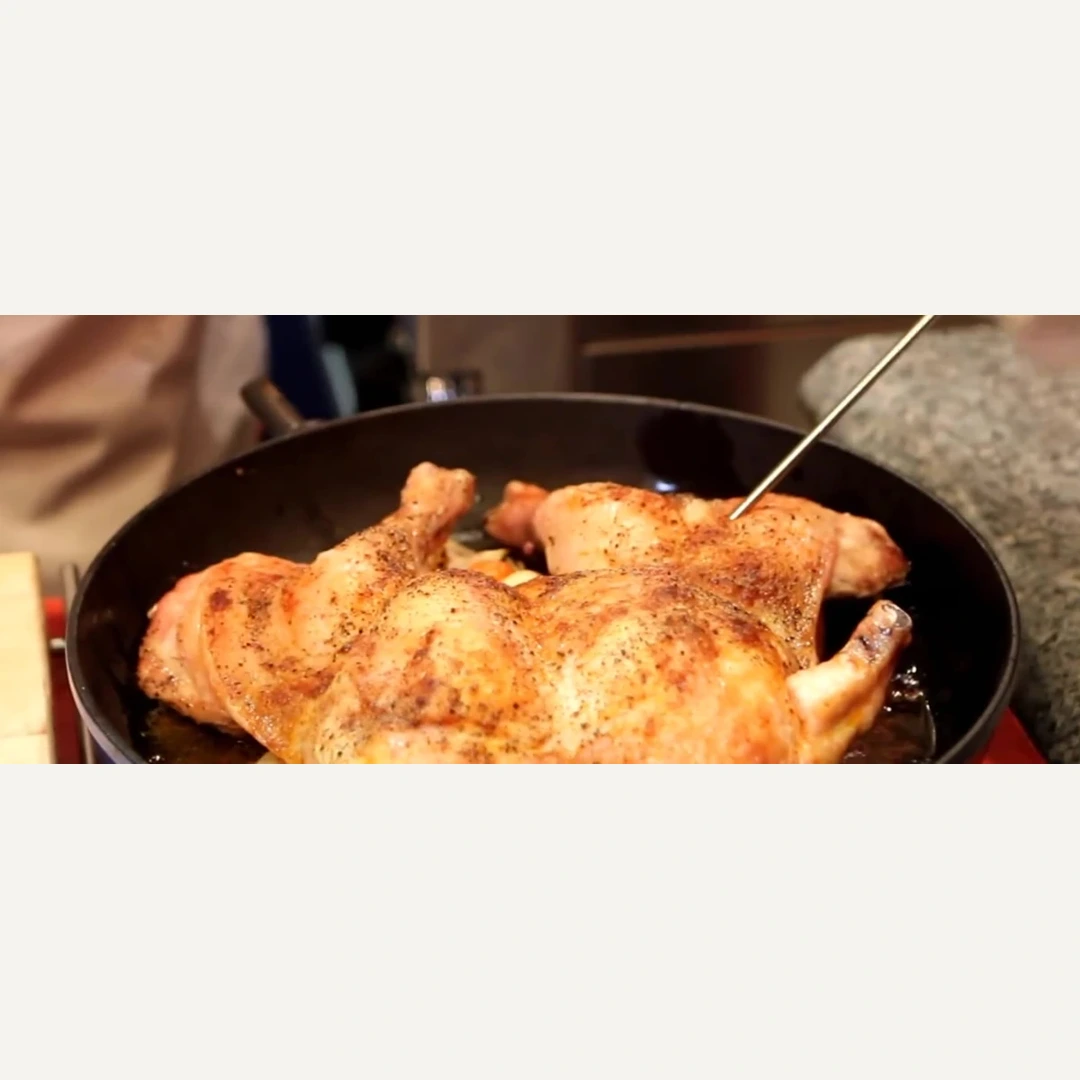
Spread the carrot, onion and garlic in a wide oven-safe skillet. Brush the underside of the chicken with some of the oil, salt, pepper and Cajun seasoning. Place it skin-side up over the vegetables and brush and season the top with the remaining amounts.
Roast uncovered. Begin checking after 45 minutes; allow roughly 45 to 65 minutes for this size, with longer cooking possible for a less thoroughly deboned bird. The skin should be golden and the onion edges softened and lightly browned. If the skin gets dark too early, cover that area loosely with foil and continue cooking.
3. Cook the potatoes and green vegetables
While the chicken roasts, bring about 3 quarts of water to a boil. Salt it moderately. The video uses roughly 1% salt by weight, but the exact saltiness can be adjusted to your taste. Cook the vegetables in batches so each one can come out when ready.
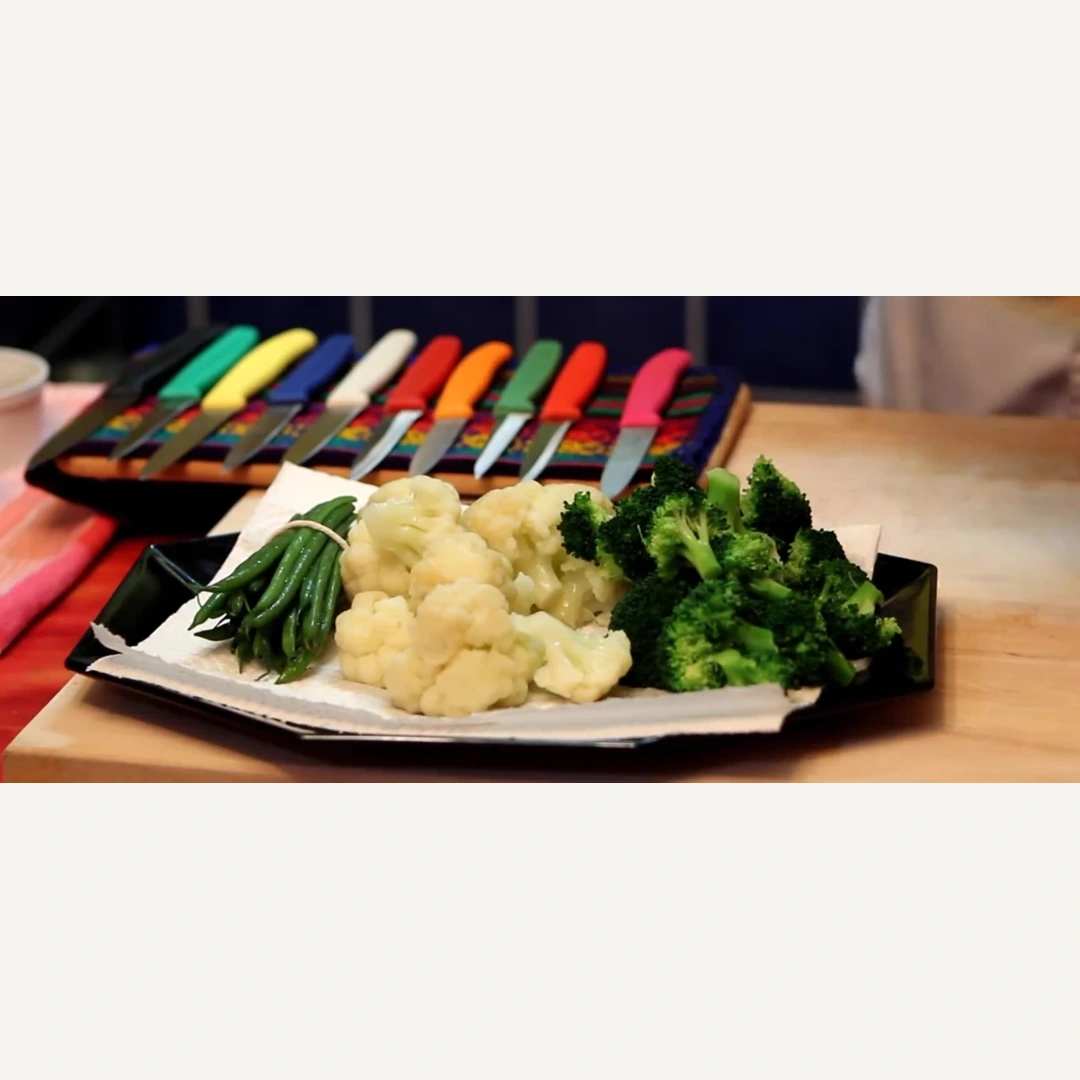
Start checking broccoli at 3 minutes and cauliflower at 5 minutes. Cook thin green beans for about 4 to 7 minutes, checking their bite. Transfer these vegetables to ice water briefly to stop cooking, then drain thoroughly. A broccoli stem should yield to a knife without the florets falling apart. Fine beans can become limp if the full timer is followed blindly.
Boil the small potatoes for about 15 to 20 minutes, until a thin knife reaches the centre without resistance. Larger potatoes need longer. Drain them without chilling. The mixed colours are attractive, but equal size matters more than colour for even cooking.
4. Reheat, check and rest
About 10 minutes before the chicken is expected to finish, put the cherry tomatoes in a small oven-safe dish with half the stock. Put the drained vegetables and potatoes in a second wide oven-safe dish with the remaining stock. Heat alongside the chicken until hot, usually 8 to 12 minutes. The tomatoes should soften while keeping their shape.
Check both breasts and the thickest thigh without touching bone. For this whole-bird preparation, use 180°F throughout the checked areas, following the Canadian whole-poultry target explained in my chicken internal-temperature guide. Browning and clear juices are not substitutes for those readings.
Transfer the chicken to a clean board and rest it for 10 minutes. Heat the prepared gravy gently in a saucepan, stirring. If it is too thick to pour, loosen it with a little water. Taste before adding salt.
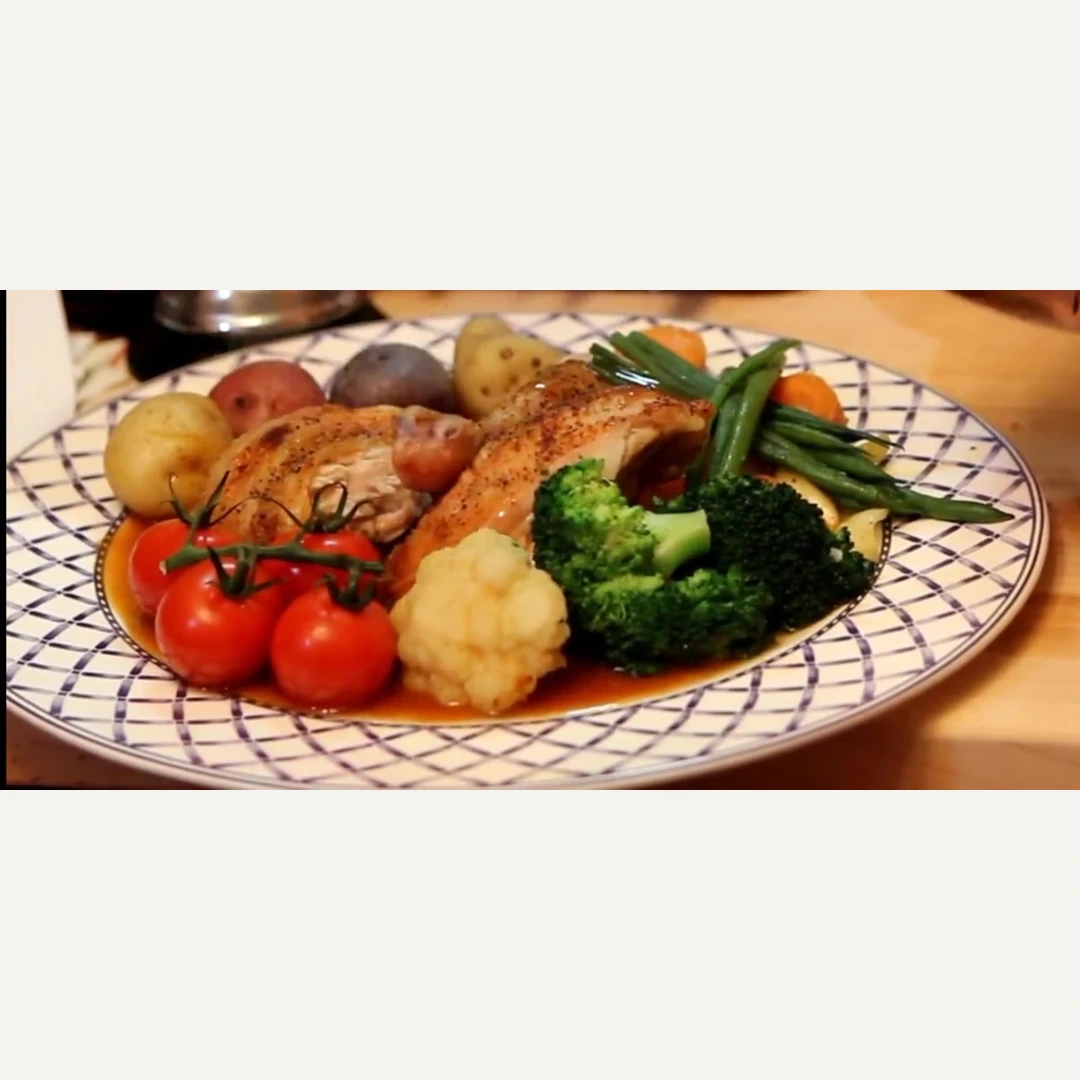
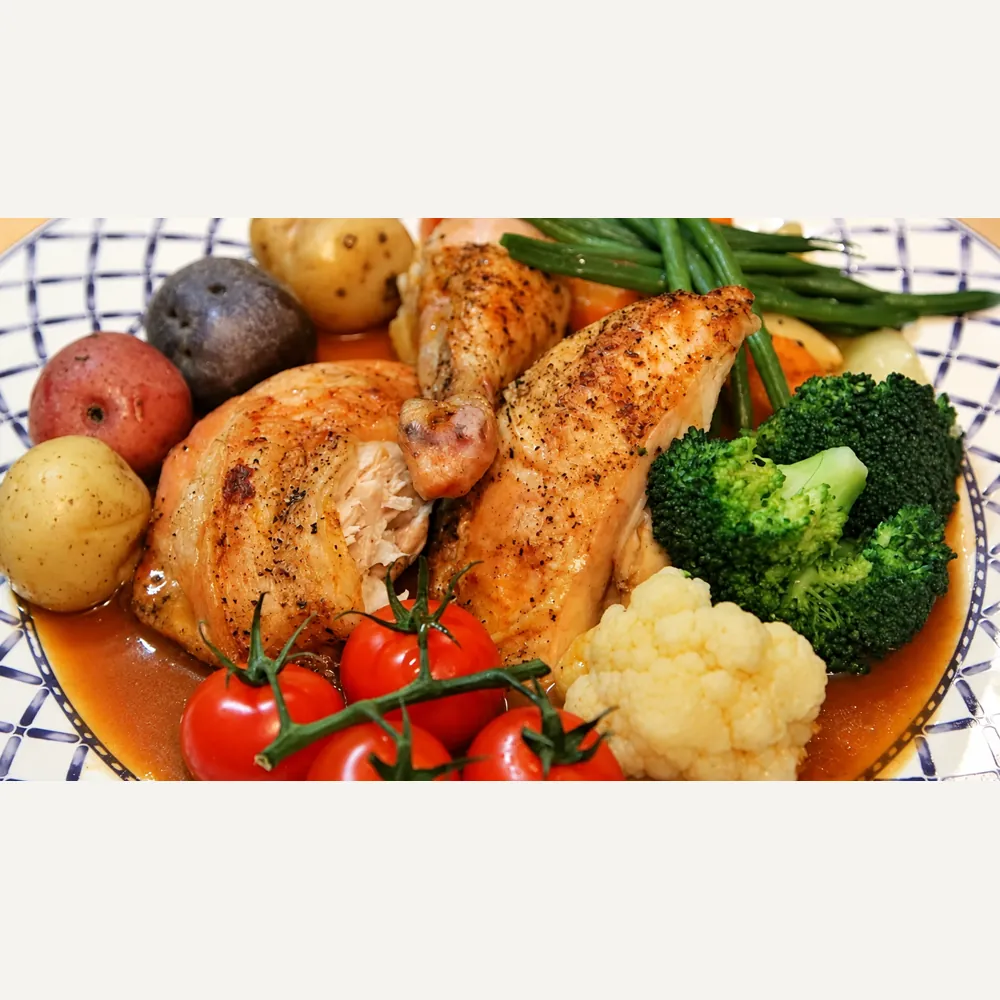
Cut the chicken into four portions, or separate the legs and slice the breast meat. Add the roasted carrot, onion and garlic, then the potatoes, vegetables and tomatoes. Spoon gravy around the meat so the golden skin remains visible.
Small details that change the result
What I look for on the skin is a thin, even sheen of oil. Puddles do not improve browning. Keep the bird above the vegetable bed rather than burying the breast beneath onion wedges.
Drain the blanched vegetables well. Water trapped in cauliflower florets dilutes the reheating stock and leaves a watery plate. For the same reason, lift the vegetables out of their reheating liquid before serving instead of pouring everything onto the plate.
The sauce needs restraint. A little gravy under the chicken gives moisture and flavour; covering every surface immediately softens the skin. This is also why I serve the remaining gravy separately.
Substitutions
If you cannot get the central carcass removed, a normally butterflied chicken is the closest alternative. Keep the same oven temperature, give it room and let the thermometer determine the finish. Do not automatically apply the 45-minute time to a larger bird.
A mild salt-free Cajun blend works well when serving children or anyone who prefers less heat. Adjust the amount rather than adding a sweet glaze. For another oven-roasted option with a different seasoning profile, try my maple roast chicken; for a smaller cut, my Cajun chicken drumsticks is easier to portion.
Use one colour of baby potato if that is what you have. Replace one of the green vegetables with more of another, keeping the overall quantity similar and cooking each batch to its own texture. Prepared brown chicken gravy can replace poutine gravy, though its flavour and thickness will differ.
Frequently asked questions
Is this chicken cooked entirely on the stovetop?
No. The chicken roasts in a skillet in the oven. Use oven-safe cookware and remember that the handle stays hot after removal. The sauce warms on the stovetop.
Do I need to add liquid under the chicken?
The original method roasts it over the vegetables without a bath of stock. If the pan starts scorching, add a small splash of water around the edges. Avoid flooding the pan, which encourages steaming.
Can I prepare the vegetables ahead?
Yes. Blanch, cool, drain and refrigerate them in covered containers. Reheat with the stock when needed. Cooked chicken and gravy should also be refrigerated promptly; keep leftovers for up to 3 days and reheat thoroughly to 165°F.
Why does my gravy taste too salty?
Cajun seasoning, stock and prepared gravy can all contain salt. Use unsalted or low-sodium stock, choose a salt-free spice blend and taste the heated gravy before seasoning it further.
Serving ideas and other chicken dinners
This plate already includes potatoes and several vegetables. For another potato preparation on a different roast night, homemade mashed potatoes or Parisian potatoes gives a softer or more browned accompaniment. A small portion of a crisp Greek salad adds a fresh contrast when you want something cold alongside the warm meal.
If you enjoy the roast-and-sauce combination, chicken with vinegar offers a tangier French chicken dinner. Keep the Cajun skillet roast for the occasions when you want golden skin, uncomplicated seasoning and vegetables that retain their individual textures.
Easy Skillet Roast Chicken with Cajun Seasoning and Vegetables
Ingredients
- 3 lb whole chicken butterflied with the central carcass removed
- 2 tbsp olive oil
- 2 tsp salt-free Cajun seasoning
- 1 tsp fine salt or less if the Cajun blend contains salt
- ½ tsp ground black pepper
- 2 medium carrots cut into thick pieces
- 2 medium yellow onions cut into wedges
- 4 garlic cloves peeled
- 1⅓ lb baby potatoes scrubbed
- 9 oz broccoli florets
- 9 oz cauliflower florets
- 7 oz thin green beans trimmed
- 7 oz cherry tomatoes
- 1 cup low-sodium chicken stock divided
- 1 cup prepared brown poutine gravy
- Water and salt as needed for boiling vegetables
Instructions
- Heat the oven to 350°F. Pat the prepared butterflied chicken dry. Use clean boards and utensils after handling raw poultry.
- Spread carrots, onions and garlic in a wide oven-safe skillet. Brush both sides of the chicken with oil and season with Cajun spice, salt and pepper. Set it skin-side up on the vegetables.
- Roast uncovered for about 45 to 65 minutes, beginning temperature checks at 45 minutes. Cover darkening areas loosely with foil if necessary. Cook until both breasts and the thickest thigh reach 180°F, away from bone; time can vary.
- Meanwhile, boil vegetables separately in salted water: broccoli about 3 minutes, cauliflower about 5 minutes and thin beans about 4 to 7 minutes, checking tenderness. Briefly chill these vegetables in ice water and drain well.
- Boil baby potatoes about 15 to 20 minutes, until knife-tender. Drain without chilling.
- Near the end of roasting, heat tomatoes with ½ cup stock in one oven-safe dish and drained vegetables and potatoes with the remaining ½ cup stock in another. Heat alongside the chicken for about 8 to 12 minutes, until hot.
- Rest the cooked chicken on a clean board for 10 minutes. Gently heat the prepared poutine gravy; thin with a little water if needed.
- Carve into four portions. Serve with roasted carrots, onions and garlic, drained hot vegetables, potatoes and tomatoes. Spoon gravy around the meat.