Easy French Chicken with Tarragon Cream Sauce
This chicken with tarragon cream sauce is based on my YouTube video, with a few adjustments since publication to make the proportions more reliable for home kitchens. The spirit is the same: tender chicken thighs, white wine, chicken stock, cream, butter, white onion, and fresh tarragon. The main adjustment is the amount of liquid, because the sauce needs to reduce properly and coat the chicken instead of staying thin.
This is a French-style chicken dish cooked gently in a pale, creamy herb sauce. It is different from a browned skillet chicken or grilled chicken recipe because the goal here is not deep caramelization, but a soft white sauce with wine, stock, cream, and tarragon. I make it when I want something comforting but still a little elegant, especially with boiled potatoes, roasted potatoes, or a simple salad.
The common mistake to avoid is adding too much liquid and not reducing it enough. At the end, the sauce should not look like soup. It should be glossy, lightly creamy, and thick enough to leave a thin coating on the spoon.

What Makes This Chicken Different
I make it this way because tarragon has a delicate anise-like flavor that can disappear if the sauce is too heavy or too browned. That is why I prefer to sweat the onions without color and cook the chicken gently. The sauce stays light in color, and the herb comes through clearly.
This is not the same kind of recipe as a roasted chicken thigh dinner, a grilled lemon chicken, or an air fryer chicken recipe. For something more roasted and direct, I would make oven-baked chicken thighs or lemon garlic chicken thighs. For this dish, the sauce is the point.
It is also different from Dijon cream chicken thighs. That recipe has mustard as the main flavor. Here, the sauce is softer, more herbal, and more classic French bistro in feeling. If you like creamy chicken recipes but want something less sharp than mustard and less earthy than mushrooms, tarragon is a beautiful direction.
Ingredients Notes
Boneless skinless chicken thighs are the best choice here. They stay tender during the simmer and do not dry out as easily as chicken breast. For more detail on choosing between cuts, I like to think about the same logic explained in chicken breast, thighs, or drumsticks: thighs give you more forgiveness, especially in a sauce.
White onion keeps the sauce pale and sweet without taking over. Dice it small so it almost melts into the reduction. If the onion pieces are too large, the sauce feels chunky instead of smooth.
The wine should be dry. Nothing sweet. A simple Sauvignon Blanc, Pinot Grigio, dry French white, or unoaked Chardonnay works well. After the wine goes in, it should bubble and lose that raw alcohol smell before the stock is added.

For the stock, use unsalted or low-sodium chicken stock. This matters because the sauce reduces. If the stock is already salty, the final spoonful can become too strong. Homemade stock or a controlled base like homemade chicken bouillon cubes works well if it is not too salty.
Fresh tarragon is ideal. Dried tarragon can work, but use much less. Fresh gives the sauce a greener, cleaner finish. I prefer to add some during cooking and some at the end, because cooked tarragon perfumes the sauce while fresh tarragon wakes it back up.
How to Make It
Start by preparing everything before the pan gets hot. Dice the onion finely. Strip the tarragon leaves from the stems. Keep the leaves for the sauce and, if you want, let a few stems sit in the white wine while you prep. That small infusion gives the wine a head start.


Melt butter in a wide skillet or sauté pan over medium heat. Add the onion with a small pinch of salt. What I look for here is soft onion without browning. The onion should turn slightly translucent and smell sweet, but it should not turn golden. If it starts to color, lower the heat.
Add the chicken thighs and season lightly with salt and white pepper. Do not hard sear them. This feels unusual if you are used to browning chicken first, but it makes sense for this sauce. The chicken should lose its raw pink look on the outside while staying pale. Turn the pieces once or twice so they pick up the butter and onion.


Pour in the white wine. It should sizzle right away, then settle into a strong simmer. Scrape the bottom of the pan, even if there are not many browned bits. This is still a useful step, and the same basic technique is covered in how to deglaze a pan. Let the wine reduce for a few minutes, until it smells softer and less sharp.
Add the chicken stock. The liquid should come about halfway up the chicken, not completely drown it. Bring it to a gentle simmer, cover loosely if needed, and cook until the thighs are tender. The bubbles should be lazy, not violent. If the sauce is boiling hard, the chicken tightens and the liquid disappears too quickly around the edges.


Remove the chicken once it is cooked through. For food safety, chicken should reach the proper internal temperature, and this chicken internal temperature guide is useful if you cook often. With thighs, tenderness matters too. They should feel soft when pierced, not rubbery.
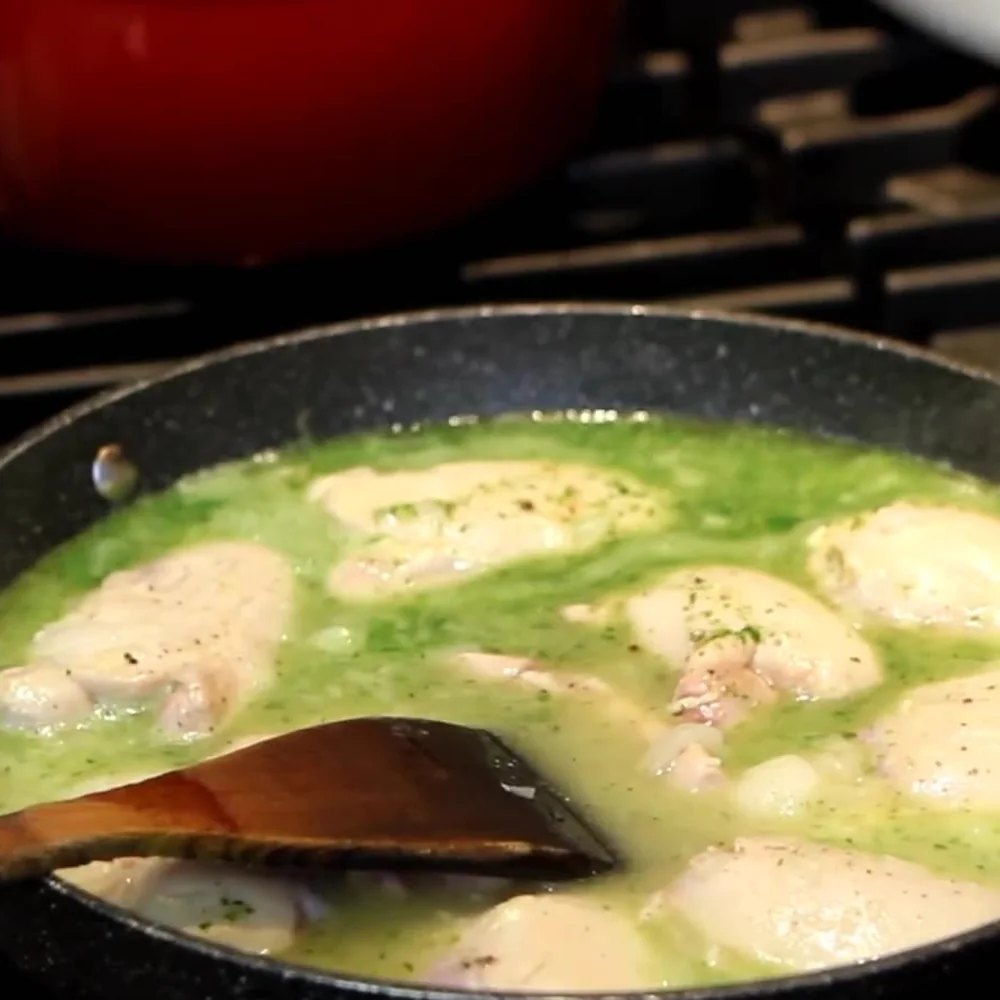


Now reduce the sauce. This is the most important part of the recipe. Let the wine, stock, onion, and pan juices simmer uncovered until the liquid looks concentrated. You know it is ready when the sauce has reduced to roughly half its volume and the bubbles look a little thicker. The onion should sit in a shallow, glossy sauce, not float in a pot of liquid.


Lower the heat and add the cream. Simmer gently, then whisk or stir in the remaining butter. The sauce should become smoother and lightly shiny. If it still looks too thin, keep it at a gentle simmer for a few minutes. If you want more general sauce cues, how to make a creamy sauce and how to thicken a sauce both follow the same kitchen logic: reduce first, adjust slowly, and do not panic.
Add the chopped fresh tarragon near the end. Then return the chicken to the pan and spoon the sauce over it. I add the cherry tomatoes only at the very end, just to warm them. They should not collapse into the sauce. Their job is color, a little acidity, and freshness.

What to Serve With It
Boiled potatoes are the most classic choice from the video. They soak up the sauce without competing with it. Mashed potatoes also make sense, but keep them simple because the sauce already has cream and butter.
For a more generous side, traditional gratin dauphinois works beautifully, especially for a Sunday meal or a colder evening. For something crispier and easier on a weeknight, serve the chicken with air fryer roasted potatoes or French sautéed Lyonnaise potatoes.
A salad is good when you want the meal to feel lighter. I like something simple and crisp, not a creamy salad. A quick plate of greens like 10-minute flower mesclun salad keeps the dish balanced without stealing attention from the sauce.
This recipe works year-round. In winter, serve it with potatoes or gratin. In spring and summer, keep the side lighter with steamed vegetables, green beans, or a simple salad.
Substitutions
Chicken breast can be used, but it needs more care. Cut large breasts in half horizontally or use smaller pieces, then simmer more gently and for less time. Thighs are still better if you want juicy meat and a forgiving recipe.
Half-and-half or light cream works in place of 15% cream. Heavy cream also works and makes the sauce richer and more stable. If using heavy cream, use a little less at first, then add more only if the sauce needs it.
No wine? Use extra chicken stock with a small splash of lemon juice at the end. It will not taste exactly the same, but it will still give balance. Do not add too much lemon early in the cooking or the cream can become more fragile.
Dried tarragon can replace fresh tarragon. Use about one-third of the amount. Add it earlier so it has time to soften in the sauce. Fresh is still better for the final flavor.
Shallots can replace the white onion for a slightly more refined sauce. Use two medium shallots instead of one onion.
FAQ
Can I make this ahead?
Yes, but the sauce is best when finished close to serving. Cook the chicken and reduce the sauce, then chill. Reheat gently and add a small splash of stock or cream if the sauce has thickened too much. Add fresh tarragon at the end so it does not taste dull.
Why is my sauce too thin?
It probably did not reduce long enough before the cream was added. The sauce should already look concentrated before the cream goes in. Cream softens and rounds the sauce, but it should not be used to fix a watery base.
Why did my sauce split?
The heat was likely too high after adding the cream, or the sauce reduced too far. Keep it at a gentle simmer. If it starts looking oily or separated, whisk in a small splash of warm water or stock.
Can I brown the chicken first?
You can, but the sauce will be darker and more like a pan sauce. That is not wrong, but it changes the character of the dish. For this version, I prefer a pale sauce because it keeps the tarragon and white wine flavor cleaner.
What does tarragon taste like?
Tarragon has a gentle anise flavor. It is not sweet like licorice candy, but it has that same direction. It works especially well with chicken, cream, eggs, fish, and classic French sauces.
Is this a heavy recipe?
It is creamy, but not overloaded. The chicken gives a good amount of protein, and the sauce uses a moderate amount of cream rather than a full cream-based casserole. For a lighter plate, serve it with boiled potatoes and salad instead of a rich gratin.
Suggested Posts
If you want another creamy chicken dinner with a deeper mushroom flavor, try creamy mushroom chicken thighs.
For a classic French chicken dish with a more elegant sauce, chicken supreme is a good next recipe.
For a brighter, less creamy chicken dinner, make Greek grilled chicken thighs with lemon.
For a cozy potato side, serve it with French gratin dauphinois.
For more sauce-based chicken dinners, browse creamy chicken recipes.

Easy French Chicken with Tarragon Cream Sauce
Ingredients
- 1½ lb boneless skinless chicken thighs
- 1 medium white onion finely diced
- 2½ tbsp butter divided
- ⅔ cup dry white wine
- 1¼ cups unsalted or low-sodium chicken stock
- ½ cup light cream or half-and-half
- 2 tbsp chopped fresh tarragon divided
- ½ tsp salt plus more to taste
- ¼ tsp white pepper
- 1 cup cherry tomatoes optional
- Boiled potatoes for serving
Instructions
- Finely dice the onion and chop the fresh tarragon. Keep some tarragon aside for the end.
- Melt 1½ tbsp butter in a wide skillet over medium heat.
- Add the onion with a small pinch of salt and cook for 4 to 5 minutes, until soft and translucent but not browned.
- Add the chicken thighs. Season lightly with salt and white pepper.
- Cook for 3 to 4 minutes, turning once, just until the outside of the chicken loses its raw color. Do not brown heavily.
- Pour in the white wine and simmer for 3 to 4 minutes, scraping the bottom of the pan.
- Add the chicken stock and half of the tarragon. Bring to a gentle simmer.
- Cook for 20 to 25 minutes, turning the chicken once or twice, until tender and cooked through.
- Remove the chicken and keep it warm.
- Simmer the sauce uncovered for 6 to 10 minutes, until reduced by about half and lightly glossy.
- Lower the heat. Add the cream and simmer gently for 2 to 3 minutes.
- Stir in the remaining butter until the sauce looks smooth and shiny.
- Add the remaining fresh tarragon and the cherry tomatoes, if using.
- Return the chicken to the pan and coat it well with the sauce.
- Taste and adjust the salt and white pepper.
- Serve with boiled potatoes and spoon the sauce over the chicken.
Video
Notes
FAQ
Can I make this ahead?
Yes, but the sauce is best when finished close to serving. Cook the chicken and reduce the sauce, then chill. Reheat gently and add a small splash of stock or cream if the sauce has thickened too much. Add fresh tarragon at the end so it does not taste dull.Why is my sauce too thin?
It probably did not reduce long enough before the cream was added. The sauce should already look concentrated before the cream goes in. Cream softens and rounds the sauce, but it should not be used to fix a watery base.Why did my sauce split?
The heat was likely too high after adding the cream, or the sauce reduced too far. Keep it at a gentle simmer. If it starts looking oily or separated, whisk in a small splash of warm water or stock.Can I brown the chicken first?
You can, but the sauce will be darker and more like a pan sauce. That is not wrong, but it changes the character of the dish. For this version, I prefer a pale sauce because it keeps the tarragon and white wine flavor cleaner.What does tarragon taste like?
Tarragon has a gentle anise flavor. It is not sweet like licorice candy, but it has that same direction. It works especially well with chicken, cream, eggs, fish, and classic French sauces.Is this a heavy recipe?
It is creamy, but not overloaded. The chicken gives a good amount of protein, and the sauce uses a moderate amount of cream rather than a full cream-based casserole. For a lighter plate, serve it with boiled potatoes and salad instead of a rich gratin.🔗 Useful Links
🛒 Michel Dumas Shop : Explore our kitchen essentials, including aprons and knives.
🌐 Linktree : Access all our important links in one place.
📱 YouTube | Instagram | Facebook | TikTok : Follow us for the latest recipes and culinary tips.