Homemade Olive Bread with Herbs and Sesame
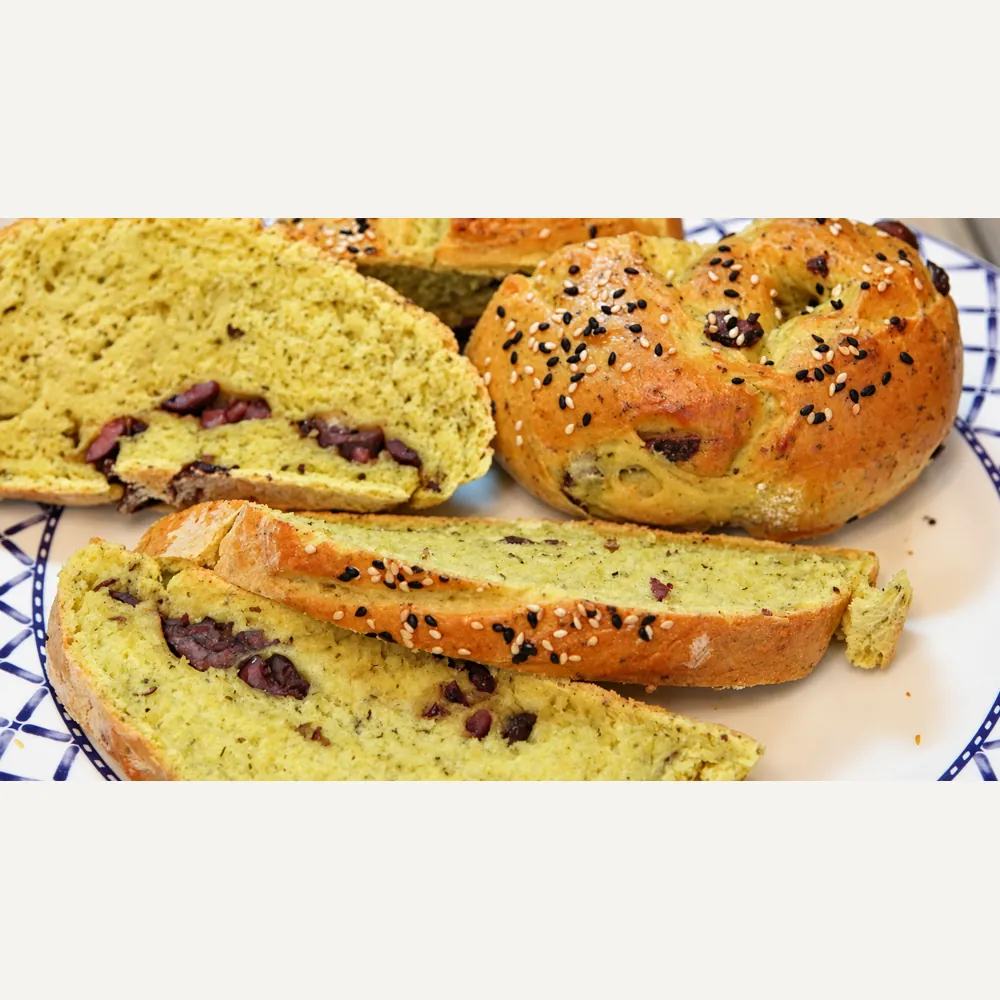
This homemade olive bread has a soft, lightly golden crumb, dark olive pieces, and a sesame crust. Olive oil keeps the dough supple, while herbes de Provence and caraway give it a distinctly savory aroma. Drain the olives well and let the shaped loaves become puffy before baking: those two details help prevent a heavy, damp center.
Olive bread is a yeast bread with olives folded into the dough. Here, a little turmeric colors the crumb, and an egg wash holds the black and white sesame seeds on top. Make these small loaves for a soup supper, a picnic, or a lunch of bread, cheese, and salad.
This recipe is based on my YouTube video, with a few adjustments since publication: a specified dry yeast quantity, more balanced seasoning, four evenly sized loaves, and clearer rising and baking instructions.
{VIDEO}
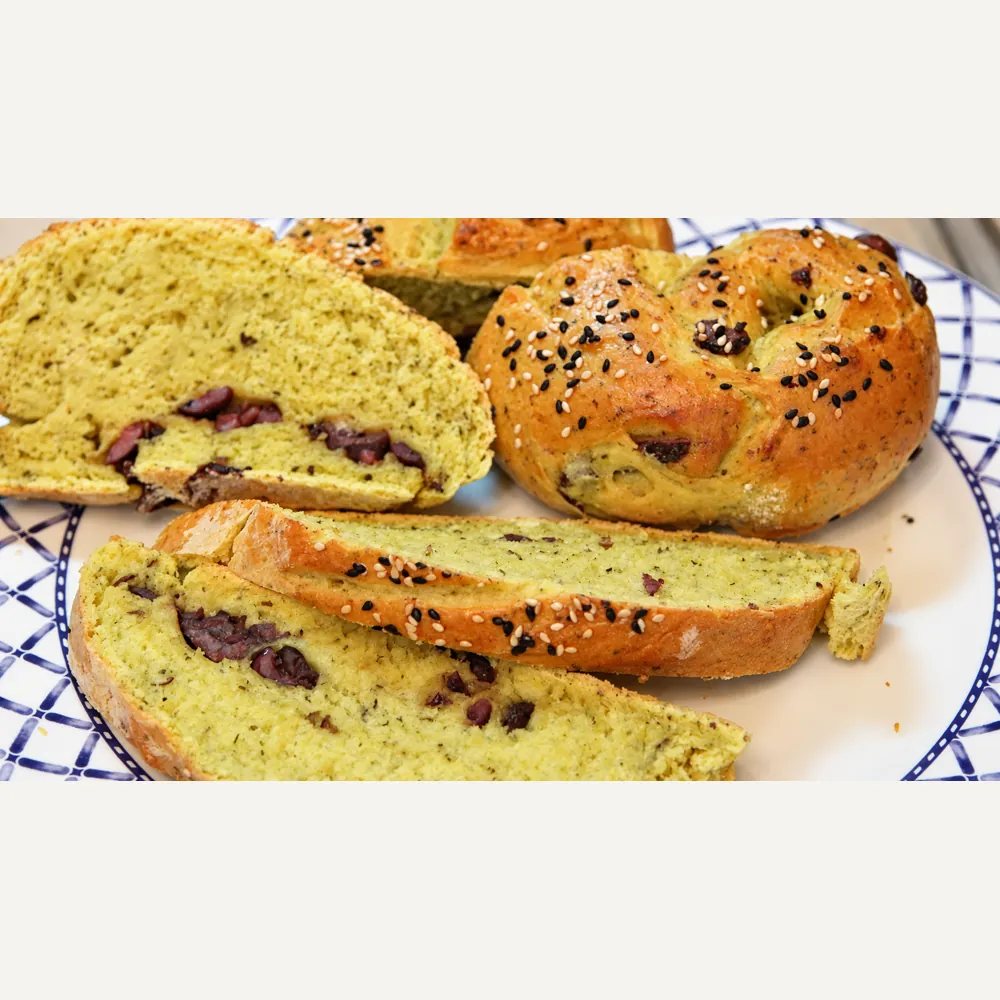
A soft olive loaf, with a little character
I fold the olives in after the first rise because the dough can develop its elasticity before the pieces are added. Gentle folding distributes them without turning the bread gray-purple or shredding the dough. What I look for is a smooth ball before the first rise and visible olive pieces after shaping.
This is different from my soft focaccia with a crisp base, which spreads across a pan. It also has a more savory seasoning than plain homemade white bread. The crumb should have small, irregular holes and slice cleanly, rather than resemble an open sourdough loaf.
Flour supplies most of the bread’s energy, while olives, oil, and sesame add fat and flavor. Treat it as the bread portion of a meal; pair it with vegetables, soup, or a protein rather than expecting a particularly light dish.
Ingredients you need
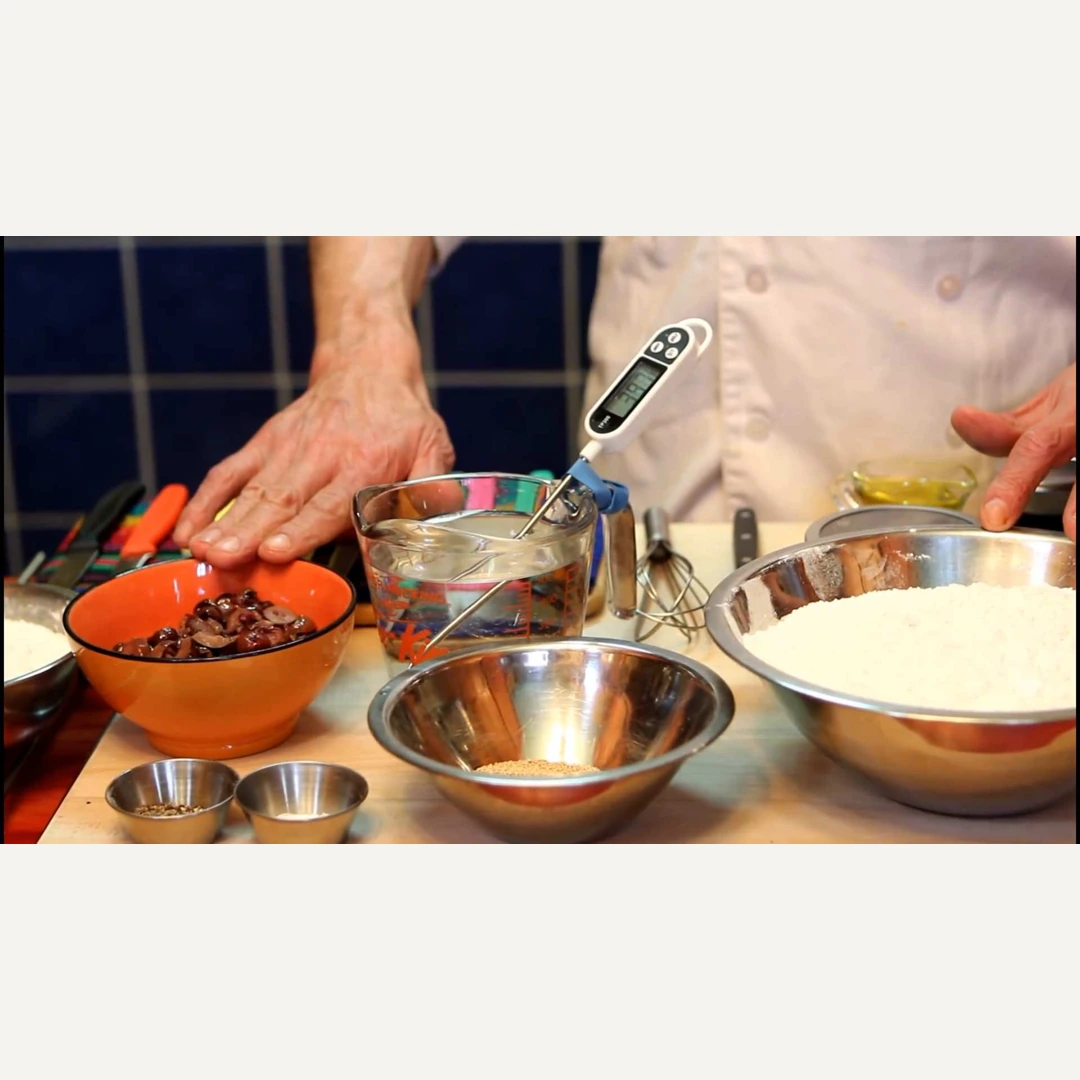
For four small loaves, use 28¼ oz all-purpose flour, about 6⅔ cups spooned and leveled; 2 cups plus 2 tablespoons warm water; 1 tablespoon plus ¼ teaspoon active dry yeast; 2 tablespoons olive oil; 2 teaspoons fine salt; 1½ teaspoons ground black pepper; 1 tablespoon herbes de Provence; 1 tablespoon caraway seeds; ¼ teaspoon turmeric; and 7 oz drained, pitted olives, about 1¼ cups sliced. Finish with 1 beaten egg and 1 tablespoon mixed black and white sesame seeds.
Use a scale for the flour when possible. Scooping flour directly with a cup can pack it down and produce a much stiffer dough. Keep a little extra flour for the board, but do not work handfuls into the dough just to remove every trace of stickiness.
Kalamata olives give a strong, fruity taste. Drain them, blot dry, and cut into thick slices or rough pieces. Check for stray pits. Very salty olives can be rinsed briefly, then dried thoroughly. The herb mixture should be dried culinary herbs without added salt.
Make the dough and bake the loaves
1. Hydrate the yeast
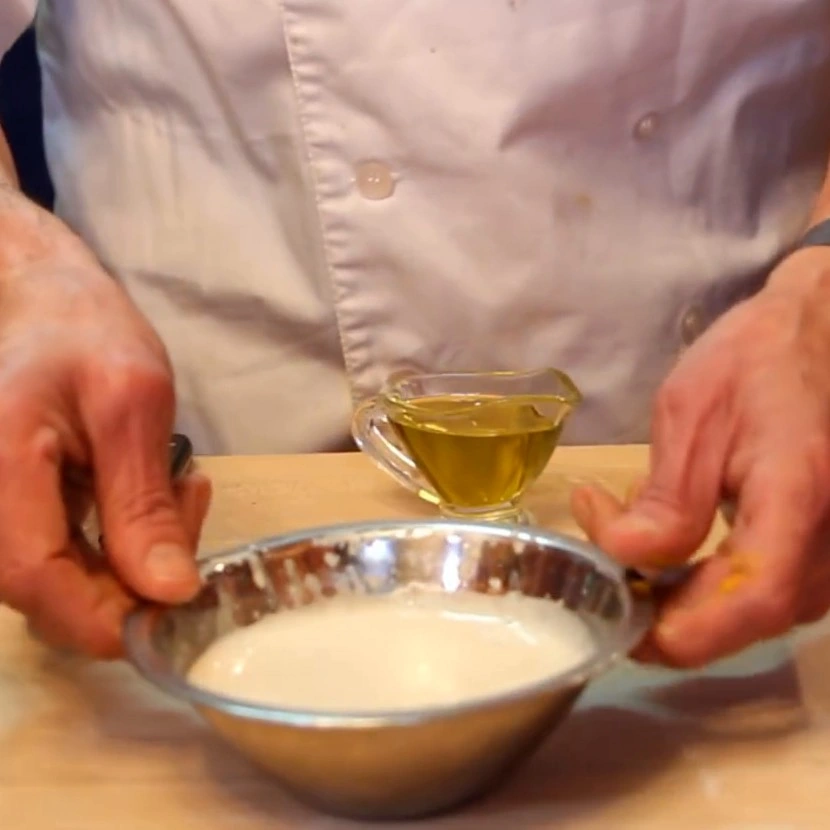
Take ½ cup from the measured water and mix it with the active dry yeast. The water should be about 100–105°F. Leave for 10–15 minutes, until the granules have hydrated and small bubbles appear. Without added sugar, the surface may not develop a dramatic foam cap. Keep the remaining water for the dough.
2. Mix and knead
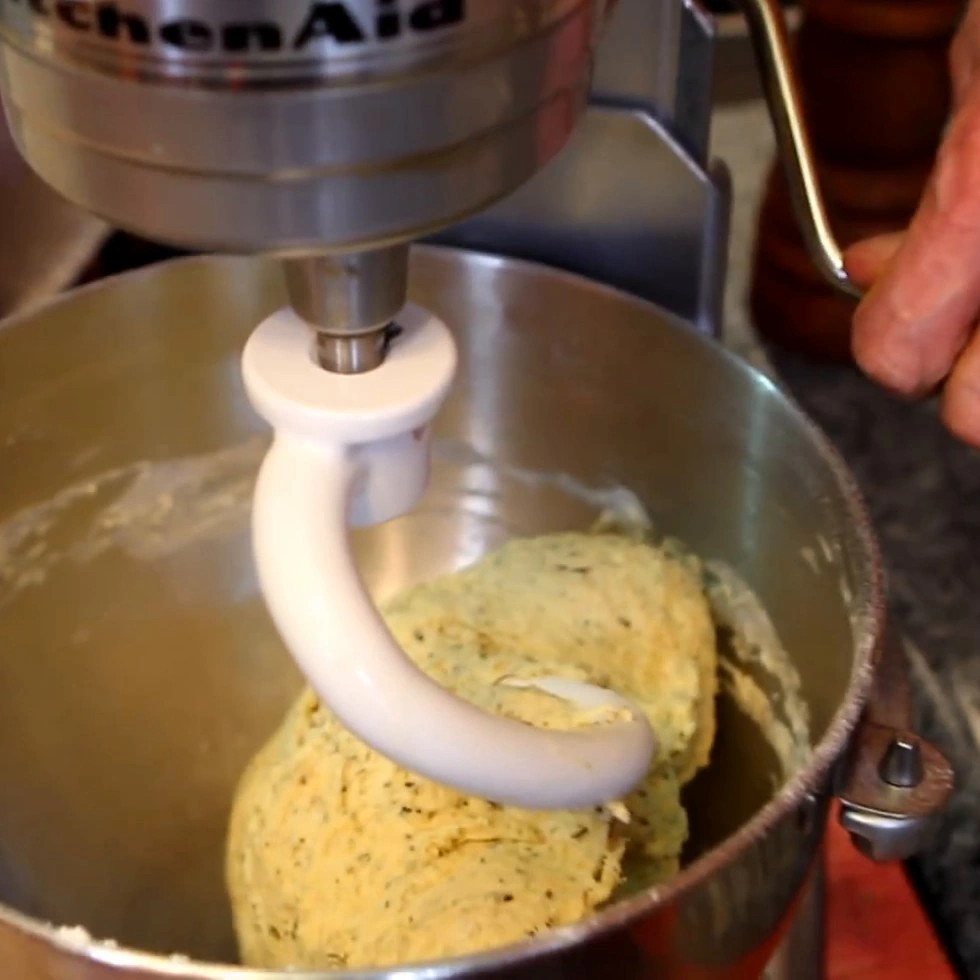
Combine flour, salt, pepper, herbes de Provence, caraway, and turmeric in a large bowl. Add the yeast mixture, remaining measured water, and olive oil. Mix, then knead with a dough hook on low speed for 8–10 minutes, or by hand for 10–12 minutes. Follow the mixer’s recommended bread-dough capacity.
The dough should gather into a soft, elastic ball and feel slightly tacky. A small stretched piece should thin before tearing. If dry flour remains after mixing, add water a tablespoon at a time. If the dough is unusually sticky, first give it a brief rest and continue kneading before adding flour sparingly.
3. Let it double
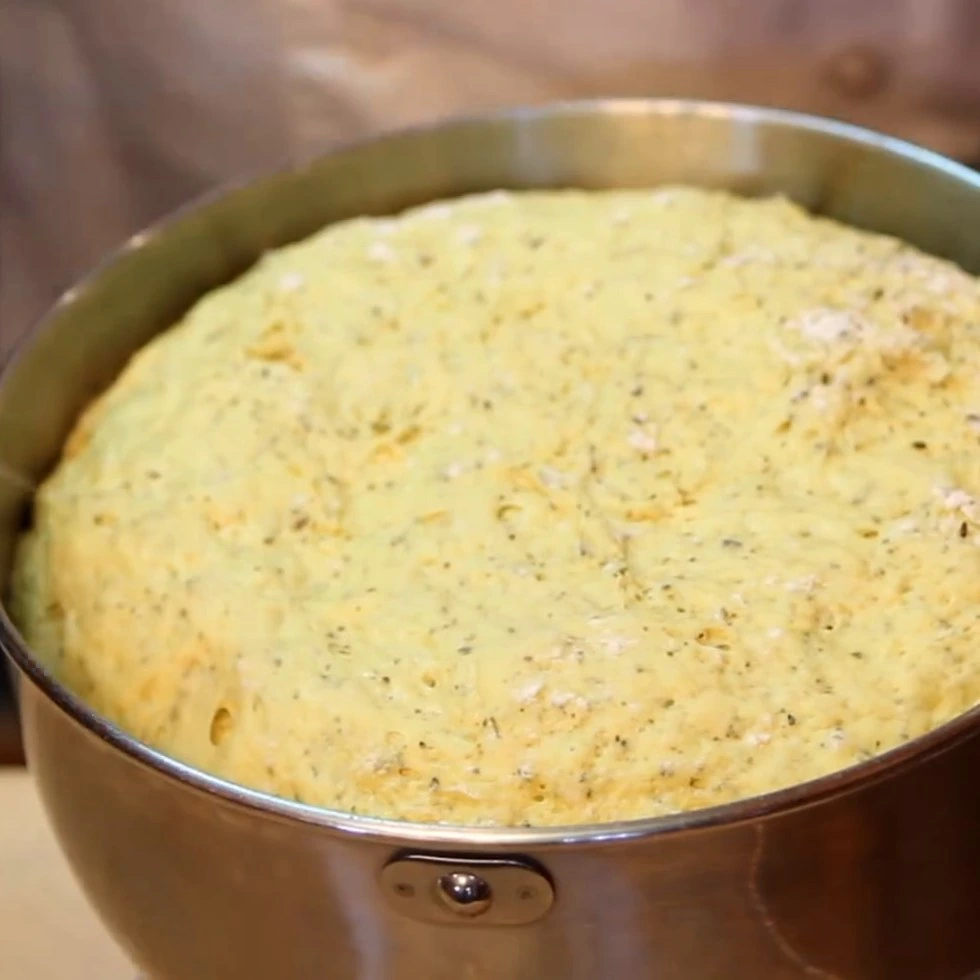
Cover the bowl with a lid or lightly oiled plastic wrap and leave in a comfortably warm spot for about 60–90 minutes, until doubled. The surface should look rounded and aerated. Do not wait for the dough to quadruple. The clock is a guide; a cold kitchen needs more time.
4. Fold in the olives and shape
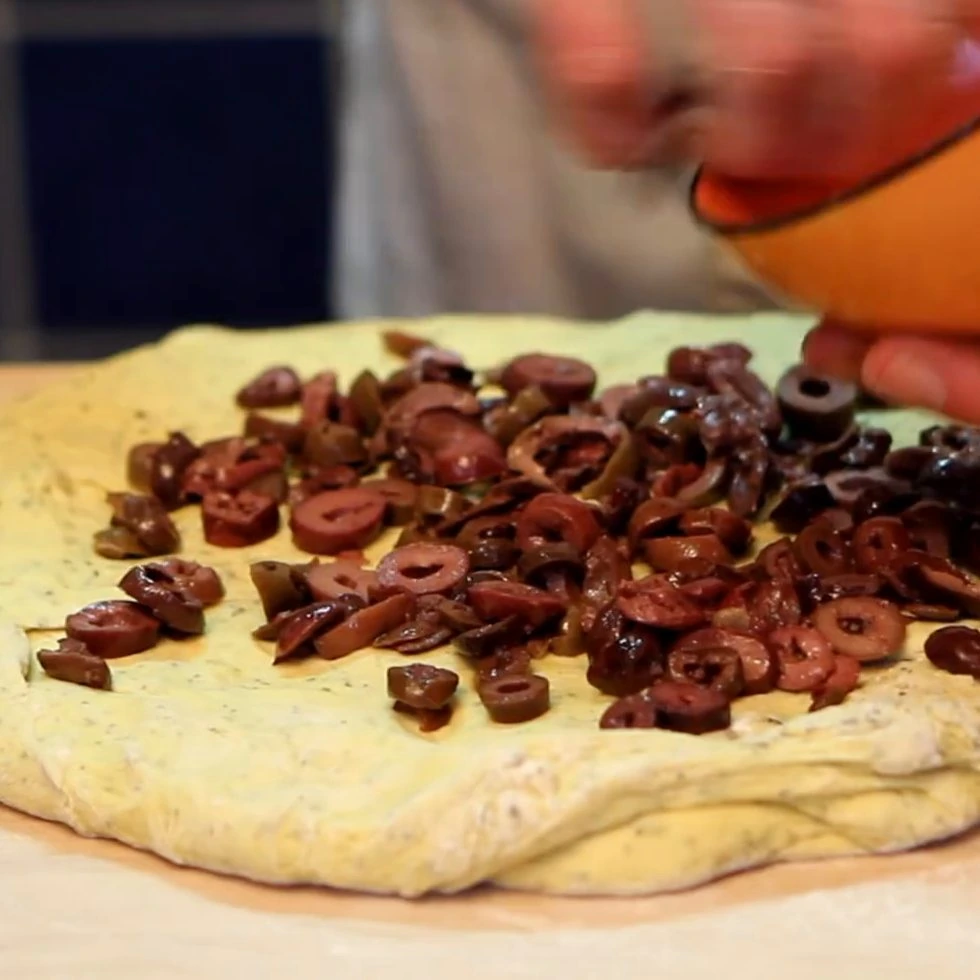
Turn the dough onto a lightly floured board and press it gently into a broad rectangle. Scatter on the dry olive pieces, fold the dough over them, and turn and fold a few more times until distributed. Stop once the olives are incorporated. Vigorous kneading now can crush them and release moisture.
Divide into four equal portions. Shape each into a short oval with the seam tucked underneath. Set on a parchment-lined baking sheet, leaving about 3 inches between loaves. Use two sheets if the loaves will crowd each other.
5. Proof, glaze, and score
Cover loosely with lightly oiled plastic wrap and proof for 30–60 minutes, until visibly puffy. A gentle fingertip indentation should return slowly and leave a small mark. If it springs back immediately, give the loaves more time. Preheat the oven to 375°F during this rise.
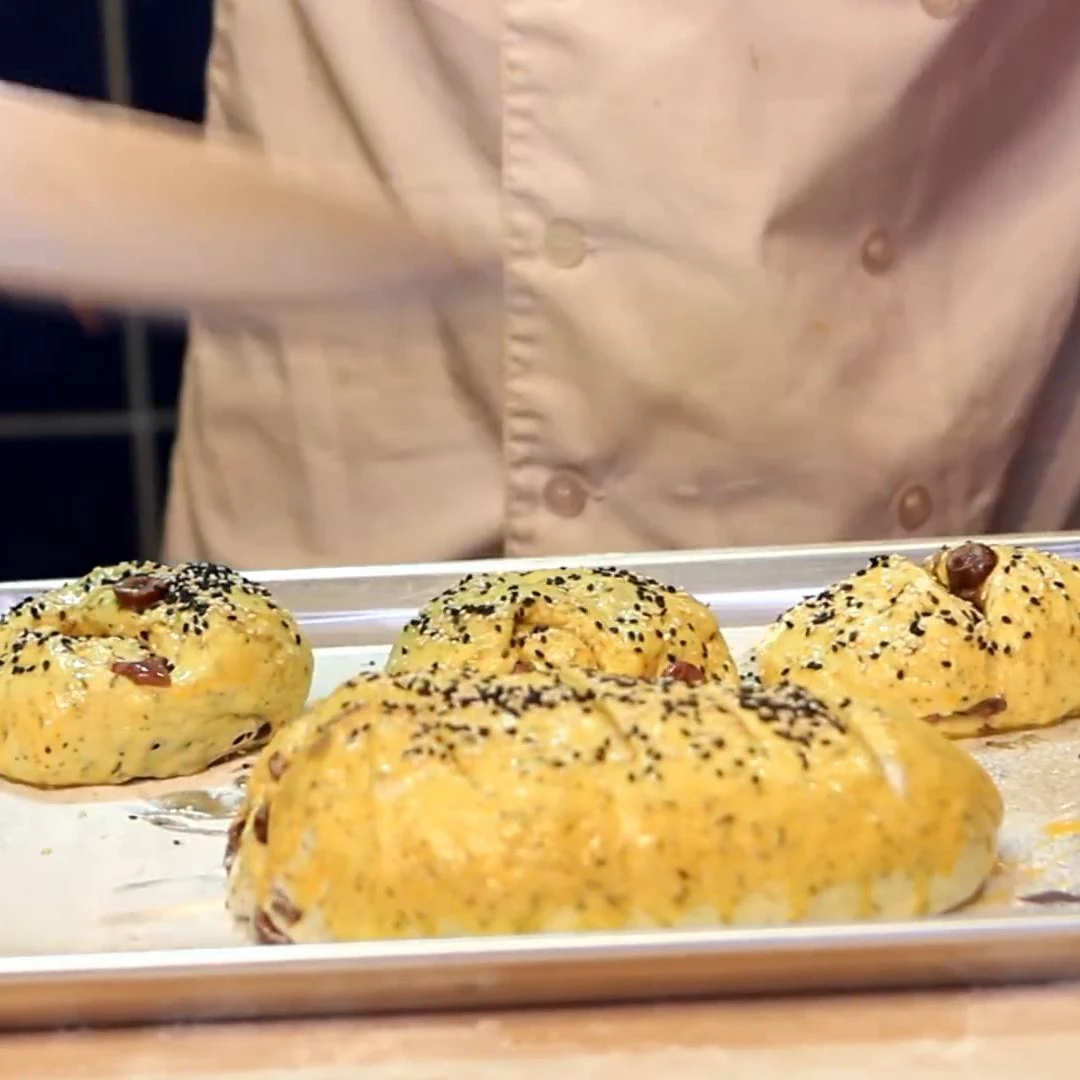
Remove the cover, brush lightly with beaten egg, scatter the sesame seeds, and make two shallow slashes on each loaf with a sharp blade. Do this just before baking. Avoid letting egg wash pool around the bases.
6. Bake and cool before slicing
Bake for 30–40 minutes, checking at 30 minutes. The crust should be well golden and the bases firm. A thermometer inserted into the center, avoiding a large olive piece, should read about 195–200°F. If the tops brown early, loosely shield them with foil while the centers finish.
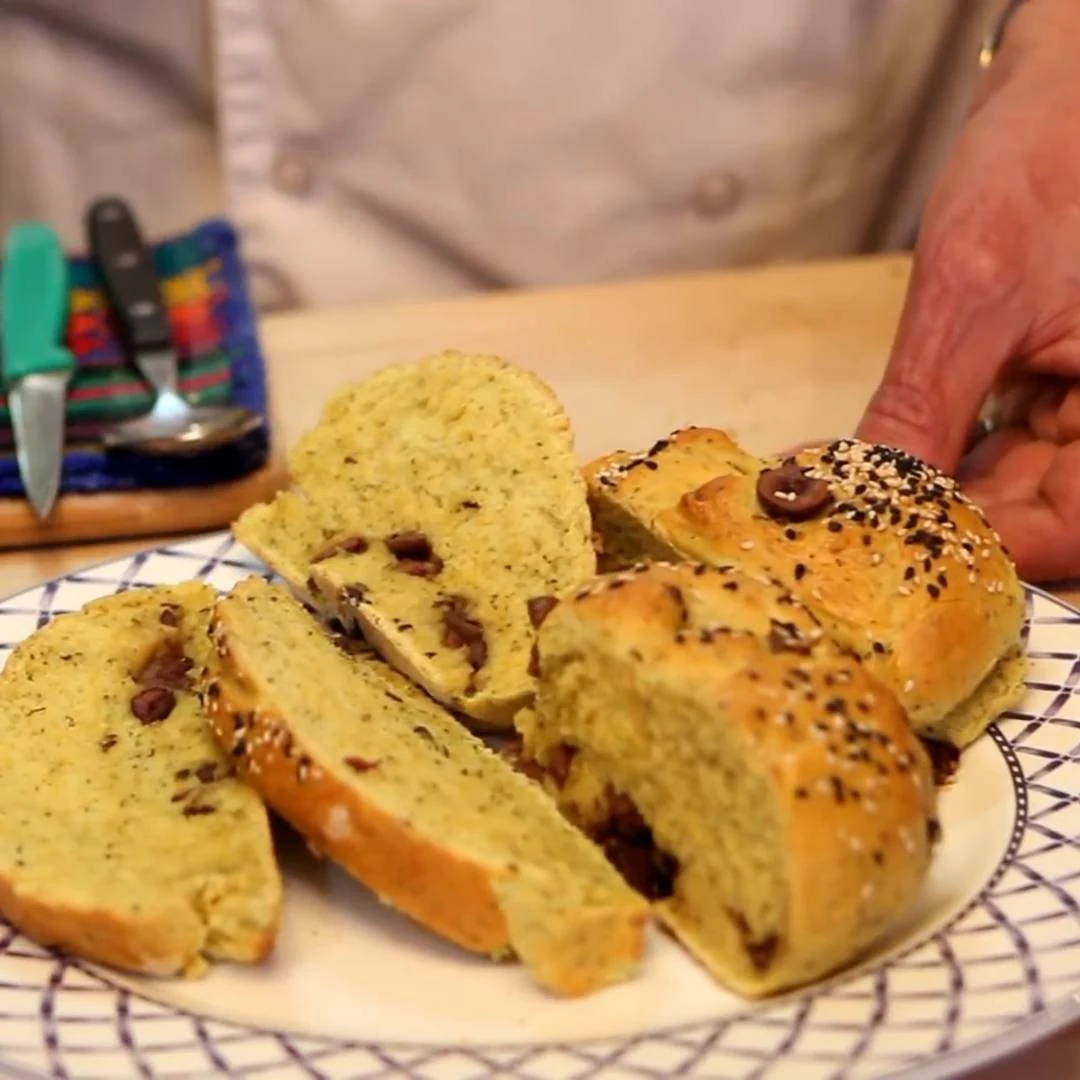
Transfer to a rack and cool for at least 45–60 minutes before slicing. Cutting a steaming loaf can compress the crumb and make it seem gummy. A cooled slice should feel tender, with no wet dough around the olives.
Substitutions and small adjustments
Pitted green olives can replace dark olives in the same drained quantity; the flavor will change. Instant yeast can replace active dry yeast in the same quantity, mixed directly into the flour. Rising time may be shorter, so watch the dough.
If caraway is too strong for your taste, reduce it to 1 teaspoon or omit it. Turmeric can also be omitted; the crumb will lose its yellow tint. Neither change requires extra liquid. Skip sesame when necessary, and use a light brush of water instead of egg for an egg-free finish. The crust will be less glossy.
For a buttery, enriched bread, choose my soft homemade brioche. For a cheesy bread course, try garlic butter rolls filled with cheese. Those are separate recipes rather than additions to this dough.
Olive bread questions
Why is the bread dense around the olives?
Wet olives, too much extra flour, insufficient second proofing, or an underbaked center can all contribute. Dry the olives well and judge the shaped dough by its puffiness. A browned crust alone does not tell you whether the center has finished baking.
Does this need sugar?
No. Yeast can ferment a flour-and-water dough without added sugar. This bread is intended to taste savory. Do not replace the yeast with baking powder; that would require a different recipe and produce a different crumb.
Can I bake one large loaf?
A large loaf needs a longer bake than these four small ones. Use the same proofing cues and center temperature, and shield the crust if needed. Do not assume the video’s half-hour bake will cook a large loaf through.
How should I store it?
Cool completely, wrap, and keep at room temperature for up to two days. Freeze slices for up to two months and toast from frozen. For a different toasted bread side, my air fryer garlic bread is another option.
What to serve with it
Warm slices suit creamy tomato soup or potato and leek potage. For a cool-weather supper, try smooth carrot soup. Keep the bread plain alongside these so its olive and caraway flavors stay distinct.
For lunch or an appetizer board, add a fresh Greek salad, chickpeas with onion and feta, or salad with marinated feta. A small bowl of creamy homemade hummus or cucumber tzatziki gives the slices something to scoop.
Homemade Olive Bread with Herbs and Sesame
Ingredients
- 28¼ oz all-purpose flour about 6⅔ cups, spooned and leveled, plus a little for shaping
- 2 cups plus 2 tablespoons warm water divided
- 1 tablespoon plus ¼ teaspoon active dry yeast
- 2 tablespoons olive oil
- 2 teaspoons fine salt
- 1½ teaspoons ground black pepper
- 1 tablespoon dried herbes de Provence without added salt
- 1 tablespoon caraway seeds
- ¼ teaspoon ground turmeric
- 7 oz pitted olives drained and dried (about 1¼ cups sliced)
- 1 large egg beaten, for glazing
- 1 tablespoon mixed black and white sesame seeds
Instructions
- Mix the active dry yeast with ½ cup of the measured water at 100–105°F. Rest 10–15 minutes until hydrated and lightly bubbly.
- Combine flour, salt, pepper, herbs, caraway, and turmeric. Add yeast mixture, remaining water, and oil. Knead 8–10 minutes on low speed or 10–12 minutes by hand until soft and elastic.
- Cover and rise about 60–90 minutes until doubled, without letting the dough quadruple.
- Gently flatten on a lightly floured board, fold in the dry olive pieces, divide into four equal portions, and shape into short oval loaves. Place well apart on parchment-lined baking sheets.
- Cover and proof 30–60 minutes until puffy and a gentle indentation returns slowly. Preheat the oven to 375°F.
- Uncover, brush lightly with beaten egg, sprinkle with sesame seeds, and make two shallow slashes per loaf.
- Bake 30–40 minutes until golden, with firm bases and a center temperature of 195–200°F. Shield with foil if browning too fast.
- Cool on a rack for 45–60 minutes before slicing.



 Last chance for our paring knives.