Honey Mustard and Herb Butterfly Chicken with Potatoes and Carrots
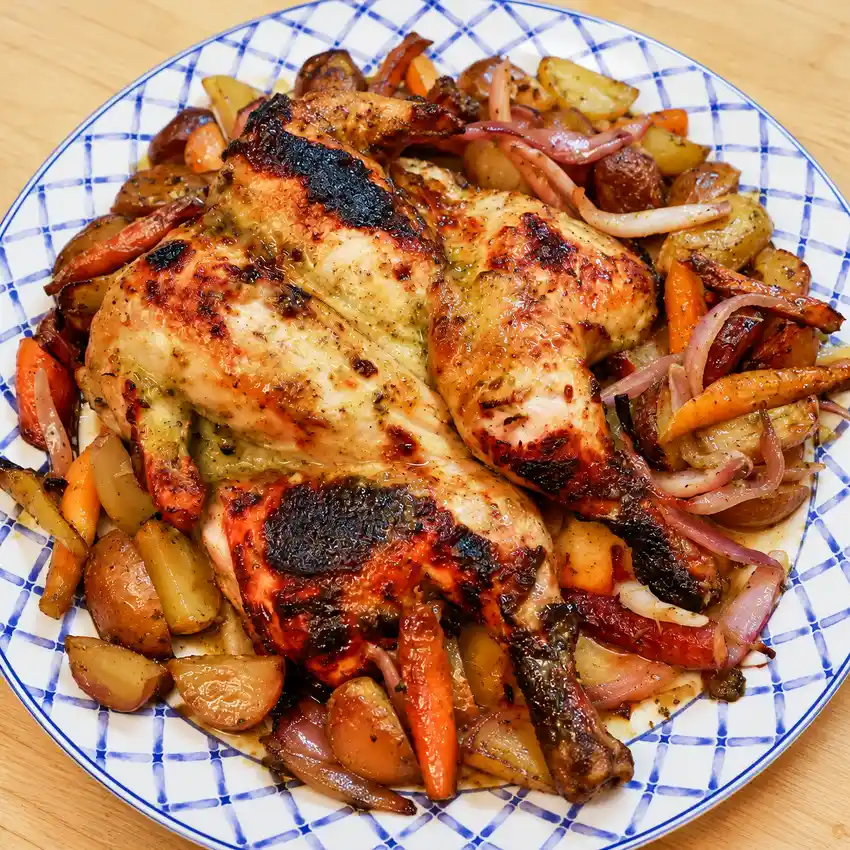
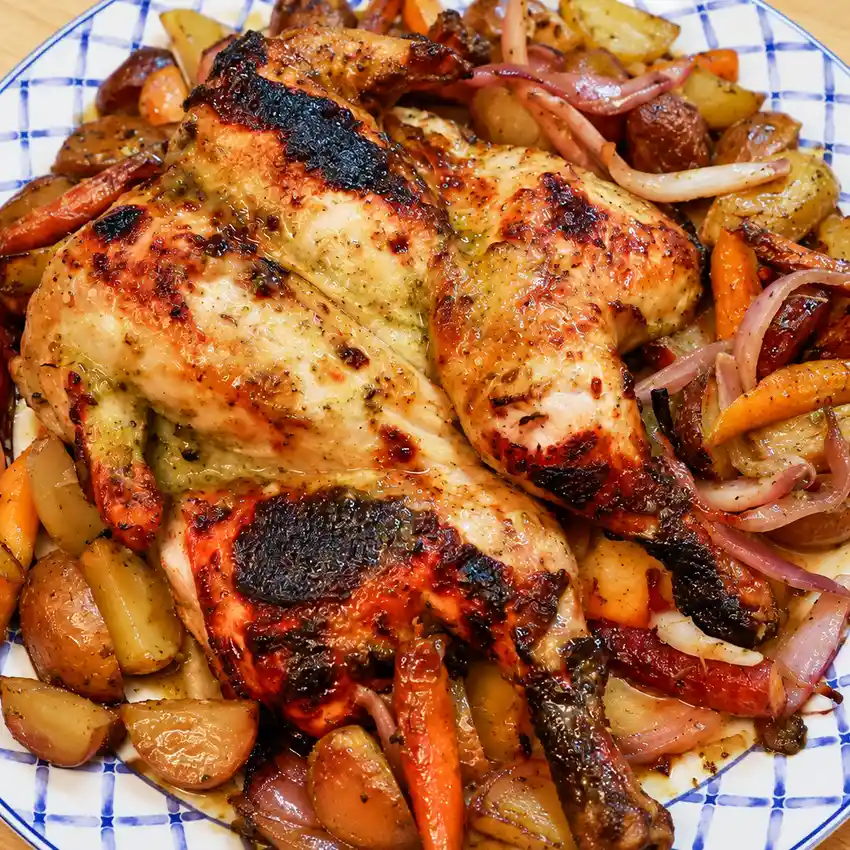
This butterfly chicken is brushed with a white wine, mustard, honey and fresh herb marinade, then cooked above potatoes, carrots and red onion. The vegetables receive the chicken juices while the skin browns in the air fryer. It is a complete meal with a fragrant marinade and a simple two-stage cooking method that gives the vegetables a head start.
This recipe is based on my YouTube video, with a few adjustments since publication to clarify quantities, the size of the chicken and the doneness checks. The video uses a portable Ninja Crispi. The short cooking intervals shown are checking points, not a guarantee that every whole chicken will be cooked after the same number of minutes.
{VIDEO}
The marinade and the cooking method
Mustard gives the marinade body, honey helps the surface color, and white wine loosens the mixture. Basil, oregano, thyme and garlic provide the main aroma. There is no need to make a separate cream sauce. The finished meal gets its moisture from the marinade, the vegetables and the chicken juices.
This is different from my creamy mustard chicken with mushrooms. It is also different from honey garlic chicken, which has another flavor balance. Here, a modest amount of honey supports the mustard and herbs rather than making a thick sweet glaze.
Flattening the chicken reduces its thickness and makes it easier to position over the vegetables. The bird still needs space around it for hot air to circulate. If it barely fits or touches the heating area, use a larger appliance or the oven variation. Forcing a large chicken into a small container gives uneven cooking and makes the vegetables difficult to finish.
Ingredients and portions
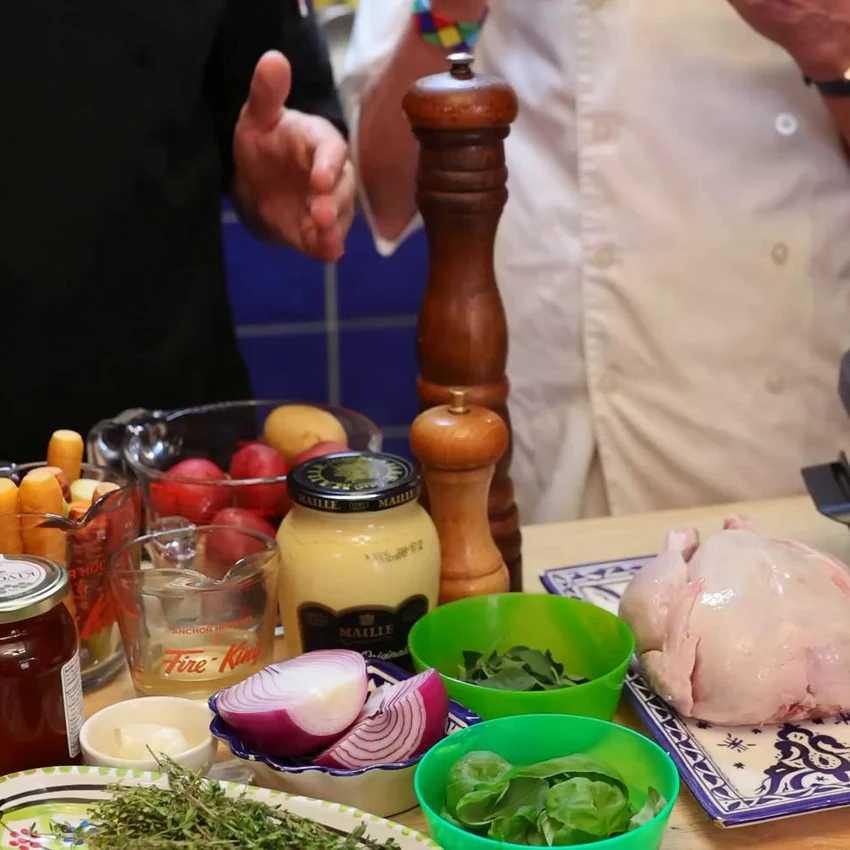
Use one small chicken of about 2 pounds, butterflied, for three portions with vegetables. A larger bird changes the timing and may not fit the same appliance. Ask your butcher to butterfly it if you prefer to avoid cutting through bones yourself. Keep the skin on for the browned finish shown in the video.
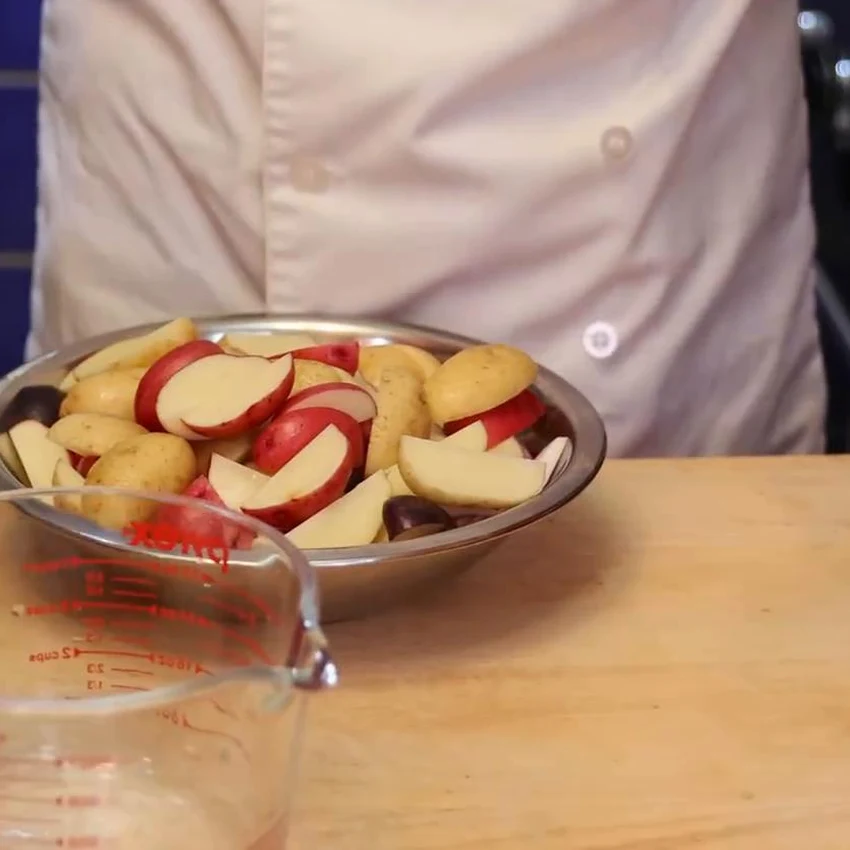
The vegetable base is 1 pound small potatoes, about 10 ounces carrots and one medium red onion. Cut the potatoes into pieces no thicker than ½ inch and slice the carrots into similar thickness. Thick potato halves can stay firm even when the chicken above them is cooked.
The marinade uses ⅓ cup dry white wine, 3 tablespoons Dijon mustard, 1 tablespoon honey, four garlic cloves, basil, oregano, thyme, salt and pepper. Blend until the herbs and garlic are finely chopped. The mixture should brush onto the chicken without pooling heavily in the container. My five chicken marinades offer other combinations for separate meals.
Reserve ¼ cup clean marinade for the vegetables before touching the raw chicken. Use the remainder on both sides of the bird. Do not pour used marinade over cooked food. The vegetable portion is cooked from the beginning and the chicken drippings must also be fully cooked before serving.
Cooking step by step
Step 1: Blend the marinade
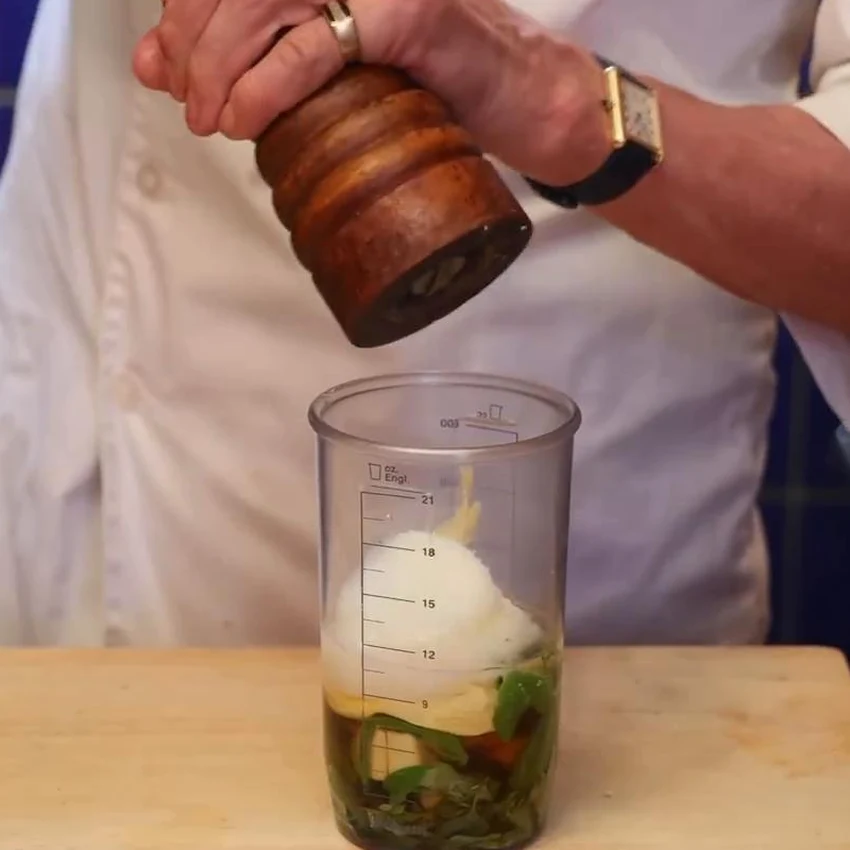
Strip the thyme leaves from their woody stems. Put the leaves, basil, oregano, peeled garlic, white wine, mustard, honey, ½ teaspoon fine salt and ¼ teaspoon pepper in a tall blending cup. Blend with an immersion blender until smooth enough to brush.
Reserve ¼ cup in a clean bowl for the vegetables. Keep the rest separate for the chicken. You can make the marinade ahead and refrigerate it, but once it touches raw poultry it belongs to the raw preparation stage.
Step 2: Butterfly and coat the chicken
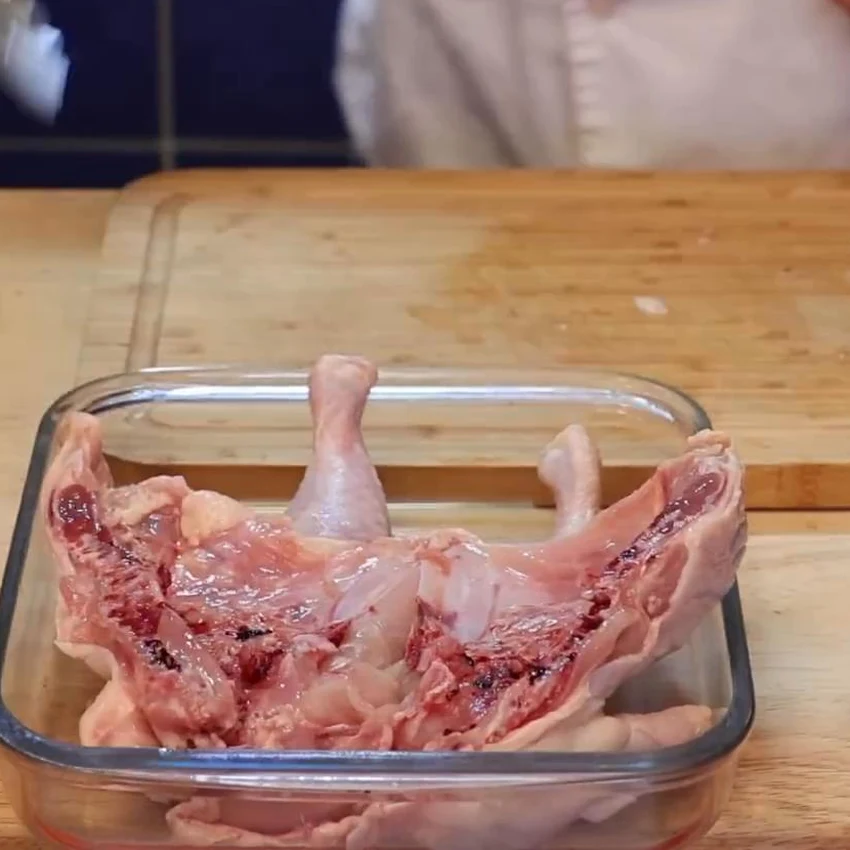
Pat the chicken dry without rinsing it. If it is not already prepared, use strong kitchen shears to remove the backbone, then open the bird and press it flat. Trim the wing tips if necessary to fit, keeping the meatier wing portions. The backbone and tips can be reserved separately for stock.
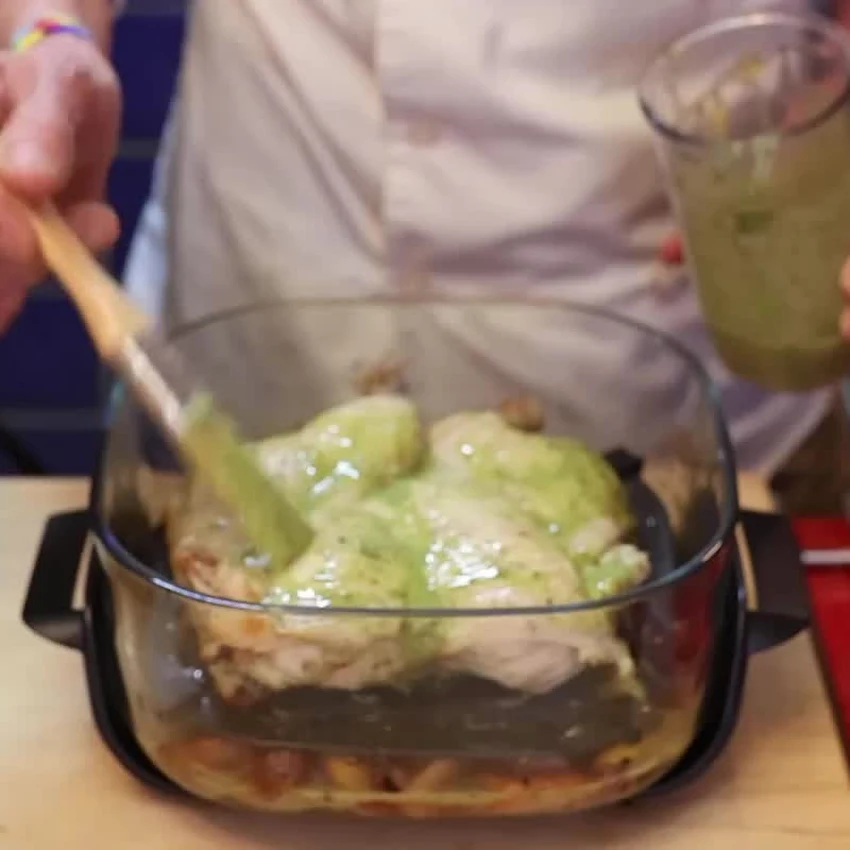
Brush both sides with the chicken portion of marinade. Refrigerate while preparing the vegetables, or for 30 minutes to 4 hours if convenient. Keep it chilled rather than marinating on the counter. Wash and sanitize the board and tools before using them for the vegetable preparation.
Step 3: Prepare the vegetables
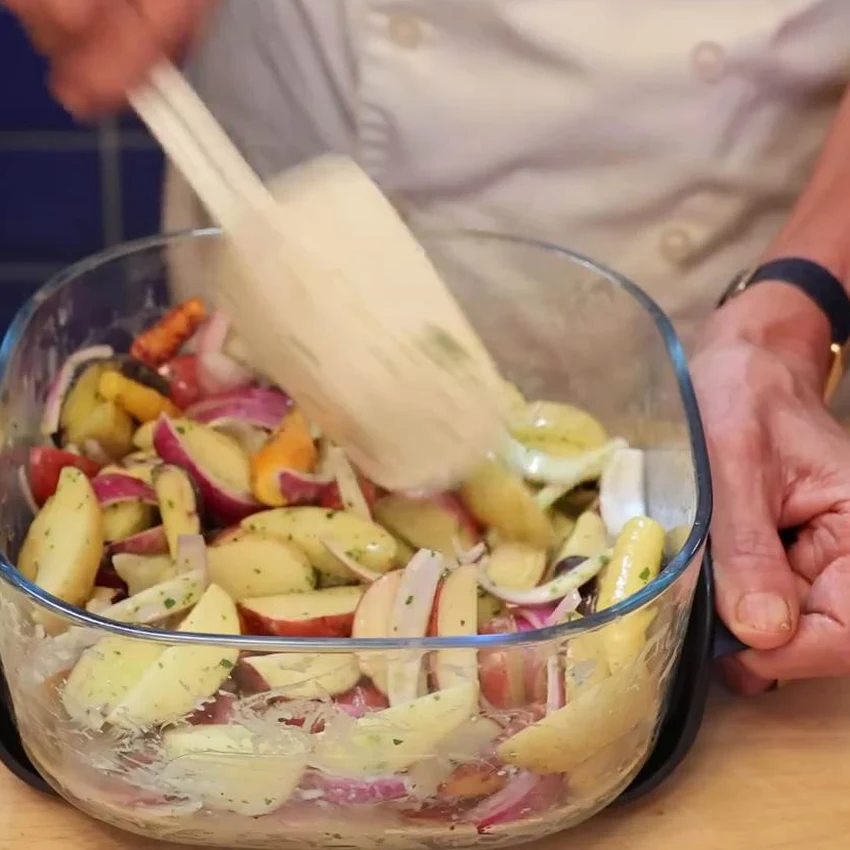
Cut the potatoes and carrots into even pieces and the onion into wedges. Toss with the reserved clean marinade. Put them in the large compatible cooking container in an even layer, leaving enough room for the chicken and the appliance’s supplied crisper plate.
Follow your appliance’s assembly instructions. The video uses its matching glass container, adapter and removable plate; a random glass dish is not a substitute. For another potato preparation, my Parisian potatoes are cooked separately and are not required for this meal.
Step 4: Give the vegetables a head start
Select Air Fry on the portable Crispi, following the model’s guide. On a temperature-controlled basket air fryer, start at 375°F. Cook the vegetables for about 12–15 minutes, turning once, until they begin to soften. They do not need to be completely cooked yet.
Pause the appliance safely before opening it. Turn the vegetables and level the layer. If the potatoes are still hard, give them several more minutes before adding the chicken. This matters because the bird blocks some of the direct airflow once it is positioned above them.
Step 5: Cook the chicken and verify doneness
Install the supplied plate above the vegetables as demonstrated, then place the flattened chicken over it with the skin upward. Cook for 12 minutes, turn carefully and cook for another 10 minutes. Return the skin upward if needed and check the temperatures before deciding the meal is ready.
For a small 2-pound bird, allow roughly 30–45 minutes total chicken cooking, depending on thickness, appliance and starting temperature. Add time in 5-minute intervals when necessary. Check the breast reaches at least 165°F and the thickest thigh reaches 180°F, without touching bone. Brown skin or clear-looking juices do not replace a thermometer.
Honey can darken before the meat is cooked. If the surface becomes too dark, use a lower-heat mode permitted by your appliance guide, or lower a temperature-controlled fryer to 350°F and continue. Do not stop early just to preserve the skin color. Check that the vegetables are tender and their chicken drippings are fully cooked as well.
Step 6: Rest and serve
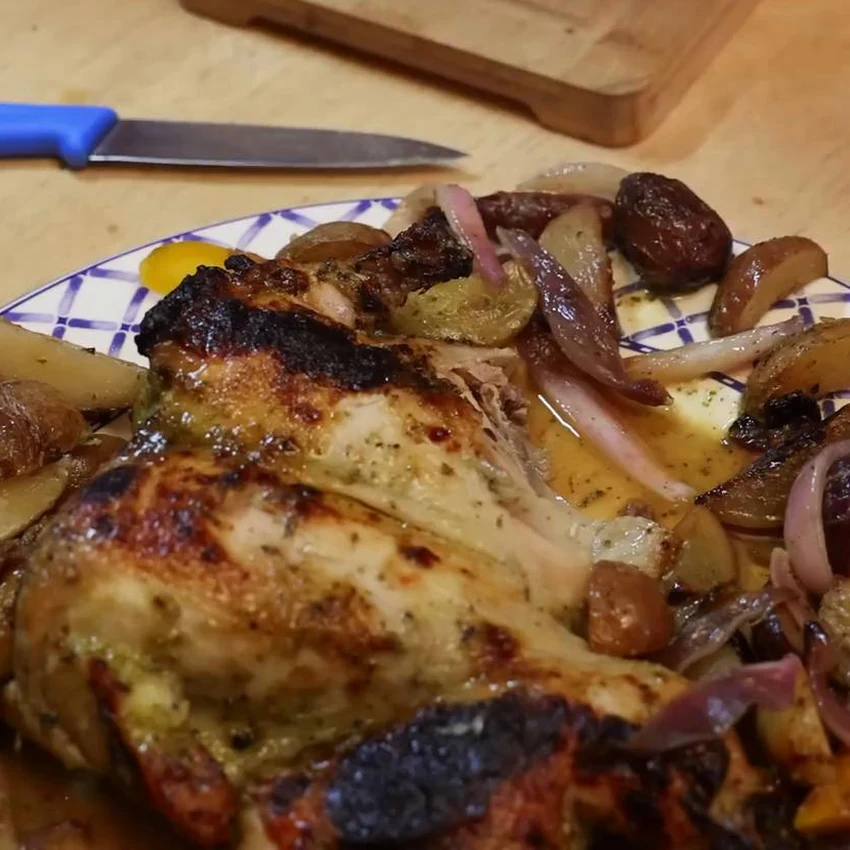
Transfer the chicken to a clean board and rest for 5–10 minutes. Test a potato with a knife. If the vegetables need more time, return them to the appliance while the chicken rests. Use clean utensils for serving and discard any uncooked marinade left from brushing the raw bird.
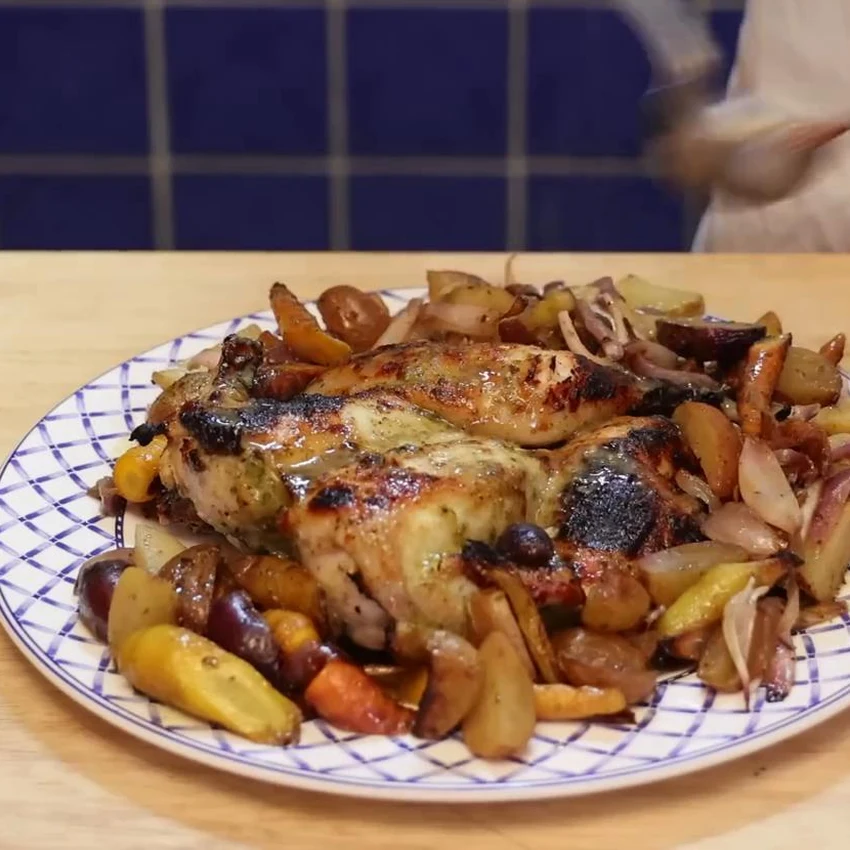
Arrange the vegetables on a warm platter and set the chicken over them, or carve into portions. The fresh herbs in the marinade provide enough flavor without extra garnish. A romaine and endive salad is a fresh addition if you want more vegetables at the table.
Oven variation and substitutions
For an oven version, heat to 375°F. Start the marinated vegetables in a shallow roasting pan for 20 minutes, then add the flattened chicken skin upward and roast about 45–65 minutes more, checking temperature and tenderness. This is an adaptation; the oven timings are different from the portable appliance. Use a pan with enough surface area and avoid a deep pile of vegetables.
Bone-in chicken thighs can replace the small whole bird, but their timing changes. Cook each piece to at least 165°F and verify the vegetables separately. Boneless breasts are not a direct replacement because they can dry out before thick potatoes become tender.
Replace the white wine with the same amount of unsalted chicken broth plus 1 teaspoon lemon juice. The flavor will be less wine-forward, but the mustard and herbs still carry the marinade. My French-style lemon chicken is another complete recipe if you want lemon as the main flavor.
Whole-grain mustard can replace part of the Dijon. Taste it first, since mustard brands vary in salt and acidity. Do not double the honey to compensate automatically: extra sugar increases the risk of a burned surface. Maple chicken with mashed potatoes uses its own sauce balance.
Questions before cooking
Is 22 minutes enough for every chicken?
No. Those 12- and 10-minute intervals are convenient checks. Weight, thickness, crowding and the appliance all affect the result. Continue cooking until the thermometer and vegetable tenderness confirm readiness.
Can the marinade be made without a blender?
Yes. Chop the herbs and garlic very finely, then whisk with the liquids. A coarse marinade has a different appearance but still works. Remove woody thyme stems and avoid large garlic pieces that can scorch on the skin.
Why are the vegetables still firm?
Their pieces may be too large or the container too crowded. Give them a head start, turn them and finish separately if the chicken is already ready. Do not keep cooking a finished chicken just to soften potatoes beneath it.
How should I store leftovers?
Refrigerate in shallow containers within 2 hours and use within 3 days. Remove the meat from the bones if practical and store with the vegetables. Reheat to 165°F, adding a spoonful of water or broth if needed.
Other chicken dinners and sides
For different meals, try chicken with vinegar, 40-clove garlic chicken or hunter’s chicken. Each has a separate sauce and cooking method.
A Greek salad can accompany this platter. If you want to serve the chicken without its vegetable base on another occasion, homemade mashed potatoes are another side, cooked separately.
Honey Mustard and Herb Butterfly Chicken with Potatoes and Carrots
Ingredients
- 1 small whole chicken about 2 pounds, butterflied
- 1 pound small potatoes cut into pieces no thicker than ½ inch
- 10 ounces carrots cut into similar thickness
- 1 medium red onion cut into wedges
- ⅓ cup dry white wine
- 3 tablespoons Dijon mustard
- 1 tablespoon honey
- 4 garlic cloves peeled
- ¼ cup loosely packed fresh basil leaves
- 1 tablespoon fresh oregano leaves
- 1 teaspoon fresh thyme leaves
- ½ teaspoon fine salt
- ¼ teaspoon ground black pepper
Instructions
- Blend wine, mustard, honey, garlic, herbs, salt and pepper. Reserve ¼ cup clean marinade for vegetables before handling chicken.
- Pat chicken dry, butterfly if necessary and brush both sides with remaining marinade. Refrigerate while preparing vegetables, or 30 minutes to 4 hours.
- Toss evenly cut potatoes, carrots and onion with reserved clean marinade. Place in the large compatible cooking container.
- Use Air Fry on Crispi, or 375°F on a temperature-controlled fryer. Cook vegetables 12–15 minutes, turning once, until beginning to soften.
- Place supplied plate over vegetables and chicken above it. Cook 12 minutes, turn and cook 10 minutes more. Continue as needed, usually 30–45 minutes total for chicken, until breast is at least 165°F and thigh reaches 180°F. Verify vegetables and drippings are cooked.
- Rest chicken 5–10 minutes on a clean board. Finish vegetables separately if needed, then serve together.