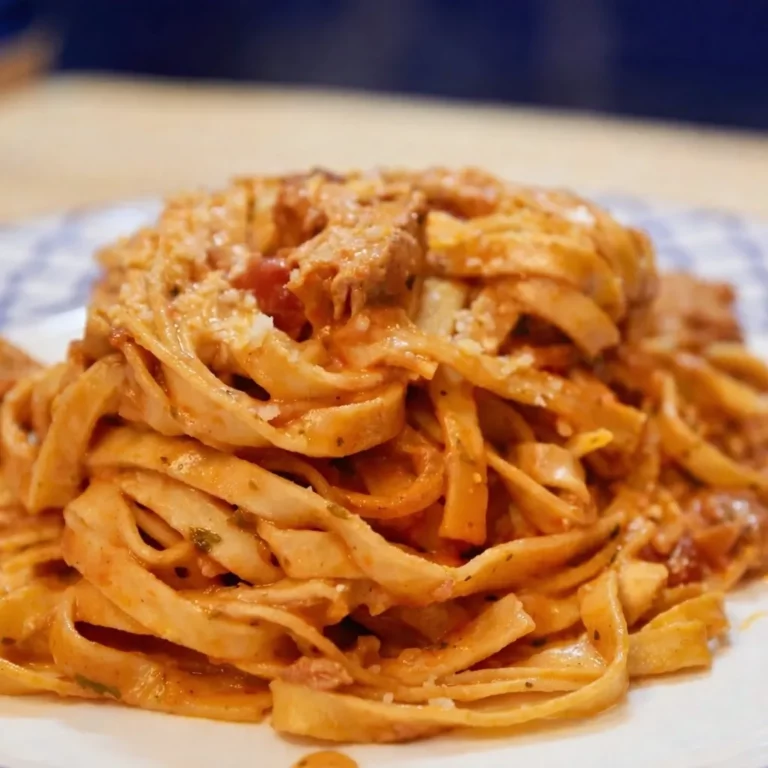
Homemade Pesto Pasta with Fresh Pappardelle
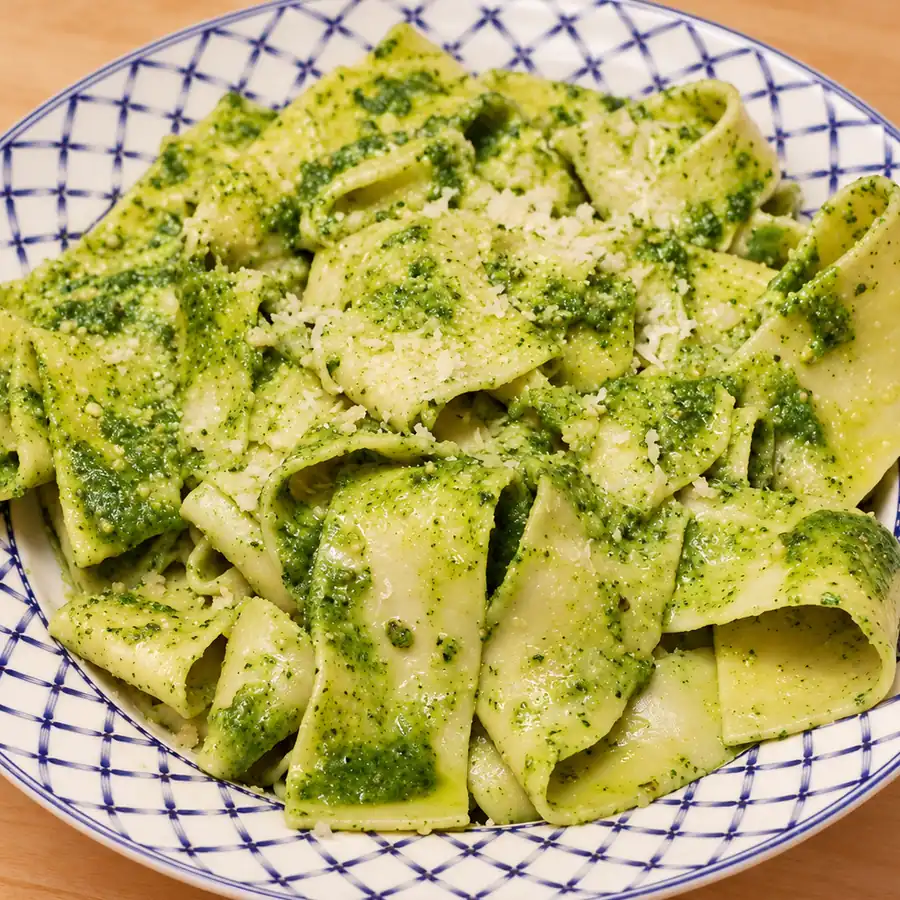
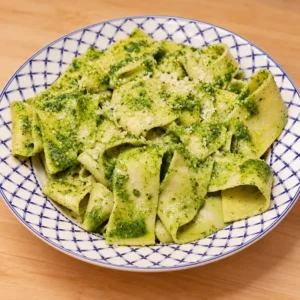
Wide ribbons of homemade egg pasta catch a fresh basil pesto made with pine nuts, garlic, olive oil and Parmesan. This pesto pasta has a soft, glossy coating without cream. The dough uses all-purpose flour and eggs, and the sauce comes together while the dough rests, making it a satisfying meal to prepare from scratch.
Pappardelle are broad pasta ribbons, and their generous surface gives the basil sauce plenty of room to cling. This is a full homemade pasta recipe rather than a ten-minute dinner: the pesto is quick, but kneading, resting, rolling and cutting the dough take longer. Allow about an hour, with a little extra time if you are learning to use a pasta machine.
This recipe is based on my YouTube video, with a few adjustments since publication: a four-serving yield, measured cheese, milder garlic and clearer dough and sauce instructions. The flour-to-egg ratio stays the same. For a shorter route, the substitutions below explain how to use purchased pasta.
{VIDEO}
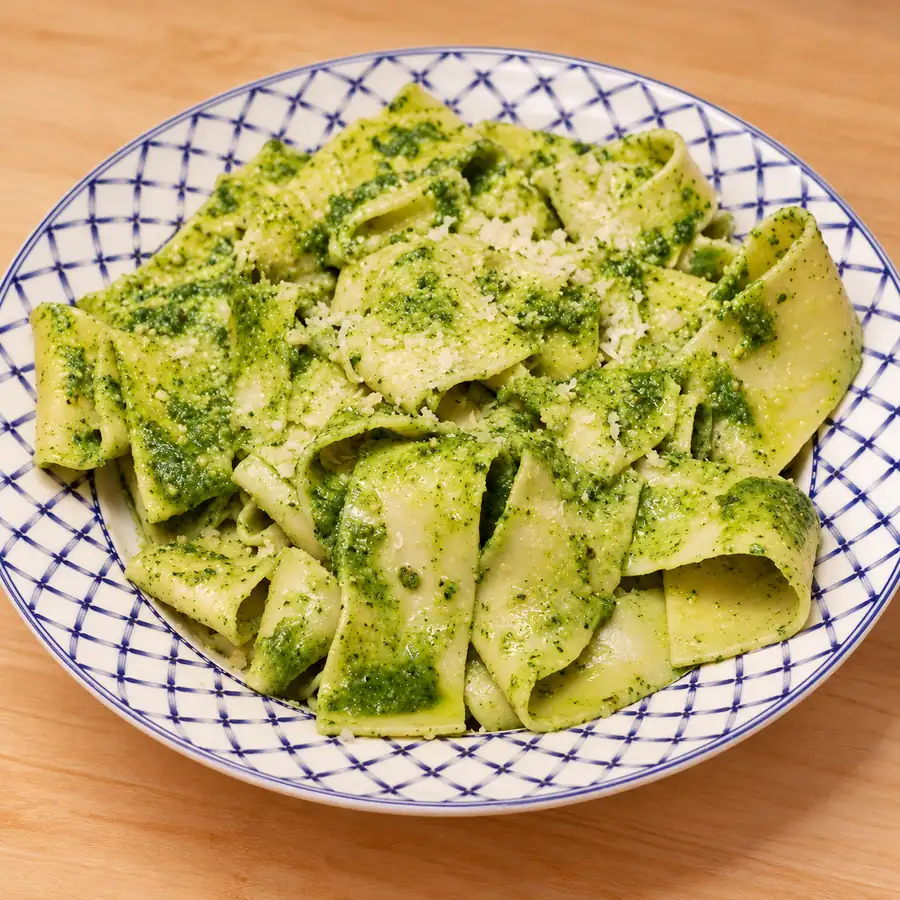
What Makes These Pesto Pasta Ribbons Work
The dough needs enough kneading to become smooth, then a covered rest so it rolls without springing back. Rolling thin sheets matters more than selecting a particular numbered machine setting. The pesto needs a different kind of care: brief blending, followed by gentle mixing with hot pasta away from direct heat.
The starch in a little pasta cooking water helps distribute the oil and cheese across the ribbons. It loosens the pesto without diluting the basil as much as a large splash of plain water would. You are looking for a light coating, not a pool of green oil beneath the pasta.
For more sauce options, try my homemade Italian basil pesto or quick food-processor basil pesto. This recipe includes its own pesto quantities, so there is no need to make either separately.
Ingredients and Equipment
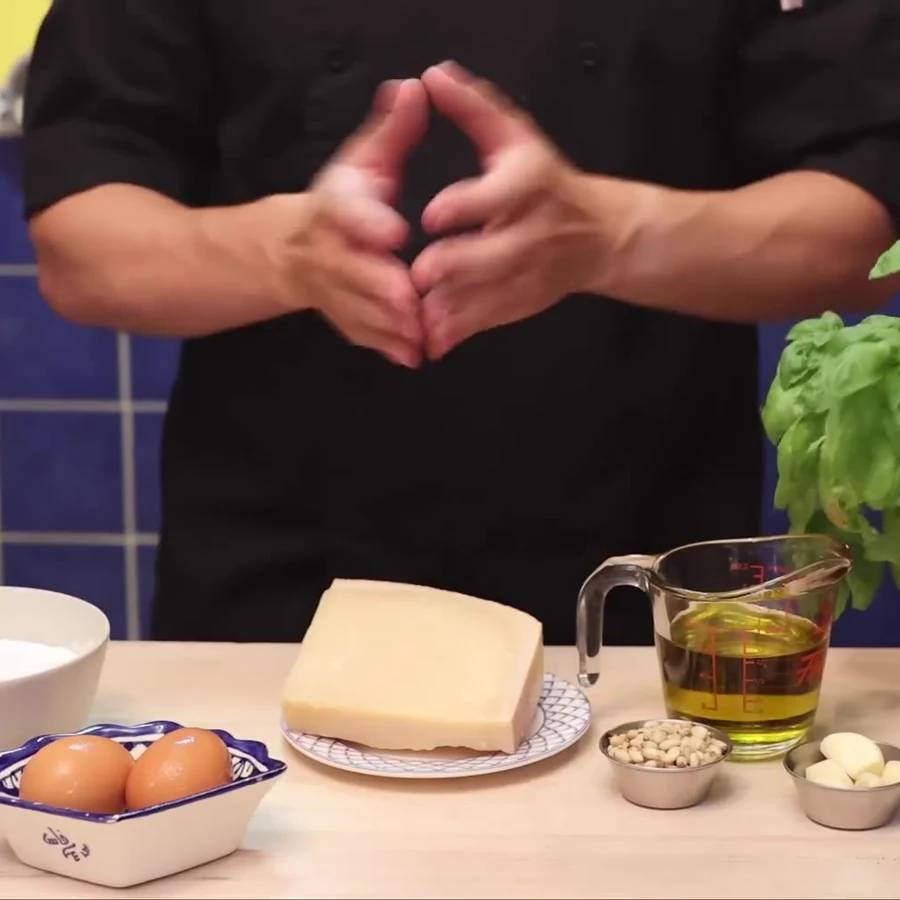
All-purpose flour and large eggs: The dough uses 14 oz flour and four large eggs. Weigh the flour when possible; the cup amount is approximate because packing flour changes how much goes into a cup. You do not need oil in this dough. Have extra flour nearby for light dusting, rather than working large handfuls into the mixture.
Fresh basil: Use the leaves and tender tips, removing thick stems. Wash and dry them thoroughly before blending. Wet leaves add uncontrolled water to the pesto. A large-looking bunch can shrink considerably after the stems are removed, so measure the leaves rather than the entire plant.
Pine nuts, garlic and Parmesan: Pine nuts give body and a mild nutty flavor. They can go in raw, as in the video; toasting is optional, and toasted nuts must cool first. Two small garlic cloves keep the sauce flavorful without overpowering the basil. Freshly grated Parmesan mixes more evenly than coarse shavings.
Olive oil and cooking water: The oil belongs in the pesto; the reserved water adjusts the finished pasta. Add the water a little at a time. Extra oil alone makes the dish richer without solving a thick or clumpy sauce.
A narrow blending cup and immersion blender work well for this quantity. A small food processor also works. Use a pasta machine or a rolling pin, a large pot and a roomy mixing bowl. My guide to homemade pasta dishes offers other ways to use freshly rolled dough.
How to Make Homemade Pesto Pasta
Step 1 Mix the Flour and Eggs
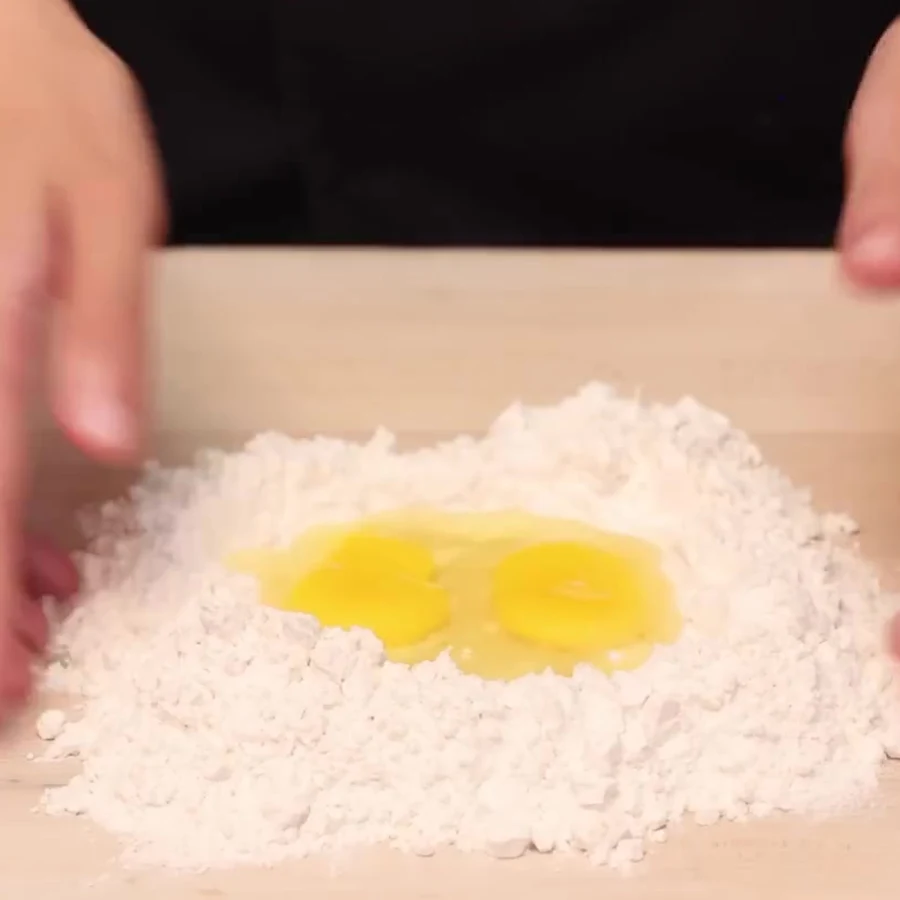
Mound the flour on a clean worktop and make a broad well. Crack the eggs into the center. Break them up with a fork, gradually pulling flour from the inside wall into the eggs. Keep the outer wall intact until the mixture is thick enough to gather without spilling. Bring the shaggy dough together with your hands or a bench scraper.
Step 2 Knead and Rest the Dough
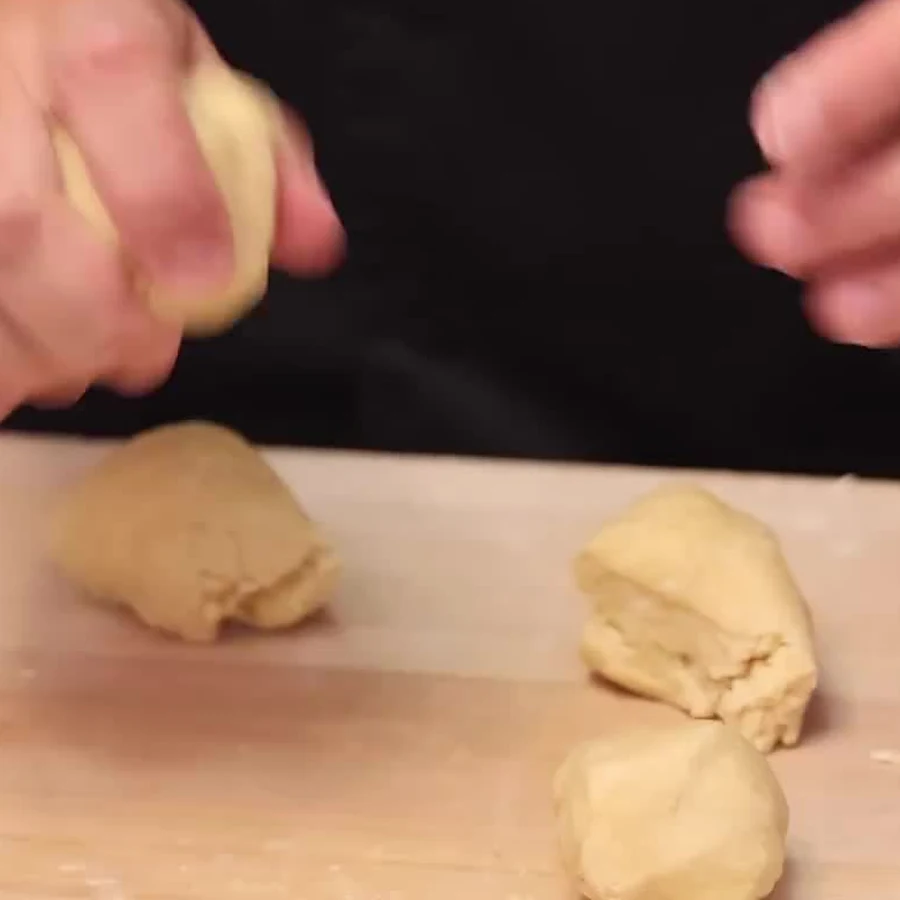
Knead for 8–10 minutes, until the dough feels firm, smooth and pliable. If dry crumbs will not join the dough, add water a teaspoon at a time; do not add another whole egg automatically. If sticky, dust sparingly with flour. Divide into four pieces, cover tightly and rest for at least 20 minutes while preparing the pesto. The pieces must stay covered so their surfaces do not dry out.
Step 3 Prepare the Pesto Ingredients
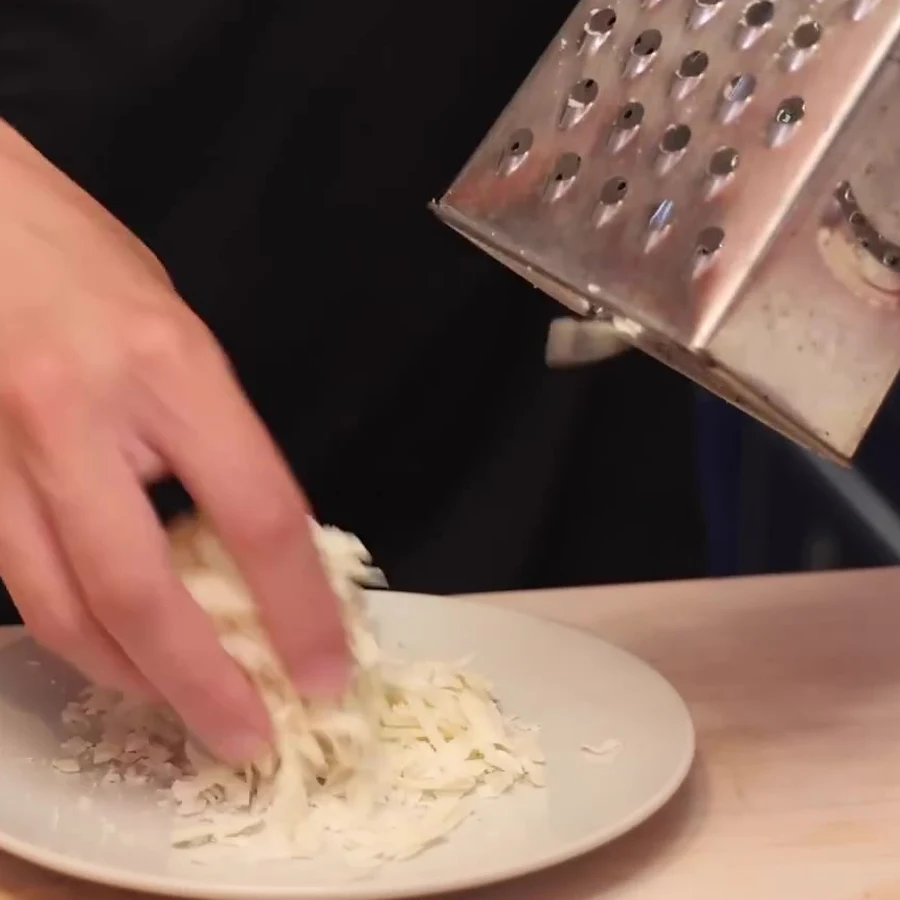
Dry the basil leaves, peel the garlic and finely grate the Parmesan. Put the basil, pine nuts and garlic in a narrow blending cup. Keep the cheese ready beside it. If using toasted nuts, wait until they are completely cool before combining them with the leaves.
Step 4 Blend the Basil Pesto
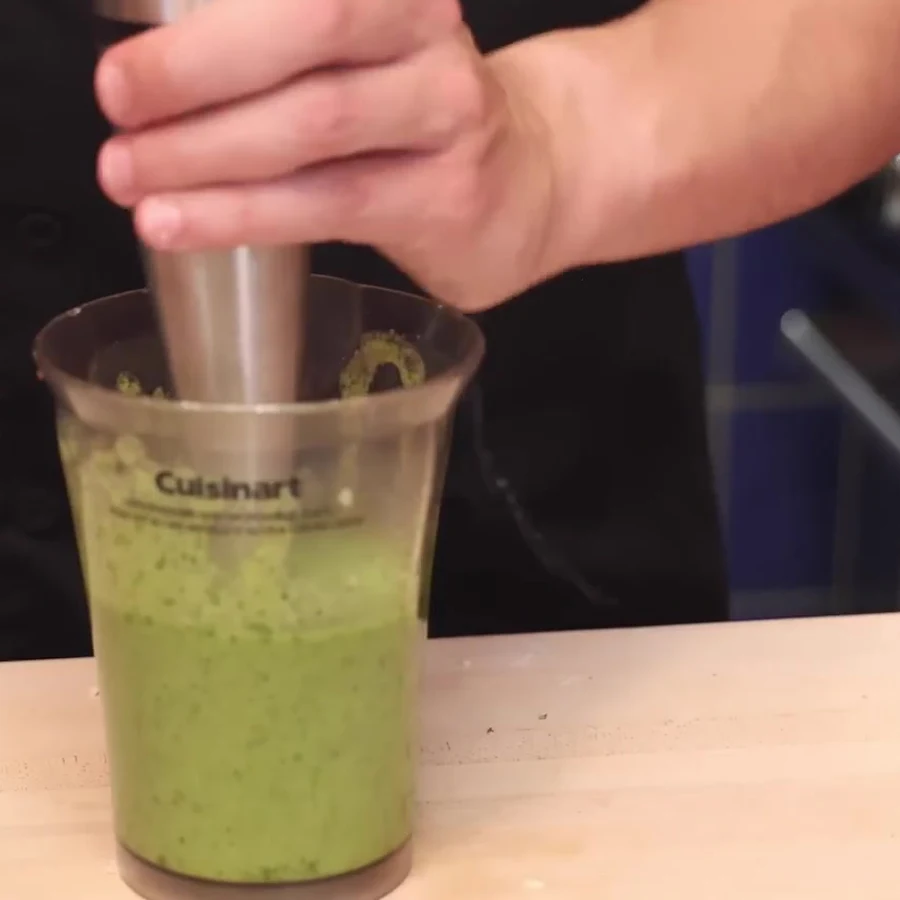
Add about half the oil and pulse to break down the leaves. Add the remaining oil gradually, stopping to scrape the cup as needed. Blend only until finely chopped and spoonable, then stir in the Parmesan. Taste before adding salt; the cheese already supplies some. Avoid long uninterrupted blending that warms the sauce. Set the pesto aside while rolling the dough.
Step 5 Roll Thin Pasta Sheets
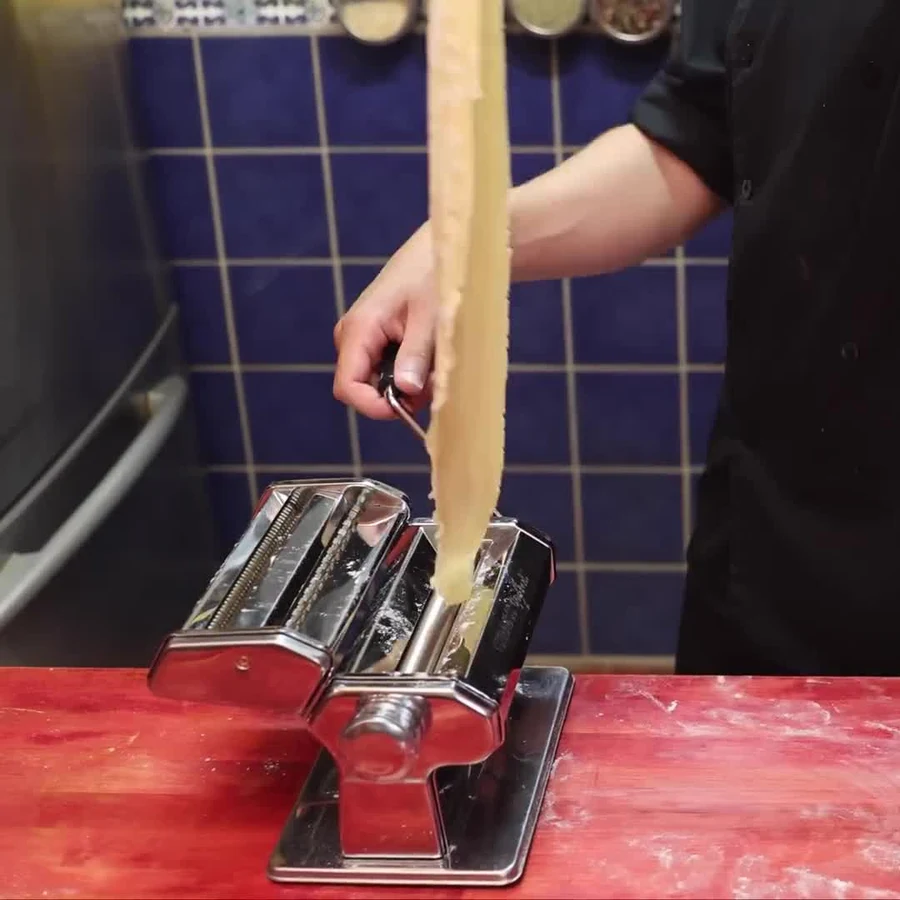
Work with one dough piece at a time, leaving the others covered. Flatten it and pass through the widest machine setting. Fold the sheet into thirds and pass through again until it is even. Move through progressively narrower settings until the sheet is about 1/32–1/16 inch thick and slightly translucent. Machine numbers vary. With a rolling pin, roll from the center outward, turning and lightly dusting the sheet as needed.
Step 6 Cut the Pappardelle
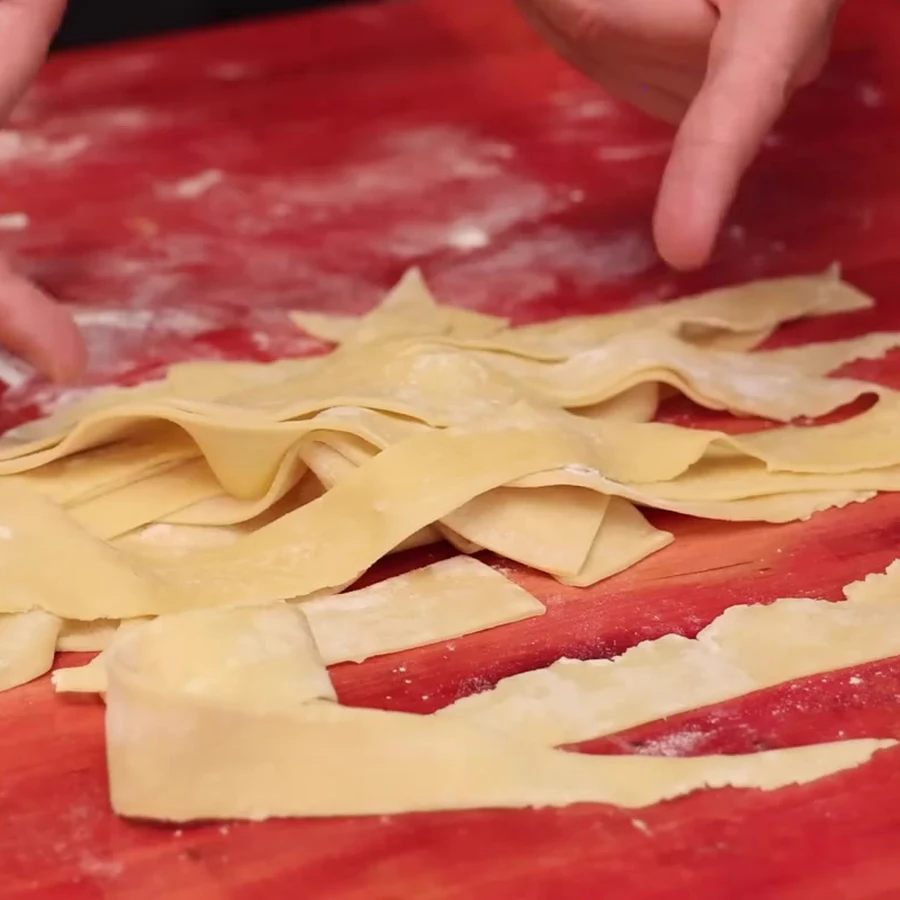
Lightly flour both sides of each sheet. Fold loosely and cut into ribbons about 3/4–1 inch wide, then unfold promptly. Cut very long ribbons into manageable lengths. Arrange in loose, lightly floured nests or separate strips. Avoid compressing them into a pile: fresh dough can stick together before it reaches the pot.
Step 7 Cook and Reserve Some Water
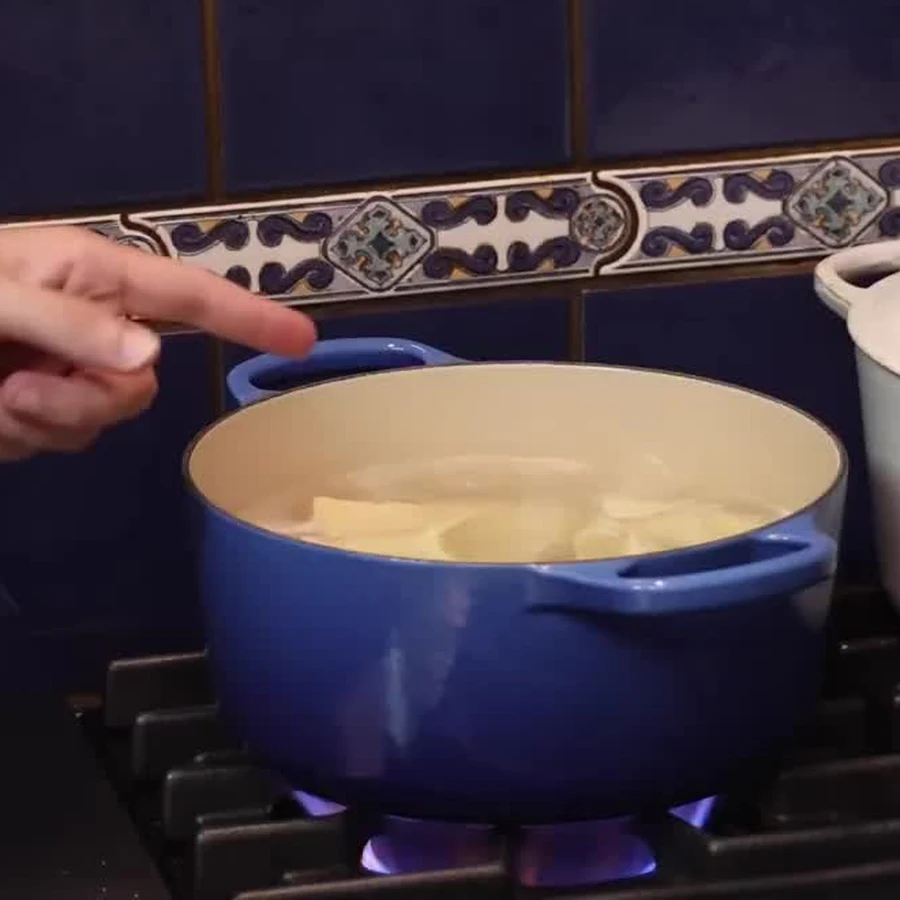
Bring 4 quarts water to a boil and add the measured cooking salt. Add the ribbons, stir gently to separate them and let the water return to a boil. Begin tasting after about 2 minutes; most thin fresh ribbons need 2–4 minutes, but thicker sheets take longer. Before draining, reserve 1 cup cooking water. Do not rinse the cooked pasta.
Step 8 Coat with Pesto and Serve
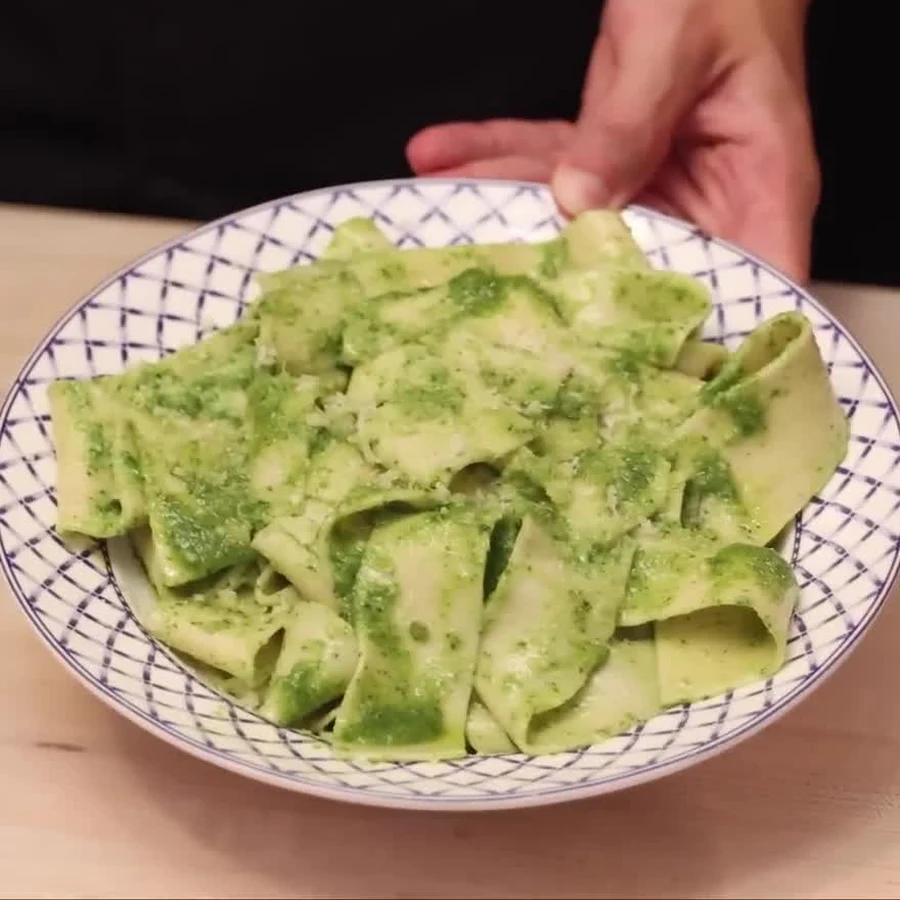
Put the pesto in a large bowl and loosen with 2 tablespoons cooking water. Add the drained hot pasta and toss gently. Add more water, 1 tablespoon at a time, until the ribbons are coated and glossy. Keep the bowl away from direct heat; do not fry or boil the pesto. Taste, adjust the seasoning and serve immediately with a little extra Parmesan if desired.
Substitutions and Troubleshooting
Purchased pasta: Replace the homemade dough with 12 oz dried pappardelle or tagliatelle, or 1 lb refrigerated fresh pasta, for four moderate servings. Follow its package directions. You still need reserved water and the off-heat finishing step.
Different nuts: Walnuts or unsalted sunflower seeds can replace the pine nuts by weight. Their flavor will change the sauce. For another affordable noodle meal with a different sauce, try easy linguine arrabbiata.
Dairy-free pesto: Replace the Parmesan with a dairy-free hard-cheese alternative you enjoy, adjusting salt after tasting. Check that it blends smoothly. Traditional Parmesan contains animal rennet; use a cheese labeled vegetarian if that matters for your table.
Dough that tears or springs back: Cover it and give it another 10–15 minutes to relax. Start at a wider setting rather than forcing a thick piece through a narrow gap. A sheet with a dry crust needs prevention: cover unused portions from the beginning.
Oily or thick sauce: Toss in small additions of warm cooking water. If the sauce becomes watery, stop adding liquid and keep gently turning the pasta. Next time, start with less water. My lemon pasta uses another simple finishing sauce; my homemade fresh pasta with tomato sauce is useful when you want a tomato-based meal instead.
Frequently Asked Questions
Can I Make the Pesto Ahead
Yes. Refrigerate it promptly in a covered container and use within four days, or freeze small portions. Thaw in the refrigerator. An oil layer does not make homemade pesto safe at room temperature. For the freshest pasta texture, roll and cook the dough on the day you serve it.
Can I Use a Rolling Pin
Yes. Roll small portions until thin and even, lightly dusting to prevent sticking. Hand rolling takes longer than a machine, especially for beginners. The thickness and texture of the sheet are the useful cues, not the time spent rolling.
Why Is My Pesto Darker Than Expected
Basil darkens with exposure to air and excessive heat. Dry the leaves, blend briefly and mix with the pasta off the burner. A slightly darker pesto can still taste good; color alone does not tell you whether stored food is safe.
How Do I Keep and Reheat Leftovers
Refrigerate in a shallow covered container within two hours and use within 3–4 days. Reheat with a splash of water until the center reaches 165°F. The basil color will fade and the pasta will soften, so freshly tossed pasta gives the best result.
What to Serve with Pesto Pasta
A Greek salad with cucumber and tomatoes or greens dressed with quick mustard vinaigrette balances the rich sauce. For a starter, serve fresh tomato bruschetta. A piece of soft and crispy focaccia is an optional accompaniment when you want a larger meal.
Browse my pasta recipe collection for more weeknight ideas. This pesto pasta is best served as soon as it is dressed, so prepare the salad and set the table before the ribbons go into the boiling water.
Homemade Pesto Pasta with Fresh Pappardelle
Ingredients
- 14 oz all-purpose flour about 3 1/3 cups, plus a little for dusting
- 4 large eggs
- Water only if needed for the dough, added 1 tsp at a time
- 1 1/2 oz fresh basil leaves about 1 cup firmly packed
- 7/8 oz pine nuts about 3 tbsp
- 2 small garlic cloves peeled
- 1 1/2 oz Parmesan finely grated (about 1/2 cup), plus optional extra for serving
- 6 tbsp plus 2 tsp olive oil
- Salt and black pepper to taste, for the pesto
- 4 quarts water for cooking the pasta
- 1 tbsp fine table salt for the pasta cooking water
- 1 cup reserved pasta cooking water; use only as needed
Instructions
- Make a well in the flour, add the eggs and gradually incorporate the flour with a fork. Gather into a dough.
- Knead 8–10 minutes until smooth and pliable, adding water 1 tsp at a time only if dry crumbs will not come together, or a little flour if sticky. Divide into four pieces, cover tightly and rest at least 20 minutes.
- Meanwhile, wash and thoroughly dry the basil, peel the garlic and finely grate the Parmesan. Put basil, pine nuts and garlic in a narrow blending cup.
- Pulse with half the oil, then add the remaining oil gradually until finely chopped and spoonable. Stir in Parmesan and season to taste. Avoid prolonged blending.
- Roll one covered dough portion at a time, starting at the widest machine setting, folding and repeating until even, then gradually narrowing to about 1/32–1/16 inch thick. Keep unused dough covered. A rolling pin also works.
- Lightly flour the sheets, fold loosely and cut into 3/4–1-inch ribbons. Unfold promptly and keep in loose, lightly floured nests.
- Bring 4 quarts water and the cooking salt to a boil. Cook ribbons until tender with a slight bite, generally 2–4 minutes depending on thickness. Reserve 1 cup cooking water before draining. Do not rinse.
- Away from direct heat, loosen the pesto in a large bowl with 2 tbsp cooking water. Add hot drained pasta and toss, adding more water 1 tbsp at a time until glossy. Adjust seasoning and serve immediately.