Sweet Potato Biscuits with Tender Layers and Crisp Golden Edges
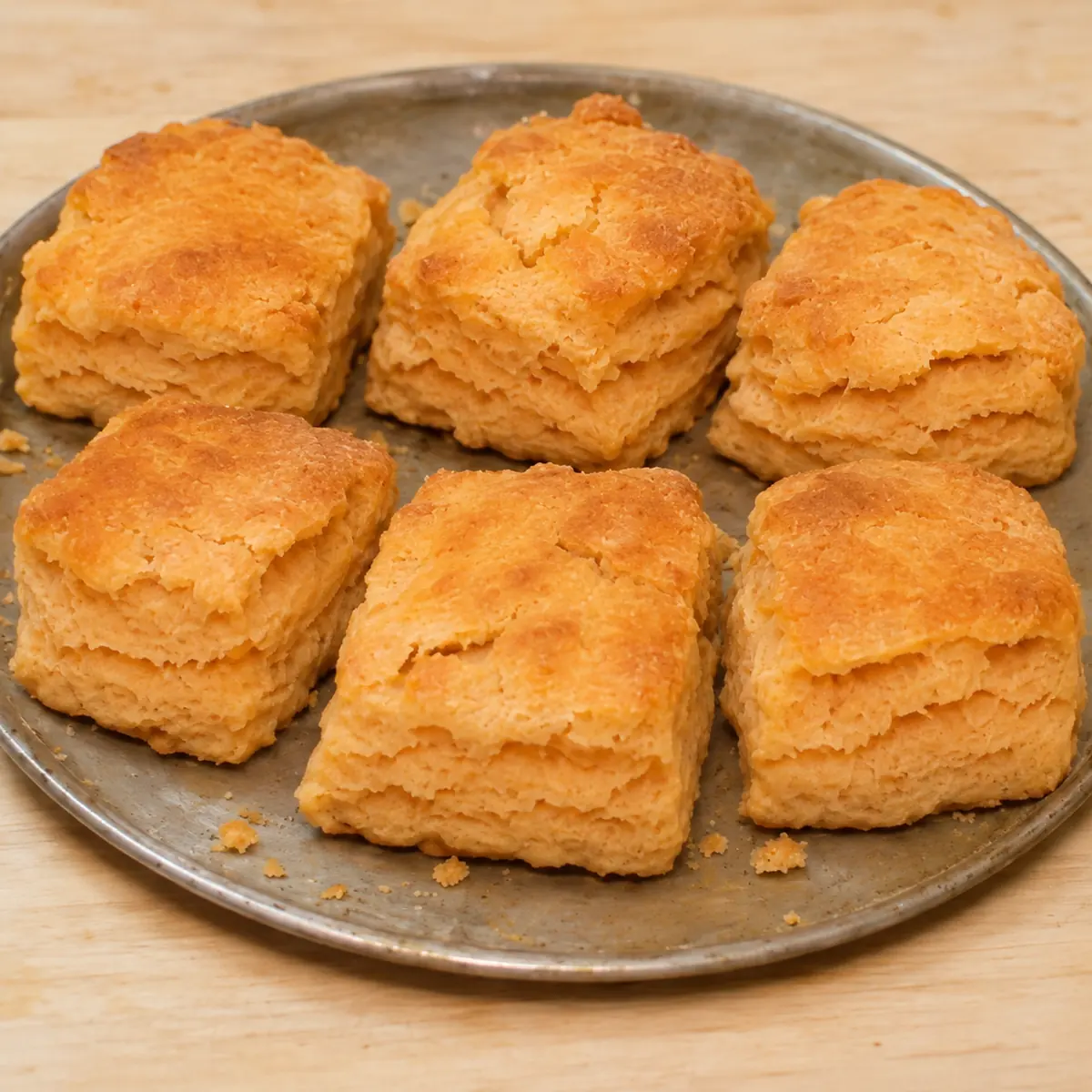
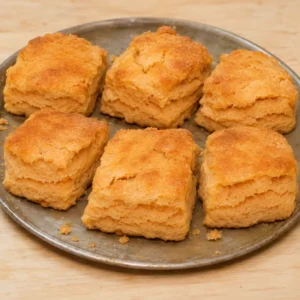
Sweet potato biscuits are tender quick breads made with cold butter and plain mashed sweet potato. They rise with baking powder, so there is no yeast or long proofing time. The orange mash gives the crumb a warm colour and mild sweetness, while the butter creates small layers. This version is cut into nine squares, which means there are no scraps to gather and roll repeatedly. Serve warm with soup, a roast dinner, or a little butter at breakfast.
Start with a cold, plain mash
Measure three-quarters of a cup plus one tablespoon of smooth cooked sweet potato, approximately seven ounces. The mash must be plain, without milk, butter, sugar, or marshmallows already added. Leftover holiday casserole is not an equivalent ingredient. Extra fat and sugar change the texture, and a loose mash can make the dough sticky before it has enough structure to hold its shape.
Baking a whole sweet potato gives a relatively dry mash. Pierce the skin and bake at 400°F until completely tender, generally forty-five to sixty minutes depending on size. Scoop out the flesh, mash until smooth, and cool before measuring. This cooking and cooling time is additional to the biscuit recipe. You can prepare the mash the day before and refrigerate it in a covered container.
If you use boiled sweet potato, drain thoroughly and allow steam to escape before cooling. There should be no puddle under the mash. My air fryer sweet potatoes offer another cooking approach, but use unseasoned cooked flesh for these biscuits. For a different use of the same vegetable, sweet potato and peanut stew belongs at the dinner table rather than in this dough.
Keep the butter in small pieces
Whisk the flour, baking powder, sugar, and salt in a wide bowl. Measure the flour lightly rather than packing it into the cup; an extra-heavy cup makes the biscuits dry. If you have a scale, use ten and a half ounces, approximately three hundred grams, for a more precise measure. The small amount of sugar rounds out the flavour but does not turn the biscuits into dessert.
Cut the cold butter into small cubes and work it into the flour with your fingertips or a pastry blender. Stop when the mixture has coarse crumbs with some butter pieces about the size of small peas. You are not trying to make a perfectly even sandy powder. Those remaining pieces flatten during folding and help form tender layers as the biscuits bake.
I keep the bowl away from the warm oven while working. If the butter starts to feel greasy or smear against your fingers, refrigerate the bowl for ten minutes before continuing. Chilling cannot undo prolonged kneading, but it can stop softened butter from disappearing into the flour. The goal is a cool, uneven mixture, not a glossy dough.
Add moisture gradually
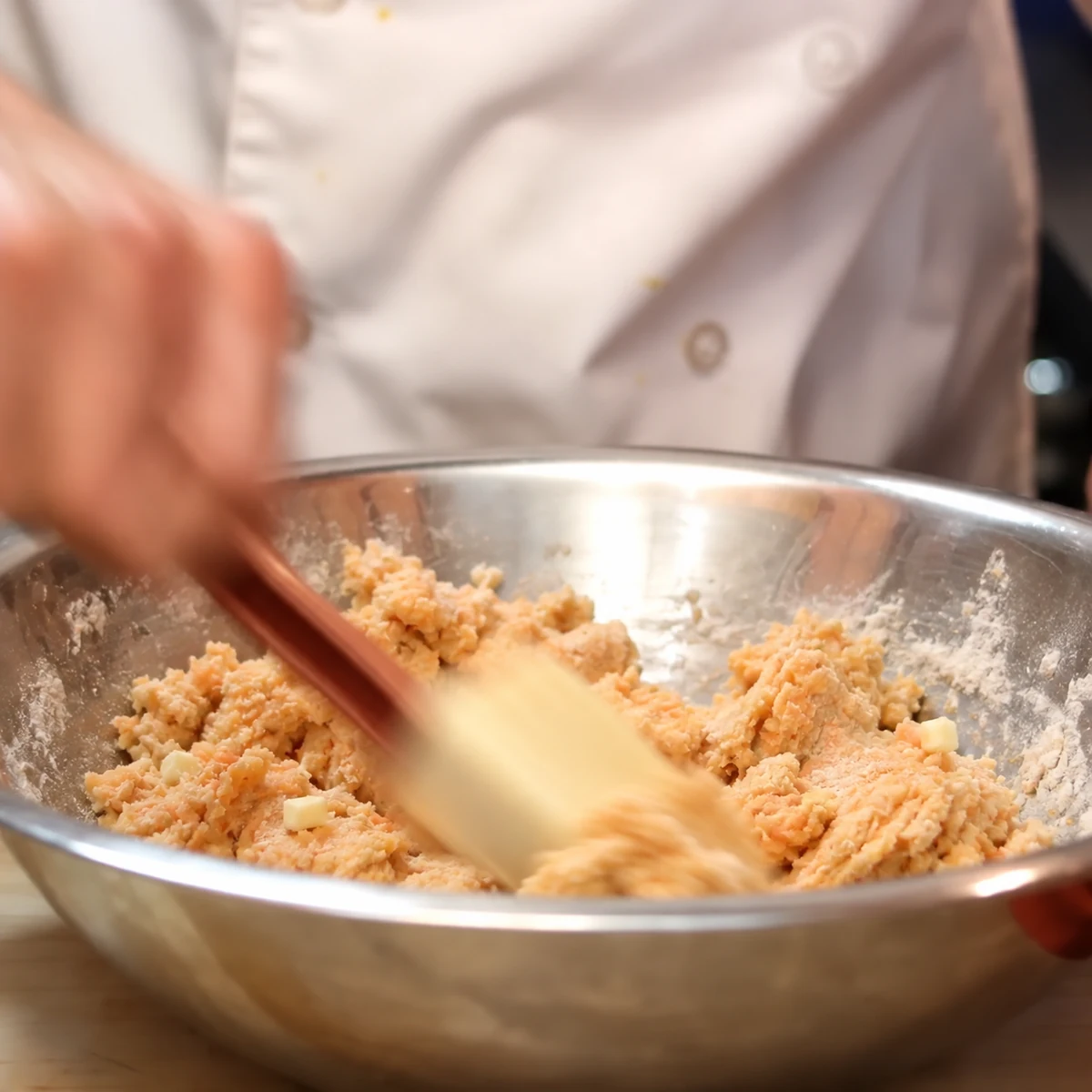
Stir the cold sweet potato mash with one-third cup of cold milk until reasonably smooth. Add to the flour mixture and fold with a fork or spatula, scraping the dry flour from the bottom. The dough will look rough at first. Press a handful together: it should hold while still feeling slightly tacky, rather than crumble into loose flour.
Only if dry pockets remain after gentle mixing, add up to one tablespoon of extra milk, a teaspoon at a time. Sweet potatoes vary in moisture, and the measured amount of milk is a starting point rather than an invitation to pour freely. If the dough is already soft and cohesive, stop. A very wet mixture spreads outward in the oven instead of lifting into a substantial biscuit.
Do not use a mixer or knead until elastic. Biscuits need much less handling than my homemade white bread or brioche. Those breads develop a structure through kneading and yeast fermentation; this dough relies on a quick mix, cold butter, and chemical leavening.
Fold twice and cut into squares
Turn the rough dough onto a lightly floured board. Pat into a rectangle about one inch thick. Fold it into thirds like a letter, turn a quarter turn, and gently pat out again. Repeat that fold once more. Two folds are enough to organize the butter pieces without working the dough excessively. Small cracks around the edges are normal and can be pressed together lightly.
Pat the dough into a square about seven and a half inches across and three-quarters inch thick. Cut straight down into a three-by-three grid with a sharp knife or bench scraper. Avoid sawing back and forth or pushing the cut edges together. Transfer the nine squares to a parchment-lined baking sheet, leaving about an inch between them so their sides can colour lightly.
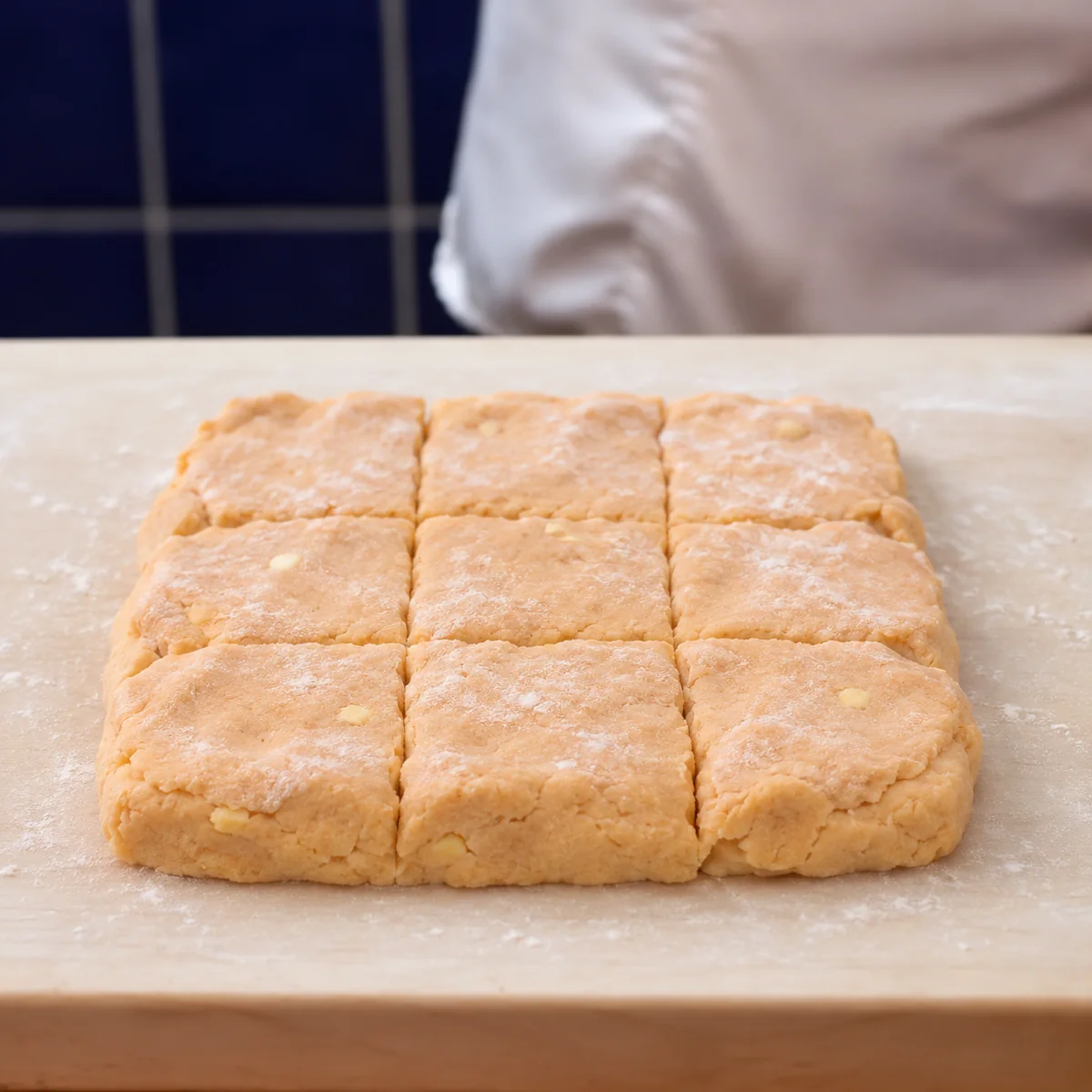
The squares will not all be identical, especially at the outer corners. I leave those small differences rather than trimming away dough just for appearance. For a richer savoury quick bread with another texture, try jalapeño cheddar drop biscuits. Their wetter dough is dropped onto the tray and should not be substituted into this folding method.
Chill briefly, then bake in a hot oven
Refrigerate the shaped biscuits for fifteen minutes while the oven reaches 425°F. A fully heated oven matters because the first burst of heat helps the dough rise before the butter melts away. Bake on the middle rack for eighteen to twenty-two minutes. The tops and bottoms should be golden, with a dry-looking edge rather than a pale band of raw dough.
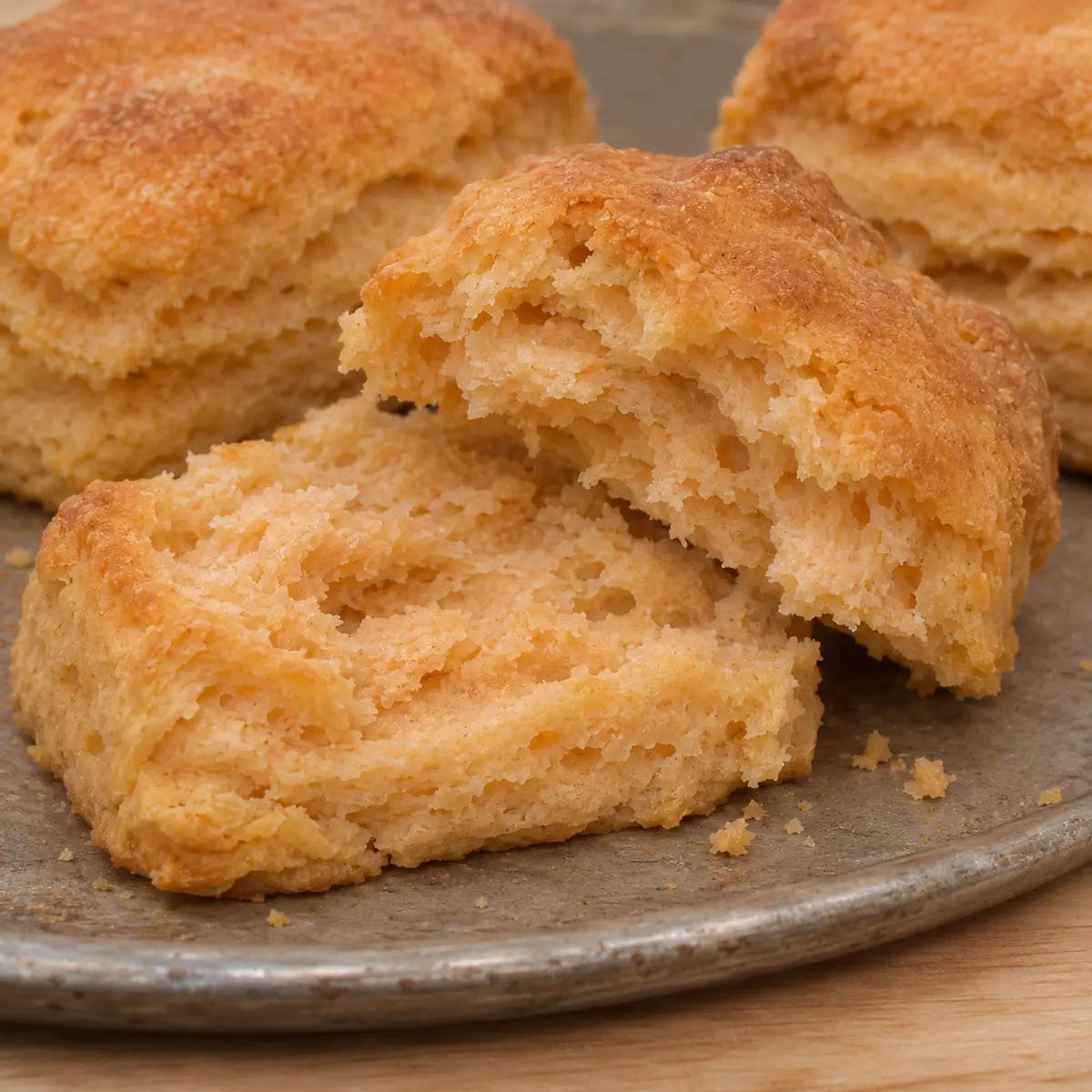
Break open one biscuit if you are unsure about the centre. The crumb should be set and tender, with no gummy strip or wet flour pocket. The orange colour can hide browning, so inspect the underside as well as the top. If the bottoms darken much earlier than the centres set, move the tray up one rack and check whether the pan is unusually dark or thin.
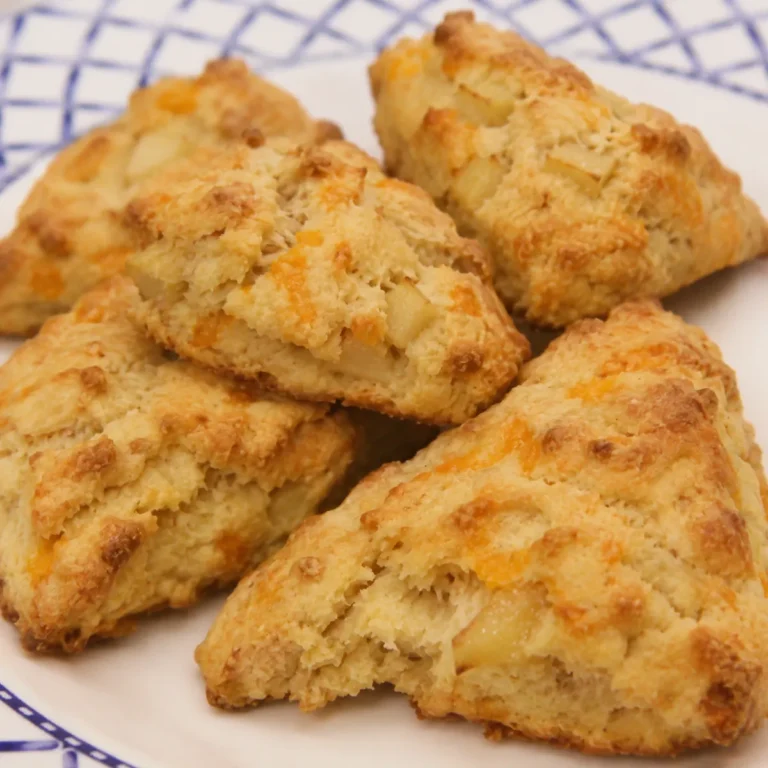
Rest on the tray for five minutes, then move to a rack or serve. These biscuits are best warm, when the butter aroma is strongest and the outside still has a little crispness. They are more tender and slightly denser than plain buttermilk biscuits because of the vegetable mash. Expect small layers and a soft crumb, not an extremely tall hollow structure.
Serve without hiding the sweet potato
Offer plain butter separately or use the biscuits to accompany fennel and sweet potato soup. They also suit a plate of roast meat and vegetables. For a different bread alongside a meal, cast-iron cornbread gives a more crumbly corn texture. My biscuits and sausage gravy use another biscuit base designed for that hearty sauce.
At breakfast, serve a biscuit with eggs rather than adding extra sugar to the dough. If you want a fruitier baked item, cranberry-orange scones are a separate option. For dessert, strawberry biscuit shortcake follows its own sweeter preparation and assembly. Keeping each dough’s purpose clear makes the results easier to repeat.
Store and refresh gently
Cool completely before closing a container, or trapped steam will soften the edges. Keep for one day in a cool room or refrigerate for up to three days. Freeze cooled biscuits for up to two months for best quality, separated so you can take out only what you need. Reheat thawed biscuits at 325°F for about eight to ten minutes, loosely wrapped for most of that time. Open the foil briefly at the end if you want to refresh the outside.
Sweet Potato Biscuits with Tender Layers and Crisp Golden Edges
Ingredients
- 2 1/2 cups all-purpose flour spooned and levelled
- 1 tablespoon baking powder
- 1 tablespoon granulated sugar
- 3/4 teaspoon fine salt
- 6 tablespoons unsalted butter cold and cubed
- 3/4 cup plus 1 tablespoon plain mashed cooked sweet potato cold (about 7 ounces)
- 1/3 cup cold milk plus up to 1 tablespoon only if needed
- A little flour for the board
Instructions
- Whisk flour, baking powder, sugar, and salt. Cut in cold butter, leaving small pea-size pieces.
- Mix cold sweet potato with 1/3 cup milk. Fold into dry mixture just until cohesive. Add up to 1 tablespoon extra milk a teaspoon at a time only if dry pockets remain.
- Pat into a rectangle on a lightly floured board. Fold in thirds, turn, and pat out; repeat once. Do not knead smooth.
- Pat into a 7 1/2-inch square about 3/4 inch thick. Cut straight down into 9 squares. Space on a parchment-lined baking sheet.
- Chill 15 minutes and heat oven to 425°F. Bake 18 to 22 minutes, until golden on top and underneath with a set, nongummy centre.
- Rest 5 minutes, then serve warm or cool on a rack.