Cranberry Orange Scones
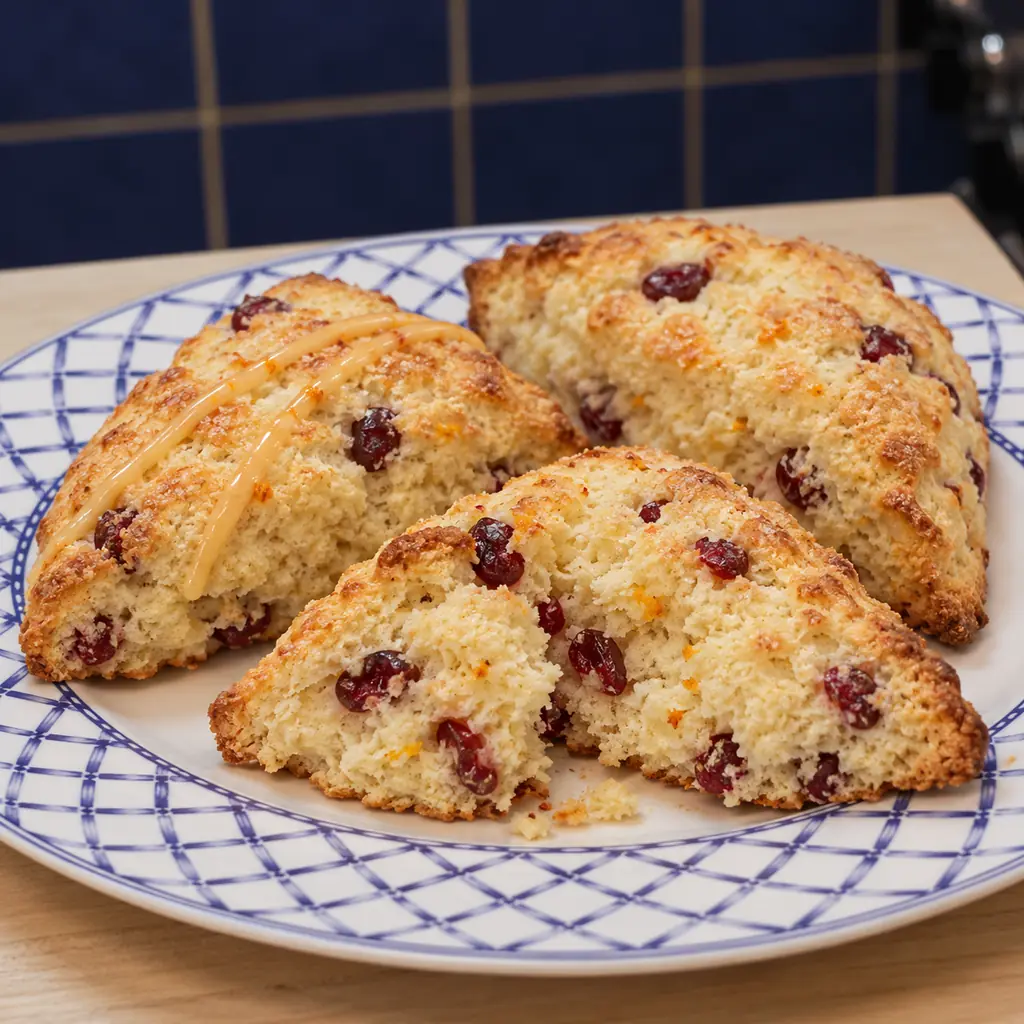
These cranberry orange scones are hand-cut wedges with dried cranberries, fresh orange zest, and a tender cream-based crumb. I use cold butter and a light touch when bringing the dough together, then chill the cut scones before baking. The tops become golden while the centre stays soft enough to split with your fingers once cooled slightly. A thin orange icing is optional. The recipe makes eight scones for breakfast, coffee, or an afternoon snack, with weights and US cup measures provided.
Keep the ingredients cold
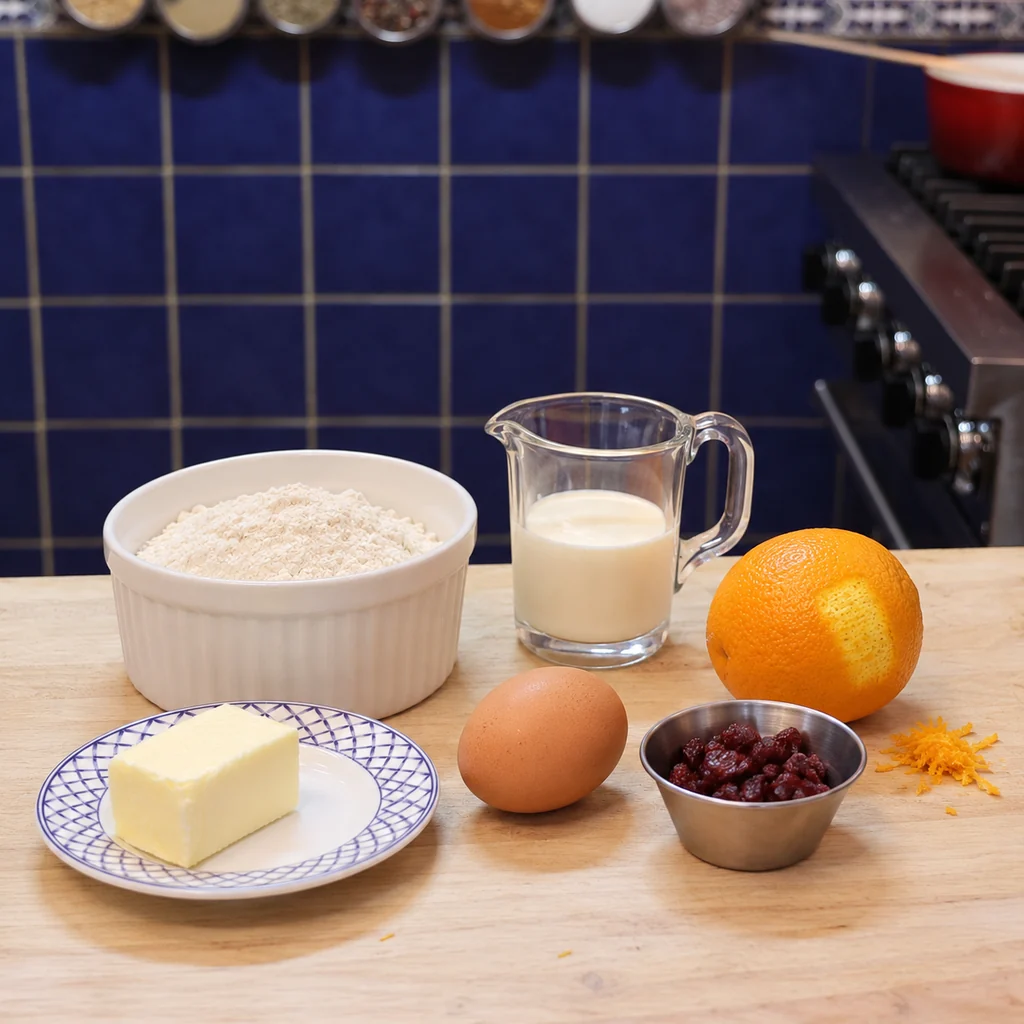
Cut 115 g, half a cup, of unsalted butter into small cubes and keep it refrigerated until the flour is ready. Measure the cream cold as well. I prefer preparing the tray, grater, and mixing bowls before touching the butter, especially in a warm kitchen. The aim is to leave small cold butter pieces in the dough, rather than rubbing until the mixture becomes a smooth oily paste.
Wash and dry the orange before grating its coloured outer skin. Avoid taking much of the white pith, which can taste bitter. The zest provides a stronger orange aroma than simply increasing the juice. For another bake with the same fruit combination, cranberry orange muffins use a batter method. These scones are shaped from a soft dough, so the mixing and handling should stay gentle.
Weigh the flour and check the raising agent
Use 300 g of all-purpose flour, about two and a half US cups. If measuring by volume, spoon the flour into the cup and level it without compressing. I like the scale because a heavily packed cup can make the dough seem dry even when the liquids are correct. Whisk the flour with sugar, baking powder, and salt so the raising agent is evenly distributed before any wet ingredients arrive.
Use baking powder, not baking soda, for the measured quantity. Check that it is within its useful date and has been stored dry. These scones get their lift from that raising agent and the cold dough structure, rather than yeast fermentation. If you prefer a spooned batter for another baking day, lemon blueberry muffins offer a different way to combine citrus with fruit without shaping a disk on the board.
Rub in butter without warming it too much
Add the cold butter cubes to the flour mixture. Cut or rub them in until you have a coarse mixture with some pea-sized pieces still visible. Use a pastry cutter, fingertips, or two knives, depending on what is comfortable. I don’t like chasing a perfectly even fine sand here, because that often means too much handling. If the butter begins to feel soft and greasy, refrigerate the bowl briefly before continuing.
Rub the orange zest lightly into the sugar before whisking with the flour if you want to distribute its aroma more evenly. Add the dried cranberries once the butter is incorporated, separating pieces that are stuck together. Use 100 g of dried cranberries rather than fresh or frozen berries. A different fruit form changes the moisture and acidity, so it should not be swapped by weight without reconsidering the dough.
Add the liquids and stop mixing early
Whisk one large egg with the cold cream, orange juice, and vanilla in a separate bowl. Pour over the dry mixture and fold with a fork or spatula just until shaggy clumps form. Some flour may remain at the bottom initially. Tip onto a lightly floured board and press the pieces together a few times, using only enough pressure to form a coherent dough. Do not knead it like bread.
If the dough will not hold together, add a teaspoon of cream at a time rather than a large splash. If sticky, dust the board and your hands lightly instead of mixing in handfuls of extra flour. I prefer a slightly rough surface to a smooth, firm ball. For a different fruit bake that is portioned in a pan, apple cinnamon muffins are another option; they should not be used as a model for how this dough ought to look.
Shape eight wedges and chill them
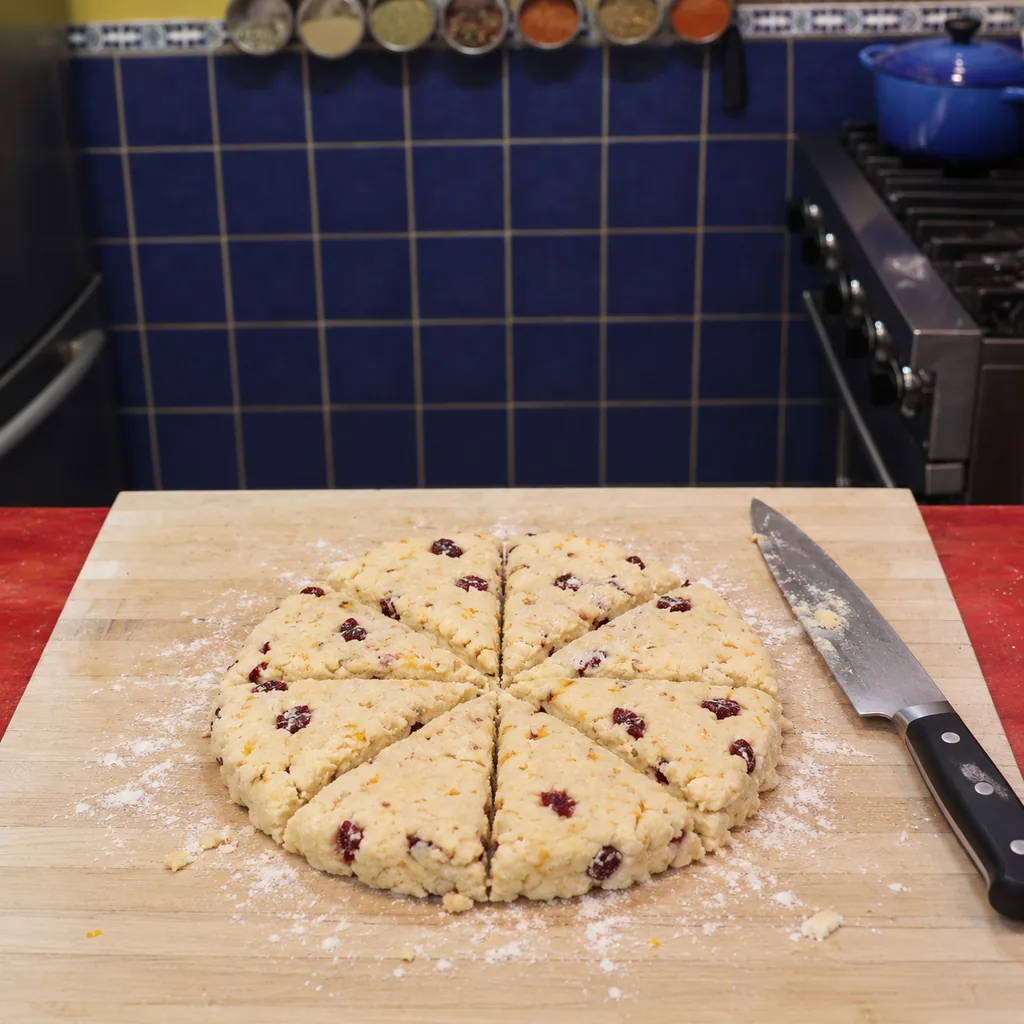
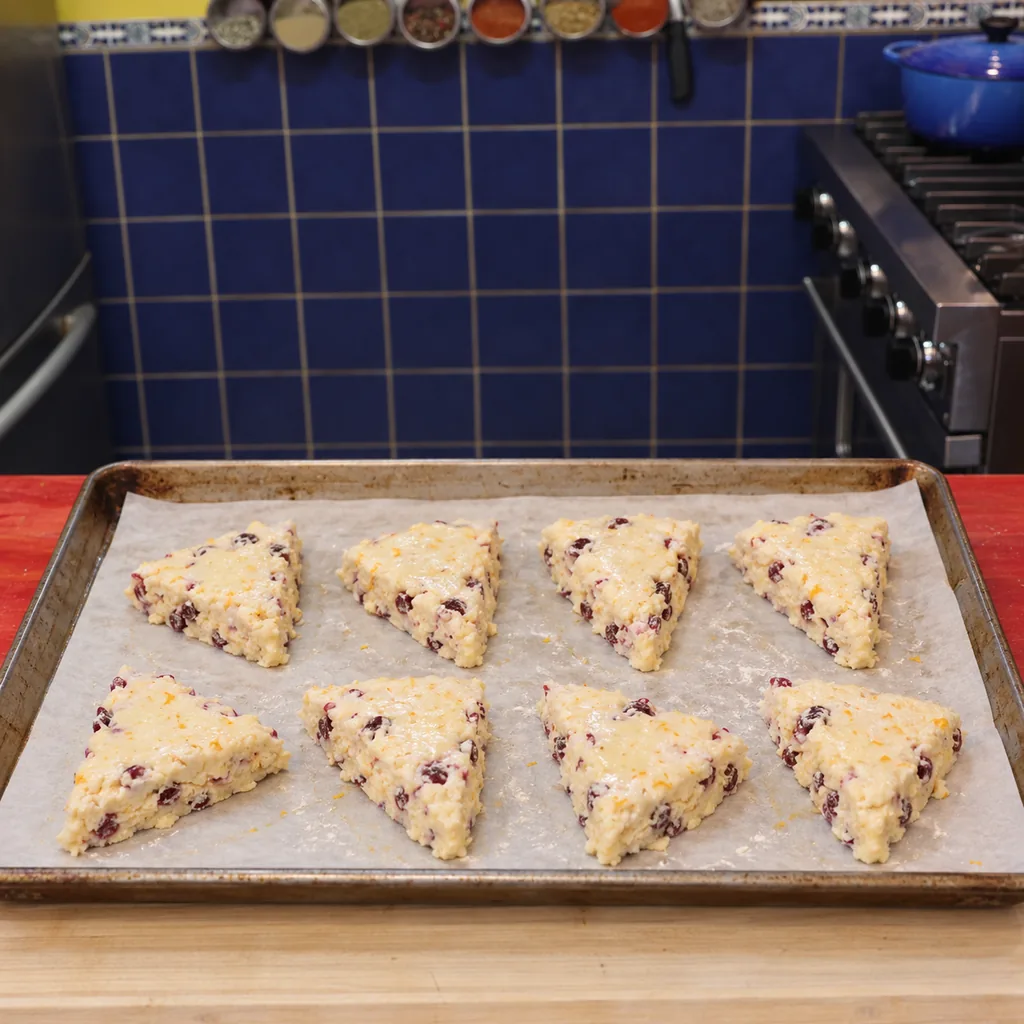
Pat the dough into a disk about 20 cm, or eight inches, across and 2.5 cm thick. Cut into eight wedges with a sharp knife, pressing straight down instead of sawing repeatedly. Move them to a lined baking tray with clear spaces between each piece. Small irregularities are fine. I like a hand-cut shape with enough room for the sides to bake rather than a tightly packed circle that stays soft at every join.
Refrigerate the cut wedges for twenty minutes while the oven heats to 200°C, or 400°F. Brush the tops lightly with the extra tablespoon of cream just before baking. Keep the brush from flooding the tray. This resting period is additional to active preparation time, and it gives you a practical moment to clear the board. Do not taste raw dough, which contains both uncooked flour and egg.
Check the sides as well as the tops
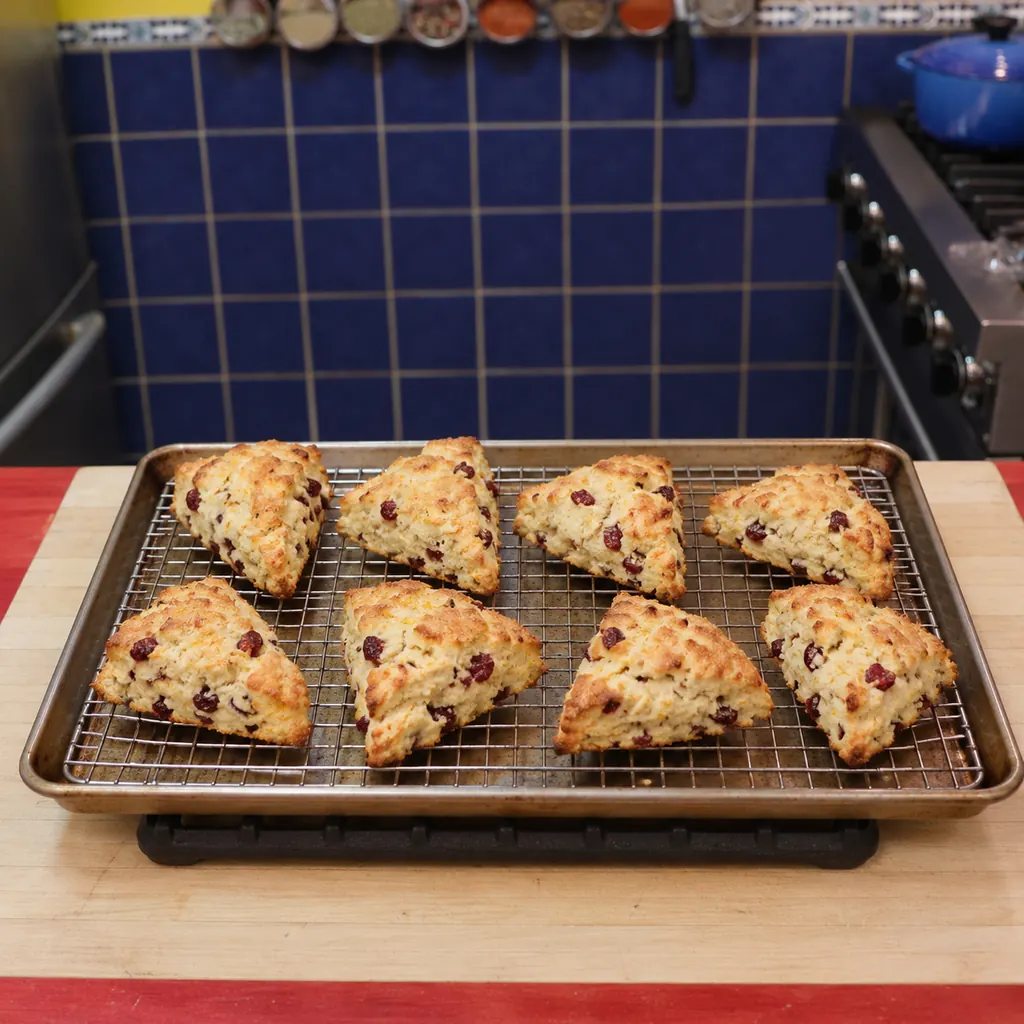
Bake on the middle rack for twenty-two to twenty-five minutes, until the tops are golden, the sides look set, and the bases have some colour. Oven behaviour varies, so begin checking near the earlier time. A thick wedge needs a little longer than a thin one, which is why an even disk helps. If the tray colours unevenly, turn it once after the scones have had time to begin setting.
Transfer to a rack and cool for about twenty minutes before adding icing. I prefer waiting until they are barely warm so the thin drizzle sits on the surface rather than disappearing into hot pastry. The crumb will also settle enough to split more neatly. For another seasonal bake to plan on a separate day, pumpkin muffins use a moist purée-based batter and a different balance of ingredients.
Optional orange icing and serving
For the icing, stir 60 g of icing sugar with two teaspoons of orange juice, adding up to one more teaspoon only if needed. It should fall in a thin ribbon from a spoon. Drizzle sparingly over the cooled scones. I like a little sweetness on top without hiding the cranberry pieces or making every surface sticky. The icing is optional and is excluded from the basic calorie estimate on the recipe card.
Serve with coffee or tea, or split and offer a small spoonful of homemade strawberry jam separately. The jam is an accompaniment rather than part of the dough. If planning a mixed baking table, apple turnovers with puff pastry provide a different texture, but prepare them on their own schedule instead of assuming they will bake at the same temperature and time as these wedges.
Storage and reheating
Scones have their most distinct outer texture on the day they are baked. Once completely cool, keep them in an airtight container for up to one day at a cool room temperature. For longer storage, freeze unglazed scones for up to two months for best quality. Wrap individually so you can thaw only what you need. I prefer adding the orange icing after thawing and warming rather than before freezing.
Warm an unglazed scone briefly in a moderate oven until pleasant to eat, watching so the dried fruit and edges do not overbrown. Glazed scones need gentler handling because the icing melts. If the crumb seems dense, check flour measurement and how much the dough was worked before changing the liquid quantity. If the wedges spread widely, consider whether the butter and cream were cold and whether the full chilling period was used before baking.

Cranberry Orange Scones
Ingredients
- 300 g 2 1/2 US cups all-purpose flour, spooned and levelled if using cups
- 75 g 6 tbsp granulated sugar
- 12 g about 1 tbsp baking powder
- 2.5 ml 1/2 tsp fine salt
- 15 ml 1 tbsp finely grated orange zest, without white pith
- 115 g 1/2 US cup cold unsalted butter, cubed
- 100 g about 3/4 US cup dried cranberries, separated if clumped
- 1 large egg
- 120 ml 1/2 US cup cold heavy cream, plus a few teaspoons only if needed
- 30 ml 2 tbsp orange juice
- 5 ml 1 tsp vanilla extract
- 15 ml 1 tbsp extra cream for brushing
- Optional icing: 60 g 1/2 US cup icing sugar and 10–15 ml (2–3 tsp) orange juice
Instructions
- Whisk flour, sugar, baking powder, salt, and zest. Cut or rub in cold butter to a coarse mixture with pea-sized pieces. Separate and stir in dried cranberries.
- Whisk egg, 120 ml cream, orange juice, and vanilla separately. Fold into dry mixture just until shaggy clumps form. Press together gently on a lightly floured board; add cream by teaspoons only if it will not hold. Do not knead.
- Pat into a disk about 20 cm wide and 2.5 cm thick. Cut 8 wedges with a sharp knife and space them on a lined tray. Refrigerate 20 minutes while heating oven to 200°C (400°F).
- Brush tops lightly with 15 ml cream. Bake on the middle rack 22–25 minutes until golden on top, set at sides, and lightly coloured underneath. Transfer to a rack.
- Cool about 20 minutes. For optional icing, mix sugar with 10 ml orange juice, adding up to 5 ml more if needed for a thin ribbon. Drizzle lightly over barely warm or cool scones.