Cast Iron Skillet Cornbread with Buttermilk
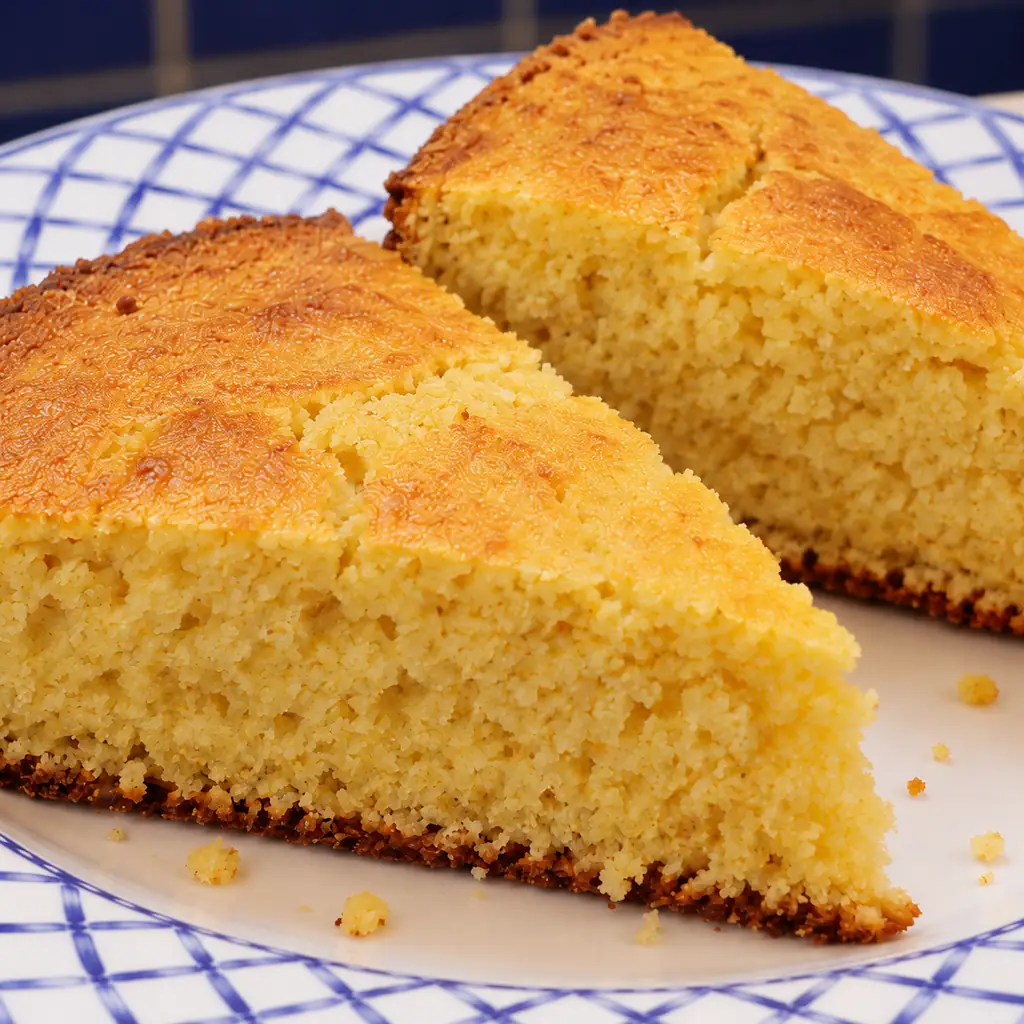
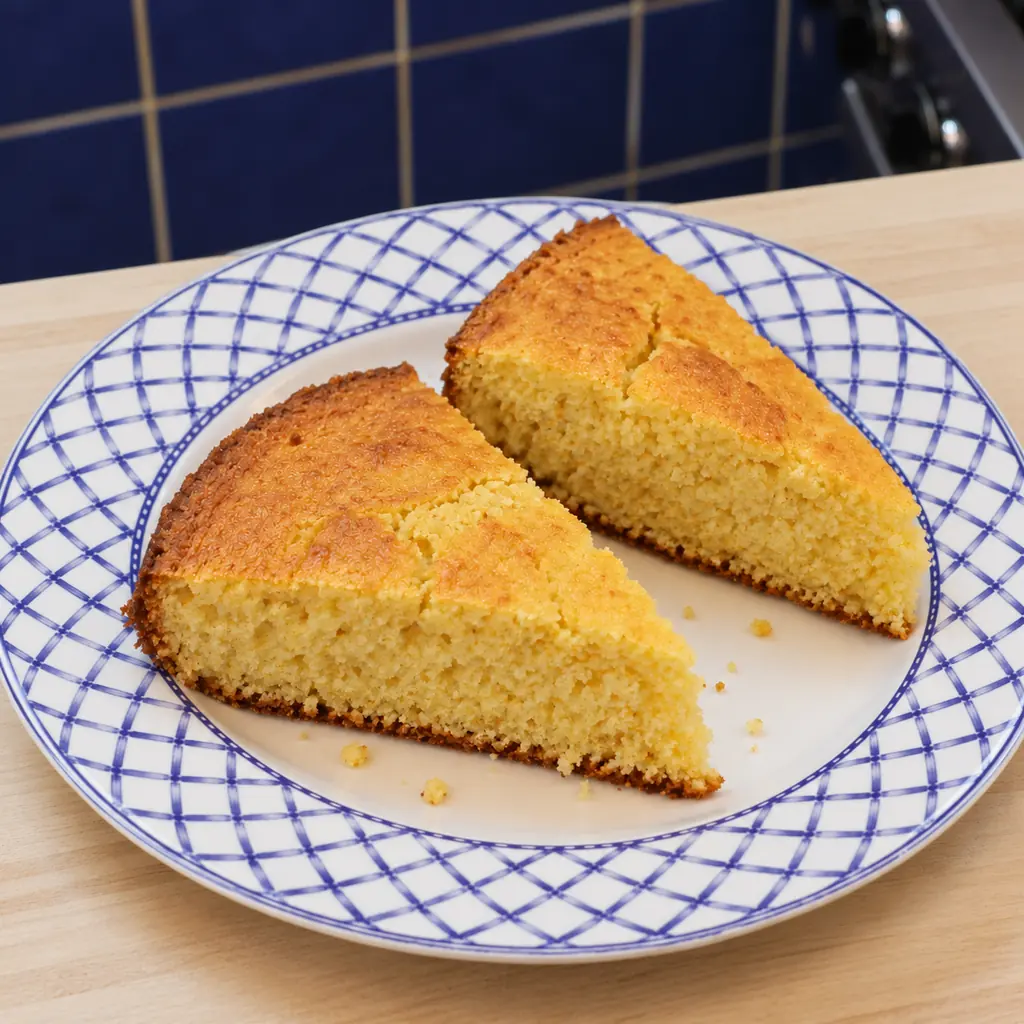
This skillet cornbread has a golden crust, a tender yellow crumb, and enough structure to cut into wedges beside a bowl of soup or chili. I preheat the cast iron before adding the batter, which helps the bottom begin cooking immediately. A modest amount of sugar rounds out the corn flavour without turning this into a sweet cake. The recipe fills a 10-inch skillet and makes eight wedges.
Choose the cornmeal before mixing
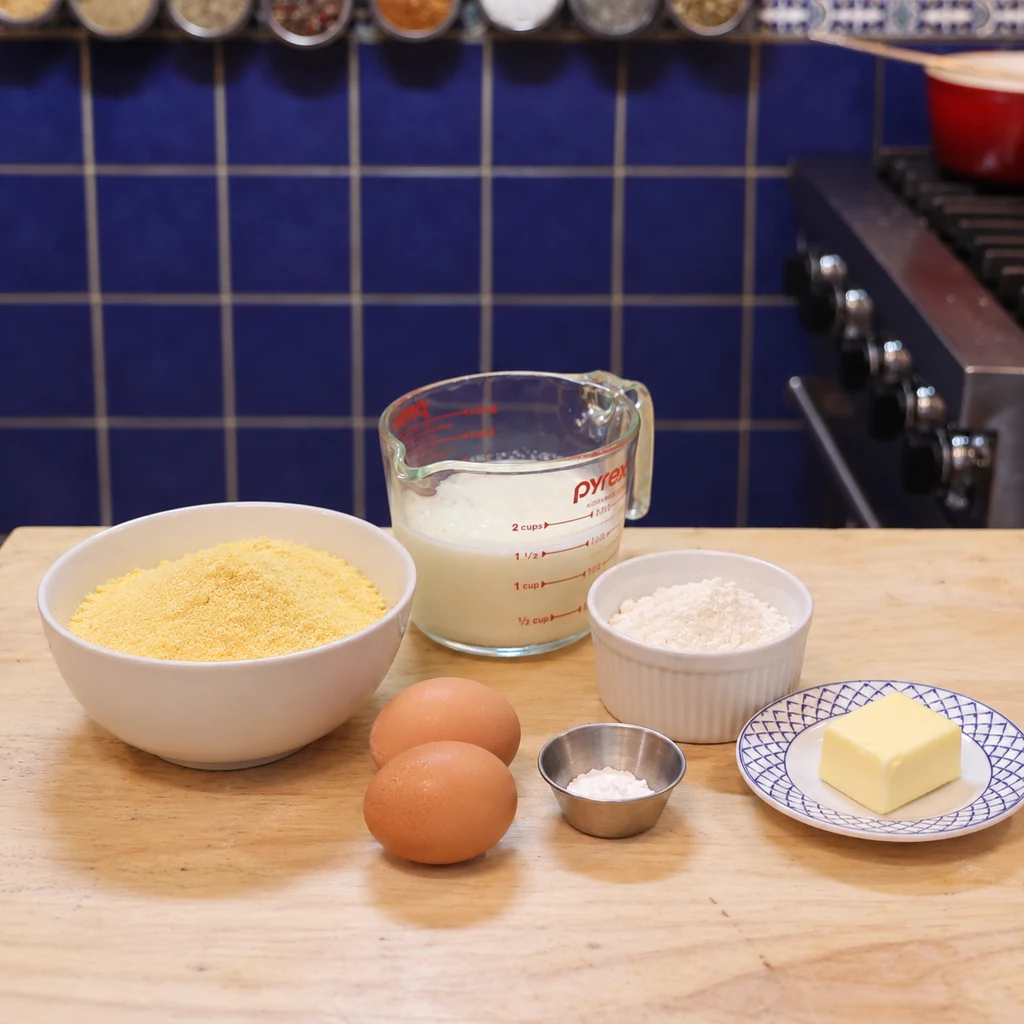
Use plain yellow cornmeal with a fine-to-medium grind. The recipe calls for 150 g, approximately 1 US cup depending on the product, so the weight is the more dependable measure. Cornmeal should look like ground corn granules. Cornstarch, finely milled corn flour, and a ready-made cornbread mix are different ingredients with different behaviour. Check the package rather than relying only on the colour.
Very coarse meal can give a harder texture in a quick bake. I prefer a finer medium grind for a crumb that still has a little corn texture but slices cleanly. If you are shopping in Canada, look for plain cornmeal or semoule de maïs, and read the grind description. In the US, packages may also be labelled self-rising; those contain added leavening and salt, so choose plain meal for the quantities in this card.
What the buttermilk and flour contribute
The batter uses 1 US cup (125 g) all-purpose flour alongside the cornmeal. That combination gives the wedges enough structure to lift from the skillet while keeping a recognizable corn flavour. I use 1 1/4 US cups (300 ml) cultured buttermilk, two large eggs, and melted butter for moisture. Let the melted butter cool slightly before whisking it into the eggs so it does not set them in little pieces.
The sugar is 2 tablespoons (25 g). I like this amount with savoury food because the cornbread is still useful for catching sauce and soup. It is not meant to be a dessert-style loaf. If you prefer less sweetness, reduce it to 1 tablespoon; do not replace the missing sugar with more flour. The baking powder gives the batter its lift, so measure it rather than estimating from an overflowing spoon.
Heat the skillet and prepare the bowls
Place an empty, well-seasoned 10-inch (25 cm) cast iron skillet in the oven while it heats to 425°F (220°C). Once the oven reaches temperature, leave the skillet inside for about 5 more minutes. Have oven mitts and a heatproof resting place ready before you take it out. The handle stays hot throughout the rest of the recipe.
Use one bowl for dry ingredients and another for wet ingredients. Whisk cornmeal, flour, sugar, baking powder, and fine salt thoroughly. In the second bowl, whisk the buttermilk, eggs, and 4 tablespoons (60 g) melted butter. Keep the remaining tablespoon (15 g) butter separate for the skillet. It goes into the hot pan just before the batter, rather than into the bowl.
I prepare the accompanying meal before mixing the batter. For example, chili con carne with beef and beans can stay gently warm while the cornbread bakes. That makes it easier to bring the bread to the table while its crust is still at its best.
Mix briefly and move straight to the pan
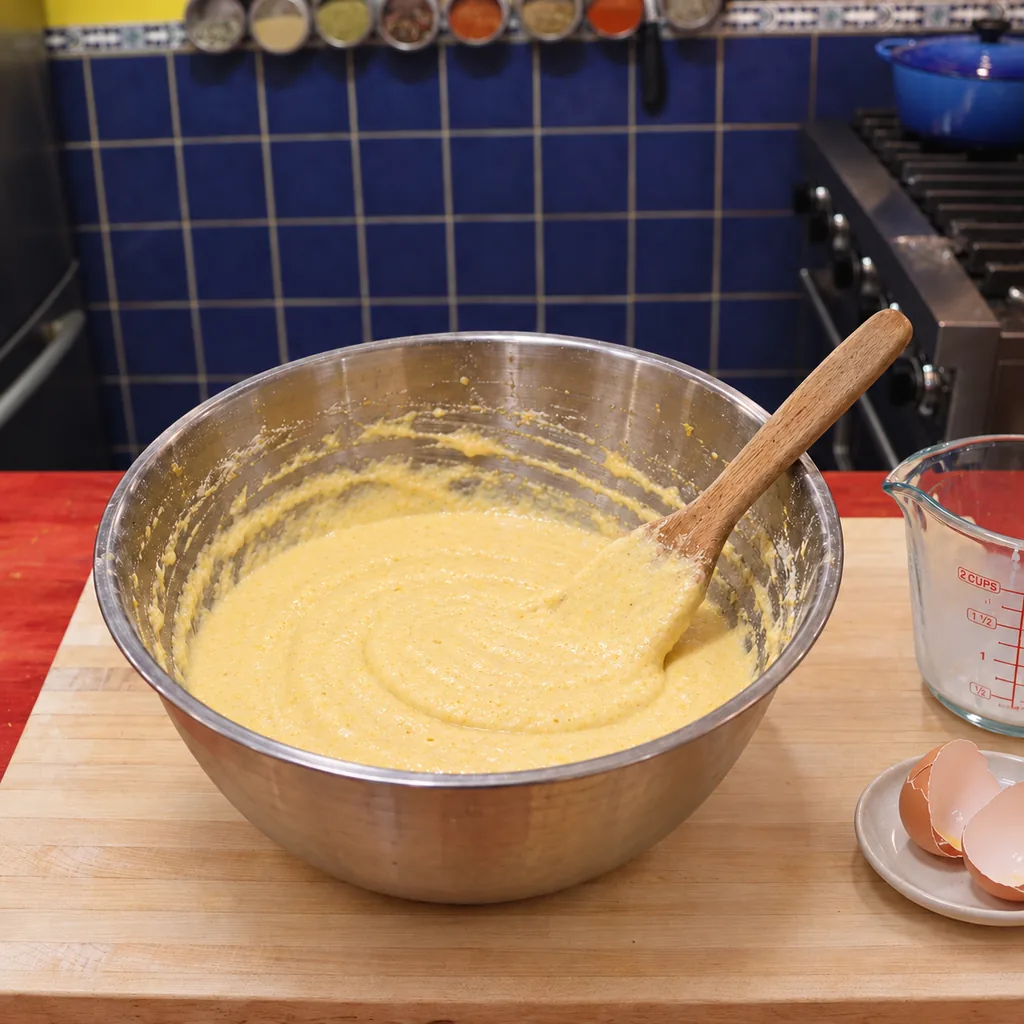
Pour the wet ingredients over the dry mixture and fold with a spatula until the dry pockets disappear. A few small lumps are fine. The batter should be thick but pourable and should spread when you tilt the bowl. I don’t beat it until perfectly smooth because that extra mixing can make the wheat portion of the batter tougher.
If the batter seems unusually stiff, fold in a tablespoon of buttermilk at a time, just enough to make it pour. Different grinds absorb liquid at different rates. Do not turn it into a thin crepe batter. The measured quantities should give a moist mixture that can be scraped into the pan and levelled lightly without pressing it into place.
Using oven mitts, remove the hot skillet and add the reserved tablespoon of butter. Swirl or brush it across the base and partway up the sides. Pour in the batter immediately, scraping the bowl and smoothing the top with two or three gentle strokes. A little sizzling at the edge is useful here. Return the skillet to the oven promptly so the hot base and the oven work together from the start.
Judge the centre as well as the crust
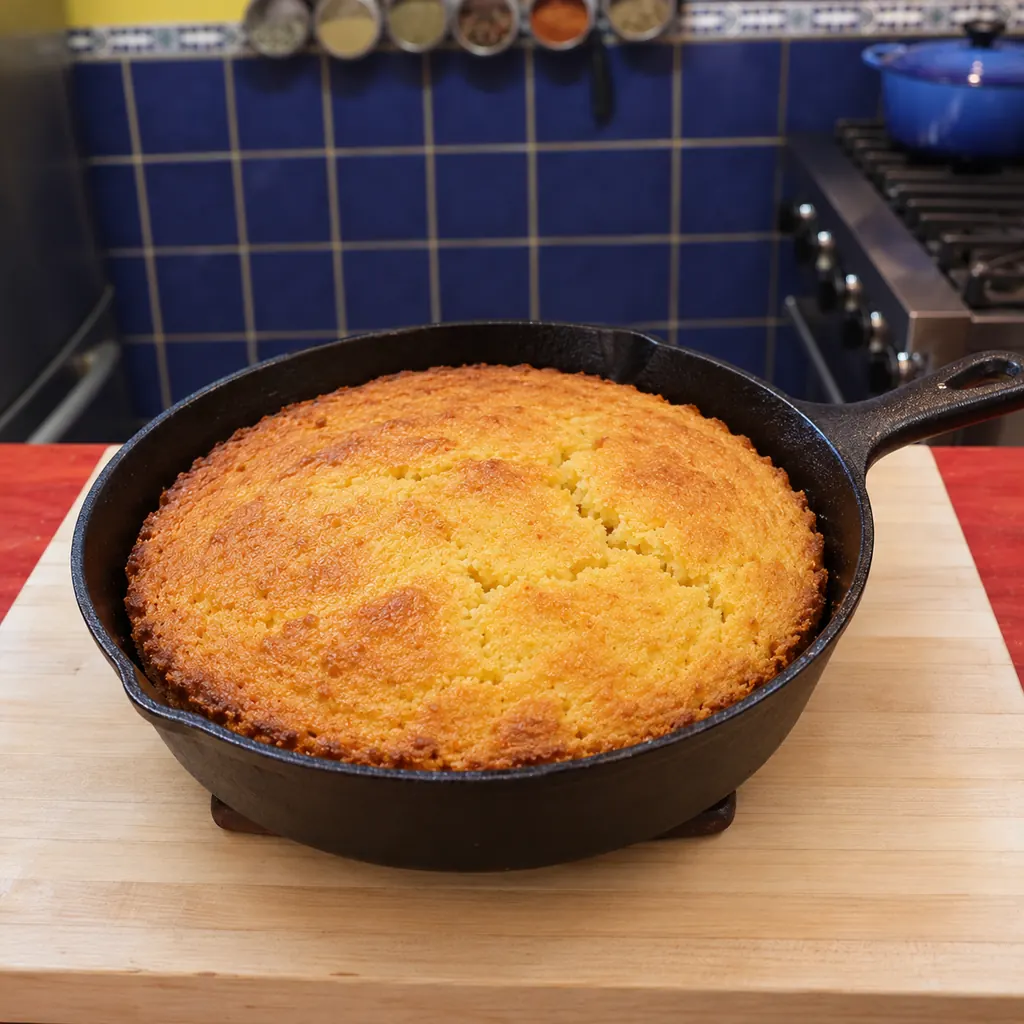
Bake for approximately 20 to 25 minutes. The top should be golden, the edges should pull slightly from the skillet, and a thin skewer inserted near the centre should come out without wet batter. A few tender crumbs are fine. If the centre still looks shiny and unset, continue for a few minutes before checking again.
A darker skillet, a strong oven, or a rack close to the lower heating element can brown the bottom faster. I bake on the middle rack and start checking near the shorter end of the time range. If the surface is already quite brown while the middle is still wet, loosely cover the top with foil for the last few minutes. Let the centre finish rather than removing the bread simply because the crust has colour.
Rest before cutting eight wedges
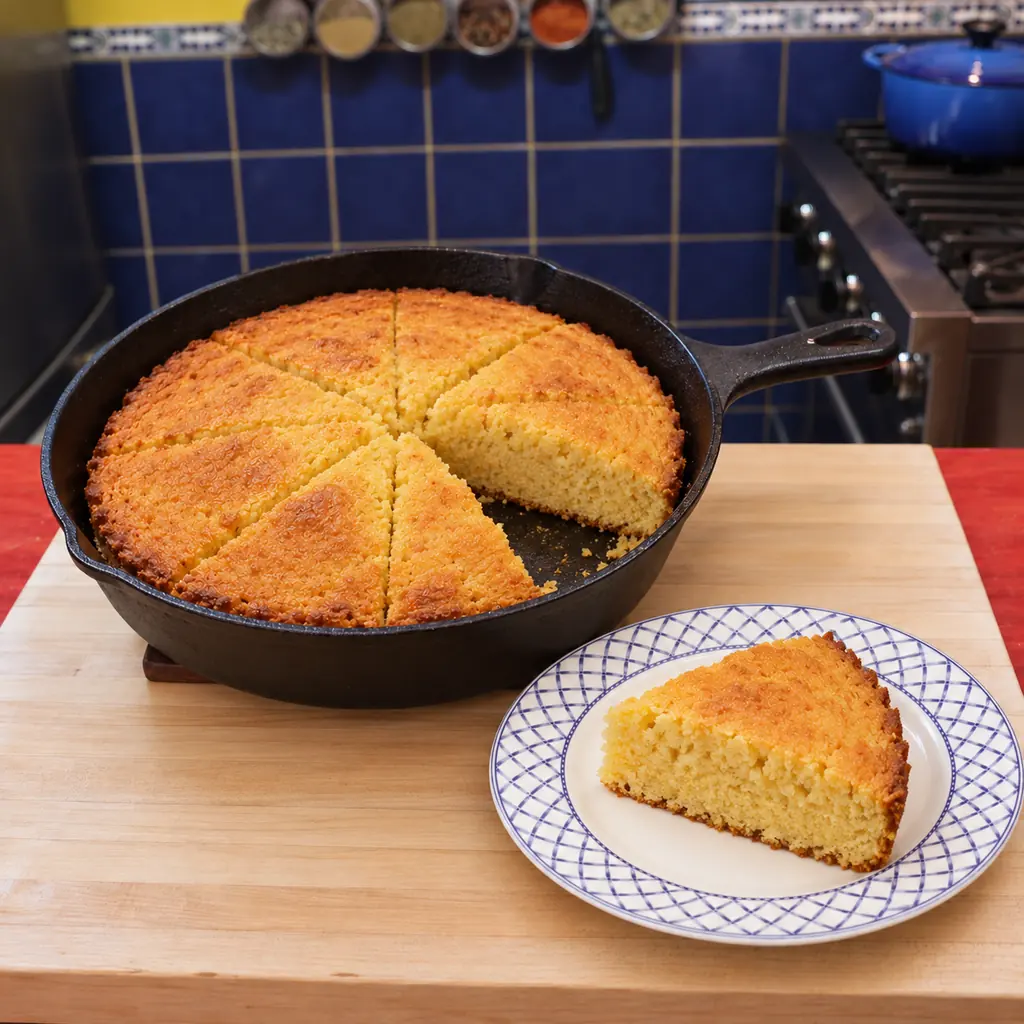
Set the skillet on a heatproof surface and let the cornbread rest for about 10 minutes. That short pause helps the crumb hold together when cut. Run a small spatula around the edge if needed, then cut into eight wedges. Lift with a broad spatula so the crisp bottom comes up with the slice rather than staying in the pan.
I like to serve the first wedges while they are warm, with a little butter available at the table. A creamy tomato soup gives a bright, smooth contrast, while green lentil soup makes a more substantial combination. Keep the bread beside the bowl until you are ready to eat so the crust stays distinct.
Pairings and sensible additions
Cornbread also works with beef and barley soup or a bowl of butternut squash and ginger soup. For a lighter meal built around vegetables, a little crunchy broccoli and cauliflower salad alongside a warm wedge brings a different texture. Choose the rest of the meal according to how rich or substantial you want it to be.
The plain version is useful because it does not compete with those dishes. A small amount of chopped chives can be folded in, but I avoid loading this batter with wet vegetables. Extra moisture changes the baking time and can leave a gummy band in the centre. If you add a handful of grated cheddar, scatter it through the batter rather than making a heavy layer on the bottom.
Storing wedges and restoring the crust
Cool the remaining cornbread before wrapping it so trapped steam does not make the crust soggy. Refrigerate in a covered container and use within 2 to 3 days, or freeze individual well-wrapped wedges for up to 2 months for best quality. Separating the wedges makes it easy to take out only what you need for another meal.
Reheat on a small baking tray in a 325°F (160°C) oven for about 8 to 12 minutes, longer if starting from frozen. A loose foil cover keeps the top from drying before the centre warms. Uncover briefly at the end if you want the edges a little crisper. The microwave is convenient for a soft wedge, but I prefer the oven when I want to recover some of the original crust.
Cast Iron Skillet Cornbread with Buttermilk
Ingredients
- 150 g plain yellow cornmeal fine-to-medium grind, about 1 US cup depending on product
- 1 US cup 125 g all-purpose flour, spooned and levelled
- 2 tablespoons 25 g sugar
- 2 1/2 teaspoons 10 g baking powder
- 1 teaspoon fine salt
- 1 1/4 US cups 300 ml cultured buttermilk, plus a little only if needed
- 2 large eggs
- 4 tablespoons 60 g unsalted butter, melted and cooled slightly
- 1 tablespoon 15 g unsalted butter, for the skillet
Instructions
- Place a well-seasoned 10-inch (25 cm) cast iron skillet in the oven and heat to 425°F (220°C). Once the oven reaches temperature, preheat the skillet about 5 minutes longer. Prepare a heatproof place and oven mitts.
- Whisk cornmeal, flour, sugar, baking powder, and salt in one bowl. Whisk buttermilk, eggs, and the 4 tablespoons melted butter in another.
- Fold wet ingredients into dry just until no dry pockets remain. The batter should be thick but pourable. Add a tablespoon of buttermilk only if unusually stiff; do not beat smooth.
- Using oven mitts, remove the skillet. Add the reserved tablespoon butter and coat the bottom and lower sides. Immediately pour in batter, level lightly, and return to the oven.
- Bake 20 to 25 minutes, until golden, the edges pull slightly away, and a skewer near the centre comes out without wet batter. Rest in the skillet for 10 minutes before cutting eight wedges.