Easy Stirred-Egg Shakshuka with Peppers and Tomatoes
This shakshuka is a skillet of tender peppers, red onion and tomatoes with the eggs stirred directly through the vegetables. Instead of whole eggs sitting in wells of sauce, you get small, softly set pieces in every spoonful. It makes a simple meatless lunch or light supper, with bread to pick up the tomato sauce.
This recipe is based on my YouTube video, with a few adjustments since publication to clarify the quantities and cooking cues. In the video, I use roughly a pound of mixed fresh vegetables and three eggs. The written version gives each ingredient a useful measure and explains how far to reduce the tomato mixture before the eggs go in.
{VIDEO}
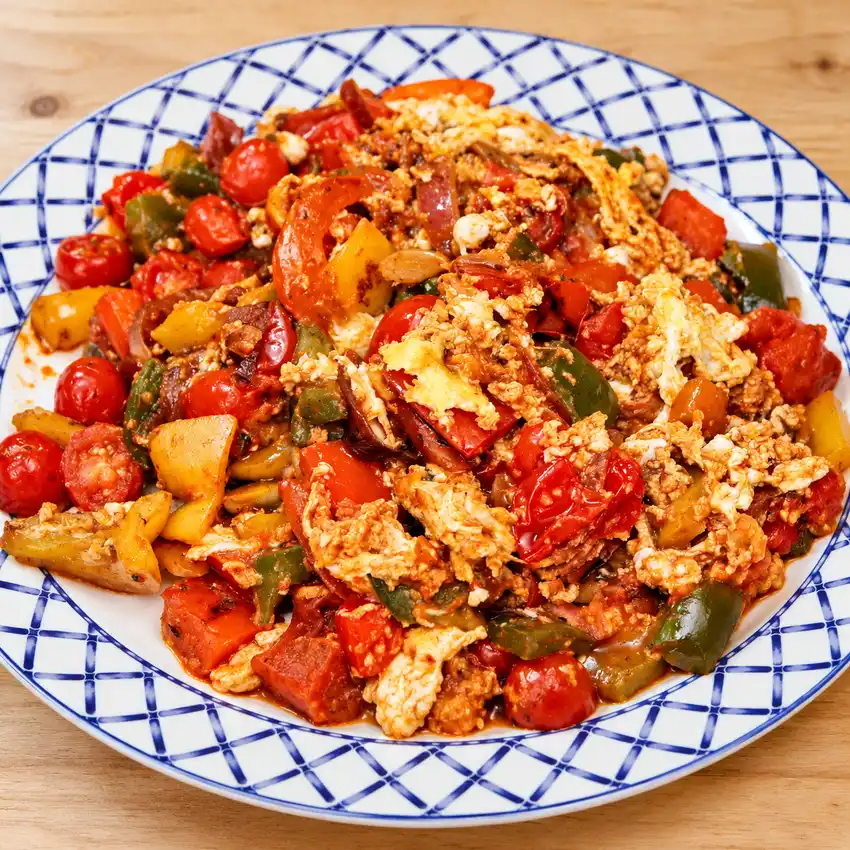
The stirred finish is the difference
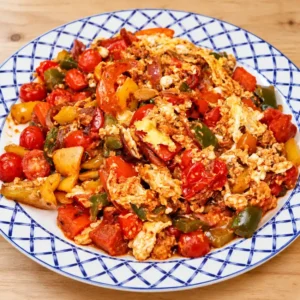
This is the preparation shown in the video: the eggs are broken into the pan and mixed with the vegetables. Do not expect the appearance of a skillet topped with intact fried eggs. The pieces of egg should stay recognizable among the peppers rather than disappearing into a watery tomato soup.
I make it this way because the eggs spread through the whole dish and the portions are easy to divide. It is also a lighter meal than my merguez shakshuka, which adds sausage. A pepper-and-egg piperade shares some ingredients, but this version uses crushed tomatoes and warm spices in its sauce.
The vegetables need time before the eggs. Once the eggs are added, you cannot keep simmering indefinitely to soften hard peppers without making the egg pieces tough. That is the main sequencing mistake to avoid. Build the vegetable texture first, reduce the sauce, then finish with eggs.
Ingredients and proportions
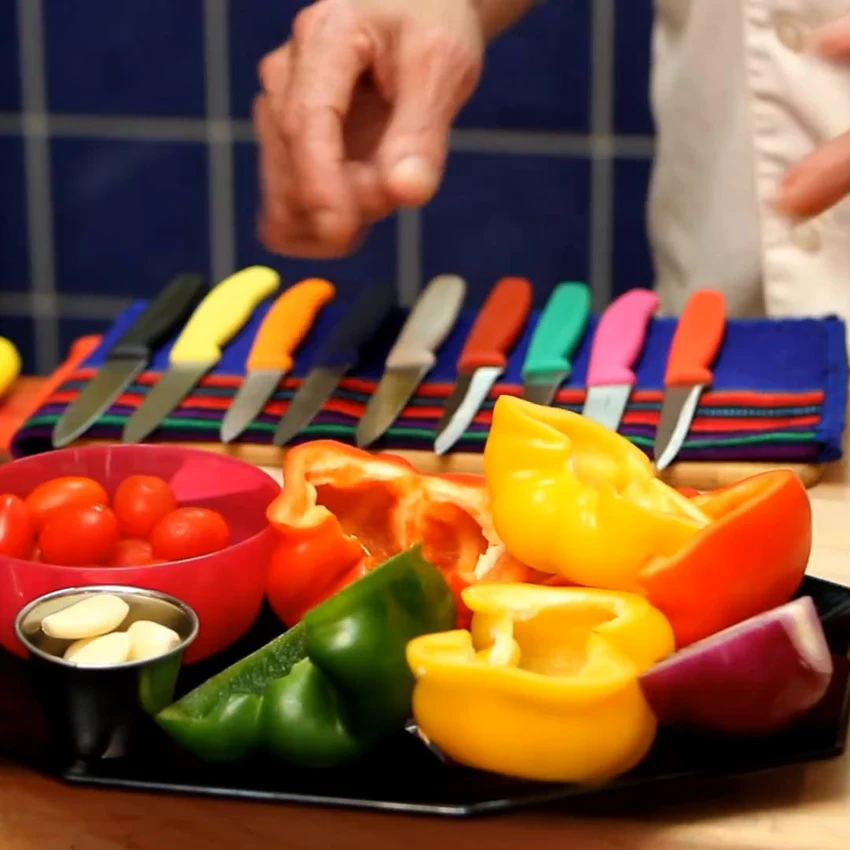
Use half each of a red, yellow and green bell pepper, one small red onion, about 1 cup cherry tomatoes and two garlic cloves. Together, these make approximately a pound of fresh vegetables, close to the quantity mentioned in the video. Chop the peppers into small pieces of similar size and slice the onion thinly.
One cup crushed tomatoes provides enough liquid to bring the pan together without flooding it. The fresh cherry tomatoes contribute sweetness and a different texture. Halve them rather than leaving them whole. If you want to understand a longer sauce-making method, my fresh-tomato sauce is a separate base recipe, not a required extra preparation here.
Three large eggs make three light portions, as in the video. For a substantial main meal, serve two larger portions instead, or offer bread and a salad alongside. The recipe card uses three servings; its calories do not include bread. Do not silently increase the eggs without allowing enough pan space and checking the seasoning again.
Cumin and a mild couscous spice blend give the sauce its warm seasoning. Start with ½ teaspoon of each. Blends differ in salt, heat and strength, so taste before adding more. If you do not have the blend, a mild ras el hanout is an optional replacement, not a claim that every shakshuka requires it. Olive oil, salt and pepper finish the short ingredient list.
Cook it in the right order
Step 1: Cut the vegetables
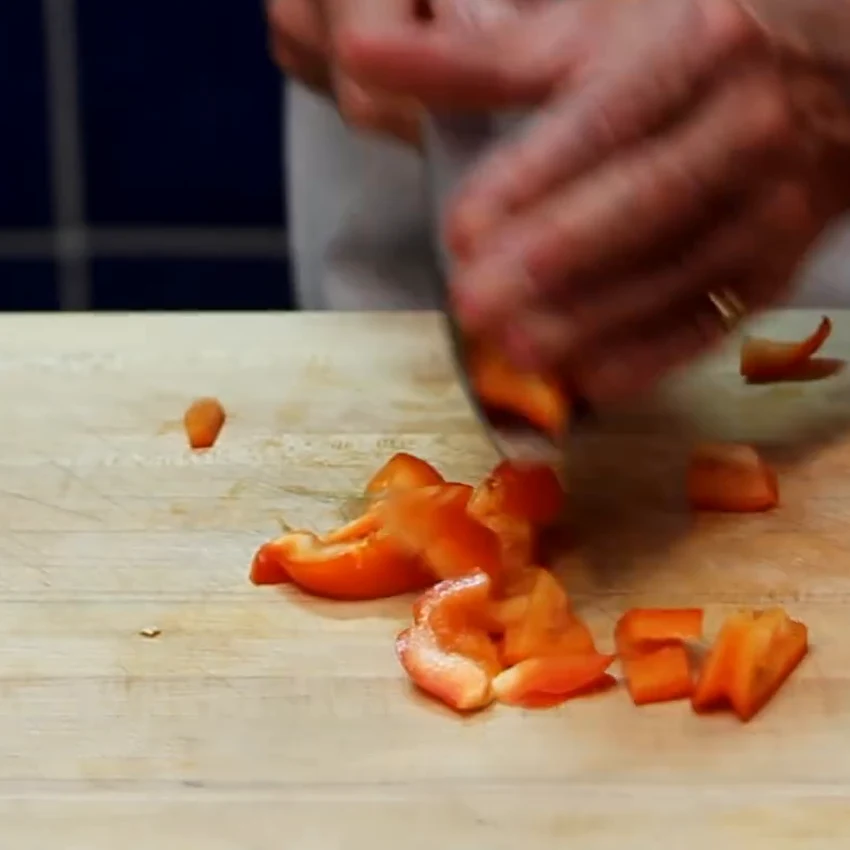
Remove the pepper seeds and pale ribs, then cut the peppers into small pieces. Thinly slice the onion, mince the garlic and halve the cherry tomatoes. Keep the garlic and tomatoes separate from the peppers because they join the pan later. Open and measure the crushed tomatoes before cooking.
Step 2: Soften onion and peppers
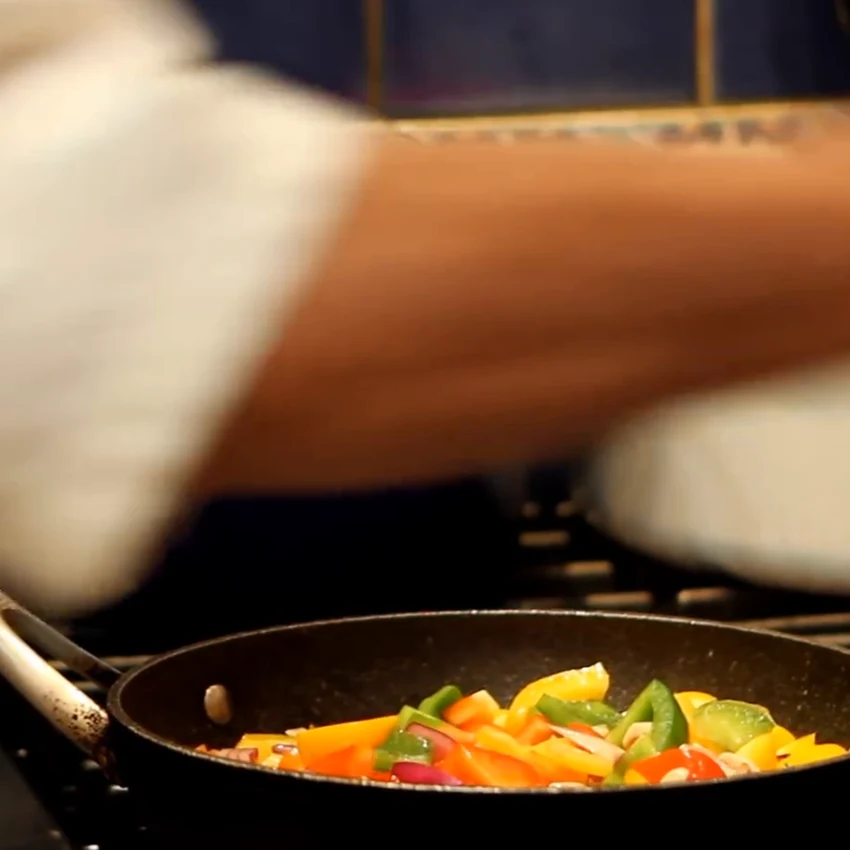
Heat 2 tablespoons olive oil in a wide skillet over medium heat. Add the onion and cook for about 2 minutes, then add the peppers and a small pinch of salt. Cook for 6–8 minutes, stirring regularly, until the peppers bend easily when pressed with the spoon and the onion is translucent. Lower the heat if the onion starts scorching.
Add the garlic for the last 30–60 seconds. I prefer to add it later because minced garlic browns much faster than the peppers soften. The pan should smell fragrant, not acrid. A rustic ratatouille uses another approach to cooked vegetables, including additional ingredients; it is not a shortcut for this step.
Step 3: Build and reduce the tomatoes
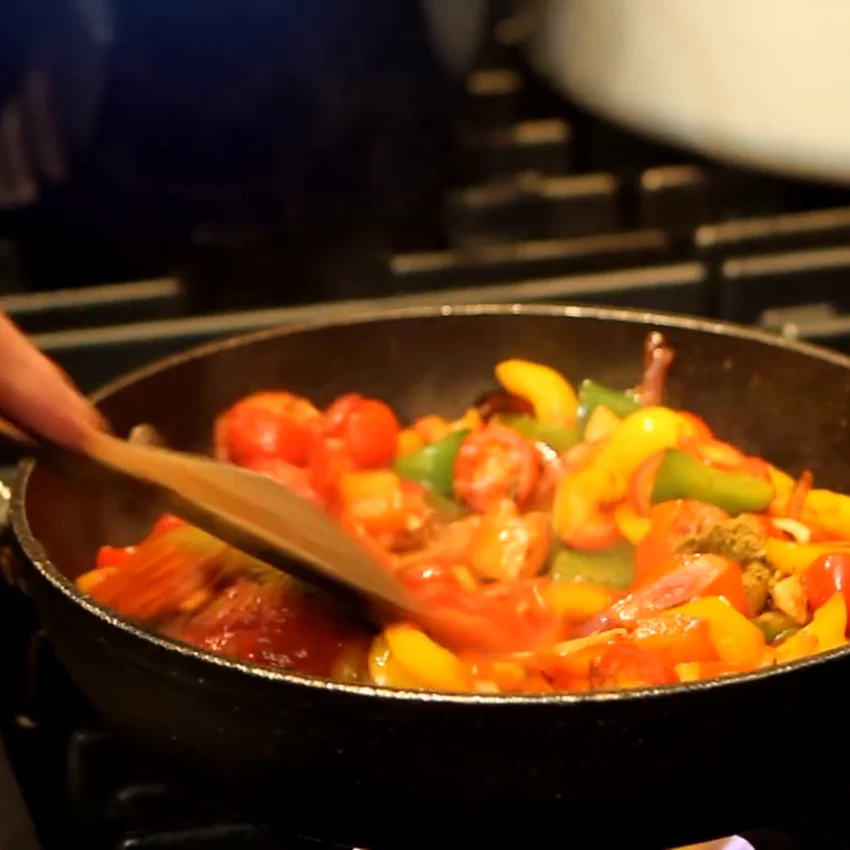
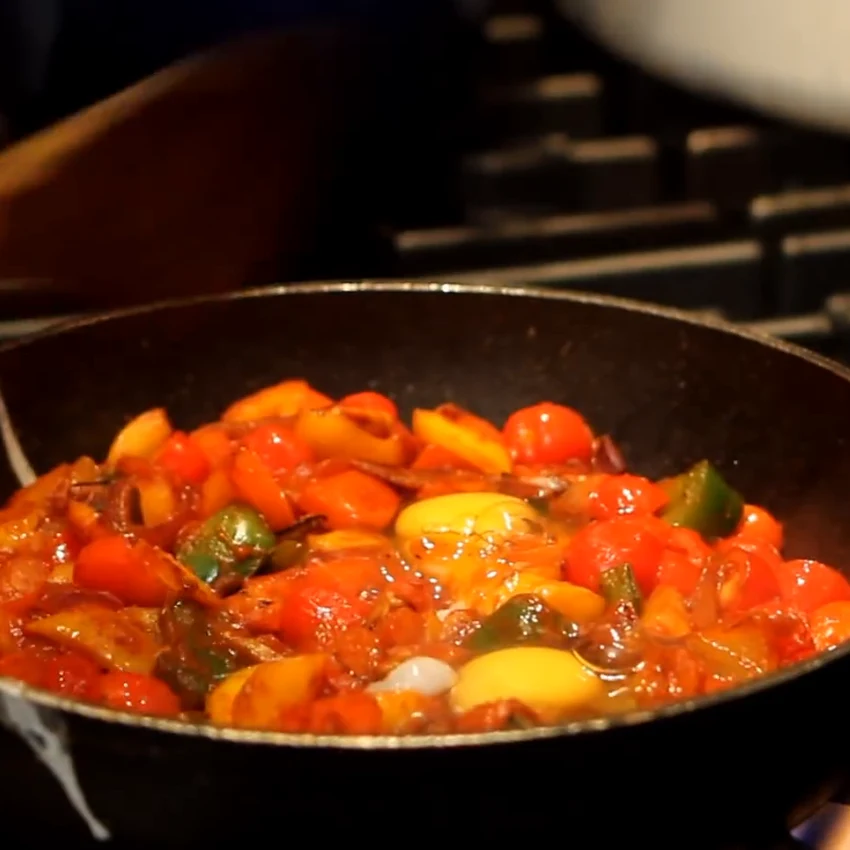
Add the cherry tomatoes and stir for about 2 minutes. Pour in the crushed tomatoes, cumin and spice blend. Add pepper and begin with only ¼ teaspoon salt, allowing for any salt in the tomatoes or blend. Simmer uncovered for 6–10 minutes, stirring, until the vegetables are tender and the sauce thickens.
What I look for is a chunky, spoonable mixture. Draw the spoon across the pan: the track should remain briefly before the sauce moves back. If liquid instantly floods the gap, simmer a little longer. If the mixture sticks and looks dry, add a tablespoon of water. Avoid reducing until the tomatoes become a paste.
Step 4: Add the eggs
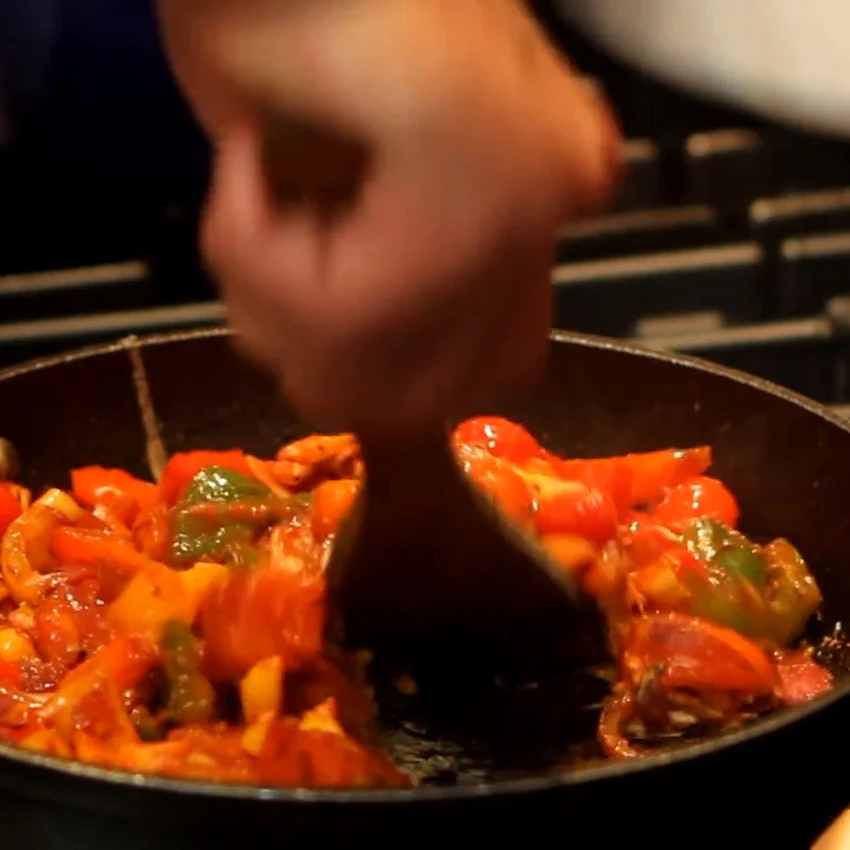
Break each egg into a small cup first to check for shell, then slide it into the hot vegetables. Lower the heat to medium-low. Stir and fold gently so yolks and whites spread through the mixture without mashing the peppers. This is the point where the video’s stirred finish becomes clear.
Step 5: Set gently and serve
Cook for about 2–4 minutes, folding slowly, until the egg pieces are fully set and moist, with no translucent white remaining. For a clear safety endpoint, check 165°F in the egg-and-vegetable mixture. Remove the pan from the heat as soon as it is ready; a hot skillet will continue cooking the eggs.
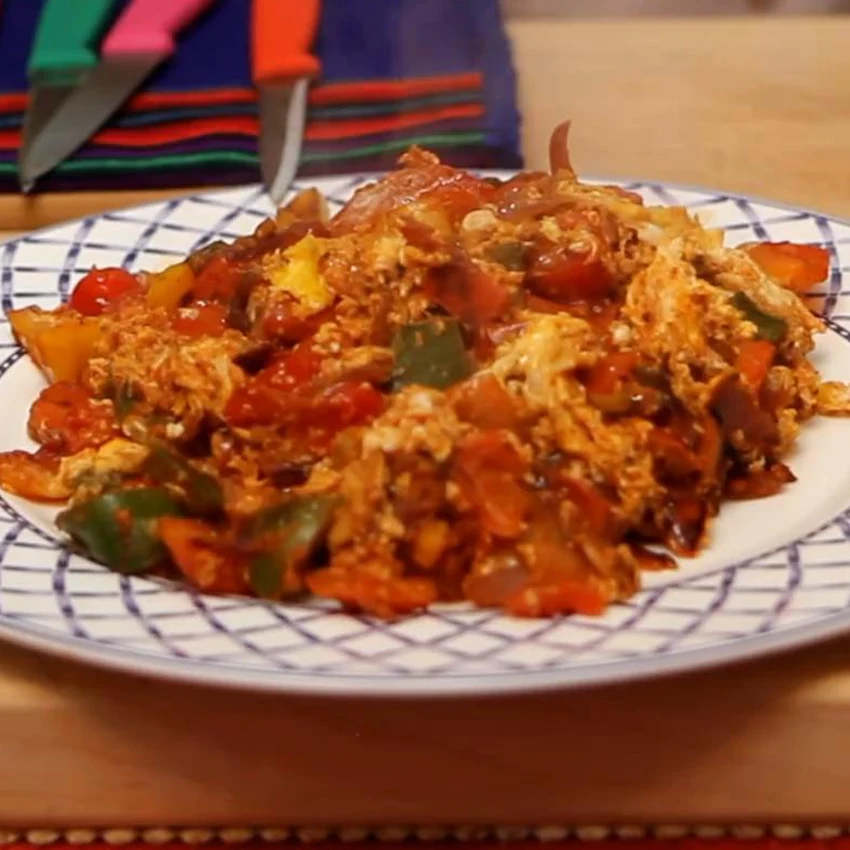
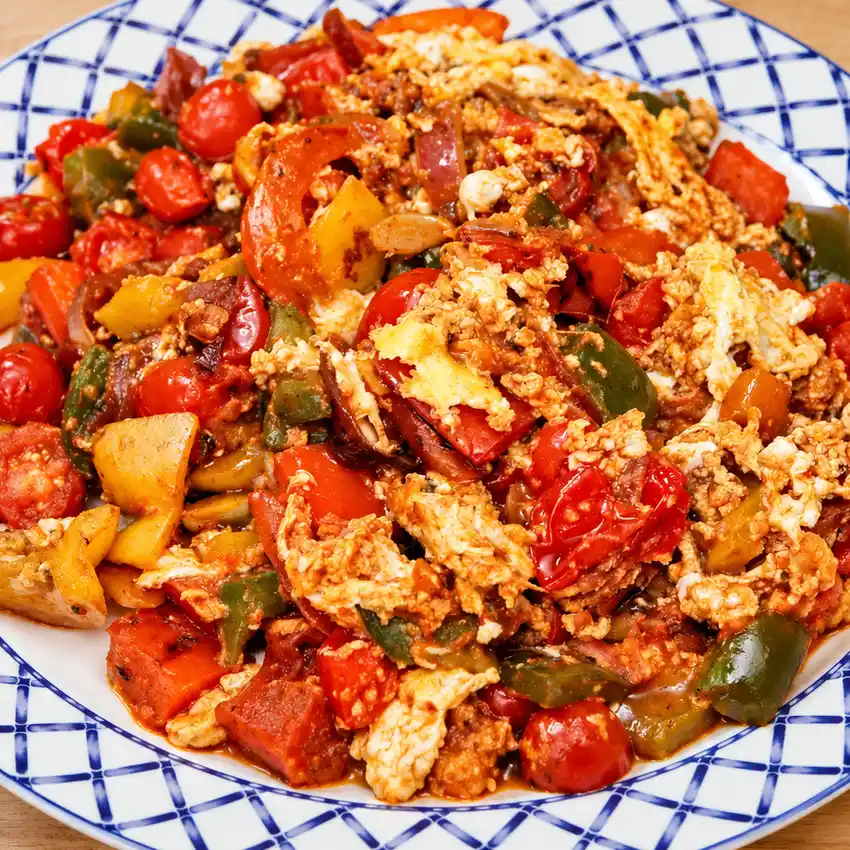
Taste and adjust the final seasoning. Divide onto warm plates and serve promptly. The finished dish should look rustic, with distinct pepper pieces and small egg curds in a thick tomato coating. It should not have a watery rim or dry, rubbery scraps of egg. A small drizzle of olive oil is optional, as in the video, but is not needed if the pan already looks glossy.
Texture, timing and serving
Allow about 15 minutes of preparation and 25 minutes of cooking. Pan width matters: a deep, narrow pot traps moisture, while a wide skillet allows the tomatoes to reduce. If doubling the recipe, use a larger skillet or two pans rather than stacking twice the vegetables into the same space.
Eggs contribute protein and the vegetables bring color and texture, but one egg per light serving is not a large protein portion. Bread makes the meal more substantial. A romaine and endive salad adds a crisp side, or choose a chickpea, cucumber and tomato salad for another legume component.
Fresh peppers and canned crushed tomatoes make this a year-round skillet dish. In summer, ripe cherry tomatoes give more sweetness; in winter, the canned tomato base provides a dependable sauce. Taste rather than adding sugar automatically. Sweeter red and yellow peppers can balance the green pepper’s sharper character.
Substitutions
Use the bell pepper colors you have, keeping the total quantity similar. Regular ripe tomatoes can replace cherry tomatoes if diced small. Very juicy tomatoes may require extra reduction. Canned crushed tomatoes should remain the sauce base; a very concentrated tomato paste is not a one-for-one replacement.
Leave out the couscous blend if unavailable and use a little more cumin, or try the mild ras el hanout variation mentioned above. Start cautiously if the blend is salty. Cheese and sausage are optional changes, not missing ingredients in this meatless preparation. If you want eggs presented as a folded dish instead, the Mediterranean omelette has its own method.
Questions before cooking
Can I leave the eggs whole?
You can make wells and cook whole eggs as a variation, but that changes the appearance and timing. The steps and photographs here follow the stirred version shown in the video.
Can I prepare the tomato base ahead?
Yes. Cook the vegetables and sauce, cool promptly and refrigerate. Reheat the base thoroughly before adding fresh eggs. This gives a better texture than repeatedly reheating the completed egg mixture.
Why did the eggs become tough?
They stayed on the heat too long, or the pan was too hot when you stirred them in. Reduce the heat before adding eggs and remove the skillet when the mixture is cooked. Do not leave it bubbling while setting the table.
How long do leftovers keep?
Refrigerate within 2 hours and use within 3 days. Reheat to 165°F. The egg pieces will be firmer afterward, so prepare only the quantity you expect to eat when possible.
More ideas for a meatless lunch or brunch
For a bread side, soft cheese naan can scoop up the sauce. Crispy hash browns suit a larger brunch, although bread and potatoes are alternatives rather than compulsory additions.
Other egg-centered options include a soft French omelette, a potato-and-pepper omelette and scrambled eggs with cottage cheese. The brunch recipe collection helps build a menu around the skillet without turning every meal into the same dish.
Easy Stirred-Egg Shakshuka with Peppers and Tomatoes
Ingredients
- ½ red bell pepper diced
- ½ yellow bell pepper diced
- ½ green bell pepper diced
- 1 small red onion thinly sliced
- 1 cup cherry tomatoes halved
- 2 garlic cloves minced
- 1 cup crushed tomatoes
- 3 large eggs
- 2 tablespoons olive oil
- ½ teaspoon ground cumin
- ½ teaspoon mild couscous spice blend or mild ras el hanout as a variation
- ¼ teaspoon fine salt plus more to taste
- ¼ teaspoon ground black pepper
- Water 1 tablespoon at a time, only if needed
Instructions
- Dice peppers, slice onion, mince garlic and halve cherry tomatoes. Measure crushed tomatoes and spices.
- Heat oil in a wide skillet over medium heat. Cook onion 2 minutes, then add peppers and cook 6–8 minutes until tender. Add garlic for the final 30–60 seconds.
- Add cherry tomatoes for 2 minutes. Stir in crushed tomatoes, cumin, spice blend, salt and pepper. Simmer uncovered 6–10 minutes until thick and spoonable; add a little water only if dry.
- Break eggs into a cup one at a time, then add to the pan. Lower heat to medium-low and fold gently through the vegetables.
- Cook 2–4 minutes until eggs are fully set but moist and the mixture reaches 165°F. Remove from heat, adjust seasoning and serve promptly.