Easy Smoked Pork Tenderloin with Dry Rub
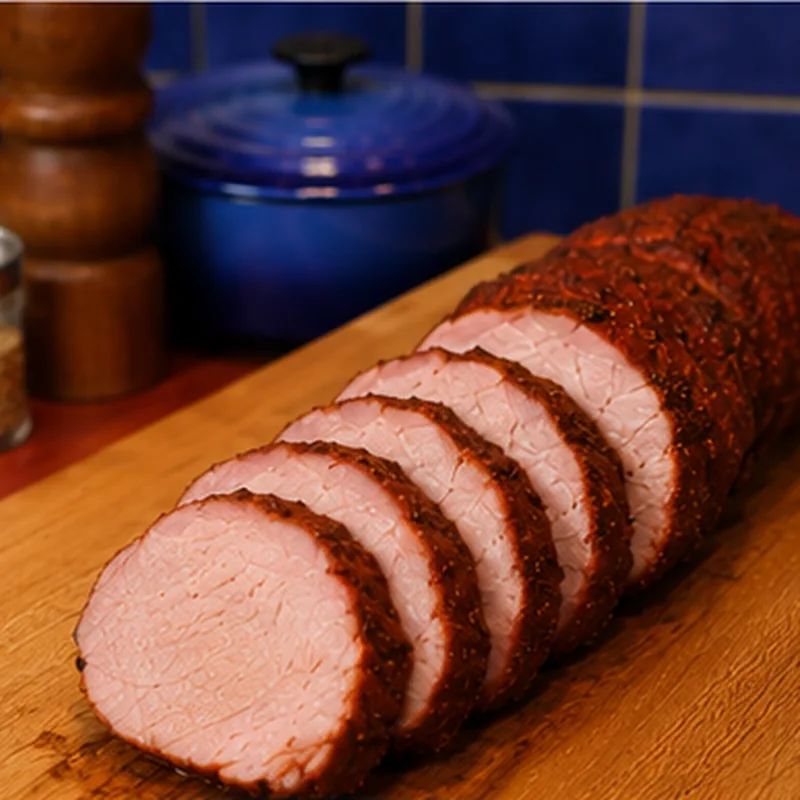
Smoked pork tenderloin is a lean, quick-cooking cut seasoned with a savory-sweet dry rub and cooked over gentle wood smoke until the center reaches 145°F. I keep the rub simple so the pork still tastes like pork, and the main mistake to avoid is leaving this small cut in the smoker too long. When it is ready, the outside should be deep mahogany, the surface should look dry rather than wet, and the center should still be juicy when sliced.
This is different from a large smoked pork loin or pork shoulder. Tenderloin is much smaller and leaner, so it cooks relatively quickly and does not need hours for connective tissue to soften. It is a good choice when you want real barbecue smoke flavor without committing the whole afternoon to the smoker.
What Makes This Smoked Pork Tenderloin Different
The goal here is not to bury the pork under a thick barbecue sauce. I prefer a dry rub with paprika, garlic, onion, black pepper, a little brown sugar, and mustard. That gives the outside enough seasoning to form a flavorful crust while still allowing the smoke to come through.
The cooking temperature matters. Pork tenderloin can go from juicy to dry faster than a pork shoulder, so a gentle smoker temperature gives you more control over the center. What I look for is steady color development on the outside while the internal temperature rises gradually.
This also gives the recipe a very different result from my pork tenderloin with a creamy Dijon sauce, which is built around a rich pan sauce, or my air-fryer pork tenderloin, which is designed around speed and concentrated heat.
Ingredients You Need
Pork tenderloin is mild, so the seasoning should support it without overwhelming it.
Pork tenderloin: Look for a piece around 1 to 1 1/4 pounds. Remove the silver skin before seasoning because it stays tough during cooking.
Olive oil: A small amount helps the dry rub stick evenly.
Dijon mustard: This gives the exterior a little acidity and helps build a seasoned coating without making the pork taste strongly of mustard.
Brown sugar: Just enough to help with browning. Too much sugar can make the exterior overly sweet.
Smoked paprika: Adds color and reinforces the barbecue character.
Garlic powder and onion powder: These distribute more evenly than fresh garlic on the smoker.
Black pepper: Pork handles a good amount of pepper, particularly with a slightly sweet rub.
Kosher salt: Season all sides evenly.
Dried thyme: A small amount works particularly well with pork without making the rub too herbal.

If you cook pork regularly, my collection of easy pork dinners has several other ways to work with different cuts.
Step-by-Step Instructions
1. Trim the tenderloin
Remove the pork from its package and pat it very dry with paper towel. Trim away any obvious silver skin with a sharp knife, keeping the blade almost parallel to the meat so you do not remove too much pork.
A dry surface is important. If the meat is wet when the oil and seasoning go on, the rub can turn pasty instead of forming an even coating.

2. Season the pork
Mix the brown sugar, smoked paprika, garlic powder, onion powder, salt, pepper, and thyme.
Lightly coat the tenderloin with olive oil and Dijon mustard, then sprinkle the seasoning over every surface. Press it on rather than rubbing aggressively, which can make the seasoning collect in wet clumps.
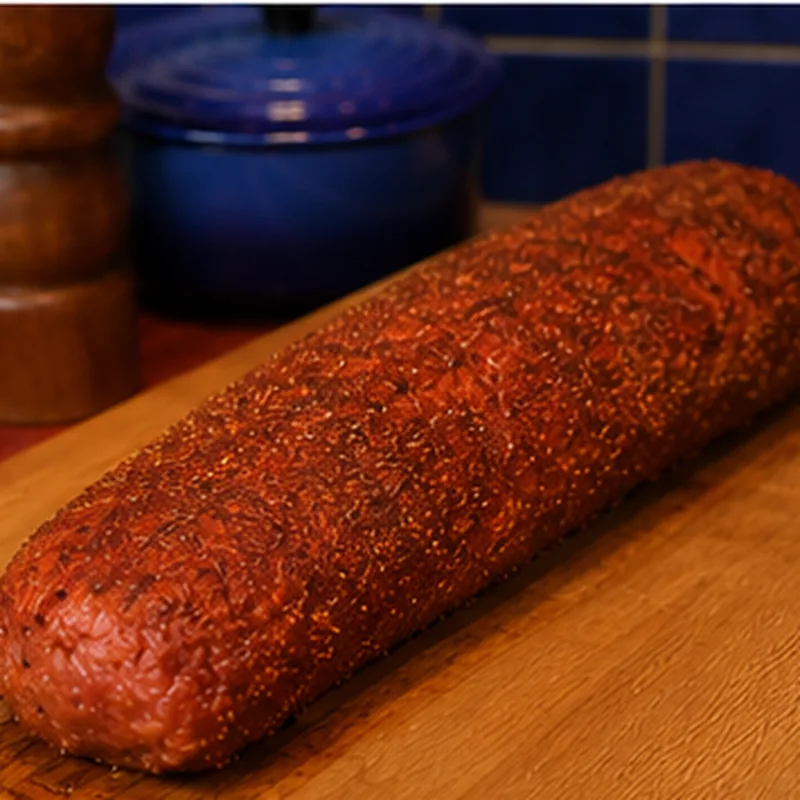
The pork should have a thin, even reddish coating with no large bare areas.
3. Preheat the smoker
Preheat the smoker to 225°F.
A mild smoking wood such as apple, cherry, maple, or pecan works particularly well with tenderloin. Stronger smoke can dominate a small, lean piece of pork faster than it would a large roast.
If you are new to seasoning meat, my guide to seasoning a recipe properly is useful for understanding why even distribution matters.
4. Smoke the pork tenderloin
Place the tenderloin directly on the smoker grate. Insert a temperature probe into the thickest part if your smoker has one.
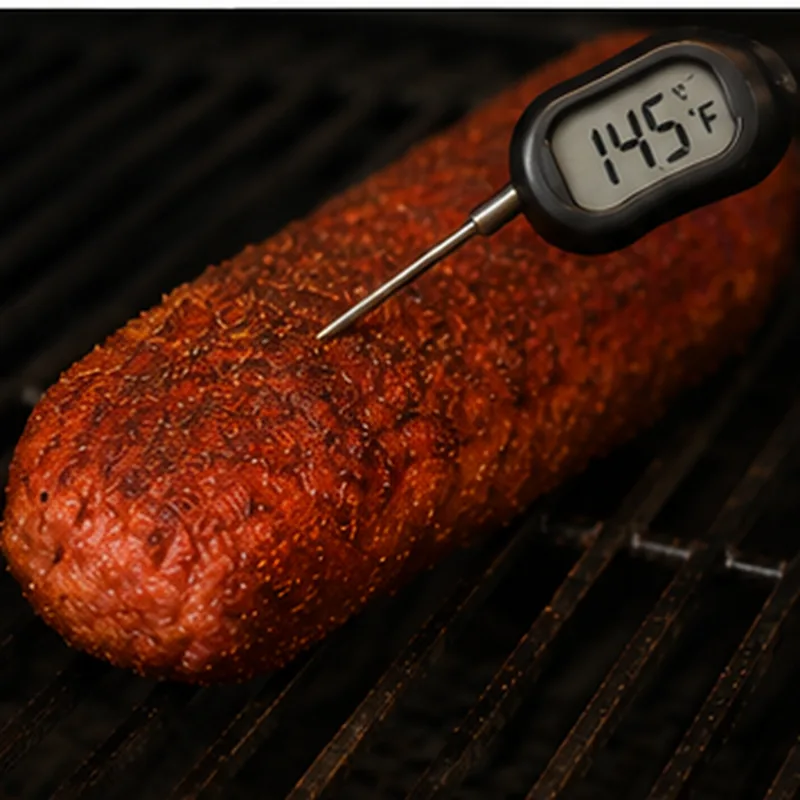
Smoke until the center approaches 140°F to 145°F. Depending on the thickness of the tenderloin and how steadily your smoker holds temperature, this will usually take around 60 to 90 minutes.
Do not cook by time alone. Two tenderloins of the same weight can have different thicknesses, and the thicker one may take noticeably longer.
What I look for here is a dark reddish-brown exterior that has become dry to the touch. The seasoning should look attached to the meat rather than wet or loose.
5. Check the internal temperature carefully
Check the thickest portion of the pork with an instant-read thermometer.
For juicy pork tenderloin, the important number is 145°F after resting. If you remove it just before that point, residual heat can continue raising the center slightly while it rests.
The mistake to avoid is pushing a lean tenderloin well beyond the target temperature just to make sure it is cooked. Unlike a fatty pork shoulder, there is very little internal fat here to protect it from drying out.
6. Rest before slicing
Transfer the pork to a cutting board and let it rest for about 8 to 10 minutes before slicing.
Resting makes a noticeable difference with tenderloin. Cut immediately and more juice ends up on the cutting board. After resting, the slices should hold their moisture much better.
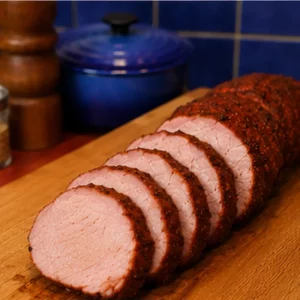
Slice across the grain into medallions about 1/2 inch thick. The center should be juicy and tender, with a visible dark seasoning crust around the outside.

For a completely different treatment of the same cut, the air-fried version of pork tenderloin is useful when you do not want to fire up the smoker. If you are cooking for a larger group, an apple-roasted pork loin gives you a larger roast that is easier to portion for more people.
What to Serve With Smoked Pork Tenderloin
Because the pork already has smoke, paprika, and a slightly sweet crust, I like sides that provide either freshness or a softer potato texture.
For a classic barbecue-style plate, a cool Québec-style cabbage salad gives you crunch and acidity against the warm pork.
For potatoes, Lyonnaise-style sautéed potatoes are a good match when you want something more substantial. A cauliflower and potato gratin makes the meal richer and works especially well in cooler weather.
In summer, I would go lighter. A grated carrot salad with mustard vinaigrette provides acidity without competing with the smoke.
The tenderloin also works cold the next day. Thin slices can go into sandwiches, wraps, or a composed salad, so cooking an extra tenderloin is useful when the smoker already has room.
Substitutions
If you do not have smoked paprika, regular paprika can be used, although the smoker itself will then provide most of the smoky character.
Maple sugar can replace the brown sugar when you want a subtle Canadian direction. Keep the amount modest because the purpose is to support browning, not turn the tenderloin into a sweet glaze. For a pork recipe where maple is much more prominent, try my maple-glazed pork roast.
Apple, cherry, maple, and pecan woods all suit pork tenderloin. The exact smoke character will change, but the cooking method stays the same.
If you do not have a smoker, use a different cooking method rather than trying to reproduce smoke in the oven. My garlic-butter pork chops are a better option for a straightforward stovetop pork dinner, while air-fryer pork chops give you another fast method.

FAQ
How long does it take to smoke pork tenderloin at 225°F?
A pork tenderloin around 1 to 1 1/4 pounds will often take roughly 60 to 90 minutes at 225°F, but thickness and smoker temperature matter more than the clock. Use an instant-read thermometer to determine when it is ready.
What internal temperature should smoked pork tenderloin reach?
Aim for 145°F in the thickest part after resting. Check in more than one location if the tenderloin has an uneven shape.
Should I wrap pork tenderloin while smoking it?
It is not necessary for this recipe. Tenderloin cooks quickly enough that wrapping can soften the seasoned exterior before it has time to develop properly.
Do I need to sear pork tenderloin after smoking it?
No. The dry rub develops plenty of color during smoking. You can sear it briefly if you specifically want a darker crust, but watch the internal temperature closely because the meat is already nearly cooked.
What wood is best for smoking pork tenderloin?
Apple, cherry, maple, and pecan are good choices because they provide noticeable smoke without overwhelming the mild pork.
Why did my smoked pork tenderloin turn out dry?
The most common cause is overcooking. Pork tenderloin is much leaner than pork shoulder, so it does not benefit from being taken to the high internal temperatures used for pulled pork.
Is pork tenderloin the same as pork loin?
No. Pork tenderloin is a narrow, very tender muscle, while pork loin is a much larger roast. They cook differently and should not be substituted using identical cooking times. My pork loin roasted with apples is an example of how I approach the larger cut.
Suggested Posts
If you want to stay in the pork cluster, these recipes use different techniques and cuts rather than repeating the same smoked-tenderloin method:
Easy Pork Recipes for Family Dinners
Pork Tenderloin with Creamy Dijon Sauce
Easy Pork Loin Roast with Apples
Traditional Québec Cabbage Salad
Easy Smoked Pork Tenderloin with Dry Rub
Ingredients
- 1 pork tenderloin about 1 to 1 1/4 lb
- 1 tbsp olive oil
- 1 tbsp Dijon mustard
- 1 tbsp brown sugar
- 2 tsp smoked paprika
- 1 tsp garlic powder
- 1 tsp onion powder
- 1 tsp kosher salt
- 1 tsp ground black pepper
- 1/2 tsp dried thyme
Instructions
- Pat the pork tenderloin dry and remove the silver skin.
- Combine the brown sugar, paprika, garlic powder, onion powder, salt, pepper, and thyme.
- Coat the pork lightly with olive oil and Dijon mustard, then season evenly with the dry rub.
- Preheat the smoker to 225°F.
- Place the tenderloin directly on the smoker grate and smoke until the thickest part approaches 145°F, about 60 to 90 minutes depending on thickness.
- Remove the pork and rest for 8 to 10 minutes.
- Slice across the grain into 1/2-inch medallions and serve.