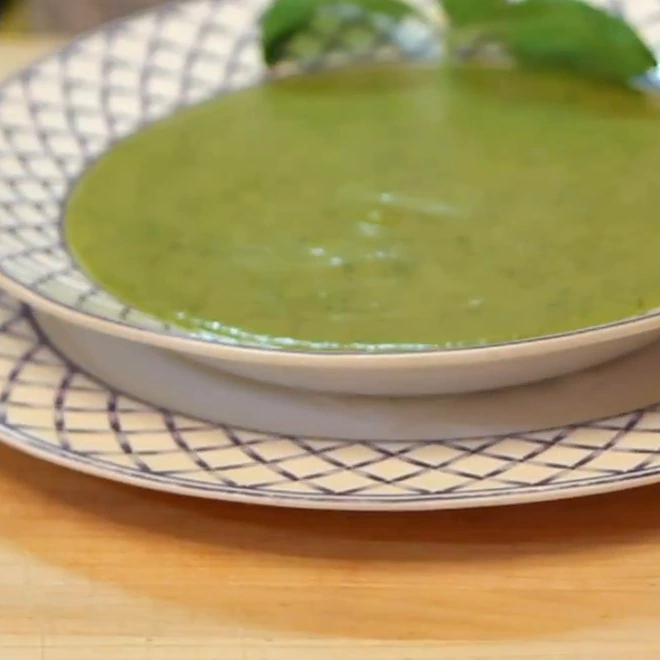
Roasted Acorn Squash Soup with a Smooth Savory Finish
Roasted acorn squash soup is a smooth vegetable soup made by roasting the squash in its skin, then blending the tender flesh with onion and broth. It becomes creamy without added cream because the squash supplies the body. Roast until the flesh is truly soft, since firm pieces make a grainy soup even after a long blend.

Why this recipe works
Acorn squash has a gentle earthy sweetness that is different from butternut squash. Roasting concentrates that flavor and makes the ridged skin easier to deal with: there is no need to peel the raw squash. Onion, garlic and thyme provide a savory base rather than turning the soup into a sweet purée. A small amount of cider vinegar at the end gives definition. The recipe is naturally dairy-free when made with vegetable broth and the listed oil, without needing coconut milk or a cream substitute.
For another vegetable soup, butternut squash and ginger soup gives a different squash profile and carrot soup focuses on carrots. white bean soup is another way to use beans for body, while green lentil soup keeps a lentil texture. These are separate soup recipes with their own liquid ratios and cooking times. Choose the one that matches the vegetable or legume you have rather than changing several ingredients at once in the same pot.
Ingredients and what to look for
2 medium acorn squash, about 3 1/2 to 4 lb total
2 tbsp olive oil, divided
1 medium yellow onion, chopped
2 garlic cloves, minced
3 cups low-sodium vegetable broth, plus up to 1 cup if needed
1/2 tsp dried thyme
1/2 tsp fine salt, then to taste
1/4 tsp ground black pepper
1 tsp apple cider vinegar, then to taste
Choose two squash with firm skins and no soft spots. Their combined weight is a guide, but the more useful measure is about four cups of cooked flesh. Small squash sometimes contain surprisingly little flesh around the seed cavity. Use a broth that tastes good and is not heavily salted. The amount is a range because the water content of roasted squash varies. Keep the extra cup nearby and add it after blending if necessary, rather than beginning with a thin soup that needs a long reduction.

How to make it
Cut the squash carefully on a stable board and scoop out the seeds. Lightly oil the cut sides and roast cut-side down on parchment until a knife enters the flesh easily. The skins should not be fighting the spoon when you scoop them. Soften the onion separately, then add garlic and thyme without letting them scorch. Combine the flesh with the smaller amount of broth and simmer briefly to bring the flavors together. Blend until smooth, then adjust thickness and finish with vinegar after tasting.
Step 1
Heat oven to 400°F. Halve squash on a stable board, scoop out seeds and brush cut sides with 1 tbsp oil. Roast cut side down on parchment for 40 to 50 minutes, until easily pierced. Scoop out 4 cups cooked flesh; discard skins.

Step 2
Meanwhile, soften onion in remaining oil for 7 to 8 minutes. Add garlic for 30 seconds. Add squash flesh, 3 cups broth, thyme, salt and pepper and simmer 10 minutes.

Step 3
Blend carefully until smooth. Add more broth gradually until the soup pours from a ladle. Add vinegar, adjust seasoning and warm gently before serving.

Practical cooking details
Keep a small amount of extra hot water or broth ready while finishing the pot. The ideal consistency is easier to reach by adding liquid gradually than by trying to remove a large excess at the end. Stir from the bottom before tasting, because thicker ingredients settle and the first spoonful from the surface may not represent the whole soup. Taste at a comfortable temperature so heat does not hide salt or acidity.
If blending hot soup, use equipment intended for hot liquids and avoid filling a countertop blender to its maximum line. Steam needs a safe route out according to the appliance instructions. An immersion blender should remain submerged before it is switched on, and the pot should stand securely. For serving, fill bowls with enough room to move them comfortably. Keep any extra bread, cheese or other garnish at the table rather than adding it to the whole pot, especially when some of the batch will be stored for another meal.
Troubleshooting
Graininess usually comes from under-roasted squash or insufficient blending. Give firm halves more oven time before scooping. A bland soup can need salt, a little acid or a better broth rather than more sweetener. If the squash has a bitter taste before cooking, do not try to hide it with sugar. If the soup is too thick, add hot broth gradually. If too thin, simmer gently uncovered before the final seasoning instead of adding flour to the finished purée.
Substitutions
Butternut squash can replace acorn squash by measured cooked flesh, though the flavor and color will change. A little fresh ginger can replace some of the thyme for a warmer profile. Water can replace part of a strongly flavored broth, but the soup will need careful seasoning. Cream is optional as a serving preference, not necessary for texture. Avoid adding a large amount of coconut milk unless its flavor is wanted, since it can quickly become more noticeable than the roasted squash.

Frequently asked questions
Do I need to peel acorn squash for soup?
No. Roast the halves with the skins on, then scoop out the cooked flesh. The ridged raw skin is awkward to peel, and this method avoids that work. Make sure no hard skin fragments remain before blending. Roasting time depends on size, so judge the softness of the flesh rather than the outside color alone.
How do I make squash soup creamy without cream?
Use enough fully cooked squash relative to the broth and blend thoroughly. The vegetable itself gives a smooth, full texture. Start with less broth, then thin gradually. A powerful blender can make the texture finer, but it cannot fully compensate for squash that was still firm when it came out of the oven.
Can I roast the squash a day ahead?
Yes. Scoop the roasted flesh into a shallow container, cool promptly and refrigerate. Use it the next day to finish the soup, allowing enough time for the chilled flesh to heat through before blending. Keeping the roasting and soup stages separate is convenient when the oven is already being used for dinner.
Storage and make-ahead
Refrigerate cooled soup within two hours in shallow covered containers and use within three to four days. It thickens as it chills, so add a little broth or water while reheating to 165°F. Freeze portions for up to two months, leaving room at the top of the container. Thaw in the refrigerator. Stir well after warming, and add any dairy garnish only to individual bowls if the rest of the batch is intended for the freezer.
What to serve with it and related recipes
A bowl of soup can stand alone or be part of a simple meal. air fryer garlic bread gives a warm bread accompaniment, and arugula and tomato salad brings a fresh salad contrast. For a cold legume side prepared separately, three bean salad can be made ahead. If you are planning other soup meals for the week, chicken and wild rice soup offers chicken and rice, while lentil and vegetable soup keeps vegetables and lentils together. For a thicker bean-based dinner, beef and bean chili provides a separate meat-and-bean option. Select according to appetite and keep portions modest when several hearty dishes are served together.

Roasted Acorn Squash Soup with a Smooth Savory Finish
Ingredients
- 2 medium acorn squash about 3 1/2 to 4 lb total
- 2 tbsp olive oil divided
- 1 medium yellow onion chopped
- 2 garlic cloves minced
- 3 cups low-sodium vegetable broth plus up to 1 cup if needed
- 1/2 tsp dried thyme
- 1/2 tsp fine salt then to taste
- 1/4 tsp ground black pepper
- 1 tsp apple cider vinegar then to taste
Instructions
- Heat oven to 400°F. Halve squash on a stable board, scoop out seeds and brush cut sides with 1 tbsp oil. Roast cut side down on parchment for 40 to 50 minutes, until easily pierced. Scoop out 4 cups cooked flesh; discard skins.
- Meanwhile, soften onion in remaining oil for 7 to 8 minutes. Add garlic for 30 seconds. Add squash flesh, 3 cups broth, thyme, salt and pepper and simmer 10 minutes.
- Blend carefully until smooth. Add more broth gradually until the soup pours from a ladle. Add vinegar, adjust seasoning and warm gently before serving.