Creamy White Bean Soup with Carrots (Potage Soissonnais)
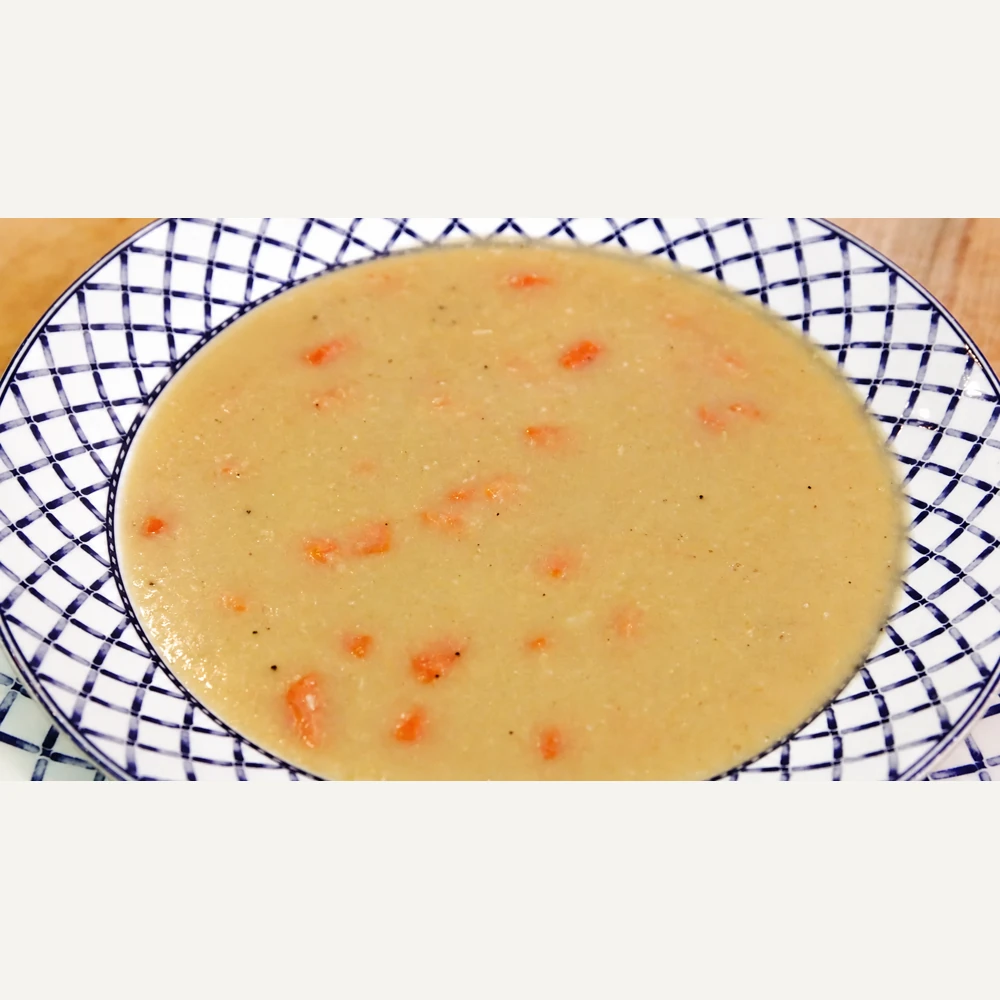
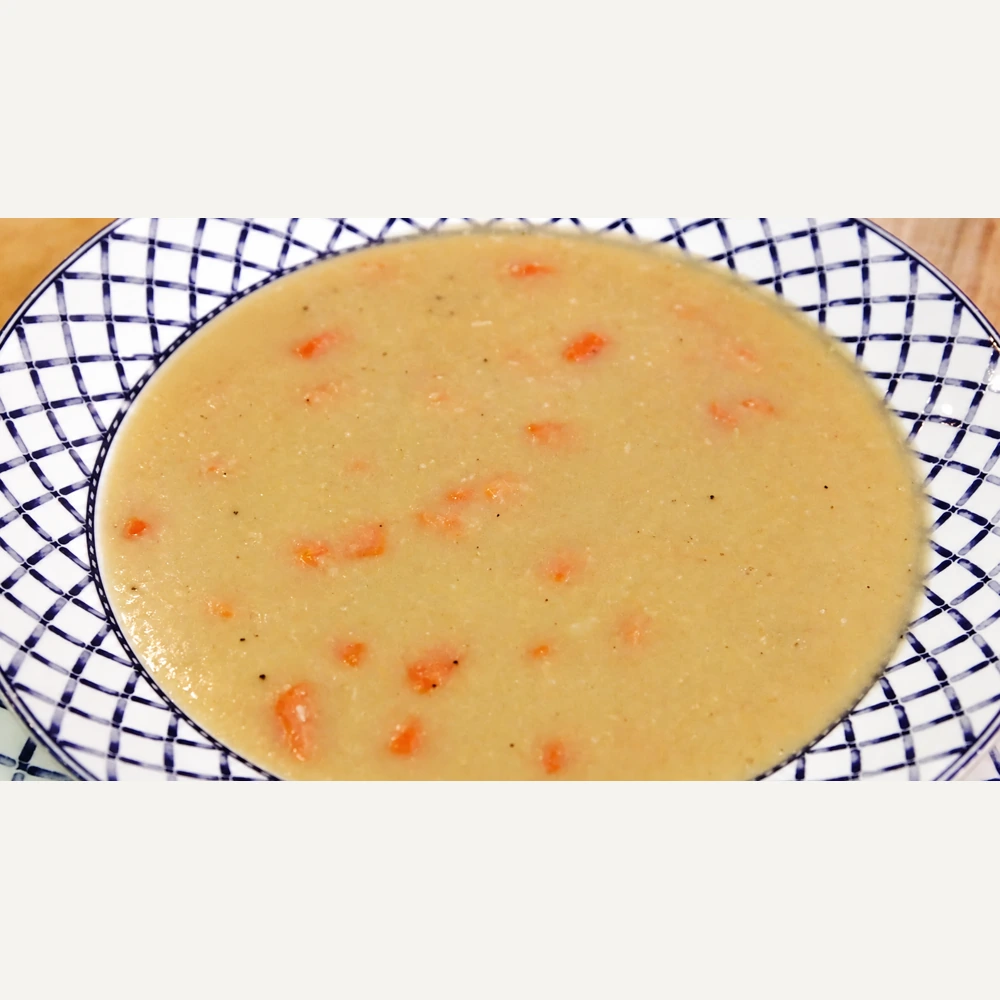
Creamy white beans, gently softened onion and small carrot dice make this French soup satisfying without a splash of cream. Cook the beans until their centers crush easily before blending, because a blender cannot fix undercooked beans. The finished potage should flow from a ladle in a thick, smooth ribbon, with tender orange pieces scattered through the pale base.
Potage Soissonnais is a blended white-bean soup associated with the French Soissons style of cooking. Here, the carrot cooks in the broth, then returns as a diced garnish rather than being blended into the soup. Make it for a quiet weekend lunch, a warming fall supper or a first course throughout the year.
This recipe is based on my YouTube video, with a few adjustments since publication: clear starting amounts for butter and broth, gentler seasoning and more precise cooking cues. Overnight soaking comes before the cooking time. The simple ingredient list and carrot finish stay faithful to the video.
{VIDEO}
Why the beans do the thickening
I make it this way because fully cooked white beans give the soup body on their own. There is no roux, potato or required cream. Butter rounds out the onion flavor, while a mild chicken broth supports the beans without turning the potage into a strongly meaty soup.
Removing the carrot before blending matters. It keeps the base pale and leaves little sweet pieces to find in each spoonful. For a soup where the carrot itself becomes the smooth base, try my carrot potage Crécy. My potage Parmentier gets its body from potatoes instead.
White beans contribute plant protein and fiber, making this more substantial than a clear broth. It is still a straightforward soup rather than a cream-heavy chowder. Serve smaller bowls as a starter or generous portions with bread for lunch.
Ingredients and the right starting proportions
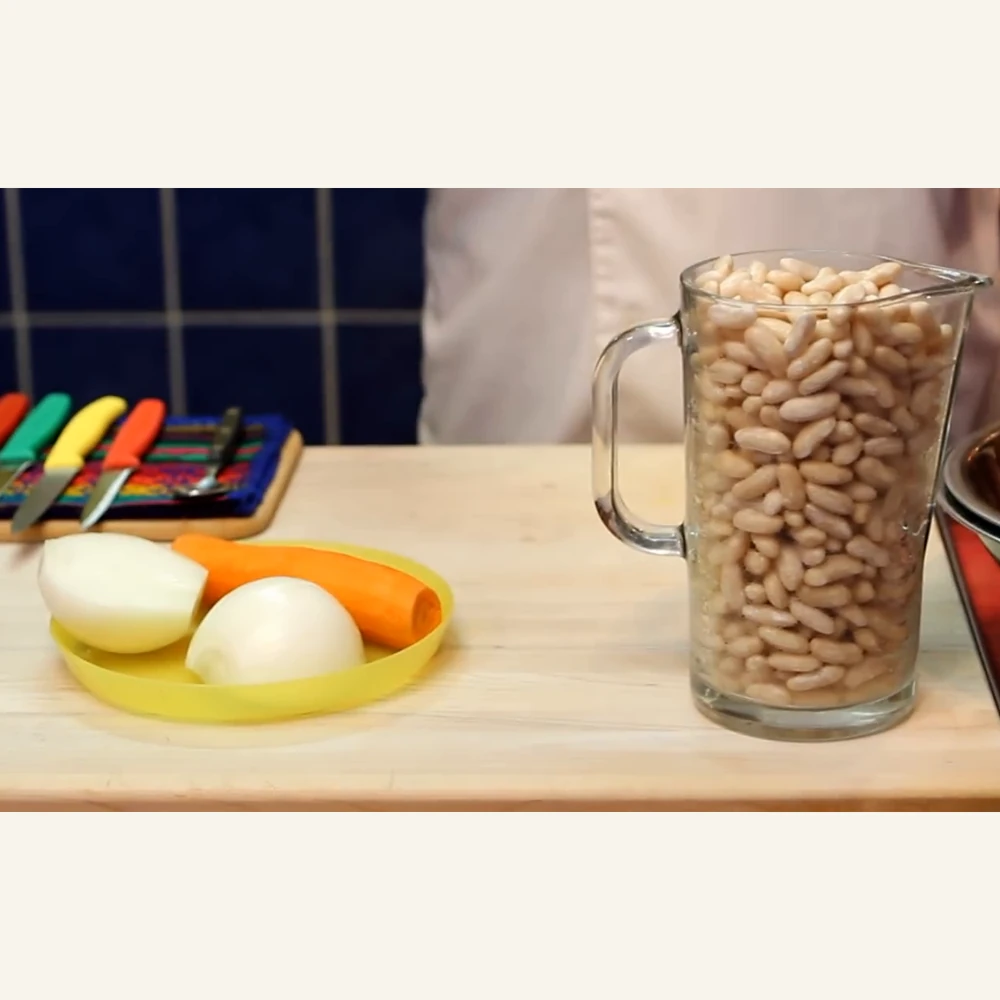
Use 14 oz dried small white beans, such as navy or Great Northern beans. Pick through them, rinse and soak overnight in plenty of cold water. The weight refers to dry beans before soaking. A large bowl of swollen beans is not interchangeable with the same volume of dry beans.
One medium yellow onion, finely chopped, provides the aromatic base. One medium carrot, peeled and left whole, supplies the garnish. Three tablespoons unsalted butter are enough to sweat the onion without leaving a greasy layer over the soup.
Start with 6 cups unsalted or low-sodium chicken broth and keep up to 2 cups hot water available for top-ups. Use enough liquid to cover the soaked beans by about half an inch; the pot shape and bean variety can change the amount needed. A concentrated stock should be diluted to ordinary broth strength. My homemade chicken bouillon cubes are another starting point when diluted appropriately.
Begin with 1/2 teaspoon fine salt only if your broth is unsalted, and 1/4 teaspoon ground black pepper. Taste again at the end. With already seasoned broth, hold back the salt until the beans are cooked. Cream is optional at the table, not necessary in the pot.
How to make the soup
1 Prepare the soaked beans and onion
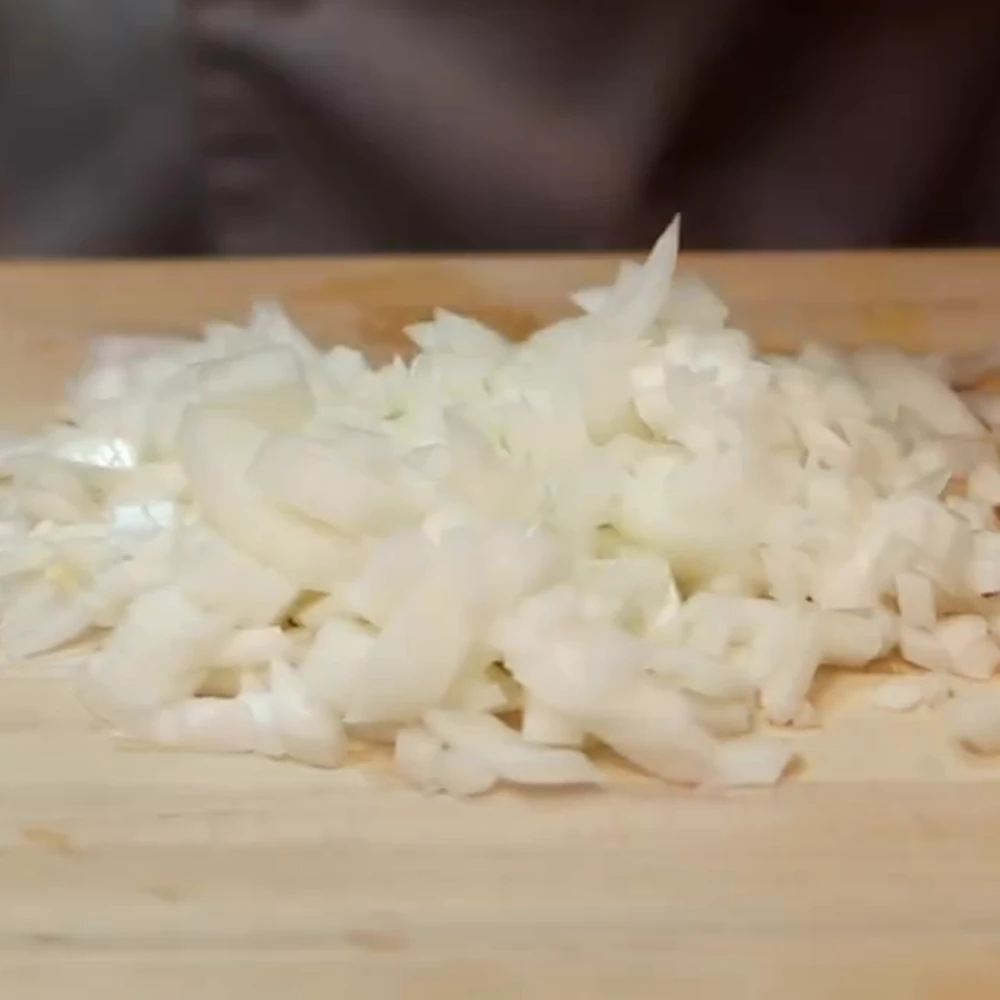
Soak the beans for 8 to 12 hours, preferably in the refrigerator. Drain, discard the soaking water and rinse. Finely chop the onion. Peel the carrot and leave it whole so it can be lifted out later. Set a large heavy pot beside the prepared ingredients.
2 Sweat the onion without browning
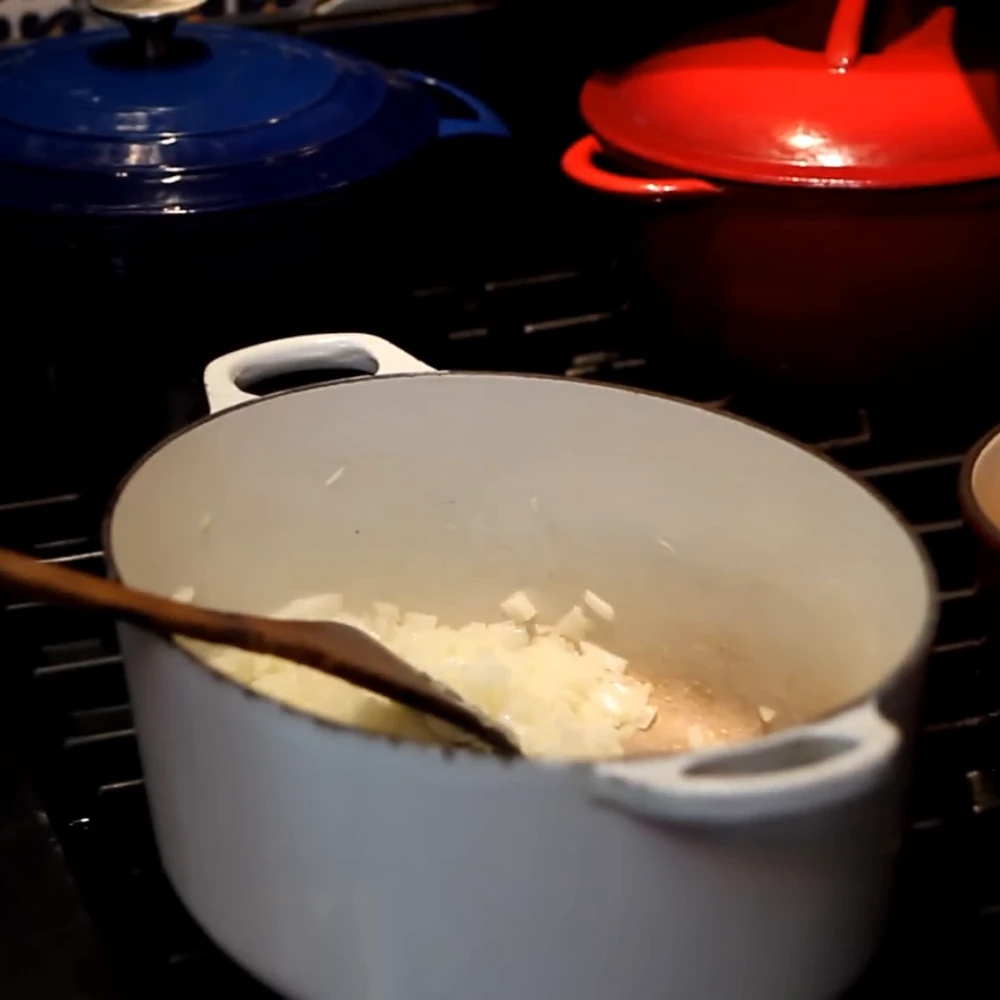
Melt the butter over medium-low heat. Add the onion and stir for 5 to 7 minutes, until translucent and softened. What I look for here is a sweet onion smell and a pale, glossy surface. Brown edges mean the heat is too high for this soup.
3 Cook the beans in broth
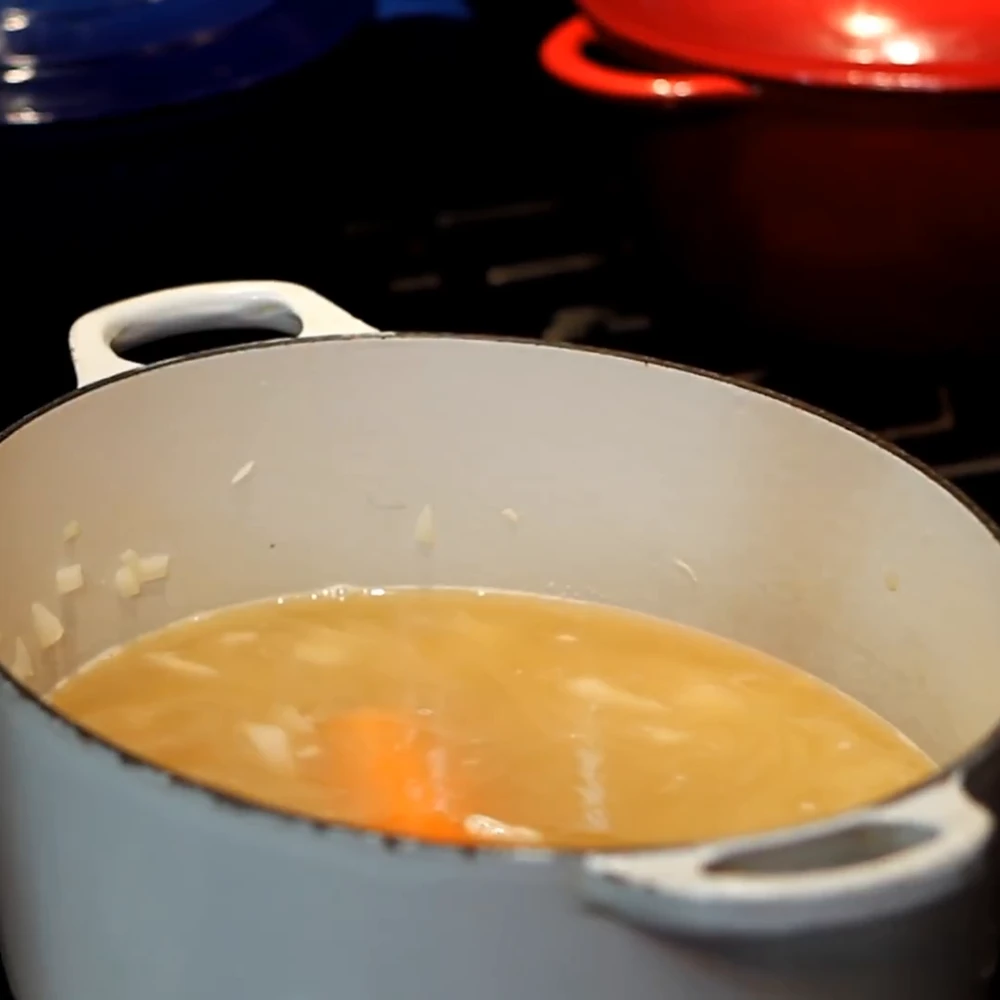
Add the drained beans, broth and whole carrot. Bring to a full boil and maintain it for at least 10 minutes, following any longer boiling requirement on the bean package. Skim foam as needed. Lower the heat to a steady simmer and partly cover the pot. Add hot water whenever the liquid no longer covers the beans.
Continue cooking until the beans are completely soft, commonly 60 to 90 minutes after the initial boil, sometimes longer. The clock is only a guide. A bean pressed against the side of the pot should collapse into a creamy paste without a firm or chalky center. Larger Soissons beans may take longer than small white beans.
4 Remove and dice the carrot
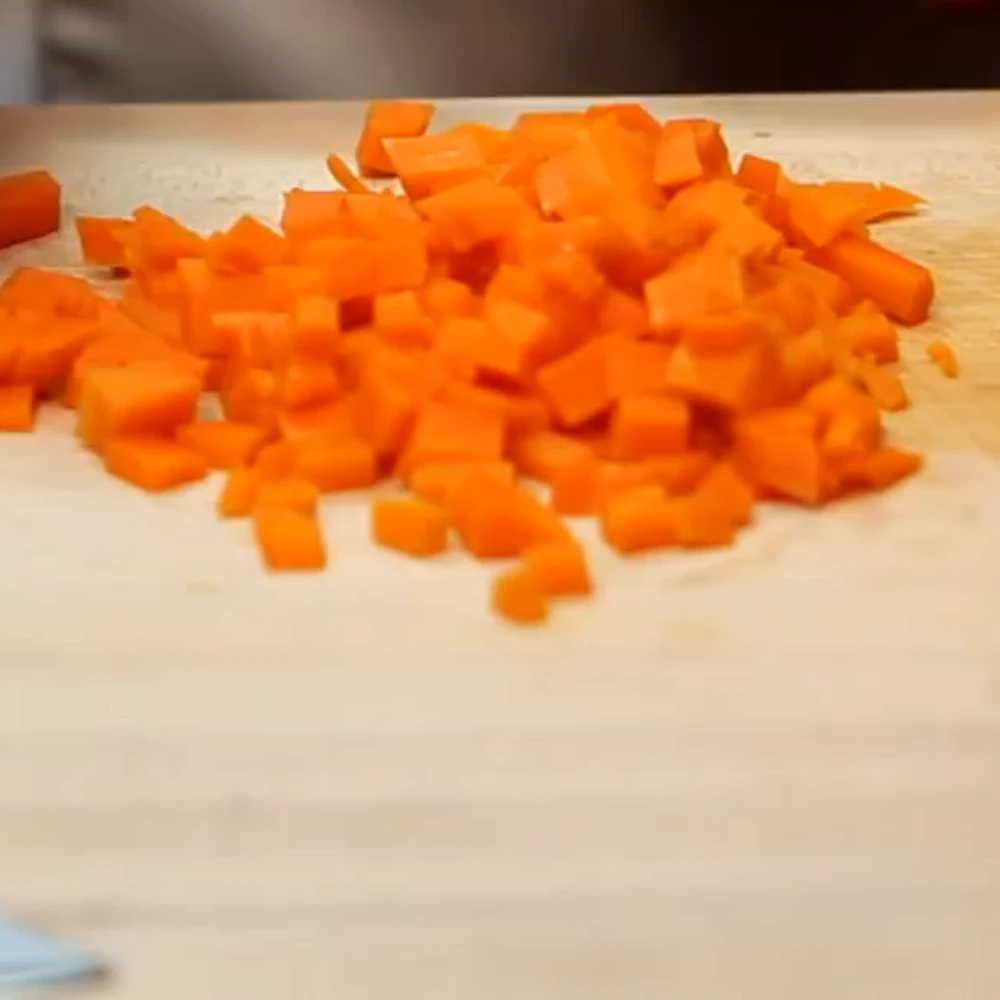
Check the carrot after about 25 to 35 minutes of cooking. Remove it when a knife slides through with slight resistance and let it cool enough to cut. Slice into thin planks, then strips, then small dice about 1/8 inch wide. Reserve while the beans finish cooking. Leaving the carrot in until it falls apart makes the garnish difficult to cut neatly.
5 Blend until smooth
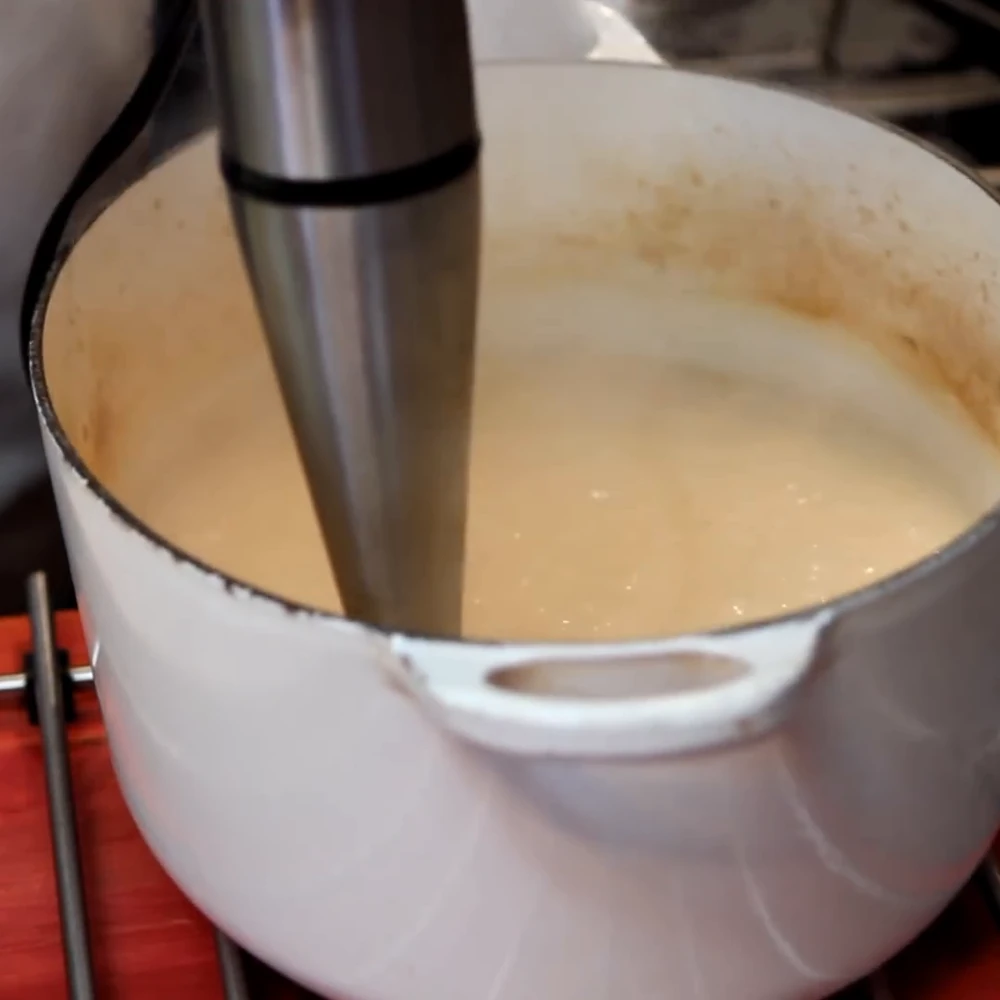
When the beans are fully tender, turn off the heat. Keep the immersion blender head submerged and blend the beans, onions and their cooking liquid until smooth. For a countertop blender, let the soup cool slightly, work in small batches and follow the manufacturer’s instructions for hot liquids.
Add hot water a little at a time if the puree sits in a mound rather than flowing. I prefer to adjust the liquid after blending because that is when the beans reveal how much thickening they provide. For an especially fine texture, pass the soup through a fine sieve.
6 Return the carrot and finish
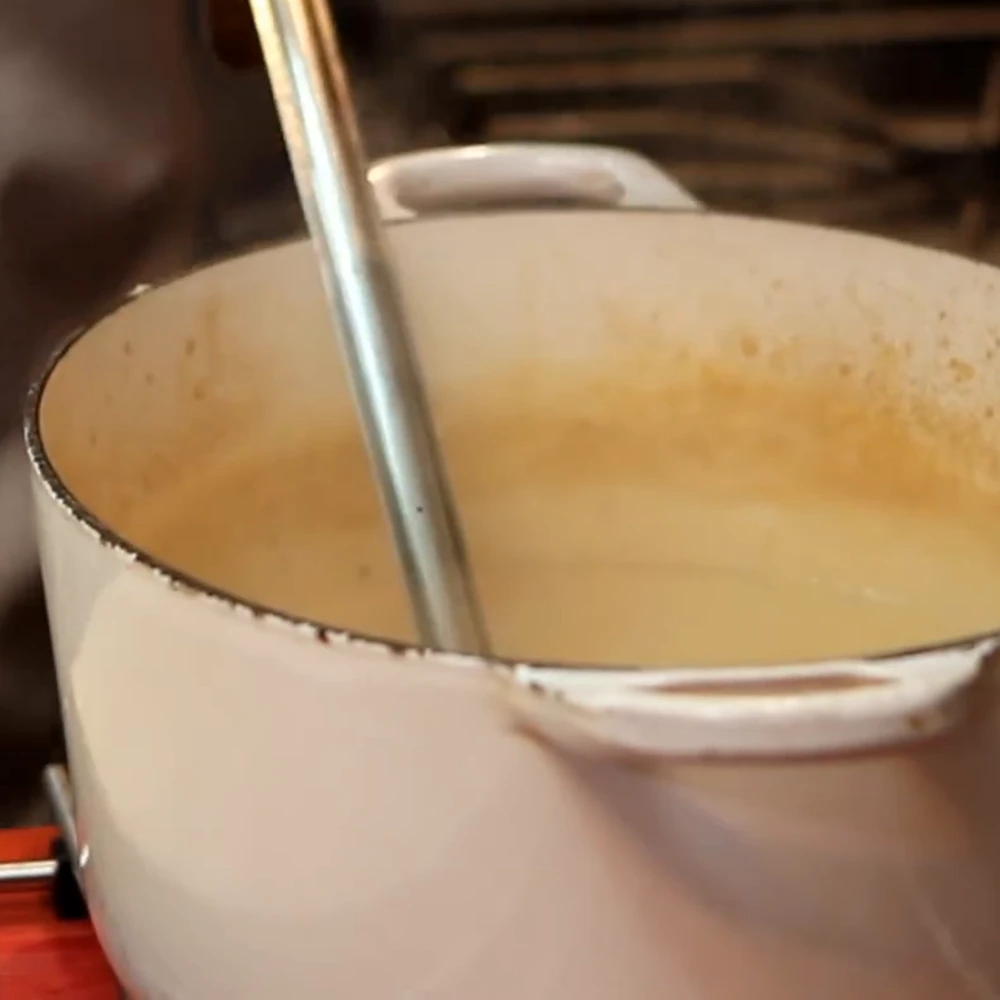
Fold in the diced carrot. Warm gently for 2 to 3 minutes, stirring along the bottom, then taste for salt and pepper. The soup should coat a spoon but still pour. Once blended, it can catch on the bottom more easily than the unblended beans, so avoid a hard boil.
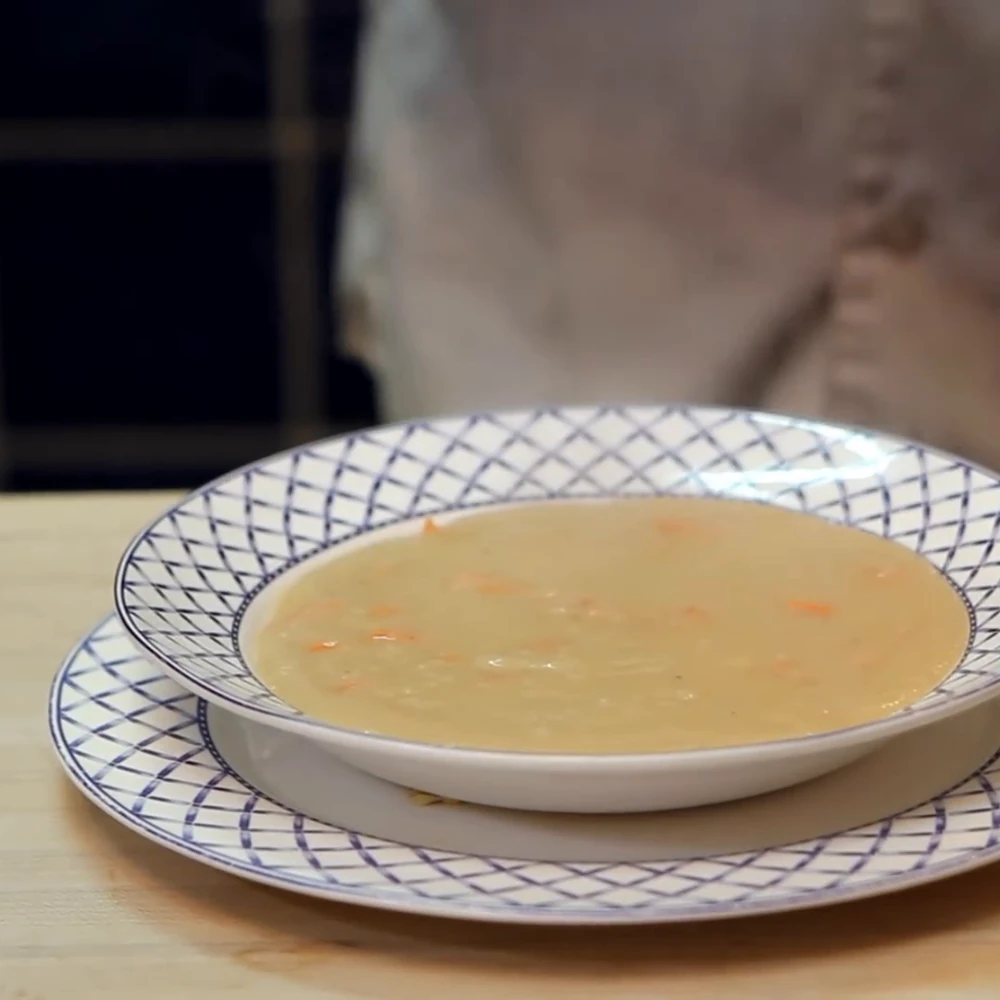
Serve hot in warmed bowls. Keep the finish simple: the carrot supplies the color and texture. Add a small spoonful of cream only if desired.
Substitutions
Great Northern or navy beans are practical choices; traditional large Soissons beans also work, with a longer cooking time if needed. For a canned-bean version, use about 5 to 6 cups drained cooked white beans, start with 4 cups broth, and simmer with the onion and carrot until the carrot is tender. Adjust the liquid after blending. Canned beans do not need overnight soaking or the dry-bean boiling step.
Vegetable broth makes the soup vegetarian when used with butter. For a dairy-free version, replace the butter with 2 tablespoons olive oil and omit cream. Keep the stock mild. Do not replace the beans with lentils and expect the same texture; my vegetable lentil soup is written specifically for that legume.
FAQ
Why does my soup feel grainy
The beans may not have been fully cooked, or their skins may need more blending. Check tenderness before pureeing. Older dried beans can take much longer to soften. If necessary, continue cooking the unblended beans rather than relying on the stated time.
Can I add the carrot to the blender
Yes, but the soup will become more orange and lose its diced garnish. For the result shown here, remove the carrot first and add it after blending. That small step changes the appearance as well as the eating texture.
Why is the soup thicker the next day
The bean puree thickens as it cools. Reheat gently and add water or mild broth in small amounts until it pours again. Taste after thinning, because both the salt level and overall flavor change with added liquid.
How should I store leftovers
Cool promptly in shallow containers and refrigerate within 2 hours. Use within 3 to 4 days, or freeze in portions for up to 3 months. Reheat thoroughly while stirring. Freeze without optional cream for the simplest texture when thawed.
Bread and other soups to try
A slice of homemade white bread is a simple accompaniment. For more chew and a crisp edge, serve soft and crispy focaccia. A small lentil and egg salad works alongside a smaller starter bowl.
For another blended legume soup, try split-pea potage Saint-Germain. Green lentil soup has a different texture, while French onion soup brings browned onions and a gratinéed finish. If you want a full white-bean main course, my chicken cassoulet keeps the beans whole.

Creamy White Bean Soup with Carrots (Potage Soissonnais)
Ingredients
- 14 oz dried white beans soaked overnight, drained and rinsed
- 1 medium yellow onion finely chopped
- 1 medium carrot peeled and left whole
- 3 tbsp unsalted butter
- 6 cups unsalted or low-sodium chicken broth plus more if needed to cover beans
- Up to 2 cups hot water as needed during cooking and blending
- 1/2 tsp fine salt if using unsalted broth then to taste
- 1/4 tsp ground black pepper then to taste
- Heavy cream optional, for serving
Instructions
- Soak beans in plenty of cold water for 8 to 12 hours, preferably refrigerated. Discard soaking water, drain and rinse. Chop the onion and peel the carrot.
- Melt butter in a heavy pot over medium-low heat. Sweat onion for 5 to 7 minutes without browning.
- Add beans, broth and whole carrot. Cover beans with liquid by about 1/2 inch. Bring to a full boil for at least 10 minutes, or longer if the package requires. Skim, then partly cover and simmer until beans are very tender, usually another 60 to 90 minutes or longer. Add hot water to keep beans covered.
- Remove carrot after about 25 to 35 minutes of cooking, once tender enough to cut. Cool slightly and cut into 1/8-inch dice. Reserve.
- When beans crush into a creamy paste, turn off heat and blend beans, onion and broth until smooth. Thin gradually with hot water as needed.
- Fold in carrot dice. Warm gently for 2 to 3 minutes, stirring. Adjust salt and pepper and serve hot with optional cream.