Creamy Chicken and Wild Rice Soup
Wild rice brings a pleasantly chewy texture to chicken soup, but it should never be crunchy in the middle. Cooking it separately gives you control: the rice can take its time while the vegetables stay tender and the chicken stays juicy. A little cream rounds out the broth without hiding the mushrooms, carrots and long dark grains.
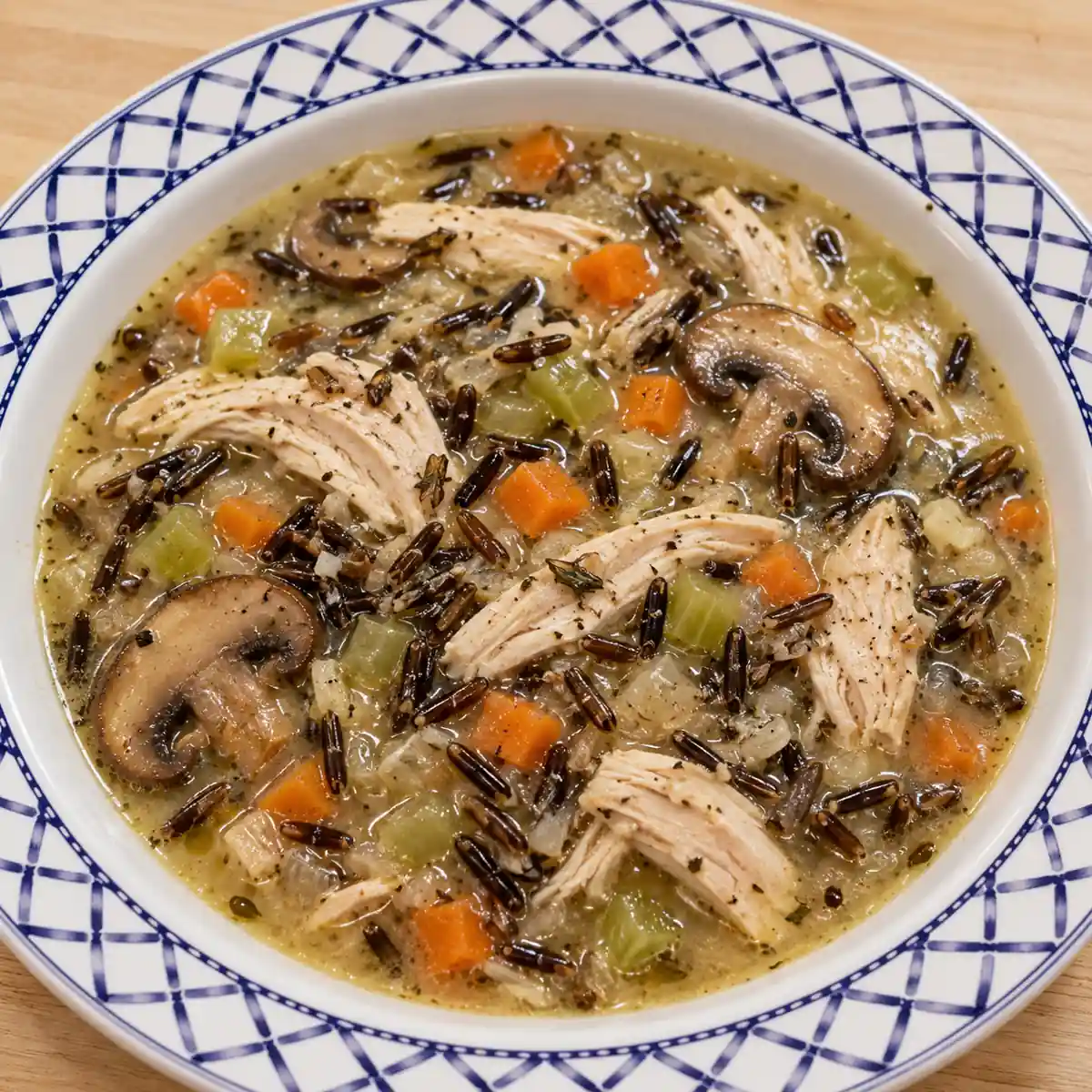
This chicken and wild rice soup is a creamy, chunky soup made with cooked poultry, pure wild rice and vegetables. It is suited to a cool-weather lunch or a make-ahead supper. The method uses cooked chicken, so the final simmer warms the meat rather than trying to cook raw poultry at the same pace as the rice.
Read the rice label first
Use pure wild rice for the cooking times below. A wild rice blend may contain brown rice, white rice or other grains with very different timings. Instant or precooked rice also behaves differently. The package matters more than the name printed in large letters on the front.
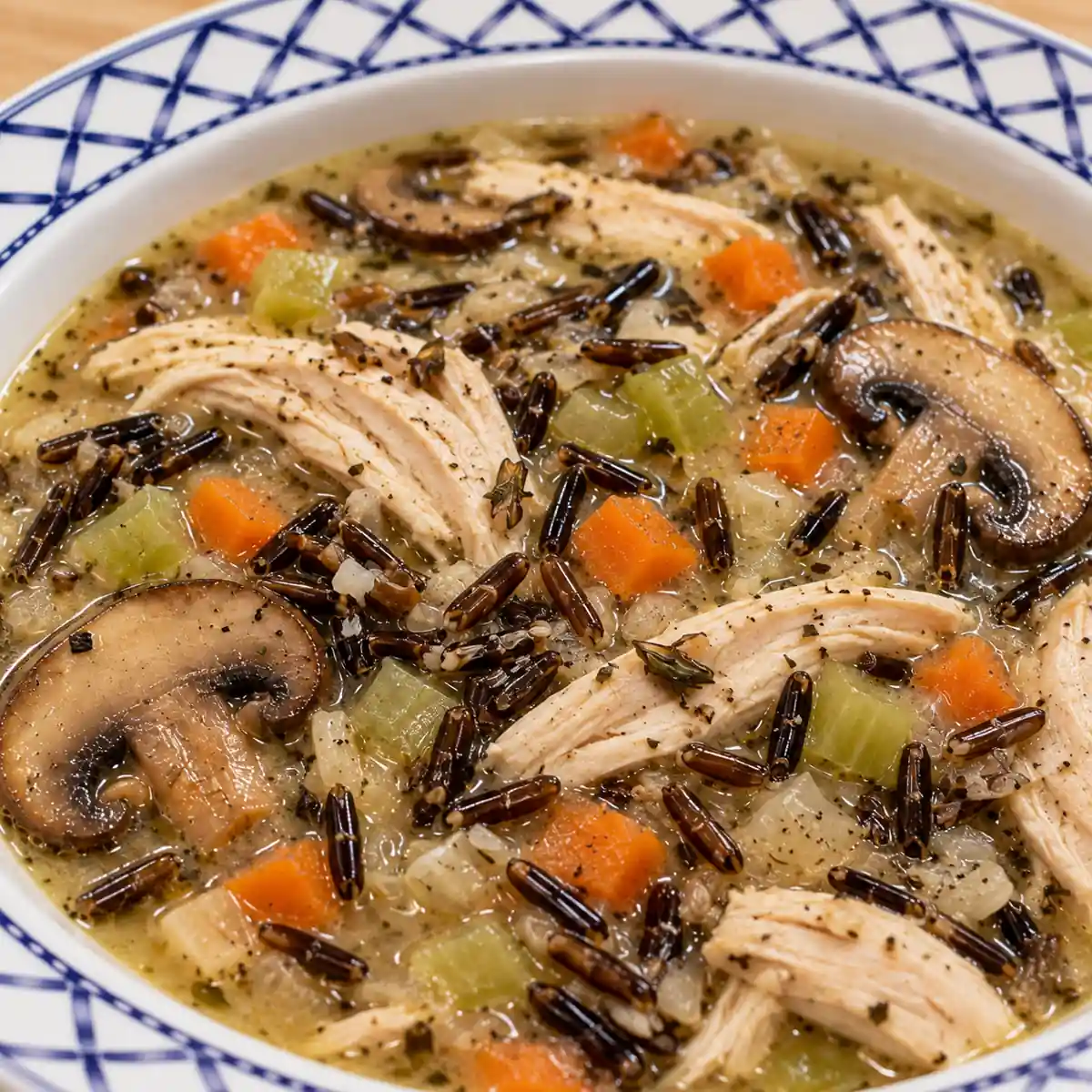
Wild rice should be tender with a gentle chew. Many grains split to show their pale interior when cooked. Start checking at forty minutes, but allow longer if needed. Some packages take closer to an hour. Drain excess cooking water rather than waiting for every drop to disappear and risking a scorched saucepan.
This is not the same method as stovetop rice pilaf or creamy chicken risotto. Those recipes use different grains and liquid management. Keeping the wild rice separate is the simplest way to avoid guessing how much soup broth it will absorb.
Chicken and broth choices
Use three cups of cooked chicken, shredded into short pieces. Breast, thigh meat or a mixture all work. Remove skin, bones and cartilage before measuring. Rotisserie chicken is convenient, but taste it first because some birds are strongly seasoned or quite salty.
Low-sodium chicken broth lets you control the finished soup. If using chicken stock concentrate or homemade bouillon cubes, dilute to regular broth strength before measuring. Concentrated stock added undiluted can overwhelm the cream and vegetables.
The mushroom flavour comes from browning, not from adding a large amount of seasoning. Slice the mushrooms rather than chopping them into tiny pieces. You should be able to recognize them in the bowl. The pairing of chicken and mushrooms also appears in chicken vol-au-vent, though that filling is much thicker than this soup.
Cook the rice, then build the soup
Give the wild rice enough time
Rinse the wild rice in a fine sieve. Bring four cups of water to a boil in a saucepan, add the rice and reduce to a gentle simmer. Cover loosely and cook for forty-five to sixty minutes, following the package as a guide. Add hot water if the pan becomes dry before the grains are tender.
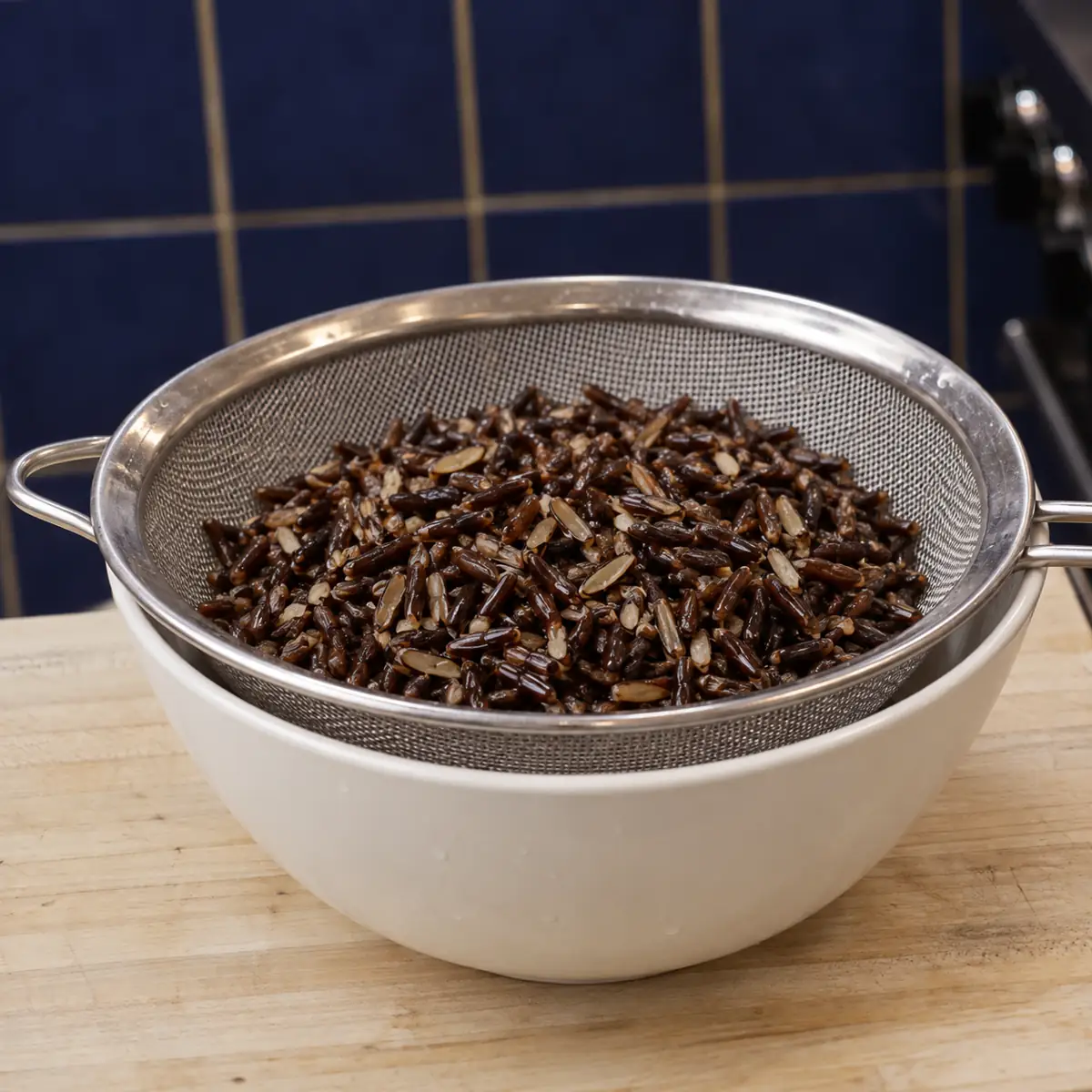
Taste several grains before draining. They should not have a hard centre. Drain well and set aside while finishing the soup. The dry three-quarter cup generally gives around two to two-and-a-half cups cooked, but yield varies. Use the cooked batch rather than adding more dry rice to make up a visual difference.
Brown the mushrooms and soften the vegetables
While the rice cooks, melt the butter in a heavy soup pot. Cook the mushrooms over medium-high heat for five to seven minutes, until their moisture evaporates and the edges begin to brown. Add the onion, carrots and celery, lower to medium and cook another six to eight minutes.
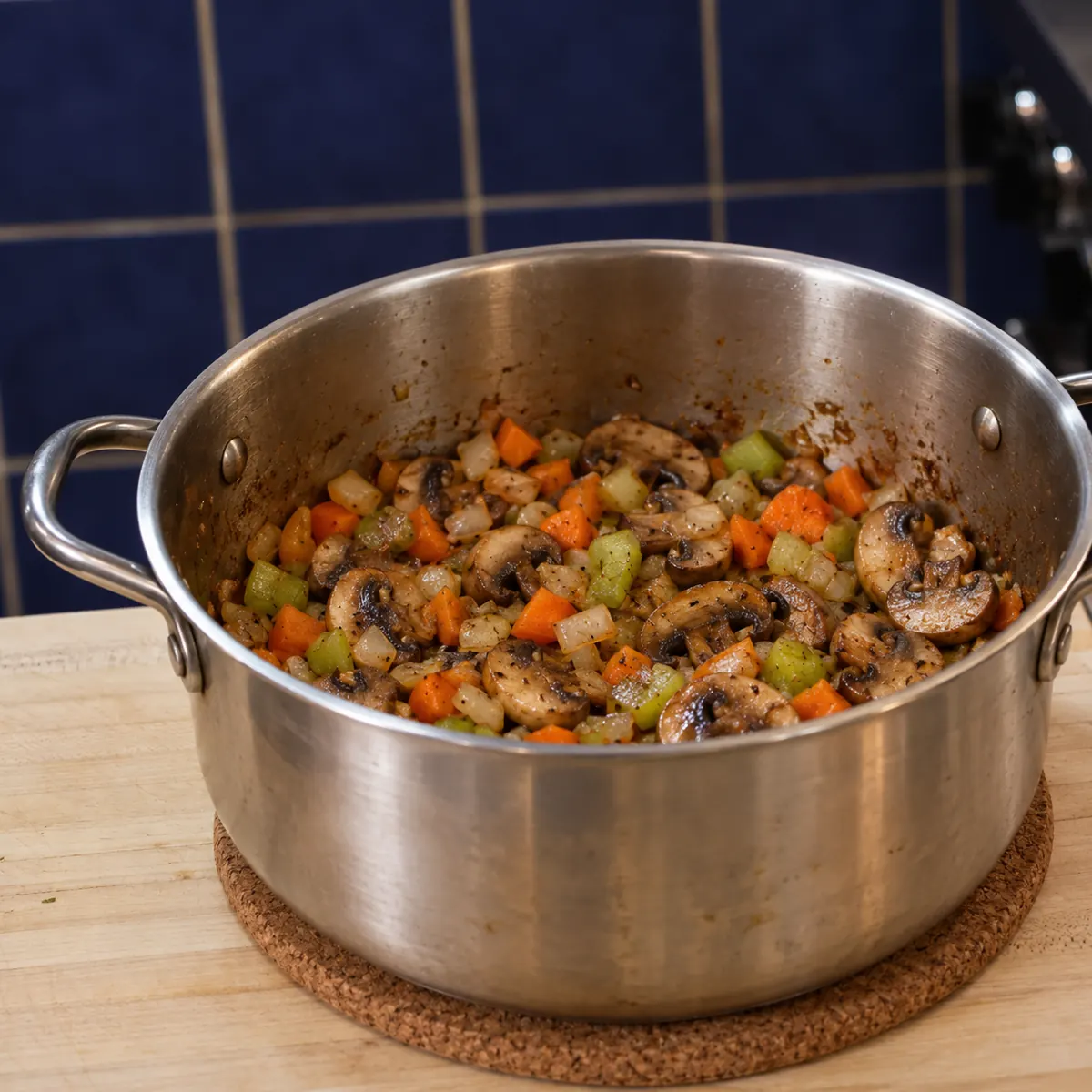
Add the garlic and thyme for thirty seconds. Stir in the flour for one minute, then gradually add the chicken broth, scraping the bottom. Add the bay leaf and simmer gently for twelve to fifteen minutes, until the carrots are tender. If the rice is not ready yet, turn the soup base to very low heat or briefly take it off the burner.
Finish with cooked chicken and cream
Remove the bay leaf. Add the drained wild rice, cooked chicken and cream. Heat gently for five to eight minutes, stirring occasionally, until the chicken is hot through and the soup reaches 165°F. Do not boil aggressively; the chicken only needs reheating and the cream benefits from gentler heat.
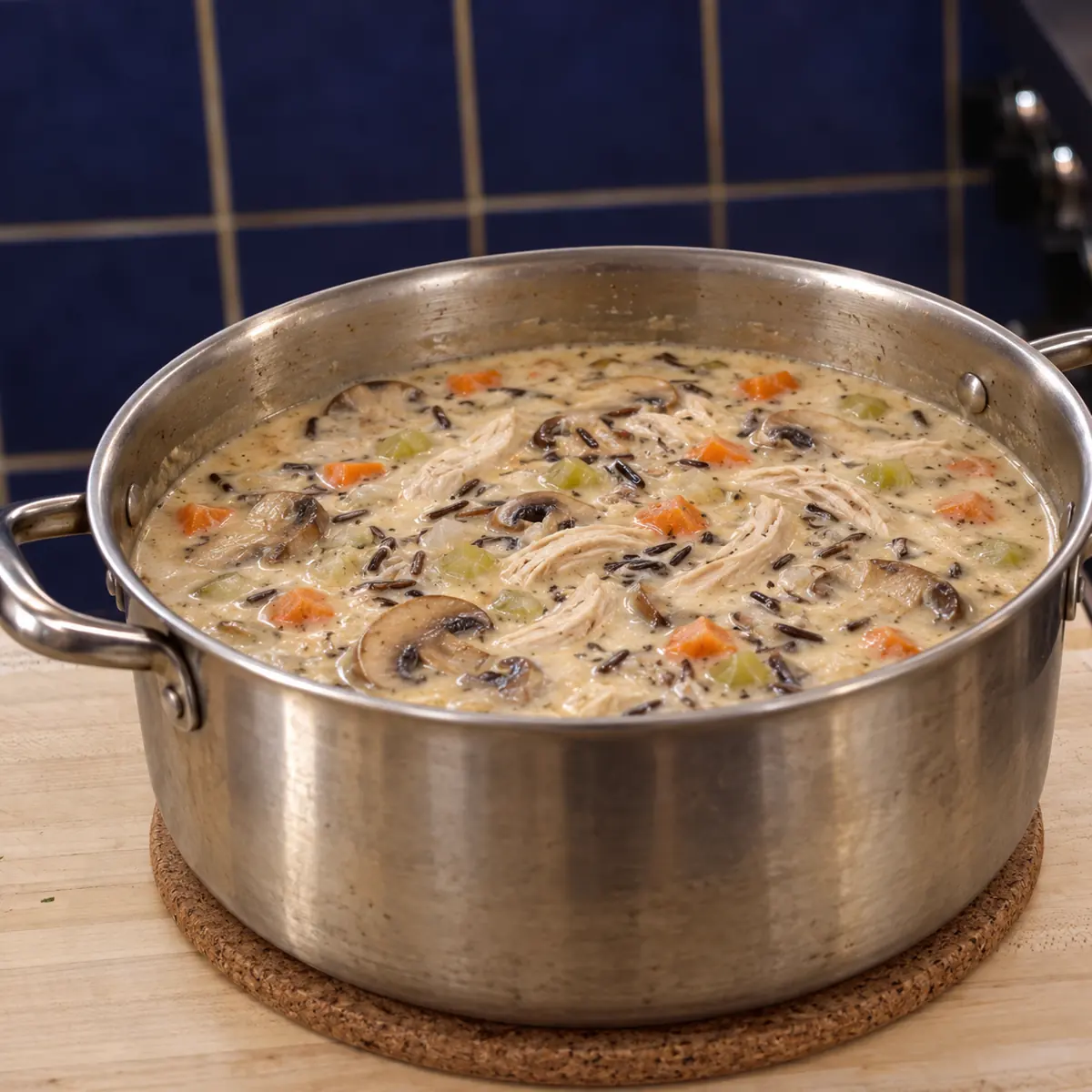
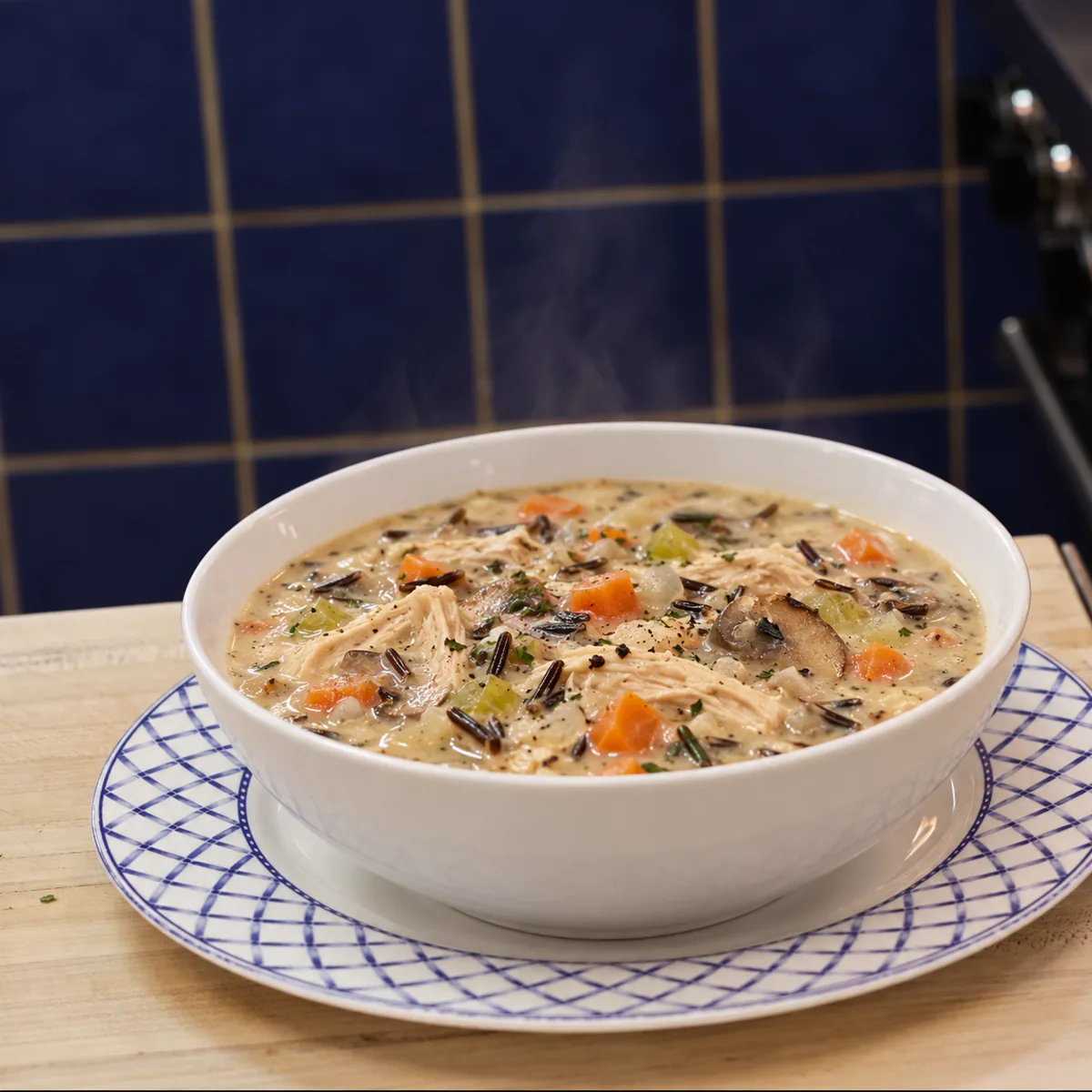
Taste and season with pepper and salt as needed. Add the lemon juice a teaspoon at a time, stopping when the flavour tastes fresher without becoming sour. A tablespoon is usually enough. If the soup has thickened too much while waiting, loosen it with a little broth or water.
Chef tips for the right balance
I recommend cutting the carrots and celery small enough to soften during the short simmer. Large chunks need longer and can leave you waiting while the rest of the soup is ready. The onion should soften into the broth rather than remain as thick, crunchy strips.
Keep the flour quantity modest. This is soup, not a casserole filling. The finished liquid should flow from the ladle and surround the rice. More flour is not the solution to every thin-looking broth, especially before the cooked grains and chicken have been added.
For a simpler vegetable soup on another day, easy broccoli soup or butternut squash soup offers a smoother texture. Here, the appeal is the contrast between tender poultry, soft vegetables and the chew of wild rice.
Substitutions
For leftover turkey, I’d use the same amount in place of the chicken. White mushrooms can replace cremini. If using a wild rice blend, cook it separately according to its own instructions and add about two to two-and-a-half cups cooked; do not copy the pure wild rice timing.
Half-and-half can replace heavy cream for a lighter result, with extra care to avoid boiling. A dairy-free alternative changes the flavour, so use an unsweetened product you already enjoy in savoury cooking. For other ideas built around creamy poultry dishes, browse the creamy chicken collection.
Questions about making it ahead
Will the rice absorb the soup overnight?
It can absorb more liquid and thicken the soup, even though it was cooked separately. For the best make-ahead texture, refrigerate the cooked rice and soup base separately, then combine with the chicken and cream when reheating. Cool both promptly in shallow containers rather than leaving them on the counter.
How long can I keep it?
Refrigerate promptly and use within three days, or sooner if the chicken was already stored for several days. Reheat to 165°F, adding broth as needed. A new soup does not extend the original safe storage period of leftover chicken.
Can I freeze portions?
Freeze cooled soup for up to two months. The cream may separate slightly on thawing, so stir gently while reheating. For a cleaner texture, freeze the base with rice and chicken before adding cream, then finish after thawing in the refrigerator.
Serving the soup
Bread and a romaine and endive salad make a complete lunch alongside a bowl. For more options through the season, see the soup recipes collection. Chicken supplies protein, rice contributes carbohydrate and the vegetables bring variety; the cream makes the broth richer without turning the recipe into a health claim.
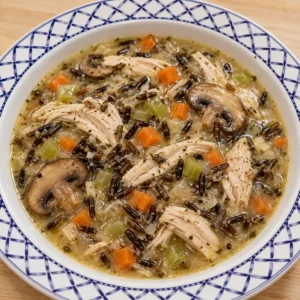
Creamy Chicken and Wild Rice Soup
Ingredients
- 3/4 cup dry pure wild rice
- 4 cups water plus more if needed for rice
- 3 tablespoons unsalted butter
- 8 ounces cremini mushrooms sliced
- 1 medium onion diced
- 2 medium carrots finely diced
- 2 celery stalks finely diced
- 2 garlic cloves minced
- 1/2 teaspoon dried thyme
- 3 tablespoons all-purpose flour
- 5 cups low-sodium chicken broth
- 1 bay leaf
- 3 cups cooked chicken shredded
- 3/4 cup heavy cream
- 1 tablespoon lemon juice or to taste
- 1/4 teaspoon black pepper
- Fine salt as needed
Instructions
- Rinse wild rice. Simmer in 4 cups water, loosely covered, 45–60 minutes or according to package, until tender with no hard centre. Add water if needed. Drain.
- Meanwhile, melt butter in a soup pot. Brown mushrooms 5–7 minutes over medium-high heat. Add onion, carrots and celery; cook over medium heat 6–8 minutes.
- Add garlic and thyme for 30 seconds. Stir in flour for 1 minute. Gradually add broth, scraping bottom. Add bay leaf and simmer 12–15 minutes until carrots are tender.
- Remove bay leaf. Add cooked rice, chicken and cream. Heat gently 5–8 minutes to 165°F, without a hard boil.
- Season with lemon juice, pepper and salt to taste. Loosen with broth if needed and serve.