Maple Syrup Pie with a Flaky Butter Crust
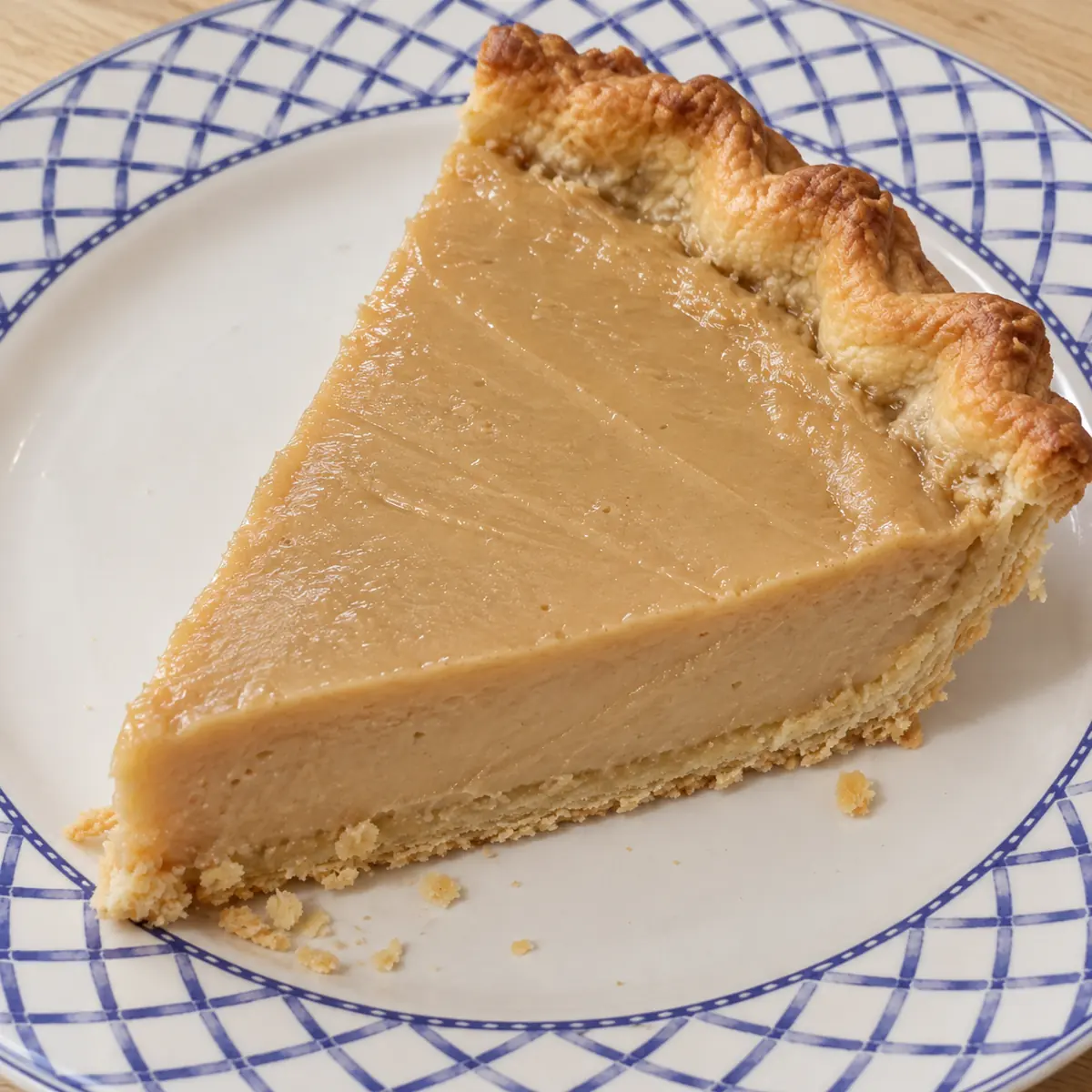
Maple syrup pie brings together a crisp butter crust and a smooth, creamy maple filling that holds its shape when chilled. The key is to bake the shell completely before adding the filling, then let the pie set properly instead of cutting it warm. Look for a golden pastry base and a filling that falls from the whisk in thick ribbons.
This is a single-crust maple cream pie with a stovetop filling, made without eggs in either the pastry or the filling. It suits a Québec-style family supper, Thanksgiving dessert table, or an ordinary weekend when there is a bottle of good maple syrup in the cupboard.
Maple flavour without a layer of brown sugar
Pure maple syrup supplies all the sweetness in the filling. Cream softens its intensity, a little salt keeps the flavour from becoming flat, and cornstarch gives the cooled pie enough structure to slice. This is a creamy, chilled dessert, not a baked egg custard or a runny sugar pie.
If you want a warm maple dessert with cake beneath the sauce, pouding chômeur is a different direction. For a smaller sweet with a firmer base, consider butter tart squares. Here, the contrast is specifically between a dry, flaky crust and a soft maple centre.
Ingredients and equipment that matter
Use a standard 9-inch metal pie plate, about 1¼ inches deep, rather than a deep-dish plate. You will also need parchment, pie weights or dried beans, a whisk, and a medium heavy-bottomed saucepan. A metal plate makes it easier to brown the pastry base.
For the crust, use all-purpose flour, cold unsalted butter, fine salt, and ice water. Spoon the flour into the measuring cup and level it; scooping a packed cup directly from the bag can leave you with dry pastry. Keep the butter cold enough that some small, flat pieces remain after mixing.
Choose pure maple syrup with a pronounced flavour, ideally an amber or dark variety. Pancake syrup is not a direct substitute. The filling also needs heavy whipping cream, whole milk, cornstarch, butter, salt, and vanilla. Use cold milk to dissolve the cornstarch before heating it.
The complete quantities are in the recipe card. Do not reduce the cornstarch because the hot mixture looks thick: that thickness is needed to support a slice after chilling. This pie is a rich dessert, so eight moderate portions work well. It does not become a low-sugar dessert simply because the sweetener is maple syrup.
Step-by-step: pastry first, filling second
1. Bring the dough together without kneading
Combine the flour and salt. Cut in the cold butter until the mixture contains both coarse crumbs and visible pea-sized pieces. Add 3 tablespoons of ice water and toss with a fork. Squeeze a little dough: it should hold together without feeling wet. Add the fourth tablespoon only if dry crumbs will not bind.
Press into a disk, wrap, and refrigerate for 30 minutes. Do not knead until smooth. A rough dough with small butter streaks is what you want; working it like bread makes the crust tougher.

2. Line, chill, and fully bake the shell
Roll the dough on a lightly floured surface into a 12-inch circle. Fit it into the pie plate without stretching, trim to a ½-inch overhang, then fold and crimp the edge. Refrigerate another 20 minutes while the oven heats to 375°F with a rack in the lower third.
Line the pastry with parchment and fill with weights right up against the sides. Bake for 20 minutes. Lift out the parchment and weights carefully, prick the base lightly with a fork, and bake another 15 to 20 minutes. The bottom should look dry and golden, not grey or translucent. Cover the rim loosely with foil if it colours before the base is ready. Cool completely on a rack.

3. Cook the maple filling until the bubbles reach the centre
Whisk the cornstarch into the cold milk in the saucepan until perfectly smooth. Add the maple syrup, cream, and salt. Cook over medium heat, whisking steadily and reaching the bottom corners of the pan. It usually takes 7 to 10 minutes to thicken and come to a gentle boil.
Once slow bubbles break through the centre, lower the heat slightly and cook for 1 full minute while whisking. Small edge bubbles alone do not count. The mixture should be glossy and fall in broad ribbons, with the whisk leaving a brief trail before the surface settles. Remove from the heat and stir in the butter and vanilla.

4. Fill, cool, and give the pie time to set
Pour the hot filling into the cooled shell and smooth it gently. Leave it on a rack for about 30 minutes, then refrigerate uncovered until cold. Allow at least 6 hours in the refrigerator before slicing; overnight is convenient. Cover once cold, keeping the cover off the filling if you want a smooth surface.
Cut with a sharp knife and wipe it between slices. The filling should yield to the knife but stay on the pastry when lifted. A freshly filled pie will slump, even if the proportions and cooking were correct.

Chef tips for a crisp base and a clean slice
I recommend filling the lined shell with enough pie weights to support the sides as well as the bottom. A thin scattering of beans lets the sides slide down before the dough sets. The second bake matters just as much: the filling will not go back into the oven, so pale pastry stays pale.
For the filling, keep the whisk moving rather than turning up the burner. Cornstarch thickens quickly near the end, and a hot spot can scorch the cream before the rest of the pan catches up. If you see small lumps, pass the hot filling through a fine sieve before pouring it into the crust.
Chilling is part of the recipe, not just a serving preference. For a dessert with a different setting method, crème caramel uses eggs and gentle oven heat. A fruit tart with pastry cream is another useful example of matching a cooked filling with a separately prepared pastry shell.
Substitutions
To save time on the pastry, I’d use a purchased single pie crust. Choose one intended for a standard 9-inch pie, follow its blind-baking directions, and cool it completely. Salted butter can replace unsalted butter in the pastry, but omit the added pastry salt. Keep the small amount of salt in the filling unless its butter is also salted.
Milk, half-and-half, and dairy-free drinks do not behave exactly like heavy cream here. Keep the stated dairy proportions for a dependable starting point. The guide to cream substitutes explains broader options, but a general substitution is not a validated version of this pie. Likewise, gluten-free apple tart is a separate recipe; simply replacing this flour cup for cup is not the same formula.

Frequently asked questions
Why did the filling stay loose?
First check the chilling time. Then check whether the filling reached a gentle boil in the centre and cooked for the full minute. Measuring too little cornstarch or cutting the pie warm can also cause slumping. More refrigerator time helps an underchilled pie, but does not correct an undercooked thickener reliably.
Can I make it the day before?
Yes. Make it the previous afternoon, chill overnight, and cover once cold. Keep refrigerated and use within 3 days. The pastry is crispest early on and gradually softens where it touches the filling. Freezing is not recommended for this version because the thawed starch filling may release water.
Can I serve it warm like sugar pie?
This formula is designed to be served chilled. Let a slice stand for 10 to 15 minutes if you prefer less refrigerator chill, but do not heat the whole pie expecting the same neat slices.
What to serve alongside
An unsweetened cup of coffee is enough. If you want a topping, add a small scoop of homemade vanilla ice cream or choose no-churn vanilla ice cream when you have no machine. Keep portions small because both are sweet accompaniments.
For a larger dessert table, apple crisp with oats adds fruit and a crumbly texture. Date squares can be cut into little pieces alongside the pie. There is no need for another syrup poured over the maple filling.
For more ideas, browse our maple desserts and sweet bakes.

Maple Syrup Pie with a Flaky Butter Crust
Ingredients
- 1¼ cups all-purpose flour spooned and levelled, plus a little for rolling
- ½ teaspoon fine salt for the crust
- ½ cup cold unsalted butter cubed, for the crust
- 3 to 4 tablespoons ice water
- ¼ cup cornstarch
- ¼ cup cold whole milk
- 1 cup pure maple syrup
- 1 cup heavy whipping cream
- ¼ teaspoon fine salt for the filling
- 2 tablespoons unsalted butter for the filling
- 1 teaspoon vanilla extract
Instructions
- Mix flour and crust salt. Cut in cold butter, leaving pea-sized pieces. Toss with 3 tablespoons ice water, adding up to 1 tablespoon more only if needed. Press into a disk, wrap, and chill 30 minutes.
- Roll into a 12-inch circle. Fit into a standard 9-inch metal pie plate without stretching. Trim, fold, and crimp the edge. Chill 20 minutes. Heat oven to 375°F with a rack in the lower third.
- Line with parchment and fill with pie weights against the base and sides. Bake 20 minutes. Remove weights and parchment, lightly prick the base, and bake 15 to 20 minutes more until dry and golden. Shield the rim if needed. Cool completely.
- Whisk cornstarch into cold milk in a medium heavy saucepan. Whisk in maple syrup, cream, and filling salt. Cook over medium heat, whisking, until thick and bubbling gently in the centre, about 7 to 10 minutes. Cook 1 more minute, whisking constantly.
- Remove from heat. Stir in filling butter and vanilla. Pour into the cooled shell and smooth. Cool on a rack about 30 minutes, then refrigerate at least 6 hours. Cover once cold.
- Slice chilled with a clean sharp knife. Refrigerate leftovers, covered, for up to 3 days.