Stuffed Pepper Soup with Ground Beef and Rice
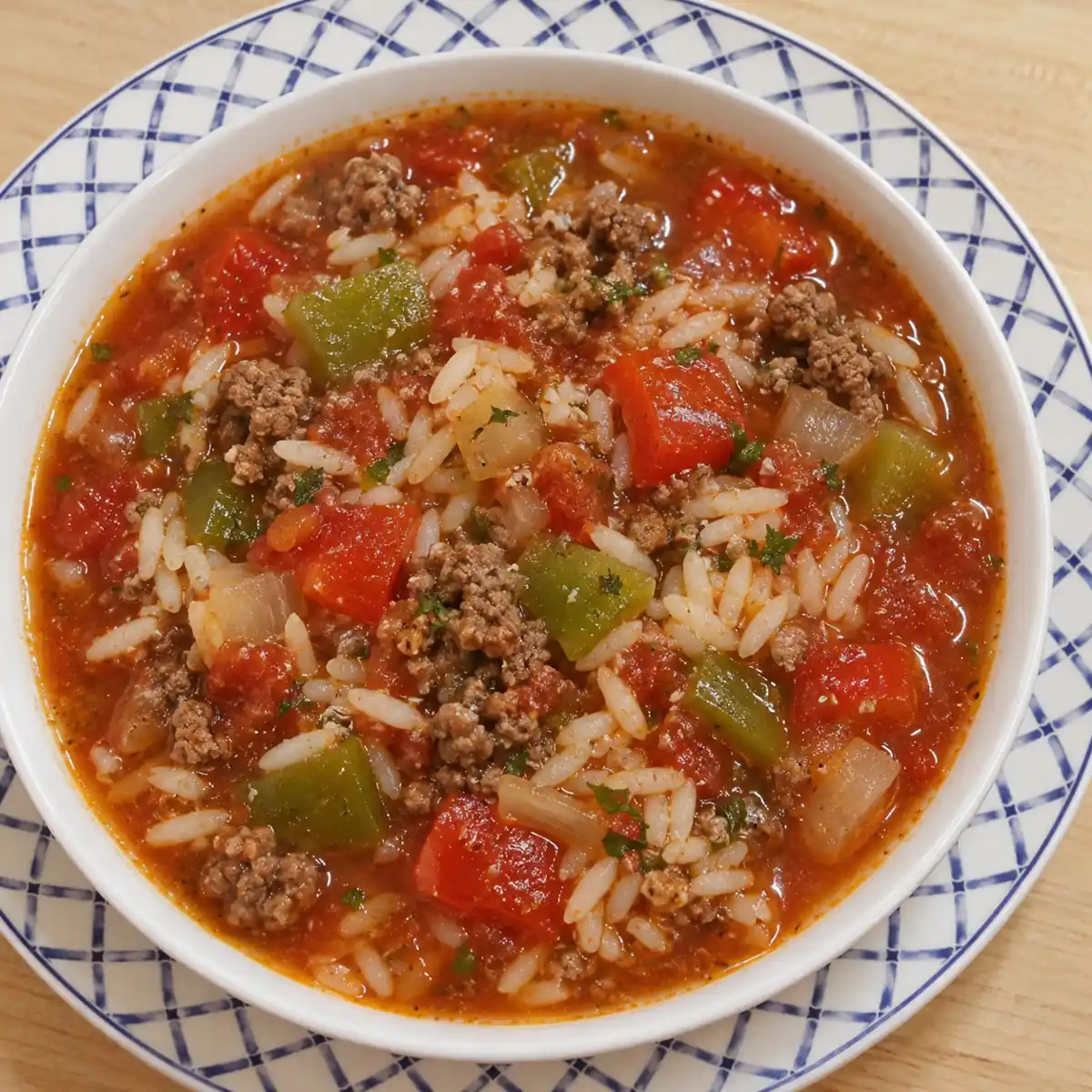
All the familiar parts of stuffed peppers fit into a soup pot, but the rice needs a little attention. Cook it separately and spoon it into the bowls before adding the beef and tomato broth. The peppers soften without disappearing, the rice keeps its shape, and tomorrow’s portion still has liquid instead of becoming a solid mound.
When you want the flavours of stuffed peppers with less assembly, I’d serve the ground beef, peppers, tomatoes and rice as a soup. There are no peppers to hollow out or stand upright in a baking dish. This stovetop version suits a weeknight dinner, especially when you want the same savoury flavours with less assembly.
What changes when stuffed peppers become soup?
The ingredients resemble classic stuffed bell peppers, but the proportions are different. Broth surrounds the filling, and the peppers are cut into spoon-sized pieces. There is no baked top, no compact filling and no need to wait for a whole pepper shell to soften.
A mix of red and green peppers gives a useful balance. Red peppers bring sweetness; green peppers have a more grassy flavour. Use two large peppers or three smaller ones to get about three cups chopped. Remove the white ribs and seeds, which do not improve the texture of a spoonful.
The three-meat stuffed peppers offer another filling style, while this soup stays with lean ground beef. It also differs from taco rice skillet: oregano and tomatoes lead here, without taco seasoning or a melted cheese layer.
Why the rice cooks in a second pan
I prefer to keep the rice separate because it absorbs broth for as long as it sits in the soup. A pot that looks right at dinner can become very thick by the next day. Cooking it separately lets each person choose a little more or less rice and makes the remaining soup base easier to freeze.
Long-grain white rice works well. Rinse it, then cook it with the measured water in a small covered saucepan. Brown rice can also be used, but follow its package instructions and allow more time. Do not use the white-rice timing for it. For another way to cook distinct grains, the stovetop rice pilaf explains a different, sautéed-rice approach.
The soup base uses crushed tomatoes and low-sodium beef broth. Crushed tomatoes provide body without making the broth chunky with tomato pieces. Tomato paste adds depth after a brief cook with the beef. Avoid a sweetened jarred pasta sauce, which would change both seasoning and consistency.
Make the soup while the rice cooks
Start the rice and brown the beef
Put the rinsed rice, water and a small pinch of salt into a saucepan. Bring to a boil, cover and reduce to the lowest heat. Cook for fifteen to eighteen minutes, or according to the package, until the water is absorbed. Remove from the heat and leave covered for five minutes before fluffing.
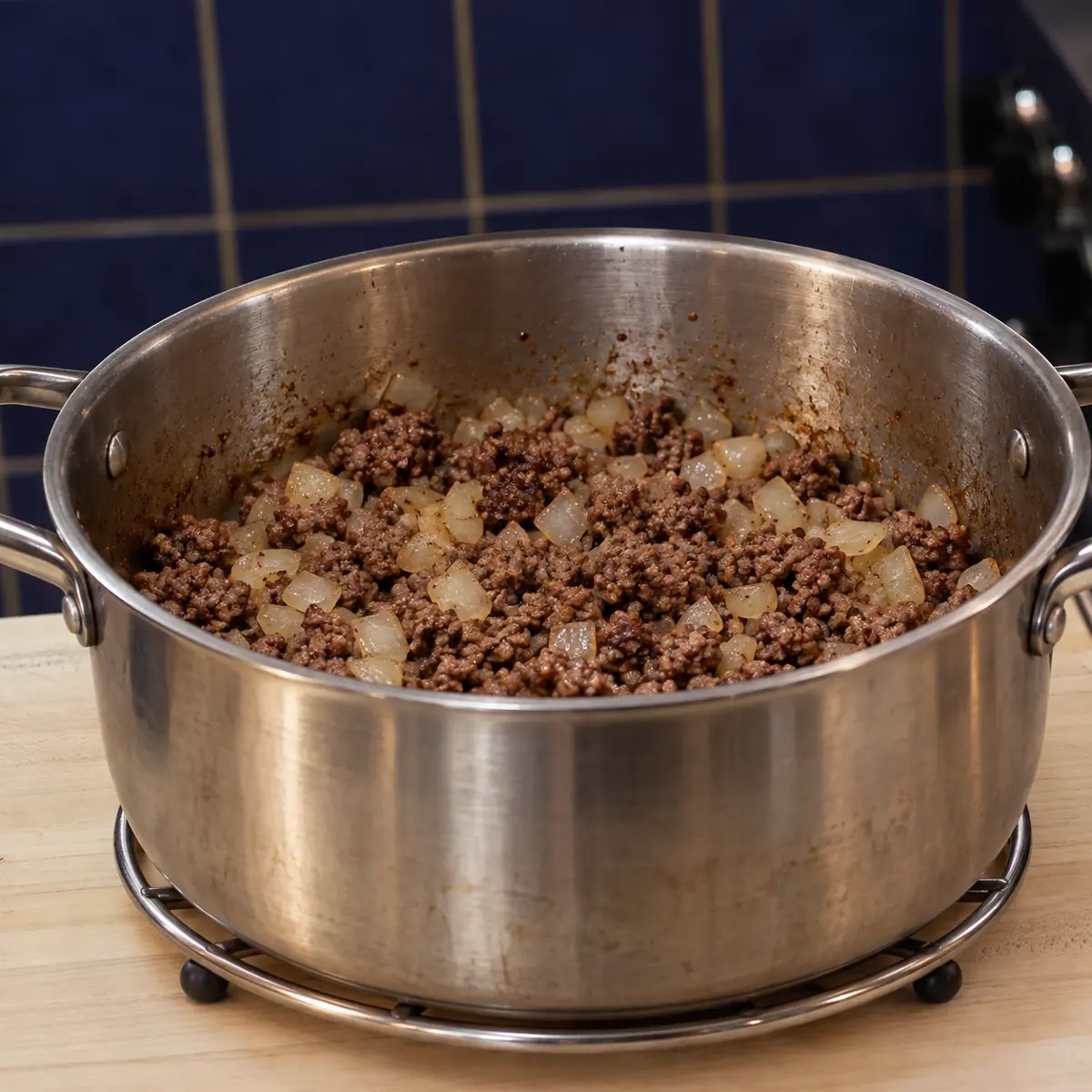
Meanwhile, heat the oil in a large soup pot over medium-high heat. Add the ground beef and cook for six to eight minutes, breaking it into small crumbles. Spoon off excess fat, leaving about a tablespoon. Add the onion and cook for three minutes.
Let the peppers lose their raw edge
Add the chopped red and green peppers. Cook for five minutes over medium heat, stirring often. They should brighten and begin to soften, but they do not need to be fully tender yet. Add the garlic, tomato paste, oregano and paprika, and stir for one minute.
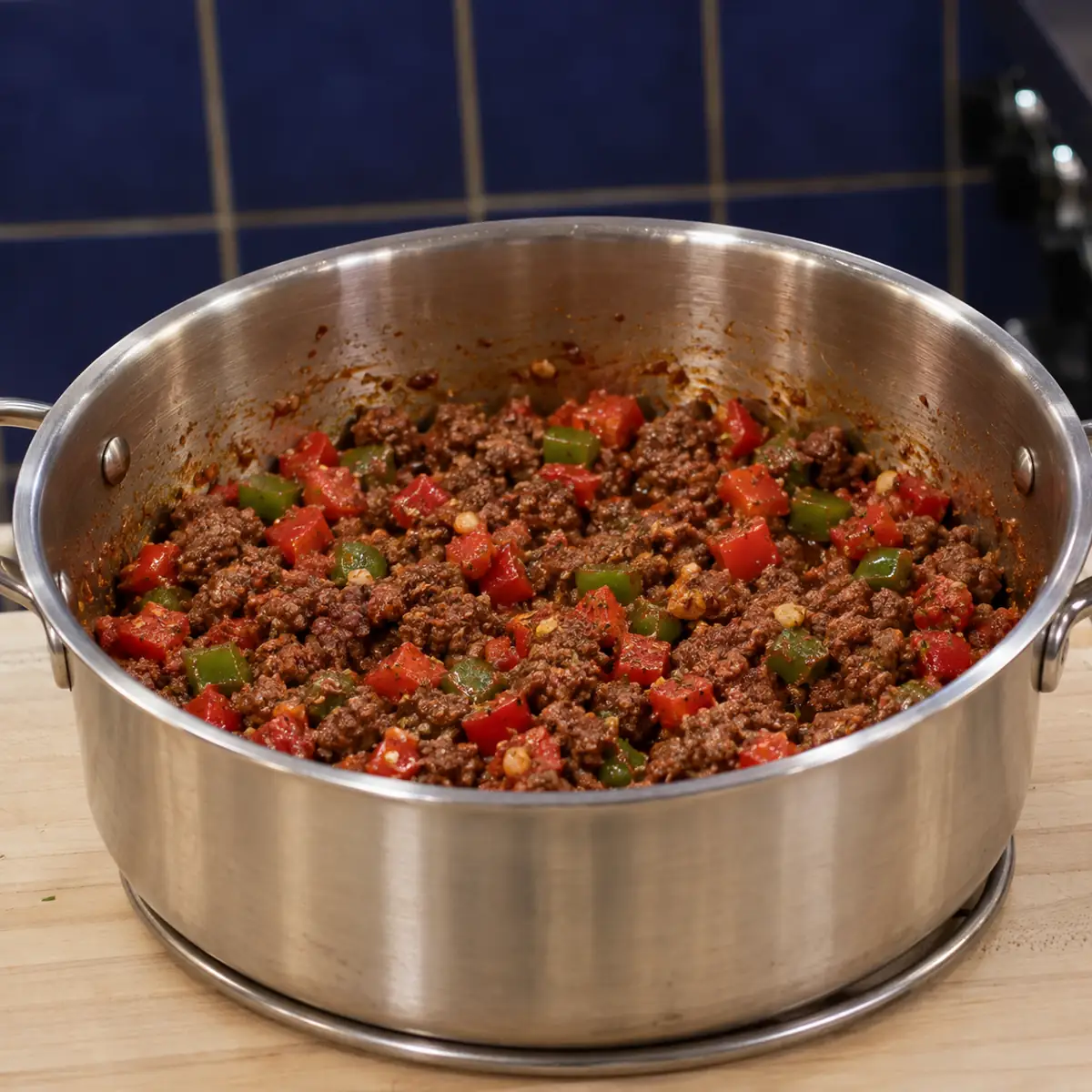
The pepper pieces should be roughly half an inch across. Very fine dice disappear in the broth, while large strips are awkward on a soup spoon. This is one reason the soup eats differently from beef with peppers and olives, where larger pieces suit a plated main course.
Simmer the tomato broth
Pour in the crushed tomatoes and broth, scraping the bottom of the pot. Add the pepper and bring to a simmer. Cook gently, partially covered, for fifteen to twenty minutes, until the bell peppers are tender but still identifiable. The ground beef should be fully cooked to at least 160°F.
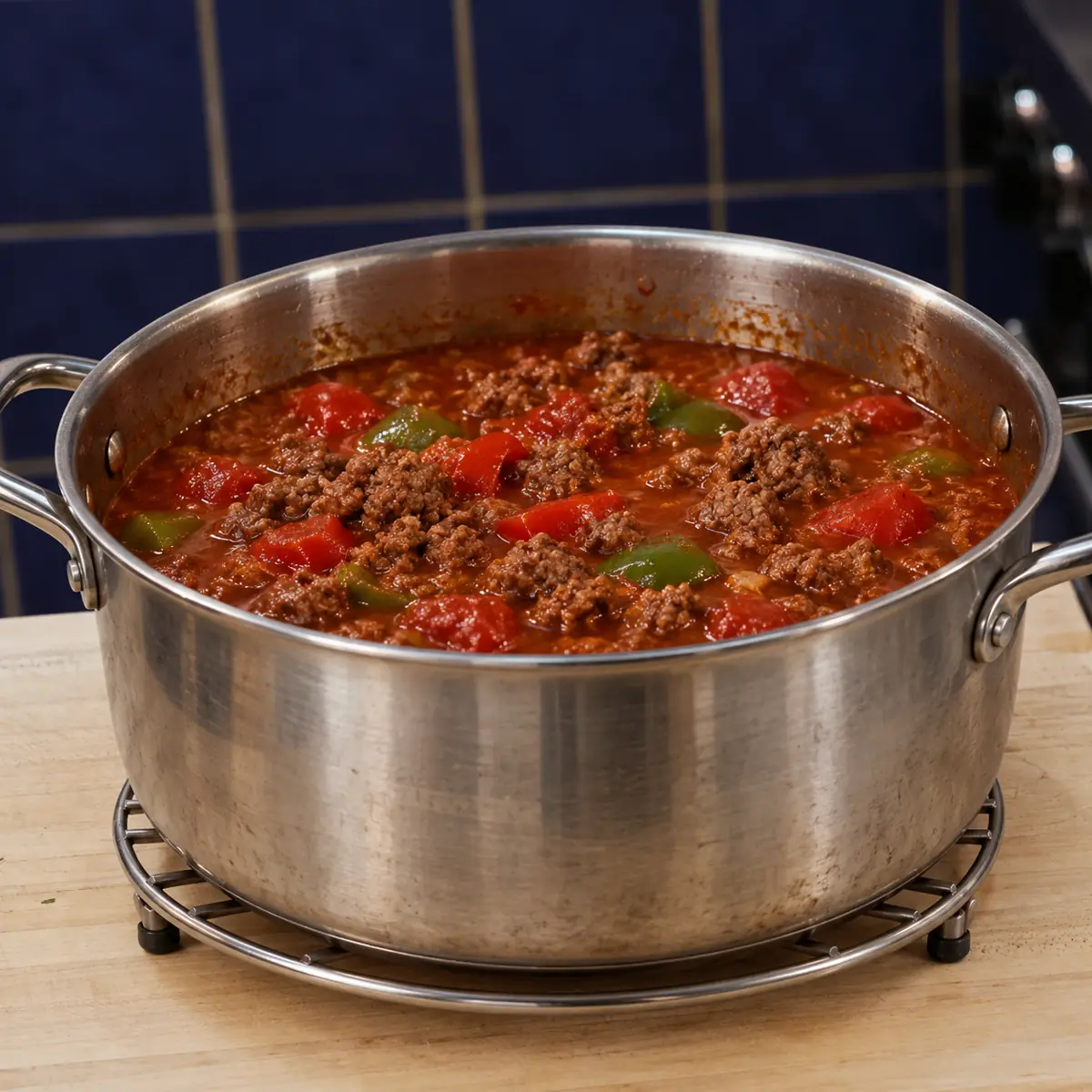
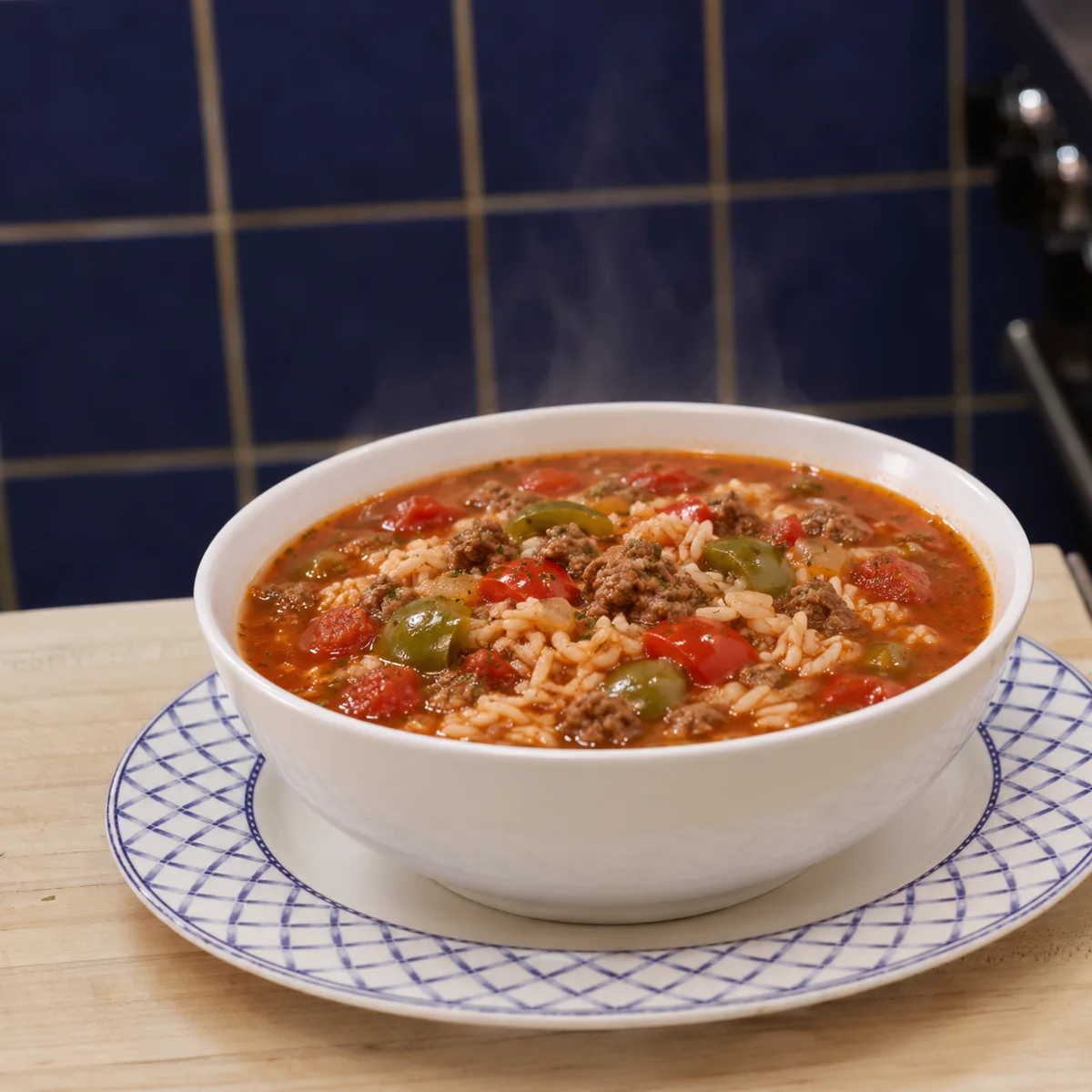
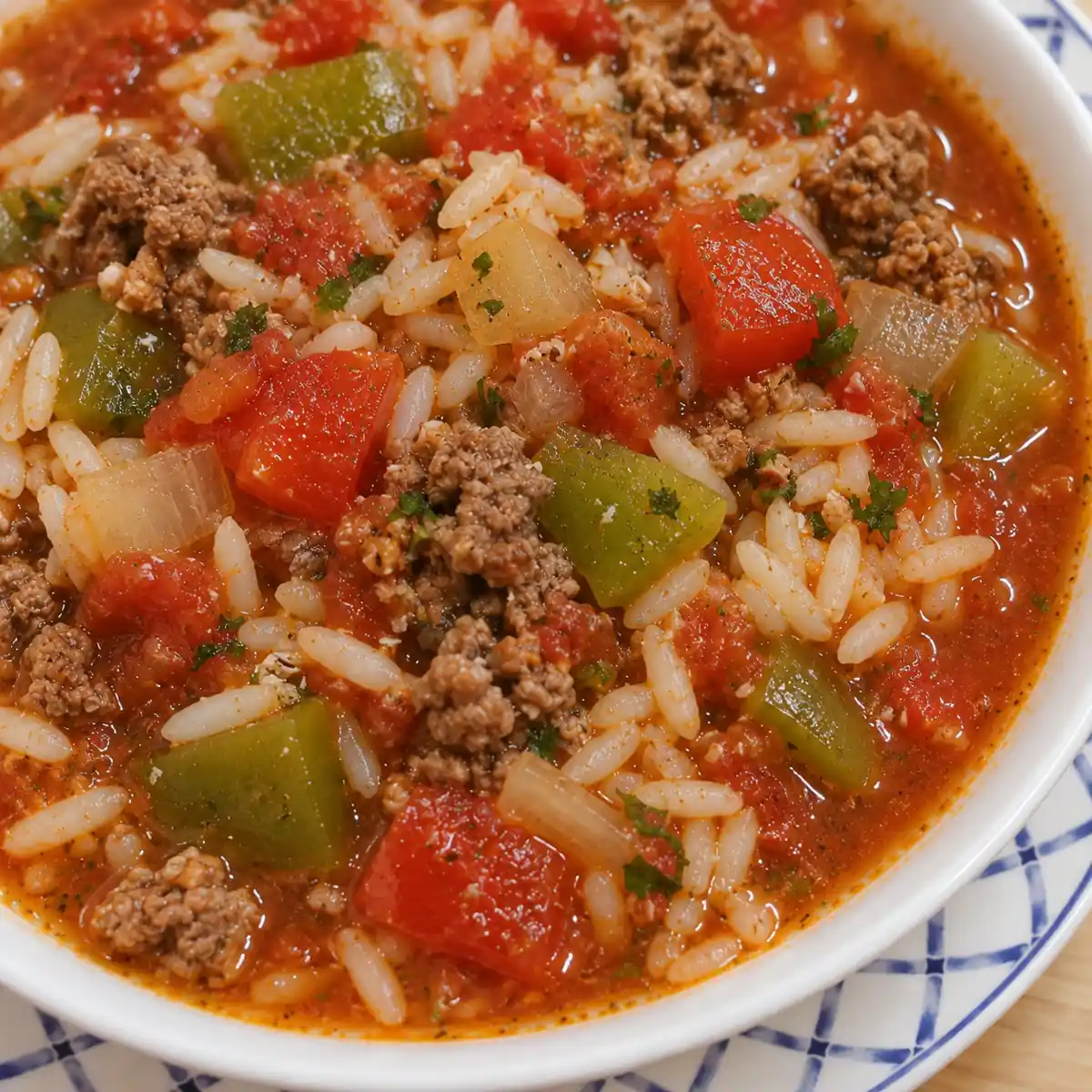
Taste and add salt only as needed. Spoon about one-third cup of cooked rice into each bowl, then ladle the soup over it. Add a little parsley if desired. Stir at the table so the rice spreads through the broth rather than sitting as a dense lump at the bottom.
Three details worth watching
Drain excess beef fat before adding the vegetables. A little carries flavour, but a heavy oily layer competes with the tomato broth. Lean beef is helpful here. For another meal that uses a small amount of beef with grain, ground beef and rice is designed as a skillet dinner rather than a soup.
Give the peppers enough time to soften. A barely warmed pepper tastes raw and can dominate the bowl. On the other hand, a hard boil for an hour will make them fall apart. A gentle simmer and a quick taste of one piece are more useful than judging by the colour of the broth.
Finally, keep the rice quantity modest at first. You can add more at the table. Once too much has been stirred into the entire pot, the only easy correction is additional broth, which also dilutes the seasoning.
Substitutions
For a milder soup, I’d substitute ground turkey for the beef and cook it to 165°F. All-red peppers make a sweeter version, while all-green peppers have a stronger vegetable flavour. Neither requires a different method. A pinch of chili flakes is optional if you want heat, but the basic soup is mild.
For a rice-free bowl, serve the beef and pepper broth as it is, with bread on the side. Do not substitute dry pasta in the same amount without adjusting the liquid. A beef pasta bake is a separate option when pasta and cheese are the main goal.
Questions about leftovers
Can I use leftover cooked rice?
Yes, if it was cooled promptly and kept refrigerated. Reheat it until steaming hot throughout, reaching 165°F, before serving with the soup. Do not use rice that has sat at room temperature for an extended period. You need about two cups cooked rice for the full recipe.
Can I freeze the soup base?
Yes. Cool promptly, portion into containers and freeze without rice for up to three months. Thaw in the refrigerator and reheat to 165°F. Add freshly cooked rice when serving. This keeps the grain from becoming excessively soft.
How long does it keep in the refrigerator?
Keep the soup and rice in separate shallow containers and use within three to four days. Reheat only the portions needed. The separate containers also let you turn one lunch into a brothier bowl and another into a more filling rice-heavy portion.
Alongside the bowls
The beef contributes protein, the peppers add vegetables, and the rice makes it a full meal. A crisp romaine and endive salad is a fresh contrast. If you skip the rice, serve homemade white bread for the broth. For more ideas using the same main ingredient, explore the ground beef recipe collection.
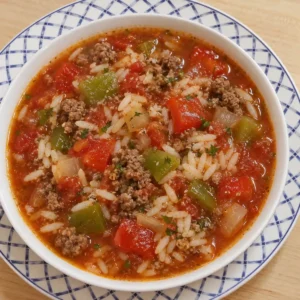
Stuffed Pepper Soup with Ground Beef and Rice
Ingredients
- 2/3 cup long-grain white rice rinsed
- 1 1/3 cups water or quantity specified on rice package
- 1 teaspoon neutral oil
- 1 pound lean ground beef
- 1 medium onion diced
- 1 large red bell pepper cut into 1/2-inch pieces
- 1 large green bell pepper cut into 1/2-inch pieces
- 2 cloves garlic minced
- 2 tablespoons tomato paste
- 1 teaspoon dried oregano
- 1/2 teaspoon sweet paprika
- 1 can 28 ounces crushed tomatoes
- 4 cups low-sodium beef broth
- 1/4 teaspoon ground black pepper
- Fine salt as needed
- 2 tablespoons chopped parsley optional
Instructions
- Bring rice, water and a pinch of salt to a boil in a small saucepan. Cover and cook on low 15–18 minutes or per package. Rest covered off heat 5 minutes; fluff.
- Heat oil in a soup pot. Brown beef 6–8 minutes, breaking into crumbles. Drain excess fat, leaving about 1 tablespoon. Add onion and cook 3 minutes.
- Add peppers and cook 5 minutes. Stir in garlic, tomato paste, oregano and paprika for 1 minute.
- Add crushed tomatoes, broth and pepper. Simmer partially covered 15–20 minutes until peppers are tender and beef reaches at least 160°F. Adjust salt.
- Place about 1/3 cup cooked rice in each bowl. Ladle soup over it and add optional parsley. Store remaining rice separately.