Homemade Vanilla Ice Cream with a Custard Base (Better Than Store-Bought Texture)
Vanilla ice cream is a frozen dessert made by churning a chilled dairy base so it freezes smoothly instead of turning icy. This version is different because it uses a French custard-style base (crème anglaise) plus a balanced dairy ratio for a creamier, more stable scoop. It’s the kind of vanilla ice cream you make for summer heat, holiday dinners, or anytime you want a reliable year-round dessert.
This recipe is based on my YouTube video “Glace à la vanille maison,” with a few adjustments since publication to improve texture (less iciness), scoopability after freezing, and consistency in a home freezer.
What Makes This Vanilla Ice Cream Different
Many “homemade vanilla ice cream” recipes are either too lean (icy) or too heavy (greasy). The original video base relied mainly on milk and egg yolks, which churns and freezes, but tends to get hard and a bit crystalline after a night in the freezer. Here, the proportions are tuned for a smoother, more scoopable “French vanilla” result while keeping the technique identical: custard base, rapid chill, overnight rest, then churn.
If you prefer a no-machine dessert, try the richer freezer-friendly approach in No-Churn Dark Chocolate Ice Cream—but for classic vanilla, a custard base with a machine gives the cleanest texture.
Differentiation
This is a custard-based, ultra-creamy vanilla ice cream meant for:
- A premium scoop texture (smooth, stable, less icy)
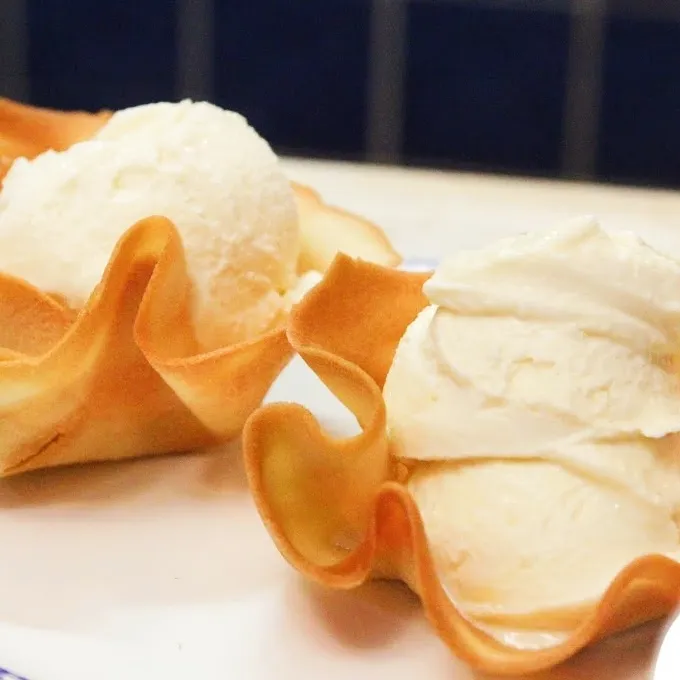
- Serving in bowls, cones, or tuile cups
- Freezer storage for several days without turning rock-hard
It’s not intended as:
- A “quick 5-minute” blender ice cream
- A “healthy high-protein” frozen dessert
- A no-churn shortcut (great, but different goal)
For lighter, more everyday desserts, browse MichelDumas.com for cakes, cookies, and comforting classics like Old-Fashioned Creamy Rice Pudding.

Ingredients Notes (so it works in Canada + USA kitchens)
- Milk and cream: Use 3.25% milk and whipping cream (35%). This creates a balanced fat level for smooth churning.
- Sugar: Sugar isn’t just sweetness; it improves scoopability and reduces iciness.
- Egg yolks: Give body, emulsification, and that “French vanilla” richness without needing stabilizers.
- Vanilla: Frozen desserts mute flavors. Vanilla needs to be slightly bolder than in cakes like Easy Vanilla Cake.
- Optional tuile cups: They’re crisp, buttery, and make plating look restaurant-level with almost no extra effort.
Step-by-Step: Custard Base Vanilla Ice Cream
1) Set up your tools
You’ll need:
- A heavy-bottom pot
- A whisk + silicone spatula
- A thermometer (recommended)
- A fine-mesh strainer
- A large bowl set over an ice bath
- Ice cream machine (with frozen bowl or compressor)
If you’re building your kitchen basics, technique matters as much as tools—same mindset as when you make sauces like Homemade Mayonnaise: temperature control = success.

2) Heat the dairy
Pour the milk and cream into a pot. Warm over medium heat until steaming and hot but not boiling, aiming for about 75–80°F? (Too low.)
Aim for 170–175°F (77–80°C): hot enough to temper eggs and dissolve sugar, not boiling.
3) Whisk yolks + sugar
In a bowl, whisk egg yolks with sugar until the mixture looks lighter and slightly thicker. Add vanilla and salt.
4) Temper the eggs
Slowly pour in a ladle of hot dairy while whisking constantly. Repeat 2–3 times. This prevents scrambling and keeps the custard smooth.
5) Cook the custard (crème anglaise)
Pour everything back into the pot. Cook on medium-low, stirring constantly with a spatula and scraping the bottom.
Cook until the custard reaches 175–180°F (80–82°C) and lightly coats the back of a spoon.
No thermometer? Do the spoon test: swipe your finger across the spoon—if the line stays clean, the custard is ready.
6) Strain and chill fast
Immediately strain into a clean bowl (removes any tiny egg bits). Set the bowl into an ice bath and stir until the base cools quickly. Rapid chilling improves texture.

7) Rest the base (important)
Cover and refrigerate at least 4 hours, ideally overnight. This hydrates proteins, stabilizes emulsification, and gives a smoother churn.
8) Churn
Pour the cold base into your machine and churn until it looks like soft-serve.
9) Freeze to set
Transfer to a container, press parchment directly on the surface, and freeze 4–6 hours for scoopable firmness.

Crispy Tuile Cups (Optional)
These tuile cups are a simple butter-sugar-egg-white batter baked into thin rounds and shaped over glasses. They’re fragile, crisp, and perfect for holding a scoop of ice cream.
This is a different intent than cookie-based dessert bowls—if you want chewy cookie energy, go for something like Chewy Chocolate Chip Cookies served warm with ice cream. Tuiles are light and elegant.
How to make tuile cups
- Cream butter + powdered sugar until smooth.
- Mix in egg whites gradually.
- Fold in flour until just combined.
- Spread thin circles on a lined baking sheet.
- Bake until edges are golden, then shape immediately over glasses.

Health / Nutrition Context (no diet claims)
This is a classic comfort dessert: dairy, sugar, and egg yolks. Compared to “milk-only” bases, the added cream creates a richer result with better texture—so you typically serve smaller scoops and feel satisfied. If you want a more protein-forward dessert idea, a different category entirely is something like mousse or yogurt-based treats—but this recipe’s intent is traditional, creamy, and luxurious.

Substitutions
Vanilla options
- Vanilla extract: easiest and consistent
- Vanilla bean paste: stronger flavor, visible specks
- Vanilla bean: steep the pod in hot dairy for 10 minutes
Dairy swaps
- Half-and-half can replace milk + some cream, but texture may be slightly less rich.
- Using only milk works, but expect more iciness (closer to the original video version).
Egg yolk adjustment
- 6 yolks = lighter custard, slightly less thick
- 8 yolks = richer “French vanilla” style
Sugar options
- Plain white sugar works best for clean vanilla flavor
- Cane sugar is fine
- A spoon of honey can add softness, but don’t overdo or it can dominate vanilla

FAQ
Why did my ice cream turn icy?
Most often: base too lean, not enough sugar, or not chilled long enough before churning. Custard base + overnight rest helps a lot.
Why is my ice cream rock-hard after freezing?
Home freezers are colder than commercial dipping cabinets. Let the container sit at room temp 5–10 minutes before scooping. Balanced sugar + cream also helps.
Can I skip the custard and just churn milk and cream?
You can, but custard gives a fuller mouthfeel and better stability—especially if you want that classic “French vanilla” richness.
Do I need a thermometer?
It’s strongly recommended. Custard has a narrow safe zone: too low = thin base; too high = scrambled eggs.
Can I make this year-round?
Yes. Vanilla is timeless: summer scoops, holiday desserts, dinner parties, birthdays, or plated with warm pastries.
What to Serve With Vanilla Ice Cream (Suggested Posts)
Pairing vanilla ice cream is all about contrast: warm + cold, creamy + crisp, or fruity + rich.
- Serve alongside Moist Apple Cake for a classic warm slice + cold scoop combo.
- Go full comfort with Homemade Chocolate Chip Cookies (Easy Recipe) and a scoop on top.
- For an elevated dessert plate, pair with Red Velvet Cake (Moist, Easy, Classic) and a small quenelle.
- If you’re building a French bistro vibe, finish a meal like Classic Boeuf Bourguignon and serve vanilla ice cream as a clean, simple dessert.
- Winter comfort pairing: a warm bowl of Creamy Pumpkin Soup followed by a small scoop of vanilla keeps the menu cozy and balanced.
For more savory meal ideas, browse Main Dishes and finish with dessert.

Homemade Vanilla Ice Cream with a Custard Base (Better Than Store-Bought Texture)
Ingredients
Ingredients (Vanilla Ice Cream)
- 2 1/2 cups whole milk
- 1 1/2 cups heavy cream 35%
- 3/4 cup granulated sugar
- 8 large egg yolks
- 1 tbsp vanilla extract or 2 tsp vanilla bean paste
- 1/4 tsp fine salt
Ingredients (Tuile Cups)
- 7 tbsp unsalted butter softened
- 3/4 cup powdered sugar
- 3 large egg whites
- 3/4 cup all-purpose flour
Instructions
- Heat dairy: Warm milk + cream in a pot to 170–175°F (77–80°C), do not boil.
- Whisk yolks + sugar: In a bowl, whisk yolks with sugar until lighter; whisk in vanilla + salt.
- Temper: Slowly whisk in 1–2 ladles hot dairy into yolks.
- Cook custard: Return to pot; cook on medium-low, stirring constantly, to 175–180°F (80–82°C).
- Strain + chill: Strain into a bowl; chill quickly over an ice bath. Cover and refrigerate 4 hours or overnight.
- Churn: Churn in ice cream machine until soft-serve texture.
- Freeze: Transfer to container, cover surface with parchment, freeze 4–6 hours to set.
Tuile cups:
- Cream butter + powdered sugar until smooth.
- Mix in egg whites gradually. Fold in flour just until combined.
- Spread thin 4-inch circles on a lined sheet.
- Bake at 350°F (180°C) for 5–7 minutes until edges are golden.
- Shape immediately over inverted glasses; cool 1–2 minutes, then lift off carefully.
Video
Notes
Substitutions
Vanilla options
- Vanilla extract: easiest and consistent
- Vanilla bean paste: stronger flavor, visible specks
- Vanilla bean: steep the pod in hot dairy for 10 minutes
Dairy swaps
- Half-and-half can replace milk + some cream, but texture may be slightly less rich.
- Using only milk works, but expect more iciness (closer to the original video version).
Egg yolk adjustment
- 6 yolks = lighter custard, slightly less thick
- 8 yolks = richer “French vanilla” style
Sugar options
- Plain white sugar works best for clean vanilla flavor
- Cane sugar is fine
- A spoon of honey can add softness, but don’t overdo or it can dominate vanilla
FAQ
Why did my ice cream turn icy?
Most often: base too lean, not enough sugar, or not chilled long enough before churning. Custard base + overnight rest helps a lot.Why is my ice cream rock-hard after freezing?
Home freezers are colder than commercial dipping cabinets. Let the container sit at room temp 5–10 minutes before scooping. Balanced sugar + cream also helps.Can I skip the custard and just churn milk and cream?
You can, but custard gives a fuller mouthfeel and better stability—especially if you want that classic “French vanilla” richness.Do I need a thermometer?
It’s strongly recommended. Custard has a narrow safe zone: too low = thin base; too high = scrambled eggs.Can I make this year-round?
Yes. Vanilla is timeless: summer scoops, holiday desserts, dinner parties, birthdays, or plated with warm pastries.Useful Links
🛒 Michel Dumas Shop : Explore our kitchen essentials, including aprons and knives.
🌐 Linktree : Access all our important links in one place.
📱 YouTube | Instagram | Facebook | TikTok : Follow us for the latest recipes and culinary tips.