Greek-Style Roast Lamb Shoulder with Lemon Potatoes
This Greek-style lamb shoulder is rolled with fresh oregano, browned in olive oil, and roasted with potatoes in lemony chicken stock. The potatoes soak up the cooking juices while the lamb develops a golden crust. Keep a little liquid in the dish throughout cooking: scorched lemon juice makes a bitter sauce, and dry potatoes will not soften evenly.
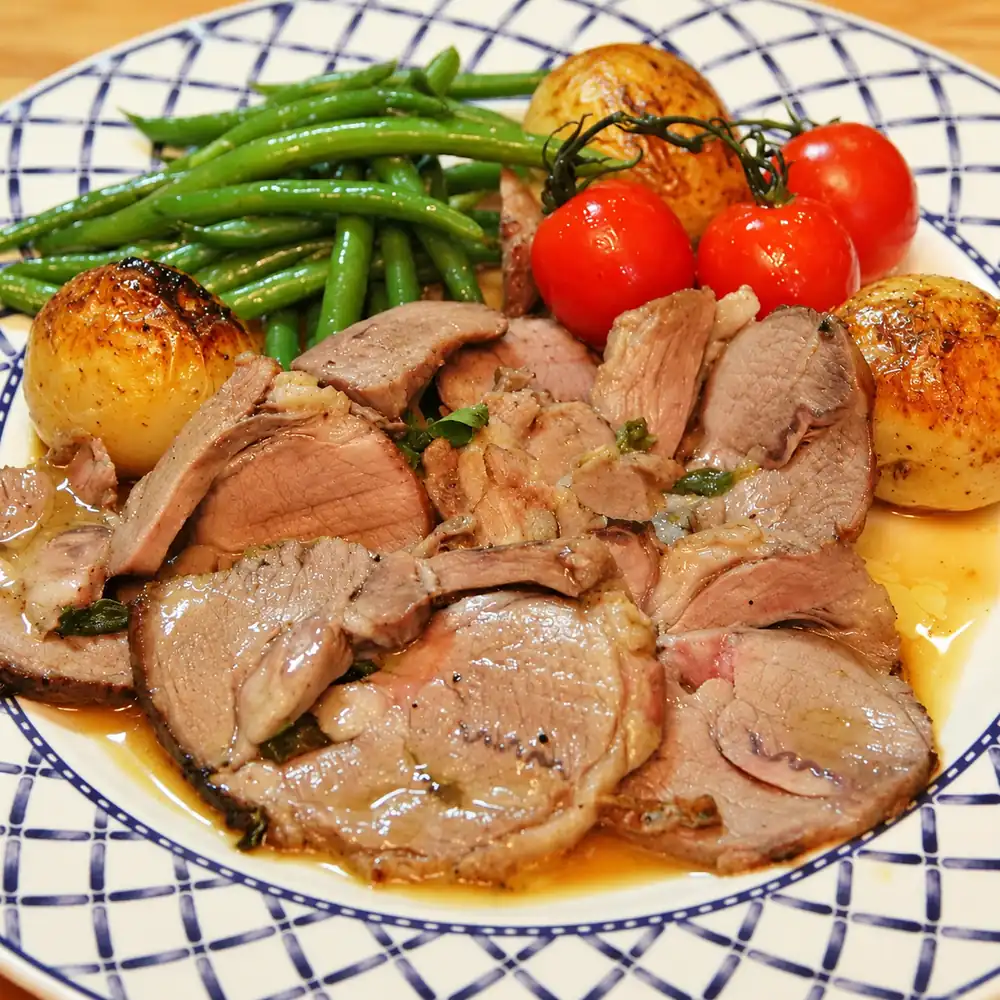
A rolled shoulder roast is a boneless cut tied into an even shape and carved into slices. This is a full roast dinner with tomatoes and green beans, suitable for a Sunday lunch, an Easter table, or a colder evening when the oven can do most of the work.
This recipe is based on my YouTube video, with a few adjustments since publication: measured ingredient amounts, a more moderate lemon-to-stock ratio, and a resting period while the vegetables finish.
{VIDEO}
What Makes This Lamb Roast Different
Lemon and fresh oregano lead the flavour here. Compared with my lamb shoulder with brown pan jus, the cooking liquid is brighter and lighter, with no flour or cream.
I keep the shoulder rolled because an even shape makes roasting and carving easier. This produces a sliceable roast, not the spoon-tender texture of slow-braised lamb shanks. Shoulder contains several muscles and connective tissue, so thin slices matter. Do not expect it to eat like a lamb loin.
Ingredients You Need
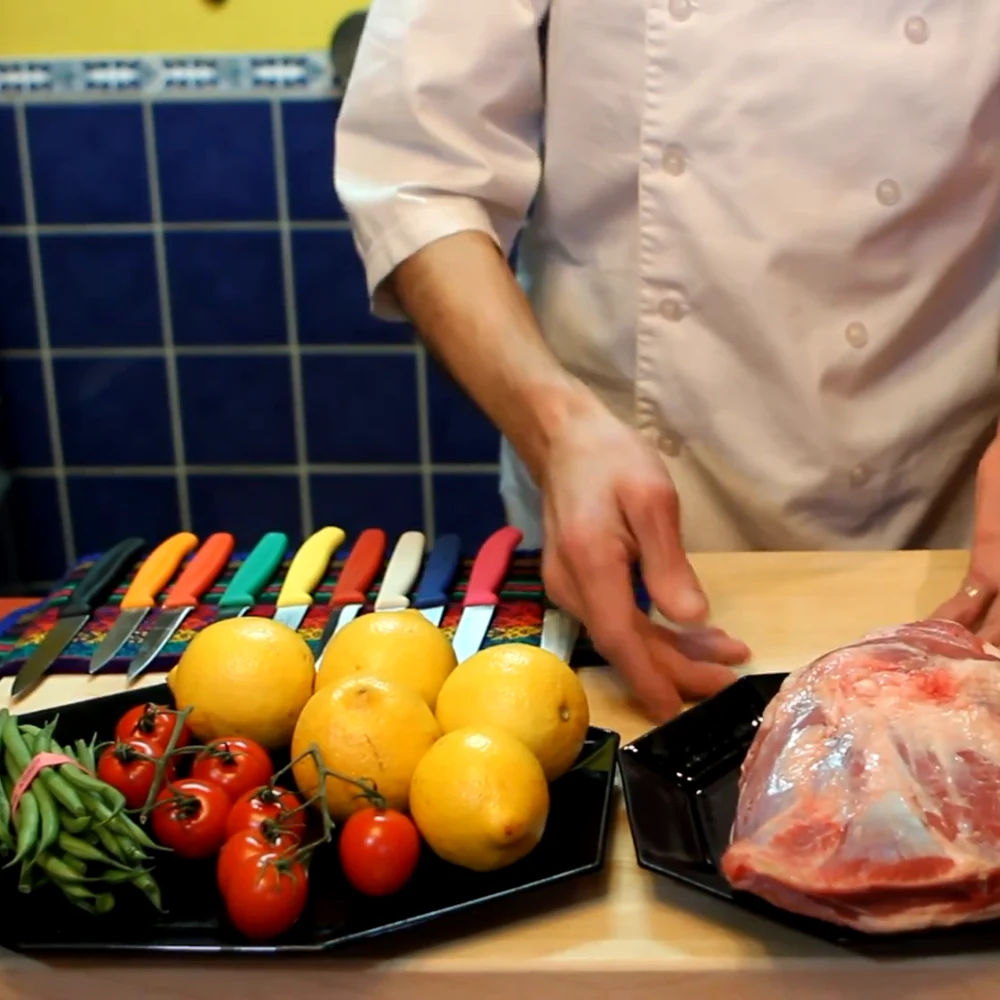
Use a 2 1/4-pound boneless shoulder, weighed after removing the bones. Ask the butcher to debone it and leave it open for seasoning. Trim tough membranes and very thick deposits of fat, but keep a thin outer covering.
Fresh oregano goes inside the roll and into the cooking liquid. Measure the lemon juice: the number of lemons alone is unreliable. For this version, use 1/2 cup juice with 1 1/2 cups low-sodium chicken stock. If using homemade chicken stock concentrate, dilute it to ordinary stock strength first.
Choose small, thin-skinned potatoes about 1 inch across. Halve larger ones so they cook at a similar rate. Green beans are blanched separately; cherry tomatoes only need a short spell in the oven. The lamb supplies a generous portion of protein, and the potatoes make this a substantial meal without another starch.
Step-by-Step Instructions
1. Prepare the shoulder
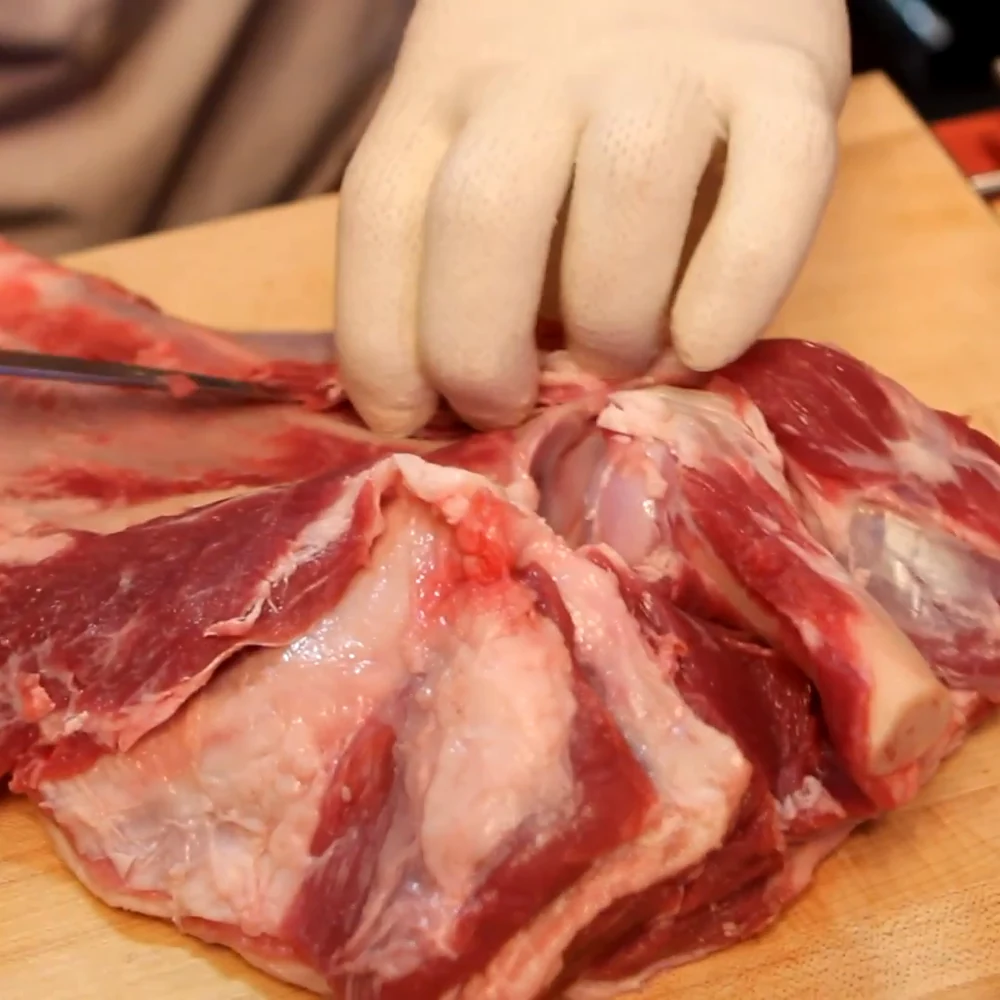
Heat the oven to 400°F with a rack in the middle. Open the boneless shoulder on a board and pat it dry. Remove any remaining bone fragments or firm membranes. If starting with a bone-in shoulder, debone it carefully or have the butcher do this; use the boneless weight for the recipe.
2. Season the inside
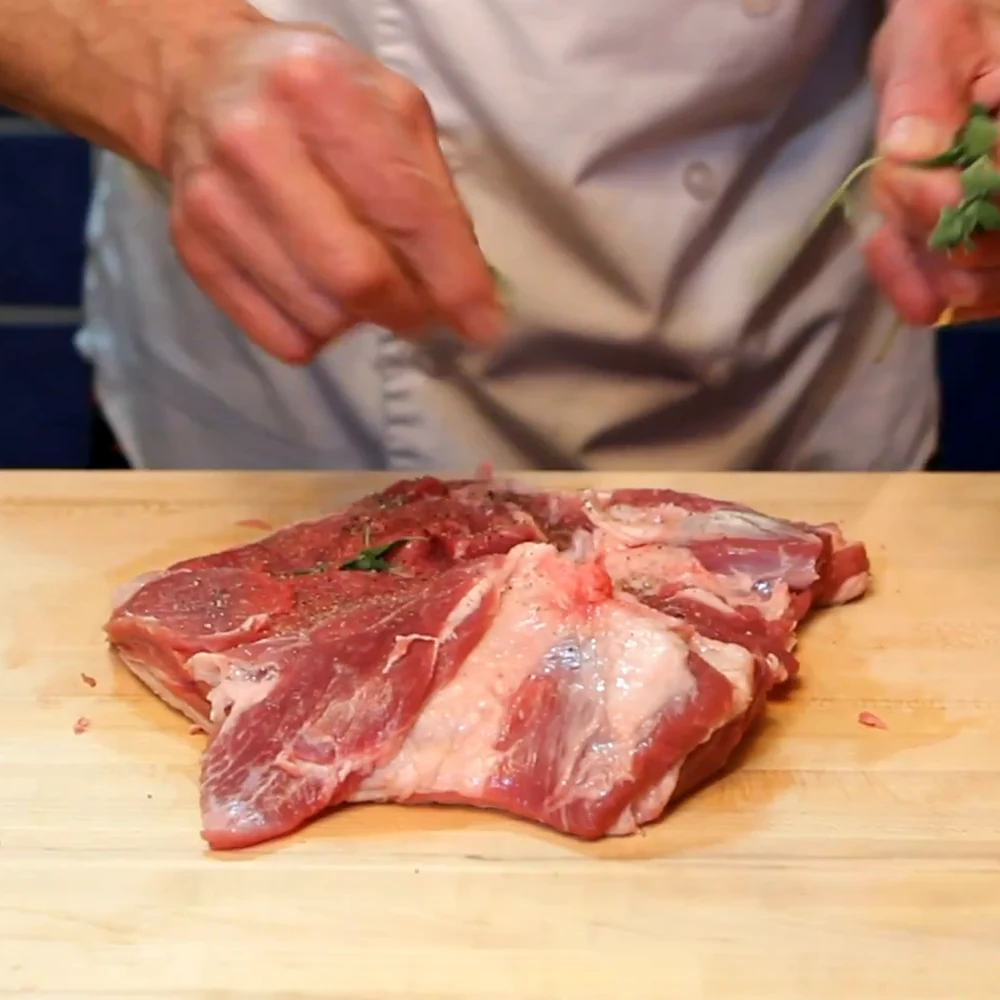
Season the exposed meat with 1/2 teaspoon fine salt and 1/4 teaspoon black pepper. Scatter 1 tablespoon fresh oregano leaves across it. Distribute the seasoning rather than leaving a thick pile of herbs in the centre.
3. Roll and tie
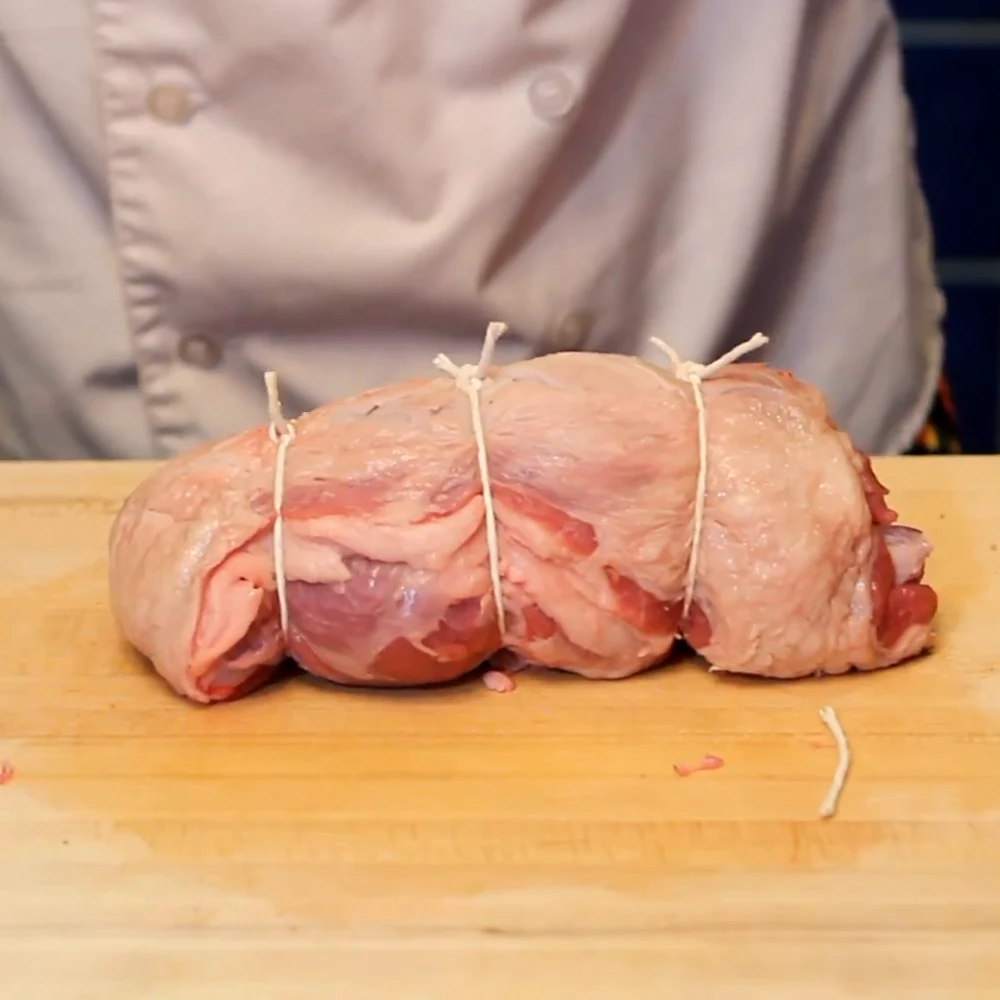
Fold in loose edges and roll the shoulder into a compact roast. Tie with kitchen twine at roughly 1-inch intervals. Make the ties snug enough to hold the shape without cutting deeply into the meat. Pat the outside dry again.
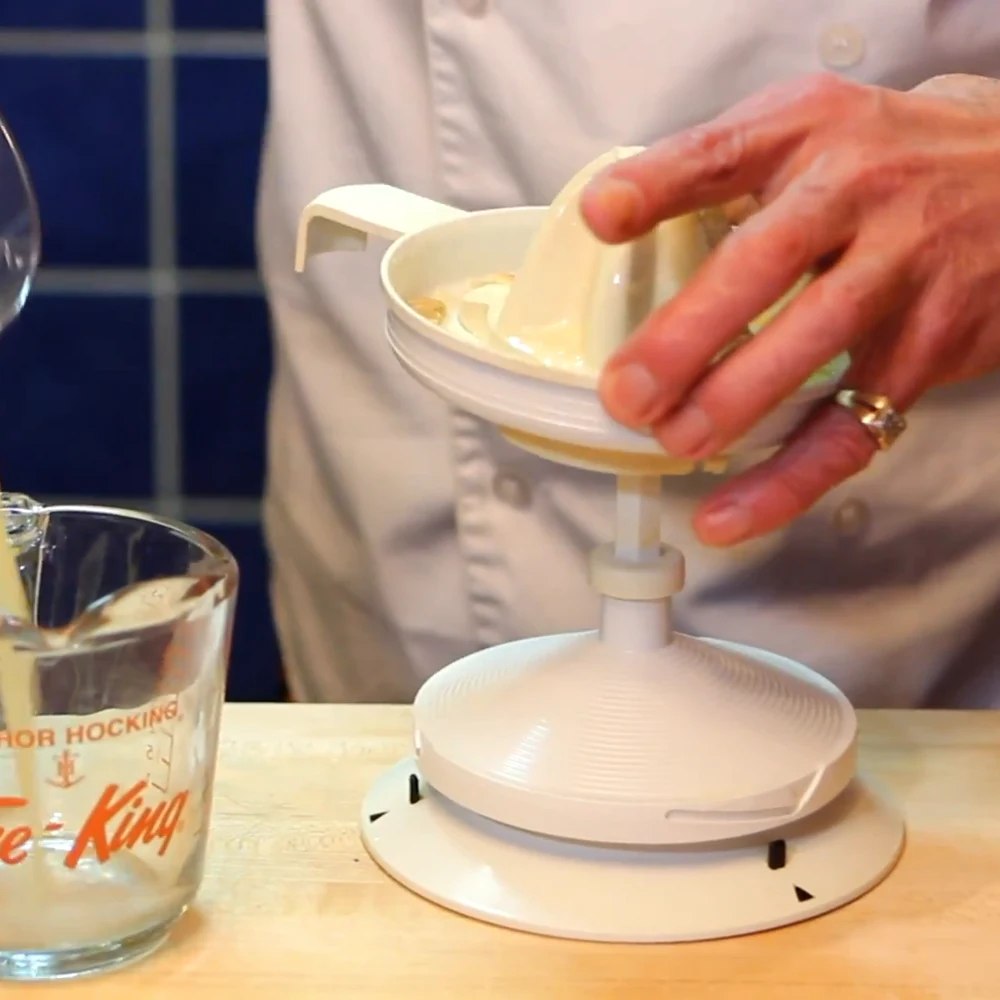
4. Measure the lemon juice
Squeeze the lemons and measure 1/2 cup juice, removing any seeds. Set out the chicken stock and remaining oregano. Having these ready prevents the browned pan from sitting empty over the heat while you squeeze fruit.
5. Brown the lamb
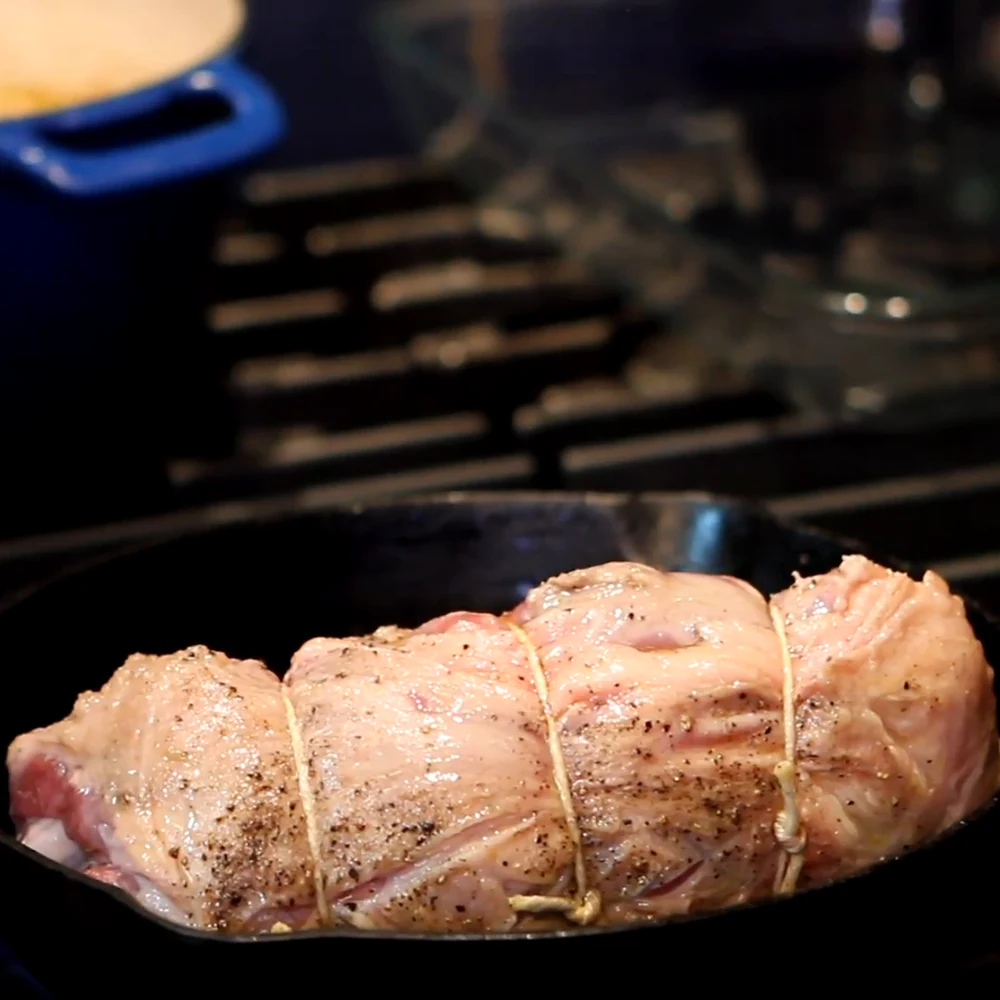
Heat 2 tablespoons olive oil in a large skillet over medium-high heat. Season the outside of the roast with another 1/2 teaspoon salt and 1/4 teaspoon pepper. Brown it on all sides, including the ends, for about 8 to 10 minutes total. Lower the heat if the drippings begin to blacken.
Transfer the lamb to a snug metal roasting pan or an oven-safe baking dish. Browning develops the sauce’s flavour; it does not seal juices inside the meat.
6. Deglaze the skillet
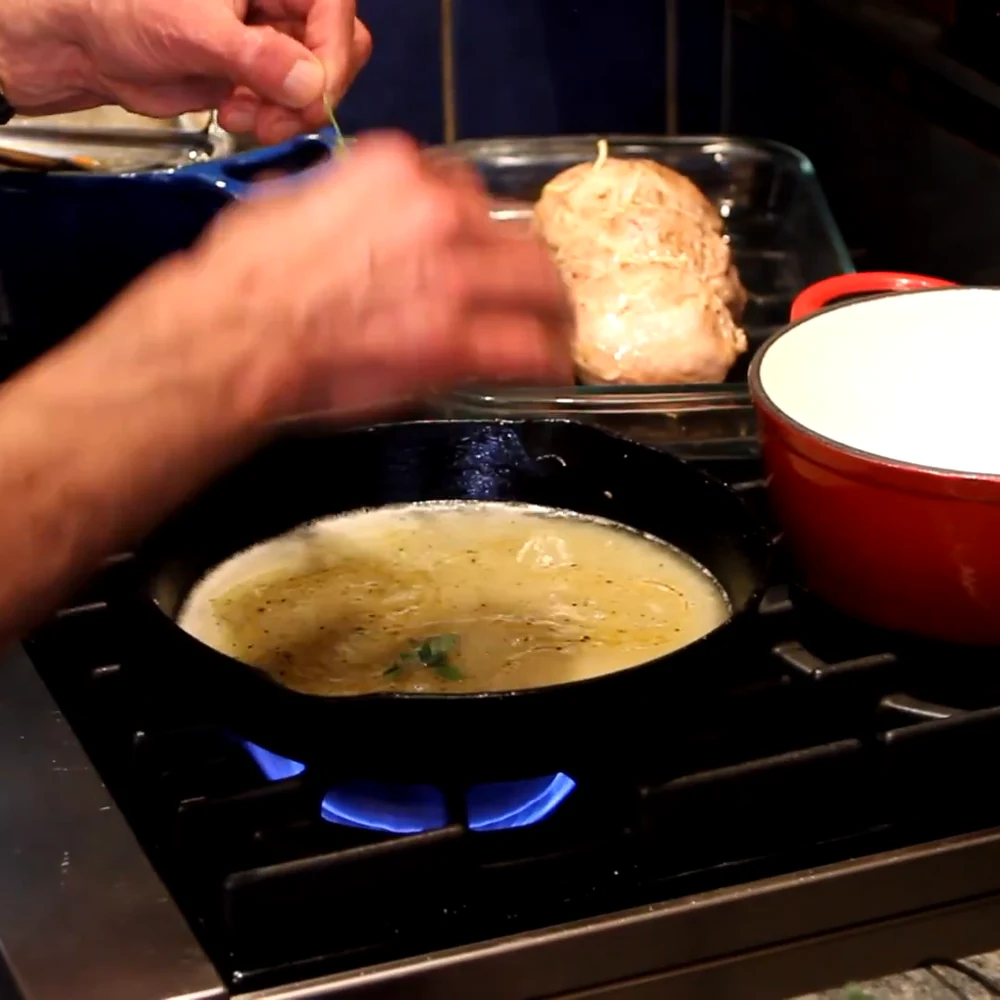
Carefully pour the chicken stock into the skillet. Scrape up the brown deposits, then add the measured lemon juice and remaining 2 tablespoons oregano. Simmer for 1 to 2 minutes. The liquid should smell fresh and savoury, with no burnt aroma.
7. Add the potatoes
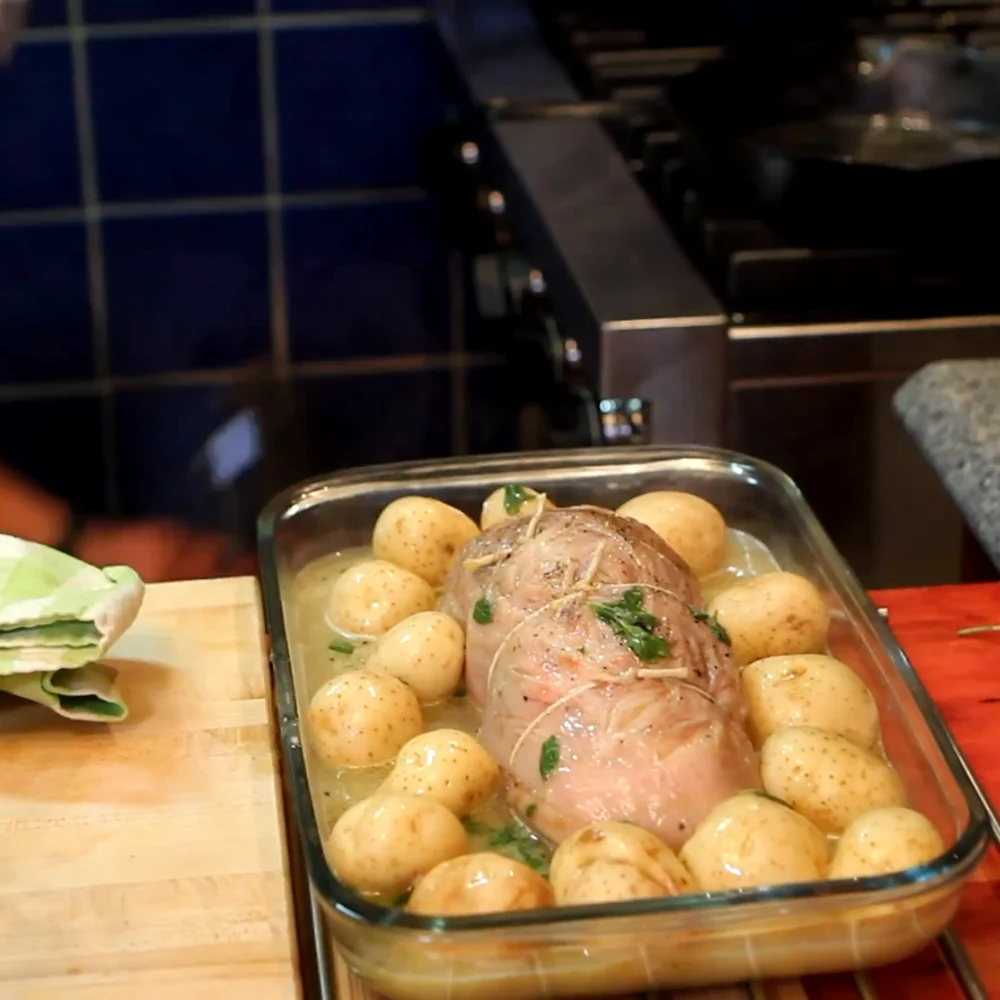
Arrange the washed potatoes around the lamb. Season them with the remaining 1/2 teaspoon salt and 1/4 teaspoon pepper. Pour the hot pan liquid around the roast. Use a dish that holds everything fairly closely; a very large pan lets the stock evaporate too quickly.
8. Roast and baste
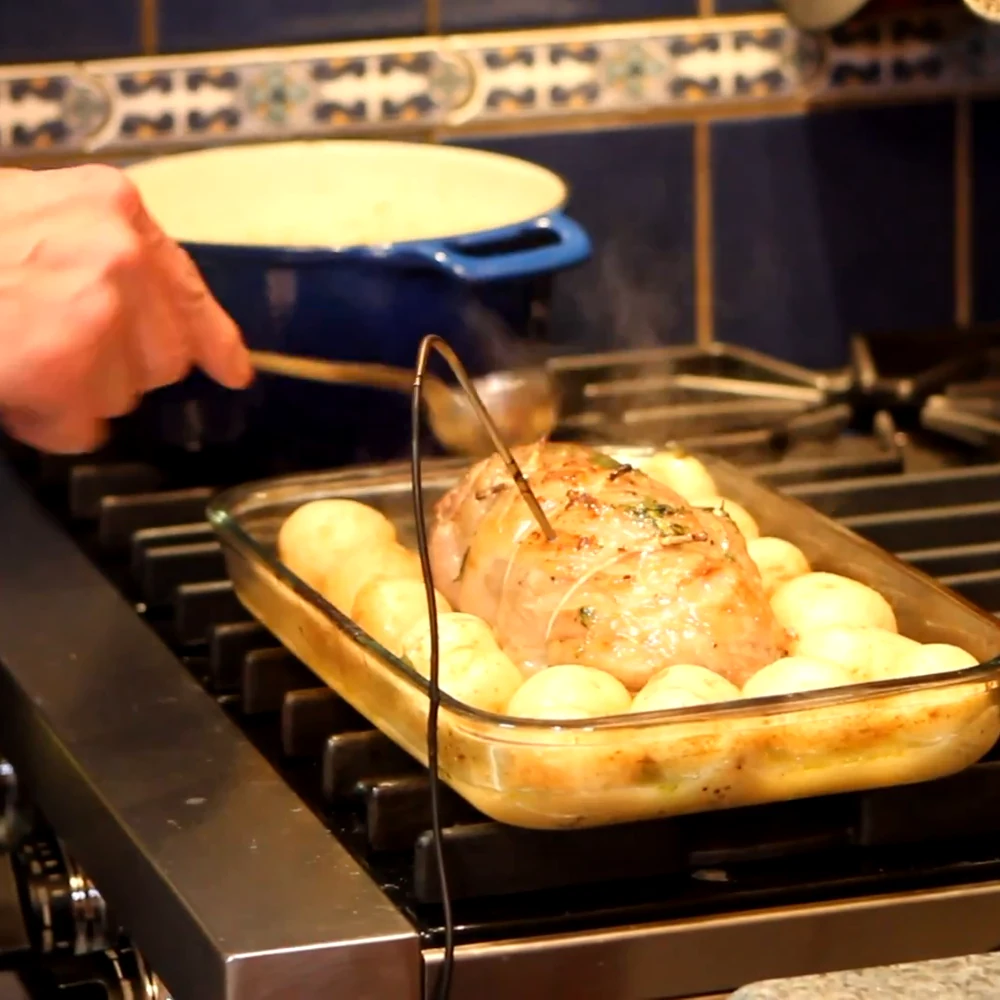
Roast uncovered, spooning liquid over the lamb and potatoes every 15 to 20 minutes. Turn the potatoes occasionally. If the bottom begins to dry, add hot water, 1/4 cup at a time. You want a shallow pool of cooking juices, not a dry, sticky film.
Begin checking the thickest part of the lamb after 60 minutes. Allow roughly 75 to 105 minutes in the oven, but follow the thermometer rather than the clock. For the medium-cooked version here, remove the lamb when the centre reaches 160°F. Do not count on an assumed temperature rise during resting to reach that endpoint.
9. Blanch the beans
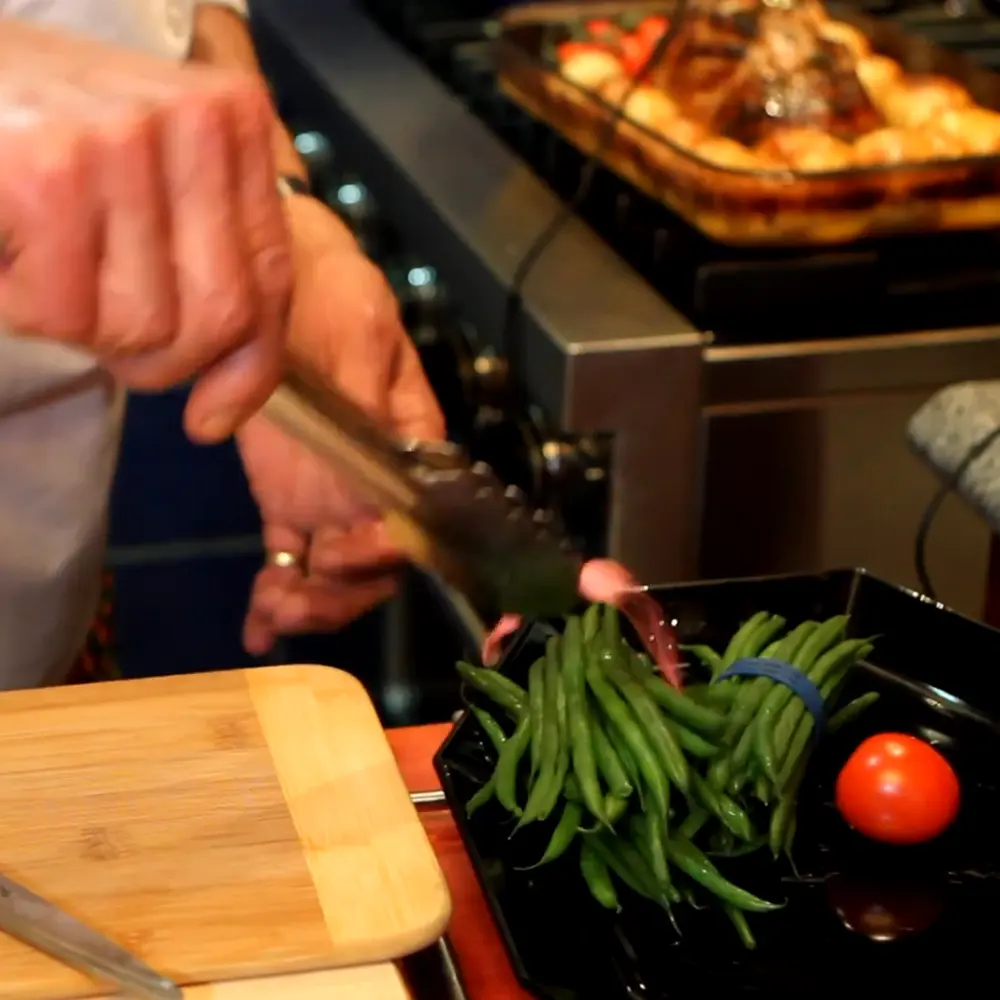
While the lamb roasts, trim the green beans. Boil them in lightly salted water for 5 to 7 minutes, until just tender. Drain well. If preparing them well before the roast is ready, cool them promptly in cold water and drain again. They will finish warming in the roasting dish.
10. Rest the lamb and finish the vegetables
Move the lamb to a clean board and cover loosely with foil for 15 minutes. Check a potato with a small knife: the centre should offer almost no resistance. If the potatoes remain firm, continue roasting them with a splash of hot water before adding the other vegetables.
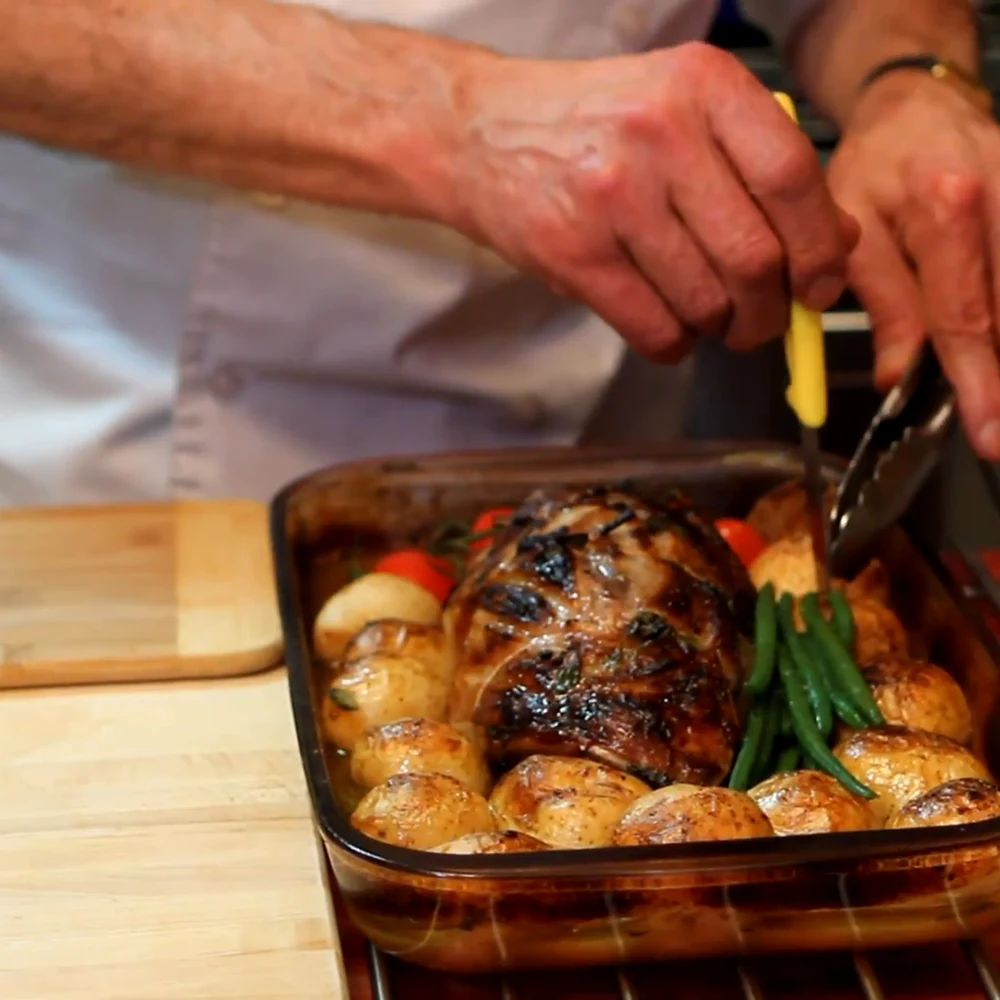
Add the tomatoes to the potatoes and roast for 10 to 15 minutes, until hot and lightly softened. Add the beans for the last 3 to 5 minutes. Keeping the lamb out of the oven now gives it a proper rest while the vegetables finish.
11. Carve and serve
Remove all the twine. Carve thinly across the grain, changing direction as needed where the shoulder’s muscles meet. Spoon off excess surface fat from the pan juices and taste before adding more salt. If the sauce is too concentrated or sharp, loosen it with hot water or unsalted stock.
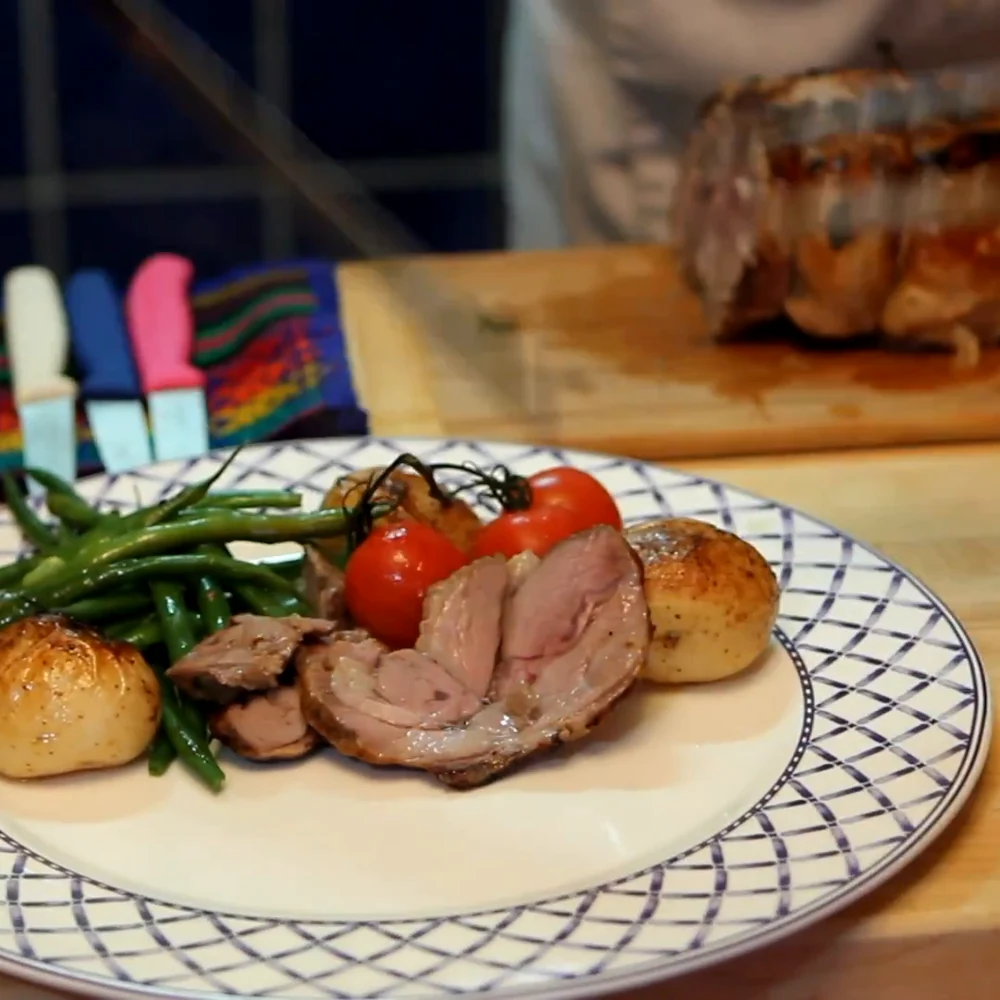
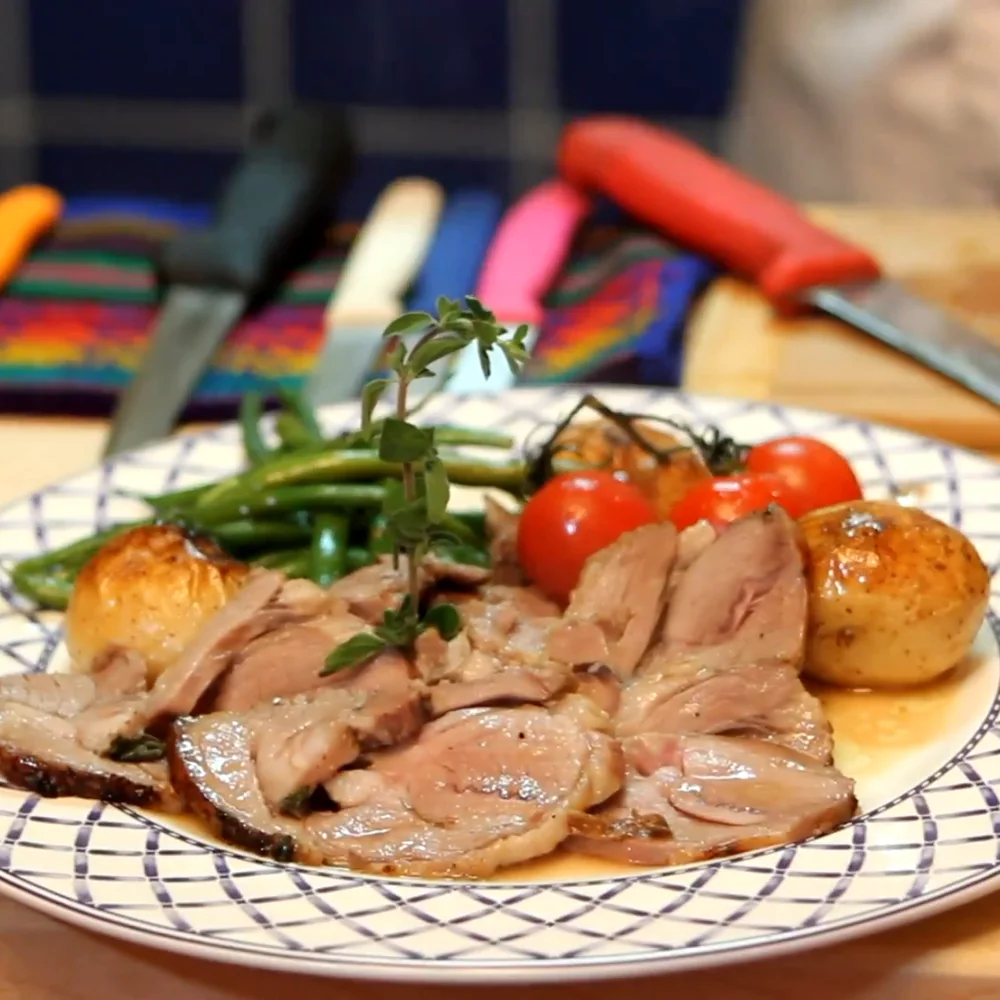
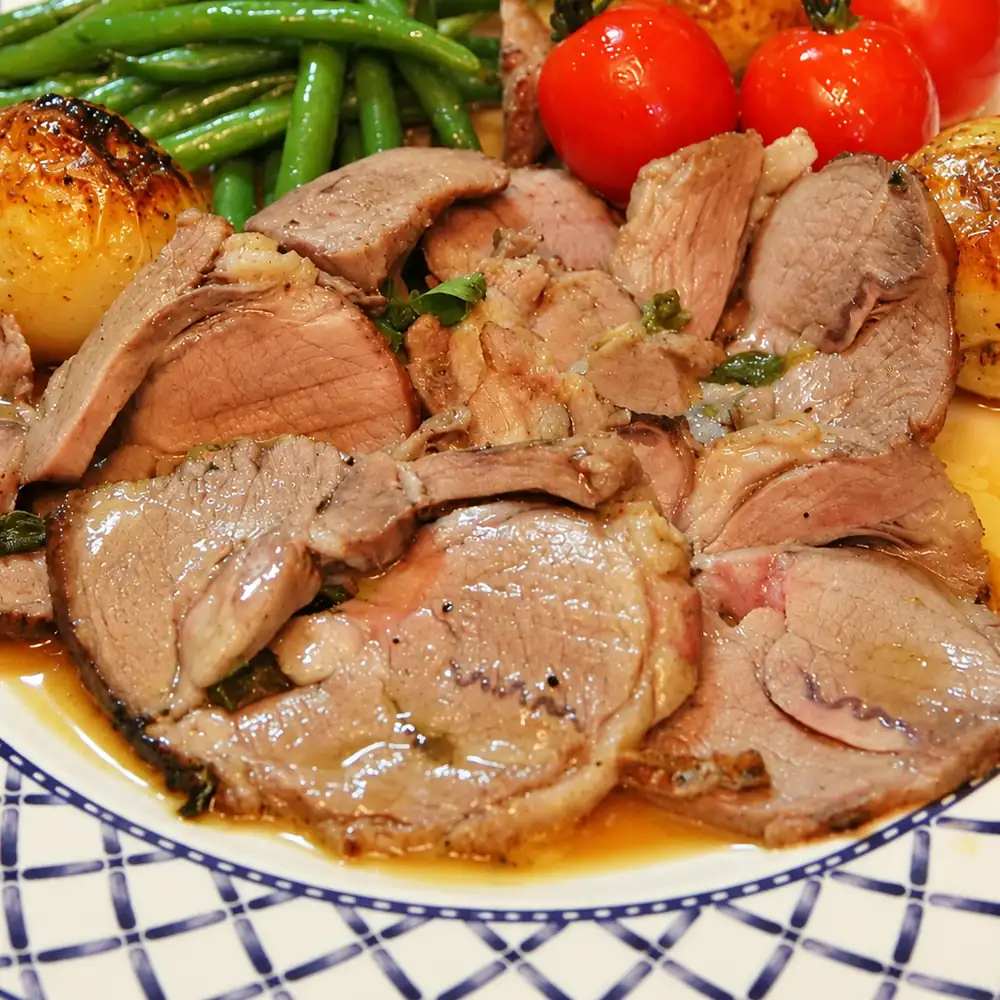
Serve the lamb with the potatoes, beans and tomatoes, then spoon a little cooking juice over each plate.
What to Serve With It
The vegetables already make a complete dinner. For a larger table, add a crisp Greek salad or a small bowl of homemade tzatziki. Serve the cool sauce alongside rather than stirring it into the hot juices.
If you prefer to cook the potatoes separately, golden Parisian potatoes suit the same meal. Homemade mashed potatoes are another option for catching the lemony sauce.
Substitutions
Use 2 teaspoons dried oregano in place of the fresh leaves, divided between the lamb and liquid. Low-sodium homemade vegetable stock can replace chicken stock. Regular potatoes work if cut into evenly sized pieces.
Boneless leg can replace shoulder, but check it earlier because its shape and texture differ. My oven-roasted boneless leg of lamb gives a method specifically for that cut. Avoid replacing the lemon juice with an equal volume of vinegar; the sauce would taste very different.
FAQ
Why is my shoulder chewy even though it reached temperature?
A safe cooking temperature does not guarantee that shoulder’s connective tissue has softened. Thin carving helps this roast, but a covered braise is the better choice for very soft meat. Try spring lamb navarin when that is the texture you want.
Why are the potatoes still firm?
They may be too large, the pan may have dried out, or the acidic liquid may be slowing their softening. Keep pieces small and continue cooking them separately from the rested lamb if necessary. Brown colour alone is not a doneness test.
Can I prepare it ahead?
Season and tie the raw lamb the day before, then refrigerate it covered. Sear it immediately before roasting. Refrigerate cooked leftovers within two hours, use within 3 to 4 days, and reheat portions with a little stock to 165°F.
What is a quicker lamb option?
A pesto-crusted rack of lamb is a better choice when you want a smaller cut with less roasting time.
Greek-Style Roast Lamb Shoulder with Lemon Potatoes
Ingredients
- 2 1/4 lb boneless lamb shoulder weighed after deboning, opened for seasoning
- 2 lb small thin-skinned potatoes about 1 inch across, larger ones halved
- 1 lb green beans trimmed
- 12 oz cherry tomatoes
- 3 tablespoons fresh oregano leaves divided
- 1/2 cup fresh lemon juice strained
- 1 1/2 cups low-sodium chicken stock
- 2 tablespoons olive oil
- 1 1/2 teaspoons fine salt divided, plus a little for the bean-cooking water
- 3/4 teaspoon ground black pepper divided
- Hot water as needed to maintain the cooking liquid
Instructions
- Heat the oven to 400°F. Pat the opened boneless shoulder dry and remove tough membranes or remaining bone fragments.
- Season the inside with 1/2 teaspoon salt, 1/4 teaspoon pepper and 1 tablespoon oregano. Roll tightly and tie with kitchen twine at roughly 1-inch intervals.
- Season the outside with 1/2 teaspoon salt and 1/4 teaspoon pepper. Heat the olive oil in a skillet and brown the lamb on all sides for 8 to 10 minutes. Transfer to a snug roasting dish.
- Deglaze the skillet with the chicken stock, scraping up the brown deposits. Add the lemon juice and remaining oregano; simmer for 1 to 2 minutes.
- Arrange the potatoes around the lamb. Season with the remaining 1/2 teaspoon salt and 1/4 teaspoon pepper. Pour the hot liquid into the roasting dish.
- Roast uncovered, basting every 15 to 20 minutes and turning the potatoes occasionally. Add hot water in 1/4-cup increments if the pan starts drying out. Start checking after 60 minutes; allow roughly 75 to 105 minutes, until the thickest part of the lamb reaches 160°F.
- Meanwhile, boil the beans in lightly salted water for 5 to 7 minutes, until just tender. Drain; cool in cold water and drain again if holding them for later.
- Move the cooked lamb to a clean board and rest loosely covered for 15 minutes. If the potatoes are still firm, continue roasting them with a little hot water until a knife enters easily.
- Add the tomatoes to the potatoes and roast for 10 to 15 minutes, until hot and softened. Add the beans for the final 3 to 5 minutes to warm through.
- Remove all twine and carve the lamb thinly across the grain. Skim excess fat from the pan juices, taste, and dilute with hot water or unsalted stock if too concentrated. Serve with the vegetables and juices.