Roasted Cauliflower Chickpea Bowls with Lemon Tahini
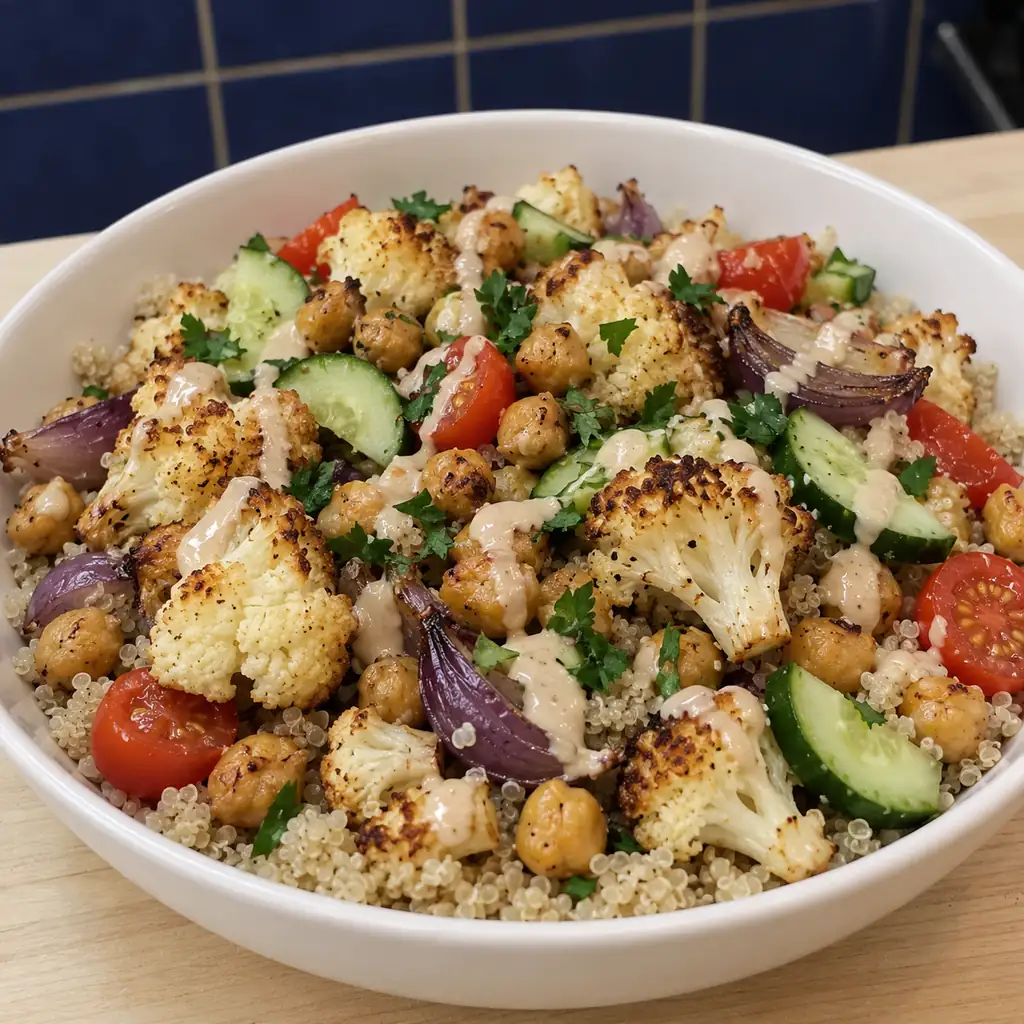
These roasted cauliflower chickpea bowls combine warm vegetables, fluffy quinoa, fresh cucumber and tomatoes, and a lemon tahini sauce. I like to roast the cauliflower and chickpeas on two trays so their surfaces dry and colour instead of steaming in a crowded pan. The sauce is added at the table or just before serving, keeping the roasted edges noticeable. The recipe makes four generous bowls with ingredients available in both Canadian and American grocery stores.
Cut the cauliflower for even cooking
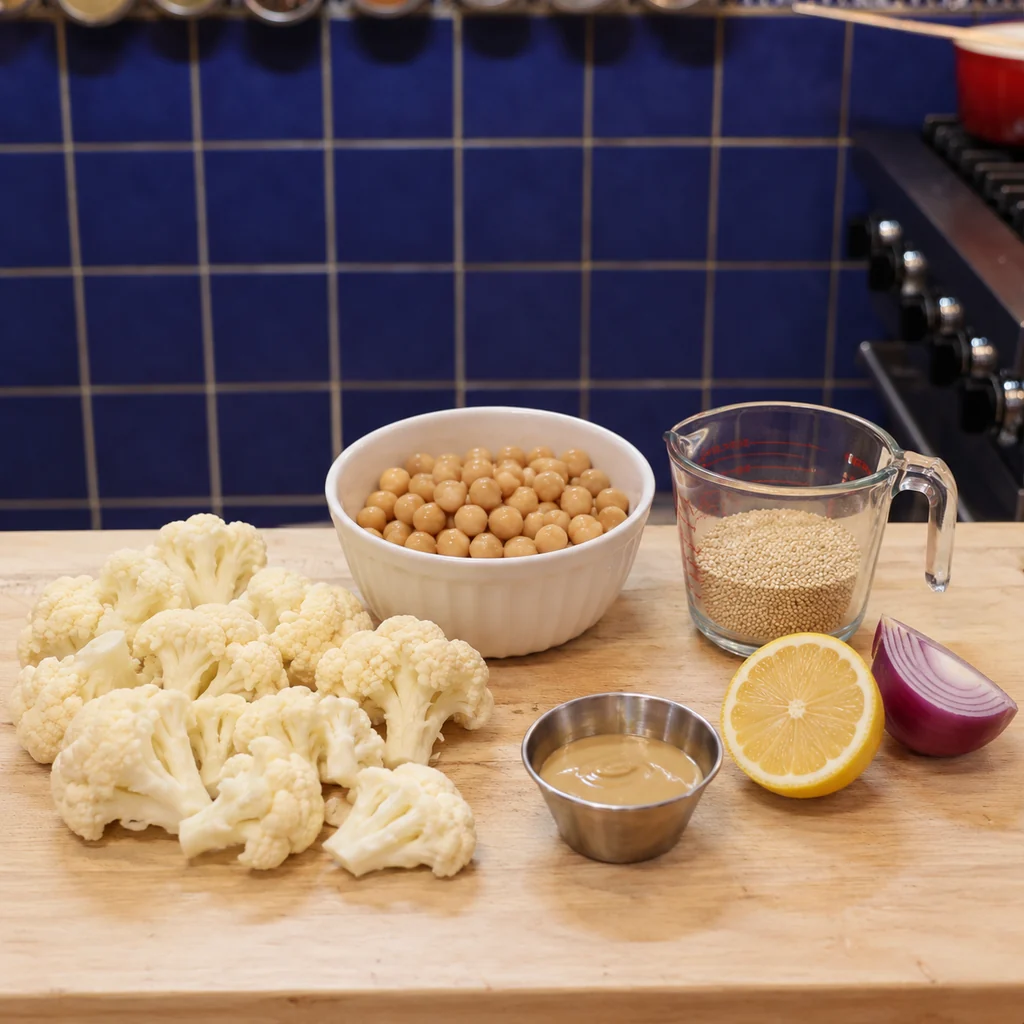
Use 800 g, approximately 1 lb 12 oz, of trimmed cauliflower florets. The weight matters more than the number of heads because cauliflower sizes vary considerably. Cut the florets into pieces about 4 cm across, with a flat cut surface where possible. Thick pieces of tender stem can be included, sliced more thinly so they soften at the same rate as the florets. Remove the hard outer base and leaves that will not cook evenly in this time.
I prefer medium pieces with a few rough edges rather than tiny crumbles. Very small bits brown before the larger pieces are tender, while enormous florets can still be firm inside when their tips darken. If you want a different cauliflower dish on another menu, classic cauliflower gratin uses a creamy baked preparation. These bowls rely on separate roasted surfaces and a sauce added afterward.
Drain chickpeas and measure after the can
Measure 480 g of drained canned chickpeas, approximately three US cups. Two standard American 15 oz cans often provide about that amount, but check the drained yield. Canadian 540 ml cans are larger, so measure rather than automatically using two complete cans. Rinse, drain well, and pat dry with a clean towel. Loose skins can be removed if they come away easily, but there is no need to peel every chickpea.
Wet chickpeas bring extra steam onto the roasting tray. Drying them helps their skins become lightly roasted, though these are not deep-fried crunchy snacks. I like their firm edges and tender centres with the cauliflower. For another chickpea preparation with a very different texture, creamy hummus from dried chickpeas is useful on a separate menu. Do not expect roasted chickpeas to turn into a smooth sauce without a different method.
Divide the vegetables between two trays
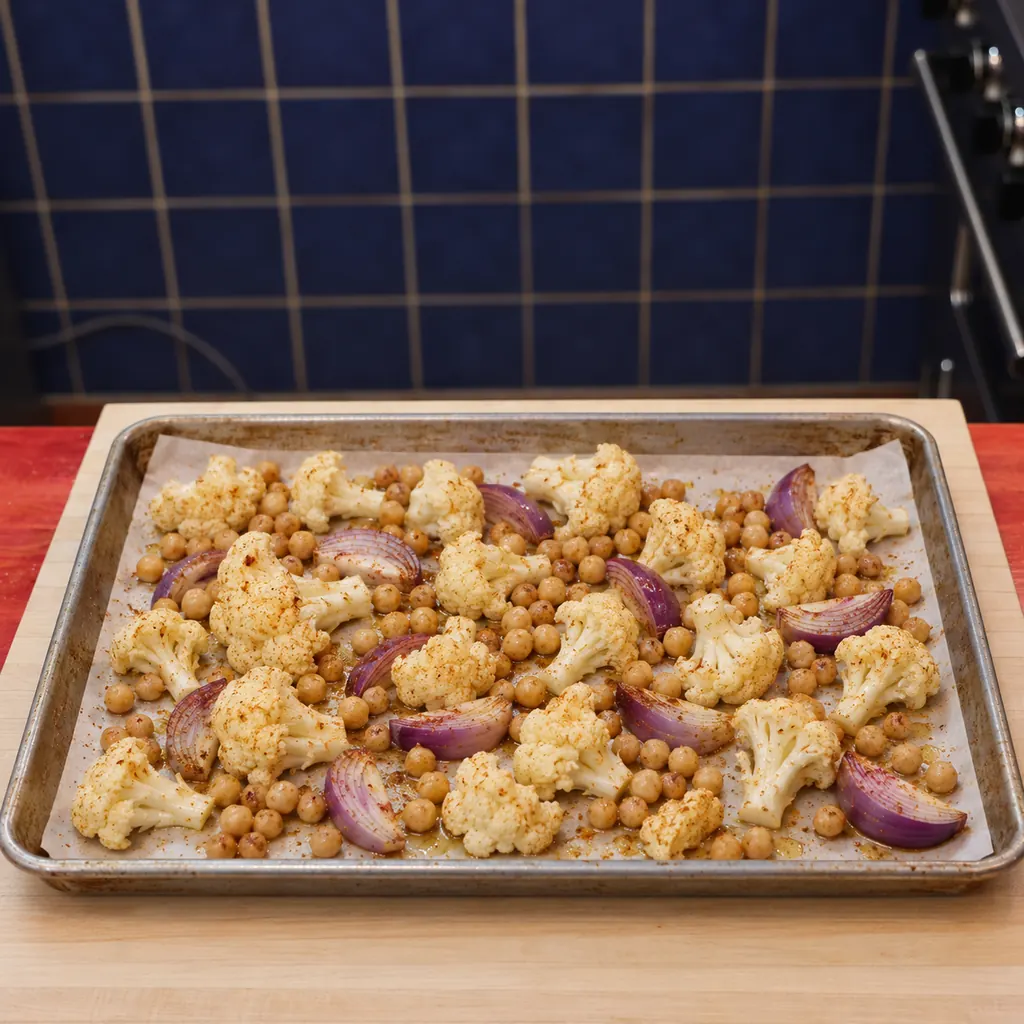
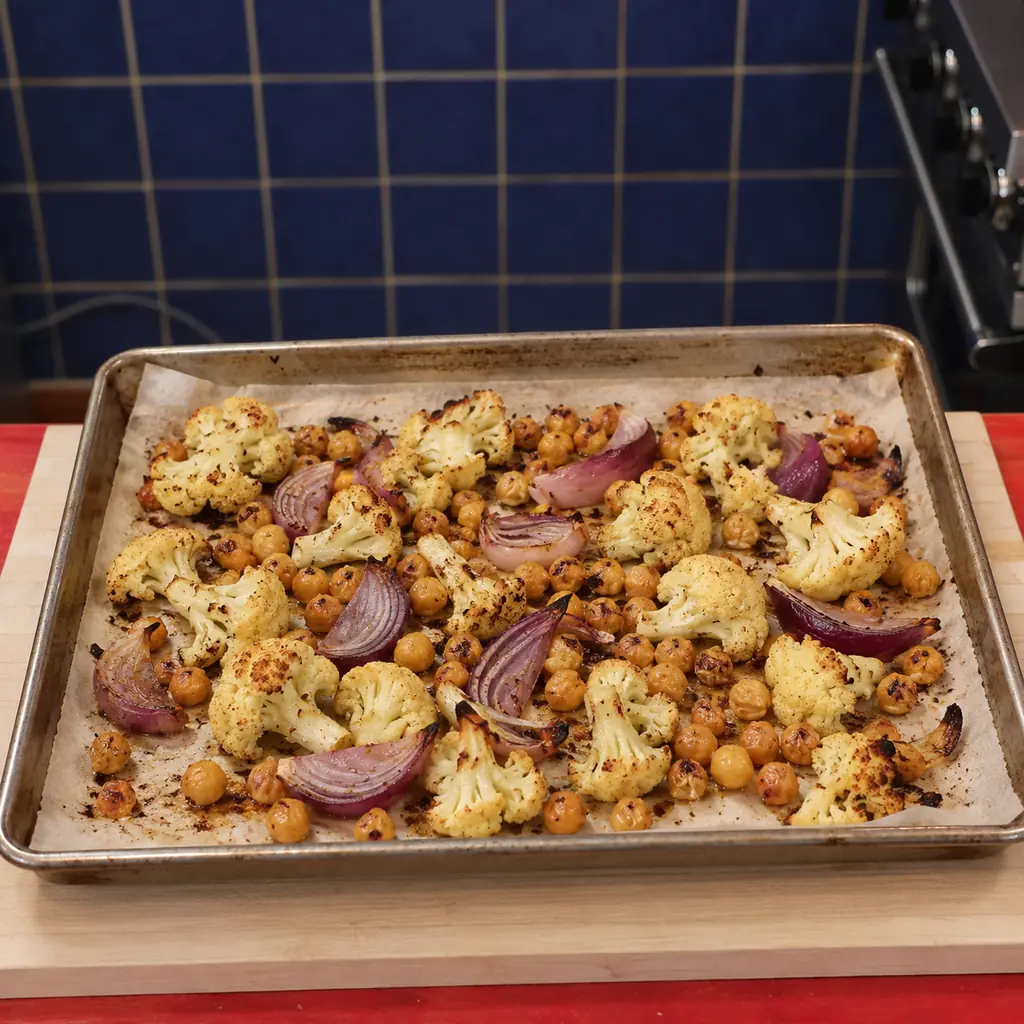
Heat a conventional oven to 220°C, or 425°F. Combine cauliflower, drained chickpeas, and red onion wedges with olive oil, cumin, paprika, ground coriander, salt, and pepper. Turn until the seasoning is spread thinly over the surfaces rather than collecting in one oily patch. Divide between two large lined metal baking sheets. Leave some visible space between pieces and place several flat cauliflower faces against the tray.
Roast for thirty to thirty-five minutes, turning once and switching the trays between oven positions partway through. Look for tender cauliflower, scattered browned edges, softened onion, and lightly wrinkled chickpea skins. If one tray finishes first, remove it rather than keeping it in the oven until every piece is identical. The onion tips can darken quickly, so keep small thin scraps from sitting alone at the hottest edge of a pan.
Cook quinoa while the oven does the main work
Rinse 170 g, approximately one US cup, of dry quinoa in a fine sieve and drain. Cook with 480 ml, or two US cups, of water or low-sodium vegetable broth, following the package directions if its liquid ratio differs. Bring to a boil, cover, and simmer gently for about fifteen to twenty minutes. Remove from the heat and let stand covered for five minutes, then fluff with a fork. The grains should be tender and separate, without a pool of water at the bottom.
If excess liquid remains after the quinoa is tender, drain it carefully and let steam escape before filling the bowls. I do not like putting wet quinoa under roasted vegetables because it softens their edges immediately. For a chilled grain-based recipe on another day, lentil quinoa salad with lemon Dijon uses a different dressing and serving style. Here, the quinoa stays fairly plain because the vegetables and tahini provide the main seasoning.
Whisk the tahini sauce until it loosens
Stir the tahini in its jar before measuring, especially if the sesame oil has separated at the top. Whisk 80 g, roughly one third US cup, with lemon juice, finely minced garlic, maple syrup, and the sauce salt. Add warm water gradually. The mixture can become stiff when the lemon first goes in; keep whisking and adding water until it becomes creamy and pourable. Start with 90 ml water and add a little more only if needed.
The finished sauce should run from a spoon in a thick ribbon. It is not a paste to spread over the bowl in a heavy layer. Taste before adding more lemon or salt, because tahini varies in bitterness and thickness. I prefer a sauce with a clear sesame flavour and enough acidity to brighten the roasted vegetables. Tahini is made from sesame and is not suitable for someone avoiding sesame; changing the sauce requires checking the needs of the people eating.
Add fresh vegetables after roasting
Slice the cucumber into half moons and halve the cherry tomatoes. Pat them dry if they are very wet. These vegetables go into the bowls fresh, giving a cool contrast to the quinoa and warm roasted cauliflower. Do not roast them alongside the chickpeas, because they release liquid and change the cooking environment. A little chopped parsley is enough for a fresh finish without a large decorative herb garnish.
For a different cold chickpea dish, chickpea cucumber tomato salad with goat cheese is another option for a separate meal. It includes a different dressing and dairy. The bowls here do not need cheese: the tahini already gives body to the sauce. Similarly, crunchy broccoli cauliflower salad offers a raw vegetable texture, while the cauliflower in this recipe should be tender from roasting.
Build bowls with a little sauce at a time
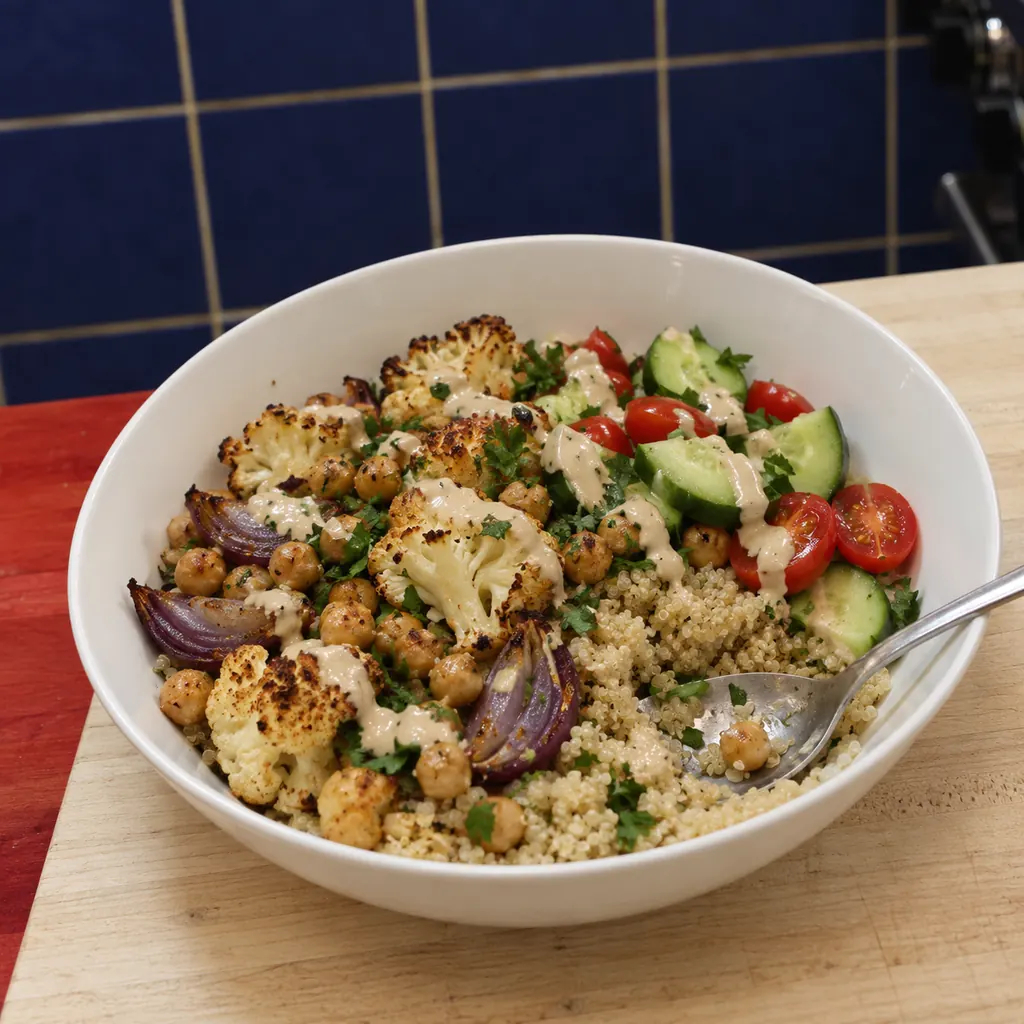
Divide the quinoa between four wide bowls. Add the roasted cauliflower, chickpeas, and onion, then the cucumber and tomatoes. Spoon over a modest amount of tahini sauce and offer the rest separately. I like a loose distribution of ingredients so each forkful can pick up grains and vegetables together. There is no need to press the quinoa into a mould or arrange every topping in rigid sections.
Serve while the roasted vegetables are still warm. For a smaller portion, reduce the quinoa and keep plenty of cauliflower and cucumber. If planning a separate meal using chickpeas in another form, homemade falafels provide a different preparation. They are not a direct replacement for the roasted canned chickpeas in this bowl, and their own ingredient and cooking instructions should be followed.
Prepare components ahead for better texture
Keep quinoa, roasted vegetables, raw vegetables, and sauce separate when preparing ahead. Refrigerate cooked components within two hours in shallow covered containers and use within two to three days. The sauce thickens in the refrigerator; whisk in a little water before serving. Cucumber and tomato are more pleasant cut close to the meal, although they can be kept separately for a short refrigerated plan.
Reheat cooked quinoa and roasted vegetables to 74°C, or 165°F, before adding fresh vegetables and sauce. A covered container with a spoonful of water helps quinoa reheat; an oven or skillet gives the cauliflower a drier surface than a covered microwave bowl. Freeze cooled quinoa and roasted vegetables separately for up to two months for good quality. Do not freeze a complete assembled bowl with fresh cucumber and tomato, which become watery after thawing.
Roasted Cauliflower Chickpea Bowls with Lemon Tahini
Ingredients
- 800 g about 1 lb 12 oz trimmed cauliflower florets, about 4 cm across
- 480 g about 3 US cups canned chickpeas, rinsed, drained, and patted dry
- 150 g 1 medium red onion, cut into wedges
- 45 ml 3 tbsp olive oil
- 10 ml 2 tsp ground cumin
- 5 ml 1 tsp sweet or smoked paprika
- 5 ml 1 tsp ground coriander
- 5 ml 1 tsp fine salt for roasting, adjusted to taste
- 2.5 ml 1/2 tsp ground black pepper
- 170 g about 1 US cup dry quinoa, rinsed and drained
- 480 ml 2 US cups water or low-sodium vegetable broth, adjusted to package directions
- 200 g about 1/2 large cucumber, sliced into half moons
- 200 g about 1 1/3 US cups cherry tomatoes, halved
- 80 g about 1/3 US cup tahini, well stirred
- 45 ml 3 tbsp lemon juice
- 1 small garlic clove finely minced
- 10 ml 2 tsp maple syrup
- 1.25 ml 1/4 tsp fine salt for sauce, or less to taste
- 90 –120 ml 6–8 tbsp warm water for sauce
- Optional: 30 ml 2 tbsp chopped parsley
Instructions
- Heat oven to 220°C (425°F). Toss cauliflower, dry chickpeas, and onion with oil, cumin, paprika, coriander, roasting salt, and pepper. Divide between 2 large lined metal sheets with space between pieces.
- Roast 30–35 minutes, turning once and switching tray positions, until cauliflower is tender with browned edges and chickpeas are lightly roasted. Remove any tray that finishes sooner.
- Meanwhile cook quinoa in water or vegetable broth according to package directions, usually simmering covered for 15–20 minutes. Stand off heat, covered, for 5 minutes and fluff. Drain excess liquid if needed.
- Whisk tahini, lemon juice, garlic, maple syrup, and sauce salt. Gradually whisk in 90 ml warm water, adding up to 120 ml or a little more as needed for a creamy pourable sauce.
- Divide quinoa between 4 bowls. Add roasted vegetables and chickpeas, then fresh cucumber and tomatoes. Spoon on a little sauce, add optional parsley, and serve remaining sauce separately.