Blended Vegetable Soup from Leftover Stock Vegetables
This blended vegetable soup turns the soft carrots, leeks, and onions left after making stock into a warm, smooth bowl. Cooked vegetables and unsalted chicken stock provide the base; salt and black pepper finish it. There is no cream, butter, flour, or cornstarch added. The body comes from the vegetables themselves.
This recipe follows my YouTube video, with clearer instructions for selecting the cooked vegetables, blending safely, and reheating. The video gives the main quantities: 3⅓ lb cooked vegetables and about 6⅓ cups unsalted stock. It does not specify the weight of each individual vegetable. Keep the mixture balanced, then adjust the liquid to the texture you like.
{VIDEO}
A second use for vegetables from homemade stock
When I make homemade chicken stock, the broth is only one part of what comes out of the pot. The carrots, onions, and leeks are very tender by then. They have given flavor to the stock, but suitable edible pieces can still become soup when blended with a flavorful broth.
This is a recipe for already-cooked vegetables. The short cooking time below covers reheating the soup, not making the original stock. If you start with raw carrots or leeks, cook them until completely tender first. Simply blending raw vegetables and warming them briefly will give a different texture and a raw taste.
Compared with my fridge-cleanout vegetable soup, this version uses vegetables that have already finished cooking and turns them into a puree. For a soup built specifically around potatoes, make leek and potato Potage Parmentier. Here, no extra potato is required to get the soft, spoonable consistency shown in the video.
Ingredients and the liquid ratio
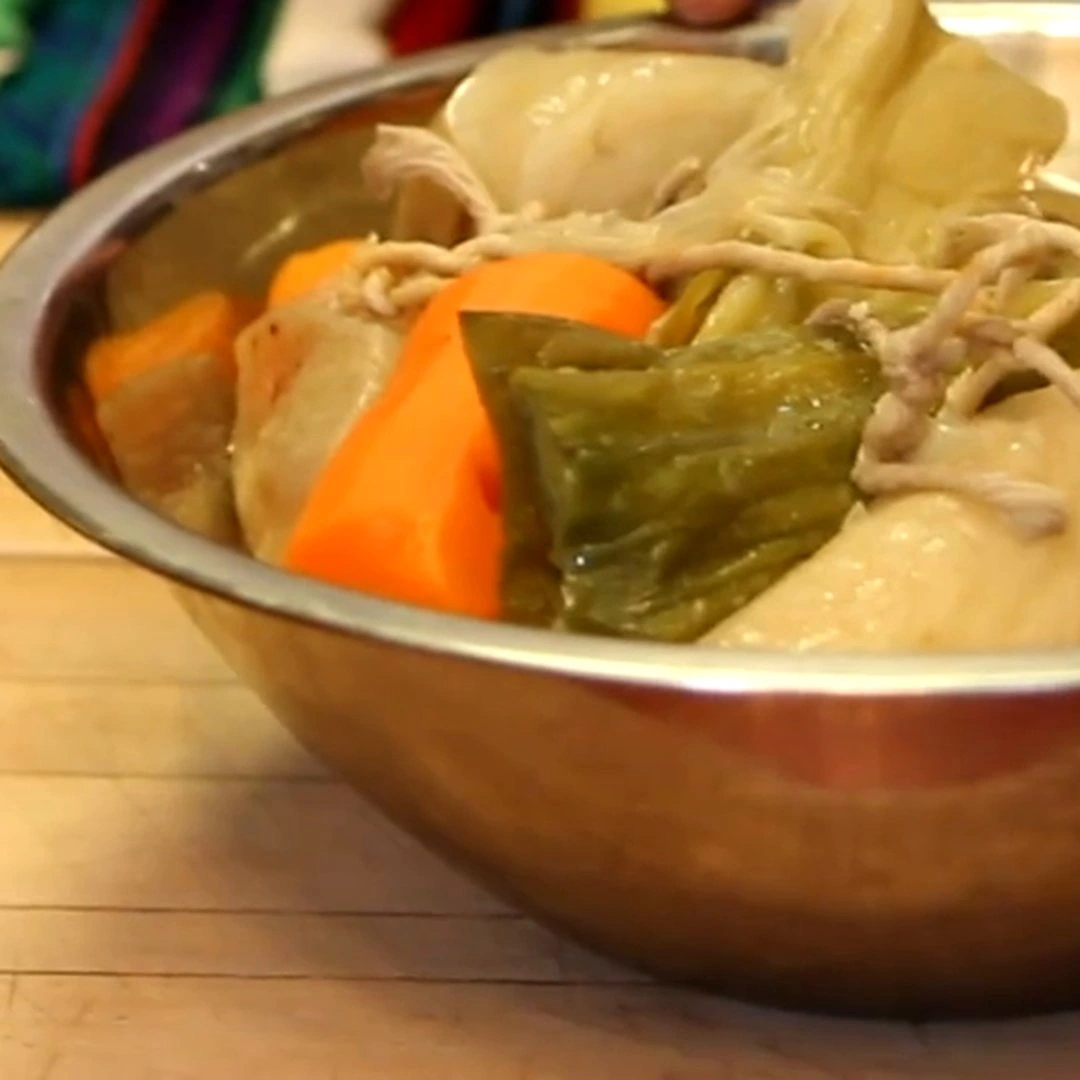
Use 3⅓ lb drained, edible cooked stock vegetables. Carrots, leeks, and peeled onion pieces are a useful combination. Tender cooked celery can join the mixture if it was in your stock. Weigh the vegetables after removing bones, string, herb stems, onion skins, and any other inedible pieces. This is a combined weight, not 3⅓ lb of every vegetable.
Have about 6⅓ cups unsalted chicken stock ready. The original ratio is equal numerical quantities of cooked vegetable weight and stock volume in metric measurements. In the kitchen, the practical rule is simpler: blend with enough broth to circulate, then use the rest to adjust the soup. Count the liquid used to rinse the blender as part of the total.
Salt and freshly ground black pepper are added to taste. The video does not measure them. Start with a small pinch, especially if your stock is purchased or concentrated. unsalted chicken bouillon cubes can supply the broth, but dilute the concentrate to normal soup strength before measuring the liquid.
The ingredients screenshot shows the actual cooked vegetables used in the video. It is not a raw-vegetable shopping layout. No cream or garnish belongs in the base recipe, and none is needed to make the puree feel smooth.
Step-by-step method
1. Sort and cut the cooked vegetables
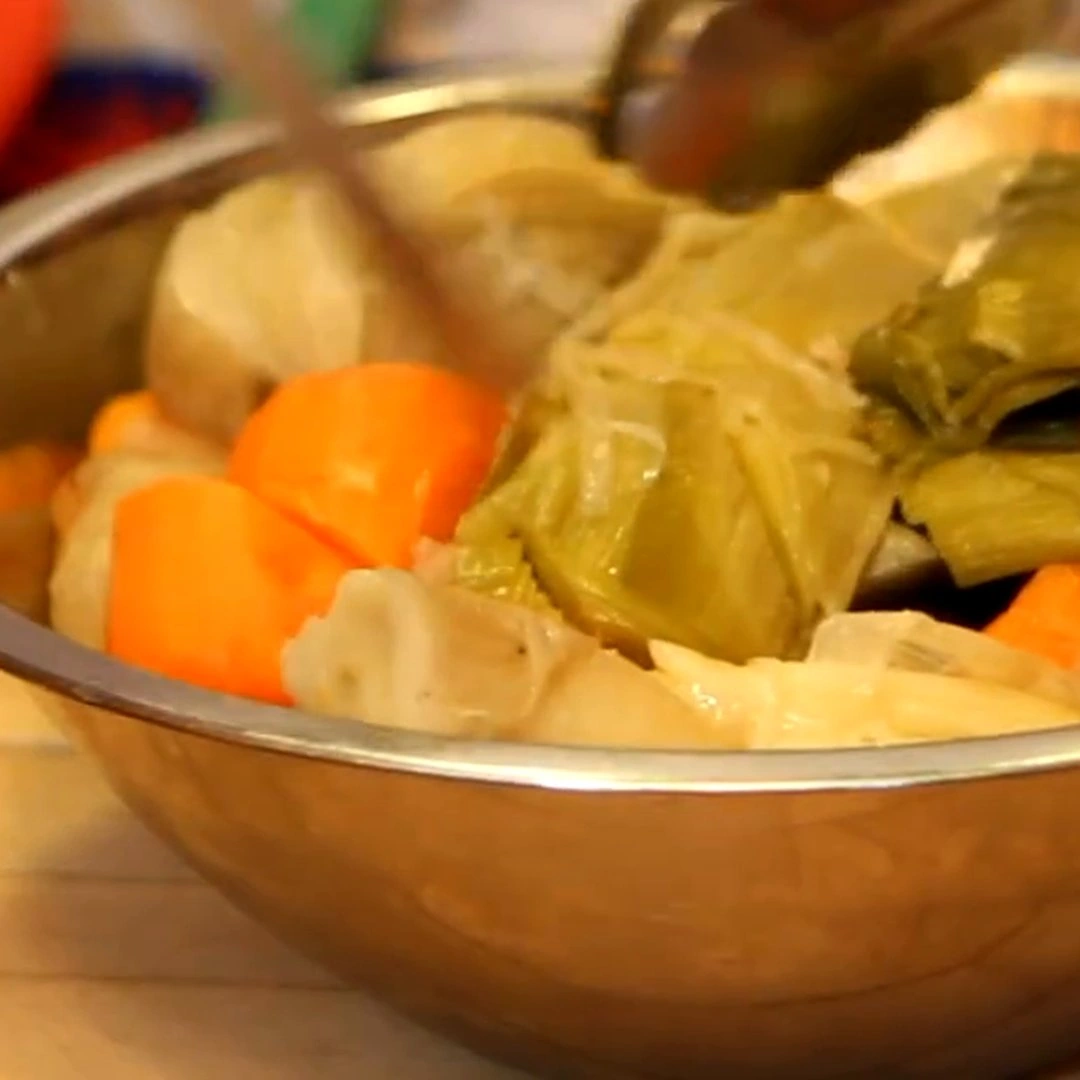
Drain the vegetables briefly. Remove every piece of kitchen string, especially around tied leeks. Check for chicken bones, bay leaves, woody herb stems, onion skins, and tough roots. Keep only edible vegetables. Cut long leeks across the grain and break large pieces into chunks that fit easily in the blender.
The vegetables should crush readily with a fork. Long, stringy leek pieces are easier to handle when cut short before blending. Discard tough outer leaves rather than trying to force them into a smooth soup. This sorting step matters more than making neat, matching pieces because everything will be pureed.
2. Add stock and blend in small batches
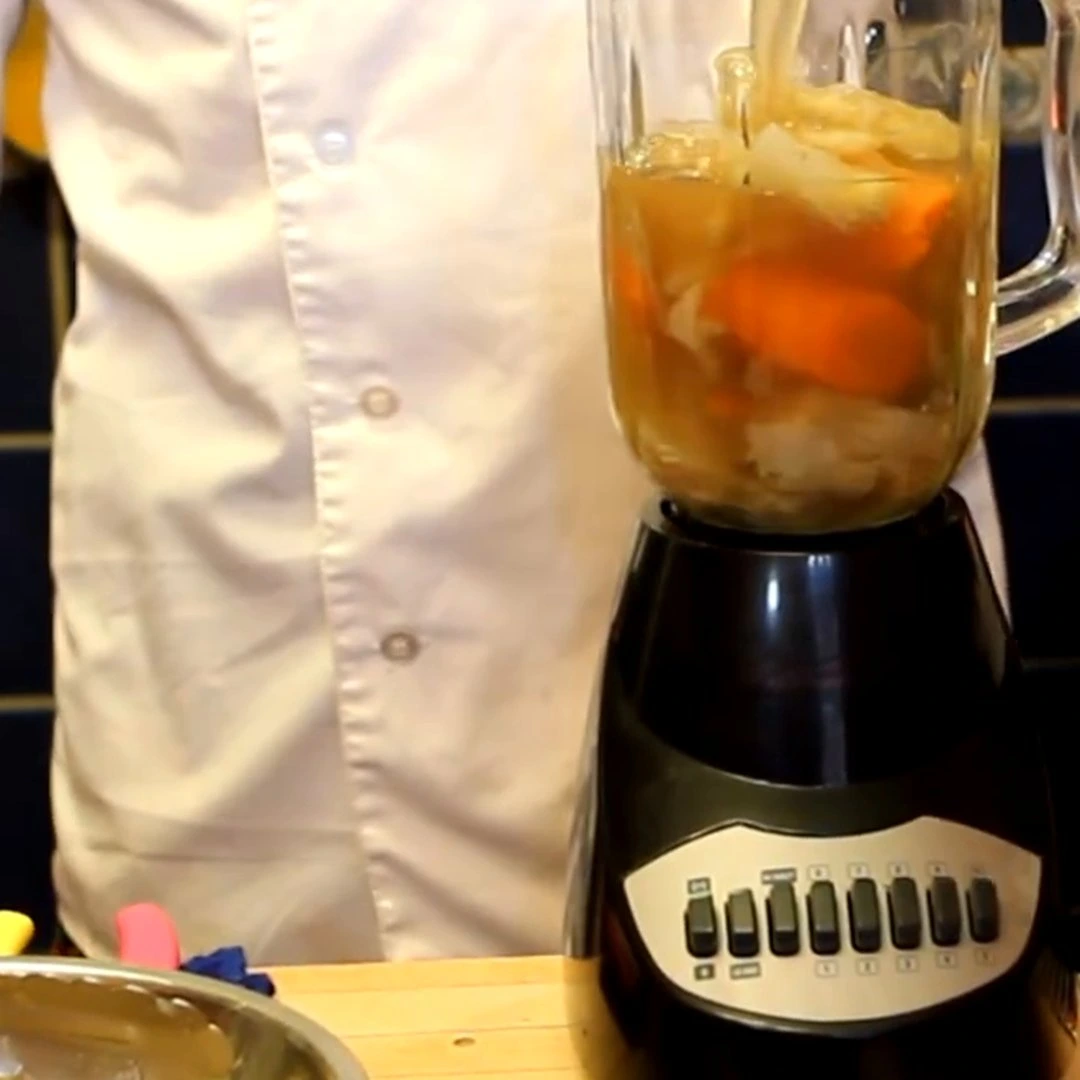
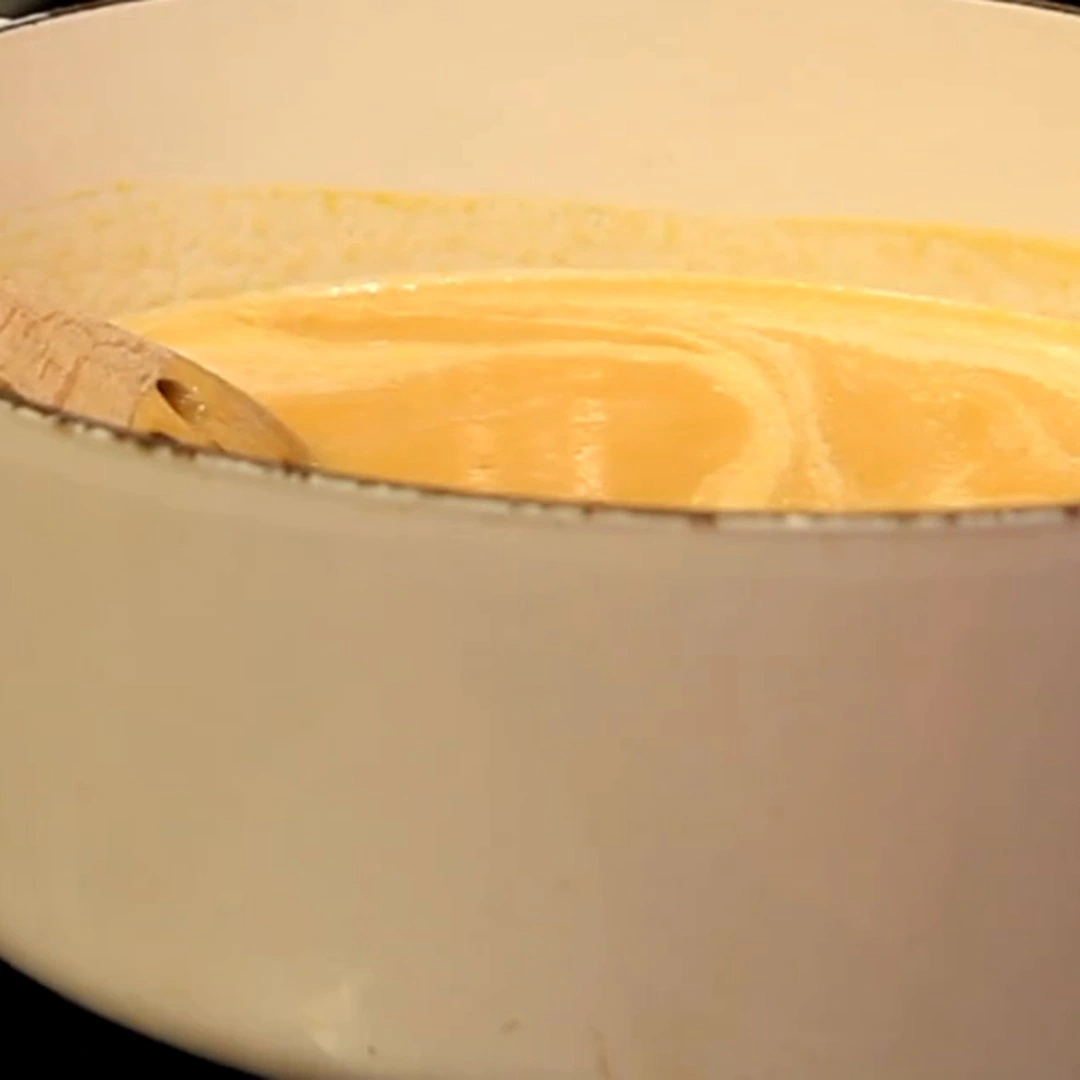
Place some vegetables in the blender and add enough stock to reach roughly their level without exceeding the appliance’s fill limit. The video blends in batches; do the same. Start with short pulses, then blend until the mixture pours smoothly and no large pieces remain. Transfer each batch into a large saucepan.
For hot ingredients, use only a blender approved for hot liquids and follow its venting and fill instructions. Never seal steaming soup in a personal blender cup. An immersion blender in a deep pot is another option; keep its head submerged and start slowly to control splashes.
3. Finish blending and recover the puree
Continue with the remaining vegetables, sharing the measured stock between batches. Add a little of the remaining broth to the empty blender jug, swirl to loosen the puree, and pour it into the saucepan. There is no need to waste the soup clinging to the glass or add a large unmeasured quantity of water.
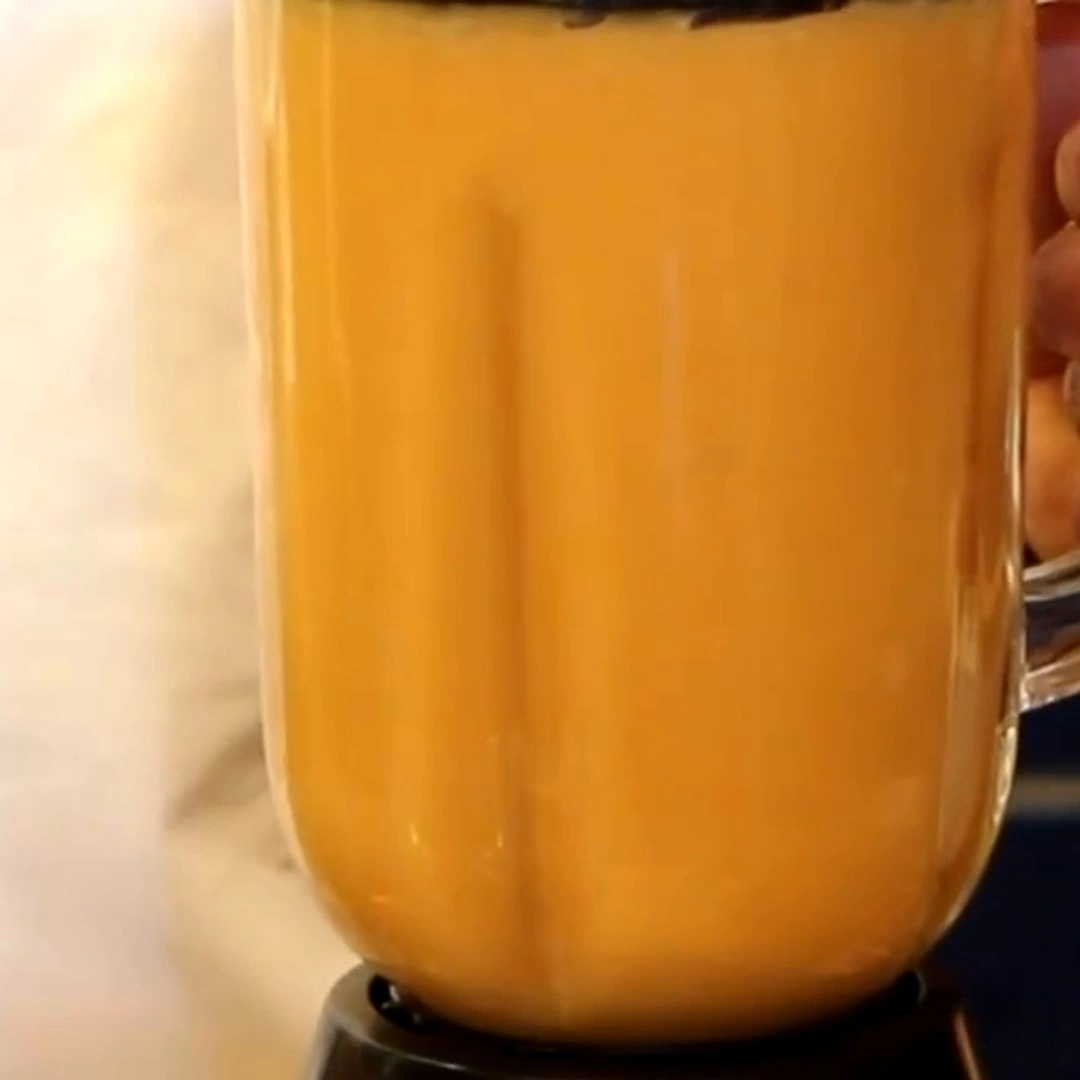
Stir the combined batches before judging the thickness. A carrot-heavy mixture may need a little more liquid than an onion-heavy mixture. If the soup is too thick, add broth a few tablespoons at a time. Stop when it flows from the spoon in a continuous ribbon instead of falling in dense lumps.
4. Heat, season, and serve
Heat over medium-low heat, stirring along the bottom so the puree does not catch. Because this soup uses cooked leftovers, reheat it thoroughly to 165°F and bring it to a full boil while stirring. Lower the heat once hot. The listed 10-minute reheating time is a practical allowance, not a substitute for checking temperature.
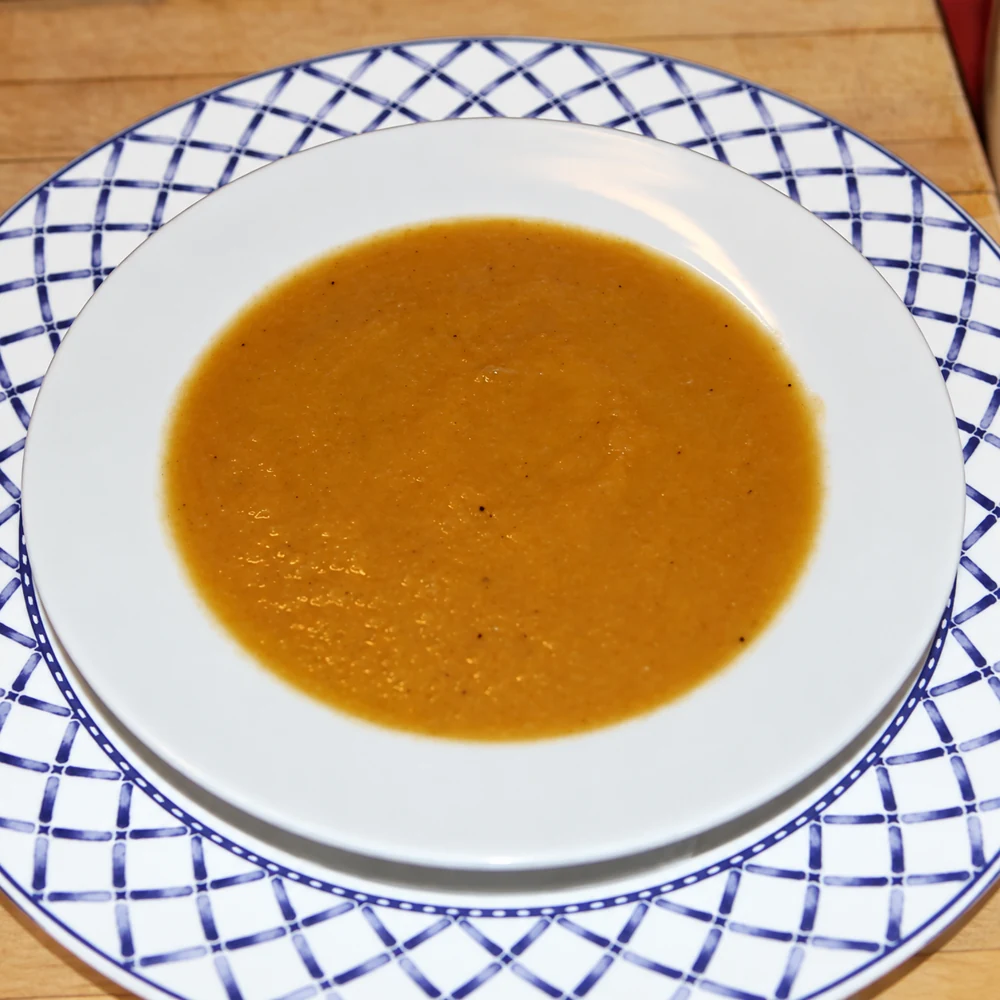
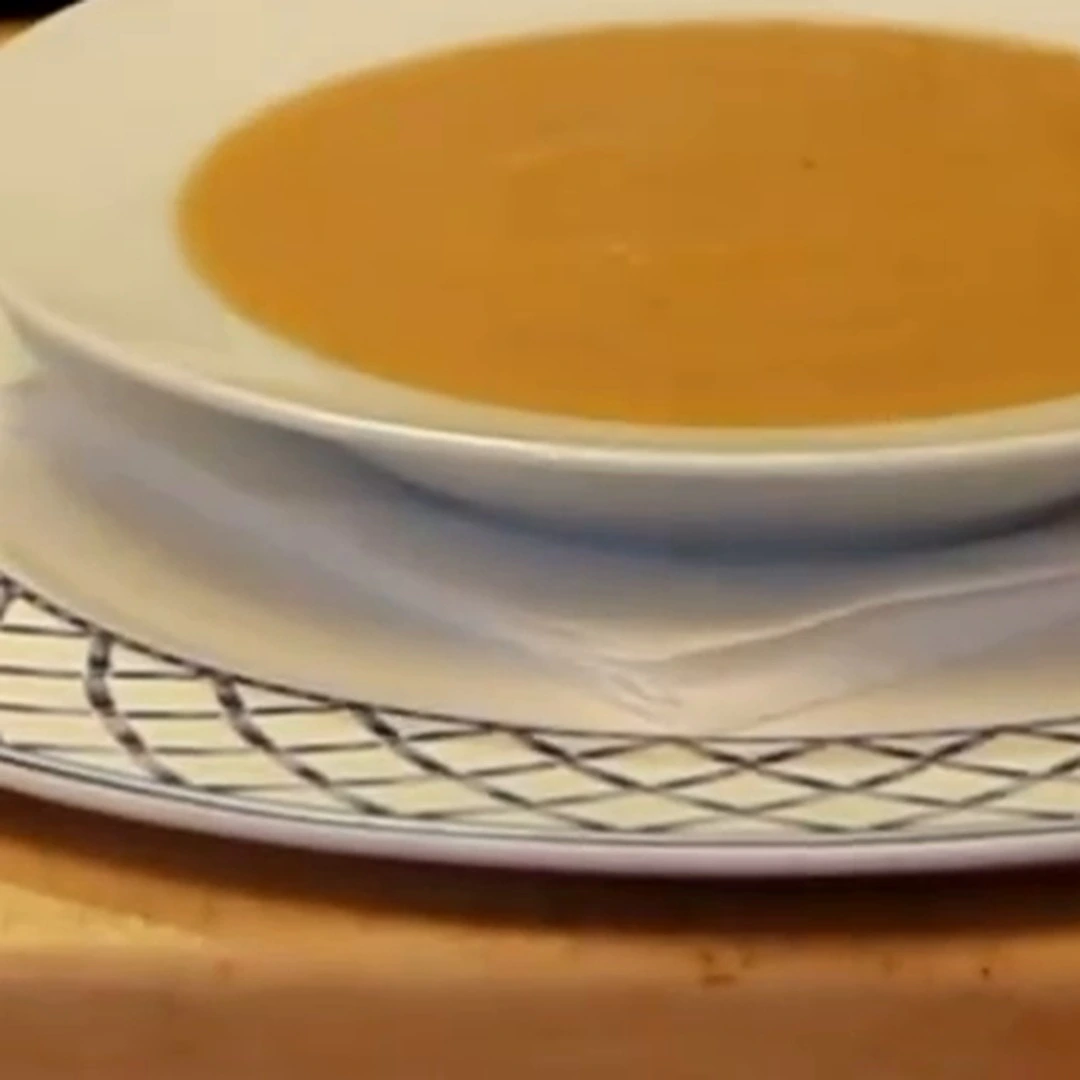
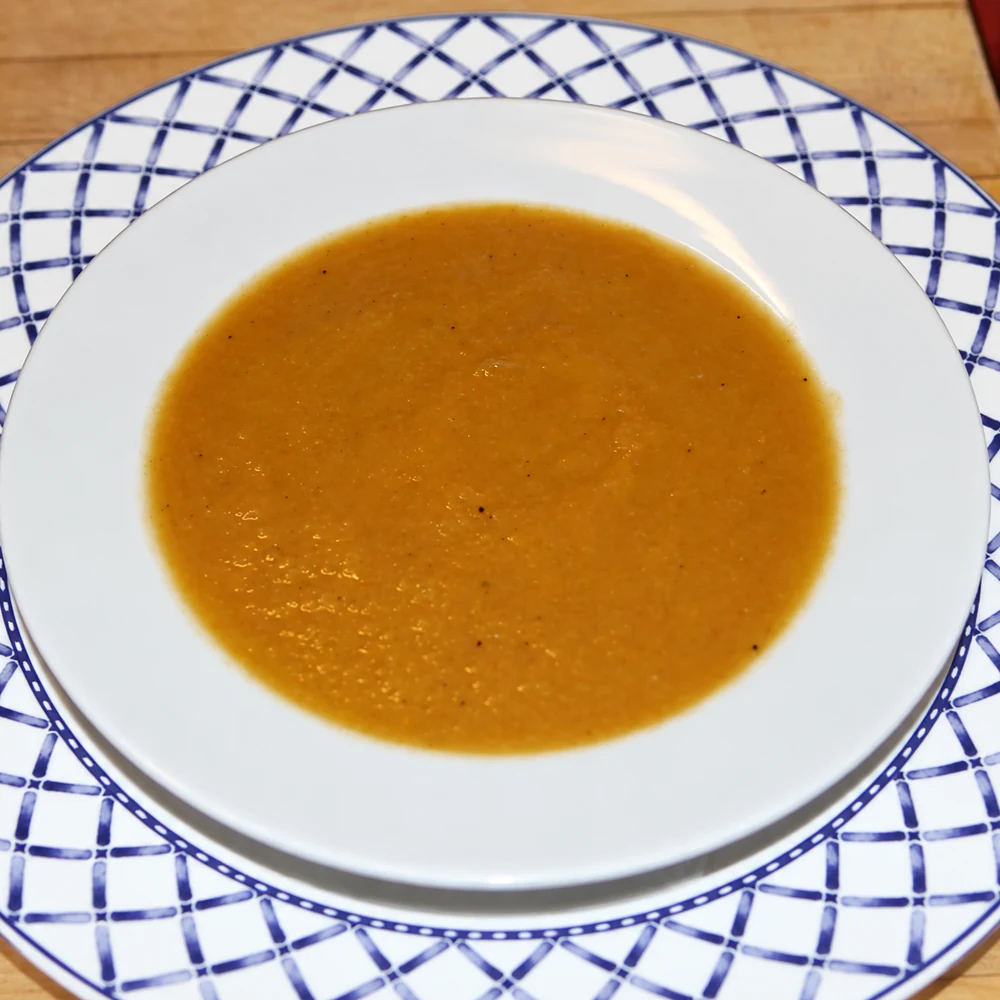
Add a little salt and pepper, stir, and taste once a spoonful has cooled enough. Adjust gradually. The soup should be savory and lightly sweet from the vegetables, with enough broth to remain pourable. Ladle into warmed bowls and serve as it is, matching the simple presentation in the video.
Does the original recipe work?
Yes. Fully softened vegetables blend into suspended fine particles that give the stock body, so no separate thickener is necessary. The main variable is the vegetable mixture: older fibrous leek leaves can leave strings, while vegetables cooked for a very long time can have a subdued flavor. Good stock and a final seasoning check help, but they cannot make unsuitable ingredients taste fresh.
Calling this soup fat-free would be too precise: chicken stock can contain fat even when none is added during this recipe. It is better described as a soup with no added fat or dairy. For other soups using vegetable puree for body, try broccoli soup without cream or leek soup with cheesy croutons.
Substitutions
For a vegetarian version, use vegetables cooked in a meat-free stock and replace the chicken broth with homemade vegetable stock. Changing only the broth does not make vegetables previously cooked with chicken vegetarian. Keep the same starting quantity and season after blending.
You can vary the cooked carrot, onion, and leek proportions according to what your stock produced. Avoid allowing bitter, very woody, or strongly flavored vegetables to dominate. If potatoes happen to be among the leftovers, blend only as long as needed; extended blending can make a potato-rich soup gluey.
Cream is a variation rather than a missing ingredient. For a deliberately richer soup on another day, choose homemade broccoli cheddar soup or creamy tomato soup with basil. If you want a different serving style, cold creamy mushroom soup is another blended soup option.
Make ahead, storage, and serving
Use cooked vegetables and broth that were handled and chilled promptly. Refrigerate in shallow containers within two hours and use refrigerated leftovers within two to three days of their original cooking, or freeze. Turning yesterday’s vegetables into soup does not restart their storage time. Reheat only the portion you need to 165°F, bringing soup to a full boil while stirring.
The soup can be frozen in portions; leave room for expansion and thaw in the refrigerator. Stir well during reheating because a vegetable puree can separate slightly. For a more substantial bowl built around legumes or pasta, try homemade lentil soup with vegetables or minestrone with pasta and beans. Serve this simpler puree with bread and a separate protein dish when you want a fuller meal.
FAQ
Can I start with fresh raw vegetables?
Yes, but cook them in broth until a fork crushes them easily before following the blending method. That preparation adds cooking time and is not the shortcut demonstrated in the video.
Why does my soup have leek strings?
Tough outer leaves or long leek fibers may remain even after blending. Remove woody parts and cut the cooked leeks short. A sieve can smooth the finished soup, although it also removes some of its body.
Why is it too thin?
The vegetables may have retained more cooking liquid, or too much broth was added. Simmer briefly while stirring to reduce it. Next time, drain the vegetables and keep some stock back until you see the blended consistency.
How many portions does this make?
The written recipe is portioned for eight starter servings. The actual volume depends on how well the vegetables were drained and how much broth you add. Use larger bowls for a light lunch and serve fewer portions.

Blended Vegetable Soup from Leftover Stock Vegetables
Ingredients
- 3⅓ lb drained cooked stock vegetables such as carrots, leeks, and peeled onions; all string, bones, skins, and woody herbs removed
- 6⅓ cups unsalted chicken stock divided, plus a little extra only if needed for texture
- Fine salt to taste
- Freshly ground black pepper to taste
Instructions
- Sort the cooked vegetables carefully, removing string, bones, bay leaves, skins, and woody stems. Cut long leeks and large pieces into shorter chunks.
- Blend the vegetables in batches with enough of the measured stock to circulate. Follow the blender's hot-liquid instructions, or use an immersion blender in a deep pot.
- Transfer the purees to a large saucepan. Rinse the blender with a little of the remaining measured stock and add it to the pot. Stir and adjust the consistency gradually.
- Reheat while stirring to 165°F and bring to a full boil. Reduce heat, season with salt and pepper, and serve hot.