Fridge-Cleanout Vegetable Soup (Soupe aux Légumes “Vide-Frigo”) — Flexible, Cozy, and Zero-Waste
If you’ve got a drawer full of “almost sad” vegetables and no plan for dinner, this fridge-cleanout vegetable soup is the move. It’s a practical, technique-driven soup that tastes intentional even when it’s built from leftovers—perfect for weeknights, meal prep, or a reset meal after heavier dishes.
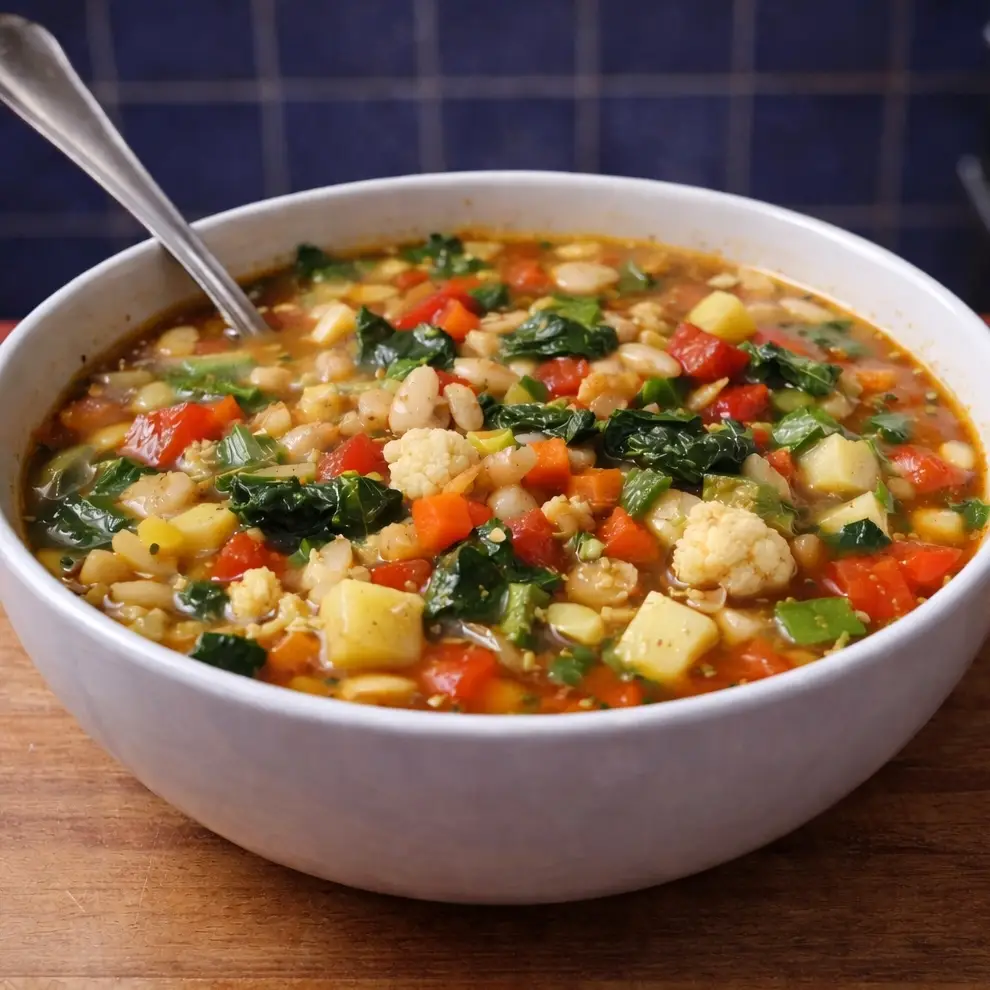
Fridge-cleanout vegetable soup is a flexible, broth-based soup that uses whatever vegetables you already have, built on a simple aromatic base and a smart cooking order. What makes it different is how it layers flavor (browning, deglazing, seasoning in stages) so it doesn’t taste like “random vegetables.” Make it when you need comfort, want to reduce food waste, or need an easy pot of something that reheats like a dream.
Why this soup works year-round
A true “vide-frigo” soup isn’t a strict list—it’s a method. Once you understand the method, you can make it in January with root vegetables, in April with leeks and greens, in July with zucchini and corn, and in October with squash and mushrooms.
It also scales beautifully. One pot can be:
- a light starter before a bigger meal,
- a cozy lunch with bread,
- or a full dinner if you add protein, pasta, rice, or beans.
If you want more soup inspiration, browse the Soup Recipes section anytime you’re in “one pot, no stress” mode.
The flavor blueprint (so it never tastes bland)
This soup has three pillars:
- Aromatic base (foundation): onion + garlic (or leeks/shallots) cooked in olive oil or butter.
- Depth (the trick): tomato paste (optional), herbs, and a quick deglaze so the pot tastes rich even without meat.
- Structure (the key): vegetables go in by cooking time—hard veg first, delicate veg last.
If you’ve ever made soup and thought “it tastes like hot water,” the fix is usually one of these: not enough aromatics, no deglaze, or everything cooked for the same amount of time.
For a vegetable side technique that pairs perfectly with soups, check Oven Roasted Mixed Vegetables—same mindset: simple steps, big payoff.

Choose-your-own-vegetable framework
Use what you have, but keep the balance. A good pot is usually:
- 40–50% “sweet & aromatic” (onion/leek/carrot/celery)
- 40–50% main vegetables (root veg, zucchini, peppers, green beans, etc.)
- 10–20% extras (greens, herbs, frozen veg, leftover cooked veg)
Vegetables that work especially well
- Aromatics: onion, leek, garlic, scallions
- Hard vegetables: carrots, parsnips, turnips, rutabaga, potatoes, sweet potatoes, squash
- Medium vegetables: cauliflower, broccoli stems, peppers, mushrooms, green beans
- Quick vegetables: zucchini, broccoli florets, peas, spinach, kale, cabbage
- From the freezer: peas, corn, mixed veg, chopped spinach
Want more veggie ideas? The Vegetables Collection is a great shortcut when you’re planning around what’s in season (or what’s on sale).

Broth choices
- Best all-purpose: chicken broth (or a good quality chicken stock concentrate)
- Vegetarian: vegetable broth + a little extra umami (soy sauce, miso, parmesan rind if you use it, or mushrooms)
If you like building deep flavor fast, Chicken Stock Concentrate is a great technique to keep in your back pocket for soups, sauces, and quick braises.
Step-by-step: Fridge-cleanout vegetable soup

1) Prep like a chef (5–10 minutes)
- Cut hard vegetables into small, even cubes (they take the longest).
- Cut medium vegetables a bit larger.
- Keep quick vegetables/greens separate for the end.
If you’re using potatoes, peel if you want a cleaner soup, or leave skin-on for a more rustic feel. The goal is consistent size so everything finishes at the same time.
2) Build the base (8–10 minutes)
In a large pot or Dutch oven over medium heat:
- Add olive oil (or butter).
- Sweat your aromatics (onion/leek + carrot + celery) with a pinch of salt until softened and slightly glossy.
This step is non-negotiable. It’s where soup flavor starts.
3) Add depth (2 minutes)
Optional but recommended:
- Add tomato paste and cook it for 30–60 seconds to remove the raw taste.
- Add dried herbs (thyme, bay leaf, Italian seasoning) so they bloom in the fat.
4) Deglaze (30 seconds)
Pour in a small splash of water, broth, or white wine and scrape the bottom of the pot. That browned layer is pure flavor.

5) Add hard vegetables first (10–15 minutes)
Add carrots/parsnips/potatoes/squash (whatever you’re using), then add broth and bring to a gentle simmer.
Keep it at a lazy simmer, not a rolling boil. Boiling can break vegetables down too aggressively and make the broth taste flat.
6) Add medium vegetables (8–10 minutes)
Add cauliflower, peppers, mushrooms, green beans—anything that needs time but not forever.
7) Add quick vegetables and greens last (2–5 minutes)
Add zucchini, peas, spinach/kale, broccoli florets. Cook just until tender and bright.
8) Taste and finish (2 minutes)
This is where the soup becomes “wow”:
- Add salt gradually.
- Add black pepper.
- Add acidity: a squeeze of lemon or a splash of vinegar wakes everything up.
- Optional richness: a knob of butter, a drizzle of olive oil, or a little grated cheese.
9) Optional thickening (pick one)
- Rustic: mash a few potato cubes against the side of the pot.
- Creamy-ish without cream: blend 1–2 ladles of soup and stir it back in.
- Hearty: add cooked rice, pasta, or beans.
For a comforting soup cousin that leans hearty, check Cozy Green Lentil Soup.

How to make it a full meal
Add protein (easy options)
- shredded rotisserie chicken
- leftover roast chicken
- cooked ground beef or sausage (brown it first)
- canned chickpeas or white beans
If you want a hearty, stew-like direction, Weeknight Beef Ragout (Beef Stew) is the same comfort category—just more intense.
Add carbs
- small pasta shapes
- cooked rice
- barley
- potatoes (already built-in)
A simple side that works with soup all year is Rice Pilaf (Fluffy Stovetop Pilaf)—especially if you want a more filling plate without adding pasta into the pot.
Add crunch (best finishing move)
Homemade croutons make a basic soup feel like a bistro bowl: Homemade Garlic Croutons.

Nutrition context (simple, no claims)
This soup can be naturally lighter when it’s mostly vegetables and broth, or more filling when you add potatoes, beans, rice, or pasta. It’s also an easy way to get a balanced bowl with fiber and volume—especially helpful when you want something cozy that doesn’t feel heavy.
Substitutions (so it always works)
No onion/garlic: use leeks, scallions, or a pinch of garlic powder and onion powder (add early so it cooks in).
No broth: water + extra salt + herbs + a splash of soy sauce or a little tomato paste.
No tomato paste: skip it—just lean on herbs and a good finish of lemon/vinegar.
Want it spicy: add chili flakes, hot sauce, or a pinch of cayenne.
Want it creamy: blend part of the soup, or add a small splash of cream at the end.
Want it more “French bistro”: add thyme, bay leaf, and finish with butter and black pepper.
Want it more “Mediterranean”: add oregano, a touch of paprika, and finish with lemon and olive oil.
FAQ
How do I stop vegetable soup from turning mushy?
Add vegetables in stages. Hard veg first, greens last. Keep the pot at a gentle simmer, not a boil.
Can I make this in advance?
Yes—soups usually taste better the next day. If you’re adding pasta, cook pasta separately and add to bowls so it doesn’t over-soften.
Can I freeze it?
Absolutely. Cool completely, freeze in containers. If using potatoes, the texture can get slightly grainy after freezing, but it’s still very good. Beans and lentils freeze beautifully.
How do I fix soup that tastes flat?
Add salt in small steps, then add acidity (lemon or vinegar). A drizzle of olive oil or a small knob of butter also helps.
What vegetables should I avoid?
Very watery vegetables (like cucumbers) don’t work well. Also be cautious with large amounts of bitter greens unless you balance with lemon and salt.
What to serve with / Suggested posts
- Homemade Garlic Croutons for the ultimate crunchy topping
- Homemade Caesar Salad (Authentic Recipe) as a fresh side
- Rice Pilaf (Fluffy Stovetop Pilaf) to make the meal more filling
- Air Fryer Roasted Potatoes for a crispy side dish vibe
- Cozy Green Lentil Soup if you want a more protein-forward soup style
- Creamy Tomato Soup for a smooth, classic alternative
- Creamy Pumpkin Soup when you want something velvety and seasonal
- Traditional Homemade Pot-au-Feu for the big weekend pot
- Oven Roasted Mixed Vegetables as a complementary technique
- Vegetables Collection for more veggie-driven ideas

Fridge-Cleanout Vegetable Soup (Soupe aux Légumes “Vide-Frigo”) — Flexible, Cozy, and Zero-Waste
Ingredients
- 2 tbsp olive oil or 2 tbsp butter
- 1 large onion diced
- 3 garlic cloves minced
- 2 medium carrots diced
- 2 celery stalks diced (optional)
- 2 tbsp tomato paste optional, for depth
- 1 tsp kosher salt plus more to taste
- 1/2 tsp black pepper plus more to taste
- 1 tsp dried thyme or 1 tbsp fresh thyme
- 1 bay leaf
- 6 to 8 tasses broth chicken or vegetable
- 2 medium potatoes diced (optional, for a heartier soup)
- 2 tasses mixed vegetables diced (choose any: zucchini, peppers, mushrooms, cauliflower, green beans)
- 2 to 3 tasses quick vegetables peas, spinach, kale, broccoli florets
- 1 tbsp lemon juice or 2 tsp vinegar finish, to taste
- Optional add-ins: 1 tasse cooked rice 1 tasse cooked pasta, 1 can beans (drained), shredded chicken
Instructions
- Heat oil (or butter) in a large pot over medium heat. Add onion, carrots, and celery with a pinch of salt. Cook 8–10 minutes until softened.
- Add garlic and cook 30 seconds. Stir in tomato paste (if using) and cook 30–60 seconds. Add thyme and bay leaf.
- Deglaze with a splash of broth (or water) and scrape the bottom of the pot.
- Add broth and potatoes (if using). Bring to a gentle simmer and cook 10–15 minutes, until potatoes begin to soften.
- Add medium vegetables (zucchini/peppers/mushrooms/cauliflower/beans). Simmer 8–10 minutes.
- Add quick vegetables and greens. Cook 2–5 minutes until tender.
- Taste and adjust salt/pepper. Finish with lemon juice (or vinegar). Add optional cooked rice/pasta/beans/chicken if desired. Serve hot.
Notes
Substitutions (so it always works)
No onion/garlic: use leeks, scallions, or a pinch of garlic powder and onion powder (add early so it cooks in).No broth: water + extra salt + herbs + a splash of soy sauce or a little tomato paste.
No tomato paste: skip it—just lean on herbs and a good finish of lemon/vinegar.
Want it spicy: add chili flakes, hot sauce, or a pinch of cayenne.
Want it creamy: blend part of the soup, or add a small splash of cream at the end.
Want it more “French bistro”: add thyme, bay leaf, and finish with butter and black pepper.
Want it more “Mediterranean”: add oregano, a touch of paprika, and finish with lemon and olive oil.
FAQ
How do I stop vegetable soup from turning mushy?
Add vegetables in stages. Hard veg first, greens last. Keep the pot at a gentle simmer, not a boil.Can I make this in advance?
Yes—soups usually taste better the next day. If you’re adding pasta, cook pasta separately and add to bowls so it doesn’t over-soften.Can I freeze it?
Absolutely. Cool completely, freeze in containers. If using potatoes, the texture can get slightly grainy after freezing, but it’s still very good. Beans and lentils freeze beautifully.How do I fix soup that tastes flat?
Add salt in small steps, then add acidity (lemon or vinegar). A drizzle of olive oil or a small knob of butter also helps.What vegetables should I avoid?
Very watery vegetables (like cucumbers) don’t work well. Also be cautious with large amounts of bitter greens unless you balance with lemon and salt.Useful Links
🛒 Michel Dumas Shop : Explore our kitchen essentials, including aprons and knives.
🌐 Linktree : Access all our important links in one place.
📱 YouTube | Instagram | Facebook | TikTok : Follow us for the latest recipes and culinary tips.